APSC Current Affairs: Assam Tribune Notes with MCQs and Answer Writing (25/11/2026)
For APSC CCE and other Assam competitive exam aspirants, staying consistently updated with reliable current affairs is essential for success. This blog provides a well-researched analysis of the most important topics from The Assam Tribune dated 25 November 2026. Each issue has been carefully selected and explained to support both APSC Prelims and Mains preparation, ensuring alignment with the APSC CCE syllabus and the evolving trends of the examination.
 For working professionals and full-time aspirantsAPSC CCE Foundation Programme₹24,999
Current Affairs Notes
From The Assam Tribune, 25 November 2026
Demwe Lower Hydroelectric Project on the Lohit River and the Forest Clearance Dispute
Open this topic as a separate page, with its MCQs →
Syllabus Mapping
- Prelims: GS Paper I (General issues on Environment ecology, Bio-Diversity and Climate Change; Current events of State/National importance).
- Mains: GS Paper III (Conservation, environmental pollution and degradation, environmental impact assessment); GS Paper V (Bio-diversity, Environment, Security and Disaster Management of Assam; Major Development Projects).
Why in News? In a letter dated 23 November 2026, 69 former bureaucrats asked the Union Environment Ministry to scrap the proposed Demwe Lower Hydroelectric Project. The project would produce 1,750 megawatt (MW) of power. It is planned on the Lohit river in Arunachal Pradesh. Copies went to the Arunachal Pradesh Chief Minister and the Standing Committee of the National Board for Wildlife (SC-NBWL).
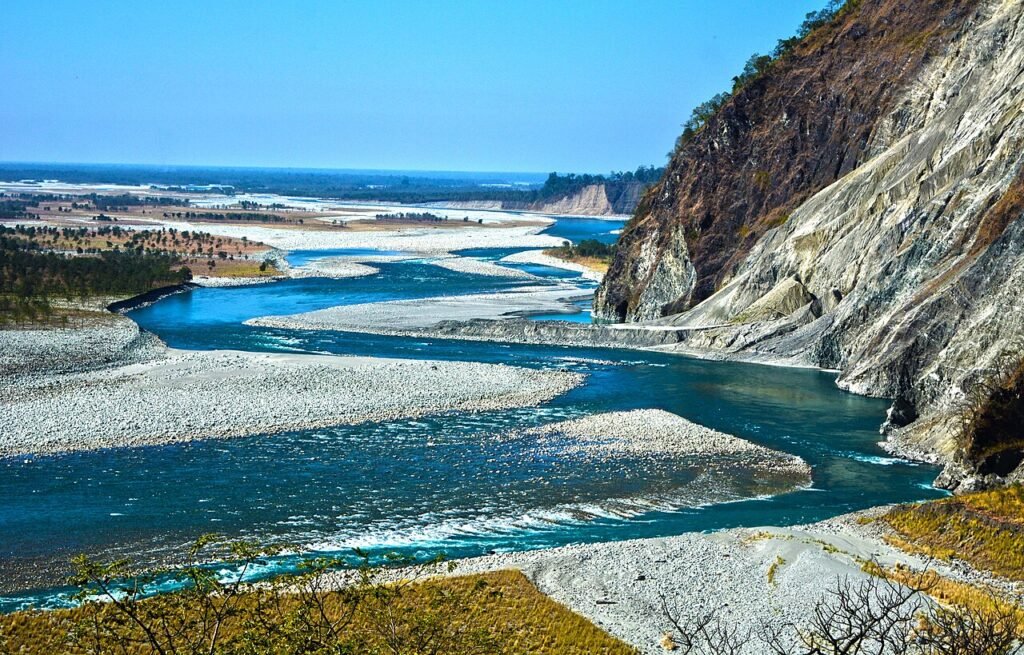
Current Context (The Trigger)
- The letter: The former officials want the project dropped. They cite its effect on the area’s ecology, its geography and local communities. The letter is dated 23 November.
- Who signed: A total of 69 former bureaucrats signed it. They include Najeeb Jung, a former Lieutenant Governor of Delhi. Another signatory is Prakriti Srivastava, a former principal chief conservator of forests in Kerala.
- Land and trees: The project needs 1,416 hectares (ha) of forest land to be diverted. About 1,590 ha would go under water. Around 43,000 trees would be felled in an evergreen rainforest that the letter calls highly sensitive.
- A long-running push: The letter says different governments have pursued the project since 2011. It adds that local resistance has continued for years.
- Wildlife concerns: The letter says the project threatens the critically endangered white-bellied heron. It also warns that tiger habitat across Kamlang, Namdapha and the proposed Dibang Tiger Reserve would be broken up.
Core Concepts & Static GK
- Run-of-the-river project: The Environment Ministry describes Demwe Lower as a run-of-the-river project. A dam sits on the river. A power house at the dam toe uses the channelled water and releases it back into the same river.
- Project size on record: The project was first conceived as a single-stage 3,000 MW scheme with a full reservoir level of 490 m. That level would have submerged parts of Kamlang Wildlife Sanctuary. The level was lowered to 424.8 m, which gave the present 1,750 MW.
- Dam and river: The proposed dam is 163.12 m high and lies across the Lohit river in Lohit district. Downstream, the river course widens as the Siang, Dibang and Lohit converge.
- Distance rule: The site lies 8.5 to 9.3 km (aerial distance) from the nearest point of Kamlang Wildlife Sanctuary. Under Supreme Court orders, a project within 10 km of a sanctuary boundary needs review by the SC-NBWL.
- Forest diversion: Forest diversion means using forest land for a non-forest purpose such as a dam. The proposal covers 1,415.92 ha for diversion. This is made up of 1,408.30 ha for surface use and 7.62 ha for underground use.
Constitutional & Legal Framework
- Standing Committee (Section 5B): Section 5B of the Wild Life (Protection) Act, 1972 lets the National Board for Wildlife constitute a Standing Committee. The Committee exercises the powers and duties that the Board delegates to it.
- Who sits on it: The Committee has the Vice-Chairperson, the Member-Secretary and not more than ten members. The Vice-Chairperson nominates these members from the National Board. Section 5B was inserted by Act 16 of 2003.
- National Green Tribunal route: The 2012 approval was challenged before the National Green Tribunal (NGT). The Tribunal’s southern bench suspended the forest clearance on 24 October 2017.
- Forest Rights Act: The appellants alleged a violation of the Scheduled Tribes and Other Traditional Forest Dwellers (Recognition of Forest Rights) Act, 2006. This was an allegation in the appeal, not a finding of the Tribunal.
Institutional Machinery
- SC-NBWL referral: The Arunachal Pradesh government sent the proposal to the SC-NBWL because the site is within 10 km of Kamlang Wildlife Sanctuary. The State Board for Wildlife had already recommended it.
- Forest Advisory Committee: This committee recommended forest clearance on 20 May 2010. It attached a condition. No other hydropower project on the Lohit river would be considered without a study of cumulative impact.
- Expert site visit: The SC-NBWL took up the project at its 23rd meeting on 14 October 2011. It sent Dr Asad Rahmani and the Chief Wildlife Warden of Arunachal Pradesh to assess the likely impacts on site.
- Experts against the dam: According to the letter, all non-official expert members rejected the dam, while official members stayed silent. The Ministry’s memo records that non-official members backed Dr Rahmani’s report rejecting the proposal at the 24th meeting on 13 December 2011.
- Minister’s approval: The Ministry’s office memorandum of 11 February 2012 recommended the project on behalf of the SC-NBWL. It issued with the approval of the Minister of State (Independent Charge) for Environment and Forests, who chaired the Committee.
Reports, Indices & Data
- Rahmani report: Dr Rahmani’s report pointed to a lack of data and a need for further studies. The Ministry’s memo records this point.
- Flow swings: Experts worried about daily swings in the dam’s water release during peak power hours. The memo puts the range at 70 to 1,729 cumecs (cubic metres per second).
- Energy claims on file: The 2012 memo projects clean energy of about 6,322 to 9,592 million units a year. It also claims about 50 million tonnes of carbon dioxide would be avoided each year.
- Forest area figures: The memo lists 490.53 ha of forest for submergence, plus 1,415.92 ha for diversion. The letter’s figures differ: 1,416 ha diverted and about 1,590 ha submerged.
Assam & Northeast Linkages
- Downstream Assam: Below the dam site, the river runs for about 105 km before it reaches Dibru-Saikhowa National Park in Assam. So the dam’s operation matters for river habitats in Assam.
- Chapori grasslands: Non-official members argued that water-level changes would harm the chapori (river island) grasslands downstream. They named the habitats of the Bengal Florican and the Asiatic Wild Buffalo.
- Tribal and sacred sites: The Mishmi and other tribes, indigenous groups and environmentalists mobilised to protect the sacred Parashuram Kund. Parashuram Kund is a Hindu pilgrimage centre in the lower reaches of the Lohit river in Lohit district.
- Kamlang Tiger Reserve: Kamlang Wildlife Sanctuary is now a tiger reserve in the south-eastern part of Lohit district. Its headquarters is at Wakro.
- Tiger habitat links: The letter links the project to Kamlang, Namdapha and the proposed Dibang Tiger Reserve. All three lie in Arunachal Pradesh.
Prelims Trap Zones (Watch out for)
- Site trap: The dam is not inside Kamlang Wildlife Sanctuary. It lies 8.5 to 9.3 km away. That is within the 10 km limit that brings in the SC-NBWL.
- Capacity trap: The present proposal is 1,750 MW, not 3,000 MW. The 3,000 MW figure was the original single-stage plan.
- Who cleared it: The 2012 wildlife clearance came from the then environment minister. It went against the non-official expert members, according to the letter.
- NGT trap: In 2017 the Tribunal suspended the dam’s approvals. It did not cancel the project for all time.
- Study timing trap: The 2012 memo asked IIT Roorkee to study ecological and cumulative impacts. These studies were to run alongside construction, not before it.
- Species trap: The white-bellied heron is Critically Endangered on the IUCN (International Union for Conservation of Nature) Red List. It is not Endangered or Vulnerable.
Introduction
On 23 November 2026, 69 former officials asked the Centre to scrap the 1,750 MW Demwe Lower Hydroelectric Project on the Lohit river. Governments have pursued it since 2011, but the National Green Tribunal suspended its approvals in 2017. The dispute tests how India balances Northeast hydropower against rainforest, rare species and tribal rights. It matters for Assam because the river flows on to Dibru-Saikhowa National Park.
Why the Project Draws Support: Energy Rationale
- Clean power claim: The 2012 Environment Ministry memo calls Demwe Lower a “green power project”. It projects carbon-free energy of about 6,322 to 9,592 million units a year.
- Emission saving: The memo expects about 50 million tonnes of carbon dioxide to be avoided each year. It also claims a saving of 230 lakh litres of diesel a year.
- Design changes: The reservoir level was lowered from 490 m to 424.8 m so that no part of Kamlang sanctuary would go under water. That cut the project from 3,000 MW to 1,750 MW.
- Run-of-the-river layout: The project uses a dam and a dam-toe power house, and returns water to the same river. Supporters see this as less damaging than a large storage reservoir.
- No homes lost: The memo says no human homesteads would be lost during or after the project. It also says the water-spread area would be managed as a protected area.
- Support from the State: The State Board for Wildlife recommended the project. Arunachal Pradesh’s representatives answered every point in the expert report that rejected it.
Ecological and Social Concerns
- Forest loss: The letter says the project needs 1,416 ha of forest land and would submerge about 1,590 ha. Around 43,000 trees would be felled in highly sensitive evergreen rainforest.
- Rare heron: The letter says the project threatens the critically endangered white-bellied heron. A 2025 Zoological Survey of India study calls Namdapha the heron’s only known breeding location in India.
- Tiger habitat: The letter warns that tiger habitat across Kamlang, Namdapha and the proposed Dibang Tiger Reserve would be fragmented. Connectivity between these areas would also suffer.
- Downstream risk: The non-official experts cited catastrophic downstream risks to endangered wildlife, says the letter. The memo records their fear of flow swings between 70 and 1,729 cumecs during peak hours.
- Assam’s river islands: These experts said water-level changes would harm chapori grasslands. They named the habitats of the Bengal Florican and the Asiatic Wild Buffalo. The memo also records a claim that the dam would fragment Gangetic Dolphin habitat downstream.
- Tribal and cultural stakes: Mishmi and other tribal groups have campaigned to save the holy site of Parashuram Kund and the river ecosystems further downstream. The appellants before the Tribunal also alleged a violation of the Forest Rights Act, 2006.
Legal and Procedural Issues in the Clearance
| Stage | What happened | Issue raised |
|---|---|---|
| 2010 | The dam got initial environmental clearance. The Forest Advisory Committee recommended forest clearance on 20 May 2010. | The Committee asked for a cumulative impact study before any other Lohit project is considered. |
| October to December 2011 | The project came before the SC-NBWL at its 23rd and 24th meetings. | All non-official expert members rejected the dam, while official members stayed silent, says the letter. |
| 2012 | The then environment minister granted wildlife clearance through the memo of 11 February 2012. | The letter says this went against majority expert opinion. |
| 2017 | The National Green Tribunal suspended the dam’s approvals. | According to the letter, the Tribunal ruled that the minister acted unlawfully by overriding the experts’ unanimous objections. |
| Procedural basis | Reports say the clearance was suspended because it was not given through due procedure. | Under Supreme Court orders, projects within 10 km of a sanctuary need SC-NBWL clearance. |
Challenges
- Weak expert voice: Official members stayed silent and non-official experts were overruled, says the letter. That damages the credibility of the clearance process. The 2017 suspension shows such a gap can be challenged in court.
- Cumulative impact: The Forest Advisory Committee asked for a study of the combined effect of hydropower projects on the Lohit. Judging one dam alone can hide the damage from many dams on one river.
- Study after approval: The 2012 memo let IIT Roorkee’s impact studies run alongside construction. So the evidence would arrive after the decision, not before it.
- Data gaps: The Rahmani report pointed to a lack of data and a need for further studies. Decisions taken without baseline data on fish, birds and river flow are hard to defend later.
- Delay and uncertainty: Governments have pursued the project since 2011, and it still has no settled clearance. Long disputes raise costs and keep local communities unsure about their land.
- Community consent: Local resistance has continued for years, according to the letter. Without the trust of the Mishmi and other tribes, even a legally cleared project can stall on the ground.
- Downstream Assam: The Lohit reaches Assam’s Dibru-Saikhowa National Park 105 km below the site. Yet the clearance was handled by Arunachal Pradesh and the Centre, which makes river-basin planning harder.
Way Ahead
- Cumulative impact study: The Environment Ministry should commission a basin-wide study of the Lohit before it decides on this dam. This follows the condition the Forest Advisory Committee set in May 2010.
- Studies before construction: The IIT Roorkee impact studies named in the 2012 memo should finish before any work begins. Mitigation can then be planned on evidence, not guesswork.
- Respect expert advice: The SC-NBWL should record reasons whenever it overrules its non-official experts. According to the letter, the Tribunal found in 2017 that a minister cannot simply override them.
- Wildlife safeguards first: The Wildlife Institute of India or a similar body should map heron, tiger and river habitats along the Lohit. The letter names the heron and the Kamlang-Namdapha-Dibang tiger area as being at risk.
- Consent of local tribes: The State government should hold documented consultations with the Mishmi and other tribes, including on Parashuram Kund. Forest-dwellers’ rights under the Forest Rights Act, 2006 must be settled first.
- Open public record: The Environment Ministry should publish all expert reports, minutes and forest diversion details online. The 2012 memo shows that such papers exist and shape the decision.
- Assam in the loop: The Centre should involve the Assam government and river experts. This applies when it reviews upstream dams on rivers that flow into Assam. Flow swings could reach Dibru-Saikhowa National Park, 105 km downstream.
Conclusion
Demwe Lower shows that a green-power label does not settle a dispute over rainforest, rare species and tribal rights. A fair decision needs a basin-wide study, open expert reasoning and local consent. Only then can Arunachal Pradesh gain power without harming the rivers and forests that Assam also depends on.
Film Preservation and Restoration of Assam’s Cinematic Heritage
Open this topic as a separate page, with its MCQs →
Syllabus Mapping
- Prelims: GS Paper I (Assam History; Indian History; current events of State/National importance and associated APSC current affairs).
- Mains: GS Paper I (Indian culture: salient aspects of art forms from ancient to modern times); GS Paper V (History, Art, Culture, Literature, Tradition and Heritage of Assam).
Why in News? On Saturday, 21 November, a restored version of Jahnu Barua’s 1987 film Halodhia Choraye Baodhan Khai was screened at Aideo Cinema in Guwahati. The show was part of the 11th Film Preservation and Restoration Workshop India. The Film Heritage Foundation is running it with the International Federation of Film Archives and the Assam Department of Cultural Affairs.
Current Context (The Trigger)
- The film screened: The restored Halodhia Choraye Baodhan Khai (1987) was shown at Aideo Cinema, Guwahati, to about 200 film lovers. The film follows a poor farmer who fights landlords that exploit him.
- How it was restored: The original 16mm camera negative was scanned at 2K resolution. The 35mm sound negative was digitised separately to recover the original audio.
- The workshop: The screening was part of the 11th Film Preservation and Restoration Workshop India (FPRWI). The Film Heritage Foundation (FHF) organised it with the International Federation of Film Archives and the Department of Cultural Affairs, Assam.
- Venue and dates: The workshop runs for eight days, from 21 to 28 November. It is being held at the Assam Administrative Staff College in Khanapara, Guwahati.
- Participants and content: 28 participants from different fields across the Northeast were selected. Sessions cover film identification, repair, digitisation, digital restoration and cataloguing. There are also practical sessions on photograph and paper conservation and on archive management.
- Next step: After the workshop, FHF will give the Department of Cultural Affairs a report on the state of Assam’s film archives. The report will also suggest steps to preserve them properly.
Core Concepts & Static GK
- Cold storage is not enough: FHF director Shivendra Singh Dungarpur said the State department holds a large collection of Assamese films, including early ones. He warned that cold storage by itself cannot keep them safe for long.
- Two negatives, two jobs: A film’s picture and its sound can sit on separate materials. For Halodhia, the picture came from the camera negative and the sound from the sound negative.
- Fragile old film: Old nitrate film stock is highly flammable. One fire can wipe out a whole collection, which is one reason so many early films are lost.
- International Federation of Film Archives (FIAF): FIAF is a film preservation body founded in Paris in 1938. Its four founding members were the Cinematheque Francaise, the Reichsfilmarchiv of Berlin, the British Film Institute and the Museum of Modern Art, New York.
- Film Heritage Foundation: FHF is a non-profit based in Mumbai. Shivendra Singh Dungarpur founded it in 2014 to preserve and restore India’s film heritage.
Constitutional & Legal Framework
- Cinematograph Act, 1952: This Act regulates the public exhibition of films in India. The Central Board of Film Certification (CBFC) certifies films under it.
- CBFC: It is a statutory body under the Ministry of Information and Broadcasting. It has nine regional offices, and one of them is at Guwahati.
- Cinematograph (Amendment) Act, 2023: This Act (No. 12 of 2023) received the President’s assent on 4 August 2023. It targets film piracy.
- Sections 6AA and 6AB: Section 6AA bars recording or transmitting a film without the owner’s written permission. Section 6AB bars showing a pirated copy of a film to the public for profit.
Institutional Machinery
- National Film Archive of India (NFAI): NFAI works from Law College Road, Pune. It aims to trace, acquire and preserve the heritage of national cinema for future generations.
- NFAI and FIAF: NFAI has been a member of FIAF since 1969. It now works as NFDC-NFAI under the National Film Development Corporation (NFDC).
- Jyoti Chitraban Film Studio: The Assam Government set up this studio in 1961 at Kahilipara, Guwahati. It stands on about 10 acres at the foot of the Narakasur Hills.
- Assam State Film (Finance and Development) Corporation: The Government of Assam incorporated it on 4 September 1974 to develop Assamese cinema. It gives loans, subsidies and grants for Assamese films.
Schemes & Initiatives
- National Film Heritage Mission (NFHM): It is a mission of the Ministry of Information and Broadcasting. NFDC-NFAI carries out the work.
- Outlay and scale: In May 2022, the Ministry said the Mission had a total budget of Rs 597 crore. Of this, Rs 363 crore is only for restoration, and about 2,200 films are to be restored.
- Digitisation progress: By March 2023, NFHM had digitised 1,293 feature films and 1,062 short films and documentaries. The work was done in 4K and 2K resolution.
Reports, Indices & Data
- Loss by the 1950s: Dungarpur estimates that India had lost 70-80 per cent of its films by the 1950s.
- Reels conserved: By March 2023, conservation work on 1,433 celluloid reels had been completed under NFHM. About 2,500 more features, shorts and documentaries were in line for digitisation.
- NFAI paper archive: NFAI holds 2,03,287 still photographs and 40,919 film posters. It also has 24,797 song booklets.
- Press clippings: NFAI’s research section also keeps about 2,28,025 press clippings on cinema.
Assam & Northeast Linkages
- Joymoti (1935): Jyoti Prasad Agarwala directed and produced it. It was released on 10 March 1935 and is based on Lakshminath Bezbaroa’s play on the Ahom princess Joymoti Konwari.
- Halodhia’s makers: Jahnu Barua directed the film. Homen Borgohain wrote it, Sailadhar Baruah produced it, and Indra Bania played a lead role.
- Halodhia’s honours: It won the National Film Award for Best Feature Film. It also won the Silver Leopard at the Locarno International Film Festival.
- Jahnu Barua: He was born in 1952 at Sivasagar. He received the Padma Shri in 2003 and the Padma Bhushan in 2015.
Prelims Trap Zones (Watch out for)
- Negative Trap: The camera negative of Halodhia was 16mm and the sound negative was 35mm. A question may swap the two gauges.
- Organiser Trap: The 11th FPRWI was organised by the Film Heritage Foundation with FIAF and the Assam Department of Cultural Affairs. NFAI and the Ministry of Information and Broadcasting are not the organisers named.
- Place Trap: FHF is based in Mumbai, and NFAI is in Pune. The workshop is at the Assam Administrative Staff College, Khanapara, while the screening was at Aideo Cinema.
- Director Trap: Halodhia (1987) is Jahnu Barua’s film. Joymoti (1935) is Jyoti Prasad Agarwala’s.
- Participants Trap: The workshop selected 28 participants from across the Northeast, not only from Assam.
Introduction
On 21 November, a restored print of Jahnu Barua’s 1987 film Halodhia Choraye Baodhan Khai played to a Guwahati audience at Aideo Cinema. The screening came with a warning from archivists that Assam’s older films need urgent care, because cold storage alone will not save them. Old films carry a society’s language, dress, songs and struggles, so their loss is a loss of Assam’s own memory.
Why Film Preservation Matters
- Social memory: Films record how people lived and struggled. Halodhia shows a poor farmer’s fight against exploitative landlords, a lasting picture of rural Assam.
- Heritage of the State: The FHF director called films and documentaries “embodiments of the State’s history and culture”.
- Pride and global recognition: Halodhia won the National Film Award for Best Feature Film and the Silver Leopard at Locarno. Such films put Assamese cinema on the world map.
- Pioneer works: Jyoti Prasad Agarwala’s Joymoti (1935) marked the start of Assamese cinema. Early works like it show students how filmmaking in the State began.
- Research and teaching: Archives hold more than films. NFAI also keeps stills, posters, song booklets and press clippings that help historians.
- Local skills: The Guwahati workshop trains people from the Northeast to care for the films of their own region. Trained archivists and technicians can find new careers in the Northeast.
Challenges
- Weak storage practice: Assam’s culture department keeps many old Assamese films, some from the earliest years of local cinema. The FHF director says cold storage alone will not preserve it for long.
- Poor condition of the stock: FHF senior cataloguer Murchana Borah said the present condition is “not so promising”. She added that Assamese cinema has a huge inventory to look after.
- Fragile material: Old nitrate film is highly flammable. A single fire or careless handling can destroy reels that have no other copy.
- Shortage of people and facilities: The region lacks trained archivists and adequate infrastructure. This workshop could take only 28 participants for the whole Northeast.
- High cost and complex steps: Restoring Halodhia needed a 2K scan of the camera negative and a separate digitisation of the sound negative. At the national level, the Ministry set aside Rs 597 crore for the whole Mission.
- History of loss: Dungarpur estimates that India had lost 70-80 per cent of its films by the 1950s. Halodhia itself was restored nearly four decades after its release.
Government Initiatives (National & Assam)
| Level | Initiative | Purpose & Impact |
|---|---|---|
| Centre | National Film Heritage Mission (NFDC-NFAI) | Preserve, digitise and restore films. A budget of Rs 597 crore was announced in 2022, and about 2,200 films are to be restored. |
| Centre | National Film Archive of India, Pune | Trace, acquire and preserve national cinema. It has been a FIAF member since 1969. |
| Centre | Cinematograph (Amendment) Act, 2023 | Sections 6AA and 6AB bar unauthorised recording of films and the public exhibition of pirated copies for profit. |
| Assam | Jyoti Chitraban Film Studio, Guwahati | State film studio set up in 1961 at Kahilipara. It gives Assam its own base for film work. |
| Assam | Assam State Film (Finance and Development) Corporation | Incorporated on 4 September 1974 to develop Assamese cinema through loans, subsidies and grants. |
| Assam | Department of Cultural Affairs with FHF | Partnered for the 11th FPRWI. FHF will report on the State’s film archives and suggest measures. |
Way Ahead
- Full audit: The Department of Cultural Affairs should list every film, reel and document in State custody and record its condition. FHF’s promised report can be the starting point.
- Digitise first, then store: The State should scan its oldest and most fragile titles first. It should also keep several digital copies in different places, since cold storage alone is not enough.
- Use the national mission: Assam can send a list of priority Assamese titles to NFDC-NFAI under the National Film Heritage Mission. This would share the cost of restoration.
- Train local archivists: Jyoti Chitraban and the Cultural Affairs Department can run regular short courses. The 28-seat workshop shows the demand but also the small scale.
- Bring the public in: Regular screenings of restored films, as at Aideo Cinema, build awareness. Families and collectors who hold old prints could be encouraged to hand them to the State archive.
- Protect new films too: The Assam State Film (Finance and Development) Corporation could ask the films it funds to deposit a master copy. The copy would go to the State archive.
Conclusion
The restored Halodhia shows what careful work can give back to a State. It gave a clear picture, true sound and an audience of about 200 people. Assam now needs to turn one workshop and one screening into a lasting system of audits, trained archivists and secure copies. Only then will its films escape the fate of the many Indian films already lost.
Asked in APSC
- APSC Mains 2023, GS Paper 5 (15 marks): “Rural life of Assam is beautifully depicted in Assamese films.” Analyze the statement with examples. How is Assamese rural life reflected in the movies of Jahnu Barua or Rima Das?
- APSC Prelims 2024: (answer in the MCQs below)
Which of the following statements regarding first Assamese film Joymoti is/are false?
(i) The film was produced by Chitralekha Movietone.
(ii) The film was based on a drama by Padmanath Gohain Baruah.
(iii) The artists were drawn from respectable families.
(iv) The film was the first Indian film to delve into ‘realism’.
Select the correct answer using the codes given below:- (A) (i) and (ii) only
- (B) (ii) and (iv) only
- (C) (ii) only
- (D) (iii) only
All 500 APSC Prelims PYQs of CCE 2020 to 2025, with answers and explanations: practise free in the PYQ Explorer
Mizoram’s Fall in HIV Deaths and the 95-95-95 Targets
Open this topic as a separate page, with its MCQs →
Syllabus Mapping
- Prelims: GS Paper I (Current events of State/National importance; Issues relating to health and social sector; Northeast India).
- Mains: GS Paper II (Issues relating to development and management of Social Sector/Services relating to Health, Education, Human Resources); GS Paper V (Governance and Social Justice, with emphasis on Assam and the Northeast).
Why in News? HIV deaths in Mizoram have fallen by 81.23 per cent. The figures were placed before the State Council on AIDS in Aizawl, in a report dated 24 November 2026. New infections have also fallen for four straight years. The meeting also reviewed India’s 95-95-95 targets and the proposed Mizoram State AIDS Policy 2026.
Current Context (The Trigger)
- Deaths down: Mizoram recorded an 81.23 per cent decline in HIV deaths, according to figures placed before the State Council on AIDS.
- Four-year fall: New HIV cases fell from 2,236 in 2022-23 to 2,059 in 2023-24, 1,911 in 2024-25 and 1,628 in 2025-26.
- Testing figures: 85,479 people were tested between April and October this year. Of them, 42,795 were male, 31,786 female and 10,898 were antenatal care (pregnancy check-up) mothers.
- Positivity rates: The rate was 1.63 per cent among males, 1.20 per cent among females and 0.77 per cent among pregnant women attending antenatal care.
- Transmission routes: Sexual transmission made up 75.19 per cent of detected infections. Sharing of contaminated injecting equipment accounted for 21.56 per cent and mother-to-child transmission for 1.86 per cent.
- Prevalence: A review of trends from 2010 to 2024 placed Mizoram’s HIV prevalence rate at 2.75 per cent.
- Other items: The meeting discussed funding for free baseline investigations for people living with HIV and a proposed HIV Resource Centre. It also reviewed the proposed Mizoram State AIDS Policy 2026.
Core Concepts & Static GK
- 95-95-95 targets: The first aims for 95 per cent of people living with HIV to know their status. The second aims for 95 per cent of those diagnosed to get sustained antiretroviral therapy (ART). The third aims for 95 per cent of those on treatment to reach viral suppression.
- Target year and origin: The 2021 United Nations Political Declaration on HIV and AIDS, agreed on 9 June 2021, set 95-95-95 testing and treatment goals for 2025. Its larger aim is to end AIDS as a public health threat by 2030.
- Prevalence versus new cases: Mizoram’s prevalence rate of 2.75 per cent (2010 to 2024) describes the existing burden. The yearly count of new cases is a separate measure, and it has been falling.
- Antiretroviral therapy: ART is the treatment that keeps the virus under control in a person living with HIV. In the national data, free ART reached over 1.8 million people living with HIV by 2025, with 97 per cent viral suppression.
- National trend: India’s adult HIV prevalence fell from 0.33 per cent in 2010 to 0.20 per cent in 2024, against a global average of 0.7 per cent.
Constitutional & Legal Framework
- HIV and AIDS (Prevention and Control) Act, 2017: It aims to prevent and control HIV and AIDS and to protect the rights of people living with or affected by the disease. Parliament passed the Bill in 2017: the Rajya Sabha on 21 March and the Lok Sabha on 11 April.
- In force from 2018: The Act came into force on 10 September 2018.
- Rights it protects: The Act prohibits discrimination against people living with HIV, protects confidentiality and requires informed consent for testing and treatment.
- Grievance redress: It provides for an Ombudsman at the State level and a Complaints Officer at the establishment level. Ombudsmen have been appointed in 34 States and Union Territories.
Institutional Machinery
- National AIDS Control Organisation (NACO): It was set up in 1992 under the Union Ministry of Health and Family Welfare to coordinate the national response.
- Mizoram State AIDS Control Society (MSACS): Its Project Director, Jane Rinsangi Ralte, presented the testing and transmission data at the meeting.
- State Council on AIDS: Chief Minister Lalduhoma chaired the meeting and asked the Council to frame programmes for vocational training of people living with HIV.
- District AIDS Prevention and Control Units (DAPCUs): They were created under the third phase of the national programme for district-level coordination and monitoring.
Schemes & Initiatives
- NACP Phase V (2021-26): The National AIDS and STD (sexually transmitted diseases) Control Programme Phase V is a Central Sector Scheme. It is fully funded by the Government of India, with an outlay of Rs 15,471.94 crore. It was approved to run until financial year 2025-26.
- Sampoorna Suraksha Kendras: These single-window centres cover prevention, testing, treatment and care for people at risk of HIV and sexually transmitted infections.
- Test and Treat, Mission Sampark and viral load testing: Earlier measures include starting ART for all diagnosed cases and bringing back people who had stopped ART. Routine universal viral load monitoring also began.
- Targeted interventions: A total of 1,587 targeted intervention projects were running across India as of October 2025 for high-risk groups.
Reports, Indices & Data
- New infections nationally: They fell from 1.25 lakh in 2010 to 64,500 in 2024, a 49 per cent reduction against the 2010 baseline.
- Deaths nationally: AIDS-related deaths fell from 1.73 lakh in 2010 to 32,200 in 2024, a reduction of 81.40 per cent.
- Global 2025 goals: The 2021 Political Declaration aimed to bring annual new infections below 370,000 and annual AIDS-related deaths below 250,000 by 2025.
- NACO estimates for 2019: National adult prevalence was 0.22 per cent, and Mizoram’s was 2.32 per cent, the highest of any State or Union Territory.
Assam & Northeast Linkages
- Highest prevalence in the country: NACO’s 2019 estimate placed Mizoram’s adult prevalence at 2.32 per cent, against 0.22 per cent for India.
- Injecting drug use: About one in five detected infections in Mizoram (21.56 per cent) came from sharing contaminated injecting equipment. This is why drug use and HIV control are linked in the Northeast.
- Harm reduction in Mizoram: The Mizoram State AIDS Control Society lists a needle syringe exchange programme among its targeted intervention components. It also offers opioid substitution therapy, where a doctor prescribes a safe, legal, long-acting medicine in place of the illicit drug.
- District leaders: Khawzawl, Saitual, Mamit and Hnahthial are among the leading districts in meeting the 95-95-95 targets. Lawngtlai is expected to join them soon.
Prelims Trap Zones (Watch out for)
- Deaths versus new cases: The 81.23 per cent figure is a fall in HIV deaths. New cases fell separately, from 2,236 to 1,628 between 2022-23 and 2025-26.
- Mizoram versus India: Mizoram’s 81.23 per cent is a State figure. India’s national reduction in AIDS deaths from 2010 to 2024 is 81.40 per cent. Do not mix them.
- Largest transmission route: Sexual transmission is first at 75.19 per cent. Injecting equipment is second at 21.56 per cent, and mother-to-child transmission is last at 1.86 per cent.
- Order of the three 95s: They run as know status, receive ART, achieve viral suppression. The third 95 is counted among people on treatment, not among all people living with HIV.
- Act dates: The HIV and AIDS Act is a 2017 law, passed by the Lok Sabha on 11 April 2017. It came into force only on 10 September 2018.
- Prevalence figures: The 2.75 per cent figure is from the 2010-2024 trend review reported in the paper. The NACO 2019 estimate for Mizoram is 2.32 per cent. They come from different exercises.
Introduction
Figures presented to Mizoram’s State Council on AIDS, reported from Aizawl on 24 November 2026, show four straight years of falling new HIV cases. New cases fell to 1,628 in 2025-26, and HIV deaths were down 81.23 per cent. The State still has a prevalence rate of 2.75 per cent, so the gains are real but the task is unfinished. How Mizoram moves towards the 95-95-95 targets matters for every high-burden Northeast State, including Assam.
Why Mizoram’s HIV Burden Remains High
- Injecting drug use: Sharing contaminated injecting equipment accounted for 21.56 per cent of detected infections. The Chief Minister linked the issue to recovery by asking for livelihood support for people recovering from substance dependence.
- Sexual transmission: This route accounts for 75.19 per cent of detected infections, so prevention must reach the general population as well as high-risk groups.
- Higher positivity among men: Positivity was 1.63 per cent among males against 1.20 per cent among females in April to October this year. Men therefore need targeted outreach for testing.
- Mother-to-child risk: Mother-to-child transmission is 1.86 per cent of detected infections, and 0.77 per cent of 10,898 antenatal mothers tested positive. The risk is small but preventable through early testing in pregnancy.
- A high starting base: NACO’s 2019 estimate put Mizoram’s adult prevalence at 2.32 per cent, the highest in India. A large pool of existing infections keeps the prevalence rate high even when new cases fall.
Progress Shown by the Data
- Steady fall in new cases: New cases dropped from 2,236 in 2022-23 to 1,628 in 2025-26. That is a fall of about 27 per cent in three years.
- Deaths sharply lower: Mizoram reported an 81.23 per cent decline in HIV deaths. This points to better access to treatment, though the paper does not give the baseline year.
- Wide testing: A total of 85,479 people were tested in seven months, including 10,898 pregnant women at antenatal care. Wide testing is the first step of the 95-95-95 cascade.
- District models: Khawzawl, Saitual, Mamit and Hnahthial lead on the 95-95-95 targets. Their practices can be copied in other districts.
- National backdrop: India’s AIDS deaths fell 81.40 per cent from 2010 to 2024, and free ART reached over 1.8 million people by 2025. Mizoram’s trend matches this national direction.
Government & Statutory Measures
| Level | Initiative | Purpose & Impact |
|---|---|---|
| Centre | HIV and AIDS (Prevention and Control) Act, 2017 (in force 10 September 2018) | Bars discrimination, protects confidentiality and sets up Ombudsmen for complaints. |
| Centre | NACP Phase V, outlay Rs 15,471.94 crore | Funds prevention, testing and treatment through a fully Centre-funded scheme. |
| Centre / NACO | Sampoorna Suraksha Kendras | Offer prevention, testing, treatment and care at one window for people at risk. |
| Mizoram | MSACS targeted interventions (needle syringe exchange, opioid substitution therapy) | Reduce infection risk among people who inject drugs. |
| Mizoram | State Council on AIDS and proposed Mizoram State AIDS Policy 2026 | Reviewed at the State Council on AIDS meeting to guide State action and coordination with voluntary groups. |
Challenges
- Persistent positivity: Positivity of 1.63 per cent among men and 1.20 per cent among women shows that new infections are still being detected.
- Drug dependence and livelihood: The Chief Minister stressed vocational training for people recovering from substance dependence, which means jobs and skills are still gaps.
- Uneven district performance: The paper names Khawzawl, Saitual, Mamit and Hnahthial among the leading districts, and Lawngtlai is still expected to join them. This suggests that progress is uneven across Mizoram’s districts.
- Late testing and treatment gaps: Health Minister Lalrinpuii urged regular testing, pre-marital testing and adherence to treatment, which suggests that testing and adherence are still uneven.
- Proposals still on paper: Funding for free baseline investigations, the HIV Resource Centre and the Mizoram State AIDS Policy 2026 are still at the discussion or proposal stage.
- Programme phase timing: NACP Phase V was approved to run only until financial year 2025-26. Since the scheme is fully Centre-funded, States depend on the next phase for continuity.
Way Ahead
- Link recovery with livelihood: The State Council on AIDS should frame vocational training and skills programmes for people living with HIV, as the Chief Minister asked. Steady income helps recovery and adherence.
- Scale up harm reduction: MSACS can widen the reach of needle syringe exchange and opioid substitution therapy. This addresses the 21.56 per cent share of infections from injecting equipment.
- Make testing routine: The Health Department should promote regular and pre-marital testing, as the Health Minister suggested. Early diagnosis is the first 95.
- Copy district models: The State should study Khawzawl, Saitual, Mamit and Hnahthial and apply their methods in lagging districts.
- Use community centres better: The meeting discussed closer coordination with voluntary organisations to improve use of drop-in centres and ICT centres. Local groups can bring in men and drug users who avoid hospitals.
- Finalise the State AIDS Policy and Resource Centre: The State Government should complete the Mizoram State AIDS Policy 2026 and the proposed HIV Resource Centre. It should also use the Act’s Ombudsman system to protect people from discrimination.
Conclusion
Mizoram’s falling numbers show that testing, treatment and community work can bend the HIV curve even in the State with India’s highest estimated adult prevalence in 2019. The next gains will depend on harm reduction for drug users, steady treatment and livelihood support, so that the 95-95-95 targets become a district reality.
End-of-Life Vehicles Rules Amendment and Producer Responsibility for Scrapping
Open this topic as a separate page, with its MCQs →
Syllabus Mapping
- Prelims: GS Paper I (General issues on Environment and Ecology; Current events of State/National importance; Indian Economy).
- Mains: GS Paper III (Environmental pollution and degradation; Conservation; Waste management; Indian economy and resource mobilisation).
Why in News? A report from New Delhi on 24 November 2026 says the Union Environment Ministry has amended the Environment Protection (End-of-Life Vehicles) Rules, 2025. Carmakers will not have to show future scrapping duties as current liabilities as long as they keep operating in India.
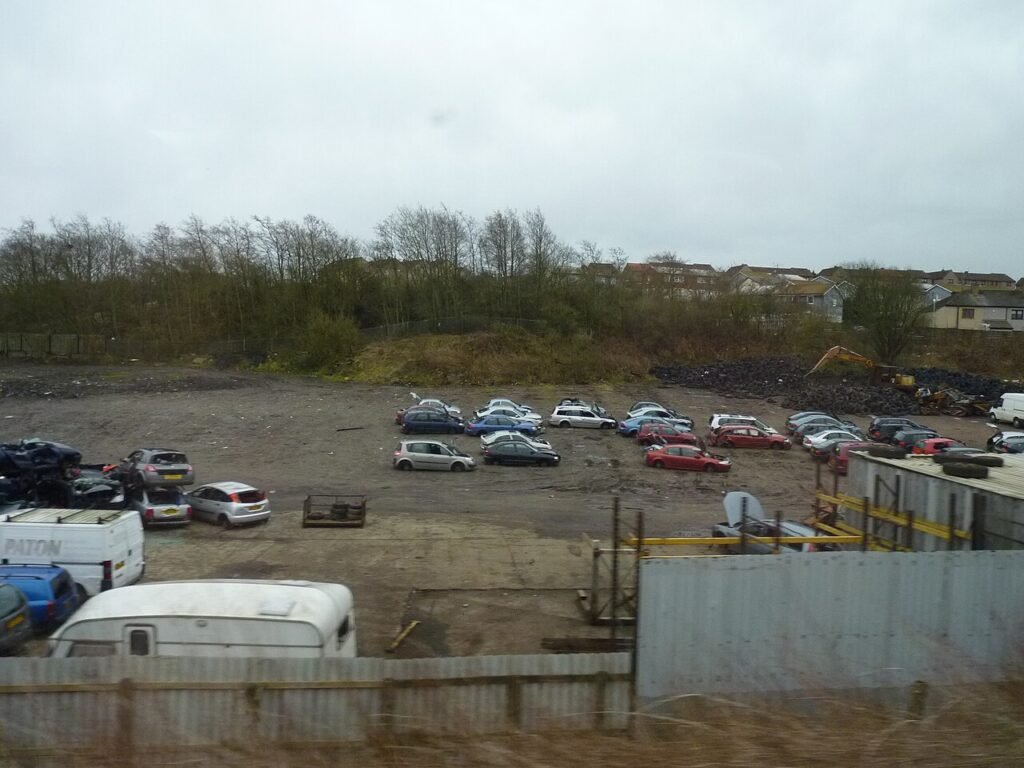
Current Context (The Trigger)
- The amendment: The Ministry of Environment, Forest and Climate Change (MoEFCC) has notified changes to the End-of-Life Vehicles (ELV) Rules, 2025. The changes refine the duties of manufacturers under the Extended Producer Responsibility (EPR) system.
- Industry worry: Carmakers feared that the original rules, read with Indian Accounting Standard (Ind AS) 37, would force large provisions in their accounts. These provisions would cover the future cost of scrapping vehicles sold many years ago.
- New trigger point: Unfulfilled EPR obligations now arise only when a producer permanently ceases operations. They do not apply to manufacturers that keep operating in India.
- On permanent closure: The maker must give details of vehicles it sold in the previous 15 years for transport vehicles and 20 years for non-transport vehicles. The Central Pollution Control Board (CPCB) then works out the outstanding EPR obligation.
- Size of the concern: Industry estimates put the one-time gross provision at tens of thousands of crores under the earlier reading. Executives had also warned that the hit would be large once environmental compensation rates for non-compliance were notified.
Core Concepts & Static GK
- Extended Producer Responsibility: The ELV Rules define EPR as the producer’s responsibility for scrapping its end-of-life vehicles in an environmentally sound manner. Producers must meet scrapping targets for vehicles they have put on the domestic market.
- End-of-life vehicle: The ELV Rules do not write their own definition. They borrow it from the Motor Vehicles (Registration and Functions of Vehicle Scrapping Facility) Rules, 2021 of the Road Transport Ministry.
- EPR certificates: The CPCB issues these through a centralised online portal in favour of Registered Vehicle Scrapping Facilities (RVSFs). One kilogram of certificate equals one kilogram of steel scrap generated at the facility.
- How producers comply: A producer can buy certificates from facilities instead of scrapping vehicles itself. It can buy only up to its current-year obligation plus any leftover from earlier years. A purchased certificate cannot be transferred to another producer.
- Certificate validity: A certificate generated by a scrapping facility stays valid for five years for meeting producer obligations.
- Annual targets: The rules came into force on 1 April 2025. Targets link to vehicles sold 15-20 years earlier. For 2025-26 the minimum is 8 per cent of the steel used in vehicles of 2005-06 (non-transport) or 2010-11 (transport).
- Ind AS 37 in simple terms: A provision needs three things: a present obligation from a past event, a probable outflow of money and a reliable estimate. Where no present obligation is probable, the item is a contingent liability. It is only disclosed, unless the chance of outflow is remote.
Constitutional & Legal Framework
- Rules, not an Act: The ELV regime is a set of rules made under the Environment (Protection) Act, 1986. They were notified on 6 January 2025 (S.O. 98(E)) and took effect on 1 April 2025.
- Motor Vehicles Act link: Owners must get vehicles tested under Section 56 of the Motor Vehicles Act, 1988 and Rule 52 of the Central Motor Vehicles Rules, 1989. An owner must deposit a vehicle within 180 days of it becoming an ELV.
- Design standard: Producers must take steps to comply with AIS-129 (an Automotive Industry Standard). It is published by the Centre under the Central Motor Vehicles Rules, 1989.
- What the rules leave out: Waste batteries, plastic packaging, waste tyres, used oil and e-waste stay under their own separate rules. Agricultural tractors, agricultural trailers, combine harvesters and power tillers are also outside the rules.
- Closure clause in the original rules: Rule 4(6) already said a producer that stops operations must meet its EPR duty for vehicles sold till closure. The new amendment makes closure the point at which unfulfilled obligations arise.
- Accounting law: Ind AS 37 is the Indian Accounting Standard on provisions, contingent liabilities and contingent assets. The dispute was about how it applies to a scrapping duty that falls due in the future.
Institutional Machinery
- MoEFCC: The ministry notified the rules and the amendment.
- CPCB: It will fix the outstanding EPR obligation of a closed company. It also runs the central portal, registers producers and receives the yearly EPR declaration due by 30 April.
- State Pollution Control Boards: Scrapping facilities and bulk consumers apply to the State Boards for registration. The Boards must register them within fifteen days.
- Registered Vehicle Scrapping Facilities: They depollute, dismantle and segregate vehicles. They send recovered material to registered recyclers. Non-recyclable material and hazardous waste go to an authorised common hazardous waste facility.
Reports, Indices & Data
- Target ladder: The Schedule keeps the target at 8 per cent of steel till 2029-30. It rises to 13 per cent for 2030-31 to 2034-35 and 18 per cent from 2035-36.
- Draft amendment of 27 March 2026: The MoEFCC draft (S.O. 1619(E)) proposes to delete “other steel scrap materials related to automobile sector” from the certificate rule. Only steel from end-of-life vehicles would then count.
- Higher long-term targets proposed: The same draft proposes 50 per cent from 2045-46 and 60 per cent from 2050-51 for non-transport vehicles. It also allows 30 per cent of any year’s target to be carried forward for four years.
- Recycled steel in new vehicles: The draft proposes that at least 10 per cent of the steel in a new vehicle be recycled steel from 2026-27.
Assam & Northeast Linkages
- Assam policy: Assam’s Transport Department notified the Vehicle Scrappage Policy of Assam, 2022 on 18 July 2022. It gives incentives to owners who hand vehicles to registered facilities and to those who set up such facilities.
- Budget support: The Assam Budget 2022-23 added vehicle scrap processing facilities to the industrial sector eligible for incentives.
- Guwahati facility: Tata Motors opened a registered scrapping facility in Guwahati on 8 February 2025, run by its partner Axom Platinum Scrappers. It can scrap up to 15,000 end-of-life vehicles a year, of all brands.
- Dues relief: Assam’s One Time Settlement scheme lets owners deregister unfit vehicles by paying 25 per cent of pending taxes and dues. The State extended it till 31 March 2026.
Prelims Trap Zones (Watch out for)
- Trigger Trap: Unfulfilled EPR obligations arise on permanent closure, not at every year-end for a running company.
- Look-back Trap: The closure look-back is 15 years for transport and 20 years for non-transport vehicles. Do not swap them.
- Certificate Basis Trap: Certificates depend on the weight of steel recovered, not on the count of vehicles.
- Body Trap: CPCB decides the outstanding obligation and runs the portal. State Boards, not CPCB, register scrapping facilities.
- Date Trap: The rules were notified on 6 January 2025 and took effect on 1 April 2025. The draft amendment on steel scrap is of 27 March 2026.
Introduction
India’s End-of-Life Vehicles Rules, 2025 make carmakers pay for scrapping the vehicles they sell, through steel-linked certificates. In November 2026 the Environment Ministry eased a key worry by saying running companies need not book future scrapping duties as current liabilities. The change shows how hard it is to fit green rules to sound accounting while keeping scrapping targets alive.
Need and Rationale of the ELV Regime
- Orderly disposal: The rules aim at environmentally responsible disposal and recycling of ageing vehicles. Depollution and segregation at registered facilities replace unsafe dismantling.
- Producer pays: EPR puts the cost of end-of-life handling on the maker, not on the public. Targets are linked to vehicles sold 15-20 years earlier.
- Steel recovery: Certificates are based on the weight of steel recovered. So scrapping also feeds a market for recycled steel.
- Formal sector: Producers, facilities and bulk consumers must all register on one portal. This brings dismantling into a tracked system.
- Flexibility for makers: Automakers can buy certificates from registered facilities and need not scrap vehicles themselves. This lets scrapping specialists do the work.
Why the Amendment Matters
- Balance-sheet relief: Industry observers say it removes doubt over balance-sheet effects. Without it, industry estimates ran to tens of thousands of crores as a one-time provision.
- Accounting logic: Under Ind AS 37, a provision needs a present obligation. The amendment ties unfulfilled obligations to permanent closure, so a running firm has none to book.
- Objective retained: Observers note that the goal of environmentally sound recycling stays. The amendment changes the timing of liability, not the yearly scrapping targets.
- Closure safeguard: If a maker shuts down, it must declare vehicles sold over the last 15 or 20 years. CPCB then fixes what is still owed, so the public is not left with the bill.
- Link to compensation: Executives had said the accounting hit would grow once environmental compensation rates were notified. The amendment removes that uncertainty for running firms.
Challenges
- Narrower certificate basis: The draft of 27 March 2026 would stop counting other automobile steel scrap for certificates. Only steel from scrapped end-of-life vehicles would earn them, so certificate supply could shrink.
- Rising targets: The goal grows from 8 per cent to 13 per cent in 2030-31 and 18 per cent from 2035-36. The draft even proposes 50 per cent from 2045-46 for non-transport vehicles.
- Supply of old vehicles: Certificates need vehicles that actually reach facilities. Automated testing stations must upload every vehicle declared unfit, and States must set up enough stations and facilities.
- Illegal dismantling: Unregistered scrap units still operate outside the system. The National Green Tribunal (NGT) has taken up a case on illegal scrap units in Delhi’s Mayapuri area.
- Risk in the closure rule: A liability that appears only at closure defers the cost. A weak firm that exits could leave a large unpaid duty behind.
- Compensation still pending: Certificate prices must lie between 30 and 100 per cent of the environmental compensation. Until those rates are notified, buyers and sellers lack a clear price band.
Way Ahead
- Raise ELV supply: States should set up enough automated testing stations, as Rule 13 of the ELV Rules asks. More unfit vehicles will then reach facilities.
- Review the certificate basis: The MoEFCC can weigh the comments received on the 27 March 2026 draft before finalising it. A phased shift would keep focus on real vehicle scrapping without a supply shock.
- Notify compensation rates early: The ministry should notify environmental compensation rates soon. Makers will then know their exposure and the certificate price band.
- Add safeguards for closure: CPCB should keep annual sales and steel data that producers file by 30 June each year. This makes the 15- and 20-year look-back easy to check.
- Grow facilities in the States: States such as Assam can bring scrapping units under industrial incentives, as the Assam Budget 2022-23 did.
- Build owner awareness: The rules ask producers and States to run awareness campaigns and offer incentives. Buy-back and deposit-refund schemes can push owners towards registered facilities.
Conclusion
The amendment fixes a real accounting worry without dropping the idea that producers must pay for the end of their products. The test now is physical. Unless more old vehicles reach registered facilities, certificates will stay scarce and the rising targets will be hard to meet.
News in Short
- Imphal-Silchar flight: Direct flights between Imphal and Silchar have restarted after a one-year break. Alliance Air runs the service with an ATR 72 aircraft every Tuesday and Thursday. It is supported by the Manipur State Viability Gap Funding (VGF) Scheme.
- Ganges river dolphin in Siang: An endangered Ganges river dolphin was seen where the Tarotamak river joins the Siang, near Namsing village in East Siang district. The spot lies next to the Daying Ering Wildlife Sanctuary. India decided in October 2009 to make this dolphin its national aquatic animal.
- Puttalam Base Hospital grant: Sri Lanka’s Cabinet approved a memorandum of understanding (MoU) with India to upgrade this hospital in the country’s northwestern region. India will give a grant of 600 million Sri Lankan rupees (about USD 1.8 million). The money will fund a three-storey building of 8,640 square metres.
- First foreign astronaut at Tiangong: Pakistan’s Mohammad Zeeshan Ali is part of the Shenzhou-24 crew, due to launch on 25 November 2026. He will be the first foreign national to visit China’s Tiangong space station. He will also be the first Pakistani in space.
- India-Canada CEPA: Talks on the Comprehensive Economic Partnership Agreement (CEPA) are close to conclusion. Prime Ministers Narendra Modi and Mark Carney launched the CEPA in March. The two sides aim for bilateral trade of USD 50 billion by 2030. Trade fell 8.23 per cent to USD 7.95 billion in 2025-26.
- 45th India International Trade Fair: The fair is being held at Bharat Mandapam, New Delhi, from 14 to 27 November on the theme ‘Vikas Aur Virasat’. The Assam Pavilion features 52 Micro, Small and Medium Enterprises (MSMEs) from the State.
- Upendra Nath Brahma Soldier of Humanity Award: Padma Shri awardee Sister Sudha Varghese has been chosen for the 23rd award, 2026. The award carries Rs 2 lakh, a citation and a memento. It will be presented on 28 November at Dhaligaon in Chirang district.
- Assam Police recruitment: Chief Minister Himanta Biswa Sarma took the salute of 1,661 new recruits at the Lachit Barphukan Police Academy, Dergaon. An examination for 5,734 posts in six departments starts on 1 February. Of these, 2,236 posts are in Assam Police.
APSC Prelims MCQs
Practice questions on the topics above
Topic 1: Demwe Lower Hydroelectric Project on the Lohit River and the Forest Clearance Dispute
Q1. The Standing Committee of the National Board for Wildlife (SC-NBWL) reviews projects near protected areas. Consider the following statements:
(i) The Standing Committee is constituted by the National Board under Section 5B of the Wild Life (Protection) Act, 1972.
(ii) It consists of the Vice-Chairperson, the Member-Secretary and not more than ten members nominated by the Vice-Chairperson from the National Board.
(iii) It is a statutory body created under the National Green Tribunal Act, 2010.
Which of the statements given above is/are correct?
- (a) (i) and (ii) only
- (b) (ii) and (iii) only
- (c) (i) only
- (d) (i), (ii) and (iii)
Show answer
Answer: (a) Explanation: Section 5B of the Wild Life (Protection) Act, 1972 lets the National Board constitute a Standing Committee. The Committee uses powers the Board delegates to it, so statement (i) is correct. The same section fixes its makeup as the Vice-Chairperson, the Member-Secretary and up to ten nominated members. So statement (ii) is also correct. Statement (iii) is wrong because the Committee comes from the wildlife law, not the National Green Tribunal Act, 2010. The Tribunal is a separate body that heard the challenge to the Demwe clearance. Hence (b), (c) and (d) fail. Value addition: Section 5B was inserted into the Act by Act 16 of 2003.
Q2. The proposed Demwe Lower Hydroelectric Project in Arunachal Pradesh has been in the news. Consider the following statements:
(i) The National Green Tribunal suspended the project’s approvals in 2017.
(ii) The dam site lies inside the Kamlang Wildlife Sanctuary.
(iii) The project is of the run-of-the-river type with a dam-toe power house.
Which of the statements given above is/are correct?
- (a) (i) only
- (b) (ii) and (iii) only
- (c) (i) and (iii) only
- (d) (i), (ii) and (iii)
Show answer
Answer: (c) Explanation: Statement (i) is correct. The National Green Tribunal suspended the dam’s approvals in 2017, after the then minister had overridden the independent experts. Statement (iii) is correct because the Environment Ministry’s 2012 memo describes a run-of-the-river project with a power house at the dam toe. Statement (ii) is wrong. The site lies 8.5 to 9.3 km from the nearest point of Kamlang Wildlife Sanctuary. It is outside the sanctuary but within the 10 km limit that sends projects to the Standing Committee. So (a), (b) and (d) fail. Value addition: the reservoir level was lowered from 490 m to 424.8 m to avoid submerging any part of the sanctuary.
Q3. Match List-I with List-II (figures relating to the Demwe Lower Hydroelectric Project):
| List-I (Item) | List-II (Figure) |
|---|---|
| a. Capacity now proposed | 1. 1,750 MW |
| b. Capacity first conceived as a single-stage project | 2. 3,000 MW |
| c. Forest land to be diverted, as per the former officials’ letter | 3. 1,416 hectares |
| d. Trees likely to be felled, as per the letter | 4. 43,000 |
Select the correct answer using the codes given below:
- (a) a-2, b-1, c-3, d-4
- (b) a-1, b-2, c-3, d-4
- (c) a-1, b-2, c-4, d-3
- (d) a-2, b-1, c-4, d-3
Show answer
Answer: (b) Explanation: The present proposal is a 1,750 MW project, so a matches 1. The Environment Ministry’s 2012 memo says it was first conceived as a single-stage project of 3,000 MW, so b matches 2. The letter of 23 November says 1,416 hectares of forest land is to be diverted, so c matches 3. It also says around 43,000 trees would be felled, so d matches 4. Codes (a) and (d) swap the two capacities. Code (c) swaps the hectare and tree figures. Only (b) is fully correct. Value addition: the Ministry’s own memo gives a different split, with 490.53 hectares of forest for submergence and 1,415.92 hectares for diversion.
Q4. The white-bellied heron was named in the former officials’ letter against the Demwe Lower project. What is its status on the IUCN Red List?
- (a) Vulnerable
- (b) Endangered
- (c) Near Threatened
- (d) Critically Endangered
Show answer
Answer: (d) Explanation: The white-bellied heron has been listed as Critically Endangered on the IUCN Red List since 2007. Its global population is very small and falling fast, so (d) is correct. The letter also calls it critically endangered. Option (b), Endangered, is the most likely trap. The heron was in that category before it was uplisted in 2007. Option (a), Vulnerable, and option (c), Near Threatened, are lower categories and understate the risk. Value addition: a 2025 Zoological Survey of India study in the journal Oryx looked at the heron’s breeding. It calls Namdapha Tiger Reserve in Arunachal Pradesh the heron’s only known breeding location in India.
Topic 2: Film Preservation and Restoration of Assam’s Cinematic Heritage
Q5. The 11th Film Preservation and Restoration Workshop India (FPRWI) was held in Guwahati. A restored version of Jahnu Barua’s Halodhia Choraye Baodhan Khai was screened there. Consider the following statements:
(i) Halodhia Choraye Baodhan Khai is a 1987 film directed by Jahnu Barua.
(ii) The restoration involved scanning the original 35mm camera negative at 2K resolution.
(iii) The workshop was organised by the Film Heritage Foundation with the International Federation of Film Archives and the Department of Cultural Affairs, Assam.
Which of the statements given above is/are correct?
- (a) (i) and (ii) only
- (b) (i) and (iii) only
- (c) (ii) and (iii) only
- (d) (i), (ii) and (iii)
Show answer
Answer: (b) Explanation: Statements (i) and (iii) are correct. The film is Jahnu Barua’s 1987 work. The 11th FPRWI was organised by the Film Heritage Foundation with the International Federation of Film Archives and the Assam Department of Cultural Affairs. Statement (ii) is wrong because the scanned camera negative was 16mm, not 35mm. The 35mm material was the sound negative, which was digitised separately to recover the original audio. Options (a), (c) and (d) all include statement (ii), so they fail. Value addition: FIAF was founded in Paris in 1938, and the National Film Archive of India has been a member since 1969.
Q6. Match List-I with List-II:
| List-I | List-II |
|---|---|
| a. Joymoti (1935) | 1. Directed by Jyoti Prasad Agarwala |
| b. Halodhia Choraye Baodhan Khai (1987) | 2. Directed by Jahnu Barua |
| c. International Federation of Film Archives | 3. Founded in Paris in 1938 |
| d. National Film Archive of India | 4. Headquartered at Pune |
Select the correct answer using the codes given below:
- (a) a-2, b-1, c-3, d-4
- (b) a-1, b-2, c-4, d-3
- (c) a-1, b-2, c-3, d-4
- (d) a-2, b-1, c-4, d-3
Show answer
Answer: (c) Explanation: The correct pairs are a-1, b-2, c-3 and d-4. Jyoti Prasad Agarwala directed and produced Joymoti, released on 10 March 1935. Jahnu Barua directed Halodhia in 1987. FIAF was founded in Paris in 1938, and NFAI works from Law College Road in Pune. Options (a) and (d) swap the two directors. Options (b) and (d) swap the Paris and Pune pairs, so they place the founding city and headquarters against the wrong body. Value addition: Joymoti was based on a play by Lakshminath Bezbaroa about the Ahom princess Joymoti Konwari.
Q7. Which of the following statements is NOT correct?
- (a) Joymoti, released in 1935, was based on a play by Lakshminath Bezbaroa.
- (b) Jahnu Barua received the Padma Shri in 2003 and the Padma Bhushan in 2015.
- (c) The Film Heritage Foundation was founded in 2014 by Shivendra Singh Dungarpur and is based in New Delhi.
- (d) The National Film Archive of India has been a member of FIAF since 1969.
Show answer
Answer: (c) Explanation: Statement (c) is not correct because the Film Heritage Foundation is based in Mumbai, not New Delhi. The year 2014 and the founder’s name are right. Statement (a) is correct: Joymoti drew on Lakshminath Bezbaroa’s play and was released in March 1935. Statement (b) is correct, as Jahnu Barua got the Padma Shri in 2003 and the Padma Bhushan in 2015. Statement (d) is correct, since NFAI has been a FIAF member since 1969. Value addition: the 11th FPRWI in Assam is an eight-day workshop, held from 21 to 28 November at the Assam Administrative Staff College in Khanapara.
Q8. The National Film Heritage Mission, which aims to preserve, digitise and restore India’s film heritage, is a mission of which Ministry?
- (a) Ministry of Culture
- (b) Ministry of Information and Broadcasting
- (c) Ministry of Education
- (d) Ministry of Tourism
Show answer
Answer: (b) Explanation: The National Film Heritage Mission belongs to the Ministry of Information and Broadcasting, and NFDC-NFAI carries out the work. The Ministry of Culture is a common wrong guess because the topic is heritage, but film archiving sits with Information and Broadcasting. The Ministry of Education and the Ministry of Tourism have no role in the Mission. In 2022 the Ministry said the Mission had a total budget of Rs 597 crore. Value addition: the Central Board of Film Certification is also under this Ministry, and it has nine regional offices, including one at Guwahati.
PYQ (APSC Prelims 2024): Which of the following statements regarding first Assamese film Joymoti is/are false?
(i) The film was produced by Chitralekha Movietone.
(ii) The film was based on a drama by Padmanath Gohain Baruah.
(iii) The artists were drawn from respectable families.
(iv) The film was the first Indian film to delve into ‘realism’.
Select the correct answer using the codes given below:
- (A) (i) and (ii) only
- (B) (ii) and (iv) only
- (C) (ii) only
- (D) (iii) only
Show answer
Answer: (C) Explanation: The question asks for the false statement(s).
Read the full explanation, with all APSC Prelims Assam Culture PYQs
Topic 3: Mizoram’s Fall in HIV Deaths and the 95-95-95 Targets
Q9. Mizoram’s State Council on AIDS reviewed the State’s HIV data. Consider the following statements:
(i) New HIV cases in Mizoram fell in each year from 2022-23 to 2025-26.
(ii) Sexual transmission was the biggest route of detected infections, at 75.19 per cent.
(iii) Mother-to-child transmission was the second-largest route of detected infections.
Which of the statements given above is/are correct?
- (a) (i) and (ii) only
- (b) (ii) and (iii) only
- (c) (i) only
- (d) (i), (ii) and (iii)
Show answer
Answer: (a) Explanation: Statement (i) is correct because new cases fell from 2,236 in 2022-23 to 2,059, then 1,911, then 1,628 in 2025-26. Statement (ii) is correct because sexual transmission made up 75.19 per cent of detected infections, the largest share. Statement (iii) is wrong because the second-largest route was sharing of contaminated injecting equipment at 21.56 per cent. Mother-to-child transmission was only 1.86 per cent. So only (i) and (ii) are correct, which makes option (a) the key. Value addition: India’s AIDS-related deaths fell by 81.40 per cent from 2010 to 2024, a national figure not to be confused with Mizoram’s 81.23 per cent.
Q10. Assertion (A): In Mizoram, HIV positivity among pregnant women tested at antenatal care was lower than among males tested.
Reason (R): Mother-to-child transmission accounted for 1.86 per cent of detected infections in Mizoram.
In the context of the above statements, which one of the following is correct?
- (a) Both A and R are true and R is the correct explanation of A
- (b) Both A and R are true but R is not the correct explanation of A
- (c) A is true but R is false
- (d) A is false but R is true
Show answer
Answer: (b) Explanation: A is true: positivity was 0.77 per cent among antenatal mothers against 1.63 per cent among males. R is also true: mother-to-child transmission accounted for 1.86 per cent of detected infections. However, R does not explain A. Positivity is measured among people tested, while the transmission share is measured among detected infections, so they are different measures. Hence (a) is wrong, and (c) and (d) are wrong because both statements are true. Value addition: Of the 85,479 people tested between April and October, 10,898 were antenatal care mothers.
Q11. Which body was established in 1992 under the Union Ministry of Health and Family Welfare to coordinate India’s national response to HIV and AIDS?
- (a) Indian Council of Medical Research
- (b) National Centre for Disease Control
- (c) National AIDS Control Organisation
- (d) Directorate General of Health Services
Show answer
Answer: (c) Explanation: The National AIDS Control Organisation (NACO) was established in 1992 under the Ministry of Health and Family Welfare to coordinate a multi-sectoral national strategy against HIV and AIDS. It came with the launch of the National AIDS and STD Control Programme, whose first phase ran from 1992 to 1999. The other three options are health bodies. None of them is the agency set up in 1992 to run the national AIDS programme, so they are wrong. Value addition: The fifth phase, NACP Phase V (2021-26), is a Central Sector Scheme with an outlay of Rs 15,471.94 crore, approved to run until financial year 2025-26.
Q12. The HIV and AIDS (Prevention and Control) Act came into force on which date?
- (a) 11 April 2017
- (b) 10 September 2018
- (c) 1 December 2017
- (d) 1 April 2021
Show answer
Answer: (b) Explanation: The HIV and AIDS (Prevention and Control) Act became law in 2017 but came into force on 10 September 2018, so (b) is correct. Option (a), 11 April 2017, is when the Lok Sabha passed the Bill after the Rajya Sabha had passed it on 21 March 2017. Passing the Bill did not make the law apply. Option (c) is a distractor built on World AIDS Day, which is observed on 1 December every year. Option (d), 1 April 2021, has no link to the commencement of this Act. Value addition: The Act provides for an Ombudsman at the State level, and Ombudsmen have been appointed in 34 States and Union Territories.
Topic 4: End-of-Life Vehicles Rules Amendment and Producer Responsibility for Scrapping
Q13. The Environment Ministry has amended the Environment Protection (End-of-Life Vehicles) Rules, 2025. Consider the following statements:
(i) The rules came into force on 1 April 2025.
(ii) Automakers can meet their obligations by buying EPR certificates generated by registered vehicle scrapping facilities.
(iii) EPR certificates are generated on the basis of the number of vehicles scrapped, whatever the steel recovered.
Which of the statements given above is/are correct?
- (a) (i) and (ii) only
- (b) (ii) and (iii) only
- (c) (i) only
- (d) (i), (ii) and (iii)
Show answer
Answer: (a) Explanation: Statements (i) and (ii) are correct. The rules took effect on 1 April 2025. Producers may buy certificates generated by registered facilities through a centralised portal instead of scrapping vehicles themselves. Statement (iii) is wrong because certificates are based on the weight of steel recovered, not on the count of vehicles. So options (b) and (d), which include (iii), are wrong. Option (c) is incomplete because it leaves out (ii). Value addition: the rules were notified on 6 January 2025, and a certificate generated by a facility stays valid for five years.
Q14. Under the amended End-of-Life Vehicles Rules, obligations for unfulfilled EPR commitments of a vehicle producer arise when:
- (a) the producer sells vehicles in the domestic market
- (b) the financial year of the producer ends
- (c) the producer permanently ceases operations
- (d) environmental compensation rates are first notified
Show answer
Answer: (c) Explanation: As amended, the rules say unfulfilled EPR obligations arise only when a producer permanently ceases operations. They do not apply to a manufacturer that keeps operating in India. Option (a) is wrong because a sale does not by itself create a booked liability. Option (b) is wrong because a year-end trigger would bring the same accounting hit that industry feared under Ind AS 37. Option (d) is wrong because compensation rates only affect the cost of non-compliance and are not the trigger. Value addition: on closure, the maker must give details of vehicles sold in the previous 15 years (transport) or 20 years (non-transport). The Central Pollution Control Board then fixes the outstanding obligation.
Q15. Match List-I with List-II:
| List-I (Body) | List-II (Role under the ELV Rules) |
|---|---|
| a. Central Pollution Control Board | 1. Issues EPR certificates through a centralised online portal |
| b. State Pollution Control Boards | 2. Receive applications for registration of scrapping facilities |
| c. Registered Vehicle Scrapping Facility | 3. Earns certificates for each vehicle processed, based on steel recovered |
| d. Producer | 4. Declares its current-year EPR obligation by 30 April |
Select the correct answer using the codes given below:
- (a) a-1, b-2, c-3, d-4
- (b) a-2, b-1, c-3, d-4
- (c) a-1, b-2, c-4, d-3
- (d) a-3, b-2, c-1, d-4
Show answer
Answer: (a) Explanation: The central board issues certificates through the portal, so a matches 1. Applications to register scrapping facilities and bulk consumers go to the State Boards, so b matches 2. A facility earns certificates for each vehicle processed, based on steel recovered, so c matches 3. A producer declares its current-year obligation by 30 April, so d matches 4. Option (b) swaps the central and State boards. Option (c) swaps the facility and the producer. Option (d) swaps the central board and the facility. Value addition: producers register with the central board, and registration must be done within fifteen days of the application.
Q16. The Vehicle Scrappage Policy of Assam, which gives incentives for using and setting up Registered Vehicle Scrapping Facilities in the State, was notified in which year?
- (a) 2020
- (b) 2021
- (c) 2022
- (d) 2025
Show answer
Answer: (c) Explanation: Assam’s Transport Department notified the Vehicle Scrappage Policy of Assam, 2022 on 18 July 2022. The Assam Budget 2022-23 had earlier added vehicle scrap processing to the industrial sector for incentives. Option (a) is wrong because 2020 is too early; the State policy came after the central scrapping facility rules. Option (b) is wrong because 2021 is the year of those central rules, the Motor Vehicles (Registration and Functions of Vehicle Scrapping Facility) Rules. Option (d) is wrong because 2025 is the year of the Environment Protection (End-of-Life Vehicles) Rules. Value addition: a Tata Motors partner facility in Guwahati can scrap up to 15,000 end-of-life vehicles a year.
Mains Answer Writing
One exam-style question with a model answer
Q. Recently, the Demwe Lower Hydroelectric Project on the Lohit river in Arunachal Pradesh has again drawn objections. Discuss the environmental concerns of large hydroelectric projects in the Eastern Himalaya, including their downstream impact on Assam. Also evaluate how far the forest and wildlife clearance process balances hydropower needs with biodiversity protection. (250 words, 15 marks)
Model answer
Introduction: In a letter dated 23 November 2026, 69 former bureaucrats asked the Union Environment Ministry to scrap the 1,750 megawatt (MW) Demwe Lower project on the Lohit. It needs 1,416 hectares of forest and about 43,000 trees felled, in a state with over 50,000 MW of hydropower potential.
1. Environmental concerns of large hydroelectric projects in the Eastern Himalaya
- Hotspot forests: Arunachal Pradesh lies in both the Himalaya and Indo-Burma biodiversity hotspots. Demwe Lower alone would submerge about 1,590 hectares in a highly sensitive evergreen rainforest.
- Endangered species: The project threatens the white-bellied heron, which the International Union for Conservation of Nature (IUCN) lists as Critically Endangered. Fewer than 250 mature birds survive worldwide.
- Broken corridors: The dam would split tiger habitat across Kamlang, Namdapha and the proposed Dibang Tiger Reserve.
- Sacred river at stake: Mishmi and other tribes have resisted the dam since its 2010 environmental clearance. They want to protect the sacred Parashuram Kund.
- Weak data: In 2018, the Wildlife Institute of India (WII) found the dam’s hydrological modelling coarse, with little data. So flooding of river islands could not be ruled out.
2. Downstream impact on Assam
- Dibru-Saikhowa at risk: Assam’s Dibru-Saikhowa National Park lies downstream of Demwe Lower. In 2018, the National Board for Wildlife (NBWL) required a study of flood impact on the park.
- Peaking floods: Water released at peak demand hours raises river levels daily and disturbs the natural seasonal flood cycle. This could flood chaporis (river islands) used by tigers, Bengal floricans and elephants.
- Dam safety fears: The All Assam Students’ Union (AASU), Krishak Mukti Sangram Samiti (KMSS) and others stalled the 2,000 MW Subansiri Lower project over safety and downstream concerns. Work stopped on 16 December 2011 and resumed only in 2019.
- Assam left out: The Kameng basin study recommended 37 projects of 2,561.9 MW. Critics said it ignored Assam’s Nameri National Park, and no official public consultation was held in Assam.
3. How far the forest and wildlife clearance process balances hydropower needs with biodiversity protection
| Strengths of the process | Gaps seen in practice |
|---|---|
| The Van (Sanrakshan Evam Samvardhan) Adhiniyam, 1980 needs prior Central approval before forest land is diverted. | Demwe got wildlife clearance in 2012, though all non-official experts on the Standing Committee had rejected it in October 2011. |
| The NBWL Standing Committee exercises the Board’s powers under Section 5B of the Wild Life (Protection) Act, 1972. | The Union Environment Minister chairs the Committee, so official views can override the experts. |
| Hydroelectric projects of 50 MW and above need central Environmental Impact Assessment (EIA) clearance. | Project-wise EIAs miss the combined effect of many dams on one river basin. |
| The National Green Tribunal (NGT) suspended Demwe’s forest clearance in October 2017. | The NGT found that majority expert objections had been set aside without proper reasons. |
| The NBWL’s 2018 approval barred peaking operations until a two-year study was done. | That study runs alongside dam construction, not before it. |
Judgement: The process strikes this balance only partly. Its laws and safeguards are strong on paper. But in Demwe, officials overruled experts and let key studies trail construction, so hydropower needs won.
4. Way Forward
- Basin-first planning: The Environment Ministry should clear projects only after a basin-wide impact study covering Assam’s floodplains.
- Respect experts: The NBWL Standing Committee should record written reasons whenever it differs from its expert members.
- Studies before concrete: Peaking and downstream flood studies should finish before construction begins.
- Voice for Assam: Hold public hearings in downstream Assam districts and consult Assam’s Chief Wildlife Warden.
- Community rights: Arunachal Pradesh should settle Forest Rights Act, 2006 claims of tribal gram sabhas before any forest diversion.
Conclusion: Demwe Lower shows that Eastern Himalayan hydropower is acceptable only if it does not cost the hotspot forests and Assam’s floodplains. Basin-wide science and local consent must come before approval, not after it.
Prepare with SuchitraACS
APSC CCE Foundation Programme₹24,999  APSC Prelims Crash Course 2027 (GS + CSAT)₹5,999
 APSC Prelims PYQ Book 2020-2025 (PDF)₹199See the book