APSC Current Affairs: Assam Tribune Notes with MCQs and Answer Writing (23/11/2026)
In this post
- Current Affairs Notes
- Juvenile Crime Hits Five-Year High and Record Backlog in Juvenile Justice Boards of Assam
- 75 Years of Bodo Sahitya Sabha: Language, Script and Constitutional Recognition
- Thiamine (Vitamin B1) Deficiency among Pregnant and Lactating Women in Barak Valley and Tripura
- Nepal Prime Minister Balendra Shah’s First Bilateral Visit to India: Energy and Connectivity
- News in Short
- APSC Prelims MCQs
- Mains Answer Writing
For APSC CCE and other Assam competitive exam aspirants, staying consistently updated with reliable current affairs is essential for success. This blog provides a well-researched analysis of the most important topics from The Assam Tribune dated 23 November 2026. Each issue has been carefully selected and explained to support both APSC Prelims and Mains preparation, ensuring alignment with the APSC CCE syllabus and the evolving trends of the examination.
 For working professionals and full-time aspirantsAPSC CCE Foundation Programme₹24,999
Current Affairs Notes
From The Assam Tribune, 23 November 2026
Juvenile Crime Hits Five-Year High and Record Backlog in Juvenile Justice Boards of Assam
Open this topic as a separate page, with its MCQs →
Syllabus Mapping
- Prelims: GS Paper I (Current events of State/National importance; Social issues; Rights issues and child rights).
- Mains: GS Paper II (Polity and governance: child rights, Juvenile Justice Act, welfare institutions); GS Paper V (Assam: social issues, law and order and administration).
Why in News? A report from Guwahati dated 22 November 2026 is based on official data. It shows that Juvenile Justice Boards (JJBs) in Assam registered 1,217 fresh cases against Children in Conflict with Law (CCL) between April and September 2026. This is the highest rate in five years, and pending cases have reached a record 2,201.
Current Context (The Trigger)
- Fresh cases: JJBs across Assam logged 1,217 fresh CCL cases from April to September 2026. That is an average of more than 200 cases a month.
- Record backlog: Pending files reached a record 2,201 till September 2026.
- Half-year versus full year: The 1,217 cases of these six months almost equal the 1,265 cases registered in the whole of 2023-24.
- Pending list grows: The boards closed 1,096 cases in April-September 2026. New filings were higher, so 121 more cases joined the pending list.
- Four-and-a-half-year total: From April 2022 to September 2026, Assam registered 7,231 fresh cases and closed 6,625.
Core Concepts & Static GK
- Juvenile: A juvenile is a person below 18 years of age.
- Two categories of children: The Juvenile Justice (Care and Protection of Children) Act, 2015 deals with two groups. These are children in conflict with law and children in need of care and protection.
- Heinous offence: It is an offence with a minimum punishment of seven years of imprisonment or more. The Supreme Court in Shilpa Mittal (2020) held that an offence without a seven-year minimum is not heinous.
- Serious offence: The 2015 Act placed offences with three to seven years of imprisonment in this class. In 2020 the Supreme Court ordered that some more offences also be treated as serious. These have a maximum above seven years but no minimum (or a minimum below seven years). The 2021 Amendment wrote this into the Act.
- Petty offence: It is an offence whose maximum punishment is imprisonment of up to three years.
- Preliminary assessment (Section 15): A child aged 16 or above who is accused of a heinous offence goes through this assessment by the JJB. It looks at the child’s mental and physical capacity to commit the offence, ability to understand its consequences and the circumstances of the offence. The Board may take help from experienced psychologists or psycho-social workers.
Constitutional & Legal Framework
- Juvenile Justice Act, 2015: It came into force on 15 January 2016. It repealed the Juvenile Justice (Care and Protection of Children) Act, 2000.
- Trial of 16-18 year olds: A JJB first assesses a child aged 16-18 accused of a heinous offence. After that, the case may go to the Children’s Court (equivalent to a Sessions Court). That court decides whether the child should be tried as an adult.
- 2021 Amendment: The Juvenile Justice (Care and Protection of Children) Amendment Act, 2021 was passed by the Rajya Sabha on 28 July 2021. It got the President’s assent on 7 August 2021. It took effect from 1 September 2022.
- Adoption orders: The 2021 Amendment moved the power to issue adoption orders from civil courts to the District Magistrate (including the Additional District Magistrate). An aggrieved person can appeal to the Divisional Commissioner within 30 days.
- International duty: India acceded to (joined) the United Nations Convention on the Rights of the Child on 11 December 1992. The 2015 Act fulfils this commitment.
- Article 21A: The 86th Constitutional Amendment (2002) inserted this Article. It makes free and compulsory education a Fundamental Right for children aged 6 to 14 years.
Institutional Machinery
- Juvenile Justice Board: The Act requires at least one JJB in every district to deal with children in conflict with law. A Board has a Principal Magistrate and two social worker members, at least one of whom must be a woman. It sits in the premises of an Observation Home.
- Child Welfare Committee: One or more CWCs in each district deal with children in need of care and protection. A CWC has a Chairperson and four other members.
- Children’s Court: After the 2021 Amendment, all offences against children listed in the Act (such as cruelty to a child) are tried in the Children’s Court.
- District Child Protection Unit (DCPU): The 2021 Amendment says the DCPU works under the supervision of the District Magistrate.
- District Magistrate’s oversight: The DM now reviews the working of the CWC every quarter. The DM is also the grievance authority for complaints against a CWC.
Schemes & Initiatives
- Mission Vatsalya: The Ministry of Women and Child Development runs this child protection scheme. The District Magistrate is responsible for implementing it in the district.
- Child Helpline: Under Mission Vatsalya, the Centre works with States and districts to run a 24×7 helpline for children. It is linked to the Emergency Response Support System (ERSS-112) of the Ministry of Home Affairs.
- Care in another family: The DCPU identifies families willing to take in and care for children. The CWC decides, case by case, when a child is placed with such a family.
- Family-based support: The Mission gives Rs 4,000 per child per month for sponsorship, family-based care (placement with a family other than the birth family) or after care. It treats institutional care as a last resort.
- District committee: The DM chairs the District Child Welfare and Protection Committee. With help from the DCPU, it builds district databases to track children in difficult circumstances.
Reports, Indices & Data
| Period | Fresh cases | Disposed | Pending at end of period |
|---|---|---|---|
| 2022-23 | 1,586 | 1,206 | 1,975 |
| 2023-24 | 1,265 | 1,276 | 1,964 |
| 2024-25 | 1,560 | 1,537 | 1,987 |
| 2025-26 | 1,603 | 1,510 | 2,080 |
| April-September 2026 | 1,217 | 1,096 | 2,201 |
- Best clearance year: The 1,537 cases closed in 2024-25 were the boards’ best full-year result. Even so, the pending list rose slightly to 1,987.
- NALSA review, 2019: The National Legal Services Authority (NALSA) found that only 17 of 35 States and Union Territories had all the basic bodies required under the Act.
- Care institutions: India had 2,162 child care institutions as of March 2020.
Assam & Northeast Linkages
- Type of offences: A police source said children in Assam are mostly involved in digital and cyber offences, substance abuse and drug peddling, and sexual offences.
- Short dip, then reversal: New cases fell to 1,265 in 2023-24. They then rose to 1,560 in 2024-25 and 1,603 in 2025-26.
- Weak child-welfare structure: The NALSA review of 2019 noted that Assam, along with Bihar and Haryana, did not have CWCs in all districts.
- Funding share: Mission Vatsalya is shared 60:40 between the Centre and most States. For Assam and the other seven North-Eastern States, the share is 90:10.
Prelims Trap Zones (Watch out for)
- Age Trap: Preliminary assessment applies only to children aged 16 or above accused of a heinous offence. It does not apply to every child under 18.
- Definition Trap: A heinous offence is defined by a minimum punishment of seven years, not by a maximum of seven years.
- Authority Trap: After the 2021 Amendment, adoption orders are issued by the District Magistrate, not the civil court, the CWC or the JJB. Appeals go to the Divisional Commissioner.
- Date Trap: The 2015 Act came into force on 15 January 2016. The 2021 Amendment took effect on 1 September 2022, not in 2021.
- Figure Trap: 1,217 is the number of fresh cases in six months (April-September 2026). 2,201 is the total pending stock, not a yearly figure.
Introduction
Assam’s Juvenile Justice Boards logged 1,217 fresh cases against children between April and September 2026, close to the total for the whole of 2023-24. Pending files have also reached a record 2,201. The numbers show that Assam must fix both the speed of juvenile justice and the reasons why children enter it.
Underlying Drivers of Juvenile Offending
- Digital and cyber offences: A police source said many cases involving children are digital and cyber offences. Such cases can grow as more children use smartphones and the internet.
- Substance abuse: Children are also caught in substance abuse and drug peddling, according to the same police source.
- Sexual offences: Sexual offences are a third group named by the police source. These cases need counselling along with legal action.
- Weak early support: A child rights activist said Assam needs stronger school support, family counselling and community outreach to keep children away from crime.
- Rising trend since 2023-24: Fresh cases climbed from 1,265 in 2023-24 to 1,603 in 2025-26. Then 1,217 came in just six months of 2026-27, so this is not a one-year spike.
Impact of Delay and Backlog
- Time limit missed: A JJB member said inquiries involving children should ideally finish within four months. This lets the child be counselled and helped back to normal life.
- Lost schooling: The same member said long delays make teenagers miss school while they wait for their cases to end.
- Social stigma: Children also face social stigma during the long wait, the JJB member said.
- Backlog above 2,000: Pending files crossed the 2,000 mark in 2025-26, when they reached 2,080.
- Disposal alone is not enough: Child welfare workers say faster disposal of cases cannot solve the problem by itself. The boards cleared 1,096 cases in six months, yet the backlog still grew by 121.
Government & Statutory Measures
| Level | Initiative | Purpose & Impact |
|---|---|---|
| National (law) | Juvenile Justice Act, 2015 (in force 15 January 2016) | Replaced the 2000 Act. It created offence categories and an assessment of children aged 16-18 accused of heinous offences. |
| National (law) | Amendment Act, 2021 (effective 1 September 2022) | Widened the serious-offence class, made offences against children under the Act triable in the Children’s Court, and gave adoption orders to the District Magistrate. |
| National (scheme) | Mission Vatsalya | Child protection scheme run in each district under the District Magistrate, with the DCPU and a 24×7 Child Helpline linked to ERSS-112. |
| District | Juvenile Justice Boards and Child Welfare Committees | Boards inquire into cases of children in conflict with law. Committees care for children who need protection. |
| Assam | Boards in the districts | Boards cleared 1,510 cases in 2025-26 and 1,096 in April-September 2026, but the backlog still rose. |
Challenges
- Inflow beats disposal: In 2025-26 the boards closed 1,510 cases against 1,603 new ones. So the pending list grew to 2,080.
- Weak structures: In 2019, only 17 of 35 States and Union Territories had all the basic bodies under the Act. Assam did not have CWCs in all districts.
- Limited independence: A Parliamentary Standing Committee noted in 2015 that CWCs and JJBs cannot manage their own money and staff. They depend on the State or district administration.
- Burdened administrators: The District Magistrate supervises the child protection set-up along with many other duties. PRS Legislative Research notes that a District Magistrate chairs about 75 committees across 23 departments.
- Prevention gap: Activists say Assam lacks enough school support, family counselling and community outreach to keep children out of crime.
- New-age offences: Cyber offences and drug peddling by children need trained police and counsellors. Such skills may not yet be available in every district.
Way Ahead
- Clear the backlog: The State government and the Juvenile Justice Boards should set district-wise targets so that closures beat fresh filings. The 1,537 closures of 2024-25 show what a strong year looks like.
- Fill the bodies: The Assam government should make sure every district has a working JJB and CWC, because the 2019 NALSA review found gaps in Assam.
- School-based counselling: The Education Department should add counsellors and life-skills sessions in schools, as activists have asked for school support.
- Family and community outreach: District Child Protection Units under Mission Vatsalya have counsellors for children and families. They should use them for family counselling and community outreach.
- Cyber and drug awareness: The Assam Police and schools should run joint awareness drives, because digital offences, substance abuse and drug peddling are the common cases.
- Use data: The district committee chaired by the DM should use its databases of children in difficult circumstances to spot repeat risks early.
Conclusion
Assam’s juvenile justice system is receiving cases faster than it can close them, and the children pay with lost schooling and stigma. Quick disposal will help only if schools, families and district child protection units also stop children from entering the system.
75 Years of Bodo Sahitya Sabha: Language, Script and Constitutional Recognition
Open this topic as a separate page, with its MCQs →
Syllabus Mapping
- Prelims: GS Paper I (Current events of State/National importance; Indian Polity and Governance: Constitution, Political System, Public Policy, Rights issues; History of India).
- Mains: GS Paper I (Indian culture: salient aspects of art forms, literature and architecture). GS Paper II (Indian Constitution: significant provisions). GS Paper V (History, Art, Culture, Literature, Tradition and Heritage of Assam; Important works of literature; Leading personalities).
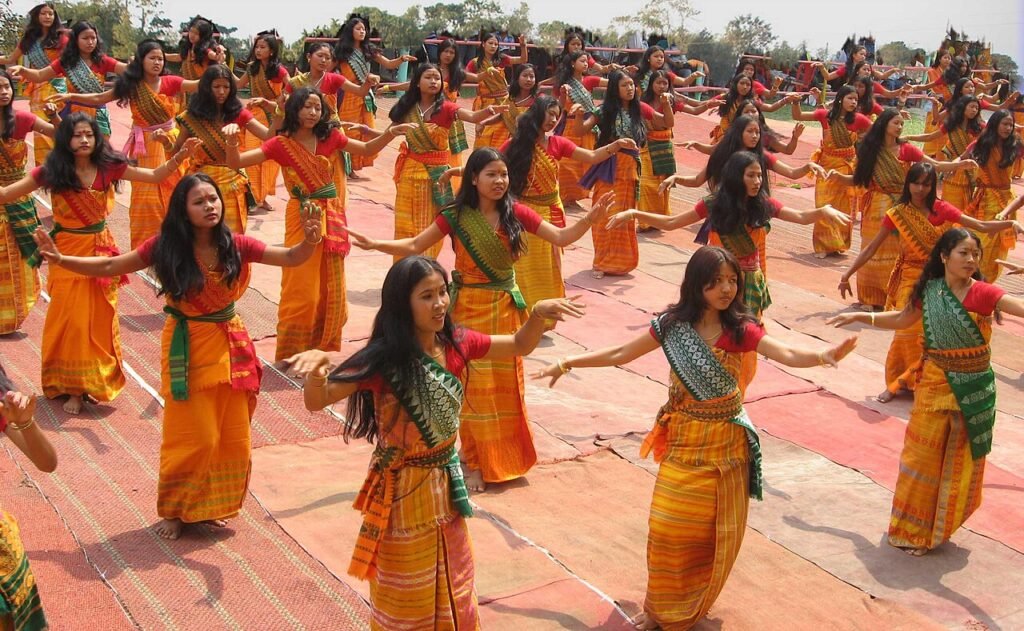
Why in News? The Bodo Sahitya Sabha is celebrating its platinum jubilee. Rajya Sabha MP Pramod Boro has written an opinion article on it in The Assam Tribune of 23 November 2026. He traces the Sabha’s journey from its founding on 16 November 1952 to the inclusion of Bodo in the Eighth Schedule. He also sets out an agenda for the next 25 years.
Current Context (The Trigger)
- Platinum jubilee: The Bodo Sahitya Sabha (BSS) is marking its platinum jubilee. The writer says it celebrates the journey of a language and its people, and not only an institution.
- Founding: The Sabha was set up on 16 November 1952 at Basugaon.
- First office-bearers: Jaybhadra Hagjer became the first president and Sonaram Thaosen the first general secretary. The writer also credits Satish Chandra Basumatary with a key part in forming and organising the Sabha.
- Writer’s agenda: The writer lists seven challenges, from mother-tongue education to making literature respond to modern life. He also lists seven goals for the Sabha’s centenary in 2052, such as a digital Bodo dictionary and a translation centre.
- Nature of the piece: This is an opinion article. Its views and its account of events (such as the role of Indira Gandhi in 1975) are the writer’s own.
Core Concepts & Static GK
- Language family: Bodo is a Tibeto-Burman language of the Sino-Tibetan family. The writer calls it an important part of the language heritage of the Brahmaputra Valley and the Northeast.
- Oral heritage: Before printing came, Bodo society kept its literature alive by word of mouth. This included Bathou prayers, Bwisagu songs, legends, proverbs and folktales.
- Eighth Schedule: This Schedule lists the languages named in the Constitution. Article 344(1) says the Official Language Commission must have members representing the languages of the Eighth Schedule.
- Link with Hindi: Article 351 asks the Union to enrich Hindi by drawing on Hindustani and the other languages of the Eighth Schedule.
- Associate official language: This is a language used for listed official purposes along with the main official language. The Assam Official Language (Amendment) Act, 1985 gave this status to Bodo in districts and subdivisions with a substantial Bodo population.
- Scripts of Bodo: In the 19th and early 20th centuries Bodo was written in Roman, Assamese and Bengali scripts. Devanagari was accepted as the standard script in 1975.
Constitutional & Legal Framework
- 92nd Amendment: The Constitution (Ninety-second Amendment) Act, 2003 added Bodo, Dogri, Maithili and Santhali to the Eighth Schedule. Bodo became entry 3 and Dogri entry 4.
- Dates of the Act: Parliament passed the Bill in December 2003, which is the date the writer gives. The President gave assent on 7 January 2004.
- Size of the Schedule: The Schedule had 18 languages before this Act and has 22 now.
- Mother-tongue schooling: Article 350A asks every State and local authority to provide primary education in the mother tongue to children of linguistic minority groups. The Seventh Amendment of 1956 inserted it.
- Cultural right: Article 29(1) gives any section of citizens with a distinct language, script or culture of its own the right to conserve it.
- State official languages: Article 345 lets a State Legislature adopt, by law, one or more languages in use in the State for its official purposes. Assam used this power through the Assam Official Language Act, 1960 and its later amendments.
Institutional Machinery
- Bodo Sahitya Sabha: The writer calls the BSS the main literary body of the Bodos. It fought for mother-tongue education and for a standard script.
- Sahitya Akademi: The national academy of letters began giving its annual award in Bodo in 2005. The first Bodo award went to poet Mangal Singh Hazowary.
- Bodoland Territorial Council: The 10 February 2003 settlement made Bodo the official language of the Bodoland Territorial Council (BTC). Assamese and English also continue in official use there.
- Assam Legislative Assembly: On 30 December 2020 it passed the Assam Official Language (Amendment) Bill, 2020. This made Bodo in Devanagari script an associate official language of the State.
Schemes & Initiatives
- Bodo-medium schooling: On 18 May 1963 Chief Minister BP Chaliha introduced Bodo as a medium of instruction at the lower primary level. This was in selected Bodo-dominated areas. In 1968 it was extended to the secondary level.
- Directorate for Bodo-medium schools: The Memorandum of Settlement of 27 January 2020 says the Government of Assam will set up a separate Directorate. It will be for Bodo-medium schools.
- Cultural centre: The same settlement provides for a Cultural Complex-cum-Centre of Excellence named after Bodofa Upendranath Brahma at Thulunghapuri in Kokrajhar district. The BTC is to manage it.
- Writer’s proposals: The writer wants four things. These are a world-class Bodo literary archive, a digital dictionary and linguistic database, a translation centre and an institute for indigenous language research.
Reports, Indices & Data
- Timeline of the movement: Bodo Chatra Sanmilani in 1919, Bibar in 1924 and Alongbar in 1938. Then BSS in 1952, Bodo-medium primary schooling in 1963 and Bodo-medium secondary schooling in 1968.
- Script timeline: The Roman-script primer Bithorai appeared in 1974. Devanagari was accepted on 25 April 1975 at the BSS’s 16th annual conference at Dhing.
- Recognition timeline: Associate official language in 1985. Eighth Schedule through the 92nd Amendment passed in December 2003. The first Sahitya Akademi Bodo award in 2005.
- Later honours: Mangal Singh Hazowary received the Padma Shri in 2021 and Prof Anil Kr Boro in 2025.
Assam & Northeast Linkages
- Place of the founding: Basugaon, where the BSS was founded, is now in Chirang district of the Bodoland Territorial Region.
- Bodo Literary Day: The Sabha’s foundation day is observed as Bodo Literary Day (Boro Thunlai San) in Assam and West Bengal.
- 2003 settlement: It applied the Sixth Schedule to the BTC. It also said the Centre would consider favourably the inclusion of Bodo in Devanagari script in the Eighth Schedule.
- 2020 settlement: It was signed in New Delhi on 27 January 2020. Its clause 6.2 says Assam will notify Bodo in Devanagari script as an associate official language in the State.
- Cabinet decision: On 7 October 2020 the Assam cabinet decided to notify Bodo as an associate official language of the State.
Prelims Trap Zones (Watch out for)
- Year Trap: The 92nd Amendment is the 2003 Act, and Parliament passed it in December 2003. But the President’s assent came on 7 January 2004.
- Number Trap: The Act added four languages (Bodo, Dogri, Maithili, Santhali), not one. The Schedule went from 18 to 22 languages.
- Script Trap: The standard script is Devanagari, accepted in 1975. Roman script was only a demand, and the Roman primer Bithorai (1974) sharpened that debate.
- Office-bearer Trap: Jaybhadra Hagjer was the first president and Sonaram Thaosen the first general secretary. Do not swap them.
- Status Trap: Associate official language status in Assam comes from a State law (1985, widened in 2020). The Eighth Schedule comes from a constitutional amendment, and it did not make Bodo an official language of the Union.
- Script-in-law Trap: The 1985 Act did not name a script. The words “in Devanagari script” came with the 2020 amendment.
- Award Trap: The Sahitya Akademi Bodo award began in 2005, not in 2003.
Introduction
On 16 November 1952 Bodo leaders met at Basugaon and founded the Bodo Sahitya Sabha. Its platinum jubilee shows how a literary body helped carry a language from oral tradition to the Eighth Schedule. Bodo joined the Schedule through the 92nd Amendment. For Assam, the story shows how questions of language, script and identity can be settled through talks after a long and painful struggle.
Why Language Recognition Matters
- Identity and memory: The writer argues that a language carries a community’s shared memory and inherited knowledge. For the Bodos, the Sabha gave these hopes an organised form in 1952.
- Education in the mother tongue: Bodo-medium schooling began at the lower primary level on 18 May 1963 and reached the secondary level in 1968. Children learn better in the language they speak at home.
- Constitutional dignity: The Eighth Schedule is linked to the Official Language Commission under Article 344(1). Being listed gives a language a recognised place in the national framework.
- Access to national platforms: The Sahitya Akademi began annual Bodo awards in 2005. This brought Bodo writers into national literary life.
- Preserving oral heritage: Bathou prayers, Bwisagu songs, proverbs and folktales were passed on by word of mouth. A standard script and a literary body help to write them down and save them.
- Language rights with harmony: The 2003 settlement made Bodo the BTC’s official language but kept Assamese and English in official use. This shows that one language’s rights can sit alongside others.
Key Milestones in the Bodo Language Movement
- Early awakening: The Bodo Chatra Sanmilani was formed in 1919. The writer sees it as a sign of new interest in education, social reform and language among educated Bodo youth.
- Print literature: The journal Bibar appeared in 1924 and Alongbar in 1938. Both gave writers a platform to write in Bodo on social and cultural questions.
- Pioneers: The writer names Modaram Brahma, Satish Chandra Basumatary, Rupnath Brahma, Ishan Chandra Muchahary and Pramad Ch Brahma among the early figures.
- The script dispute: The writer says some sections demanded Roman script in the late 1960s and early 1970s. The primer Bithorai of 1974 sharpened the debate. The 1974-75 movement was a time of agitation and sacrifice.
- Devanagari accepted: According to the writer, talks with the Government of India and the intervention of Prime Minister Indira Gandhi followed. The BSS then accepted Devanagari at Dhing on 25 April 1975.
- Recognition steps: A 1985 Assam law made Bodo an associate official language for specified purposes. Parliament added it to the Eighth Schedule in December 2003.
Government & Statutory Measures
| Level | Initiative | Purpose & Impact |
|---|---|---|
| Assam Government (1963, 1968) | Bodo as medium of instruction, lower primary and then secondary | Gave Bodo children schooling in their mother tongue |
| Assam Legislature (1985) | Assam Official Language (Amendment) Act, which added section 5A | Bodo became an associate official language for specified purposes in districts and subdivisions with a substantial Bodo population |
| Union and Assam Governments (2003) | Settlement of 10 February 2003 on the BTC | Made Bodo the council’s official language; the Centre promised to consider it favourably for the Eighth Schedule |
| Parliament (2003-04) | Constitution (92nd Amendment) Act | Added Bodo, Dogri, Maithili and Santhali to the Eighth Schedule |
| Assam Government and Legislature (2020) | Settlement of 27 January 2020, cabinet decision of October 2020 and the amendment passed in December 2020 | Bodo in Devanagari became an associate official language of the State. The settlement also promised a Directorate for Bodo-medium schools and a cultural centre at Thulunghapuri |
Challenges
- Mother-tongue education: The writer puts stronger mother-tongue education first on his list. Bodo-medium schools need good textbooks and trained teachers at every stage.
- Higher education and research: The writer wants the frontiers of higher education and research widened. This needs university departments, research funds and trained scholars in Bodo.
- Digital gap: The writer lists the digital and technological revolution as a challenge. A language without good digital tools, such as a dictionary or a database, can lose young users.
- Translation and exchange: The writer calls for more translation and international literary exchange. Only then can Bodo works reach readers beyond the community.
- Diversity within the community: The writer stresses preserving linguistic plurality within the community. A common standard should not wipe out local forms of speech.
- Relevance to modern life: The writer wants literature to respond to present-day society. Writers must take up current themes to keep young readers.
- Use in daily administration: Legal status does not by itself bring a language into official papers. In July 2025 the All Bodo Students’ Union (ABSU) asked for the electoral roll of the 2025 BTC elections to be published in Bodo too. It cited the 2020 amendment.
Way Ahead
- Literary archive: The BSS and the State government can build a Bodo literary and cultural archive, as the writer proposes for 2052. It could hold manuscripts, old journals like Bibar and Alongbar, and recordings.
- Digital dictionary: Universities and the BSS can create a digital Bodo dictionary and a linguistic database. Students and translators would then have a standard reference.
- Translation centre: A centre for translation and comparative literature would link Bodo with other Indian languages. The Sahitya Akademi, which has given Bodo awards since 2005, can be a partner.
- Research institute: The writer wants an institute for indigenous language research. It could also record the oral heritage of Bathou prayers and Bwisagu songs.
- Bodo-medium schools: The 2020 settlement provides for a separate Directorate for Bodo-medium schools. A dedicated directorate can plan teachers, textbooks and school supervision for these schools.
- Support for young writers: The writer asks for a lasting support system for young writers, researchers and publishers. Prizes, publishing grants and workshops would help new authors.
- Cultural centre: The 2020 settlement provides for a centre named after Bodofa Upendranath Brahma at Thulunghapuri. It could house the archive and research work the writer proposes.
Conclusion
The Bodo story shows that a language grows when a community builds schools, a script and a literary body, and when the State responds. Recognition in the Eighth Schedule was a milestone. The next 25 years will be judged by classrooms, digital tools and the quality of new writing.
Asked in APSC
- APSC Prelims 2025: (answer in the MCQs below)
Which of the following statements about the languages of India are correct?
1. India has 22 languages listed in the Eighth Schedule.
2. Tamil is the oldest surviving classical language in India.
3. Hindi is the mother tongue for over 50% of India’s population.
4. Sanskrit is recognized as a classical language but is spoken as a mother tongue by less than 0.1% of the population.
Select the correct answer using the codes given below.- (A) 1 and 4 only
- (B) 1, 2 and 4 only
- (C) 2, 3 and 4 only
- (D) 1, 2, 3 and 4
- APSC Prelims 2023: (answer in the MCQs below)
Consider the following statements regarding the provisions of official languages in India:
(i) Article 343 of the Constitution of India has made Hindi in Devanagari Script the National Language of India.
(ii) The Legislature of a State may by law adopt any one or more of the languages in use in the State as the official language/languages of the State as per Article 345 of the Constitution of India.
(iii) The Assam Official Language Act, 1960, has been legislated as per Article 345 of the Constitution of India.
Select the correct statements using the codes given below:- (A) (i) and (ii) only
- (B) (ii) and (iii) only
- (C) (i) and (iii) only
- (D) (i), (ii), and (iii)
All 500 APSC Prelims PYQs of CCE 2020 to 2025, with answers and explanations: practise free in the PYQ Explorer
Thiamine (Vitamin B1) Deficiency among Pregnant and Lactating Women in Barak Valley and Tripura
Open this topic as a separate page, with its MCQs →
Syllabus Mapping
- Prelims: GS Paper I (Current events of national and international importance; Economic and Social Development – Social Sector Initiatives; General Science).
- Mains: GS Paper II (Issues relating to development and management of Social Sector/Services relating to Health, Education, Human Resources; Issues relating to poverty and hunger; Welfare schemes for vulnerable sections). GS Paper V (Economy of Assam: Government Welfare Schemes for Women and Children).
Why in News? A new multi-institution study has found that Thiamine (Vitamin B1) deficiency has come back. It affects pregnant and lactating women in Barak Valley (Assam) and adjoining Tripura. India once thought this deficiency was under control. The findings were reported from Guwahati on 22 November. The study appears in the Annals of the New York Academy of Sciences.
Current Context (The Trigger)
- Re-emergence: The study says Thiamine deficiency has reappeared in parts of the Northeast, although India once considered it controlled.
- Size of the problem: About one in five women showed biochemical or functional deficiency. Nearly one in 10 women showed severe functional impairment.
- Study design: The study ran during 2023-2024 in Barak Valley of Assam and adjoining districts of Tripura. The women came from 120 villages.
- Scale and method: It is described as one of the largest community-based studies in India. It measured both biochemical and functional Thiamine status together in pregnant and lactating women.
- Main cause: The researchers link the burden mainly to social disadvantage, monotonous rice-based diets and food practices rooted in culture. They say gaps in the use of maternal health services are not the main reason.
- Silent problem: The study calls the deficiency common, mostly silent and preventable. Because most of it is subclinical, the researchers say the real burden is probably much larger than recognised beriberi cases show.
Core Concepts & Static GK
- Thiamine (Vitamin B1): It is a water-soluble B vitamin. Its active form, thiamine diphosphate, is a cofactor (helper molecule) for enzymes such as pyruvate dehydrogenase and transketolase.
- Why it matters: Thiamine works as a co-enzyme in the breakdown of carbohydrates for energy. FAO/WHO link beriberi in adults to high carbohydrate intake, mainly from milled rice.
- Beriberi: Dry beriberi mainly damages the peripheral nerves (polyneuropathy). Wet beriberi mainly affects the heart and blood vessels and causes swelling (oedema).
- Infantile beriberi: Exclusively breastfed babies of Thiamine-deficient mothers are at greatest risk. Signs include vomiting, refusal to breastfeed and constant loud crying, and untreated cases can die within hours.
- Small body stores: The body keeps very little Thiamine, and stores can run down within about two weeks of poor intake. So regular daily intake matters.
- Thiamine deficiency disorders (TDDs): TDDs were once widespread among people who eat polished rice. Milling and polishing remove much of the grain’s Thiamine.
- Subclinical deficiency: This means low Thiamine status without clear signs of disease. It was the main form found in this study.
Constitutional & Legal Framework
- National Food Security Act, 2013: Section 4 entitles every pregnant woman and lactating mother to a free meal through the local anganwadi. The meal is available during pregnancy and for six months after childbirth.
- Maternity benefit: The same section provides a maternity benefit of not less than Rs 6,000, subject to schemes framed by the Centre.
- Link to this study: This meal entitlement is a legal channel through which Thiamine-rich or fortified food could reach the women at risk.
Institutional Machinery
- Anganwadi network: Anganwadi centres give supplementary nutrition to pregnant women and lactating mothers under Saksham Anganwadi and Poshan 2.0. The Ministry of Women and Child Development runs these.
- Health system: The Ministry of Health and Family Welfare runs Anaemia Mukt Bharat Abhiyaan. Its revised guidelines add intravenous iron therapy for pregnant and lactating women with severe anaemia.
- Poshan Tracker: This is a central ICT data system for nutrition services. In 2022 the Ministry said it was being linked with the Health Ministry’s RCH (Anmol) portal.
Schemes & Initiatives
- Saksham Anganwadi and Poshan 2.0: The Centre approved this mission for the 15th Finance Commission period, 2021-22 to 2025-26. Anganwadi Services, Poshan Abhiyaan and the Scheme for Adolescent Girls were subsumed under it.
- Anaemia Mukt Bharat: It began in 2018 with a 6x6x6 strategy. On 29 June 2026 the Health Ministry released revised guidelines that expand it to a 7x7x7 framework. Low birth weight babies (0-6 months) are the seventh beneficiary group.
- Fortified rice: The Centre supplies rice fortified with iron, folic acid and vitamin B12. It goes out through the Targeted Public Distribution System, ICDS, PM POSHAN and other welfare schemes. In October 2024 the Cabinet approved its continuation from July 2024 to December 2028.
- Gap: The government’s fortified rice carries iron, folic acid and vitamin B12, so Thiamine is not part of this package.
Reports, Indices & Data
- This study: About one in five women had biochemical or functional deficiency, and nearly one in 10 had severe functional impairment.
- NFHS-5 (2019-21), Assam: 68 per cent of children aged 6-59 months were anaemic. 66 per cent of women were anaemic.
- Child nutrition in Assam: NFHS-5 found 35 per cent of children under five stunted and 22 per cent wasted.
Assam & Northeast Linkages
- Study area: The women came from Barak Valley in Assam and adjoining districts of Tripura.
- Staple diet: Most participants ate cereals and roots or tubers every day. Polished white rice was the main staple.
- Foods eaten rarely: Green leafy vegetables, legumes, nuts and animal-source foods reached the plate mostly weekly or occasionally.
- Fish: Fish was the animal-source food eaten most often. Eggs, poultry, meat, fruits and dairy were eaten irregularly.
- Policy ask: The researchers want India’s maternal nutrition strategies to name Thiamine deficiency explicitly, especially in high-risk regions such as the Northeast.
Prelims Trap Zones (Watch out for)
- Vitamin Trap: Thiamine is Vitamin B1. Do not mix it with B2 (riboflavin) or B12 (one of the nutrients in fortified rice).
- Cause Trap: The study blames diet and social disadvantage, not poor use of maternal health services.
- Number Trap: “About one in five” is the deficiency (biochemical or functional). “Nearly one in 10” is the severe functional impairment. Do not swap them.
- Place and Year Trap: The study covers Barak Valley of Assam and adjoining Tripura districts, not the Brahmaputra Valley. It was conducted in 2023-2024.
- Fortification Trap: The government’s fortified rice kernels carry iron, folic acid and vitamin B12, not Thiamine.
- Disease Trap: Beriberi is the classic disease of Thiamine deficiency, but most deficiency in this study was subclinical.
Introduction
A study reported from Guwahati on 22 November 2026 found Thiamine deficiency in about one in five pregnant and lactating women in Barak Valley and adjoining Tripura. India once considered this problem controlled. It matters because a mother’s Thiamine status affects her breastfed baby. The main cause here is a monotonous rice diet, not a lack of health services.
Underlying Drivers
- Polished rice staple: Polished white rice is the main staple of the women studied. Milling and polishing strip much of the grain’s Thiamine.
- Thin diet variety: Thiamine-rich foods such as leafy vegetables, legumes, nuts and animal foods were eaten mostly weekly or occasionally.
- Carbohydrate load: The researchers describe the diet as monotonous and carbohydrate-dense. FAO/WHO link beriberi to high carbohydrate intake, mainly from milled rice.
- Social disadvantage: The researchers say social disadvantage shapes the burden more than gaps in health-service use.
- Food culture: Food practices rooted in culture also play a part. A 2023 review adds that restrictive diets after childbirth can raise the risk during lactation.
- Higher need in pregnancy: FAO/WHO recommended intakes are higher in pregnancy (1.4 mg a day) and lactation (1.5 mg a day). For adult women in general the figure is 1.1 mg a day.
Impact on Mothers and Infants
- Maternal harm: Thiamine deficiency in pregnant and postpartum women can show up as polyneuropathy (nerve damage).
- Infant risk: The researchers warn of avoidable illness among mothers and infants if the problem is not tackled. Infantile beriberi is the most severe result for babies of deficient mothers.
- Rapid course: Untreated infantile beriberi can kill within hours of the first clinical signs.
- Hidden burden: Because most cases are subclinical, the burden is likely much larger than recognised beriberi shows.
- Severe cases: Nearly one in 10 women in the study had severe functional impairment, so a sizeable group already shows measurable harm.
- Existing child nutrition burden: Poor maternal nutrition adds to an existing problem, since NFHS-5 found 35 per cent of Assam’s children under five stunted.
Government Initiatives (National & Assam)
| Level | Initiative | Purpose & Impact |
|---|---|---|
| National | National Food Security Act, 2013 (Section 4) | Free meal during pregnancy and for six months after birth, plus a maternity benefit of at least Rs 6,000. |
| National | Saksham Anganwadi and Poshan 2.0 (approved for 2021-22 to 2025-26) | Brings Anganwadi Services, Poshan Abhiyaan and the Scheme for Adolescent Girls under one mission. Its Poshan Tracker records nutrition services. |
| National | Anaemia Mukt Bharat (2018; 7x7x7 guidelines of 29 June 2026) | Tackles anaemia across life stages, including pregnant and lactating women. The revision adds low birth weight babies and an “Eating Right” intervention. |
| National | Free fortified rice (July 2024 to December 2028) | Rice with iron, folic acid and vitamin B12 through welfare schemes in all States and UTs. |
| Assam and Tripura | Anganwadi and health services in Barak Valley and Tripura | These are the delivery points where the researchers want Thiamine named in maternal nutrition plans. |
Challenges
- Silent deficiency: Subclinical deficiency has no clear signs. A woman can look healthy and still be deficient.
- Surveillance gap: The researchers call for better surveillance and early identification of women at risk. This shows the problem is not being picked up early today.
- Package gap: Fortified rice carries iron, folic acid and vitamin B12 but not Thiamine. So a large government food channel does not address this deficiency.
- Dietary habits: Daily polished rice and only occasional leafy vegetables, legumes and animal foods are long-standing habits. Such habits change slowly.
- Social disadvantage: The study ties the burden to social disadvantage. So better use of health services alone will not fix it.
- Limited coverage: The study covers Barak Valley and parts of Tripura in 2023-2024. Other regions may differ, so local data are needed before a uniform national rule.
Way Ahead
- Name the problem: The Health Ministry and the Women and Child Development Ministry should write Thiamine deficiency into maternal nutrition strategies, as the researchers recommend.
- Targeted supplements: Health and anganwadi workers in high-risk areas can give Thiamine supplements, or prenatal multiple micronutrient supplements that contain Thiamine.
- Dietary diversification: Anganwadi meals and nutrition counselling in Barak Valley and Tripura can promote more leafy vegetables, legumes, nuts and fish.
- Consider fortification: The researchers want population-level fortification considered in high-risk regions. A 2023 review names rice as a suitable vehicle for adding Thiamine.
- Better cooking and milling: Washing rice fewer times before cooking keeps more Thiamine. The same review recommends parboiled, undermilled rice as a Thiamine-rich choice.
- Surveillance: The health departments of Assam and Tripura can add Thiamine checks and early identification of at-risk women to antenatal care.
Conclusion
The Thiamine finding shows that hidden hunger can persist where rice is plentiful, even when the cause is not poor use of health services. The Northeast needs a low-cost, local response that combines supplements, a more varied diet and careful thought on fortification. Acting early can prevent avoidable harm to mothers and their infants.
Nepal Prime Minister Balendra Shah’s First Bilateral Visit to India: Energy and Connectivity
Open this topic as a separate page, with its MCQs →
Syllabus Mapping
- Prelims: GS Paper I (Current events of national and international importance; Economic and Social Development).
- Mains: GS Paper II / Paper-III of Mains (India and its neighbourhood – relations; Bilateral, regional and global groupings and agreements involving India and/or affecting India’s interests). GS Paper III / Paper-IV (Economic Development, infrastructure and energy). GS Paper V (Assam syllabus: International Relations, Economic Development).
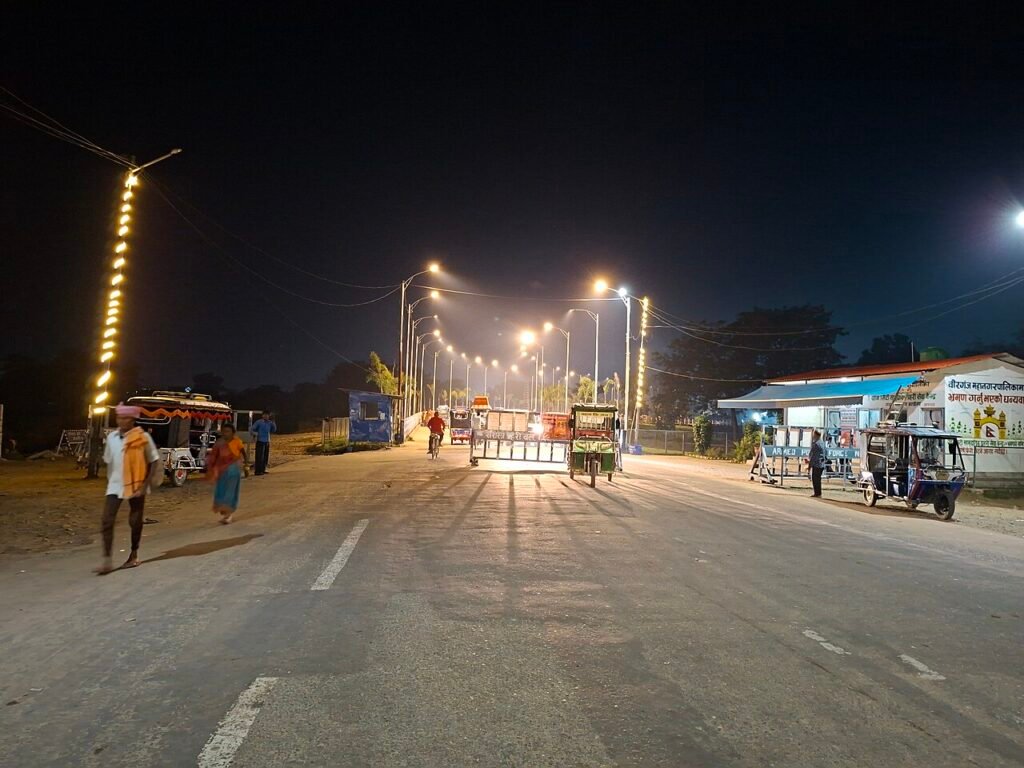
Why in News? Nepal Prime Minister Balendra Shah set out on a two-day visit to India on Sunday, 22 November 2026, on the invitation of Prime Minister Narendra Modi. It is his first official bilateral trip abroad since he took office in March. Energy, connectivity, trade and investment top the agenda.
Current Context (The Trigger)
- First bilateral trip: This is Shah’s first official bilateral foreign visit since he took office in March. His only earlier trip abroad was to the United States in September, for the United Nations General Assembly.
- Delegation: Shah leads a 34-member delegation. It includes Chief Advisor Kumar Byanjankar, Finance Minister Swarnim Wagle and Foreign Minister Shisir Khanal. A separate business delegation has come with him.
- Programme: He will call on President Droupadi Murmu and hold delegation-level talks with Prime Minister Modi. External Affairs Minister S Jaishankar will pay him a courtesy call. Shah will also speak at a Nepal-India Business Forum to draw Indian investment.
- Likely outcomes: Nepal’s Ministry of Foreign Affairs said the two sides will discuss inaugurating energy projects and laying foundation stones for new ones. Memoranda of understanding (MoUs) on education, health, agriculture, space, disaster management and human resource development are expected.
- Political backdrop: Shah leads a government of the Rastriya Swatantra Party (RSP), formed in March. It came about six months after a youth-led Gen Z protest brought down the K P Sharma Oli government in September last year.
- Travel detail: The 36-year-old leader, popularly called ‘Balen’, flew on a regular commercial Nepal Airlines flight.
Core Concepts & Static GK
- Open border: India and Nepal share an open border and old historical, cultural and economic ties. The Ministry of Home Affairs (MHA) puts the length of this open border at 1,751 km.
- Border guarding force: The Sashastra Seema Bal (SSB), under the MHA, guards the Indian side. It got the border guarding role on the Nepal and Bhutan borders in 2001.
- Trade and transit: India is Nepal’s largest partner in trade and investment. Nepal is landlocked, so India is also its main transit route for trade with other countries.
- Hydropower trade: Nepal sells its surplus hydropower to India and wants wider access to the Indian power market. The Ministry of External Affairs (MEA) says Nepal exported about 1,100 MW of electricity to India last year.
- Dhalkebar-Muzaffarpur line: This 400 kilovolt (kV) line joins Dhalkebar in Nepal with Muzaffarpur in Bihar. The MEA says it is the one high-capacity cross-border line now working, and its Nepal section was built with Indian help.
- Arun-III: SJVN, an Indian public sector company, is building the 900 MW Arun-III project. It will be the largest power project in Nepal once it runs.
Constitutional & Legal Framework
- 1950 Treaty of Peace and Friendship: India and Nepal signed it at Kathmandu on 31 July 1950. It came into force the same day.
- Articles 6 and 7: These give each country’s nationals the same rights as locals in the other country. The rights cover economic activity, employment, residence and owning property.
- 2014 review: During Prime Minister Modi’s first visit to Nepal in 2014, the two sides agreed to “review, adjust and update” the 1950 treaty.
- Trade and Transit treaties: Separate treaties of Trade and of Transit guide the economic relationship.
- Legal assistance pact: India and Nepal signed an Agreement on Mutual Legal Assistance in Criminal Matters in February 2026. It helps investigation and prosecution of cross-border crime.
Institutional Machinery
- Bilateral mechanisms: India and Nepal have more than 40 bilateral institutional mechanisms. They cover border management, security, trade, power, water resources and railways.
- Joint Commission: India’s External Affairs Minister and Nepal’s Foreign Minister co-chair the Joint Commission. It has met five times since May 2014, most recently in Kathmandu in 2024.
- Joint Steering Committee (JSC): The 13th energy-secretary-level JSC met at Pokhara in July 2026. Secretaries from Nepal’s energy ministry and India’s Ministry of Power co-chaired it.
- Power agencies: The Nepal Electricity Authority (NEA) is Nepal’s state power utility. NTPC Vidyut Vyapar Nigam (NVVN) is the Indian power trader in the Nepal-Bangladesh power deal.
- Border force strength: The MHA has deployed 34 battalions of the SSB as the border guarding force on the Nepal border.
Schemes & Initiatives
- Nepal-India-Bangladesh power sale: NVVN, the NEA and the Bangladesh Power Development Board signed a tripartite deal in Kathmandu on 3 October 2024. Supply of 40 MW (megawatts) to Bangladesh through India began on 15 November 2024.
- Cross-border oil pipeline: The Motihari-Amlekhgunj petroleum pipeline opened in 2019. The MEA calls it the first regional cross-border petroleum pipeline, built by Indian Oil Corporation.
- Rail links: In June 2023 the two Prime Ministers flagged off a cargo rail service from Bathnaha (India) to the Nepal Customs Yard at Biratnagar. The Jaynagar-Kurtha passenger service was also extended to Bijalpura.
- Hydropower projects: In June 2023 Nepal signed a Project Development Agreement for the 669 MW Lower Arun project, which SJVN is developing. An MoU was also signed for the 480 MW Phukot-Karnali project.
- Digital payments: A link between India’s Unified Payments Interface (UPI) and Nepal’s National Payments Interface (NPI) for personal remittances went live in June 2026.
Reports, Indices & Data
- Trade volume: India-Nepal goods trade was about US$ 9.38 billion in 2025-26. This is more than 60% of Nepal’s total goods trade.
- Export destination: India took more than 80% of Nepal’s goods exports in 2025-26. India is also the largest source of foreign investment in Nepal, at almost one-third of its total.
- Long-term power target: India and Nepal agreed during the June 2023 visit that India would import 10,000 MW from Nepal within ten years. Energy secretaries signed the long-term power trade agreement in Kathmandu on 4 January 2024.
- Bangladesh deal numbers: Nepal supplies 40 MW from 15 June to 15 November each year for five years. That is about 144,000 megawatt-hours a year at 6.4 US cents per unit.
- Export earning: The NEA estimated that the Bangladesh sales would earn about Rs 330 million (Nepali rupees) a year.
Assam & Northeast Linkages
- Siliguri Corridor: Nepal and Bangladesh do not touch each other. A narrow strip of West Bengal, the Siliguri Corridor (about 21-22 km at its narrowest), lies between them. The same strip is the land link between the Northeast and the rest of India.
- Power route: Nepal’s power for Bangladesh enters India’s grid on the Dhalkebar-Muzaffarpur line. India then sends an equal amount on to Bangladesh.
- Kakarbhitta-Fulbari-Banglabandha corridor: This road links Nepal to Bangladesh across Indian land. In January 2025 India agreed that Nepali trucks on it would face the same axle-weight limits as Indian trucks.
- Motor vehicle pact: Bangladesh, Bhutan, India and Nepal signed the BBIN Motor Vehicles Agreement at Thimphu on 15 June 2015. The four finalised its protocol text in April 2025. Bhutan has not joined the trial runs, so the other three plan to go ahead.
Prelims Trap Zones (Watch out for)
- Treaty year trap: The Treaty of Peace and Friendship dates from 1950 (31 July 1950, Kathmandu), not 1947 or 1960.
- Agreed vs signed trap: The 10,000 MW power deal was agreed in June 2023 but signed on 4 January 2024 in Kathmandu. It is a ten-year target, not today’s export.
- Project trap: SJVN is behind both Arun projects. Arun-III is 900 MW; Lower Arun is 669 MW. Phukot-Karnali (480 MW) is a different project.
- Line trap: Only the Muzaffarpur-Dhalkebar high-capacity line is working now. The Gorakhpur-Butwal line is still being built.
- Siliguri trap: The Siliguri Corridor lies in West Bengal, not in Assam.
- First-trip trap: This is Shah’s first official bilateral visit abroad, not his first foreign trip. He went to the UN General Assembly in September.
- Figure trap: 40 MW is the Bangladesh deal. About 1,100 MW is what Nepal sent to India last year. 10,000 MW is the ten-year target.
Introduction
Nepal Prime Minister Balendra Shah chose India for his first official bilateral foreign visit, which began on 22 November 2026. The two countries share an open border and deep cultural and economic ties. India is Nepal’s main trading partner and transit route. How the talks handle power trade and connectivity will shape India’s neighbourhood policy. It will also shape the Northeast’s role as a corridor.
Why Nepal Matters to India
- Open border and people ties: The 1,751 km open border lets people move freely, so families and livelihoods are linked on both sides. More than one lakh Indian Army ex-servicemen live in Nepal, and Gorkha soldiers from Nepal serve in the Indian Army.
- Treaty base: The 1950 Treaty of Peace and Friendship still frames the relationship. Its Articles 6 and 7 give each other’s nationals equal rights in economic activity, residence and property.
- Trade and investment: India accounts for more than 60% of Nepal’s goods trade and almost one-third of its foreign investment. This gives India a strong stake in Nepal’s stability.
- Transit lifeline: Nepal is landlocked, and India is its main transit route for trade with other countries. This is why trade facilitation is always on the agenda.
- Border security: The MHA has posted 34 SSB battalions on this border. Its main worry is the misuse of the open border by criminals and terrorists, so a friendly Nepal keeps the border calm.
- Dense dialogue: More than 40 bilateral mechanisms exist across sectors. So there is a regular channel for most problems.
Energy and Connectivity: What Is Changing
- New line plans: In July 2026 the Joint Steering Committee approved project reports for two works. One is a Motihari-Nijgadh 400 kV line. The other is the re-stringing of Muzaffarpur-Dhalkebar with high-capacity conductors. Both aim to carry more power.
- Second big line: The Gorakhpur-Butwal line is at an advanced stage. Joint venture agreements have been signed for two more lines, Dododhara-Bareilly and Inaruwa-Purnea.
- Regional power trade: Nepal began sending 40 MW to Bangladesh through the Indian grid on 15 November 2024. It was the first time Nepal sold power to a country other than India.
- Big hydropower plans: India aims to import 10,000 MW from Nepal within ten years. SJVN is developing Arun-III (900 MW) and Lower Arun (669 MW).
- Rail and pipeline: The Motihari-Amlekhgunj oil pipeline (2019) and the cargo rail link from Bathnaha to Biratnagar (2023) make fuel and goods cheaper to move.
- New sectors: The expected MoUs on space, disaster management, health and education would take the partnership beyond power and trade. The UPI-NPI payment link of June 2026 adds a digital layer.
Northeast and Corridor Dimension
- Chicken’s neck: The Siliguri Corridor in West Bengal, about 21-22 km at its narrowest, links the Northeast to the rest of India. It also lies between Nepal and Bangladesh.
- Power transit: Nepal’s power reaches Bangladesh only by passing through India’s grid. This gives India a central place in regional power trade.
- Road transit: India’s January 2025 decision to apply Indian axle-weight limits to Nepali trucks on the Kakarbhitta-Fulbari-Banglabandha corridor puts Nepali freight on par with Indian freight.
- Sub-regional pact: The BBIN Motor Vehicles Agreement (2015) could link the Northeast, Nepal and Bangladesh by road. Its protocol text was finalised in April 2025.
- Possible Northeast gain (our reading): If Nepal-Bangladesh trade and power move smoothly across the Siliguri area, the same roads and grid links also serve the Northeast. This is our analysis, not a stated outcome of the visit.
Government & Statutory Measures
| Level | Initiative | Purpose & Impact |
|---|---|---|
| Treaty | 1950 Treaty of Peace and Friendship (Articles 6, 7) | Gives each other’s nationals equal rights in economic activity, residence and property. |
| Trade | Treaties of Trade and of Transit | Guide bilateral trade and Nepal’s transit trade through India. |
| Energy | Long-term power trade agreement (signed 4 January 2024) | Sets a target of 10,000 MW of Nepali exports to India in ten years. |
| Energy | Tripartite power sale (Nepal-India-Bangladesh) | 40 MW to Bangladesh through India from 15 November 2024. |
| Transport | Motihari-Amlekhgunj pipeline; Bathnaha-Biratnagar cargo rail | Cheaper movement of fuel and goods across the border. |
| Security | Mutual Legal Assistance Agreement (February 2026) | Better investigation and prosecution of cross-border crime. |
Challenges
- Treaty perception: Many in Nepal see the 1950 treaty as unequal. The two sides agreed in 2014 to review it, and an Eminent Persons Group recommended revision in 2018, but follow-up has been slow.
- Line bottleneck: Only one high-capacity cross-border line, Muzaffarpur-Dhalkebar, is working now. Exports cannot grow fast until lines like Gorakhpur-Butwal are finished.
- Seasonal supply: The Bangladesh deal covers only 15 June to 15 November each year. This shows how Nepal’s export surplus depends on the monsoon months.
- Narrow corridor: Nepal-Bangladesh power and goods must cross the narrow Siliguri Corridor. Any disruption there hurts both the Northeast and Nepal’s transit.
- Slow regional pacts: The BBIN agreement was signed in 2015, but its protocol came only in April 2025. Trial runs, road upgrades and border agency coordination are still pending.
- Doubts inside Nepal: Some rights activists and former officials in Nepal called the January 2024 power deal problematic. They sought parliamentary oversight over its effect on Nepal’s water use.
- Political churn in Nepal: The Oli government fell after the Gen Z protest in September last year, and Shah’s RSP-led government came in March. Frequent change makes long projects harder to sustain.
Way Ahead
- Finish the lines: India’s Ministry of Power and Nepal’s energy ministry should complete Gorakhpur-Butwal and the re-stringing of Muzaffarpur-Dhalkebar on time. More lines mean more of the 10,000 MW target can actually flow.
- Firm power contracts: The two governments should turn the 10,000 MW target into long-term purchase contracts. Hydropower developers need that certainty before they invest.
- Use the Joint Steering Committee: Regular energy-secretary meetings, like the one at Pokhara in July 2026, should track deadlines. One example is the Chameliya-Jauljibi line, due by December 2028.
- Operationalise the BBIN pact: India, Nepal and Bangladesh should run the pending trial runs and fix border procedures. This would give Nepali trucks a smoother route through Siliguri.
- Talk quietly on the treaty: Both sides should use the review agreed in 2014 to discuss the 1950 treaty calmly. This keeps the economic agenda on track.
- Use the Business Forum: The Nepal-India Business Forum can bring Indian investors to Nepali hydropower and infrastructure.
Conclusion
Power trade and connectivity are now the strongest pillars of India-Nepal ties, as the new line plans and the Bangladesh power deal show. If Shah’s visit turns these plans into funded projects, Nepal gains export income. India gains a stable neighbour and a role as a regional power hub. The 1950 treaty question needs patient handling so that it does not slow this progress.
News in Short
- India-EU FTA: India and the European Union (EU) are likely to sign their long-pending Free Trade Agreement (FTA) on December 16. Reports say the signing is expected during the Prime Minister’s proposed visit to Brussels. The EU has 27 member countries.
- Indraprastha Communique: This is the outcome document of the SCO Civilisational Dialogue Forum, a three-day meet that India hosted at Purana Quila, New Delhi. It asks members to protect cultural heritage, including against illicit trafficking, and to treat every civilisation as an equal voice. India became a full member of the Shanghai Cooperation Organisation (SCO) in 2017, and the SCO now has 10 member states.
- Fish sanctuary, East Khasi Hills: Seventeen villages of the Khatarshnong-Laitkroh Block in Meghalaya’s East Khasi Hills district have declared a river stretch of about 30 km a fish sanctuary. They did this on World Fisheries Day (November 21). Fishing, waste dumping and other harmful activities are now forbidden there.
- Red serow in Ukhrul: Forest Department camera traps recorded a female red serow with its young. The spot is the Forest Closure Area of Kangkhui Khunou in Ukhrul district, Manipur. The paper describes the red serow as a Schedule I species under the Wildlife (Protection) Act, 1972.
- Arunachal Pradesh Cooperative Vision 2047: Union Home and Cooperation Minister Amit Shah unveiled this long-term road map for the cooperative sector at Itanagar. He also launched four initiatives worth over Rs 5,610 crore, including Mission Shikshit Arunachal Phase II with an outlay of Rs 1,500 crore.
- Record FPI inflow: Foreign portfolio investors (FPIs) have put a net Rs 1.22 lakh crore into Indian equities in November so far. This is the highest-ever monthly inflow. According to NSDL data, they had pulled out Rs 34,843 crore in October and Rs 35,861 crore in September.
- Pushpak bus, Majuli: Pushpak, said to be the Northeast’s first double-decker tourist bus, reached Majuli ahead of the Raas festival (November 24 to 26). The 42-seater air-conditioned bus was built in Jalandhar, Punjab. It is the idea of Dr Pitambar Devagoswami, Satradhikar of Auniati Satra.
APSC Prelims MCQs
Practice questions on the topics above
Topic 1: Juvenile Crime Hits Five-Year High and Record Backlog in Juvenile Justice Boards of Assam
Q1. The Juvenile Justice (Care and Protection of Children) Act, 2015 governs children in conflict with law. Consider the following statements:
(i) A juvenile under the Act is a person below 18 years of age.
(ii) A heinous offence is one with a minimum punishment of seven years of imprisonment or more.
(iii) A preliminary assessment by the Juvenile Justice Board applies to every child in conflict with law, whatever the age or offence.
Which of the statements given above is/are correct?
- (a) (i) and (ii) only
- (b) (ii) and (iii) only
- (c) (i) only
- (d) (i), (ii) and (iii)
Show answer
Answer: (a) Explanation: Statements (i) and (ii) are correct. The Act treats every person below 18 years as a juvenile. A heinous offence is defined by a minimum punishment of seven years. The Supreme Court in Shilpa Mittal (2020) held that an offence with no seven-year minimum is not heinous. Statement (iii) is wrong because the Section 15 preliminary assessment is meant only for a child aged 16 or above who is accused of a heinous offence. So options (b) and (d) are wrong, and option (c) leaves out the correct statement (ii). Value addition: a petty offence is one with a maximum punishment of up to three years, and the 2015 Act came into force on 15 January 2016.
Q2. Match List-I with List-II:
| List-I (Event) | List-II (Year) |
|---|---|
| a. Juvenile Justice Act, 2015 comes into force | 1. 1992 |
| b. Juvenile Justice Amendment Act, 2021 takes effect | 2. 2002 |
| c. India accedes to the UN Convention on the Rights of the Child | 3. 2016 |
| d. 86th Constitutional Amendment inserts Article 21A | 4. 2022 |
Select the correct answer using the codes given below:
- (a) a-3, b-4, c-1, d-2
- (b) a-4, b-3, c-1, d-2
- (c) a-3, b-4, c-2, d-1
- (d) a-1, b-2, c-3, d-4
Show answer
Answer: (a) Explanation: The 2015 Act came into force on 15 January 2016, so a matches 3. The 2021 Amendment Act got assent on 7 August 2021 but took effect only on 1 September 2022, so b matches 4. India acceded to the UN Convention on the Rights of the Child on 11 December 1992, so c matches 1. The 86th Amendment of 2002 inserted Article 21A, so d matches 2. Option (b) swaps the 2016 and 2022 dates. Option (c) swaps 1992 and 2002. Option (d) simply lists the years in numerical order, which is a trap. Value addition: Article 21A makes free and compulsory education a Fundamental Right for children aged 6 to 14 years.
Q3. Juvenile Justice Boards in Assam have reported rising cases against children. Consider the following statements about the data for Assam:
(i) The Boards registered 1,217 fresh cases against children between April and September 2026.
(ii) The overall pending cases reached a record 2,201 till September 2026.
(iii) In 2024-25 the Boards closed more cases than they received, so pending files fell.
Which of the statements given above is/are NOT correct?
- (a) (i) only
- (b) (i) and (ii) only
- (c) (iii) only
- (d) (ii) and (iii) only
Show answer
Answer: (c) Explanation: Statement (iii) is not correct. In 2024-25 the Boards received 1,560 fresh cases and closed 1,537, so they closed fewer than they received. Pending files rose slightly, from 1,964 to 1,987, even though it was the Boards’ best full-year clearance. Statements (i) and (ii) are correct as reported. Fresh filings in April-September 2026 were 1,217, and the pending stock was 2,201. Options (a), (b) and (d) are wrong because each marks a correct statement as incorrect. Value addition: the Boards closed 1,096 cases in April-September 2026, yet the pending list still grew by 121 cases.
Q4. After the Juvenile Justice (Care and Protection of Children) Amendment Act, 2021, which authority issues adoption orders in place of the civil court?
- (a) Child Welfare Committee
- (b) Juvenile Justice Board
- (c) District Magistrate
- (d) Divisional Commissioner
Show answer
Answer: (c) Explanation: The 2021 Amendment gave the District Magistrate, including the Additional District Magistrate, the power to issue adoption orders. The aim was to speed up adoption cases, which had been delayed in civil courts. Option (a) is wrong because the Child Welfare Committee cares for children needing protection and declares a child legally free for adoption. It does not issue the final order. Option (b) is wrong because the Juvenile Justice Board inquires into cases of children in conflict with law. Option (d) is a trap, because the Divisional Commissioner only hears appeals against the District Magistrate’s order. Value addition: such an appeal must be filed within 30 days.
Topic 2: 75 Years of Bodo Sahitya Sabha: Language, Script and Constitutional Recognition
Q5. The Bodo Sahitya Sabha, founded in 1952, is marking its platinum jubilee. Consider the following statements:
(i) The Sabha was established on 16 November 1952 at Basugaon.
(ii) Jaybhadra Hagjer became its first president.
(iii) Sonaram Thaosen became its first president.
Which of the statements given above is/are correct?
- (a) (i) and (ii) only
- (b) (ii) and (iii) only
- (c) (i) only
- (d) (i), (ii) and (iii)
Show answer
Answer: (a) Explanation: Statements (i) and (ii) are correct. The Bodo Sahitya Sabha was founded on 16 November 1952 at Basugaon, and Jaybhadra Hagjer was its first president. Statement (iii) is wrong because Sonaram Thaosen was the first general secretary, not the president. Option (b) wrongly includes (iii) and leaves out (i). Option (c) leaves out (ii), which is true. Option (d) includes the false statement (iii). Value addition: Basugaon is now in Chirang district, and the Sabha’s foundation day is observed as Bodo Literary Day (Boro Thunlai San). The writer also credits Satish Chandra Basumatary with a key part in forming the Sabha.
Q6. Match List-I with List-II:
| List-I (Event / Publication) | List-II (Year) |
|---|---|
| a. Founding of Bodo Chatra Sanmilani | 1. 1938 |
| b. Publication of Bibar | 2. 1919 |
| c. Publication of Alongbar | 3. 1974 |
| d. Roman-script primer Bithorai | 4. 1924 |
Select the correct answer using the codes given below:
- (a) a-2, b-4, c-1, d-3
- (b) a-4, b-2, c-1, d-3
- (c) a-2, b-4, c-3, d-1
- (d) a-1, b-2, c-4, d-3
Show answer
Answer: (a) Explanation: The Bodo Chatra Sanmilani was founded in 1919 and Bibar was published in 1924. Alongbar came in 1938, and the Roman-script primer Bithorai came in 1974. So the correct code is a-2, b-4, c-1, d-3. Option (b) swaps the years of the Sanmilani and Bibar. Option (c) swaps the years of Alongbar and Bithorai. Option (d) gets only Bithorai right and mixes up the other three years. Value addition: Devanagari, not Roman, became the standard script. The BSS accepted it at its 16th annual conference at Dhing on 25 April 1975.
Q7. Which of the following statements is NOT correct?
- (a) The Constitution (Ninety-second Amendment) Act, 2003 added Bodo, Dogri, Maithili and Santhali to the Eighth Schedule.
- (b) After this Act the Eighth Schedule contained 22 languages.
- (c) The President gave assent to the Act on 7 January 2004.
- (d) The Sahitya Akademi began annual awards for Bodo in 2003, the year of the amendment.
Show answer
Answer: (d) Explanation: Statement (d) is not correct, so it is the answer. The Sahitya Akademi began its annual Bodo award in 2005, and the first award went to poet Mangal Singh Hazowary. Statement (a) is correct because the 92nd Amendment added exactly these four languages. Statement (b) is correct because the Schedule rose from 18 to 22 languages. Statement (c) is correct: Parliament passed the Bill in December 2003, but the President’s assent came on 7 January 2004. Value addition: Bodo is entry 3 of the Eighth Schedule. It is not an official language of the Union, because the Eighth Schedule does not give official-language status.
Q8. At which place and in which year did the Bodo Sahitya Sabha accept Devanagari as the standard script for Bodo, at its 16th annual conference?
- (a) Basugaon, 1952
- (b) Dhing, 1974
- (c) Dhing, 1975
- (d) Basugaon, 1975
Show answer
Answer: (c) Explanation: The Bodo Sahitya Sabha accepted Devanagari at its 16th annual conference at Dhing on 25 April 1975. According to the writer, this came after talks with the Government of India. Option (a) gives the place and year of the Sabha’s founding, not the script decision. Option (b) has the right place but the wrong year; 1974 is the year the Roman-script primer Bithorai appeared. Option (d) pairs the founding place with the right year. Value addition: The 2003 BTC settlement said the Centre would consider favourably the inclusion of Bodo in Devanagari script in the Eighth Schedule.
PYQ (APSC Prelims 2025): Which of the following statements about the languages of India are correct?
1. India has 22 languages listed in the Eighth Schedule.
2. Tamil is the oldest surviving classical language in India.
3. Hindi is the mother tongue for over 50% of India’s population.
4. Sanskrit is recognized as a classical language but is spoken as a mother tongue by less than 0.1% of the population.
Select the correct answer using the codes given below.
- (A) 1 and 4 only
- (B) 1, 2 and 4 only
- (C) 2, 3 and 4 only
- (D) 1, 2, 3 and 4
PYQ (APSC Prelims 2023): Consider the following statements regarding the provisions of official languages in India:
(i) Article 343 of the Constitution of India has made Hindi in Devanagari Script the National Language of India.
(ii) The Legislature of a State may by law adopt any one or more of the languages in use in the State as the official language/languages of the State as per Article 345 of the Constitution of India.
(iii) The Assam Official Language Act, 1960, has been legislated as per Article 345 of the Constitution of India.
Select the correct statements using the codes given below:
- (A) (i) and (ii) only
- (B) (ii) and (iii) only
- (C) (i) and (iii) only
- (D) (i), (ii), and (iii)
Topic 3: Thiamine (Vitamin B1) Deficiency among Pregnant and Lactating Women in Barak Valley and Tripura
Q9. A study reported in November 2026 examined Thiamine status among pregnant and lactating women in the Northeast. Consider the following statements:
(i) The study was conducted during 2023-2024 and recruited women from 120 villages.
(ii) It found that the burden was caused mainly by gaps in the use of maternal health services.
(iii) Fish was the most commonly consumed animal-source food among the participants.
Which of the statements given above is/are correct?
- (a) (i) and (ii) only
- (b) (ii) and (iii) only
- (c) (i) and (iii) only
- (d) (i), (ii) and (iii)
Show answer
Answer: (c) Explanation: Statements (i) and (iii) are correct. The multi-institution study ran in 2023-2024 and recruited women from 120 villages in Barak Valley and adjoining Tripura districts. Fish was the animal-source food they ate most often, while eggs, poultry, meat, fruits and dairy were eaten irregularly. Statement (ii) is wrong. The researchers said the burden comes mainly from social disadvantage, monotonous rice-based diets and food practices rooted in culture. It does not come from gaps in maternal health-service use. So options (a), (b) and (d) are wrong because each includes statement (ii). Value addition: Thiamine is a water-soluble vitamin. Body stores can run down within about two weeks of poor intake, so regular daily intake is needed.
Q10. Assertion (A): The Thiamine deficiency burden among pregnant and lactating women in the study area is likely higher than clinically recognised beriberi alone suggests. Reason (R): Most of the deficiency observed in the study was subclinical.
- (a) Both A and R are true and R is the correct explanation of A
- (b) Both A and R are true but R is not the correct explanation of A
- (c) A is true but R is false
- (d) A is false but R is true
Show answer
Answer: (a) Explanation: Both statements are true, and R explains A. The researchers noted that subclinical deficiency was the main form they found. Subclinical deficiency has no clear signs of disease, so it goes unnoticed. The real burden is therefore likely much greater than recognised beriberi cases show. Option (b) is wrong because R is the very reason the researchers gave for A. Option (c) is wrong because R is true. Option (d) is wrong because A is also true. This is why the researchers call for better surveillance and early identification of women at risk. Value addition: Beriberi has dry (nerve) and wet (heart) forms, and exclusively breastfed infants of deficient mothers are at greatest risk.
Q11. A recent study of Thiamine deficiency among pregnant and lactating women recruited women from 120 villages. In which area were these villages located?
- (a) Brahmaputra Valley of Assam and Meghalaya
- (b) Barak Valley of Assam and adjoining districts of Tripura
- (c) Barak Valley of Assam and adjoining districts of Mizoram
- (d) Karbi Anglong of Assam and Nagaland
Show answer
Answer: (b) Explanation: The multi-institution study, conducted during 2023-2024, recruited women from 120 villages in Barak Valley of Assam and adjoining districts of Tripura. It was published in the Annals of the New York Academy of Sciences. Option (a) is wrong because the study did not cover the Brahmaputra Valley or Meghalaya. Option (c) is the closest trap: it names the right valley, but the neighbouring state in the study was Tripura, not Mizoram. Option (d) is wrong because neither Karbi Anglong nor Nagaland was covered. Value addition: The researchers recommend that India’s maternal nutrition strategies explicitly recognise Thiamine deficiency, especially in high-risk regions such as the Northeast.
Q12. Fortified Rice Kernels blended into rice supplied under government welfare schemes such as PM POSHAN and ICDS are enriched with which of the following?
- (a) Iron, zinc and vitamin A
- (b) Iodine, calcium and vitamin D
- (c) Iron, folic acid and vitamin B12
- (d) Thiamine, riboflavin and niacin
Show answer
Answer: (c) Explanation: The government’s fortified rice is enriched with iron, folic acid and vitamin B12. Fortified Rice Kernels are added to ordinary custom-milled rice as per standards of the Food Safety and Standards Authority of India (FSSAI). Option (a) is wrong because only iron is right; zinc and vitamin A are not in the government’s stated package. Option (b) is wrong because India delivers iodine mainly through iodised salt under the National Iodine Deficiency Disorders Control Programme, not through rice. Option (d) is wrong because these B vitamins are not in the package. This is why fortified rice does not address Thiamine deficiency. Value addition: In October 2024 the Cabinet continued free fortified rice from July 2024 to December 2028.
Topic 4: Nepal Prime Minister Balendra Shah’s First Bilateral Visit to India: Energy and Connectivity
Q13. Nepal Prime Minister Balendra Shah began a two-day visit to India on 22 November 2026. Consider the following statements:
(i) It is his first official bilateral foreign visit since taking office in March.
(ii) He leads a government of the Rastriya Swatantra Party, formed about six months after a youth-led protest toppled the K P Sharma Oli government.
(iii) He travelled to India on a special Indian Air Force aircraft.
Which of the statements given above is/are correct?
- (a) (i) and (ii) only
- (b) (ii) and (iii) only
- (c) (i) and (iii) only
- (d) (i), (ii) and (iii)
Show answer
Answer: (a) Explanation: Statement (i) is correct. This is Shah’s first official bilateral foreign visit since March. His only earlier trip abroad was to the United Nations General Assembly in September. Statement (ii) is correct. His Rastriya Swatantra Party government was formed in March. That was about six months after the Gen Z protest removed the K P Sharma Oli government in September last year. Statement (iii) is wrong because he flew on a regular commercial Nepal Airlines flight, not an Indian Air Force aircraft. So only (i) and (ii) are correct. Value addition: The India-Nepal Treaty of Peace and Friendship was signed at Kathmandu on 31 July 1950. In 2014 the two sides agreed to review, adjust and update it.
Q14. Match List-I with List-II:
| List-I | List-II |
|---|---|
| a. Nepal’s power sale to Bangladesh through India (from November 2024) | 1. 40 MW |
| b. Dhalkebar-Muzaffarpur cross-border power line | 2. 400 kV |
| c. Long-term target for Nepal’s power exports to India | 3. 10,000 MW in ten years |
| d. Lower Arun hydropower project | 4. 669 MW |
Select the correct answer using the codes given below:
- (a) a-1, b-2, c-3, d-4
- (b) a-4, b-2, c-3, d-1
- (c) a-1, b-3, c-2, d-4
- (d) a-3, b-2, c-1, d-4
Show answer
Answer: (a) Explanation: The correct pairing is a-1, b-2, c-3, d-4. Nepal began selling 40 MW to Bangladesh through the Indian grid on 15 November 2024. The Dhalkebar-Muzaffarpur line is a 400 kV link. The long-term agreement, signed on 4 January 2024, targets 10,000 MW of Nepali exports to India in ten years. Lower Arun, developed by SJVN, is a 669 MW project. Code (b) swaps the Bangladesh deal with Lower Arun. Code (c) treats the line as an export target. Code (d) swaps the Bangladesh deal with the ten-year target. Value addition: SJVN is also building the 900 MW Arun-III project, which will be Nepal’s largest power project once it runs.
Q15. Which Indian company signed the October 2024 tripartite power sales agreement with the Nepal Electricity Authority and the Bangladesh Power Development Board, under which Nepal exports power to Bangladesh through the Indian grid?
- (a) National Hydroelectric Power Corporation (NHPC)
- (b) SJVN Limited
- (c) NTPC Vidyut Vyapar Nigam
- (d) Power Grid Corporation of India
Show answer
Answer: (c) Explanation: NTPC Vidyut Vyapar Nigam (India), the Nepal Electricity Authority and the Bangladesh Power Development Board signed the tripartite agreement in Kathmandu on 3 October 2024. NTPC Vidyut Vyapar Nigam is the power trading company in this sale, so (c) is correct. NHPC is a hydropower generator and did not sign this deal, so (a) is wrong. SJVN develops Nepal’s Arun-III and Lower Arun projects but is not a party to this sale, so (b) is wrong. Power Grid builds and runs transmission lines and did not sign it either, so (d) is wrong. Value addition: Nepal supplies Bangladesh 40 MW from 15 June to 15 November each year for five years.
Q16. Which of the following statements about India-Nepal relations is NOT correct?
- (a) The Treaty of Peace and Friendship was signed at Kathmandu on 31 July 1950.
- (b) The Sashastra Seema Bal guards the Indian side of the open India-Nepal border.
- (c) The Siliguri Corridor, which separates Nepal from Bangladesh, lies in Assam.
- (d) Nepal exports its surplus hydropower to India.
Show answer
Answer: (c) Explanation: Statement (c) is not correct because the Siliguri Corridor lies in West Bengal, not Assam. This narrow strip, about 21-22 km at its narrowest, links the Northeast to the rest of India. Statement (a) is correct, as the treaty was signed at Kathmandu on 31 July 1950 and came into force the same day. Statement (b) is correct, since the Ministry of Home Affairs made the Sashastra Seema Bal the border guarding force for the Nepal border in 2001. Statement (d) is correct, as Nepal sells its surplus hydropower to India. Value addition: The Ministry of Home Affairs puts the open India-Nepal border at 1,751 km, guarded by 34 SSB battalions.
Mains Answer Writing
One exam-style question with a model answer
Q. Cases against children in conflict with law in Assam have touched a five-year high, while pendency before the Juvenile Justice Boards has reached a record level. What accounts for the delay in juvenile justice delivery? Suggest a prevention-focused framework to keep children away from crime. (250 words, 15 marks)
Model answer
Introduction: Between April and September 2026, Juvenile Justice Boards (JJBs) in Assam registered 1,217 fresh cases of Children in Conflict with Law (CCL). Pending files reached a record 2,201. The Juvenile Justice Act, 2015 wants such an inquiry finished in four months, extendable by the Board by two more months.
1. What accounts for the delay in juvenile justice delivery
- Inflow beats disposal: In April-September 2026 the Boards closed 1,096 cases but received 1,217, adding 121 files to the backlog. In 2025-26 too, 1,603 new cases came in against 1,510 closures.
- A thin Bench: Each JJB has one Metropolitan or Judicial Magistrate First Class and two social workers, at least one a woman. A vacancy or a magistrate with other court work can mean fewer sittings.
- Slow reports: A Probation Officer must file a social investigation report within 15 days. A police source says most cases now involve cyber offences, drugs and sexual offences, which often wait for digital, chemical or medical reports.
- No fixed end for heavier cases: A petty-offence inquiry ends once the extended period is over. For serious and heinous offences, the Chief Judicial Magistrate (CJM) can grant further time. The 2021 amendment also widened the “serious offences” category.
- Few experts: For a heinous offence by a child aged 16 or above, the Board must finish a preliminary assessment of mental and physical capacity within three months. The Board may consult psychologists, who are scarce in many district towns.
- Reviews without action: The CJM must review pendency every three months. A committee chaired by the State Legal Services Authority’s Executive Chairperson must do so every six months. The record backlog shows they are not enough.
2. Suggest a prevention-focused framework to keep children away from crime
The National Crime Records Bureau (NCRB) found that 77.7% of juveniles apprehended in India in 2024 were aged 16-18, so prevention must reach teenagers early.
| Level | What should be done | Anchor |
|---|---|---|
| Family | District Child Protection Units should spot at-risk families and offer counselling and sponsorship. | Mission Vatsalya is funded 90:10 by the Centre and Assam. |
| School | Schools should track long absentees, appoint counsellors and teach drug and cyber safety. | Nasha Mukt Bharat Abhiyaan focuses on youth and educational institutions. |
| Community | Panchayats and urban wards should map drug spots and school dropouts. | Mission Vatsalya seeks the participation of Panchayats and municipal bodies. |
| Police | Police should divert first-time offenders to counselling instead of formal proceedings. | Section 3 makes diversion a principle. Section 107 provides a Child Welfare Police Officer. |
| Mental health | Teenagers and parents should get free phone counselling. | Tele Mental Health Assistance and Networking Across States (Tele-MANAS) runs toll-free helpline 14416. |
| Second chance | Boards should prefer non-custodial orders so that a child does not reoffend. | Section 18 allows counselling, community service, schooling and de-addiction orders. |
3. Way Forward
- More Benches: The State Government should set up extra JJBs in high-pendency districts under Section 4(1). CJMs can push for this under Section 16(1).
- Staff and experts: Assam’s child protection department should fill Probation Officer posts and keep district panels of psychologists.
- Faster police inputs: Assam Police should speed up forensic reports in CCL cases and train Special Juvenile Police Units.
- District accountability: District Magistrates should use their 2021 powers to seek information from the Boards and evaluate them.
- Open data: The six-monthly review committee should publish district-wise pendency.
Conclusion: The delay comes from thin, part-time Boards facing a rising inflow, so more Benches and staff are the short-term fix. The lasting fix is prevention, with families, schools and communities as the first line of juvenile justice.
Prepare with SuchitraACS
APSC CCE Foundation Programme₹24,999  APSC Prelims Crash Course 2027 (GS + CSAT)₹5,999
 APSC CCE Study Materials Package (Prelims + Mains)₹4,999