APSC Current Affairs: Assam Tribune Notes with MCQs and Answer Writing (22/11/2026)
For APSC CCE and other Assam competitive exam aspirants, staying consistently updated with reliable current affairs is essential for success. This blog provides a well-researched analysis of the most important topics from The Assam Tribune dated 22 November 2026. Each issue has been carefully selected and explained to support both APSC Prelims and Mains preparation, ensuring alignment with the APSC CCE syllabus and the evolving trends of the examination.
 For working professionals and full-time aspirantsAPSC CCE Foundation Programme₹24,999
Current Affairs Notes
From The Assam Tribune, 22 November 2026
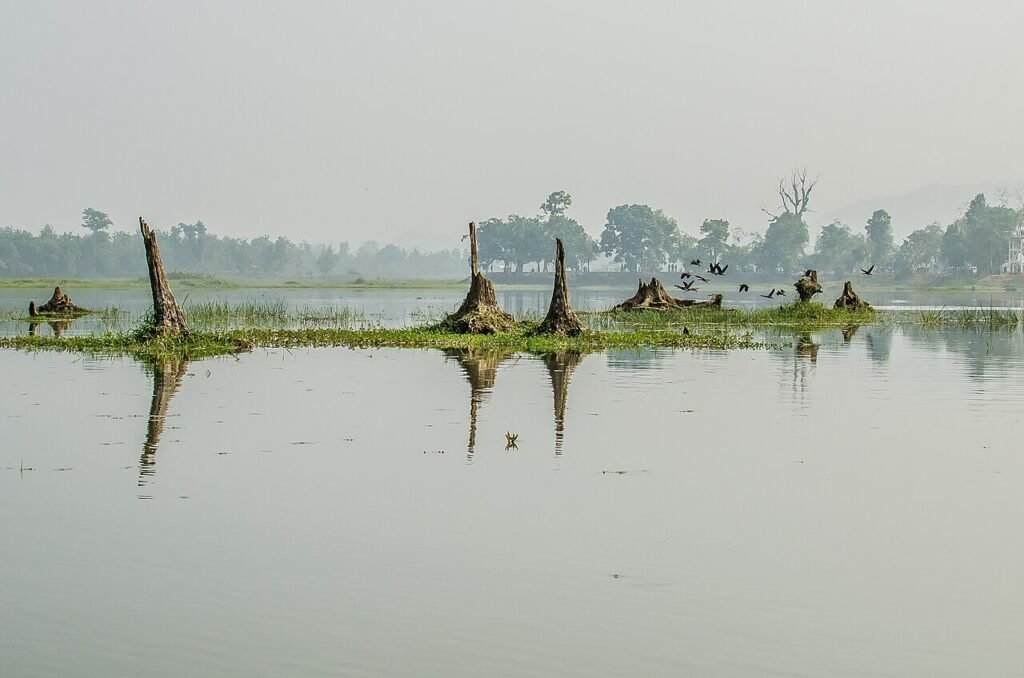
SWIFT Project: Restoring Assam’s Beels with ADB Support
Open this topic as a separate page, with its MCQs →
Syllabus Mapping
- Prelims: GS Paper I (General issues on Environment, ecology and biodiversity; Current events of State and National importance).
- Mains: GS Paper III (Conservation, environmental pollution and degradation; Inclusive growth, agriculture and livelihoods); GS Paper V (Assam: economy, natural resources and environment).
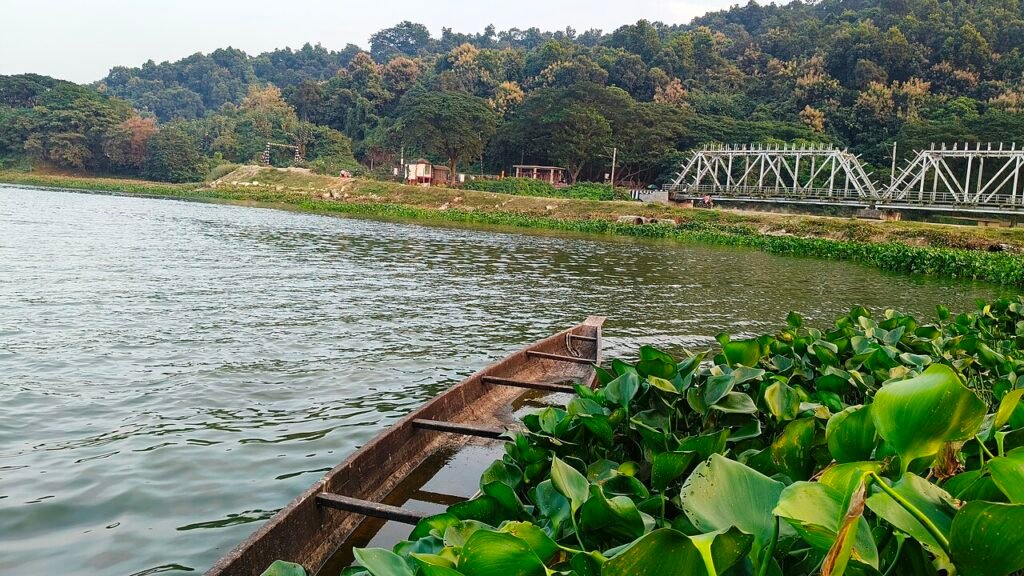
Why in News? The Assam government launched the Assam Sustainable Wetland and Integrated Fisheries Transformation (SWIFT) project in Guwahati on Friday, 20 November 2026. The project uses a loan of USD 71.9 million from the Asian Development Bank (ADB) to restore beels and help fishing communities.
Current Context (The Trigger)
- Launch: The State government launched the SWIFT project on Friday at the ARIAS Society Conference Hall in Guwahati.
- Who launched it: KC Samria, Additional Chief Secretary in the Fishery department, Government of Assam, launched the project.
- Loan and target: A USD 71.9 million loan from ADB supports restoration and community-based management of at least 102 beels.
- Loan agreement: The Government of India, the Government of Assam and ADB signed the loan agreement on 2 November 2026.
- Women’s share: Beel Development Committees must have at least 40 per cent women representatives.
- Outreach: The programme also launched the project’s social media platform for public outreach and stakeholder engagement.
Core Concepts & Static GK
- Beel: A beel is the local Assamese name for a floodplain wetland.
- Wetland: Rule 2(1)(g) of the Wetlands (Conservation and Management) Rules, 2017 defines a wetland as an area of marsh, fen, peatland or water. It may be natural or artificial, permanent or temporary, with still or flowing, fresh, brackish or salt water.
- Wise use: Rule 4(1) says wetlands must be conserved and managed on the principle of “wise use”, as decided by the Wetlands Authority. The Rules define wise use as keeping a wetland’s ecological character through an ecosystem approach.
- Fish yield gap: ADB notes that Assam’s floodplain wetlands can yield 1,000 to 1,500 kg of fish per hectare per year with good management. Wetlands with culture-based fisheries give about 704.60 kg per hectare per year, and those without stocking give about 206.4 kg.
- Water hyacinth: The invasive plant Eichhornia crassipes is abundant across the beels and chokes fish habitat.
- Common property: Beel fisheries are a common property resource used and managed by communities in Assam.
Constitutional & Legal Framework
- Wetlands Rules, 2017: The Ministry of Environment, Forest and Climate Change (MoEFCC) notified these rules on 26 September 2017 under the Environment (Protection) Act, 1986. They replaced the Wetlands Rules of 2010.
- What is not a wetland: The 2017 definition leaves out river channels and paddy fields. It also leaves out tanks built for drinking water and structures built for aquaculture, salt production, recreation and irrigation.
- Banned activities: Rule 4(2) bans converting a wetland to other uses, including encroachment of any kind. It also bans new industries, solid waste dumping, discharge of untreated waste and poaching inside notified wetlands.
- State Wetlands Authority: Rule 5 sets up a State Wetlands Authority in each State. The State Minister in charge of Environment or Forests chairs it, and the Fisheries Secretary is an ex-officio member.
- Role of States: Rule 7 gives States a task. Within one year of the Rules, they must prepare a brief document for each wetland they plan to notify. The State then notifies the wetland within 240 days of the Authority’s recommendation.
- Assam Fishery Rules, 1953: These rules regulate fisheries in Assam, and all SWIFT work stays within beels regulated under them. A 2005 amendment added curbs on overfishing and illegal fishing, and brought leasing of fisheries through transparent bidding.
Institutional Machinery
- Executing agency: The Assam Rural Infrastructure and Agricultural Services (ARIAS) Society is the executing agency.
- Implementing agency: The Department of Fisheries, Government of Assam, is the implementing agency. Its Directorate of Fisheries acts as the project implementation unit.
- Beel Development Committees: These local committees, made up of community members and other stakeholders, plan and manage project work in each beel.
- Project team: Sunae Kim is ADB’s team leader for the SWIFT project. Virendra Mittal is the State project director at ARIAS Society.
Schemes & Initiatives
- Three outputs: ADB lists three outputs: stronger institutions and rules for beel management, community fisheries business with diversified income, and planned beel conservation and restoration.
- Grants: The project gives performance-based grants to beel community institutions for carrying out their management plans. It also offers matching grants for hatcheries, feed mills and primary processing.
- Self-help groups: Women’s self-help groups receive start-up funds, aligned with the Assam State Rural Livelihood Mission’s revolving fund mechanism.
- Value chain: The project will support fish landing sites and village-level aggregation centres.
Reports, Indices & Data
- Approval: ADB approved the project on 12 December 2025 as Loan 4744-IND.
- Cost: The project is estimated to cost USD 89.9 million. ADB provides USD 71.9 million (80 per cent) and the Government of Assam about USD 18.0 million (20 per cent).
- Beneficiaries: The project aims to benefit at least 8,000 beel-dependent fisher beneficiaries.
- Safeguards: ADB rates the project Category B for environment and Category C for involuntary resettlement.
Assam & Northeast Linkages
- Ramsar site: Deepor Beel, designated on 19 August 2002, is Assam’s only Ramsar site. India had 99 Ramsar sites in the MoEFCC list of 21 April 2026. It had 103 by October 2026, but none of the new sites is in Assam.
- Majuli: Water hyacinth handicrafts in Majuli are cited as an example of turning an invasive plant into livelihood.
- State goals: ADB links the project to the Assam 2030 document on sustainable consumption and production in natural resource management.
- Fishing ban: A seasonal fishing ban cuts the main income of beel families, so they need other earnings.
Prelims Trap Zones (Watch out for)
- Lender Trap: The funder is the Asian Development Bank, not the World Bank.
- Amount Trap: The ADB loan is USD 71.9 million, while the estimated total project cost is USD 89.9 million.
- Agency Trap: ARIAS Society is the executing agency, and the Department of Fisheries is the implementing agency.
- Number Trap: The target is “at least 102 beels”, and women must be “at least 40 per cent” of the Beel Development Committees.
- Date Trap: The loan agreement was signed on 2 November 2026, and the project was launched later, on 20 November 2026.
- Definition Trap: Paddy fields and river channels are not wetlands under the 2017 Rules, even though they hold water.
- Land Trap: The works are on government land and ADB expects no involuntary resettlement.
Introduction
On 20 November 2026, Assam launched the SWIFT project, backed by a USD 71.9 million ADB loan, to restore at least 102 beels. Beels feed fish production and the livelihoods of rural families, but lost river links, shrinking depth and weeds have degraded many of them. SWIFT tests whether giving local committees ownership can protect the wetland and raise incomes together.
Importance of Beels
- Fish habitat: Beels are key habitats for fish production and support varied aquatic life.
- Rural livelihoods: ADB says the beel fisheries sector gives livelihoods to millions of people, mostly in rural areas.
- Nutrition: Fish from beels are an important source of nutrition and help food security and dietary variety.
- Untapped yield: Assam’s floodplain wetlands can yield 1,000 to 1,500 kg per hectare per year, but unstocked wetlands give only about 206.4 kg.
- Biodiversity: Deepor Beel, Assam’s Ramsar site since 2002, shows the international value of beel ecosystems.
- Climate research: The project supports research on carbon sequestration from beel management and on climate change impacts.
Key Features of SWIFT
- Beel-wise restoration: Each beel gets its own plan. Work may include removing silt and weeds and improving water flow through the channels already there.
- Community ownership: Beel Development Committees will be at the centre of the work, from planning to running it and keeping it going.
- Women’s role: At least 40 per cent of committee members must be women.
- Market support: Fish farmers and cooperatives will get better inputs and fishing gear. They will also get facilities to process their catch and sell it.
- Price premium: Certification, traceability and branding aim to fetch better prices for beel fish.
- Alternative income: The project backs fishing methods that can cope with climate change. It also helps families find other earnings, so that they take less from the wetlands.
Challenges
- Lost river links: Many beels have lost their connection with nearby rivers, which harms fish movement and water exchange.
- Shallow water: Water depth in many beels is falling, and silt build-up is a main reason, so desilting is part of the plan.
- Weed growth: Water hyacinth and other weeds spread widely and hold down fish productivity.
- Encroachment: Unclear boundaries invite encroachment, which is why the project plans satellite mapping and boundary pillars.
- Lease conflicts: Some beels are under lease to fisheries cooperatives or other lessees, so profit-sharing talks with them will be needed.
- Seasonal income gaps: The seasonal fishing ban leaves families without their main income.
- Climate variability: Erratic monsoons, long dry spells and more frequent extreme floods worsen the stress on beel habitats and fishing incomes.
Way Ahead
- Update the rules: The Department of Fisheries should revise fishery rules to allow community management, as the project’s first output plans.
- Hand over leases: Once leases expire, Beel Development Committees are expected to become the leaseholders, so their by-laws and bank accounts must be ready.
- Demarcate beels: Satellite mapping and boundary pillars should fix beel limits and stop encroachment.
- Use the weed: Communities can turn water hyacinth into handicrafts, compost, bioenergy or animal feed, as artisans in Majuli do.
- Reward beel health: Performance-based grants linked to beel health monitoring should keep committees active after the loan period.
- Back women’s groups: Start-up funds for self-help groups can give women income outside fishing.
- Plan the exit: The project must prepare a sustainable operating model so that the work continues after ADB support ends.
Conclusion
SWIFT ties wetland health directly to fishing incomes, which is the right logic for Assam’s beels. Its results will depend on honest community committees, clear beel boundaries and a lease system that gives fishers a real stake. If those hold, the 102 beels can become a model for the rest of the State’s wetlands.
Asked in APSC
- APSC Prelims 2023: (answer in the MCQs below)
Match the following wetlands (List-I) with the districts where these are located (List-II):
(List-I) (List-II)
a. Urpad Beel 1. Bongaigaon
b. Son Beel 2. Goalpara
c. Tamranga Beel 3. Morigaon
d. Nandini-Sonai Beel 4. Karimganj
Select the correct answer using the codes given below:- (A) a b c d – 2 4 1 3
- (B) a b c d – 4 1 3 2
- (C) a b c d – 1 2 4 3
- (D) a b c d – 3 1 2 4
All 500 APSC Prelims PYQs of CCE 2020 to 2025, with answers and explanations: practise free in the PYQ Explorer
Chandubi Sanctuary Proposal and Human-Elephant Conflict in Kamrup
Open this topic as a separate page, with its MCQs →
Syllabus Mapping
- Prelims: GS Paper I (General issues on Environment, ecology and biodiversity; Current events of State/National importance).
- Mains: GS Paper III (Conservation, environmental pollution and degradation; Disaster and conflict management); GS Paper V (Assam syllabus: wildlife, forests and environment of Assam).
Why in News? In a report from Amingaon dated 21 November 2026, wildlife enthusiasts and local residents backed a sanctuary in the Chandubi forest landscape. They said it could ease the growing man-elephant conflict in the Kamrup West and East Kamrup Forest divisions. They want the State to revive a proposal that has been pending for nearly 17 years.
Current Context (The Trigger)
- Demand for sanctuary: Local people and conservationists want the Chandubi forest landscape declared a wildlife sanctuary as a long-term answer to man-elephant conflict. The affected areas fall under the Kamrup West and East Kamrup Forest divisions.
- Pending since 2009: A proposal to make three Reserve Forests under the Kamrup West Forest Division a wildlife sanctuary was submitted in 2009. The then Divisional Forest Officer of the division sent it, and it has stayed pending since.
- Area figures: The proposed sanctuary covered 9,328 hectares after leaving out 1,731 hectares of human settlements. Settlements named include Rajapara-I, Rajapara-II, Jaramukhuria and Hatigarh.
- Crop and house losses: Elephant depredation is reaching more and more areas. Herds damage crops and houses and even raid paddy kept in granaries.
- Campaign voices: Debojit Rabha, assistant finance secretary of the All Rabha Students’ Union (ARSU), has led the campaign for sanctuary status for several years. Wildlife enthusiast Prasanna Kumar Goswami and farmer Jiten Kalita also backed the demand.
Core Concepts & Static GK
- Section 18 route: Under Section 18 of the Wild Life (Protection) Act, 1972, the State Government notifies its intention to constitute a sanctuary. This route covers areas outside reserve forests and territorial waters, and a Collector then inquires into rights under Sections 19 to 25.
- Section 26A route: Section 26A, inserted by the Wild Life (Protection) Amendment Act, 1991, covers the final notification of a sanctuary’s limits. For an area inside a reserve forest, the State can declare a sanctuary directly under Section 26A(1)(b).
- Management of sanctuaries: Under Section 33, the Chief Wild Life Warden controls, manages and maintains all sanctuaries. After the 2022 amendment, this must follow management plans prepared under central government guidelines.
- National park: Section 35 of the Act deals with the declaration of national parks. Rules are stricter there: Section 35(7) bans livestock grazing in a national park, while Section 33(d) lets the warden regulate grazing in a sanctuary.
- Elephant status: The Asian elephant is listed in Schedule I of the Wild Life (Protection) Act, 1972, which gives the highest protection.
- National Heritage Animal: The Government of India declared the elephant the National Heritage Animal in 2010.
Institutional Machinery
- Project Elephant: The Government of India launched Project Elephant in 1992 as a centrally sponsored scheme. It gives technical and financial help to elephant range States.
- Elephant Reserves: Elephant Reserves are the basic management units under Project Elephant. They can include protected areas, reserved forests, plantations and eco-sensitive zones.
- State Government and warden: The State Government issues the sanctuary notification under the Act. The Chief Wild Life Warden then manages the sanctuary under its management plan.
- Forest division: The Chandubi proposal came from the Divisional Forest Officer of Kamrup West. Divisional Forest Officers head forest divisions, so the idea started at the field level.
Reports, Indices & Data
- Assam elephant count 2024: The Elephant Population Estimation 2024 counted 5,828 elephants in Assam. Chief Minister Himanta Biswa Sarma released the report in early January 2025.
- Earlier count: The previous statewide figure was 5,719 in 2017, so the count rose by 109.
- Human deaths: Lok Sabha replies list Assam’s human deaths from elephant attacks as 75, 91, 63, 80 and 74 from 2019-20 to 2023-24. That adds up to 383 lives in five years.
Assam & Northeast Linkages
- Three Reserve Forests: The proposal covers Borduar, Mayang Hill and Mataikhar Reserve Forests under the Kamrup West Forest Division.
- Varied habitat: These forests hold woodlands, wetlands, rivers and hill forests. Sal and teak stands and wide shrubland make up the main vegetation.
- Wildlife present: Barking deer and sambar live there, along with leopards, leopard cats and the highly endangered clouded leopard.
- Primates: The forests support hoolock gibbon, capped langur, slow loris, Assamese macaque and rhesus macaque.
Prelims Trap Zones (Watch out for)
- Number trap: The proposal covers three Reserve Forests, not four or five. The names are Borduar, Mayang Hill and Mataikhar.
- Year trap: The proposal dates to 2009, so it has been pending for nearly 17 years. It is not a recent proposal.
- Area trap: The 9,328 hectares figure is after excluding 1,731 hectares of settlements. Do not read 9,328 as the gross area.
- Status trap: Chandubi is only a proposed sanctuary. It is not yet notified, and it is not a national park.
- Source trap: The 2009 proposal came from the Divisional Forest Officer of Kamrup West, not from the Union ministry.
- Section trap: A sanctuary inside a reserve forest is declared directly under Section 26A. The Section 18 intention notice applies to areas outside reserve forests.
Introduction
On 21 November 2026, residents and conservationists near Amingaon renewed their demand for sanctuary status for the Chandubi forest landscape. The proposal for three Reserve Forests has waited since 2009, while elephant raids on farms keep rising. Assam holds 5,828 elephants as per the 2024 estimate, so the way the State handles habitat and conflict matters for farmers and wildlife alike.
Underlying Drivers of the Conflict
- Long-distance movement: Elephants travel far in search of food. On the way they enter fields and villages, which puts the livelihood of thousands of farmers at risk.
- Weak surveillance: Debojit Rabha says the forest has suffered from poor surveillance and protection over the years. A degraded habitat pushes animals outward.
- Poaching: Residents on the forest edge named poaching as one factor behind the conflict.
- Attractive crops: Herds damage crops and houses and raid stored paddy. Easy food near settlements draws them back.
- Ineffective old methods: Goswami says conventional preventive measures are working less well each year as the conflict grows.
- Rising population: Assam’s elephant count grew from 5,719 in 2017 to 5,828 in 2024. More animals now share a limited habitat.
Importance of the Chandubi Landscape
- Varied ecology: The three Reserve Forests combine woodlands, wetlands, rivers and hill forests. Such variety supports many species.
- Red List species: Several species found here figure on the International Union for Conservation of Nature (IUCN) Red List.
- Prey base: Barking deer and sambar give leopards, leopard cats and the highly endangered clouded leopard natural prey.
- Primate refuge: Hoolock gibbon, capped langur, slow loris, Assamese macaque and rhesus macaque all live in these forests.
- Vegetation cover: Rabha says the sal and teak forests and shrubland deserve a higher conservation status. Legal protection would help them recover.
- Elephant refuge: Conservationists argue that a safe, quiet habitat would keep herds inside the forest. That would mean fewer visits to villages.
Challenges
- Long delay: The 2009 proposal has stayed pending for nearly 17 years. Residents complain of neglect by successive governments.
- Settlements close by: The proposal excluded 1,731 hectares of villages such as Rajapara-I and Hatigarh. People living so close mean contact with elephants will continue.
- Fixed boundaries: Since the 2003 amendment, Section 26A(3) lets a sanctuary’s boundaries change only on the recommendation of the National Board for Wild Life. So the boundary around the villages must be drawn right the first time.
- Heavy human toll: Assam recorded 75, 91, 63, 80 and 74 human deaths from elephants from 2019-20 to 2023-24. Any plan must save lives first.
- Surveillance gap: The forest has lacked an effective monitoring system for years. A notification alone will not stop encroachment or poaching.
- Short-term fixes: Jiten Kalita says the government relies on temporary deterrents. He wants a comprehensive strategy instead.
Way Ahead
- Revive the file: The Assam Forest Department should take up the 2009 proposal again and update its boundaries. Since the area lies inside Reserve Forests, the State can then notify it directly under Section 26A.
- Consult the villages: The department should hold meetings with excluded settlements such as Rajapara-I, Rajapara-II, Jaramukhuria and Hatigarh before notification. Early agreement avoids disputes later.
- Management plan: The Chief Wild Life Warden should approve a plan under Section 33 that covers patrolling, habitat repair and community roles.
- Strong patrolling: Anti-poaching camps and regular surveillance should be set up. This answers the lack of protection that Rabha pointed out.
- Protect farmers: Quick compensation and crop protection for villages along the edge would build local support. This goes beyond temporary deterrents.
- Use the data: The 2024 elephant estimate should feed into an elephant conservation plan for Kamrup, following the Union environment ministry’s framework for such plans.
Conclusion
A sanctuary will not end elephant raids alone, but it can give herds a protected home and the forest a legal shield. The State should pair a quick notification with surveillance, village consultation and fair compensation. Only then will farmers near Chandubi see real relief.
Asked in APSC
- APSC Mains 2025, GS Paper 5 (10 marks): Explain the anthropogenic and environmental drivers of human-wildlife conflict in Assam. Suggest community-based strategies to mitigate the conflict.
Bangladesh Political Violence and the Awami League Question
Open this topic as a separate page, with its MCQs →
Syllabus Mapping
- Prelims: GS Paper I (Current events of international importance; India and its neighbourhood).
- Mains: GS Paper II (India and its neighbourhood relations; bilateral groupings and agreements involving India; effect of policies of developed and developing countries on India’s interests).
Why in News? Violent clashes broke out across Bangladesh on 20-21 November 2026 between supporters of the ruling Bangladesh Nationalist Party (BNP) and the banned Awami League. This followed a nationwide strike called by the Awami League on 19 November. Dhaka’s State Minister for Foreign Affairs also said that the return of fugitives from New Delhi would be pursued through the extradition treaty.
Current Context (The Trigger)
- Strike call: The Awami League called a nationwide lockdown strike on 19 November 2026, after a week of rallies.
- Passport refusal: The BNP government headed by Tarique Rahman refused former Prime Minister Sheikh Hasina’s request for a new passport and identity card. The League acted after this refusal.
- Spread of violence: The editorial says violence has hit at least 17 districts, with Gopalganj, Hasina’s home district, as the centre.
- Deaths reported: The editorial says at least two BNP members have been killed in the Gopalganj violence. The PTI report says at least four people died in separate incidents, including three BNP members and a bus helper burnt alive. The two counts differ.
- Government crackdown: Dhaka deployed 97 platoons of Border Guard Bangladesh and arrested people linked to the Awami League, including former Education Minister Nurul Islam Nahid.
- Extradition remark: State Minister for Foreign Affairs Humaiun Kobir said no fugitive could be brought back from Delhi by petrol bombs. He said their return would come through the extradition treaty.
Core Concepts & Static GK
- Extradition: It is the formal surrender of an accused or convicted person by one state to another, under a treaty or law. India and Bangladesh signed a bilateral extradition treaty on 28 January 2013. It was amended in 2016 so that an arrest warrant alone could start the process.
- Political offence exception: Article 6 of the treaty lets the requested state refuse extradition if the offence is of a political character.
- Limits of that exception: Article 6(2) says some offences can never be called political. These include murder, culpable homicide, causing explosions, kidnapping and hostage-taking, and crimes both states must punish under multilateral treaties.
- Extradition and prosecution: Under Article 7, the requested state may refuse if it can try the person in its own courts. It must then send the case to its own authorities to consider prosecution.
- Trial in absentia: This means the court tries an accused who is not present. Bangladesh’s International Crimes Tribunal (ICT) tried Hasina this way and sentenced her to death on 17 November 2025 for crimes against humanity.
- Ban on a party: In May 2025 the interim government led by Muhammad Yunus banned all activities of the Awami League under the Anti-Terrorism Act. The ban stays until the trial of the party and its leaders ends.
Institutional Machinery
- International Crimes Tribunal: This is the Bangladeshi court that convicted Hasina in November 2025. The interim cabinet also amended the ICT Act in May 2025 so that political parties could be tried as entities.
- Border Guard Bangladesh: This is the border force that Dhaka has now deployed in 97 platoons inside the country for the crackdown.
- Interim government: A government headed by Muhammad Yunus ran Bangladesh after Hasina left on 5 August 2024. It handed over to an elected government after the vote of 12 February 2026.
- Ministry of External Affairs (India): After the November 2025 verdict, it said India had noted the judgment. It said India stayed committed to the best interests of the people of Bangladesh. It did not discuss extradition directly.
Reports, Indices & Data
- Population: The editorial describes Bangladesh as a nation of 175 million people.
- 2024 casualties: The United Nations has estimated that up to 1,400 people were killed in the 2024 crackdown on protesters. Reports at the time of Hasina’s exit counted at least 280 deaths.
- Arrests and platoons: The editorial reports scores of arrests of Awami League-linked persons and 97 platoons deployed.
Assam & Northeast Linkages
- Total border: India shares a land border of about 4,096.7 km with Bangladesh, per a Home Ministry reply in Parliament.
- Assam’s stretch: The same reply gives Assam 263 km of that border. Some non-official sources print 262 km.
- Other Northeast states: Meghalaya has 443 km, Tripura 856 km and Mizoram 318 km, per the same reply.
- Paper’s silence: Today’s reports describe no spillover into Assam or other Indian states. The Northeast link here is the long shared border, not a reported incident.
Prelims Trap Zones (Watch out for)
- Year Trap: Sheikh Hasina was ousted in 2024 (5 August), not in 2026. The 2026 events are the Awami League strike of 19 November and the current violence.
- Government Trap: The ruling party is the BNP under Tarique Rahman, not the Awami League. Option setters like to swap them.
- Status Trap: The interim government banned the Awami League’s activities in May 2025 under the Anti-Terrorism Act. This was an executive order, not a court verdict, and it was to last until the party’s trial ends.
- Label Trap: Calling the League a “terrorist organisation” is the view of Humaiun Kobir, a minister. It is a political statement in the paper, not a court finding.
- Verdict Trap: The 17 November 2025 death sentence came from Bangladesh’s ICT in absentia. It is not a ruling of an Indian court or of the United Nations.
- Treaty Trap: The extradition treaty was signed in 2013 and amended in 2016. Bangladesh’s minister says return will follow it, but today’s reports do not say that any extradition has taken place.
Introduction
On 19 November 2026 the banned Awami League enforced a nationwide strike in Bangladesh, and clashes with the ruling BNP followed in many districts. The same week, Dhaka said that it would pursue fugitives in India through the extradition treaty. For India, the issue joins three things. These are domestic order in a neighbour of 175 million people, a 4,096.7 km shared border and Dhaka’s pending request for Sheikh Hasina.
Underlying Drivers of the Unrest
- Hasina’s planned return: The editorial says trouble grew after Hasina announced her wish to return from exile. It argues this energised Awami League supporters who were in hiding.
- Passport refusal: The BNP government turned down her request for a new passport and identity card. The League then called protests and the 19 November strike.
- Party ban: The Awami League cannot work openly, since its activities were banned in May 2025. Its supporters therefore use street action and rallies.
- Verdict of 2025: Hasina carries a death sentence from the ICT, passed in absentia on 17 November 2025. Dhaka presents the verdict as accountability for the 2024 killings, while critics question the trial.
- Local rivalry: In Bera, Pabna, police and local sources said tension over establishing supremacy had simmered for three days before the clash. Such local contests turn national disputes into street fights.
- Separate wage protests: The editorial notes that garment and government workers also protest for higher wages. It says these do not look like an offshoot of the Awami League protests.
Competing Narratives
- Government’s account: Kobir blamed the Awami League for the rising violence and promised legal action over arson and petrol bomb attacks. He alleged its leaders abroad were encouraging the attacks.
- Language used: He called the League a “terrorist organisation” and promised strong action. This is a ministerial claim that the paper attributes to him.
- Editorial’s view: The editorial blames Hasina’s presence in India as the biggest disruptive element. It also says the BNP drew away from India and towards China and Pakistan. These are the editorial’s opinions, not findings.
- Awami League’s stance: In May 2025 the party called the ban illegitimate. Today’s reports carry no statement from its leaders on the latest violence.
- Who gets hurt: Reports list a bus helper burnt alive and parked buses set on fire. Dozens of homes and shops of League activists were vandalised in Kalia upazila, Narail.
The Extradition Question
- Dhaka’s demand: Bangladesh asked India to hand over Hasina in December 2024. It repeated the demand after the ICT verdict of 17 November 2025.
- India’s public line: The Ministry of External Affairs said it had noted the verdict and stayed committed to the people of Bangladesh. It said nothing direct on extradition.
- Treaty grounds: Article 6 of the 2013 treaty allows refusal for political offences. But it excludes murder, culpable homicide and kidnapping, among others, from that label.
- Contested reading: Dhaka frames the charges as crimes against humanity linked to the 2024 killings. However, Article 8 also lets a state refuse if the accusation was not made in good faith in the interests of justice. Commentators differ on how India may read it.
- Dhaka’s latest signal: Kobir said the return of fugitives would follow the treaty route and not violence. He did not name anyone.
Implications for India and the Northeast
- Shared border: The 4,096.7 km frontier runs along West Bengal, Assam, Meghalaya, Tripura and Mizoram. Instability in Bangladesh therefore concerns all five states.
- Assam’s stretch: Assam has 263 km of this border, according to the Home Ministry reply. This is shorter than Tripura’s 856 km, Meghalaya’s 443 km and Mizoram’s 318 km.
- Host state question: The editorial says Hasina has been “pulling strings” from India. It is an allegation in an opinion piece. The paper gives no Indian government statement on this.
- Diplomatic tension: Kobir said attempts to bring fugitives from Delhi through violence would not work. This links India directly to Dhaka’s domestic dispute.
- Geopolitical angle: The editorial warns of Bangladesh moving closer to China and Pakistan. India would need to protect its own interests without taking sides in Dhaka’s party politics.
Challenges
- Legal complexity: The treaty has a political offence clause with listed exclusions and a good-faith ground for refusal. India has to weigh these while the trial of Hasina was held in her absence.
- Weak trust: The editorial says the BNP has distanced itself from India. A fragile relationship makes quiet diplomacy harder.
- Information gaps: Death tolls differ between the editorial and the PTI report, which relies on Bangladeshi local media. Verified facts are hard to get in fast-moving violence.
- Domestic pressure: A government that speaks publicly of fugitives in Delhi faces pressure to look tough. This can harden positions on both sides.
- Border management: Instability near a 4,096.7 km border makes patrolling, movement control and information sharing more demanding for the Border Security Force and Assam Police.
- Fair process worries: Mass arrests and a ban on a party raise questions of due process. Observers disagree on how fair the 2025 trial was.
Way Ahead
- Treat the request legally: The Ministry of External Affairs and Ministry of Law should examine any formal request. They should test it against Articles 6, 7 and 8 of the treaty. A written reasoned position avoids charges of political bias.
- Keep talks open: Foreign ministries and high commissions should keep regular contact with Dhaka. Quiet channels reduce the chance that public statements harden positions.
- Back inclusive politics: India should encourage peaceful, lawful political activity in Bangladesh through the elected government. It should avoid favouring any party.
- Strengthen border coordination: The Border Security Force, Border Guard Bangladesh and Assam Police should share information on movement near the 263 km Assam stretch. Regular meetings help early warning.
- Protect shared interests: Both governments can keep trade, connectivity and people-to-people ties insulated from the political dispute. This reduces the cost of the crisis for border communities.
- Call for due process: Dhaka should ensure that arrests of party members follow law and that courts remain open to them. This will help the government answer critics at home and abroad.
Conclusion
The violence in Bangladesh is mainly a domestic contest between the ruling BNP and a banned Awami League. India is drawn in because the main accused lives on its soil and the border is long. A calm, treaty-based and non-partisan approach will serve India best, while peace depends on how Dhaka treats its opponents.
Asked in APSC
- APSC Mains 2024, GS Paper 2 (15 marks): Discuss the implications of political turmoil in Bangladesh on India’s foreign policy.
RERA Enforcement in Assam and Homebuyer Protection
Open this topic as a separate page, with its MCQs →
Syllabus Mapping
- Prelims: GS Paper I (Current events of State/National importance; Polity and Governance: statutory and regulatory bodies).
- Mains: GS Paper II (Statutory, regulatory and quasi-judicial bodies; Government policies and interventions; Mechanisms and laws for protecting consumers); GS Paper III (Infrastructure: housing and urban development); GS Paper V (Assam: governance and economy).
Why in News? On 21 November 2026, Assam Real Estate Regulatory Authority (RERA) chairman Paban Kumar Borthakur said the authority is taking a firm line against rule-breaking builders. He cited a Rs 3 lakh fine on a builder that the Gauhati High Court upheld.
Current Context (The Trigger)
- Fine of Rs 3 lakh: Assam RERA recently fined a builder Rs 3 lakh because the builder did not report the progress of construction.
- High Court backing: The builder challenged the order in the Gauhati High Court, but the court upheld the RERA order.
- Registration rule as stated: According to the chairman, an apartment building built for sale must register with RERA. This applies if it has eight or more apartments and an area of 500 square metres or more.
- Approval first: He said a project can start only after RERA gives its approval.
- Top complaint: The most common complaint is late handover of flats. Builders take advance money and promise a handover date, but often miss it.
- Second complaint: The second major complaint is delay in giving the sale deed to the buyer.
- Vanishing builders: Sometimes a builder disappears and leaves a project incomplete. Then RERA sends the case to the bakijai (revenue recovery) branch of the district collector’s office to recover the money.
Core Concepts & Static GK
- The parent law: The Real Estate (Regulation and Development) Act, 2016 (Act No. 16 of 2016) got the President’s assent on 25 March 2016. It sets up a Real Estate Regulatory Authority and a Real Estate Appellate Tribunal in each State or Union Territory.
- Passage in Parliament: The Bill was introduced in the Rajya Sabha on 14 August 2013. The Rajya Sabha passed it on 10 March 2016 and the Lok Sabha on 15 March 2016.
- Prior registration: Section 3(1) bars a promoter from advertising, booking or selling units in a project in a planning area. The promoter must first register the project with the Authority.
- Small-project exemption: Section 3(2)(a) exempts a project where the land does not exceed 500 square metres. It also exempts a project where the apartments do not exceed eight, counting all phases. The State government may lower this threshold.
- Completed projects: Section 3(2)(b) also exempts a project that received its completion certificate before the Act came into force.
- 70 per cent rule: Section 4(2)(l)(D) makes the promoter keep 70 per cent of the money collected from buyers in a separate account in a scheduled bank. The money can cover only construction and land cost. Withdrawals must match the progress of work, certified by an engineer, an architect and a chartered accountant.
- Quarterly disclosure: Section 11(1) makes the promoter put project details on the Authority’s website, including a quarterly up-to-date status of the project.
- Refund and compensation: Section 18 (“Return of amount and compensation”) covers a promoter who fails to give possession on time. If the buyer withdraws, the promoter must return the buyer’s money with interest. A buyer who stays gets interest for every month of delay.
Constitutional & Legal Framework
- Filing complaints: Under Section 31, any aggrieved person can complain to the Authority or the adjudicating officer. The word “person” includes an association of allottees or a registered consumer association.
- Recovery as land revenue: Under Section 40(1), unpaid interest, penalty or compensation can be recovered as an arrears of land revenue. The dues can be recovered from a promoter, allottee or agent.
- Appeal to the Tribunal: Under Section 44, any person unhappy with an order of the Authority or the adjudicating officer can appeal. The appeal goes to the Appellate Tribunal within 60 days.
- Appeal to the High Court: Under Section 58, an order of the Appellate Tribunal can be challenged in the High Court within 60 days. The grounds are those in Section 100 of the Code of Civil Procedure, 1908.
- Penalty sections: Section 59 allows a penalty of up to 10 per cent of the estimated project cost for not registering under Section 3. Section 63 allows a daily penalty, up to 5 per cent in all, for ignoring the Authority’s orders. Section 64 allows a fine of up to 10 per cent or jail up to three years for ignoring the Tribunal’s orders.
- Adjudicating officer: Under Section 71, the Authority appoints a judicial officer who is or has been a District Judge. This officer decides compensation under Sections 12, 14, 18 and 19.
Institutional Machinery
- Assam RERA chairman: Paban Kumar Borthakur, a former Chief Secretary of Assam, chairs the authority.
- Appointment: The Governor of Assam appointed him under Sections 20, 21 and 22 of the Act. The Assam Real Estate (Regulation and Development) Rules, 2017 also apply. He took charge on 1 April 2024, after his term as Chief Secretary.
- Composition: Section 21 says each Authority has a Chairperson and at least two whole-time Members. Under Section 22, a committee of the High Court Chief Justice (or nominee), the Housing Secretary and the Law Secretary recommends them.
- Civil court effect: The chairman said a RERA order in a dispute works like a decree of a civil court.
- Appeal route: He said a builder unhappy with a RERA order can approach the “Real Estate Appellate Authority” or the High Court. The Act calls this body the Real Estate Appellate Tribunal.
- Assam Appellate Tribunal: The Assam Real Estate Appellate Tribunal functions from Guwahati. Under Section 46, its Chairperson must be or have been a High Court judge. The appointment is made in consultation with the Chief Justice of the High Court.
- Tribunal head in 2024: In 2024, a bench of the tribunal headed by Justice (retd) Manojit Bhuyan as Chairperson decided an appeal on old projects.
Reports, Indices & Data
- National registrations: A Press Information Bureau (PIB) release of 4 September 2025 reported 1,51,113 projects and 1,06,545 agents registered under RERA across India.
- Complaints disposed: The same release said Real Estate Regulatory Authorities had disposed of 1,47,383 complaints nationwide.
- Bodies set up: It reported that 35 States and Union Territories had set up Regulatory Authorities. Also, 29 had set up Appellate Tribunals and 27 had appointed Adjudicating Officers.
- Unified RERA Portal: Union Housing Minister Manohar Lal launched the Unified RERA Portal (rera.mohua.gov.in) on 4 September 2025. He did so at the 5th meeting of the Central Advisory Council under the Act.
- Assam outreach: RERA Assam has held awareness meetings in Jorhat, Bongaigaon and Tezpur, and plans another in Guwahati.
Assam & Northeast Linkages
- Assam rules: Assam has its own Assam Real Estate (Regulation and Development) Rules, 2017, made under the central Act.
- Growth view: The chairman said Assam’s real estate sector is improving, but less than desired because of the economic condition.
- Consumer awareness: He accepted that buyers need to be more aware of their rights.
- Tribunal case on old projects: In Shantanu Baruah v. Dona Builders (Appeal No. 04 of 2024), the Assam tribunal held that RERA does not apply to a project. That project had got its occupancy certificate on 7 May 2014.
Prelims Trap Zones (Watch out for)
- Threshold Trap: The Act exempts a project if the land is not more than 500 square metres. It also exempts a project if the apartments are not more than eight, counting all phases. A project with exactly eight apartments is exempt under the Act, even though the chairman’s quoted wording said “eight or more”.
- Proviso Trap: The 500 square metre and eight-apartment limits are a ceiling. The State government can lower them, not raise them.
- Appeal Trap: An appeal against the Authority goes first to the Appellate Tribunal (Section 44). The Act’s appeal to the High Court (Section 58) is against the Tribunal’s order.
- Recovery Trap: For a vanished builder, RERA Assam sends the case to the bakijai branch of the district collector’s office, not to the police. Section 40(1) treats such dues as arrears of land revenue.
- Section Trap: Section 31 is complaints and Section 40 is recovery. Section 43 sets up the Appellate Tribunal. Section 58 is the appeal to the High Court.
- Forum Trap: The Authority decides refund and interest. Only the adjudicating officer decides compensation, as the Supreme Court held in Newtech Promoters (2021).
Introduction
On 21 November 2026, the Assam RERA chairman said the authority had fined a builder Rs 3 lakh. He added that the Gauhati High Court upheld the fine. The Real Estate (Regulation and Development) Act, 2016 was made to protect homebuyers from delay and hidden dealing. In Assam, where buyers usually pay in advance, the real test of the law is how firmly its orders are enforced.
Why Homebuyers Needed a Regulator
- Advance money, late flats: Builders collect advance money and promise a handover date, and many miss it. This is the most common complaint reaching Assam RERA.
- Delay in sale deed: Buyers also wait long for the sale deed after paying. This is the second major complaint before Assam RERA.
- Vanishing promoters: Some builders leave projects half-built and disappear. The buyer is then left with no one to hold to account.
- Information gap: Section 11(1) of the Act makes promoters post a quarterly status of each project on the Authority’s website. Before this, buyers had no easy way to check progress.
- Money diversion risk: Section 4(2)(l)(D) keeps 70 per cent of buyers’ money in a separate bank account for that project’s land and construction. This stops promoters from moving buyers’ money to other projects.
- Faster forum: The chairman said a RERA order works like a civil court decree. Buyers get a special forum instead of waiting in ordinary courts.
How Assam RERA Enforces the Law
- Mandatory registration: Builders of covered apartment projects must register, and work may begin only after RERA approval. Section 59 allows a penalty of up to 10 per cent of project cost for not registering.
- Transparency drive: The authority says it wants openness at every stage of construction, until the flats reach the buyers.
- Penalty for delay: RERA can impose a penalty when a builder delays handover. Under Section 18, the buyer can also claim refund with interest, or interest for each month of delay.
- Fine on progress reports: The Rs 3 lakh fine shows that even a failure to report construction progress is punished. This duty flows from the quarterly disclosure rule in Section 11(1).
- Dispute forum: Any buyer in a dispute with a promoter can approach the authority directly. Section 31 also lets associations of allottees file complaints.
- Recovery through revenue officers: For vanished builders, the case goes to the bakijai branch of the district collector’s office. This fits Section 40(1), which makes unpaid dues recoverable as arrears of land revenue.
Statutory Remedies Available to a Homebuyer
| Stage | Provision | Purpose |
|---|---|---|
| Complaint | Section 31 | Complaint to the Authority or the adjudicating officer by any aggrieved person |
| Refund and compensation | Section 18 | Refund with interest on withdrawal, or monthly interest for delay |
| Compensation | Section 71 | Adjudicating officer (a serving or former District Judge) decides compensation |
| Recovery | Section 40 | Unpaid interest, penalty or compensation recovered as arrears of land revenue |
| Appeal to Tribunal | Section 44 | Appeal against the Authority or adjudicating officer within 60 days |
| Appeal to High Court | Section 58 | Appeal against the Tribunal’s order within 60 days |
Challenges
- Low consumer awareness: The chairman himself said buyers need more awareness. Many buyers may not know they can complain to RERA at all.
- Threshold confusion: The chairman’s quoted rule (eight or more apartments) differs from the Act, which exempts projects of up to eight apartments. If even the threshold is misstated, small builders and buyers can misread whether a project must register.
- Builders who vanish: Once a builder disappears, recovery depends on revenue officers in the collector’s office. These officers also handle many other duties, so recovery can be slow.
- Litigation on each order: A builder can challenge an order, as one did against the Rs 3 lakh fine in the Gauhati High Court. Each round of litigation delays relief for the buyer.
- Old projects outside the law: The Assam tribunal held that RERA does not cover a project completed in 2014. Buyers in such projects cannot use RERA remedies.
- Enforcement gaps nationally: At its September 2025 meeting, the Central Advisory Council discussed legacy stalled projects and asked for steps to enforce RERA orders. This shows weak enforcement is a national problem, not only Assam’s.
- Weak market conditions: The chairman said Assam’s real estate growth is below what is desired because of the economic condition. Slow sales can push small builders into delay.
Way Ahead
- Awareness campaigns: RERA Assam should continue meetings like those in Jorhat, Bongaigaon and Tezpur and hold the planned Guwahati meeting. More buyers will then know their remedies.
- Check registration first: Buyers and lending banks should check a project’s RERA registration before paying. The law lets a project start only after RERA approval.
- Use the national portal: Assam RERA data should feed fully into the Unified RERA Portal launched in September 2025. The Central Advisory Council wants this data to help spot project delays early.
- Strict quarterly reporting: RERA should keep enforcing the quarterly status updates required by Section 11(1), as the Rs 3 lakh fine did. Late progress reports are often the first sign of a stalled project.
- Faster recovery: The Revenue Department and district collectors should treat RERA recovery cases as priority. Section 40(1) already gives them the land revenue route.
- Standard procedures: Assam should adopt the Standard Operating Processes recommended by the Central Advisory Council for RERA functioning and enforcement. It could also study the Amitabh Kant Committee recommendations on stalled projects, which Uttar Pradesh has implemented.
- Clear rule communication: RERA should publish the exact registration threshold of Section 3(2)(a) in plain words on its website. This removes doubt about which buildings are covered.
Conclusion
Assam RERA has begun to show that its orders carry weight, because a fine upheld by the High Court sends a clear signal to builders. The next step is faster recovery through collectors, wider awareness and plain rules. Then a buyer in Jorhat or Tezpur can use the law without a long court fight.
News in Short
- Lasiodiplodia pseudotheobromae: Scientists at the Institute of Advanced Study in Science and Technology (IASST), Guwahati, confirmed this fungus as a dieback pathogen of tea (Camellia sinensis). Prof Debajit Thakur led the team. This is the first time in India. Dieback in Indian tea was earlier linked mainly to Fusarium species. The team also found that the beneficial soil bacterium Streptomyces sp A2 showed 83.33% inhibition of the fungus in the laboratory.
- President’s Police Colour: Union Home Minister Amit Shah presented it to the Arunachal Pradesh Police at the Police Training Centre, Banderdewa. The State force became the 70th police force in the country to receive this honour, which is symbolised by the ‘Nishan’.
- Bioeconomy targets: India aims for a bioeconomy of $300 billion by 2030 and $1 trillion by 2047. Union Minister Jitendra Singh said this at the 4th Annual General Meeting of the Biotechnology Research and Innovation Council (BRIC) Society. He put the current size at more than $195 billion, up from about $10 billion.
- Exports to Africa: Among all regions, India’s merchandise exports to Africa grew fastest in April-September 2026-27. They rose 44 per cent, from $21.87 billion to $31.42 billion. Asia followed with 21 per cent growth, to $103.84 billion.
- Lethal autonomous weapons: UN-backed talks in Geneva agreed only to “elaborate” a possible accord on AI-powered weapons by 2028, extending discussions by two more years. No binding rules were adopted, though UN Secretary-General Antonio Guterres had sought them.
- Buddha relics exposition: The 22-day exposition in Arunachal Pradesh ended with a farewell at Tezu airport on 21 November. More than 1.10 lakh devotees attended. The relics come from Piprahwa in Uttar Pradesh. They were displayed at Tawang Monastery, Thubchog Gatsel Ling Monastery in Bomdila and the Golden Pagoda at Namsai.
- Census 2027, second phase: Assam trained 66 master trainers for Population Enumeration from 17 November. They comprised 50 district officials and 16 personnel of the Directorate of Census Operations.
- Manipur Cherry Blossom-cum-Flower Festival 2026: The four-day festival began at Motu Tubvii, Mao, in Senapati district under the theme ‘Blossoms of Unity and Culture’. It started in 2015 and has been a State festival since 2017.
APSC Prelims MCQs
Practice questions on the topics above
Topic 1: SWIFT Project: Restoring Assam’s Beels with ADB Support
Q1. The Assam Sustainable Wetland and Integrated Fisheries Transformation (SWIFT) project was launched in Guwahati. Consider the following statements:
(i) It is supported by a loan of USD 71.9 million from the Asian Development Bank.
(ii) It aims to restore and manage at least 102 beels through community-based management.
(iii) Its executing agency is the Assam Forest Department.
Which of the statements given above is/are correct?
- (a) (i) and (ii) only
- (b) (ii) and (iii) only
- (c) (i) only
- (d) (i), (ii) and (iii)
Show answer
Answer: (a) Explanation: Statements (i) and (ii) are correct. The project rests on a USD 71.9 million ADB loan, and it targets at least 102 beels across Assam. Statement (iii) is wrong because the executing agency is the Assam Rural Infrastructure and Agricultural Services (ARIAS) Society. The Department of Fisheries is the implementing agency, and the Forest Department has no such role. Option (b) adds the wrong statement (iii) and drops (i). Option (c) leaves out the correct statement (ii). Option (d) includes (iii). Value addition: ADB puts the estimated total project cost at USD 89.9 million, of which the Government of Assam provides about USD 18.0 million.
Q2. Regarding the Beel Development Committees under the SWIFT project, consider the following statements:
(i) The project requires at least 40 per cent representation of women in these committees.
(ii) Where a beel is under lease, the committee is expected to become the leaseholder once the lease expires.
(iii) The project needs large-scale land acquisition and resettlement of fishing families.
Which of the statements given above is/are correct?
- (a) (i) only
- (b) (i) and (ii) only
- (c) (ii) and (iii) only
- (d) (i), (ii) and (iii)
Show answer
Answer: (b) Explanation: Statements (i) and (ii) are correct. At least 40 per cent of committee members must be women. ADB’s project manual says a committee is expected to become the beel leaseholder after the existing lease ends. Statement (iii) is wrong because the works are on government land within existing beel ecosystems, and ADB expects no involuntary resettlement. Option (a) leaves out (ii), option (c) wrongly includes (iii) and drops (i), and option (d) includes (iii). Value addition: ADB rates SWIFT Category C for involuntary resettlement and Category B for environment.
Q3. Match List-I with List-II:
| List-I (SWIFT feature) | List-II (Figure) |
|---|---|
| a. Minimum number of beels covered | 1. 102 |
| b. ADB loan amount | 2. USD 71.9 million |
| c. Estimated total project cost | 3. USD 89.9 million |
| d. Minimum women’s share in Beel Development Committees | 4. 40 per cent |
Select the correct answer using the codes given below:
- (a) a-2, b-1, c-3, d-4
- (b) a-1, b-2, c-3, d-4
- (c) a-1, b-2, c-4, d-3
- (d) a-3, b-4, c-1, d-2
Show answer
Answer: (b) Explanation: The correct pairs are a-1, b-2, c-3 and d-4. The project covers at least 102 beels, and the ADB loan is USD 71.9 million. The estimated total cost is USD 89.9 million, and women must form at least 40 per cent of the committees. Option (a) swaps the beel count with the loan. Option (c) swaps the total cost with the women’s share. Option (d) mixes up all four pairs. Value addition: ADB funds 80 per cent of the total cost, and the Government of Assam funds the remaining 20 per cent.
Q4. As of November 2026, which one of the following is the only Ramsar site in Assam?
- (a) Son Beel
- (b) Deepor Beel
- (c) Urpad Beel
- (d) Loktak Lake
Show answer
Answer: (b) Explanation: Deepor Beel is Assam’s only Ramsar site, designated on 19 August 2002. Son Beel and Urpad Beel are well-known Assam wetlands, but neither is a Ramsar site. Loktak Lake is also a Ramsar site, but it lies in Manipur, not Assam. Students often confuse Northeast wetlands, so always match the site with its State. Value addition: India had 103 Ramsar sites by October 2026. Sukhna Lake in Chandigarh and Sauj Jheel in Uttar Pradesh were added, but no new site came from Assam.
PYQ (APSC Prelims 2023): Match the following wetlands (List-I) with the districts where these are located (List-II):
(List-I) (List-II)
a. Urpad Beel 1. Bongaigaon
b. Son Beel 2. Goalpara
c. Tamranga Beel 3. Morigaon
d. Nandini-Sonai Beel 4. Karimganj
Select the correct answer using the codes given below:
- (A) a b c d – 2 4 1 3
- (B) a b c d – 4 1 3 2
- (C) a b c d – 1 2 4 3
- (D) a b c d – 3 1 2 4
Topic 2: Chandubi Sanctuary Proposal and Human-Elephant Conflict in Kamrup
Q5. A proposal to declare Reserve Forests in the Chandubi landscape as a wildlife sanctuary has been pending in Assam. Consider the following statements:
(i) The proposal was submitted in 2009 by the then Divisional Forest Officer of the Kamrup West Forest Division.
(ii) The proposed sanctuary covered 9,328 hectares after excluding 1,731 hectares of human settlements.
(iii) The proposal covers four Reserve Forests of the Kamrup East Forest Division.
Which of the statements given above is/are correct?
- (a) (i) and (ii) only
- (b) (ii) and (iii) only
- (c) (i) only
- (d) (i), (ii) and (iii)
Show answer
Answer: (a) Explanation: Statements (i) and (ii) match the newspaper report. The 2009 proposal came from the then Divisional Forest Officer of Kamrup West, and the 9,328 hectares figure is net of 1,731 hectares of settlements. Statement (iii) is wrong on two counts. The proposal covers three Reserve Forests, namely Borduar, Mayang Hill and Mataikhar, and they lie under the Kamrup West Forest Division, not Kamrup East. So option (b) and option (d) fail because they include (iii), and option (c) fails because it leaves out the correct statement (ii). Value addition: the area lies inside Reserve Forests. So the State can declare the sanctuary directly under Section 26A(1)(b) of the Wild Life (Protection) Act, 1972.
Q6. Match List-I with List-II (Wild Life (Protection) Act, 1972):
| List-I (Section) | List-II (Subject) |
|---|---|
| a. Section 18 | 1. Declaration of national parks |
| b. Section 26A | 2. Notification of intention to constitute a sanctuary outside reserve forests |
| c. Section 33 | 3. Final notification declaring an area as a sanctuary |
| d. Section 35 | 4. Control and management of sanctuaries by the Chief Wild Life Warden |
Select the correct answer using the codes given below:
- (a) a-2, b-3, c-4, d-1
- (b) a-3, b-2, c-4, d-1
- (c) a-2, b-3, c-1, d-4
- (d) a-4, b-2, c-3, d-1
Show answer
Answer: (a) Explanation: Section 18 lets the State Government notify its intention to constitute a sanctuary in an area outside reserve forests and territorial waters. Section 26A, inserted in 1991, covers the final notification declaring an area a sanctuary. Section 33 gives the Chief Wild Life Warden control and management of sanctuaries, now under management plans. Section 35 deals with national parks. Option (b) swaps Sections 18 and 26A. Option (c) swaps Sections 33 and 35. Option (d) gets only Section 35 right and mismatches the other three. Value addition: Section 35(7) bans livestock grazing in a national park, while Section 33(d) lets the warden regulate grazing in a sanctuary.
Q7. Which one of the following statements about the proposed Chandubi wildlife sanctuary is NOT correct?
- (a) It involves three Reserve Forests under the Kamrup West Forest Division.
- (b) The proposal was submitted in 2009.
- (c) The proposal was submitted by the Union Ministry of Environment, Forest and Climate Change.
- (d) Settlements such as Rajapara-I and Jaramukhuria were excluded from the proposed area.
Show answer
Answer: (c) Explanation: Statement (c) is incorrect. The proposal was submitted by the then Divisional Forest Officer of the Kamrup West Forest Division. He is a State forest official, not a Union ministry officer. Statement (a) is correct because Borduar, Mayang Hill and Mataikhar lie in Kamrup West. Statement (b) is correct because the proposal dates to 2009 and has stayed pending since. Statement (d) is correct because the area excludes 1,731 hectares of settlements, including Rajapara-I, Rajapara-II, Jaramukhuria and Hatigarh. Value addition: under the Wild Life (Protection) Act, 1972, it is the State Government that notifies a sanctuary.
Q8. In which year did the Government of India declare the elephant the National Heritage Animal?
- (a) 1992
- (b) 2008
- (c) 2010
- (d) 2012
Show answer
Answer: (c) Explanation: The Union environment ministry declared the elephant the National Heritage Animal in October 2010. The Elephant Task Force had recommended this status in its report that year. The year 1992, option (a), is a trap because it is when Project Elephant was launched, not when the heritage status was given. Options (b) and (d) are nearby years with no such declaration. The question links to the Chandubi story because safe elephant habitat is central to reducing conflict. Value addition: the Asian elephant is listed in Schedule I of the Wild Life (Protection) Act, 1972, which gives it the highest legal protection.
Topic 3: Bangladesh Political Violence and the Awami League Question
Q9. Bangladesh is facing political violence involving the ruling Bangladesh Nationalist Party (BNP) and the banned Awami League. Consider the following statements:
(i) The Awami League’s activities were banned in May 2025 under Bangladesh’s Anti-Terrorism Act by the interim government headed by Muhammad Yunus.
(ii) Bangladesh’s International Crimes Tribunal sentenced Sheikh Hasina to death in absentia on 17 November 2025.
(iii) The BNP government headed by Tarique Rahman took the oath of office in 2025.
Which of the statements given above is/are correct?
- (a) (i) only
- (b) (i) and (ii) only
- (c) (ii) and (iii) only
- (d) (i), (ii) and (iii)
Show answer
Answer: (b) Explanation: Statement (i) is correct. The interim cabinet led by Muhammad Yunus banned all Awami League activities in May 2025, using the Anti-Terrorism Act. Statement (ii) is correct. The International Crimes Tribunal convicted Hasina of crimes against humanity. It sentenced her to death in her absence on 17 November 2025. Statement (iii) is wrong. Tarique Rahman was sworn in as Prime Minister on 17 February 2026, after the election of 12 February 2026, not in 2025. So only (i) and (ii) hold. Value addition: Hasina resigned and left for India on 5 August 2024, which started the interim phase.
Q10. Arrange the following events in Bangladesh in chronological order:
(i) Tarique Rahman is sworn in as Prime Minister.
(ii) Sheikh Hasina resigns as Prime Minister and leaves for India.
(iii) The Awami League’s activities are banned under the Anti-Terrorism Act.
(iv) The International Crimes Tribunal sentences Hasina to death in absentia.
Select the correct answer using the code given below:
- (a) (ii), (iii), (iv), (i)
- (b) (ii), (iv), (iii), (i)
- (c) (iii), (ii), (iv), (i)
- (d) (ii), (iii), (i), (iv)
Show answer
Answer: (a) Explanation: Hasina resigned and flew to India on 5 August 2024, so (ii) comes first. The ban on the Awami League followed in May 2025, which is (iii). The International Crimes Tribunal passed its death sentence on 17 November 2025, which is (iv). Tarique Rahman took the oath on 17 February 2026, which is (i). Option (b) wrongly puts the verdict before the ban. Option (c) starts with the ban, which cannot precede her exit. Option (d) places the swearing-in before the verdict, which is also wrong. Value addition: the BNP won the election held on 12 February 2026, the first vote after the 2024 uprising.
Q11. Under the India-Bangladesh Extradition Treaty of 2013, extradition may be refused for an offence of a political character. Which of the following does the treaty expressly exclude from being treated as a political offence?
- (a) Peaceful public criticism of a government
- (b) Murder
- (c) Membership of a banned political party
- (d) Organising a lawful rally
Show answer
Answer: (b) Explanation: Article 6(1) of the treaty lets the requested state refuse extradition for a political offence. Article 6(2) then lists crimes that can never get this shield. Murder is on that list, along with culpable homicide, causing explosions, kidnapping and hostage-taking. So (b) is correct. Options (a), (c) and (d) describe peaceful political expression or association. The treaty does not list them as exclusions, so they are the kind of conduct the political label can protect. Value addition: Article 7 lets a state refuse if it can try the person in its own courts. It must then refer the case for possible prosecution. Article 8 allows refusal if the accusation was not made in good faith.
Q12. Which of the following Northeast Indian states shares the longest land border with Bangladesh, according to a Home Ministry reply in Parliament?
- (a) Assam
- (b) Meghalaya
- (c) Tripura
- (d) Mizoram
Show answer
Answer: (c) Explanation: Tripura has the longest stretch among the Northeast states, at 856 km. Meghalaya follows with 443 km, then Mizoram with 318 km, and Assam with 263 km. So (c) is right. Option (a) is a common error, since Assam is the most populous state in the region and many students assume it has the longest border. Options (b) and (d) are shorter than Tripura’s stretch. Value addition: the total India-Bangladesh border is about 4,096.7 km. West Bengal holds the longest share at 2,216.7 km, so it is longer than all Northeast stretches combined.
Topic 4: RERA Enforcement in Assam and Homebuyer Protection
Q13. Assam RERA has recently acted against an erring builder. Consider the following statements:
(i) The chairman of Assam RERA, Paban Kumar Borthakur, is a former chief secretary of the State.
(ii) According to the chairman, a RERA order in a dispute is like a decree of a civil court.
(iii) A builder dissatisfied with a RERA order can approach only the Gauhati High Court.
Which of the statements given above is/are correct?
- (a) (i) and (ii) only
- (b) (ii) and (iii) only
- (c) (i) and (iii) only
- (d) (i), (ii) and (iii)
Show answer
Answer: (a) Explanation: Statements (i) and (ii) are correct. The Assam Tribune report of 22 November 2026 describes Paban Kumar Borthakur as a former chief secretary of Assam. It also quotes him saying that a RERA order works like a civil court decree. Statement (iii) is wrong because a dissatisfied builder can also go to the appellate body, not only the High Court. Under the Act, an appeal against the Authority lies first to the Appellate Tribunal. Options (b), (c) and (d) all include statement (iii), so they fail. Value addition: Section 44 of the Real Estate (Regulation and Development) Act, 2016 allows an appeal to the Appellate Tribunal within 60 days. Section 58 allows a further appeal to the High Court.
Q14. Match List-I with List-II:
| List-I (Section of RERA Act, 2016) | List-II (Subject) |
|---|---|
| a. Section 31 | 1. Establishment of Real Estate Appellate Tribunal |
| b. Section 40 | 2. Filing of complaints with the Authority or the adjudicating officer |
| c. Section 43 | 3. Appeal to High Court |
| d. Section 58 | 4. Recovery of interest or penalty or compensation and enforcement of order |
Select the correct answer using the codes given below:
- (a) a-2, b-4, c-1, d-3
- (b) a-4, b-2, c-1, d-3
- (c) a-2, b-4, c-3, d-1
- (d) a-1, b-4, c-2, d-3
Show answer
Answer: (a) Explanation: Section 31 deals with filing of complaints with the Authority or the adjudicating officer, so a matches 2. Section 40 covers recovery of interest, penalty or compensation and enforcement of orders, so b matches 4. Section 43 establishes the Real Estate Appellate Tribunal, so c matches 1. Section 58 is the appeal to the High Court, so d matches 3. Option (b) swaps Sections 31 and 40. Option (c) swaps Sections 43 and 58. Option (d) wrongly pairs Section 31 with the Tribunal and Section 43 with complaints. Value addition: Section 59 allows a penalty of up to 10 per cent of the estimated project cost. This applies to not registering a project under Section 3.
Q15. Which one of the following is the route Assam RERA uses when a builder disappears leaving a project incomplete?
- (a) It refers the case to the bakijai branch of the district collector’s office for recovery of money
- (b) It sends the case directly to the Real Estate Appellate Tribunal for trial
- (c) It asks the Gauhati High Court to appoint a new builder
- (d) It closes the case as the promoter cannot be traced
Show answer
Answer: (a) Explanation: The chairman said that builders sometimes vanish, leaving projects incomplete. Then RERA refers the case to the bakijai branch of the district collector’s office to recover the money. Option (b) is wrong because the Appellate Tribunal hears appeals against orders of the Authority under Section 44; it does not run first-stage recovery. Option (c) is wrong because the report mentions no such step, and the High Court acts only as an appeal forum. Option (d) is wrong because RERA pursues recovery instead of dropping the case. Value addition: Section 40(1) of the Act makes unpaid interest, penalty or compensation recoverable as an arrears of land revenue.
Q16. In Newtech Promoters and Developers Pvt. Ltd. v. State of U.P. (2021), the Supreme Court described the allottee’s right to a refund under Section 18(1)(a) of the RERA Act as:
- (a) a conditional right, available only after the Appellate Tribunal permits it
- (b) an unconditional absolute right if possession is not given within the agreed time
- (c) a right limited to the adjudicating officer, with no role for the Authority
- (d) a right available only for projects with a completion certificate
Show answer
Answer: (b) Explanation: In its judgment of 11 November 2021, the Supreme Court called the refund on demand an unconditional absolute right of the allottee. It applies when the promoter fails to give possession within the time in the agreement. Option (a) is wrong because the Court said the right does not depend on any contingency, so no tribunal permission is needed. Option (c) is wrong because the Court held that the Authority decides refund and interest, while the adjudicating officer decides only compensation. Option (d) is wrong because the Court said completed projects with a completion certificate are outside the Act. Value addition: The Assam tribunal relied on paragraph 54 of this judgment in Shantanu Baruah v. Dona Builders (2024).
Mains Answer Writing
One exam-style question with a model answer
Q. The floodplain wetlands (beels) of Assam support inland fisheries and absorb floodwater, yet many of them are shrinking. Examine the major causes of their degradation and discuss how community-based management can balance the livelihoods of fishers with wetland conservation. (250 words, 15 marks)
Model answer
Introduction: Beels are floodplain wetlands of the Brahmaputra and Barak valleys that fill with river water every monsoon, breed fish and store floodwater. On 20 November 2026, Assam launched the Assam Sustainable Wetland and Integrated Fisheries Transformation (SWIFT) project to restore at least 102 beels through community-based management.
1. Major causes of degradation of beels
- Loss of river links: Silted or blocked channels have cut many beels off from the rivers that once fed them. The Asian Development Bank (ADB) names this loss of connectivity, along with falling water depth, as a main cause of habitat loss in Assam’s beels.
- Siltation: Floods leave fresh silt on the beel bed every year. The beel turns shallow, holds less water and supports fewer fish, which is why SWIFT plans desilting.
- Weed growth: Aquatic weeds (macrophytes) spread over the water surface and choke the beel. The ADB notes that this weed growth cuts fish productivity, so weed removal is one of the planned SWIFT measures.
- Encroachment: Houses, roads and other construction eat into beel margins near towns. Deepor Beel, Assam’s Ramsar site near Guwahati, has shrunk visibly because of such encroachment.
- Waste and infrastructure: A 24-hectare garbage dumping ground at Boragaon lies east of Deepor Beel and pollutes it. A railway line along the beel also splits its wildlife habitat. Forest officials say more than a dozen elephants have died in train hits there.
- Short-term leasing: Many government fisheries, including beels, are settled by tender under the Assam Fishery Rules, 1953. A lessee who holds a beel only for a fixed term has little reason to protect brood fish or the habitat.
2. How community-based management can balance livelihoods with conservation
- Ownership to users: Under SWIFT, Beel Development Committees of local people and other stakeholders will plan, manage and sustain the works. Fishers who earn from a beel then have a direct reason to guard it.
- Voice for women: At least 40 per cent of committee members will be women. Women’s self-help groups will also get support for income-generating activities.
- More income per catch: Fish farmers and cooperatives will get better inputs, fishing gear, and facilities to process and market their catch. Higher value per fish lowers the urge to over-harvest. The project will also help families build other sources of income, which eases pressure on fish stocks in the lean season.
- Limits to watch: Community control can fail if richer lessees or local elites capture the committees. The 40 per cent seats for women help, but the balance holds only if the Fishery Department enforces fair rules and checks the committees.
- Beel-specific restoration: Each beel gets its own mix of desilting, weed removal and better water flow through existing channels. Deeper, connected water means more fish breeding, so ecology and income improve together.
- Proven model: Chilika Lake in Odisha was taken off the Ramsar Montreux Record (the list of threatened wetlands) in November 2002. Its restoration by the Chilika Development Authority won a Ramsar award in 2002 for work done with the active involvement of all stakeholders.
3. Way Forward
- Reform leases: The Fishery Department should use SWIFT’s planned update of beel and fishery rules to give longer leases to genuine fishers’ cooperatives.
- Legal protection: The Assam State Wetland Authority should notify key beels under the Wetlands (Conservation and Management) Rules, 2017. These rules restrict harmful activities in notified wetlands.
- Mark the boundaries: District administrations should demarcate beels, as SWIFT’s restoration output provides, and then clear encroachments.
- Keep waste out: Urban bodies such as the Guwahati Municipal Corporation must stop solid waste and sewage from reaching beels like Deepor Beel.
- Link to national missions: Beel Development Committees can join the Ministry of Environment, Forest and Climate Change’s Mission Sahbhagita and its Wetland Mitras volunteer network.
- Fish sanctuaries: Committees should keep breeding pockets closed to fishing during the breeding months, so that stocks recover each year.
Conclusion: Beels can feed fishers and soften floods only when the people who use them also guard them. The real test of SWIFT is whether the Beel Development Committees and fisher-friendly lease rules survive after the loan period ends.
Prepare with SuchitraACS
APSC CCE Foundation Programme₹24,999  APSC Prelims Crash Course 2027 (GS + CSAT)₹5,999
 APSC Prelims PYQ Book 2020-2025 (PDF)₹199See the book