End-of-Life Vehicles Rules and EPR: APSC Current Affairs Notes and MCQs
APSC CCE current affairs notes on End-of-Life Vehicles Rules and EPR, from The Assam Tribune of 25 November 2026, with 4 practice MCQs for Prelims.
 For working professionals and full-time aspirantsAPSC CCE Foundation Programme₹24,999
Current Affairs Notes
From The Assam Tribune, 25 November 2026
End-of-Life Vehicles Rules Amendment and Producer Responsibility for Scrapping
Syllabus Mapping
- Prelims: GS Paper I (General issues on Environment and Ecology; Current events of State/National importance; Indian Economy).
- Mains: GS Paper III (Environmental pollution and degradation; Conservation; Waste management; Indian economy and resource mobilisation).
Why in News? A report from New Delhi on 24 November 2026 says the Union Environment Ministry has amended the Environment Protection (End-of-Life Vehicles) Rules, 2025. Carmakers will not have to show future scrapping duties as current liabilities as long as they keep operating in India.
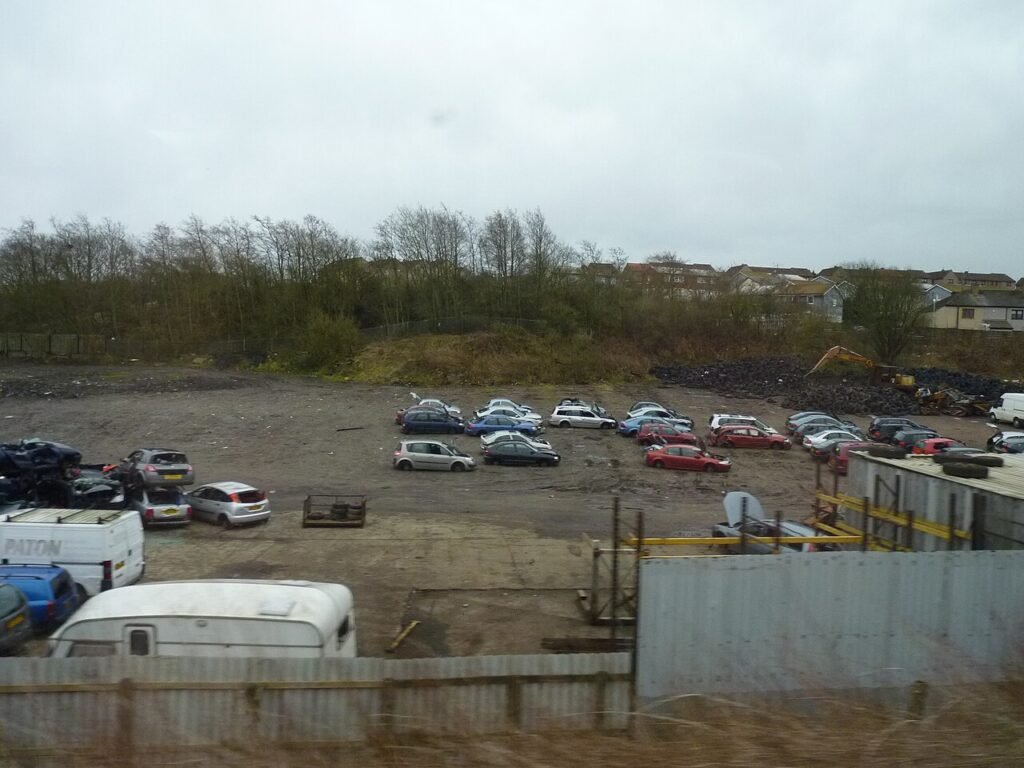
Current Context (The Trigger)
- The amendment: The Ministry of Environment, Forest and Climate Change (MoEFCC) has notified changes to the End-of-Life Vehicles (ELV) Rules, 2025. The changes refine the duties of manufacturers under the Extended Producer Responsibility (EPR) system.
- Industry worry: Carmakers feared that the original rules, read with Indian Accounting Standard (Ind AS) 37, would force large provisions in their accounts. These provisions would cover the future cost of scrapping vehicles sold many years ago.
- New trigger point: Unfulfilled EPR obligations now arise only when a producer permanently ceases operations. They do not apply to manufacturers that keep operating in India.
- On permanent closure: The maker must give details of vehicles it sold in the previous 15 years for transport vehicles and 20 years for non-transport vehicles. The Central Pollution Control Board (CPCB) then works out the outstanding EPR obligation.
- Size of the concern: Industry estimates put the one-time gross provision at tens of thousands of crores under the earlier reading. Executives had also warned that the hit would be large once environmental compensation rates for non-compliance were notified.
Core Concepts & Static GK
- Extended Producer Responsibility: The ELV Rules define EPR as the producer’s responsibility for scrapping its end-of-life vehicles in an environmentally sound manner. Producers must meet scrapping targets for vehicles they have put on the domestic market.
- End-of-life vehicle: The ELV Rules do not write their own definition. They borrow it from the Motor Vehicles (Registration and Functions of Vehicle Scrapping Facility) Rules, 2021 of the Road Transport Ministry.
- EPR certificates: The CPCB issues these through a centralised online portal in favour of Registered Vehicle Scrapping Facilities (RVSFs). One kilogram of certificate equals one kilogram of steel scrap generated at the facility.
- How producers comply: A producer can buy certificates from facilities instead of scrapping vehicles itself. It can buy only up to its current-year obligation plus any leftover from earlier years. A purchased certificate cannot be transferred to another producer.
- Certificate validity: A certificate generated by a scrapping facility stays valid for five years for meeting producer obligations.
- Annual targets: The rules came into force on 1 April 2025. Targets link to vehicles sold 15-20 years earlier. For 2025-26 the minimum is 8 per cent of the steel used in vehicles of 2005-06 (non-transport) or 2010-11 (transport).
- Ind AS 37 in simple terms: A provision needs three things: a present obligation from a past event, a probable outflow of money and a reliable estimate. Where no present obligation is probable, the item is a contingent liability. It is only disclosed, unless the chance of outflow is remote.
Constitutional & Legal Framework
- Rules, not an Act: The ELV regime is a set of rules made under the Environment (Protection) Act, 1986. They were notified on 6 January 2025 (S.O. 98(E)) and took effect on 1 April 2025.
- Motor Vehicles Act link: Owners must get vehicles tested under Section 56 of the Motor Vehicles Act, 1988 and Rule 52 of the Central Motor Vehicles Rules, 1989. An owner must deposit a vehicle within 180 days of it becoming an ELV.
- Design standard: Producers must take steps to comply with AIS-129 (an Automotive Industry Standard). It is published by the Centre under the Central Motor Vehicles Rules, 1989.
- What the rules leave out: Waste batteries, plastic packaging, waste tyres, used oil and e-waste stay under their own separate rules. Agricultural tractors, agricultural trailers, combine harvesters and power tillers are also outside the rules.
- Closure clause in the original rules: Rule 4(6) already said a producer that stops operations must meet its EPR duty for vehicles sold till closure. The new amendment makes closure the point at which unfulfilled obligations arise.
- Accounting law: Ind AS 37 is the Indian Accounting Standard on provisions, contingent liabilities and contingent assets. The dispute was about how it applies to a scrapping duty that falls due in the future.
Institutional Machinery
- MoEFCC: The ministry notified the rules and the amendment.
- CPCB: It will fix the outstanding EPR obligation of a closed company. It also runs the central portal, registers producers and receives the yearly EPR declaration due by 30 April.
- State Pollution Control Boards: Scrapping facilities and bulk consumers apply to the State Boards for registration. The Boards must register them within fifteen days.
- Registered Vehicle Scrapping Facilities: They depollute, dismantle and segregate vehicles. They send recovered material to registered recyclers. Non-recyclable material and hazardous waste go to an authorised common hazardous waste facility.
Reports, Indices & Data
- Target ladder: The Schedule keeps the target at 8 per cent of steel till 2029-30. It rises to 13 per cent for 2030-31 to 2034-35 and 18 per cent from 2035-36.
- Draft amendment of 27 March 2026: The MoEFCC draft (S.O. 1619(E)) proposes to delete “other steel scrap materials related to automobile sector” from the certificate rule. Only steel from end-of-life vehicles would then count.
- Higher long-term targets proposed: The same draft proposes 50 per cent from 2045-46 and 60 per cent from 2050-51 for non-transport vehicles. It also allows 30 per cent of any year’s target to be carried forward for four years.
- Recycled steel in new vehicles: The draft proposes that at least 10 per cent of the steel in a new vehicle be recycled steel from 2026-27.
Assam & Northeast Linkages
- Assam policy: Assam’s Transport Department notified the Vehicle Scrappage Policy of Assam, 2022 on 18 July 2022. It gives incentives to owners who hand vehicles to registered facilities and to those who set up such facilities.
- Budget support: The Assam Budget 2022-23 added vehicle scrap processing facilities to the industrial sector eligible for incentives.
- Guwahati facility: Tata Motors opened a registered scrapping facility in Guwahati on 8 February 2025, run by its partner Axom Platinum Scrappers. It can scrap up to 15,000 end-of-life vehicles a year, of all brands.
- Dues relief: Assam’s One Time Settlement scheme lets owners deregister unfit vehicles by paying 25 per cent of pending taxes and dues. The State extended it till 31 March 2026.
Prelims Trap Zones (Watch out for)
- Trigger Trap: Unfulfilled EPR obligations arise on permanent closure, not at every year-end for a running company.
- Look-back Trap: The closure look-back is 15 years for transport and 20 years for non-transport vehicles. Do not swap them.
- Certificate Basis Trap: Certificates depend on the weight of steel recovered, not on the count of vehicles.
- Body Trap: CPCB decides the outstanding obligation and runs the portal. State Boards, not CPCB, register scrapping facilities.
- Date Trap: The rules were notified on 6 January 2025 and took effect on 1 April 2025. The draft amendment on steel scrap is of 27 March 2026.
Introduction
India’s End-of-Life Vehicles Rules, 2025 make carmakers pay for scrapping the vehicles they sell, through steel-linked certificates. In November 2026 the Environment Ministry eased a key worry by saying running companies need not book future scrapping duties as current liabilities. The change shows how hard it is to fit green rules to sound accounting while keeping scrapping targets alive.
Need and Rationale of the ELV Regime
- Orderly disposal: The rules aim at environmentally responsible disposal and recycling of ageing vehicles. Depollution and segregation at registered facilities replace unsafe dismantling.
- Producer pays: EPR puts the cost of end-of-life handling on the maker, not on the public. Targets are linked to vehicles sold 15-20 years earlier.
- Steel recovery: Certificates are based on the weight of steel recovered. So scrapping also feeds a market for recycled steel.
- Formal sector: Producers, facilities and bulk consumers must all register on one portal. This brings dismantling into a tracked system.
- Flexibility for makers: Automakers can buy certificates from registered facilities and need not scrap vehicles themselves. This lets scrapping specialists do the work.
Why the Amendment Matters
- Balance-sheet relief: Industry observers say it removes doubt over balance-sheet effects. Without it, industry estimates ran to tens of thousands of crores as a one-time provision.
- Accounting logic: Under Ind AS 37, a provision needs a present obligation. The amendment ties unfulfilled obligations to permanent closure, so a running firm has none to book.
- Objective retained: Observers note that the goal of environmentally sound recycling stays. The amendment changes the timing of liability, not the yearly scrapping targets.
- Closure safeguard: If a maker shuts down, it must declare vehicles sold over the last 15 or 20 years. CPCB then fixes what is still owed, so the public is not left with the bill.
- Link to compensation: Executives had said the accounting hit would grow once environmental compensation rates were notified. The amendment removes that uncertainty for running firms.
Challenges
- Narrower certificate basis: The draft of 27 March 2026 would stop counting other automobile steel scrap for certificates. Only steel from scrapped end-of-life vehicles would earn them, so certificate supply could shrink.
- Rising targets: The goal grows from 8 per cent to 13 per cent in 2030-31 and 18 per cent from 2035-36. The draft even proposes 50 per cent from 2045-46 for non-transport vehicles.
- Supply of old vehicles: Certificates need vehicles that actually reach facilities. Automated testing stations must upload every vehicle declared unfit, and States must set up enough stations and facilities.
- Illegal dismantling: Unregistered scrap units still operate outside the system. The National Green Tribunal (NGT) has taken up a case on illegal scrap units in Delhi’s Mayapuri area.
- Risk in the closure rule: A liability that appears only at closure defers the cost. A weak firm that exits could leave a large unpaid duty behind.
- Compensation still pending: Certificate prices must lie between 30 and 100 per cent of the environmental compensation. Until those rates are notified, buyers and sellers lack a clear price band.
Way Ahead
- Raise ELV supply: States should set up enough automated testing stations, as Rule 13 of the ELV Rules asks. More unfit vehicles will then reach facilities.
- Review the certificate basis: The MoEFCC can weigh the comments received on the 27 March 2026 draft before finalising it. A phased shift would keep focus on real vehicle scrapping without a supply shock.
- Notify compensation rates early: The ministry should notify environmental compensation rates soon. Makers will then know their exposure and the certificate price band.
- Add safeguards for closure: CPCB should keep annual sales and steel data that producers file by 30 June each year. This makes the 15- and 20-year look-back easy to check.
- Grow facilities in the States: States such as Assam can bring scrapping units under industrial incentives, as the Assam Budget 2022-23 did.
- Build owner awareness: The rules ask producers and States to run awareness campaigns and offer incentives. Buy-back and deposit-refund schemes can push owners towards registered facilities.
Conclusion
The amendment fixes a real accounting worry without dropping the idea that producers must pay for the end of their products. The test now is physical. Unless more old vehicles reach registered facilities, certificates will stay scarce and the rising targets will be hard to meet.
APSC Prelims MCQs
Practice questions on this topic
Q1. The Environment Ministry has amended the Environment Protection (End-of-Life Vehicles) Rules, 2025. Consider the following statements:
(i) The rules came into force on 1 April 2025.
(ii) Automakers can meet their obligations by buying EPR certificates generated by registered vehicle scrapping facilities.
(iii) EPR certificates are generated on the basis of the number of vehicles scrapped, whatever the steel recovered.
Which of the statements given above is/are correct?
- (a) (i) and (ii) only
- (b) (ii) and (iii) only
- (c) (i) only
- (d) (i), (ii) and (iii)
Show answer
Answer: (a) Explanation: Statements (i) and (ii) are correct. The rules took effect on 1 April 2025. Producers may buy certificates generated by registered facilities through a centralised portal instead of scrapping vehicles themselves. Statement (iii) is wrong because certificates are based on the weight of steel recovered, not on the count of vehicles. So options (b) and (d), which include (iii), are wrong. Option (c) is incomplete because it leaves out (ii). Value addition: the rules were notified on 6 January 2025, and a certificate generated by a facility stays valid for five years.
Q2. Under the amended End-of-Life Vehicles Rules, obligations for unfulfilled EPR commitments of a vehicle producer arise when:
- (a) the producer sells vehicles in the domestic market
- (b) the financial year of the producer ends
- (c) the producer permanently ceases operations
- (d) environmental compensation rates are first notified
Show answer
Answer: (c) Explanation: As amended, the rules say unfulfilled EPR obligations arise only when a producer permanently ceases operations. They do not apply to a manufacturer that keeps operating in India. Option (a) is wrong because a sale does not by itself create a booked liability. Option (b) is wrong because a year-end trigger would bring the same accounting hit that industry feared under Ind AS 37. Option (d) is wrong because compensation rates only affect the cost of non-compliance and are not the trigger. Value addition: on closure, the maker must give details of vehicles sold in the previous 15 years (transport) or 20 years (non-transport). The Central Pollution Control Board then fixes the outstanding obligation.
Q3. Match List-I with List-II:
| List-I (Body) | List-II (Role under the ELV Rules) |
|---|---|
| a. Central Pollution Control Board | 1. Issues EPR certificates through a centralised online portal |
| b. State Pollution Control Boards | 2. Receive applications for registration of scrapping facilities |
| c. Registered Vehicle Scrapping Facility | 3. Earns certificates for each vehicle processed, based on steel recovered |
| d. Producer | 4. Declares its current-year EPR obligation by 30 April |
Select the correct answer using the codes given below:
- (a) a-1, b-2, c-3, d-4
- (b) a-2, b-1, c-3, d-4
- (c) a-1, b-2, c-4, d-3
- (d) a-3, b-2, c-1, d-4
Show answer
Answer: (a) Explanation: The central board issues certificates through the portal, so a matches 1. Applications to register scrapping facilities and bulk consumers go to the State Boards, so b matches 2. A facility earns certificates for each vehicle processed, based on steel recovered, so c matches 3. A producer declares its current-year obligation by 30 April, so d matches 4. Option (b) swaps the central and State boards. Option (c) swaps the facility and the producer. Option (d) swaps the central board and the facility. Value addition: producers register with the central board, and registration must be done within fifteen days of the application.
Q4. The Vehicle Scrappage Policy of Assam, which gives incentives for using and setting up Registered Vehicle Scrapping Facilities in the State, was notified in which year?
- (a) 2020
- (b) 2021
- (c) 2022
- (d) 2025
Show answer
Answer: (c) Explanation: Assam’s Transport Department notified the Vehicle Scrappage Policy of Assam, 2022 on 18 July 2022. The Assam Budget 2022-23 had earlier added vehicle scrap processing to the industrial sector for incentives. Option (a) is wrong because 2020 is too early; the State policy came after the central scrapping facility rules. Option (b) is wrong because 2021 is the year of those central rules, the Motor Vehicles (Registration and Functions of Vehicle Scrapping Facility) Rules. Option (d) is wrong because 2025 is the year of the Environment Protection (End-of-Life Vehicles) Rules. Value addition: a Tata Motors partner facility in Guwahati can scrap up to 15,000 end-of-life vehicles a year.
Prepare with SuchitraACS
APSC CCE Foundation Programme₹24,999  APSC Prelims Crash Course 2027 (GS + CSAT)₹5,999
 APSC Prelims PYQ Book 2020-2025 (PDF)₹199See the book