Agarwood export from Guwahati airport: APSC Current Affairs Notes and MCQs
APSC CCE current affairs notes on Agarwood export from Guwahati airport, from The Assam Tribune of 1 November 2026, with 4 practice MCQs for Prelims.
 Last batch for APSC CCE 2027 · starts 16 NovAPSC CCE Foundation Programme₹24,999
Current Affairs Notes
From The Assam Tribune, 1 November 2026
Agarwood Export Point at Guwahati Airport
Syllabus Mapping
- Prelims: GS Paper I (Current events of State/National importance; Assam Economy; General issues on Environment ecology, Bio-Diversity).
- Mains: GS Paper III (Indian Economy and issues relating to planning, mobilisation of resources, growth and development; Conservation); GS Paper V (Economy of Assam: Infrastructure and Resources; Bio-diversity and Environment of Assam).
Why in News? Union Commerce and Industry Minister Piyush Goyal made the announcement on Saturday, 31 October. According to the minister, the Centre has cleared LGBI Airport, Guwahati, as an export point for agarwood chips and agarwood oil. The approval came at Chief Minister Himanta Biswa Sarma’s request.
Current Context (The Trigger)
- The approval: Lokapriya Gopinath Bardoloi International (LGBI) Airport is now an approved export point for agarwood chips and agarwood oil.
- Who announced it: Piyush Goyal shared the news in a post on X.
- Expected gain: Growers, producers and exporters now have an export point inside the region. This should make it easier to sell agarwood products from Assam and the Northeast abroad.
- Recent trade: In October, Assam sent 123 kg of agarwood chips to Dubai. The state government called it a boost for the sector.
Core Concepts & Static GK
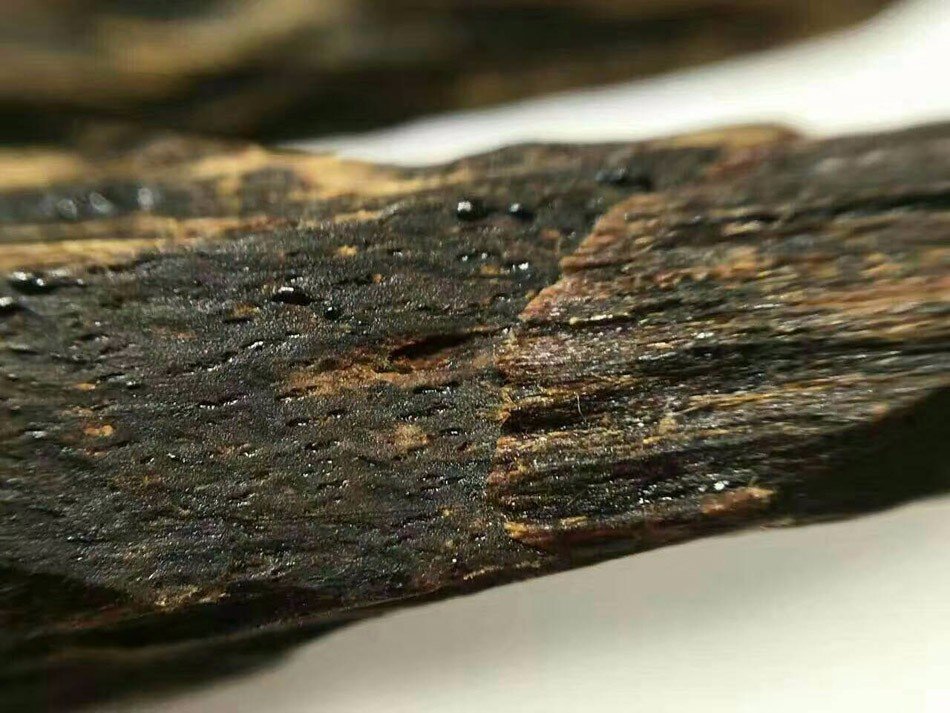
- Agarwood: A scented wood that forms inside trees of the genus Aquilaria. It goes into perfumes, incense sticks, essential oils and other traditional fragrances.
- Species in trade: India’s export rules name Aquilaria malaccensis for agar oil and for agarwood chips and powder. This species has been in Appendix II of CITES since 1995.
- CITES Appendix II: It lists species that may become threatened if trade is not controlled. Trade is allowed, but each export needs a CITES export permit.
Constitutional & Legal Framework
- Restricted export: A DGFT notification of 29 November 2021 moved agar oil and agarwood chips and powder from “Free” to “Restricted” export.
- Quota in 2021: The yearly limit was 25,000 kg for chips and powder and 1,500 kg for oil. It applies only to plantation-grown stock from outside forest areas.
- Higher quota from 2024: India’s CITES export quota rose to 151,080 kg a year for chips and powder and 7,050 kg a year for oil.
- Wild stock: The export quota for agarwood harvested from the wild is zero.
Institutional Machinery
- DGFT: The Directorate General of Foreign Trade issues the export licence for these restricted items.
- Forest Department: A state forest officer must certify that the stock came from a plantation registered with the state government.
- Botanical Survey of India: It prepared India’s Non-detriment Findings (NDF) study on agarwood for CITES. The Union Ministry of Environment, Forest and Climate Change commissioned it.
Reports, Indices & Data
- Review of Significant Trade: In 2023, CITES placed India under this review for Aquilaria malaccensis. Indonesia, Malaysia, Singapore and Thailand were also placed under it. India’s case has since been closed.
- Plantation base: The BSI study counted at least 139.89 million agarwood plants in non-forest areas of India.
Assam & Northeast Linkages
- Share of resources: The Chief Minister’s Office puts Assam’s share of India’s agarwood resources at about 81 per cent.
- Livelihoods: The Chief Minister said the industry supports more than 50,000 farmers and workers.
- State policy: Assam’s Industries and Commerce Department brought out the Assam Agarwood Promotion Policy, 2020. It came into force on 1 January 2021.
- Earlier shipment: In May 2026, about 112 kg of agarwood chips worth about Rs 2.35 crore went to Saudi Arabia and the UAE. The consignment left from the LGBI Airport cargo terminal after all statutory clearances.
Prelims Trap Zones (Watch out for)
- Genus Trap: Agarwood comes from Aquilaria, not from sandalwood (Santalum).
- Policy Trap: Agarwood exports are “Restricted”, not “Free” or “Prohibited”.
- CITES Trap: Aquilaria malaccensis is in Appendix II, not Appendix I.
- Announcer Trap: The Union Commerce and Industry Minister announced the approval, not the Assam government.
- Quantity Trap: The October export to Dubai was 123 kg of chips. The May shipment to Saudi Arabia and the UAE was a different one.
Introduction
Agarwood is a high-value product of the Northeast. Assam holds about 81 per cent of India’s agarwood resources. Each export needs a DGFT licence and a CITES permit, so paperwork and logistics matter as much as production.
Economic Rationale
- Export point at home: Exporters now have an approved export point within the region. Goyal called it a “massive logistical leap” for Assam and the Northeast.
- Livelihoods: The trade supports more than 50,000 farmers and workers.
- Market access: Recent shipments went to Dubai, Saudi Arabia and the UAE. This shows demand in Gulf markets.
Challenges
- Conservation: The species is in CITES Appendix II. Exports must come from plantations, as the wild quota is zero.
- Quota limits: Fixed yearly quotas cap how much India can sell abroad.
- Paperwork: Exporters need a forest department certificate of origin, a DGFT export licence and a CITES export permit.
- Small volumes: The October export to Dubai was only 123 kg.
Government Initiatives (National & Assam)
| Level | Initiative | Purpose & Impact |
|---|---|---|
| Centre | LGBI Airport approved as export point | Gives exporters an export point in the region |
| Centre | DGFT restricted-export regime with quotas | Allows controlled export of plantation-grown stock |
| Centre | Non-detriment Findings study by the Botanical Survey of India | Supported India’s case at CITES and the higher quota |
| Assam | Assam Agarwood Promotion Policy, 2020 | State policy to promote the agarwood sector, in force from 1 January 2021 |
Way Ahead
- Traceability: Track each plantation lot so buyers and CITES officials can check its origin.
- Faster permits: Bring DGFT and CITES clearances under one window at Guwahati.
- Farmer support: Expand nurseries and training so more growers can meet export rules.
- Value addition: Promote local oil and incense units so Assam exports finished goods, not only chips.
Conclusion
The new export point closes a logistics gap for Assam’s agarwood growers. Lasting gains will depend on legal, plantation-based trade that protects the species.
APSC Prelims MCQs
Practice questions on this topic
Q1. The Centre has approved Lokapriya Gopinath Bardoloi International Airport in Guwahati as an export point for agarwood products. Consider the following statements:
(i) The approval covers agarwood chips and agarwood oil.
(ii) It was announced by the Union Commerce and Industry Minister.
(iii) Agarwood is formed in trees of the genus Santalum.
Which of the statements given above is/are correct?
- (a) (i) only
- (b) (iii) only
- (c) (i) and (ii) only
- (d) (i), (ii) and (iii)
Show answer
Answer: (c) Explanation: Statements (i) and (ii) are correct. Statement (iii) is wrong because agarwood forms in trees of the genus Aquilaria. Santalum is the sandalwood genus.
Q2. India regulates the export of agarwood products. Consider the following statements:
(i) Agar oil and agarwood chips and powder were moved from the “Free” to the “Restricted” export category in November 2021.
(ii) India’s annual export quota for agarwood chips and powder was raised from 25,000 kg to 151,080 kg.
(iii) A non-zero export quota exists for wild-harvested agarwood.
How many of the statements given above are correct?
- (a) Only one
- (b) Only two
- (c) All three
- (d) None
Show answer
Answer: (b) Explanation: Statements (i) and (ii) are correct. Statement (iii) is wrong because the export quota for wild-harvested agarwood is zero. Only plantation-grown stock can be exported.
Q3. Match List-I with List-II:
| List-I | List-II |
|---|---|
| a. Genus of the agarwood tree | 1. Restricted |
| b. CITES listing of Aquilaria malaccensis | 2. Aquilaria |
| c. Export policy status of agar oil since November 2021 | 3. 1,500 kg a year |
| d. Annual export quota for agar oil set in 2021 | 4. Appendix II |
Select the correct answer using the codes given below:
- (a) a-2, b-4, c-1, d-3
- (b) a-2, b-1, c-4, d-3
- (c) a-4, b-2, c-1, d-3
- (d) a-2, b-4, c-3, d-1
Show answer
Answer: (a) Explanation: Agarwood comes from Aquilaria (a-2). The species is in CITES Appendix II (b-4). Its export is Restricted (c-1). The 2021 quota for agar oil was 1,500 kg a year (d-3). It was later raised to 7,050 kg.
Q4. Which international convention lists Aquilaria malaccensis, the agarwood species in trade, in its Appendix II?
- (a) Convention on Biological Diversity
- (b) CITES
- (c) Ramsar Convention
- (d) Convention on Migratory Species
Show answer
Answer: (b) Explanation: CITES controls international trade in wild species and lists Aquilaria malaccensis in Appendix II, so exports need permits. The CBD, Ramsar and CMS deal with biodiversity, wetlands and migratory animals.
Prepare with SuchitraACS
APSC CCE Foundation Programme₹24,999  APSC Prelims Crash Course 2027 (GS + CSAT)₹5,999
 APSC CCE Study Materials Package (Prelims + Mains)₹4,999