COP31 climate conference at Antalya: APSC Current Affairs Notes and MCQs
APSC CCE current affairs notes on COP31 climate conference at Antalya, from The Assam Tribune of 10 November 2026, with 4 practice MCQs for Prelims.
 For working professionals and full-time aspirantsAPSC CCE Foundation Programme₹24,999
Current Affairs Notes
From The Assam Tribune, 10 November 2026
COP31 Climate Conference at Antalya
Syllabus Mapping
- Prelims: GS Paper I (General issues on Environment and Ecology; Current events of national and international importance; International organisations and conventions).
- Mains: GS Paper III (Environment: climate change, conservation, disaster management). GS Paper II (Important international institutions, agencies and fora); GS Paper V (Assam syllabus: floods, environment and climate issues of Assam and the Northeast).
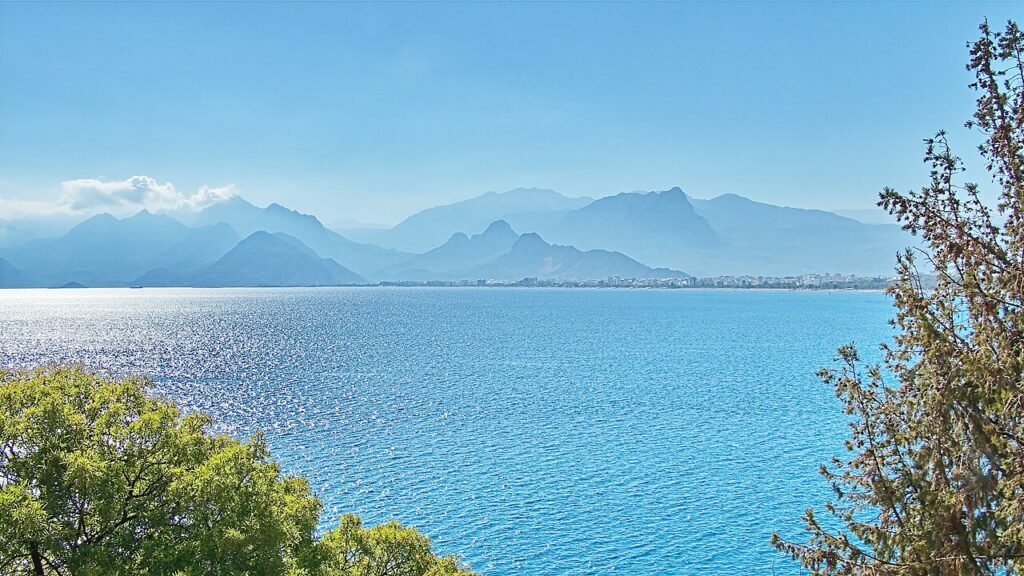
Why in News? On Monday, 9 November 2026, UN Climate Change Executive Secretary Simon Stiell spoke at the opening plenary of COP31 at Antalya in Turkiye. He warned about the heat crisis, glacial lake outburst floods in the Himalayas and a “super El Nino”. He urged countries to use the summit to speed up practical climate solutions.
Current Context (The Trigger)
- Opening plenary: Stiell addressed the opening plenary of the 31st Conference of the Parties (COP31) at Antalya on 9 November 2026.
- Three warnings: He named the rising heat crisis, glacial lake outburst floods (GLOFs) in the Himalayan region and a “super El Nino” as growing threats.
- Fairness theme: He said the vulnerable pay the highest price and that “profound injustice” threatens solidarity. He wanted fairness at the heart of the global move to clean energy and climate resilience.
- Fossil fuel shock: Stiell said swinging fossil fuel prices this year caused a global shock. Household bills rose and inflation spread.
- Renewables saving: He said renewable energy saved the world about half a trillion dollars in 2025. It saved another USD 265 billion in the first six months of 2026.
- Money worry: He cautioned that the conference is short of funds while its tasks keep growing. Countries will need serious budget talks over the next six months.
Core Concepts & Static GK
- UNFCCC: The United Nations Framework Convention on Climate Change was adopted in 1992, the year of the Rio Earth Summit. It came into force on 21 March 1994.
- COP: The Conference of the Parties is the supreme decision-making body of the Convention. The first COP met at Berlin in 1995.
- Membership: The UNFCCC lists 198 Parties to the Convention (197 states and one regional economic integration organisation, the European Union).
- Paris Agreement: It was adopted at COP21 on 12 December 2015 and entered into force on 4 November 2016.
- Temperature goal: Article 2 aims to hold warming “well below” 2 degrees Celsius above pre-industrial levels. It also asks countries to pursue efforts to limit it to 1.5 degrees Celsius.
- NDCs: A Nationally Determined Contribution is a country’s own climate pledge. Every Party must communicate one every five years.
- El Nino: It is a warming of sea-surface temperatures in the central and eastern Pacific Ocean. It shifts air circulation patterns, and IMD says most of India tends to get less monsoon rain in El Nino years.
- GLOF: A glacial lake outburst flood happens when a lake suddenly breaks out. The lake is held back by a moraine (loose rock and debris left by a glacier) or by ice. It sends a surge of water, rock and debris downstream.
Institutional Machinery
- UNFCCC secretariat: It is based in Bonn, Germany. Under Article 4.12 of the Paris Agreement, it keeps the public registry of NDCs.
- Executive Secretary: Simon Stiell of Grenada was appointed by the UN Secretary-General in August 2022. He succeeded Patricia Espinosa of Mexico.
- COP31 leadership: Turkiye hosts COP31 at Antalya and holds the COP Presidency. Its environment minister, Murat Kurum, is the COP31 President.
- Australia’s role: Australia is President of Negotiations, with “exclusive authority in relation to the negotiations”. Climate Change and Energy Minister Chris Bowen fills the role. This deal was agreed at COP30 in Belem, Brazil.
- NDMA: The National Disaster Management Authority (NDMA) issued national guidelines on the management of GLOFs in October 2020.
Schemes & Initiatives
- India’s NDC (2031-2035): The Union Cabinet approved it on 25 March 2026 for communication to the UNFCCC. It aims to cut the emissions intensity of GDP by 47 per cent from 2005 levels by 2035.
- Clean power target: The NDC targets a 60 per cent share of non-fossil sources in installed electricity capacity by 2035. India had reached 52.57 per cent by February 2026.
- Carbon sink: The NDC aims for a carbon sink of 3.5 to 4.0 billion tonnes of CO2 equivalent through forest and tree cover by 2035.
- Net zero: The NDC is aligned with India’s long-term goal of net-zero emissions by 2070.
- GLOF programme: In 2024 the Centre approved the NDMA’s Rs 150 crore National GLOF Risk Mitigation Programme for Himachal Pradesh, Uttarakhand, Sikkim and Arunachal Pradesh.
Assam & Northeast Linkages
- Assam SAPCC 2.0: The updated State Action Plan on Climate Change covers 2021 to 2030. It updates the first plan of 2015.
- Nodal body: The Assam Climate Change Management Society is the nodal agency. The Environment, Forest and Climate Change Department is the nodal department.
- Flood and erosion baseline: Assam’s Water Resources Department puts the flood-prone area at 31.05 lakh hectares, about 39.58 per cent of the state. Rivers have eroded 4.27 lakh hectares since 1950.
- Arunachal lakes: The NDMA has identified 27 high-risk glacial lakes in Arunachal Pradesh. In August 2024, expert teams went to six of them in Tawang and Dibang Valley districts.
- Mago Chu basin: A study found glacial lakes in this Brahmaputra headwater zone in western Arunachal rose from 15 in 1988 to 29 in 2017.
- NE and El Nino: The India Meteorological Department (IMD) notes that northeast India is an exception to the El Nino pattern. It often gets above-average rain in El Nino years.
Prelims Trap Zones (Watch out for)
- Host vs negotiator: Turkiye hosts COP31 and holds the Presidency. Australia is President of Negotiations. Do not call Australia the host or a co-president, because Kurum has said the two are not co-presidents.
- Year trap: The UNFCCC was adopted in 1992 but came into force in 1994. The Paris Agreement was adopted in 2015 but came into force in 2016.
- Who runs the secretariat: Stiell is the Executive Secretary of the UNFCCC secretariat. He is not the COP President and not the UN Secretary-General.
- El Nino and NE India: El Nino is linked to weak monsoon rain over most of India. IMD notes the Northeast as an exception and says El Nino is not the only factor.
- GLOF is not a normal flood: A GLOF comes from the sudden breach of a glacial lake, not from heavy rain alone. Rain or a landslide may only trigger the breach.
- NDC target type: India’s 47 per cent target is a cut in emissions intensity per unit of GDP. It is not a cut in total emissions.
Introduction
On 9 November 2026, the UN’s climate chief told COP31 delegates at Antalya that “global heating is already costing the Earth”. He singled out Himalayan glacial lake floods and a “monster” El Nino. These are not distant risks for Assam, because its rivers begin in the same mountains and its monsoon depends on the same oceans.
Causes and Impact: Why Heat, GLOFs and El Nino Matter
- Heat crisis: Stiell listed rising heat among the main threats to communities worldwide. Hotter summers raise health risks, strain power grids and cut farm output.
- Himalayan lakes: Warming melts glaciers and fills lakes behind weak moraine walls. A sudden breach can send a flood far downstream.
- Sikkim 2023: In early October 2023, a GLOF from South Lhonak Lake swept away the 1,200 MW Teesta III dam. Reports blamed the high toll on the lack of an early warning system and weak dam safety.
- Arunachal basin: Studies of the Mago Chu basin, a headwater zone of the Brahmaputra, show glacial lakes rose from 15 in 1988 to 29 by 2017. More lakes upstream mean more risk for the plains of Assam.
- El Nino and monsoon: IMD’s April 2026 forecast expected below-normal monsoon rain, about 92 per cent of the long period average. It cited the expected development of El Nino conditions.
- Cost of fossil dependence: Stiell said this year’s fossil fuel price swings pushed up household costs and inflation. Poor families feel such shocks the most.
India’s Role & Strategic Significance
- Climate target setter: India’s NDC for 2031 to 2035 promises a 47 per cent cut in emissions intensity from 2005 levels. It gives India a concrete position at COP31.
- Clean power record: Non-fossil sources made up 52.57 per cent of India’s installed power capacity by February 2026. This supports India’s claim that developing countries can deliver.
- Net-zero 2070: India links its NDC to a net-zero goal for 2070. This keeps its long-term path tied to its development needs.
- Voice on fairness: Stiell said fairness must be at the heart of the clean energy shift. This matches India’s long-standing call for support to vulnerable and developing countries.
- Himalayan stakeholder: India shares the Himalayan risk that Stiell raised. Its mountain states, such as Sikkim and Arunachal Pradesh, already face GLOF threats.
Government Initiatives (National & Assam)
- NDMA GLOF guidelines: Released in October 2020, they guide ministries and states on preparedness, prevention, mitigation and response. They explain how to identify dangerous lakes from field data, past events and satellite radar.
- Lowering lake levels: The guidelines suggest controlled breaching, pumping or siphoning out water, or a tunnel through the moraine to cut lake volume.
- Land-use rules: They call for rules on construction and land-use planning in GLOF-prone zones. They also want trained local people, who are often the first responders.
- Sikkim weather stations: In September 2023, NDMA-led teams installed two solar-powered automated weather stations at South Lhonak and Shako Cho lakes. The South Lhonak unit stopped sending data days before the October flood.
- National GLOF programme: The Rs 150 crore National GLOF Risk Mitigation Programme covers four Himalayan states. Arunachal Pradesh’s share is Rs 45 crore.
- India’s NDC: The 2031 to 2035 NDC sets a 3.5 to 4.0 billion tonne carbon sink target through forest and tree cover.
- Assam SAPCC 2.0: The plan for 2021 to 2030 includes a district-level vulnerability assessment of climate, exposure and adaptive capacity. It is run by the Assam Climate Change Management Society.
Challenges
- Shrinking budget: Stiell warned that the climate process faces money limits even as its tasks grow. A weaker secretariat can slow technical support to poor countries.
- Climate justice gap: Stiell said the vulnerable pay the highest price. Poor countries and mountain communities have added little to emissions but face the worst floods.
- Split presidency: Turkiye holds the Presidency and Australia leads the negotiations. Kurum says the final decision lies with the Turkish presidency, while Bowen says his role covers the draft texts. This could slow decisions at a tense summit.
- Warning system gaps: The South Lhonak weather station failed days before the 2023 flood, and the lake had no early warning system. Remote lakes in Arunachal, above 11,000 feet, are even harder to monitor.
- Forecast uncertainty: IMD says El Nino is not the only factor behind monsoon rain. Other factors, such as the Indian Ocean Dipole and Eurasian snow cover, also matter, so planners cannot rely on one signal.
- Unprotected flood plains: Assam’s Water Resources Department says only about 16.50 lakh hectares of its 31.05 lakh hectares of flood-prone land has reasonable protection. A GLOF surge would add to an already heavy flood load.
Way Ahead
- Fund the process: Parties should agree a stable budget for the UNFCCC secretariat in the budget talks Stiell has called for. This keeps negotiations and technical support running.
- Back adaptation finance: India should press at COP31 for funds that reach vulnerable communities, in line with Stiell’s call for fairness.
- Monitor every high-risk lake: The NDMA and state disaster authorities should extend weather stations and sensors to all 27 high-risk lakes in Arunachal. The South Lhonak failure shows that stations also need regular upkeep.
- Warn downstream: The Assam State Disaster Management Authority should link Arunachal lake alerts to district warnings along Brahmaputra tributaries. Commentators have urged a full GLOF risk assessment for Assam.
- Enforce land-use rules: Mountain states should follow the NDMA guidelines on building and land use in GLOF-prone zones. This cuts the number of people and assets in the flood path.
- Fund the Assam plan: The Environment, Forest and Climate Change Department should tie SAPCC 2.0 actions to clear budgets. The district vulnerability assessment can guide where money goes first.
- Deliver the NDC: The Centre should keep growing non-fossil capacity from 52.57 per cent towards the 60 per cent target for 2035.
Conclusion
Stiell’s speech shows that climate talks are now about floods, heat and prices that people already face. For Assam, the answer lies in better warning systems for Himalayan lakes, a funded state climate plan and firm support for fair global finance.
APSC Prelims MCQs
Practice questions on this topic
Q1. COP31 is being held at Antalya in Turkiye with an unusual leadership arrangement. Consider the following statements:
(i) Turkiye hosts the conference and holds the COP Presidency.
(ii) Australia is the President of Negotiations for COP31.
(iii) The Executive Secretary of the UNFCCC is elected by the Conference of the Parties through a vote.
Which of the statements given above is/are correct?
- (a) (i) and (ii) only
- (b) (ii) and (iii) only
- (c) (i) only
- (d) (i), (ii) and (iii)
Show answer
Answer: (a) Explanation: Statement (i) is correct. At COP30 in Belem, it was agreed that Turkiye would host COP31 in Antalya and hold the Presidency. Statement (ii) is correct. Australia is President of Negotiations with “exclusive authority in relation to the negotiations”, and Minister Chris Bowen fills the role. Statement (iii) is wrong. The UN Secretary-General appointed Simon Stiell in August 2022 after consulting the COP through its Bureau, so there was no vote by the COP. Option (b) wrongly includes (iii), option (c) leaves out the true statement (ii), and option (d) includes the false one. Value addition: Turkiye’s environment minister Murat Kurum is the COP31 President, and Stiell was reappointed for a second three-year term in 2025.
Q2. Arrange the following events in chronological order:
(i) Adoption of the Paris Agreement
(ii) Entry into force of the UNFCCC
(iii) Entry into force of the Paris Agreement
(iv) First Conference of the Parties at Berlin
Select the correct answer using the code given below:
- (a) (ii), (iv), (i), (iii)
- (b) (iv), (ii), (i), (iii)
- (c) (ii), (iv), (iii), (i)
- (d) (ii), (i), (iv), (iii)
Show answer
Answer: (a) Explanation: The UNFCCC came into force on 21 March 1994, so (ii) comes first. The first COP met at Berlin in 1995, so (iv) follows. The Paris Agreement was adopted on 12 December 2015, which is event (i). It entered into force on 4 November 2016, which is event (iii). The sequence is (ii), (iv), (i), (iii). Option (b) puts the first COP before the Convention took effect, which could not happen. Option (c) places entry into force of the Paris Agreement before its adoption, which is impossible. Option (d) puts the 2015 Paris adoption before the 1995 Berlin COP. Value addition: the Kyoto Protocol was adopted at COP3 on 11 December 1997 and came into force on 16 February 2005.
Q3. Which of the following is the nodal agency for the Assam State Action Plan on Climate Change (SAPCC) 2.0, which covers 2021 to 2030?
- (a) Assam State Disaster Management Authority
- (b) Assam Climate Change Management Society
- (c) Brahmaputra Board
- (d) Pollution Control Board, Assam
Show answer
Answer: (b) Explanation: The Assam Climate Change Management Society is the nodal agency for SAPCC 2.0, with the Environment, Forest and Climate Change Department as the nodal department. Option (a) is wrong. The Assam State Disaster Management Authority is the state body under the Disaster Management Act, 2005, chaired by the Chief Minister. Option (c) is wrong. The Brahmaputra Board is a statutory body under the Brahmaputra Board Act, 1980. It prepares master plans for flood, erosion and drainage control. Option (d) is wrong because the Pollution Control Board, Assam was set up in 1975 under the Water Act, 1974 to control pollution. Value addition: the first Assam SAPCC came in 2015.
Q4. India’s updated Nationally Determined Contribution for 2031 to 2035 aims to reduce which of the following by 47 per cent from 2005 levels by 2035?
- (a) Total greenhouse gas emissions of the country
- (b) Per capita carbon dioxide emissions
- (c) Emissions intensity of GDP
- (d) Coal consumption in the power sector
Show answer
Answer: (c) Explanation: The Union Cabinet approved the NDC in March 2026. Its headline target is a 47 per cent cut in the emissions intensity of GDP, which means emissions per unit of economic output, measured against 2005. Option (a) is wrong because India has not promised an absolute cut in total emissions. Option (b) is wrong because the NDC does not set a per capita target. Option (d) is wrong because the NDC does not fix a coal consumption cut. Instead, it sets a share of non-fossil power capacity. Value addition: the same NDC aims for 60 per cent non-fossil installed capacity by 2035, up from 52.57 per cent in February 2026. It ties into India’s net-zero goal for 2070.
Prepare with SuchitraACS
APSC CCE Foundation Programme₹24,999  APSC Prelims Crash Course 2027 (GS + CSAT)₹5,999
 APSC CCE Study Materials Package (Prelims + Mains)₹4,999