APSC Current Affairs: Assam Tribune Notes with MCQs and Answer Writing (09/11/2026)
For APSC CCE and other Assam competitive exam aspirants, staying consistently updated with reliable current affairs is essential for success. This blog provides a well-researched analysis of the most important topics from The Assam Tribune dated 09 November 2026. Each issue has been carefully selected and explained to support both APSC Prelims and Mains preparation, ensuring alignment with the APSC CCE syllabus and the evolving trends of the examination.
 For working professionals and full-time aspirantsAPSC CCE Foundation Programme₹24,999
Current Affairs Notes
From The Assam Tribune, 9 November 2026
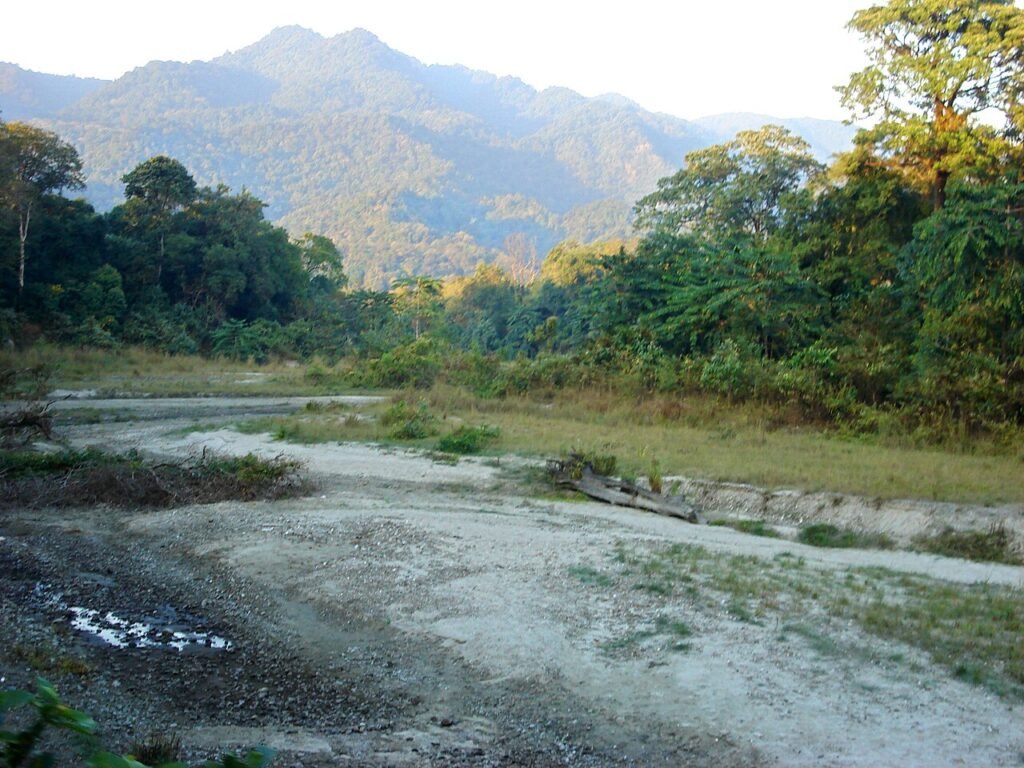
Manpower Shortage in Manas National Park and Tiger Reserve
Open this topic as a separate page, with its MCQs →
Syllabus Mapping
- Prelims: GS Paper I (General issues on Environment ecology, Bio-Diversity and Climate Change; Current events of State/National importance).
- Mains: GS Paper III (Conservation, environmental degradation); GS Paper III (Important aspects of governance, transparency and accountability); GS Paper V (Forests, Wildlife and Bio-diversity of Assam; Public Policy, Legal Rights).
Why in News? The Assam Tribune reported from Guwahati on 8 November 2026 that 103 of the 466 sanctioned posts in Manas National Park and Tiger Reserve have been vacant for years. The report also shows two forest offices handling the same Right to Information (RTI) request in very different ways.
Current Context (The Trigger)
- Vacancy figure: Official data put the sanctioned staff strength (gazetted and non-gazetted) at 466. Of these, 103 posts have stayed vacant for many years.
- Vacancy rate: The vacancy stands at 22 per cent. Some posts, such as research officer, junior assistant/ranger assistant, veterinary field assistant and lab attendant, are 100 per cent vacant.
- Field posts hit: The vacant posts include 19 game watchers, 12 forest guards and 11 mahuts. Also vacant are 9 foresters of grade 1, 9 foresters of grade 2, 2 deputy rangers and 1 forest ranger.
- Position in 2023: Forest sources said that in 2023 the sanctioned strength was 294 and 160 posts were vacant, nearly 55 per cent. Another 25 staff were unfit for field duty owing to age, illness or infirmity, so the effective vacancy was 63 per cent.
- Rhino plan deferred: About three years ago, the State Board of Wildlife Assam approved moving 25 rhinos to Manas. The security assessment team set up for the reintroduction did not clear it, so the exercise was put off. Rhino and elephant poaching cases also took place around that time.
- RTI reply one: Activist Rohit Choudhury sought the vacancy data from the Field Director’s office of the park. In a letter dated 28 September 2026, that office called the records voluminous and invited him to come and inspect them. The paper says the office allegedly skipped the usual procedure.
- RTI reply two: The office of the Principal Chief Conservator of Forests (Wildlife) and Chief Wildlife Warden got the same petition. It sent the data at once as a one-page attachment, in a letter dated 30 September 2026.
Core Concepts & Static GK
- World Heritage status: UNESCO inscribed Manas as a natural World Heritage Site in December 1985. The area inscribed was the 39,100-hectare Manas Wildlife Sanctuary.
- Danger listing: Manas stayed on the List of World Heritage in Danger from 1992 to 2011. UNESCO took it off the list on 21 June 2011, noting its recovery from damage suffered during ethnic unrest.
- Early history: The area was declared a sanctuary on 1 October 1928. In 1990 it was enlarged to 50,000 hectares and made a national park.
- Tiger reserve: The sanctuary became the core of the Manas Tiger Reserve from April 1973, the month Project Tiger was launched. The government list of tiger reserves shows Manas among those created in 1973-74.
- Present size: The National Tiger Conservation Authority (NTCA) gives the tiger reserve a total area of 2,837.31 sq km. This is made up of 526.22 sq km of core (critical tiger habitat) and 2,310.88 sq km of buffer.
- Biosphere reserve: Manas was designated a Biosphere Reserve in 1989, covering 2,837 sq km. The Environment Ministry’s list does not show it among the Indian reserves in UNESCO’s World Network of Biosphere Reserves.
- Many labels, one area: The NTCA describes Manas as a natural World Heritage Site, a Tiger Reserve, an Elephant Reserve, a Biosphere Reserve and an Important Bird Area.
- Cross-border landscape: To the north, the Manas river and its tributaries, the Beki and the Hakua, separate it from Royal Manas National Park of Bhutan. To the west, the Sankosh river separates it from Buxa Tiger Reserve of West Bengal.
Constitutional & Legal Framework
- RTI Act, 2005, Section 4: Every public authority must publish key details on its own. The list in Section 4(1)(b) includes a directory of its officers and employees and the names of its Public Information Officers. Section 4(2) asks authorities to share as much as possible suo motu, so citizens need to file fewer requests.
- Supreme Court on Section 4: In Kishan Chand Jain v. Union of India (17 August 2023, Writ Petition (Civil) No. 990 of 2021), a bench led by Chief Justice D.Y. Chandrachud directed the Central and State Information Commissions to keep monitoring how public authorities carry out Section 4.
- Meaning of the right: Section 2(j) of the RTI Act includes inspection of work, documents and records within the right to information. So inspection is a lawful way of giving access.
- Form of information: Section 7(9) says information should ordinarily be given in the form in which it is sought. The only exceptions are when this would disproportionately divert the authority’s resources or harm the safety of the record.
- Tiger law: The NTCA was set up under Section 38L(1) of the Wild Life (Protection) Act, 1972, as amended in 2006. Under Section 38O(2), people and authorities must comply with its written directions for protecting tigers and tiger reserves.
Institutional Machinery
- NTCA: The NTCA is a statutory body under the Ministry of Environment, Forest and Climate Change. The Union Environment Minister chairs it.
- Field Director’s office: This office of Manas National Park and Tiger Reserve received the RTI request first. It asked the applicant to inspect the files in person instead of sending the data.
- Chief Wildlife Warden: The office of the Principal Chief Conservator of Forests (Wildlife) and Chief Wildlife Warden sent the same data in one page. This came two days after the Field Director’s letter.
- State Board of Wildlife: The State Board of Wildlife Assam had approved the plan to bring 25 rhinos to Manas, which was later deferred.
Schemes & Initiatives
- Indian Rhino Vision 2020 (IRV2020): This was a joint programme. The partners were the Assam Forest Department, World Wide Fund for Nature (WWF) India, the Bodoland Territorial Council and the International Rhino Foundation.
- Aim: IRV2020 aimed to raise Assam’s rhino population to 3,000 by building new rhino populations in other protected areas.
- Manas reintroduction: Rhinos had been wiped out in Manas and were brought back from 2008, from Kaziranga and Pobitora, according to the national tiger report of 2022. The International Rhino Foundation says IRV2020 built an initial population of 18 rhinos in Manas by 2009.
- Final translocation: The last IRV2020 operation, in April 2021, moved two rhinos from Pobitora to Manas. After this release, Manas had 49 rhinos, according to the International Rhino Foundation.
- Project Tiger funding: Project Tiger is a Centrally Sponsored Scheme. In the North Eastern and Himalayan states, the Centre bears 90 per cent of the cost, against 50:50 or 60:40 sharing elsewhere.
Assam & Northeast Linkages
- Location: The NTCA says the tiger reserve spans Kokrajhar, Chirang, Baksa and Udalguri districts in north-west Assam, in the Bodoland area.
- Tigers: In the 2022 all-India tiger estimation, camera traps in Manas captured 57 individual tigers. The same report put Assam’s tiger population at 227, up from 190 in 2018.
- Rare species: The IUCN (International Union for Conservation of Nature) names the pygmy hog, hispid hare, golden langur and the critically endangered Bengal florican among Manas’s key species.
- Past damage: The NTCA notes that the rhino and other herbivores suffered during the insurgency of 1989 to 2003. This history is why strong field staff matter so much for the rhino reintroduction.
Prelims Trap Zones (Watch out for)
- Year Trap: Manas became a sanctuary in 1928 and a tiger reserve in 1973. It became a World Heritage Site in 1985, a Biosphere Reserve in 1989 and a national park in 1990. Do not swap these years.
- Percentage Trap: The current vacancy is 22 per cent (103 of 466 posts). The 55 per cent (160 of 294) and the effective 63 per cent figures belong to 2023, and they use a different sanctioned base.
- Body Trap: The Field Director’s office invited the applicant to inspect records. The Chief Wildlife Warden’s office supplied the data in a one-page reply.
- Number Trap: The State Board of Wildlife approved 25 rhinos for Manas. IRV2020 had built an initial Manas population of 18 by 2009, and Manas had 49 rhinos after the April 2021 release.
- Section Trap: Proactive disclosure is Section 4 of the RTI Act. Section 6 is the route for filing an individual request, and Section 2(j) defines the right, including inspection.
- Biosphere Trap: Manas Biosphere Reserve (1989) is a national designation. It is not on the Environment Ministry’s list of Indian reserves in UNESCO’s World Network of Biosphere Reserves.
Introduction
Manas is a World Heritage Site and a tiger reserve, yet 103 of its 466 sanctioned posts are vacant, according to official data reported on 9 November 2026. The gap affects patrolling, the rhino reintroduction plan and the way forest offices answer citizens. Manas shows that a protected area is only as safe as the people who guard it.
Why Adequate Staff Matters in Manas
- Heritage record: Manas spent 1992 to 2011 on UNESCO’s List of World Heritage in Danger. Weak protection on the ground could put that hard-won recovery at risk.
- Frontline patrolling: Game watchers and forest guards walk the beats and watch for poachers. Manas now has 19 game watcher and 12 forest guard posts vacant.
- Field supervision: The paper calls forester posts of both grades critical and notes high vacancy in them. A total of 18 forester posts, 9 in each grade, are vacant.
- Elephant work: Mahuts handle the park’s working elephants. Eleven mahut posts are vacant.
- Science and animal health: The research officer and veterinary field assistant posts are fully vacant. This weakens wildlife monitoring and the care of injured animals.
- Shared landscape: The NTCA’s 2022 report treats Manas, Royal Manas in Bhutan and Buxa in West Bengal as one tiger population block. Strong staff on the Indian side protect this whole shared population.
Causes and Impact of the Vacancies
- Posts empty for years: The report says the vacancies have stayed unfilled for many years. This points to slow recruitment, not a sudden loss of staff.
- Unfit staff: In 2023, 25 staff could not be put on field duty owing to age, illness or infirmity. Counting them, the effective vacancy reached 63 per cent.
- Rhino plan deferred: The move of 25 rhinos, which the State Board of Wildlife had cleared, did not get security clearance about three years ago. A thin guard force made the risk to new rhinos too high.
- Poaching at the time: Rhino and elephant poaching cases were reported around the same period. This shows what happens when patrolling thins out.
- Some improvement: Forest sources say things have improved to an extent. However, the 2023 figure (160 vacant of 294) and the present one (103 vacant of 466) use different sanctioned strengths. So the two percentages are not a like-for-like comparison.
- Risk to past gains: IRV2020 helped Manas reach 49 rhinos by April 2021. A weak guard force puts that result at risk.
Transparency and the RTI Angle
- Two offices, two replies: One forest office asked the applicant to inspect the records, while another sent the data in a one-page reply dated 30 September 2026. This shows uneven practice inside one department.
- Duty to publish: Section 4(1)(b) of the RTI Act asks every public authority to publish a directory of its officers and employees. Staff and vacancy data of this kind could sit on a website without any request.
- Judicial reminder: In Kishan Chand Jain (2023), the Supreme Court told the Central and State Information Commissions to keep monitoring Section 4 compliance.
- Form of reply: Section 2(j) makes inspection a lawful mode of access. But Section 7(9) says information should ordinarily be given in the form sought, unless that would disproportionately divert resources or harm the record.
- Public interest: Vacancy data of a World Heritage tiger reserve concern public money and public assets. Easy access helps wildlife groups and the press hold the system to account.
Challenges
- Slow recruitment: Posts have stayed vacant for years, which shows delay in filling them through the state recruitment system.
- Remote postings: Field posts such as forest guard and boatman mean living in forest camps along rivers. Such postings are harder to fill and to keep filled.
- Ageing field force: In 2023, some staff could not be deployed because of age or illness. Younger recruits are needed to replace them.
- Security of reintroduced rhinos: Rhinos attract poachers. The plan to bring 25 more rhinos could not go ahead without clearance from the security team.
- Weak disclosure culture: The Field Director’s office did not compile the data and asked the applicant to visit. Another office showed the same data fitted on one page.
- Porous border: The NTCA’s 2022 report says porous international borders make poaching easier across this landscape. Patrolling the long Bhutan boundary needs enough staff.
Way Ahead
- Time-bound recruitment: The Assam Forest Department should fill the 103 vacant posts through a dated plan. Forest guards, foresters and game watchers should come first.
- Specialist posts first: The research officer, veterinary field assistant and lab attendant posts are fully vacant. They are few in number but key to monitoring and animal care, so they should be filled soon.
- Use NTCA support: Project Tiger gives North Eastern states 90 per cent central funding. Assam can use its Annual Plan of Operations to seek support for frontline staff and capacity building.
- Proactive disclosure: The Field Director’s office should post staff strength and vacancy data online under Section 4. Commissions should check this, as the Supreme Court directed in 2023.
- Common RTI practice: The Chief Wildlife Warden’s office can issue a circular asking field offices to send short data in writing. Inspection should be offered only when records are truly bulky.
- Link staffing to translocation: The State Board of Wildlife should clear the next rhino move only after a staffing and security review of Manas.
- Work with Bhutan: The NTCA lists close coordination with Bhutan as a management need for Manas. Regular joint meetings and information sharing with Royal Manas National Park would help protect the shared tiger and rhino landscape.
Conclusion
Forest sources say Manas is better staffed than in 2023, but 103 empty posts in a World Heritage tiger reserve is still a serious gap. Filling frontline and specialist posts quickly, and sharing basic data openly, will decide whether the rhino and tiger recovery in Manas lasts.
Safety Lapses after Fire at OIL Tank Farm in Tengakhat
Open this topic as a separate page, with its MCQs →
Syllabus Mapping
- Prelims: GS Paper I (Current events of State/National importance; General issues on Environment ecology, Bio-Diversity and Climate Change; Economic and Social Development).
- Mains: GS Paper III (Technology, Economic Development, Biodiversity, Security and Disaster Management); GS Paper V (Economic Development, Environment, Security and Disaster Management of Assam).
Why in News? On 6 November, a blast during maintenance set off a fire at the Intermediate Tank Farm (ITF) of Oil India Limited (OIL) at Tengakhat in Dibrugarh district. By 8 November four contract workers had died, and OIL had suspended the four employees in charge of the site pending an inquiry.
Current Context (The Trigger)
- The accident: An explosion took place on 6 November, a Friday, while maintenance work was going on at the Tengakhat tank farm. A fire followed, according to an OIL statement.
- Death toll: One worker died on the day of the fire and two more died the next day. A fourth worker, a mechanical helper, died in a Dibrugarh hospital on Sunday, 8 November, so the toll reached four.
- Injured: Three other people hurt in the blaze are still in hospital. Officials describe their condition as critical.
- Contract workers: Every victim worked for Spectron Engineering Private Limited. OIL had hired this Mumbai company for the job.
- Action taken: OIL ordered a high-level inquiry. It suspended all four of its employees in charge of the ITF, three of them officers, until the probe ends.
- Where it happened: The paper’s editorial places the blast in the section with crude storage and an indirect bath heater. Workers were handling a valve at that moment.
Core Concepts & Static GK
- Oil India Limited: OIL is a Government of India enterprise in oil and gas exploration and production. Its registered office is at Duliajan in Dibrugarh district, Assam.
- Maharatna status: The Government of India raised OIL to the Maharatna category in August 2023. It became the 13th Maharatna central public sector enterprise. OIL had become a Navratna in 2010.
- Intermediate tank farm: A tank farm is a set of storage tanks where crude oil from wells is collected and handled before it moves on. The Tengakhat unit also had a heater section where the blast took place.
- Blowout: A blowout is an uncontrolled flow of oil or gas from a well. The Baghjan blowout of 2020 came from an OIL well, and gas kept escaping for months.
- Oil Industry Safety Directorate (OISD): OISD is a technical directorate of the Ministry of Petroleum and Natural Gas (MoPNG), set up in 1986. It assists the Safety Council, which the Secretary of MoPNG chairs.
- Outsourced maintenance: The editorial notes that oil public sector units such as OIL and ONGC often give maintenance jobs to private firms. It doubts whether these firms have enough expertise.
Constitutional & Legal Framework
- Public Liability Insurance Act, 1991: This Act (No. 6 of 1991) gives quick relief to people hit by accidents while hazardous substances are handled. It received the President’s assent on 22 January 1991.
- No-fault liability: Section 3 makes the owner liable to give relief for death, injury or property damage from such an accident. The claimant does not have to prove anyone’s negligence.
- Workers are excluded here: Section 3 relief covers a person “other than a workman”. So employees hurt on the job must use labour and compensation law instead.
- Insurance and Collector: Section 4 requires the owner to buy insurance against this liability before handling any hazardous substance. Claims go to the Collector of the area, who holds an inquiry and makes an award.
- OSH Code, 2020: The Occupational Safety, Health and Working Conditions Code came into force on 21 November 2025, with the other three labour codes. It applies to establishments with 10 or more workers, but this limit does not apply to hazardous or life-threatening work notified by the Centre.
- Older laws merged: The OSH Code replaces 13 central laws on workers’ health, safety and working conditions. Together, the four labour codes replace 29 central labour laws.
Institutional Machinery
- OISD standards: OISD writes safety standards for the oil and gas sector and has issued 121 of them. Only 21 are mandatory, because they are part of rules such as the Petroleum Rules, 2002 and the Oil Mines Regulations, 2017.
- PESO: The Petroleum and Explosives Safety Organisation administers the Explosives Act, 1884 and the Petroleum Act, 1934. It is based in Nagpur and works under the Department for Promotion of Industry and Internal Trade (DPIIT), Ministry of Commerce and Industry.
- NDMA guidelines: The National Disaster Management Authority issued National Guidelines on Chemical Disasters (Industrial) in 2007. They deal with preventing and handling accidents at industrial units that store or use hazardous chemicals.
- District emergency plans: Under the Manufacture, Storage and Import of Hazardous Chemicals Rules, 1989, a major hazard unit must prepare an on-site emergency plan. The District Collector prepares the off-site emergency plan for the district.
- OIL’s own inquiry: So far the company itself, not an outside body, has set up the inquiry. The editorial hopes it will find both the immediate and the deeper causes.
Reports, Indices & Data
- Katakey committee: On 26 June 2020 the National Green Tribunal (NGT) set up a committee under former judge B.P. Katakey to study the Baghjan blowout.
- Finding on consents: The committee found that OIL did not hold mandatory consents, including those under the Water and Air Acts, when the blowout and explosion occurred.
- Supreme Court condition: A 2017 Supreme Court order let OIL work near Dibru-Saikhowa only after a biodiversity impact assessment. The committee found that OIL had not done this study.
- Legal action: The committee asked that the Pollution Control Board of Assam be directed to take legal action against OIL.
Assam & Northeast Linkages
- Baghjan, 2020: The editorial calls the Baghjan blowout unmatched in the 150-year history of oil exploration in Assam.
- Baghjan dates: The blowout at the Baghjan-5 well in Tinsukia district began on 27 May 2020. An explosion and fire followed on 9 June 2020.
- Ecological damage: The months-long gas release hurt the Maguri wetland and Dibru-Saikhowa National Park. It also destroyed farmland, homes and livestock.
- Sivasagar blowout: An ONGC well in Sivasagar suffered a blowout in 2025. More than 1,500 people were affected and 70 families had to move to relief camps.
- Guwahati refinery fire: On 5 March 2007 a major fire broke out in the crude distillation unit of Indian Oil Corporation’s Guwahati refinery, after a leak.
Prelims Trap Zones (Watch out for)
- Employer trap: The dead were employees of the contractor Spectron Engineering Private Limited, not of OIL itself.
- Company trap: The Sivasagar blowout of 2025 was at an ONGC well. The Baghjan blowout of 2020 was at an OIL well.
- Toll trap: The toll rose over three days: one death on 6 November, two on 7 November and one on 8 November. A figure of three reflects an earlier count; the latest report says four.
- Ministry trap: OISD sits under the Ministry of Petroleum and Natural Gas. PESO sits under DPIIT in the Ministry of Commerce and Industry.
- Act trap: PESO administers the Explosives Act, 1884 and the Petroleum Act, 1934. The Public Liability Insurance Act, 1991 works through insurance and the district Collector.
- Coverage trap: Relief under the Public Liability Insurance Act excludes a “workman”. It is meant for outsiders such as nearby residents.
Introduction
An explosion and fire at Oil India’s tank farm in Tengakhat, Dibrugarh, on 6 November 2026 had killed four contract workers by 8 November. It comes after the Baghjan blowout of 2020 and an ONGC blowout in Sivasagar in 2025. For Assam, with its long oil history, the question is simple: are hazardous oil sites being run and watched with enough care?
Likely Causes and Underlying Drivers
- Risky maintenance work: The blast happened while workers were handling a valve during maintenance. Such jobs are risky wherever crude oil and heaters sit close together.
- Maintenance lapses: The editorial argues that repeated accidents point to poor maintenance and human error. A one-time fix will not solve a pattern.
- Outsourcing: Oil PSUs often hand maintenance to private firms whose skills may be limited. All four dead at Tengakhat worked for such a contractor.
- Weak supervision: OIL suspended the four employees in charge of the site, three of them officers. This suggests the inquiry will look closely at supervision on site.
- Repeat pattern: Baghjan in 2020 and Sivasagar in 2025 show that serious failures at Upper Assam oil sites are not one-off events.
- Weak compliance: At Baghjan, the NGT committee found OIL without mandatory consents and without a court-ordered biodiversity study. Rules on paper were not followed on the ground.
Impact and Why Oil Disasters Are Hard to Control
- Human cost: Four workers have died at Tengakhat and three people remain critical. Contract workers carry most of the risk in such jobs.
- Long uncontrolled releases: Gas escaped for months at Baghjan. At Sivasagar it flowed for days before anyone could stop it.
- Ecological harm: The Baghjan blowout hit the Maguri wetland and Dibru-Saikhowa National Park. Both lie close to the Baghjan oil field in Upper Assam.
- Livelihood loss: Farmland, houses and livestock around Baghjan were destroyed. Rural families lost their income as well as their property.
- Displacement: The Sivasagar blowout affected more than 1,500 people. Seventy families had to shift to relief camps.
- Trust in PSUs: Each accident lowers public trust in the oil PSUs. The editorial warns that any slackness could lead to another disaster on the scale of Baghjan.
Government & Statutory Measures
| Level | Initiative | Purpose & Impact |
|---|---|---|
| Central (MoPNG) | Oil Industry Safety Directorate (1986) | Writes safety standards for the oil and gas sector; 21 of its 121 standards are mandatory through statutory rules. |
| Central (DPIIT) | Explosives Act, 1884 and Petroleum Act, 1934, administered by PESO | Licensing and safety rules for storing and handling explosives and petroleum. |
| Central (NDMA) | Guidelines on Chemical Disasters (Industrial), 2007 | Guide prevention of and response to accidents at units handling hazardous chemicals. |
| Central (Environment) | Public Liability Insurance Act, 1991 | No-fault relief for non-workers and compulsory insurance for owners of hazardous substances. |
| Central (Labour) | OSH Code, 2020, in force from 21 November 2025 | Safety and health duties for establishments with 10 or more workers, and for notified hazardous work of any size. |
| District | Off-site emergency plan under the 1989 hazardous chemicals rules | The District Collector plans the response outside the plant, in consultation with the units. |
| Company | OIL high-level inquiry and suspensions | Meant to find the immediate and deeper causes and suggest steps to prevent a repeat. |
Challenges
- Contractor accountability: The dead were a contractor’s employees working at OIL’s site. Under the labour codes, the principal employer must give contract workers health and social security benefits. But day-to-day safety duties between OIL and the contractor still need to be spelt out.
- Mostly voluntary standards: Only 21 of OISD’s 121 standards are mandatory through rules. The rest depend on the industry regulating itself.
- Internal inquiry: OIL’s inquiry is run by the company itself. Its findings may not carry the weight of an independent probe.
- Weak emergency response: The editorial says authorities are often unprepared when emergencies strike. Stopping a blowout, moving people out and giving relief all need a tested plan.
- Relief law limits: The Public Liability Insurance Act excludes a “workman”. Its 1991 Schedule also fixed relief for a death at only Rs 25,000, plus medical costs up to Rs 12,500.
- Delayed compliance: In 2020 the NGT committee found that OIL had been running at Baghjan without mandatory consents. Late compliance leaves risks unchecked.
- Complacency: The editorial observes that operators of hazardous industries often treat safety casually. Laxity becomes routine when accidents bring few consequences.
Way Ahead
- Independent probe: MoPNG should ask OISD or an outside expert panel to examine the Tengakhat fire. The report should be made public so every operator learns from it.
- Safety audits: OIL and ONGC should audit all tank farms, heaters and valve systems and repair weak points. The editorial calls for an overhaul of how safety systems are installed, maintained and monitored.
- Contractor standards: OIL should check the skills and training of maintenance contractors before awarding work. Its own engineers should enforce permit-to-work checks on site.
- Emergency drills: The Dibrugarh and Tinsukia district administrations should update their off-site emergency plans under the 1989 hazardous chemicals rules. They should hold regular mock drills with OIL, following the NDMA industrial chemical disaster guidelines.
- Fair compensation: OIL and Spectron should pay the families of the dead and the injured quickly. They should meet their duties under the labour codes in force since 21 November 2025.
- Ecological safeguards: OIL units near Dibru-Saikhowa and Maguri should complete the consents and biodiversity study that the NGT committee flagged.
- Public disclosure: OIL should publish accident data and action-taken reports. Local people and the media can then track whether the promised steps happen.
Conclusion
The Tengakhat fire shows that oil safety depends on routine maintenance, trained people and clear accountability. Baghjan and Sivasagar taught the same lesson, yet the gaps remain. A credible inquiry, tighter control over contractors and tested district emergency plans can keep Assam’s oil belt from another such tragedy.
Village Grazing Reserve De-reservation and Landless Settlement in Dhekiajuli
Open this topic as a separate page, with its MCQs →
Syllabus Mapping
- Prelims: GS Paper I (Current events of State/National importance; Indian Polity: Directive Principles; Assam Polity and Economy).
- Mains: GS Paper II (Government policies and interventions; welfare schemes for vulnerable sections; issues relating to poverty); GS Paper III (Land reforms in India); GS Paper V (Governance, Polity and Social Justice of Assam).
Why in News? On 4 November 2026 the Assam Cabinet approved taking 987 bigha of Village Grazing Reserve (VGR) land in Dhekiajuli Revenue Circle, Sonitpur district, out of reserve. The land will go to 2,016 beneficiaries: landless labourers and members of Scheduled Caste and Scheduled Tribe communities. In an opinion piece, Asmita Rekha Bora of Sandpaper Academy asks a question. Has the legal process for such de-reservation been followed?
Current Context (The Trigger)
- Cabinet decision: On 4 November 2026 the Assam Cabinet approved de-reservation of 987 bigha of VGR land. The land is in the Dhekiajuli Revenue Circle of Sonitpur district.
- Beneficiaries: The land will go to 2,016 beneficiaries: landless labourers and Scheduled Caste and Scheduled Tribe members.
- Replacement land: The government said an equal area of government land would be reserved as VGR at the same time.
- The writer’s concern: Asmita Rekha Bora, Founder-Director of Sandpaper Academy, says landless families and village commons both deserve protection. She argues that the process must not weaken the legal safeguards for grazing land.
- The writer’s demand: She wants Assam to make public the legal basis of the decision. She also wants full facts about the replacement plot and about how beneficiaries were chosen.
Core Concepts & Static GK
- Village Grazing Reserve (VGR): It is land formally set apart as a grazing ground for the people of a village. Rule 92 of the rules framed under the Assam Land and Revenue Regulation, 1886 lets persons other than professional graziers use it free of charge.
- No other use: Rule 92 also bars any other use of a declared grazing ground. Nobody may give it away without a direction from the State Government.
- De-reservation: It means taking land out of its reserved status so that it can be used for another purpose, here for settling landless families.
- Professional Grazing Reserve (PGR): It is a separate category of grazing reserve. The Assam Land Policy, 2019 deals with VGR and PGR land together. Rule 94 says professional graziers may use village grazing grounds only in quite exceptional circumstances.
- Village commons: In Jagpal Singh (2011), the Supreme Court said common village lands go by many names. Examples are gram sabha land, gram panchayat land and shamlat deh. These lands served shared needs like cattle grazing, ponds and threshing floors.
- Equal area is not equal use: The writer points out that a replacement plot may not meet the same needs. It may be far from the village, have no water or be unfit for grazing.
Constitutional & Legal Framework
- Article 38(1): The State shall strive to promote the welfare of the people by securing a social order in which justice, social, economic and political, shall inform all the institutions of the national life.
- Article 39(b): The State shall direct its policy towards securing that the ownership and control of the material resources of the community are so distributed as best to subserve the common good.
- Directive Principles: Both Articles are in Part IV of the Constitution (Directive Principles of State Policy). The writer uses them to support giving land to disadvantaged families.
- Section 13 of the ALRR: The Assam Land and Revenue Regulation, 1886 (ALRR) lets the State Government make rules. These rules allot grazing grounds to villagers who need them and regulate their use.
- Rules 83 to 91: These rules set out demarcation after local inquiry, public notice, hearing of objections, confirmation and a final notice. Rule 91 then requires the land to be entered in the register of grazing grounds.
- Rule 95 and Rule 95-A: Rule 95 bars occupying a demarcated grazing ground for any purpose other than grazing. Rule 95-A, inserted on 24 July 1948, lays down how an allotment is cancelled. The Deputy Commissioner publishes a notice, hears objections and sends a recommendation to Government for final orders.
Institutional Machinery
- Assam Cabinet: It took the de-reservation decision for Dhekiajuli on 4 November 2026.
- Revenue and Disaster Management Department: It administers the Assam Land Policy, 2019. In November 2022 it notified Mission Basundhara 2.0 and the related amendments to the policy.
- Deputy Commissioner: Under the grazing ground rules, the Deputy Commissioner proposes and declares grazing grounds. Under Rule 95-A, the same officer starts any cancellation by notice and hearing.
- Supreme Court: It decided Jagpal Singh v. State of Punjab on 28 January 2011. The bench was Justices Markandey Katju and Gyan Sudha Misra.
Schemes & Initiatives
- Assam Land Policy, 2019: The State Cabinet approved it on 21 October 2019, as the State told the Gauhati High Court. When it was adopted, it was reported that encroached VGR and PGR land would be cleared. De-reservation and allotment of such land would stop, except for public purposes under special circumstances.
- Mission Basundhara 2.0: The Revenue Department notified it on 11 November 2022, with effect from 14 November 2022. It is a mission-mode project to clean up land records, speed up land settlement and give ownership rights. It does not cover Sixth Schedule areas.
- VGR settlement in 2022: The Mission Basundhara 2.0 notification added Clauses 6.6 to 6.9 to the Land Policy. These allowed VGR and PGR land to be settled with eligible groups. The groups included landless SC and ST members. The limit was 1 bigha per person for homestead.
- Replacement rule: Clause 6.8 required an equal area of government land to be reserved as open space. It had to be found in the same revenue village, failing which in the same mouza, revenue circle or district.
Assam & Northeast Linkages
- Sonitpur: The Cabinet decision covers Dhekiajuli Revenue Circle of Sonitpur district.
- Tribal belts: Chapter X of the ALRR (Sections 160 to 171) was added by Assam Act XV of 1947. The Act came into force on 22 October 1947. The chapter deals with protected classes and tribal belts and blocks, not with grazing reserves.
- One-time window: The 2022 notification said the VGR settlement clauses were a one-time measure under Mission Basundhara 2.0. They were to cease after 31 December 2023.
Prelims Trap Zones (Watch out for)
- Court Trap: Jagpal Singh v. State of Punjab (2011) is a Supreme Court judgment, not a Gauhati High Court one. It arose from an encroached village pond in Rohar Jagir village of Patiala district, Punjab.
- Article Trap: Article 38 is about a just social order for people’s welfare. Article 39(b) is about distributing the material resources of the community to subserve the common good. Do not swap them.
- Exception Trap: Jagpal Singh did not ban every lease to the landless. It said regularisation should be allowed only in exceptional cases, such as land leased under a government notification to landless labourers or SC/ST members.
- Chapter Trap: Chapter X of the ALRR (added in 1947) is about protected classes and tribal belts and blocks. Grazing grounds come under rules made under Section 13.
- Rule Trap: Rule 95 punishes occupation of a grazing ground for non-grazing use. Rule 95-A is the procedure for cancelling a grazing ground allotment. Rule 95-A was inserted in 1948.
- Number Trap: 987 bigha is the land being de-reserved, and 2,016 is the number of landless beneficiaries. Under the 2022 amendment, the cap for one person was 1 bigha for homestead.
Introduction
On 4 November 2026 the Assam Cabinet approved settling 2,016 landless beneficiaries on 987 bigha of de-reserved village grazing land in Dhekiajuli. An equal area is to be reserved elsewhere. The decision puts two fair claims side by side: land for the poor and the survival of village commons. How the State follows the law will decide whether one group gains at the cost of another.
Why Village Grazing Reserves Matter
- Livelihood support: The writer says VGRs support livestock rearing, small farm households and rural livelihoods in Assam.
- Free access: Under Rule 92, villagers can graze animals on a declared grazing ground free of charge, which matters most to poor households.
- Help for the poor: Families that cannot afford private pasture depend on a common reserve. So, as the writer notes, its value goes beyond its market price.
- Traditional commons: The Supreme Court in Jagpal Singh (2011) said village common lands were used for centuries for shared needs. They were generally treated as inalienable.
- Shared infrastructure: The writer calls grazing reserves part of the shared infrastructure of the rural economy, like roads or ponds.
- Accessibility counts: The writer adds that location, water and the number of dependent households decide how useful a reserve really is.
Legal and Judicial Framework
- Statutory procedure: Rules 83 to 91 under the ALRR set the steps before land becomes a grazing ground. They are demarcation after local inquiry, public notice, hearing of objections and a final notice.
- Register entry: Rule 91 requires the declared grazing ground to be entered in the register of grazing grounds. This gives it a formal legal status.
- Cancellation procedure: Rule 95-A says the Deputy Commissioner must publish a notice and hear objections. He or she must then send a recommendation to Government before an allotment is cancelled.
- Jagpal Singh (2011): The Supreme Court held that some people had filled in a village pond in Rohar Jagir, Patiala, and built on it. It called them trespassers. It said such illegal occupation should not be regularised.
- Directions to States: The Court asked all State Governments to frame schemes to evict illegal occupants of common village land. The land was to be restored for the common use of villagers.
- Limited exception: The Court allowed regularisation only in exceptional cases, such as a lease to landless labourers or SC/ST members under a government notification.
The Question of Equivalent Land
- Offsetting the loss: The aim of keeping an equal area of other government land as a grazing reserve is simple. The total grazing land of the community should not shrink.
- Earlier rule: The 2022 Clause 6.8 allowed the replacement land to be found elsewhere if the village had none. It could be in the same mouza, revenue circle or even district. So equal area could still mean a distant plot.
- Area versus utility: The writer argues that equal area does not mean equal usefulness for the village that loses its reserve.
- Distance and water: A replacement plot far away or without water may not serve cattle owners. So its quality matters as much as its size.
- Disclosure: The writer wants the administration to say where the new land lies. She also wants to know whether it adjoins the village, whether people can reach it, and whether it is formally notified as a reserve.
- Carrying capacity: She also asks whether the new reserve can support the village’s present livestock and whether villagers were consulted.
Social Justice for the Landless
- Constitutional basis: Articles 38 and 39(b) ask the State to secure justice and to distribute community resources for the common good. The writer uses them to back land for disadvantaged families.
- Scale of the settlement: The Dhekiajuli plan covers 2,016 landless labourers and SC/ST members in one revenue circle of Sonitpur.
- Earlier precedent: Under Mission Basundhara 2.0 (2022), landless SC and ST members were among the groups eligible for settlement of VGR and PGR land.
- Secure rights: The writer says beneficiaries need legally secure entitlements, not just an announcement that land has been allotted.
- Clear criteria: Open eligibility rules would help ensure that genuinely landless families are not left out.
- Clarity of tenure: Families should know what kind of land right they are getting. This means the type of patta and any limits on transfer.
Challenges
- Legal vulnerability: If the Rule 95-A process of notice and hearing is skipped, the settlement could be challenged in court.
- Policy limits: The Land Policy, 2019 was reported to bar VGR de-reservation except for public purposes in special circumstances. The 2022 relaxation for Mission Basundhara 2.0 was a one-time measure that was to end on 31 December 2023.
- Poor replacement land: A distant or dry replacement reserve can leave cattle owners worse off even when the areas match.
- Burden on beneficiaries: If the process is flawed, landless families may later lose their plots. They would then pay for an error they did not make.
- Transparency gap: The writer says the legal basis, the proceedings and the beneficiary criteria have not yet been made public.
- Erosion of commons: Jagpal Singh noted that common village land in many States had been grabbed over the years. So a loose de-reservation can weaken commons further.
Way Ahead
- Publish the record: The Revenue Department should make public the legal basis and proceedings of the Dhekiajuli decision. This includes whether the Rule 95-A steps were completed.
- Disclose replacement land: The Sonitpur district administration should state where the new VGR lies. It should also say whether it adjoins the village and whether it is formally notified as a reserve.
- Independent assessment: An independent check of the new reserve’s access, water and suitability for grazing would build public trust.
- Consult villagers: Gram panchayats and livestock-owning households in Dhekiajuli should be heard, as the notice-and-objection steps of Rule 95-A already require.
- Fix beneficiary criteria: The government should announce clear eligibility rules and give each family a clearly defined and secure land right.
- Follow Jagpal Singh: The State should keep de-reservation for exceptional cases and protect the remaining commons by removing encroachments.
Conclusion
Landlessness is a real problem in Assam, but a grazing reserve is a protected common, not spare government land. The Dhekiajuli decision will be judged by whether the 2,016 beneficiaries get secure land and the village keeps a working pasture. Following Rule 95-A and disclosing the replacement land would let social justice and the commons move forward together.
US Midterm Verdict and India’s Strategic Autonomy
Open this topic as a separate page, with its MCQs →
Syllabus Mapping
- Prelims: GS Paper I (Current events of national and international importance; Indian Polity and Governance; Economic and Social Development).
- Mains: GS Paper III (Bilateral, regional and global groupings and agreements involving India and/or affecting India’s interests); GS Paper IV (Economic development, technology); GS Paper V (International Relations and Economic Development of Assam).
Why in News? An opinion article by Banasmita Das on the editorial page of The Assam Tribune of 9 November 2026 makes a claim about the United States midterm elections. It says the Democratic Party has taken both the Senate and the House of Representatives. The writer argues that India should prepare for a divided Washington. It should also hold on to its strategic autonomy.
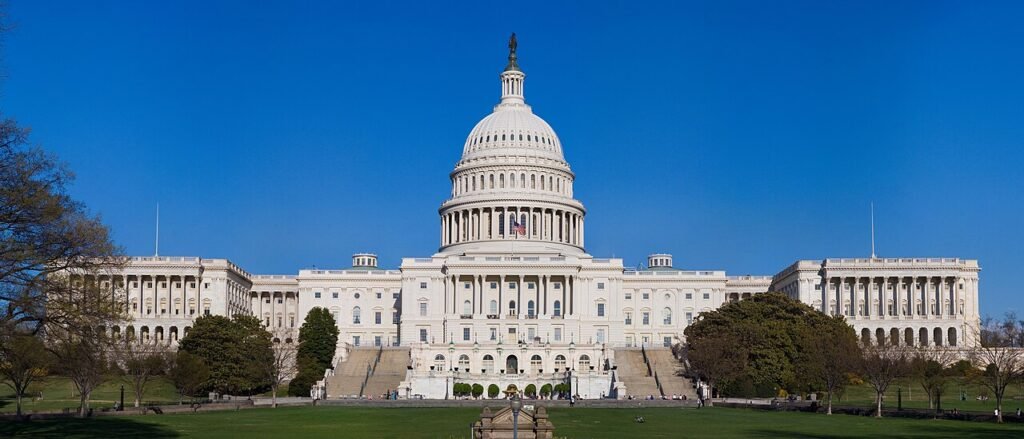
Current Context (The Trigger)
- The verdict: The article says the Democrats now control both chambers of the US Congress. So the Republican administration will face a legislature that is not on its side. The paper’s own editorial on the same page also notes the heavy defeat of President Donald Trump’s Republican Party.
- Result status: On 4 November 2026 Al Jazeera reported, citing an Associated Press projection, that Democrats had won the Senate. They had at least 54 seats. It added that a few races were still undecided, so this note uses no final seat totals.
- Divided government: Donald Trump remains President. But the article says the new Democratic majorities will hold real law-making, money and oversight powers.
- Timing: The article says the new Congress takes office next year, and Republicans control the present Congress until then. Under the Twentieth Amendment, the terms of the newly elected members begin at noon on 3 January, so the change comes in January 2027.
- Voter mood: The writer reads the result as voter anger. Voters were upset over high living costs, over tariffs and over how the administration dealt with conflicts abroad.
Core Concepts & Static GK
- Midterm election: It is held halfway through the President’s four-year term. The whole House and about one-third of the Senate face voters.
- House of Representatives: It has no more than 435 voting members, a number fixed by law. Each member serves a two-year term.
- Senate: Each state has two senators with six-year terms. The seats are divided into three classes so that one-third are filled every second year.
- Divided government: This means the President’s party does not control one or both chambers of Congress. The article expects more clashes between the executive and the legislature over the next two years.
- Non-voting members: Apart from the 435 voting members, the House has five delegates and a resident commissioner for Puerto Rico.
Constitutional & Legal Framework
- Power over trade: Article I, Section 8 of the US Constitution gives Congress two powers. It can lay duties, and it can regulate commerce with foreign nations.
- Delegated authority: The article notes that the President still holds wide power, delegated by Congress through several trade laws, to impose duties.
- Court ruling on tariffs: On 20 February 2026 the US Supreme Court held in Learning Resources, Inc. v. Trump that the International Emergency Economic Powers Act (IEEPA) does not give the President power to impose tariffs. Chief Justice John Roberts wrote the opinion of the Court.
- What the case covered: The ruling struck down two sets of IEEPA tariffs. One was the drug-related tariffs on Canada, Mexico and China. The other was the trade-deficit tariffs on most other imports. Tariffs under other laws, such as Section 232 duties on steel, aluminium and automobiles, were not part of the case.
- Stop-gap tariff: The President then used Section 122 of the Trade Act of 1974. It imposed a 10 per cent tariff for 150 days from 24 February 2026. Section 122 allows a temporary surcharge of at most 15 per cent for up to 150 days.
- Section 301 duties: On 23 July 2026 the Office of the US Trade Representative (USTR) imposed Section 301 tariffs on 60 economies. The reason was that they did not ban imports made with forced labour. India was placed in the lower 10 per cent group.
Reports, Indices & Data
- Imports from India: USTR reports that US goods imports from India were USD 103.8 billion in 2025, up 18.9 per cent from 2024.
- Exports to India: The same USTR page puts US goods exports to India at USD 45.4 billion in 2025, up 9.1 per cent.
- Total goods trade: USTR gives total two-way goods trade with India in 2025 as USD 149.1 billion. The US goods trade deficit with India was USD 58.4 billion.
- H-1B cap: The H-1B programme allows 65,000 new visas or statuses a year. Another 20,000 are available for people with a US master’s degree or higher.
Assam & Northeast Linkages
- Tea exports: Tea Board final data show that India exported 257.88 million kg of tea worth Rs 7,503.52 crore in 2024-25.
- North India’s share: North India, the region that includes Assam, supplied 161.20 million kg of these exports, worth Rs 5,161.06 crore, in 2024-25.
- Recent growth: Provisional Tea Board data for 2025-26 show North Indian tea exports rising 15.32 per cent in quantity to 185.90 million kg.
- Tariff exposure: Assam’s exporters to the US have faced a changing duty regime. Before February 2026 they faced a 25 per cent reciprocal tariff plus an extra 25 per cent. From July 2026 many Indian goods face a 10 per cent Section 301 duty.
Prelims Trap Zones (Watch out for)
- Seat numbers: Do not memorise any final seat count for the 2026 midterms. Some races were still undecided when the first reports came out.
- Immediate reversal: The article says the midterm result will not cancel existing tariffs on its own. The President keeps his delegated trade powers.
- Tariff law: The Supreme Court struck down IEEPA tariffs, not all tariffs. Section 232 tariffs were not part of the case.
- H-1B exemption: The 65,000 cap does not cover everyone. Universities and non-profit research organisations are not subject to it.
- Chamber terms: House members serve two years and senators serve six years. The terms are not the same.
- Treaty vote: A treaty needs the consent of two-thirds of the senators present, not a simple majority. This is in Article II, Section 2.
Introduction
The Democrats’ win in both chambers of the US Congress, discussed in The Assam Tribune on 9 November 2026, will end one-party control in Washington from January 2027. The writer argues that India should treat this as a lesson in preparedness. It is not a threat or a windfall. The real test for India is whether its policy can stay steady while American politics keeps shifting.
Why the Verdict Matters for India
- Trade exposure: The article lists Indian medicines, textiles, engineering goods and IT services as major exports to the US. USTR data show US goods imports from India reached USD 103.8 billion in 2025.
- Tariff uncertainty: A Congress that questions tariffs could make US trade policy more predictable. But long quarrels between the White House and Congress could also delay any trade deal.
- Trade talks: In February 2026 the two countries announced a framework for an Interim Agreement on trade. A White House fact sheet of 9 February 2026 said the US would lower its reciprocal tariff on India from 25 to 18 per cent. It would also remove an extra 25 per cent tariff.
- Talks reopened: The Supreme Court ruling upset that framework. Commerce Minister Piyush Goyal then met US Trade Representative Jamieson Greer in New Delhi on 23 June 2026. The talks aimed to recalibrate the proposed agreement.
- Energy risk: The article says unrest in West Asia, trouble near the Strait of Hormuz, and swings in crude prices hit India directly. They raise the import bill, push up inflation and strain the budget.
- Skilled workers: H-1B visas matter for Indian professionals in US technology firms. A Presidential Proclamation of 19 September 2025 added a USD 100,000 payment for certain new H-1B petitions.
- Technology ties: The article lists cooperation in Artificial Intelligence, chips, space and critical technologies as central to the relationship.
Limits of a Divided Government
- Oversight powers: The article says the new majorities can examine executive decisions, probe official conduct and shape federal spending.
- Trade law: Under Article I, Section 8, Congress holds the power to regulate trade with foreign nations. But the President can still set duties under powers Congress has delegated by law.
- Courts as a check: The Supreme Court’s ruling of 20 February 2026 shows something useful. Limits on tariff powers can come from the judiciary, and Congress is not the only check.
- Foreign policy: The article says Congress can apply pressure through budgets, resolutions and oversight. But the President keeps wide authority over foreign policy.
- Treaties: The Constitution requires two-thirds of senators present to agree before a treaty is made. So the Senate’s balance matters for formal agreements.
- Timing gap: The old Congress stays in office until the new members take their seats on 3 January 2027. So the full effect of the verdict will be seen only from 2027.
Challenges
- Policy swings: The article says Indian firms need stable market conditions. A US trade policy that keeps changing with domestic politics makes planning hard.
- Energy balancing: US sanctions and Washington’s stand on Indian purchases of Russian oil make things harder for India. It must buy cheap energy and also keep its strategic ties.
- Deeper conflicts remain: The writer stresses that the vote may change political pressure in Washington. It does not settle the basic geopolitical tensions India faces.
- Visa risk: USCIS says a federal district court in Massachusetts vacated the agency guidance for the USD 100,000 H-1B payment on 8 June 2026. The First Circuit refused the government a stay on 24 July 2026. But DHS says it still plans to collect the payment if the order is lifted.
- Shifting tariff law: Indian goods have moved from IEEPA tariffs to a Section 122 surcharge. In July 2026 they moved to a 10 per cent Section 301 duty. Each change has needed fresh talks and fresh costing by exporters.
- Exporter exposure: Tea is one example of the risk. India exported 257.88 million kg of tea in 2024-25, and any US duty change hits Assam’s export-oriented gardens.
Way Ahead
- Engage Congress: The article says New Delhi should not build its US policy only around the White House. It should work with congressional committees and with lawmakers of both parties.
- Widen contacts: The writer also suggests closer links with business bodies, universities and the Indian diaspora in the US.
- Protect bipartisan base: Ties in defence, the Indo-Pacific, intelligence and strategic technology have lasted through changes of party in the White House. India should keep this continuity.
- Close the trade deal: The Commerce Ministry should finish the Interim Agreement on terms that hold even if US tariff law changes again. It can build on the New Delhi talks of June 2026.
- Diversify energy: India should cut its exposure to West Asia and to crude price swings. The article links these directly to the import bill and inflation.
- Back exporters: The Tea Board and the Commerce Ministry can help Assam tea exporters find other markets. North Indian tea exports already grew 15.32 per cent in quantity in 2025-26.
Conclusion
The midterm verdict changes the mood in Washington, but it does not by itself rewrite tariffs, visas or West Asia policy. India gains most by keeping ties wide across both American parties and by trading without depending on any one side. As the writer argues, strategic autonomy is now a tool of national resilience and not just a diplomatic idea.
News in Short
- Manipur district security SOP: The Manipur Home Department has issued a standard operating procedure (SOP) for security reviews. Each district must hold a review at least every fortnight. The District Magistrate chairs it, and the district Superintendent of Police coordinates inputs from all security agencies.
- Festival aid for displaced persons in Manipur: Manipur released Rs 5,88,63,000 from the State Emergency Fund for 58,863 eligible Internally Displaced Persons (IDPs). Each person receives Rs 1,000 through Direct Benefit Transfer. The money comes after Diwali and before Ningol Chakouba (11 November).
- Ticket to Hornbill 2026: Mizoram rock band Terat won the contest. The final was staged at New Delhi’s Talkatora Stadium, and 221 bands had auditioned. The top three bands will play at the Hornbill Music Festival at Kisama near Kohima during the Hornbill Festival, 1-10 December 2026.
- RBI draft Priority Sector Lending Directions, 2026: The Reserve Bank of India’s draft asks banks to keep details of land location, crops and any crop hypothecation when checking farm loans backed by gold. Comments are invited until 26 November. Under the current 2025 Directions, domestic commercial banks must lend 40 per cent of Adjusted Net Bank Credit (ANBC) or the credit equivalent of off-balance sheet exposure, whichever is higher, to the priority sector. There is also an 18 per cent agriculture sub-target.
- BTC and IOCL fuel outlets: The Bodoland Territorial Council (BTC) signed a memorandum of understanding with Indian Oil Corporation Limited (IOCL) for 11 fuel retail outlets in the first phase. BTC gives the land, and IOCL builds and runs the outlets. Operations are targeted by March 2027.
- Bail and Article 21 in NDPS cases: The Gauhati High Court granted bail to an accused held for about 724 days under the Narcotic Drugs and Psychotropic Substances (NDPS) Act, with no progress in the trial. The court ruled that the right to life and liberty under Article 21 can override statutory bail restrictions such as the twin conditions of Section 37. The plea was heard under Section 483 of the Bharatiya Nagarik Suraksha Sanhita (BNSS), 2023.
- Mapal Kangjeibung, Imphal: Manipur Assembly Speaker Th Satyabrata Singh said this polo ground should be reserved only for polo and horse-related activities. The Ministry of Tourism’s Incredible India site calls it the world’s oldest active polo ground and the birthplace of polo.
- 150-yard rule on the India-Bangladesh border: Under an India-Bangladesh agreement, permanent construction is barred inside a 150-yard belt from the zero line. So around 300 families in Tripura’s Sepahijala district still live outside the border fence. Smugglers exploit this gap.
APSC Prelims MCQs
Practice questions on the topics above
Topic 1: Manpower Shortage in Manas National Park and Tiger Reserve
Q1. Manas National Park in Assam is a tiger reserve and a UNESCO site. Consider the following statements:
(i) It was inscribed as a UNESCO World Heritage Site in 1985.
(ii) It was designated a Biosphere Reserve in 1989.
(iii) It was declared a national park in 1985.
How many of the statements given above are correct?
- (a) Only one
- (b) Only two
- (c) All three
- (d) None
Show answer
Answer: (b) Explanation: Statements (i) and (ii) are correct. UNESCO inscribed the 39,100-hectare Manas Wildlife Sanctuary as a World Heritage Site in 1985, and the Environment Ministry lists Manas as a Biosphere Reserve designated in 1989. Statement (iii) is wrong. Manas was enlarged to 50,000 hectares and made a national park only in 1990; 1985 is the World Heritage year, which is the trap. So exactly two statements are correct. Options (a), (c) and (d) miscount the correct statements. Value addition: Manas stayed on the List of World Heritage in Danger from 1992 until UNESCO removed it on 21 June 2011.
Q2. Activist Rohit Choudhury sought vacancy data of Manas under the Right to Information (RTI) Act, 2005. Consider the following statements:
(i) Section 4 of the RTI Act asks public authorities to disclose key information only when a citizen files an application.
(ii) In Kishan Chand Jain v. Union of India (2023), the Supreme Court directed the Information Commissions to monitor the implementation of Section 4.
(iii) Section 2(j) includes inspection of work, documents and records within the right to information.
Which of the statements given above is/are correct?
- (a) (i) and (ii) only
- (b) (ii) and (iii) only
- (c) (i) and (iii) only
- (d) (i), (ii) and (iii)
Show answer
Answer: (b) Explanation: Statements (ii) and (iii) are correct. In its judgment of 17 August 2023, the Supreme Court told the Central and State Information Commissions to keep monitoring Section 4 compliance. Section 2(j) lists inspection of work, documents and records as part of the right. Statement (i) is wrong. Section 4 is a duty to publish information on the authority’s own initiative, without waiting for a request; the request route is Section 6. So options (a), (c) and (d), which include (i), are wrong. Value addition: Section 7(9) says information should ordinarily be given in the form sought, unless that would disproportionately divert resources or harm the record.
Q3. Match List-I with List-II (in the context of the Manas vacancy report):
| List-I (Authority) | List-II (Role in the report) |
|---|---|
| a. State Board of Wildlife, Assam | 1. Supplied the data in a one-page reply dated 30 September 2026 |
| b. Field Director, Manas National Park and Tiger Reserve | 2. Directed Information Commissions in 2023 to monitor proactive disclosure |
| c. Chief Wildlife Warden’s office | 3. Approved the translocation of 25 rhinos to Manas |
| d. Supreme Court of India | 4. Invited the applicant to inspect records in a letter dated 28 September 2026 |
Select the correct answer using the codes given below:
- (a) a-1, b-4, c-3, d-2
- (b) a-3, b-1, c-4, d-2
- (c) a-3, b-4, c-1, d-2
- (d) a-2, b-4, c-1, d-3
Show answer
Answer: (c) Explanation: The State Board of Wildlife Assam approved moving 25 rhinos to Manas, so a matches 3. The Field Director’s office, in its letter of 28 September 2026, called the records voluminous and invited the applicant to inspect them, so b matches 4. The Chief Wildlife Warden’s office sent the data in one page on 30 September 2026, so c matches 1. The Supreme Court in 2023 directed the Information Commissions to monitor Section 4, so d matches 2. Option (a) gives the reply to the Board, option (b) swaps the two forest offices, and option (d) mixes up the Board and the Court. Value addition: the Court’s judgment is dated 17 August 2023.
Q4. The final translocation under Indian Rhino Vision 2020, in April 2021, moved two rhinos to Manas National Park. From which protected area were they brought?
- (a) Kaziranga National Park
- (b) Pobitora Wildlife Sanctuary
- (c) Orang National Park
- (d) Dibru-Saikhowa National Park
Show answer
Answer: (b) Explanation: The last Indian Rhino Vision 2020 operation was in April 2021. It captured two rhinos at Pobitora and released them in Manas, according to the International Rhino Foundation. Option (a) is wrong because Kaziranga supplied rhinos in earlier rounds, but not in this final move. Option (c) is wrong because Orang holds rhinos but was not the source here. Option (d) is wrong because the national tiger report of 2022 names Dibru-Saikhowa as a planned site for receiving rhinos, not a source. Value addition: the programme built an initial Manas population of 18 rhinos by 2009, and Manas had 49 rhinos after the 2021 release.
Topic 2: Safety Lapses after Fire at OIL Tank Farm in Tengakhat
Q5. Oil India Limited (OIL) is in the news after a fire at its tank farm in Tengakhat, Dibrugarh. Consider the following statements:
(i) OIL was elevated to the Maharatna category in August 2023.
(ii) OIL has its registered office at Duliajan in Dibrugarh district.
(iii) OIL functions under the Ministry of Mines.
Which of the statements given above is/are correct?
- (a) (i) and (ii) only
- (b) (ii) and (iii) only
- (c) (i) only
- (d) (i), (ii) and (iii)
Show answer
Answer: (a) Explanation: Statements (i) and (ii) are correct. The Government of India raised OIL to the Maharatna category in August 2023, making it the 13th Maharatna central public sector enterprise. Its registered office is at Duliajan in Dibrugarh district. Statement (iii) is wrong because OIL works under the Ministry of Petroleum and Natural Gas, not the Ministry of Mines. Students often link oil drilling with mining, but the administrative ministry is MoPNG. So option (b) and option (d) fail because they include (iii), and option (c) fails because it leaves out (ii). Value addition: OIL became a Navratna in 2010, and the Oil Industry Safety Directorate, which writes oil sector safety standards, also works under MoPNG.
Q6. Match List-I with List-II:
| List-I (Body / Law) | List-II (Feature) |
|---|---|
| a. Oil Industry Safety Directorate | 1. Issued guidelines on Chemical Disasters (Industrial) in 2007 |
| b. Petroleum and Explosives Safety Organisation | 2. Administers the Explosives Act 1884 and the Petroleum Act 1934 |
| c. National Disaster Management Authority | 3. Technical directorate set up in 1986 under the Ministry of Petroleum and Natural Gas |
| d. Public Liability Insurance Act, 1991 | 4. Gives no-fault relief for accidents with hazardous substances |
Select the correct answer using the codes given below:
- (a) a-3, b-2, c-1, d-4
- (b) a-2, b-3, c-1, d-4
- (c) a-3, b-1, c-2, d-4
- (d) a-3, b-2, c-4, d-1
Show answer
Answer: (a) Explanation: The correct pairs are a-3, b-2, c-1 and d-4. The Oil Industry Safety Directorate is a technical directorate set up in 1986 under the oil ministry. The Petroleum and Explosives Safety Organisation, based in Nagpur under DPIIT, administers the Explosives Act 1884 and the Petroleum Act 1934. The National Disaster Management Authority issued the 2007 guidelines on industrial chemical disasters. The Public Liability Insurance Act gives relief without proof of negligence. Option (b) swaps pairs a and b, option (c) swaps b and c, and option (d) swaps c and d. Value addition: under Section 4 of the 1991 Act, every owner must take out insurance before handling any hazardous substance.
Q7. Which of the following statements is NOT correct?
- (a) The fire at the Tengakhat tank farm broke out on 6 November during maintenance work.
- (b) The workers who died were employees of a Mumbai-based contractor engaged by OIL.
- (c) The 2020 Baghjan blowout occurred at a well of Oil India Limited.
- (d) The 2020 Baghjan blowout occurred at a well of the Oil and Natural Gas Corporation.
Show answer
Answer: (d) Explanation: Statement (d) is not correct, so it is the answer. The Baghjan blowout of 2020 came from a well of Oil India Limited, as statement (c) says. It was the Sivasagar blowout of 2025 that involved an ONGC well, and students often mix up the two. Statement (a) is correct because the fire followed an explosion during maintenance at the tank farm on 6 November. Statement (b) is also correct, since the victims were on the rolls of Spectron Engineering Private Limited, which OIL had hired from Mumbai. Value addition: the Baghjan-5 well blowout began on 27 May 2020 in Tinsukia district, and an explosion and fire followed on 9 June 2020.
Q8. Who headed the committee appointed by the National Green Tribunal in June 2020 to examine the Baghjan blowout?
- (a) Justice A.K. Goel
- (b) Justice B.P. Katakey
- (c) Justice Ranjan Gogoi
- (d) Justice U.U. Lalit
Show answer
Answer: (b) Explanation: The National Green Tribunal set up an expert committee headed by former judge B.P. Katakey on 26 June 2020. Justice A.K. Goel is wrong because he headed the NGT principal bench that made the appointment, not the committee. Justices Ranjan Gogoi and U.U. Lalit had no link with this committee, so options (c) and (d) are only distractors. The committee found that OIL lacked mandatory consents when the blowout and explosion occurred. Value addition: it also noted that OIL had not done the biodiversity impact assessment required by a 2017 Supreme Court order. It recommended legal action against OIL by the Pollution Control Board of Assam.
Topic 3: Village Grazing Reserve De-reservation and Landless Settlement in Dhekiajuli
Q9. The Supreme Court decided Jagpal Singh v. State of Punjab on village common land. Consider the following statements:
(i) The Court said that regularising illegal occupation of village common land should be permitted only in exceptional cases.
(ii) The Court gave State governments a free hand to hand out village common land to any landless person.
(iii) The Court gave land leased under a government notification to landless labourers or SC/ST members as an example of an exceptional case.
Which of the statements given above is/are correct?
- (a) (i) only
- (b) (i) and (iii) only
- (c) (ii) and (iii) only
- (d) (i), (ii) and (iii)
Show answer
Answer: (b) Explanation: Statements (i) and (iii) are correct. In its judgment of 28 January 2011, the bench of Justices Markandey Katju and Gyan Sudha Misra said something clear. Regularisation should be permitted only in exceptional cases. One example it gave was land leased under a government notification to landless labourers or SC/ST members. Statement (ii) is wrong because the Court treated common land as generally inalienable and gave no unrestricted power to distribute it. Option (a) misses statement (iii), and options (c) and (d) wrongly include (ii). Value addition: the Court directed all State Governments to prepare schemes to evict illegal occupants of Gram Sabha and Gram Panchayat land. The land was to be restored for villagers’ common use.
Q10. Assertion (A): Under the 2022 amendment to the Assam Land Policy, 2019 for Mission Basundhara 2.0, replacement land for de-reserved grazing reserves did not always have to be in the same revenue village.
Reason (R): The amendment said an equal quantum of government land should be reserved in the same revenue village, failing which in the same mouza, revenue circle or district, subject to availability.
- (a) Both A and R are true and R is the correct explanation of A
- (b) Both A and R are true but R is not the correct explanation of A
- (c) A is true but R is false
- (d) A is false but R is true
Show answer
Answer: (a) Explanation: Both statements are true, and R explains A. Clause 6.8 was added to the Land Policy by the Revenue Department notification of 11 November 2022. It asked for an equal area of government land to be kept as open space. It first looked to the same revenue village, then the mouza, the revenue circle and the district. So the replacement could lie some distance away. Option (b) is wrong because R is the direct reason for A. Options (c) and (d) are wrong because neither statement is false. Value addition: this is why the writer on the Dhekiajuli decision argues that equal area does not always mean equal use for the village.
Q11. Chapter X of the Assam Land and Revenue Regulation, 1886, which was added in 1947, deals with which of the following?
- (a) Protection of certain classes through tribal belts and blocks
- (b) Village grazing reserves
- (c) Settlement of khas land with landless families
- (d) Assessment of land revenue on tea estates
Show answer
Answer: (a) Explanation: Chapter X, covering Sections 160 to 171, was added by Assam Act XV of 1947. The Act came into force on 22 October 1947. It allows the State to protect notified classes, including by forming tribal belts and blocks under Section 161. Option (b) is wrong because grazing grounds come under rules framed under Section 13 of the Regulation, not Chapter X. Option (c) is wrong because general settlement of government land is dealt with elsewhere in the Regulation and the Land Policy. Option (d) is wrong because revenue assessment is not the subject of Chapter X. Value addition: Section 160(2) lets the State Government name the protected classes by notification in the Official Gazette.
Q12. The 2022 amendment to the Assam Land Policy, 2019 was made for Mission Basundhara 2.0. What was the maximum Village or Professional Grazing Reserve land that could be settled with one person of an eligible category for homestead?
- (a) 1 bigha
- (b) 5 bigha
- (c) 15 bigha
- (d) 50 bigha
Show answer
Answer: (a) Explanation: Clause 6.7 was added by the notification of 11 November 2022. It capped VGR and PGR settlement at 1 bigha per eligible person for homestead. Eligible groups included landless SC and ST members and some families displaced by erosion or ethnic violence. Options (b) and (c) are wrong because 5 to 15 bigha is something else. It is the range of the block of government land the policy keeps reserved in each village. Option (d) is wrong because 50 bigha was the limit for settling hereditary land of tribal families under the same mission. Value addition: these VGR clauses were a one-time measure meant to cease after 31 December 2023. Mission Basundhara 2.0 did not cover Sixth Schedule areas.
Topic 4: US Midterm Verdict and India’s Strategic Autonomy
Q13. The United States has held its midterm elections. Consider the following statements about the US Congress:
(i) The House of Representatives has no more than 435 voting members, each serving a two-year term.
(ii) Senators serve six-year terms, and one-third of the seats are filled every second year.
(iii) A treaty can be made with the concurrence of a simple majority of senators present.
Which of the statements given above is/are correct?
- (a) (i) and (ii) only
- (b) (ii) and (iii) only
- (c) (i) only
- (d) (i), (ii) and (iii)
Show answer
Answer: (a) Explanation: Statement (i) is correct. The number of voting House members is fixed by law at no more than 435, and each is elected for two years. Statement (ii) is correct. Senate terms are six years, and the seats are arranged in three classes so that one-third are filled every second year. Statement (iii) is wrong. Article II, Section 2 requires the concurrence of two-thirds of the senators present, not a simple majority. So (a) is the answer. Options (b) and (d) wrongly include (iii), and option (c) leaves out the correct statement (ii). Value addition: under Article I, Section 7, a presidential veto can be overridden if two-thirds of each house agree to pass the bill.
Q14. On 20 February 2026 the US Supreme Court held in Learning Resources, Inc. v. Trump that the President cannot impose tariffs under which law?
- (a) Section 232 of the Trade Expansion Act of 1962
- (b) International Emergency Economic Powers Act
- (c) Section 122 of the Trade Act of 1974
- (d) Smoot-Hawley Tariff Act
Show answer
Answer: (b) Explanation: The Court held that the International Emergency Economic Powers Act (IEEPA) does not give the President power to impose tariffs. This struck down the drug-related tariffs on Canada, Mexico and China and the trade-deficit tariffs on most other imports. Option (a) is wrong because Section 232 duties on steel, aluminium and automobiles were not part of the case. Option (c) is wrong because the President used Section 122 after the ruling. It imposed a 10 per cent tariff for 150 days from 24 February 2026. Option (d) is wrong because that old law was not the subject of the case. Value addition: in July 2026 the USTR placed India in the 10 per cent group of new Section 301 duties.
Q15. With reference to the H-1B visa programme of the United States, which one of the following statements is NOT correct?
- (a) The annual cap is 65,000 new H-1B visas or statuses.
- (b) A further 20,000 are available for those with a US master’s degree or higher.
- (c) Initial admission is generally up to three years, extendable to a total of six.
- (d) Universities and non-profit research organisations are covered by the 65,000 cap.
Show answer
Answer: (d) Explanation: Statement (d) is not correct. USCIS says workers at institutions of higher education, their affiliated non-profits and non-profit research organisations are not subject to the cap. Statement (a) is correct because the regular annual cap is 65,000 new statuses or visas. Statement (b) is correct because a separate 20,000 petitions are set aside for holders of a US master’s degree or higher. Statement (c) is correct because the first admission is generally for up to three years. It can be extended to a total of six years. Value addition: a Presidential Proclamation of 19 September 2025 added a USD 100,000 payment for certain new petitions. A federal court vacated the agency guidance implementing it on 8 June 2026.
Q16. According to the Office of the US Trade Representative, what was the value of US goods imports from India in 2025?
- (a) USD 45.4 billion
- (b) USD 58.4 billion
- (c) USD 103.8 billion
- (d) USD 149.1 billion
Show answer
Answer: (c) Explanation: USTR reports that US goods imports from India were USD 103.8 billion in 2025, up 18.9 per cent from 2024. Option (a), USD 45.4 billion, is the value of US goods exports to India, so it is the reverse flow. Option (b), USD 58.4 billion, is the US goods trade deficit with India, which is imports minus exports. Option (d), USD 149.1 billion, is the total two-way goods trade, which adds both flows together. Value addition: a White House fact sheet of 9 February 2026 said something important for India. The US would lower its reciprocal tariff on India from 25 to 18 per cent under the new trade framework.
Mains Answer Writing
One exam-style question with a model answer
Q. Recently, Assam de-reserved Village Grazing Reserve land in Dhekiajuli to settle landless families. In this context, discuss the legal safeguards for village grazing land in Assam and their conflict with the need to give land to the landless. Suggest measures to reconcile the two. (250 words, 15 marks)
Model answer
Introduction: On 4 November 2026, the Assam Cabinet de-reserved 987 bighas of Village Grazing Reserve (VGR) land in Dhekiajuli, Sonitpur. The land is for 2,016 landless labourers and members of Scheduled Caste and Scheduled Tribe communities. The Cabinet promised an equal area of new VGR elsewhere. A VGR is village common land kept for free grazing, so the decision sets land for the landless against protection of the commons.
1. Legal safeguards for village grazing land in Assam
| Safeguard | What it provides |
|---|---|
| Assam Land and Revenue Regulation (ALRR), 1886: Rules 83 to 91 | A grazing ground is created only after inquiry, demarcation, public notice, hearing of objections and a final notice. It is then entered in the grazing-ground register. |
| Rules 92 and 95 | Villagers may graze cattle there free of charge. Nobody may occupy the land for any purpose other than grazing. |
| Rule 95-A | Grazing land can be de-reserved only by a final order of the State Government under this rule. Until then, it stays protected common land. |
| Gauhati High Court rulings | In the Kundargaon case (2005), the High Court held that a Deputy Commissioner cannot settle VGR land without a Rule 95-A order. The court has repeatedly stressed that grazing reserves must be protected. |
| Jagpal Singh v. State of Punjab (2011) | The Supreme Court directed every State to frame schemes to evict illegal occupants of village common land. The land was to be restored for the common use of villagers. |
| Equal-land rule (Mission Basundhara 2.0) | A notification of 11 November 2022 said an equal area of government land, subject to availability, must be reserved when grazing land is de-reserved. It was a one-time measure that lapsed after 31 December 2023. |
2. Conflict with the need to give land to the landless
- Constitutional duty to redistribute: Article 38 asks the State to secure a social order based on social, economic and political justice. Article 39(b) asks that the community’s material resources be distributed to best serve the common good.
- Commons also serve the poor: Rule 92 lets villagers graze cattle on the reserve free of charge. This matters most to poor households that cannot afford private pasture, so taking it away can shift hardship from one poor group to another.
- Equal area is not equal use: A replacement plot far from the village or without water is of little use to its herders. The 2022 rule allowed fallback land anywhere in the same circle or district.
- Weak title for beneficiaries: Courts insist on a valid Rule 95-A order. So families settled through a faulty process may later face cancellation or eviction.
- Risk of rewarding encroachment: Jagpal Singh held that long occupation or political links cannot justify regularisation. It allowed only narrow exceptions, such as government leases to landless labourers or Scheduled Castes and Scheduled Tribes.
3. Way Forward: measures to reconcile the two
- Follow the law fully: The Revenue and Disaster Management Department should publish the Rule 95-A order and proceedings for every de-reservation.
- Replace land nearby: Deputy Commissioners should first look for replacement land in the same revenue village. An independent check should confirm its access, water and capacity for the village’s livestock.
- Consult the village: District officials should hear the affected community before the new reserve is notified.
- Use other land first: Government khas land (unsettled government land) and ceiling surplus land were also covered by Mission Basundhara 2.0. These should be offered to landless families before village commons.
- Clear eligibility and secure title: Beneficiary criteria and lists should be public. Each family should get a recorded, legally secure land right.
Conclusion: The Dhekiajuli decision serves a just aim. It will be fair only if Rule 95-A is followed and the new reserve is as usable as the old one. Assam can settle its landless without shrinking its commons, provided every de-reservation is lawful, open and backed by real replacement land.
Prepare with SuchitraACS
APSC CCE Foundation Programme₹24,999  APSC Prelims Crash Course 2027 (GS + CSAT)₹5,999
 APSC CCE Study Materials Package (Prelims + Mains)₹4,999