Paddy procurement at MSP in Assam: APSC Current Affairs Notes and MCQs
APSC CCE current affairs notes on Paddy procurement at MSP in Assam, from The Assam Tribune of 1 November 2026, with 4 practice MCQs for Prelims.
 Last batch for APSC CCE 2027 · starts 16 NovAPSC CCE Foundation Programme₹24,999
Current Affairs Notes
From The Assam Tribune, 1 November 2026
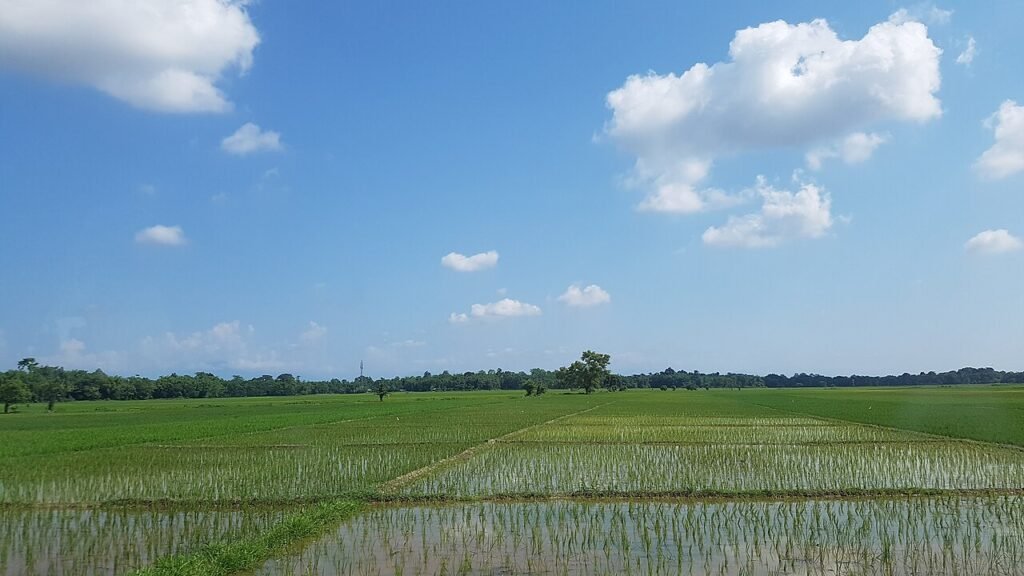
Paddy Procurement at MSP in Kharif Marketing Season 2026-27
Syllabus Mapping
- Prelims: GS Paper I (Economic and Social Development; Current events of State/National importance).
- Mains: GS Paper III (Issues related to direct and indirect farm subsidies and minimum support prices; Public Distribution System; issues of buffer stocks and food security); GS Paper V (Economy of Assam: major agricultural issues; schemes for farmers).
Why in News? Assam begins buying paddy for the first crop of Kharif Marketing Season (KMS) 2026-27 on 1 November 2026. On 31 October, Kaushik Rai, the State’s Minister for Food, Public Distribution and Consumer Affairs, held a video conference with the District Commissioners of all districts. He reviewed the preparations.
Current Context (The Trigger)
- Target: Assam aims to buy 8.49 lakh metric tonnes (LMT) of paddy. It will buy through 181 notified paddy procurement centres (PPCs).
- Price: The MSP for the season is Rs 2,441 per quintal. This is the Centre’s MSP for common paddy.
- State incentive: The minister said the State’s own incentive for paddy procurement will be announced at the next Cabinet meeting.
- Payment: The minister told officials to credit the MSP amount to farmers within one week of procurement.
- Decentralised system: In an earlier video conference, the minister spoke with MLAs and District Commissioners of Golaghat and Nagaon. They discussed whether the Decentralised Procurement (DCP) system can be brought to these districts soon.
Core Concepts & Static GK
- MSP 2026-27: The Cabinet Committee on Economic Affairs approved the MSP for 14 kharif crops for 2026-27 on 13 May 2026. Common paddy gets Rs 2,441 per quintal and Grade A gets Rs 2,461. Both are Rs 72 higher than last season.
- Cost rule: The Government says it fixes MSP at a level of at least 1.5 times the all-India weighted average cost of production.
- DCP: Under Decentralised Procurement, the State itself buys paddy and/or wheat on behalf of the Government of India. It stores the grain and distributes it under the Targeted Public Distribution System and welfare schemes. The scheme began in 1997-98.
- Centre’s role in DCP: The Centre meets the State’s procurement expenditure as per approved costs. Grain bought beyond the State’s own need is handed over to FCI for the central pool. States are encouraged to join but are not forced.
Institutional Machinery
- CACP: The Commission for Agricultural Costs and Prices is an attached office of the Ministry of Agriculture and Farmers Welfare. It recommends MSPs. The Government then fixes them.
- On the ground in Assam: The Agriculture Department has posted its officers as PPC managers. The minister asked District Commissioners to attach two more staff to each PPC.
- Monitoring committees: Local MLAs head the PPC Monitoring Committees. These committees are to meet every fortnight.
- AFCSCL: The Managing Director of the Assam Food and Civil Supplies Corporation Limited will review progress every week. The minister will review it every month.
Assam & Northeast Linkages
- DCP in new districts: Golaghat and Nagaon are being studied for the DCP system.
- Farmer outreach: District Commissioners must meet all registered farmers and the monitoring committees. They will explain the procurement process and its benefits.
- Field visits: The minister asked District Commissioners, ADCs (Agriculture) and ADCs (Supply) to visit the PPCs regularly.
Prelims Trap Zones (Watch out for)
- Grade Trap: Rs 2,441 per quintal is the MSP of common paddy. Grade A paddy is Rs 2,461.
- Head Trap: PPC Monitoring Committees are headed by local MLAs, not by District Commissioners.
- Review Trap: The AFCSCL Managing Director reviews weekly. The minister reviews monthly.
- Unit Trap: The target is 8.49 lakh metric tonnes, not 8.49 lakh quintals.
- Body Trap: CACP only recommends MSP. The Government decides it.
Introduction
MSP is the price at which the Government stands ready to buy a crop from farmers. It protects growers when market prices fall. In Assam, the test is whether farmers can reach a procurement centre and get paid quickly.
Importance of MSP Procurement
- Income support: A known buying price gives a paddy grower a floor when market rates are low.
- Food security: Under DCP, the State uses the grain it buys for TPDS and welfare schemes.
- Local benefit: DCP was started to extend MSP benefits to local farmers and to make procurement and the PDS more efficient.
Challenges / Operational Bottlenecks
- Manpower: The minister asked for two extra staff at each PPC to ensure enough hands at the centres.
- Timely payment: The one-week deadline for MSP credit needs quick checks and fund flow at every centre.
- Farmer awareness: Farmers need to know the procedure. That is why District Commissioners must hold meetings with registered farmers.
- Supervision: With 181 centres, regular field visits and fortnightly committee meetings are needed to sort out problems.
Government Initiatives (National & Assam)
| Level | Initiative | Purpose & Impact |
|---|---|---|
| Centre | MSP for 14 kharif crops, 2026-27 | Paddy at Rs 2,441 (common) and Rs 2,461 (Grade A) per quintal |
| Centre | Decentralised Procurement (since 1997-98) | State buys, stores and distributes; Centre meets approved costs |
| Assam | 181 PPCs, 8.49 LMT target | Procurement for the first crop from 1 November 2026 |
| Assam | MLA-led PPC Monitoring Committees | Fortnightly review and farmer outreach |
| Assam | MSP credit within one week | Timely payment to farmers |
Way Ahead
- Extend DCP: Try DCP in Golaghat and Nagaon first. Widen it if storage and payment work well.
- Prompt payment: Track the one-week payment rule and publish delays.
- Early incentive: Announce the State incentive soon, so farmers know the full price before they sell.
- Active committees: Make sure the MLA-led committees meet every fortnight and act on complaints.
Conclusion
A good MSP helps only when farmers can sell and get paid on time. Assam’s reviews, monitoring committees and the DCP plan are steps in that direction.
Asked in APSC
- APSC Mains 2023, GS Paper 3 (10 marks): Explain the relationship among government procurement operations, minimum support prices (MSPs) and the creation of buffer stocks in the context of Assam.
APSC Prelims MCQs
Practice questions on this topic
Q1. Assam’s paddy procurement for Kharif Marketing Season 2026-27 (first crop) begins on 1 November 2026. Consider the following statements:
(i) The State has set a target of 8.49 lakh metric tonnes through 181 notified paddy procurement centres.
(ii) The MSP of Rs 2,441 per quintal is for common paddy.
(iii) The Managing Director of AFCSCL will review progress every month.
Which of the statements given above is/are correct?
- (a) (i) and (ii) only
- (b) (ii) and (iii) only
- (c) (i) and (iii) only
- (d) (i), (ii) and (iii)
Show answer
Answer: (a) Explanation: Statements (i) and (ii) are correct. Grade A paddy has a higher MSP of Rs 2,461. Statement (iii) is wrong because the AFCSCL Managing Director reviews every week. The minister reviews every month.
Q2. Assertion (A): Under the Decentralised Procurement Scheme, grain bought beyond a State’s own need is handed over to FCI for the central pool. Reason (R): The Decentralised Procurement Scheme began in 1997-98.
- (a) Both A and R are true and R is the correct explanation of A
- (b) Both A and R are true but R is not the correct explanation of A
- (c) A is true but R is false
- (d) A is false but R is true
Show answer
Answer: (b) Explanation: Both statements are true. The scheme did begin in 1997-98, but its start year does not explain why the surplus goes to FCI. The surplus goes to the central pool because the State buys on behalf of the Government of India and keeps only what it needs for TPDS and welfare schemes.
Q3. Which body recommends Minimum Support Prices of mandated crops to the Government of India?
- (a) NITI Aayog
- (b) Food Corporation of India
- (c) Commission for Agricultural Costs and Prices
- (d) Central Warehousing Corporation
Show answer
Answer: (c) Explanation: CACP, an attached office of the Ministry of Agriculture and Farmers Welfare, recommends MSPs. The Government then fixes them. FCI buys and stores grain for the central pool, and CWC provides warehousing. NITI Aayog does not recommend MSPs.
Q4. At his review of 31 October 2026, the Assam minister directed that the MSP amount be credited to farmers within what period of procurement?
- (a) 24 hours
- (b) Three days
- (c) Fifteen days
- (d) One week
Show answer
Answer: (d) Explanation: The direction was to credit the MSP within one week of procurement. Fifteen days is a trap: it matches the fortnightly meetings of the PPC Monitoring Committees, not the payment rule.
Prepare with SuchitraACS
APSC CCE Foundation Programme₹24,999  APSC Prelims Crash Course 2027 (GS + CSAT)₹5,999
 APSC CCE Study Materials Package (Prelims + Mains)₹4,999