Food price rise in Assam and Joha rice: APSC Current Affairs Notes and MCQs
APSC CCE current affairs notes on Food price rise in Assam and Joha rice, from The Assam Tribune of 27 November 2026, with 4 practice MCQs for Prelims.
 For working professionals and full-time aspirantsAPSC CCE Foundation Programme₹24,999
Current Affairs Notes
From The Assam Tribune, 27 November 2026
Food Price Rise in Assam: Joha Rice, Trading Syndicates and Market Regulation
Syllabus Mapping
- Prelims: GS Paper I (Indian Economy; Assam Economy; Current events of State/National importance).
- Mains: GS Paper III (Indian Economy and issues of growth and inclusive growth; Public Distribution System, buffer stocks and food security; storage, transport and marketing of agricultural produce). Also GS Paper V (Assam economy: major agricultural issues, welfare and governance in Assam).
Why in News? An editorial in The Assam Tribune on 27 November 2026 says the prices of everyday food items in Assam keep climbing. Joha rice, for example, has gone from Rs 100 to Rs 180 per kg. The paper’s editorial argues that trading lobbies and syndicates are largely to blame. It also says the State’s Food and Civil Supplies Department has failed to act.
Current Context (The Trigger)
- Wide price rise: The editorial says rice, flour, pulses, eggs, sugar and cooking oil have all become costlier, and a look at city markets bears this out.
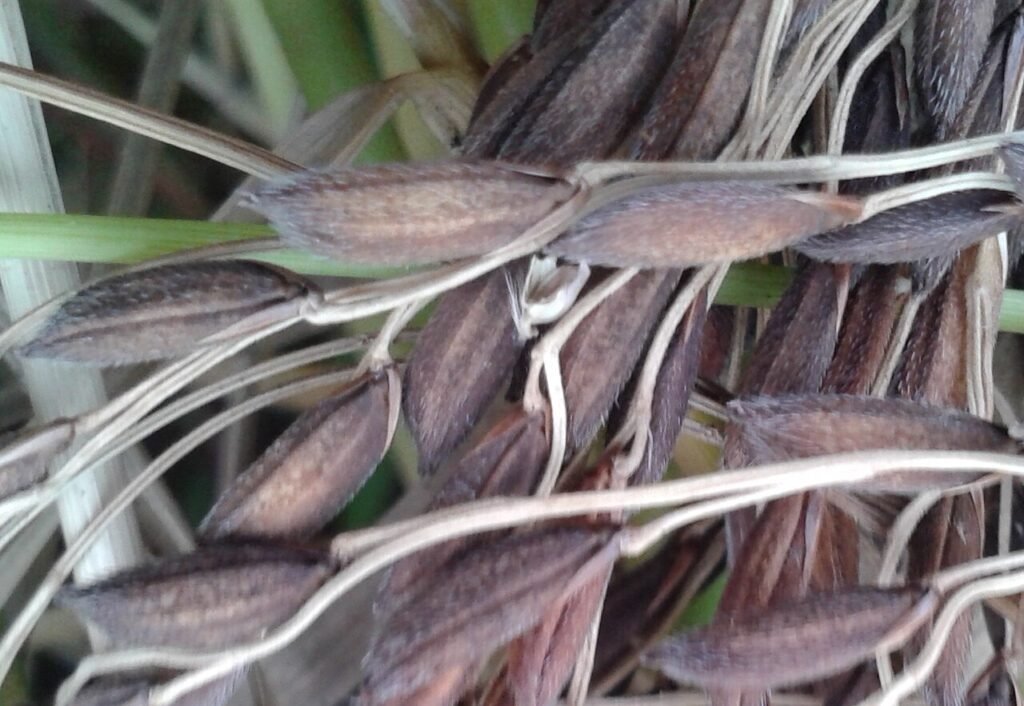
- Joha rice: The aromatic Joha variety has gone from Rs 100 to Rs 180 per kg, an 80 per cent jump. The editorial sees irony in this, because Joha is a popular choice in many Assamese homes.
- Pulses and eggs: Most pulses now cost about Rs 10 to Rs 20 per kg more. A plate of eggs sells for around Rs 230, up from Rs 200.
- Sugar, milk and mustard oil: The paper reports sharp rises in sugar, milk and several mustard oil varieties.
- Official explanation: The government blames a “rise at source”. The editorial replies that the rise in Assam is far bigger than the rise at source, and notes that traders use the same excuse.
- Remedy suggested: The editorial wants complaint booths in markets, so that consumers can report unjustified prices and action can follow at once.
Core Concepts & Static GK
- Essential commodity: Under the Essential Commodities Act, 1955, an essential commodity is one listed in its Schedule. The Schedule includes “foodstuffs, including edible oilseeds and oils”, drugs, fertiliser and petroleum products.
- Cartel: Section 2(c) of the Competition Act, 2002 defines a cartel as an association of producers, sellers, distributors, traders or service providers. The members agree among themselves to limit or control production, distribution, sale or price.
- Syndicate versus cartel: The editorial uses the word “syndicate”, but the Act uses “cartel”. The Competition Commission of India (CCI) says a cartel needs an agreement between competing enterprises not to compete.
- Presumed harm: Under Section 3(3) of the Competition Act, cartels and similar horizontal agreements are presumed to have an appreciable adverse effect on competition. Such agreements are void.
- Price Monitoring Division: The Union Department of Consumer Affairs set up this division in 1998. It oversees daily price monitoring of essential food items and price stabilisation work.
- Buffer stock: Under the Price Stabilisation Fund (PSF), the government buys onion, potato and pulses from farmers at harvest. It stores them and releases them in the lean season to bring prices down.
- Geographical Indication (GI): A GI tag marks a product whose quality comes from its place of origin. The GI Registry lists “Joha Rice of Assam” as a registered agricultural GI.
Constitutional & Legal Framework
- Entry 33, List III: The Centre can add or remove items in the Schedule of the Essential Commodities Act, in consultation with the States. This power covers only commodities under Entry 33 of the Concurrent List.
- Section 3(1): The Centre may issue orders to regulate or prohibit the production, supply, distribution and trade of an essential commodity. One stated aim is “equitable distribution and availability at fair prices”.
- Section 3(2): Such an order can control the price of a commodity, require licences for storage and transport, and bar the withholding of goods ordinarily kept for sale.
- Section 3(1A), 2020 to 2021: The 2020 amendment added price triggers for stock limits. A stock limit needed a 100 per cent retail price rise for horticultural produce and a 50 per cent rise for non-perishable foodstuffs. The Farm Laws Repeal Act, 2021 omitted this sub-section from 30 November 2021.
- Stock limits today: With Section 3(1A) gone, the Act sets no fixed price trigger. Stock limits again rest on the general order-making power under Section 3.
- Delegation to States: Under Section 5, the Centre can let a State Government or its officers use the power to make orders under Section 3.
- Penalty and cognizance: Breaking most Section 3 orders can bring imprisonment of three months to seven years plus a fine (Section 7). Section 10A makes every offence under the Act cognizable.
Institutional Machinery
- Price Monitoring Division (Centre): It collects daily retail and wholesale prices of 22 essential commodities and retail prices of 16 more. The data come from 555 price reporting centres through the Price Monitoring System mobile app.
- Items covered: The 38 monitored items include mustard oil, milk, egg, sugar, potato, onion and tomato. Several of these are the same items the editorial names.
- Northeast centres: The Department’s 2024 review says 87 of the 555 centres are in the Northeast. Assam centres on the list include Guwahati, Jorhat, Dibrugarh, Tinsukia, Majuli and Diphu.
- Coverage: In October 2024, Leh and Kargil were added, which took the price monitoring network to 35 States and Union Territories.
- Competition Commission of India: It can inquire into a suspected cartel under Section 19 of the Competition Act. The Director General investigates and has powers of search and seizure.
Schemes & Initiatives
- Price Stabilisation Fund: It was set up with an initial corpus of Rs 500 crore to tackle price swings in onion, potato and pulses.
- PM-AASHA link: The PSF is now a component of the PM-AASHA umbrella scheme of the Department of Agriculture and Farmers Welfare. The Department of Consumer Affairs still manages its price stabilisation work and daily price monitoring.
- State-level PSF in Assam: The Centre released Rs 75 crore to Assam in December 2019 as its first share for a Rs 200 crore State-level revolving fund. Assam said it would use the fund for market intervention in onion and masur dal.
- Northeast cost sharing: A State-level PSF is normally shared 50:50 between the Centre and the State. For North Eastern States the ratio is 75:25.
- Recent use: In 2024 the PSF was used to sell subsidised onion and tomato. Onion retail sale began on 5 September 2024 and had reached 23 States by 4 December 2024.
- Consumer helpline: The National Consumer Helpline (toll-free 1915) takes complaints in 17 languages, including Assamese.
Reports, Indices & Data
- Daily price data: The Department of Consumer Affairs says its daily prices help decide on market intervention, import and export duties and monetary policy.
- Price jump in numbers: Rs 100 to Rs 180 per kg is an 80 per cent rise, but the editorial gives no time period for it. Eggs rose from Rs 200 to Rs 230 a plate, a 15 per cent rise.
- Joha output: According to the Union Commerce Ministry, Joha was grown on about 21,662 hectares in Assam in 2024-25, with an estimated output of about 43,298 tonnes.
Assam & Northeast Linkages
- Joha GI: The GI Registry lists “Joha Rice of Assam” under application no. 439, filed on 10 September 2013. The Centre says Joha received its GI tag in 2017.
- Other rice GIs: Boka Chaul (filed 25 July 2016) and Chokuwa Rice of Assam (filed 14 December 2016) are separate Assam rice GIs on the same list.
- Main Joha districts: Nagaon, Baksa, Goalpara, Sivasagar, Majuli, Chirang and Golaghat are the major Joha-producing districts.
- Exports: On 12 March 2026, a first consignment of 25 tonnes of GI-tagged Joha left Assam for the United Kingdom and Italy. APEDA (Agricultural and Processed Food Products Export Development Authority) facilitated it with Assam’s Department of Agriculture.
- Earlier shipments: APEDA had earlier helped export 1 tonne of Joha to Vietnam and 2 tonnes to five Gulf countries: Kuwait, Bahrain, Qatar, Oman and Saudi Arabia.
- New marketing law: The Assam Agricultural Produce and Livestock Marketing (Promotion and Facilitation) Act, 2020 received the President’s assent on 29 June 2022. It provides for repeal of the Assam Agricultural Produce Market Act, 1972 and allows licensed private markets.
Prelims Trap Zones (Watch out for)
- Repeal trap: The 50 and 100 per cent stock-limit triggers came with the 2020 amendment. The Farm Laws Repeal Act, 2021 omitted them, so they are not current law.
- Cognizable trap: Offences under the Essential Commodities Act are cognizable (Section 10A), not non-cognizable.
- Repeal date trap: Parliament passed the Farm Laws Repeal Bill on 29 November 2021. The omission of Section 3(1A) took effect from 30 November 2021.
- Cartel penalty trap: The CCI can fine each cartel member up to 3 times its profit or 10 per cent of its turnover for each year of the cartel. The higher of the two applies. It is not a flat fine.
- Rice GI trap: Joha Rice of Assam, Boka Chaul and Chokuwa Rice of Assam are three different Assam GIs. Do not treat them as one.
- Year trap: The Joha GI application was filed in 2013, but the tag came in 2017. Questions may offer either year.
- Which department: The Price Monitoring Division sits in the Department of Consumer Affairs, not in the Reserve Bank or the Agriculture Ministry.
Introduction
On 27 November 2026, an editorial in The Assam Tribune noted that Joha rice had climbed from Rs 100 to Rs 180 per kg. Pulses, eggs, sugar and mustard oil were also dearer. These are daily needs, so the rise hurts Assam’s households quickly. The real question is whether the cause is genuine shortage or market manipulation, and whether the State can tell the two apart.
Causes and Underlying Drivers
- Rise at source: Higher prices in producing regions do pass through to Assam. However, the editorial argues that the size of the local hike does not match the rise at source.
- Trading lobbies: The paper’s editorial argues that trading lobbies and syndicates are largely responsible for the rise. It offers no data, so this is a charge to be tested, not a proven fact.
- Niche Joha supply: Joha output was only about 43,298 tonnes in 2024-25 from about 21,662 hectares. A small, speciality crop can see sharper price swings than common rice.
- Exports too small to explain it: The first Joha shipment to the United Kingdom and Italy in March 2026 was 25 tonnes. That is under 0.1 per cent of the year’s output, so exports alone cannot explain an 80 per cent jump.
- Weak local checks: The editorial says the Food and Civil Supplies Department defends price hikes by calling them an all-India trend. In its view, nobody checks whether the hike matches any real shortfall in production.
- Repeated hikes: The editorial says even locally grown vegetables become dearer every few months on one pretext or another. This suggests a pricing habit, not a one-time shock.
Impact on Households and Governance
- Household budgets: The editorial says families already facing rising living costs now struggle to make ends meet.
- Uneven burden: Rice, pulses, eggs and oil are daily items. A rise in their prices hits low-income families far harder than a rise in the price of luxury goods.
- Nutrition: Dearer pulses, eggs and milk can cut protein intake in poor homes. Food security means being able to afford a balanced diet, not only having enough grain.
- Loss of trust: The paper calls the measures announced so far “little more than an eyewash”. Weak action on prices lowers public trust in the administration.
- Silent watchdogs: The editorial faults opposition parties and mass organisations for not raising the issue. Without public pressure, officials have less reason to act fast.
- Policy use of data: The Centre uses daily price data to decide on market intervention and import duties. Assam towns such as Guwahati and Jorhat feed this data, so accurate local reporting shapes national decisions.
Statutory and Regulatory Tools
| Level | Instrument | Purpose and Limit |
|---|---|---|
| Centre | Essential Commodities Act, 1955, Section 3 | Allows orders on production, supply, distribution, licensing and price control of foodstuffs. Section 5 lets the Centre delegate this power to States. |
| Centre | Farm Laws Repeal Act, 2021 | Omitted Section 3(1A), the 2020 price triggers for stock limits, from 30 November 2021. |
| Centre | Competition Act, 2002 | The CCI can fine each member of a proven cartel up to 3 times profit or 10 per cent of turnover for each year. |
| Centre | Price Monitoring Division and Price Stabilisation Fund | Tracks 38 commodities daily and releases buffer stock to ease prices. |
| Assam | State-level Price Stabilisation Fund | A Rs 200 crore revolving fund, with Rs 75 crore from the Centre in December 2019, meant for onion and masur dal. |
| Assam | Assam Agricultural Produce and Livestock Marketing (Promotion and Facilitation) Act, 2020 | Provides market committees for market areas and licensed private markets, and provides for repeal of the 1972 Act. |
- Penal teeth: Breaking most Section 3 orders can bring three months to seven years in jail and a fine. The offence is cognizable, so police can register a case and investigate without a court order.
- Leniency route: Section 46 of the Competition Act lets the CCI impose a lesser penalty on a cartel member who gives full, true and vital information. This helps crack secret cartels.
- Interim relief: Under Section 33, the CCI can temporarily stop a party from continuing an alleged violation while the inquiry is on.
- Market orders: Under Section 27, the CCI can order cartel members to stop the agreement and not re-enter it.
- Consumer complaints: The National Consumer Helpline (1915) lets Assam’s consumers lodge grievances in Assamese before going to a consumer court.
Challenges
- Proof of agreement: A cartel needs an agreement among competing traders. The CCI notes that cartels work in secrecy and hide their activity, so evidence is hard to find.
- No fixed trigger: Since Section 3(1A) was omitted in 2021, the Act no longer says when a stock limit must be imposed. Action depends on Section 3 orders issued case by case, so it depends on the will of the Centre or the State.
- Data without action: Assam already reports prices from towns such as Guwahati, Dibrugarh and Tinsukia. The editorial’s complaint is that the “rise at source” claim is still rarely put to scrutiny.
- Weak market oversight: The editorial calls the Food and Civil Supplies Department a “white elephant” that explains away price rises instead of checking them.
- No quick redress on the spot: The editorial’s call for complaint booths shows that buyers lack a visible place in the market to report unfair prices.
- Mixed causes: Part of the rise may be genuine, for example from a poor harvest or higher transport costs. Action against honest traders would be unfair and could shrink supply.
Way Ahead
- Price complaint booths: The State’s Food and Civil Supplies Department should set up booths in district markets, as the editorial suggests. Consumers could then report unjustified prices and see quick action.
- Verify “rise at source”: District officers should compare Assam’s wholesale prices with prices in source markets every week. A published gap would expose unjustified mark-ups.
- Use the price network fully: Assam’s centres in the Price Monitoring System should be used to flag towns where prices jump first. The 2024-25 central help to strengthen price monitoring in Assam can support this.
- Use Section 3 orders: Under Section 5, the State can seek delegated powers for licensing, stock disclosure and anti-hoarding checks. Because offences are cognizable, enforcement can be quick.
- Refer cartels to the CCI: If market surveys show traders fixing prices together, the State should place the evidence before the CCI. Penalties of up to 3 times profit for each year are a strong deterrent.
- Use the State PSF: Assam can draw on its Rs 200 crore State-level Price Stabilisation Fund to release onion and masur dal when prices spike.
- Promote the helpline: The State should publicise the National Consumer Helpline (1915) in Assamese, so that complaints reach officials with names and places.
Conclusion
The editorial’s charge against syndicates is serious but unproven, and the law acts on evidence, not suspicion. Assam already has the Essential Commodities Act, the Competition Act, a State price fund and national price data to draw on. The test is whether the State uses these tools, with quick complaint redress, to separate real shortage from manipulation.
APSC Prelims MCQs
Practice questions on this topic
Q1. The Essential Commodities Act, 1955 is the main law against hoarding of food items. Consider the following statements:
(i) Foodstuffs, including edible oilseeds and oils, are listed in the Schedule of the Act.
(ii) The price triggers for stock limits added to the Act in 2020 were later omitted by the Farm Laws Repeal Act, 2021.
(iii) Offences under the Act are non-cognizable.
Which of the statements given above is/are correct?
- (a) (i) and (ii) only
- (b) (ii) and (iii) only
- (c) (i) and (iii) only
- (d) (i), (ii) and (iii)
Show answer
Answer: (a) Explanation: Statement (i) is correct because item 3 of the Schedule lists “foodstuffs, including edible oilseeds and oils” as essential commodities. Statement (ii) is correct. The Essential Commodities (Amendment) Act, 2020 inserted Section 3(1A) with price triggers for stock limits. Section 3 of the Farm Laws Repeal Act, 2021 omitted it from 30 November 2021. Statement (iii) is wrong because Section 10A makes every offence under the Act cognizable. So options (b) and (c), which include (iii), are wrong. Option (d), which includes all three, is also wrong. Value addition: the omitted triggers were a 100 per cent price rise for horticultural produce and a 50 per cent rise for non-perishable foodstuffs.
Q2. Consider the following Assertion (A) and Reason (R):
Assertion (A): Buffer stocking under the Price Stabilisation Fund of the Department of Consumer Affairs can discourage speculation in food markets.
Reason (R): Under the Fund, the government buys crops such as onion, potato and pulses at harvest and releases them in a controlled manner during the lean season.
Select the correct answer using the codes given below:
- (a) Both A and R are true and R is the correct explanation of A
- (b) Both A and R are true but R is not the correct explanation of A
- (c) A is true but R is false
- (d) A is false but R is true
Show answer
Answer: (a) Explanation: The Department of Consumer Affairs says the Fund buys onion, potato and pulses from farmers at harvest. It stores them for regulated release in the lean season, so R is true. Its 2024 review adds that buffer stocking deters unscrupulous speculation, so A is true. R explains A, because a ready stock that can be released at any time removes the profit from hoarding. Option (b) fails because R does explain A. Options (c) and (d) fail because both statements are true. Value addition: the Fund began with a corpus of Rs 500 crore, and Assam received Rs 75 crore in December 2019 for a Rs 200 crore State-level fund.
Q3. According to the Department of Consumer Affairs’ 2024 year-end review, how many commodities does its Price Monitoring Division monitor?
- (a) 22
- (b) 30
- (c) 38
- (d) 45
Show answer
Answer: (c) Explanation: The 2024 year-end review says the Price Monitoring Division monitors 38 commodities. Daily retail and wholesale prices are collected for 22 essential commodities, and retail prices for 16 more. Option (a), 22, is only the core list with wholesale data, so it is incomplete. Options (b) and (d), 30 and 45, do not match the official figure. The data come from 555 price reporting centres through the Price Monitoring System mobile app, and 87 of these centres are in the Northeast. Value addition: the Division was set up in 1998, and the addition of Leh and Kargil in October 2024 took the network to 35 States and Union Territories.
Q4. Besides Joha Rice of Assam, which one of the following rice varieties is listed in the GI Registry as a Geographical Indication of Assam?
- (a) Navara Rice
- (b) Tulaipanji Rice
- (c) Boka Chaul
- (d) Kalanamak Rice
Show answer
Answer: (c) Explanation: Boka Chaul is listed in the GI Registry under Assam, with its application filed on 25 July 2016. Option (a) is wrong because Navara Rice is a Kerala GI, filed in 2004. Option (b) is wrong because Tulaipanji Rice is a West Bengal GI. Option (d) is wrong because Kalanamak Rice is an Uttar Pradesh GI. All three distractors are real rice GIs, but of other States, which is the trap. Value addition: Chokuwa Rice of Assam, filed on 14 December 2016, is another Assam rice GI. Joha Rice of Assam was filed on 10 September 2013 and received its tag in 2017.
Prepare with SuchitraACS
APSC CCE Foundation Programme₹24,999  APSC Prelims Crash Course 2027 (GS + CSAT)₹5,999
 APSC Prelims PYQ Book 2020-2025 (PDF)₹199See the book