APSC Current Affairs: Assam Tribune Notes with MCQs and Answer Writing (26/11/2026)
For APSC CCE and other Assam competitive exam aspirants, staying consistently updated with reliable current affairs is essential for success. This blog provides a well-researched analysis of the most important topics from The Assam Tribune dated 26 November 2026. Each issue has been carefully selected and explained to support both APSC Prelims and Mains preparation, ensuring alignment with the APSC CCE syllabus and the evolving trends of the examination.
 For working professionals and full-time aspirantsAPSC CCE Foundation Programme₹24,999
Current Affairs Notes
From The Assam Tribune, 26 November 2026
Greenfield Airport at Doloo near Silchar and Barak Valley Connectivity
Open this topic as a separate page, with its MCQs →
Syllabus Mapping
- Prelims: GS Paper I (Current events of State/National importance; Infrastructure and connectivity).
- Mains: GS Paper III (Infrastructure: airports and regional connectivity; inclusive growth); GS Paper V (Assam: economy, infrastructure and development of the Barak Valley).
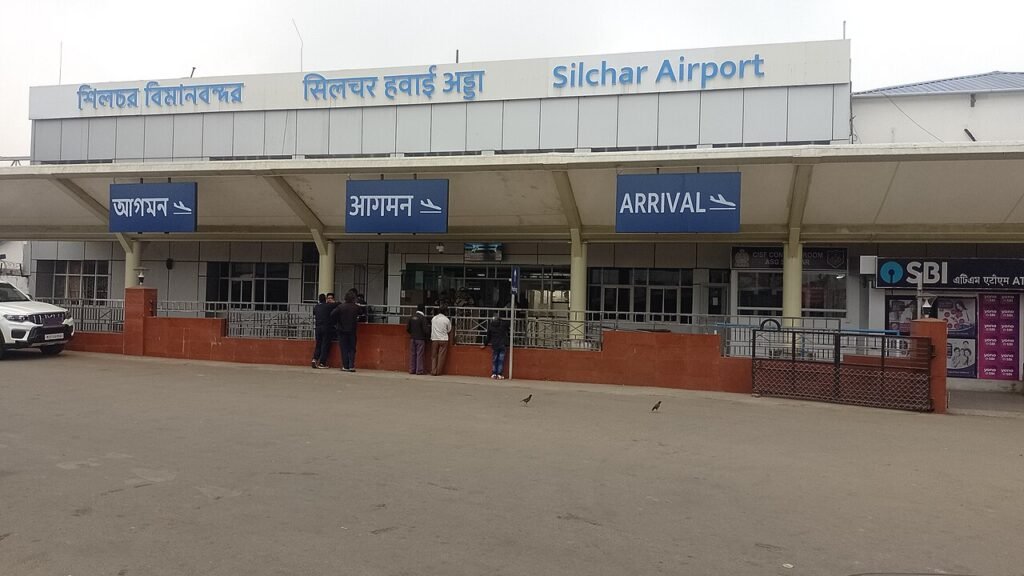
Why in News? On Wednesday, 25 November 2026, the Union Cabinet approved a Rs 2,014-crore greenfield airport at Doloo near Silchar in Assam. The Airports Authority of India will develop it.
Current Context (The Trigger)
- Cabinet approval: The Union Cabinet, chaired by Prime Minister Narendra Modi, cleared the Rs 2,014-crore greenfield airport at Doloo near Silchar. This happened on 25 November 2026.
- Land acquisition: The Cachar district administration started acquiring land at the Doloo tea estate on 12 May 2022.
- Runway: The airport will have a 2,705-metre runway that can take Airbus A320 aircraft.
- Terminal: The terminal will cover 12,351 square metres. Its peak-hour capacity will be 800 passengers, and its annual capacity will exceed one million passengers.
- Apron: The apron will park six A-320 aircraft at a time.
- Catchment: The airport is also expected to serve neighbouring Mizoram, Manipur and Tripura.
Core Concepts & Static GK
- Greenfield airport: This is a new airport built on fresh land, not an expansion of an existing airfield. Doloo fits this meaning because land was acquired at a tea estate for it.
- Current Silchar airport: The existing airport at Silchar belongs to the Indian Air Force. The Airports Authority of India runs a civil enclave there on 70.66 acres of land.
- Why a new site: An executive summary on the Cachar district website says the present terminal building is likely to saturate soon. It adds that land limits leave no room to expand the civil enclave.
- Airports Authority of India (AAI): It is a statutory body set up under the Airports Authority of India Act, 1994. It was formed on 1 April 1995 by merging the International Airports Authority of India and the National Airports Authority.
- AAI functions: AAI designs, develops, operates and maintains airports and civil enclaves. It also provides air navigation services, including air traffic management.
- Civil enclave: This is a civilian area at an airfield owned by the armed forces. The Silchar airport works in this way today.
Institutional Machinery
- Ministry of Civil Aviation: It is the nodal ministry for civil aviation policy. AAI is a public sector organisation under this ministry.
- AAI board: The Authority has a Chairperson appointed by the Central Government. The Director General of Civil Aviation, or an officer not below Deputy Director General rank, is an ex officio member. Eight to fourteen other members are appointed by the Centre.
- Greenfield Airports Policy, 2008: It was announced in April 2008. A Steering Committee chaired by the Secretary of Civil Aviation coordinates and monitors clearances under it.
- 150 km rule: Under the policy, a new airport proposal within 150 km aerial distance of an existing airport goes to the Steering Committee. It then goes to the Ministry.
Schemes & Initiatives
- UDAN: The Regional Connectivity Scheme, Ude Desh ka Aam Nagrik, was launched on 21 October 2016. It aims to link unserved and underserved airports.
- UDAN fare cap: The fare for a one-hour fixed-wing flight, or a half-hour helicopter flight, over about 500 km is capped at Rs 2,500.
- First UDAN flight: The first flight under the scheme ran from Shimla to Delhi in April 2017.
- Regional links: State minister Kaushik Rai listed other projects that can change the region’s connectivity. These are broad-gauge railway links, the East-West Corridor and the proposed Panchgram-Barapani high-speed corridor.
Assam & Northeast Linkages
- Airport growth claim: Chief Minister Himanta Biswa Sarma said operational airports in the region rose from nine in 2014 to 16.
- Assam’s airports: A Press Information Bureau release of 14 December 2023 on Northeast air traffic lists seven airports in Assam. They are Dibrugarh, Guwahati, Jorhat, Lakhimpur (Lilabari), Rupsi, Silchar and Tezpur.
- Land for Doloo: In December 2025 the Assam government approved the transfer of about 3,000 bighas (nearly 992 acres) to AAI. The land is for the Silchar greenfield airport.
- Neighbours served: Doloo is expected to help Mizoram, Manipur and Tripura with inter-state travel and trade.
Prelims Trap Zones (Watch out for)
- Project cost trap: The Doloo airport costs Rs 2,014 crore. Do not mix it with other round figures such as Rs 2,000 crore.
- Peak-hour trap: Peak-hour capacity is 800 passengers. The annual capacity is above one million. Students often swap these two.
- Aircraft trap: The runway and apron are planned for Airbus A320 aircraft, and the apron holds six of them. Wide-body jets are not mentioned.
- Agency trap: AAI will develop the airport. Land acquisition was done by the Cachar district administration, and the Union Cabinet gave approval.
- Existing airport trap: The present Silchar airport is owned by the Indian Air Force. AAI only runs a civil enclave on 70.66 acres.
- Regulator trap: AAI builds and runs airports. The Directorate General of Civil Aviation is the safety regulator.
Introduction
On 25 November 2026 the Union Cabinet approved a Rs 2,014-crore greenfield airport at Doloo near Silchar. The present Silchar airport is an Indian Air Force airfield with a civil enclave, and its terminal is likely to saturate soon. The new airport can give the Barak Valley and its neighbours a civilian gateway of their own.
Need and Underlying Drivers
- Saturating terminal: An executive summary on the Cachar district website says the present terminal at Silchar is likely to saturate soon. A new airport removes this limit.
- Defence ownership: The current airport belongs to the Indian Air Force, and AAI works only from a civil enclave of 70.66 acres. Land limits leave no room to expand that enclave.
- Long wait for connectivity: The Barak Valley has wanted better transport links for years to grow its economy. The Cabinet decision answers this old demand.
- Political push: Rajya Sabha member Sushmita Dev called the sanction “a dream come true” for the Barak Valley. State minister Kaushik Rai credited the Chief Minister’s efforts since 2022.
- Regional demand: Mizoram, Manipur and Tripura are expected to use the airport, so demand extends beyond Cachar.
Importance and Economic Rationale
- Passenger capacity: The terminal covers 12,351 square metres and will handle more than one million passengers a year.
- Cargo and freight: Silchar MLA Dr Rajdeep Roy said better cargo links could reduce freight costs. Local businesses could then reach wider markets.
- Trade and investment: Easier air access can draw business, investors and tourists to southern Assam.
- Gateway for south Assam: Union minister Sarbananda Sonowal called the approval a defining moment for aviation in Assam. He said it gives south Assam a new gateway.
- Inter-state mobility: Serving Mizoram, Manipur and Tripura can increase travel and trade between these states.
- Jobs and construction: A Rs 2,014-crore project will need construction, operations and services staff. This is an analytical point, and no job numbers have been given.
Government Initiatives (National & Assam)
| Level | Initiative | Purpose & Impact |
|---|---|---|
| Centre | Greenfield Airports Policy, 2008 | Sets the clearance route for new airports through a Steering Committee. |
| Centre | UDAN (21 October 2016) | Links unserved and underserved airports and caps fares at Rs 2,500 for about one hour of flying. |
| Centre | Airports Authority of India Act, 1994 | Makes AAI the agency to build and manage airports and civil enclaves. |
| Assam | Land acquisition at Doloo tea estate (from 12 May 2022) | Gave AAI the land needed for the project. |
| Assam and Centre | Broad-gauge rail, East-West Corridor, proposed Panchgram-Barapani high-speed corridor | Supports passenger and freight movement and trade in the region. |
Challenges
- Construction timeline: The Cabinet has approved the project, but building a 2,705-metre runway and terminal will take time. Delays raise cost.
- Cost control: The sanction is Rs 2,014 crore. Any overrun would strain the budget and could slow the work. This is an analytical point.
- Airline interest: A new airport is useful only if airlines fly there often. Silchar has to attract regular services from other cities.
- Last-mile access: Passengers and cargo need good roads and rail to reach Doloo. The Panchgram-Barapani high-speed corridor is still only a proposal.
- Affordability: Air fares can stay high on thin routes. The UDAN fare cap of Rs 2,500 for about one hour of flying covers only a set share of seats on supported flights.
- Handling of tea estate land: The land came from the Doloo tea estate, so the livelihood of those linked to it needs continued care. This is an analytical point.
Way Ahead
- Time-bound execution: AAI should publish clear milestones for the runway, terminal and apron, so that delays can be tracked.
- Route planning: The Ministry of Civil Aviation should include Silchar routes in UDAN or similar support schemes. These routes are to Guwahati, Kolkata, Delhi and the neighbouring state capitals.
- Road and rail links: The Assam government and the Centre should speed up the road and rail projects around Silchar, including the proposed Panchgram-Barapani corridor. People from Mizoram, Manipur and Tripura can then reach Doloo easily.
- Cargo facility: AAI should plan a cargo terminal so that local producers can use the freight advantage Dr Rajdeep Roy spoke about.
- Plan for growth: The terminal is designed for more than one million passengers a year. AAI should keep land and design space so that capacity can grow later.
- Fair rehabilitation: The district administration should keep supporting workers and families linked to the Doloo tea estate. It can do this through skill training and local jobs at the airport.
Conclusion
The Doloo airport can end the Barak Valley’s dependence on a single defence-owned airfield. Its value will depend on how fast it is built. It will also depend on how well road, rail and airline links grow around it.
Speed 4 Defence Manufacturing Unit at Rangia and Assam Aerospace and Defence Policy
Open this topic as a separate page, with its MCQs →
Syllabus Mapping
- Prelims: GS Paper I (Current events of State/National importance; Economic and Social Development; Indian Economy and Assam Economy).
- Mains: GS Paper III (Effects of liberalization on the economy, changes in industrial policy and their effects on industrial growth; Security); GS Paper V (Major industrial sector issues, Growth, Development and Planning, Major Development Projects of Assam).
Why in News? On 25 November, Chief Minister Himanta Biswa Sarma laid the foundation stone of a defence equipment factory at the AIDC Industrial Estate, Tulsibari, Rangia. The Mumbai-based Speed 4 Defence Systems Private Limited is building it. The Chief Minister also said the State would amend the Assam Aerospace and Defence Manufacturing Policy, 2025, to attract more defence companies.
Current Context (The Trigger)
- Foundation stone: The Chief Minister laid the foundation stone on Wednesday, 25 November, at the Assam Industrial Development Corporation (AIDC) Industrial Estate at Tulsibari, Rangia.
- Investment and land: The company will first invest around Rs 50 crore on about 14 acres. Production is targeted to start by January 2028.
- Annual capacity: At full strength the unit can make these every year: about 5,000 prefabricated rapidly deployable structures, 300 underground bunkers and protective structures, 100 counter-drone systems and 1,500 drones.
- Jobs: The first phase should give around 150 direct jobs. The number may rise to about 500 at full capacity.
- Local supply chain: The company wants local suppliers to handle 25 to 30 per cent of its production and supplies. These include micro, small and medium enterprises (MSMEs) and ancillary units.
- Research tie-up: The company also plans to work with IIT Guwahati on research, development and new technology. Students, researchers and teachers of the institute would get real defence and engineering problems to solve.
- Policy change coming: Sarma said the State would amend the Assam Aerospace and Defence Manufacturing Policy, 2025. The aim is to make Assam more attractive to defence equipment makers.
Core Concepts & Static GK
- Defence manufacturing: It means making weapons, platforms, protective structures, sub-systems and components for the armed forces. The Assam policy lists small arms, ammunition, aerospace systems and unmanned aerial vehicles (UAVs) among its target products.
- Indigenisation: It means reducing imports by designing and making defence items inside India. The Assam policy calls it a key part of India’s self-reliance strategy and links it to the Defence Acquisition Procedure (DAP) 2020 and the Positive Indigenisation Lists.
- Buy (Indian-IDDM): DAP 2020 gives top priority to this category. IDDM stands for Indigenously Designed, Developed and Manufactured.
- Positive Indigenisation Lists: These lists put an embargo on imports of a wide range of defence items. The aim is that Indian firms make them.
- iDEX: Innovations for Defence Excellence (iDEX) of the Department of Defence Production was launched in April 2018. It links defence needs with start-ups and MSMEs.
- Counter-drone system: It is a set of equipment meant to detect and stop hostile drones. The Rangia unit plans to make 100 such systems a year.
- MSME ecosystem: A Press Information Bureau (PIB) backgrounder of November 2025 says about 16,000 MSMEs are now part of India’s defence production base.
Constitutional & Legal Framework
- Union List, Entry 1: “Defence of India and every part thereof including preparation for defence” is Entry 1 of the Union List in the Seventh Schedule. So Parliament makes laws on defence.
- Two licensing laws: Listed defence items such as military aircraft and warships need an industrial licence under the Industries (Development and Regulation) Act, 1951. Listed arms and ammunition are licensed under the Arms Act, 1959.
- Who issues arms licences: The Department for Promotion of Industry and Internal Trade (DPIIT) licenses arms and ammunition of 12.7 mm calibre and above, crew-served weapons and allied defence equipment. It does so under a delegation from the Ministry of Home Affairs, which handles the other categories.
- Parts exempt: Press Note 2 of 2019 says parts and accessories need no industrial or arms licence. The exception is a part that is itself named in the lists of Press Note 1 of 2019.
- Licence validity: DPIIT says a defence industrial licence is first valid for 15 years. It can be extended up to 18 years.
Institutional Machinery
- AIDC: The Assam Industrial Development Corporation runs the industrial estate at Tulsibari where the plant will stand.
- Industries, Commerce and Public Enterprise Department: The Government of Assam notified the aerospace and defence policy through this department on 23 February 2025.
- Empowered Committee: The policy lets an Empowered Committee, with State Cabinet approval, give extra subsidies case by case.
- Defence Acquisition Council: It is chaired by the Raksha Mantri (Defence Minister) and clears acquisition proposals for the armed forces.
- Department of Defence Production: It runs a fully digital portal for defence export authorisations.
Schemes & Initiatives
- Assam Aerospace and Defence Manufacturing Policy 2025: It offers capital subsidy, State Goods and Services Tax (SGST) reimbursement, transport subsidy, production-linked subsidy and skill support. It runs for five years from its Gazette publication.
- Defence Industrial Corridors: India has two, in Uttar Pradesh and Tamil Nadu. Together they had attracted investment of over Rs 9,145 crore with 289 Memoranda of Understanding (MoUs) signed, as of October 2025.
- Nellie defence park: On 3 November 2026 the Assam Cabinet approved about 6,000 bighas (about 1,984 acres) at Nellie in Morigaon district for a defence park. The Assam Tribune described it as the State’s first defence park.
- Research, Development and Innovation Scheme: The Centre’s scheme has a Rs 1 lakh crore outlay. It aims to link public sector units, private firms, MSMEs and start-ups.
- SRIJAN portal: The Assam policy names the SRIJAN portal as a support for indigenisation.
Reports, Indices & Data
- Production record: India’s defence production reached an all-time high of Rs 1.78 lakh crore in FY 2025-26, as announced by the Defence Minister in June 2026. This was 15.6 per cent more than the Rs 1.54 lakh crore of FY 2024-25.
- Exports: Defence exports reached a record Rs 38,424 crore in FY 2025-26, as reported by the Ministry of Defence in April 2026. This was 62.66 per cent more than the Rs 23,622 crore of FY 2024-25.
- Licences: The November 2025 PIB backgrounder says 788 industrial licences have been issued to 462 companies.
- 2029 targets: The Centre aims for defence manufacturing of Rs 3 lakh crore and defence exports of Rs 50,000 crore by 2029.
- Procurement claim: Sarma said the defence forces buy equipment worth around Rs 2 lakh crore every year.
- Contracts: The Ministry of Defence signed a record 193 contracts worth Rs 2,09,050 crore in 2024-25. Of these, 177 contracts worth Rs 1,68,922 crore went to domestic industry.
Assam & Northeast Linkages
- A first for the region: Sarma said no defence manufacturing industry had been set up so far in Assam or the Northeast. This is the Chief Minister’s statement.
- After semiconductors: Sarma said the State is turning to defence after bringing the semiconductor industry to Assam. The Union Cabinet approved the Rs 27,000 crore Tata Semiconductor Assembly and Test unit at Jagiroad in Morigaon district on 29 February 2024.
- Nellie park: The defence park approved at Nellie in Morigaon district would add land for such units. Sarma has also raised a defence corridor proposal for Assam with the Defence Minister.
- Gateway location: The Assam policy says the State’s position as a gateway to Southeast Asia gives it an export advantage.
- Youth exposure: The State plans to send 10,000 youths in 20 batches to Gujarat so that they can see its industrial ecosystem.
Prelims Trap Zones (Watch out for)
- Validity Trap: The Assam Aerospace and Defence Manufacturing Policy 2025 stays in force for 5 years, not 10. It was notified on 23 February 2025.
- Amount Trap: The policy’s seed grant for defence start-ups is up to Rs 25 lakh. The Rs 2.5 crore figure is the separate go-to-market support.
- Year Trap: The Rangia plant targets production by January 2028. The investment is about Rs 50 crore on about 14 acres.
- Place Trap: The Rangia unit is at Tulsibari. The defence park is at Nellie in Morigaon district. They are different projects.
- FDI Trap: Foreign direct investment (FDI) in defence is allowed up to 74 per cent through the automatic route for companies seeking a new industrial licence. Beyond 74 per cent, up to 100 per cent, the government route applies where it is likely to bring modern technology or for other recorded reasons.
- Figure Trap: Rs 1.54 lakh crore is the defence production of FY 2024-25. The latest record is Rs 1.78 lakh crore in FY 2025-26.
- “First” Trap: The claim that Assam and the Northeast had no defence manufacturing industry is the Chief Minister’s. Do not write it as a verified record in an answer.
- Collaborator Trap: The research partner named for the Rangia unit is IIT Guwahati. Do not confuse it with a Defence Research and Development Organisation (DRDO) laboratory.
Introduction
On 25 November the Chief Minister laid the foundation stone of Speed 4 Defence Systems’ Rs 50 crore plant at Rangia. Sarma said no defence manufacturing industry had been set up in Assam or the Northeast before it. The timing matters because India’s defence production reached a record Rs 1.78 lakh crore in FY 2025-26. The project tests whether Assam can turn its 2025 policy into real factories, jobs and local supply chains.
Why Assam Is Entering Defence Manufacturing (Underlying Drivers)
- Large domestic market: The Chief Minister said the defence forces buy equipment worth around Rs 2 lakh crore a year. A state that supplies even a small share can build a steady order book.
- National self-reliance push: DAP 2020 gives top priority to Indian-made equipment, and the Positive Indigenisation Lists bar imports of many items. These rules create demand for new Indian suppliers.
- Private sector rise: The private sector made about 24 per cent of India’s defence production in FY 2025-26, according to the Defence Minister’s June 2026 figures. This opens room for firms like Speed 4 to enter.
- Location advantage: The State policy describes Assam as a gateway to Southeast Asia that can export defence products.
- Next step after semiconductors: Sarma said the semiconductor success pushed the government to focus on defence. The Rs 27,000 crore Tata unit at Jagiroad shows the State can attract large industrial projects.
- Ready policy: Assam notified a dedicated aerospace and defence policy on 23 February 2025. The Rangia foundation stone comes about 21 months after that notification.
Economic Rationale and Importance of the Rangia Project
- Investment: The plant brings an initial investment of around Rs 50 crore on about 14 acres at an AIDC estate. It makes use of industrial land the State already has.
- Employment: About 150 direct jobs are expected in the first phase and about 500 at full capacity. Local youth can get skilled factory work close to home.
- MSME linkages: The company wants local suppliers, MSMEs and ancillary units to handle 25 to 30 per cent of its production and supplies. This means business for local machinery makers, construction firms and service providers.
- Technology transfer: The collaboration with IIT Guwahati gives students and faculty real defence engineering problems. It can also help turn research into products made in the State.
- Product range: The unit will make rapidly deployable structures, bunkers, counter-drone systems and drones. These are items the armed forces need in large numbers.
- Industrial diversification: Sarma presented defence as the next sector after semiconductors. It adds a new product line next to the Rs 27,000 crore Jagiroad unit.
Government Initiatives (National & Assam)
| Level | Initiative | Purpose & Impact |
|---|---|---|
| Assam | Aerospace and Defence Manufacturing Policy 2025 | Gives capital subsidy of 30 per cent on plant and machinery and land at 50 per cent discount. It also gives 100 per cent SGST reimbursement (capped at 150 per cent of fixed capital investment over 10 years). |
| Assam | Start-up support in the policy | Seed grant up to Rs 25 lakh, go-to-market support up to Rs 2.5 crore and a Startup Growth Fund with an initial corpus of Rs 50 crore. |
| Assam | Production-linked and export support | Production-linked subsidy of 5 per cent of annual revenue and export promotion of 2 per cent of export revenue, each for 5 years from commercial production. |
| Assam | Nellie defence park | About 6,000 bighas (about 1,984 acres) approved by the State Cabinet on 3 November 2026 in Morigaon district to host defence units. |
| Centre | FDI liberalisation | Up to 74 per cent FDI through the automatic route for firms seeking a new industrial licence, and up to 100 per cent through the government route. |
| Centre | iDEX | Launched in April 2018 to link start-ups and MSMEs with defence needs. |
| Centre | Defence Industrial Corridors | Uttar Pradesh and Tamil Nadu corridors drew over Rs 9,145 crore of investment by October 2025. |
Strategic and Regional Significance
- Supply close to users: Sarma said the Nellie park would bring arms manufacturing closer to the eastern frontier. The Rangia unit follows the same logic for bunkers and rapidly deployable structures.
- Counter-drone capability: The plant plans 100 counter-drone systems and 1,500 drones a year. Both are fast-growing needs for the armed forces.
- Corridor ambition: Sarma raised a defence corridor proposal for Assam with the Defence Minister. The Assam Tribune reported that Assam would be the third state with such a corridor if it is approved.
- Export gateway: The Assam policy says the State’s Southeast Asia gateway position helps exports. India’s defence exports reached a record Rs 38,424 crore in FY 2025-26.
- Atmanirbhar Bharat link: The Centre targets defence manufacturing of Rs 3 lakh crore by 2029. Every new state with factories helps spread that capacity.
- Human capital: The plan to send 10,000 youths to Gujarat in 20 batches aims to build industrial awareness. It supports the labour base that defence plants will need.
Challenges
- Early stage: The plant has only had its foundation stone laid, and production is targeted for January 2028. Jobs and supplier orders will arrive only after that.
- Thin ecosystem: The Chief Minister said no defence industry existed in Assam or the Northeast before this. Suppliers, testing and skilled workers must be built from a low base.
- MoUs versus money: The two defence corridors had 289 MoUs with Rs 66,423 crore of potential, but actual investment was over Rs 9,145 crore by October 2025. Assam must make sure announcements turn into factories.
- Competition for orders: Of 193 contracts in 2024-25, 177 went to domestic industry. A new Assam firm competes with established players for the same orders.
- Policy certainty: The policy lets the State amend or withdraw incentives. The Chief Minister has already said it will be amended. Investors need clarity on what will change.
- Licensing and compliance: Listed defence items need an industrial licence under the 1951 Act, and listed arms and ammunition need a licence under the Arms Act, 1959. These steps add time and paperwork for a new unit.
Way Ahead
- Amend the policy with clear rules: The Industries, Commerce and Public Enterprise Department should publish the amended policy quickly and keep incentive terms stable. This reduces risk for investors.
- Build the local vendor base: The State and AIDC should train and register local MSMEs so that the 25 to 30 per cent supply target is met. The SRIJAN indigenisation portal, named in the State policy, can help them find items to make.
- Use IIT Guwahati: The company and the institute should convert their research tie-up into prototypes. The policy’s start-up seed grant of up to Rs 25 lakh can fund early products.
- Fast-track Nellie and the corridor case: The State should complete land allotment at Nellie and keep pressing the Centre on the defence corridor proposal. A cluster of units lowers costs for each firm.
- Train the workforce: The policy offers Rs 10,000 per employee per month for 6 months for skilling, up to 100 employees. Firms and skill institutes in the State should use this to prepare technicians before 2028.
- Aim at exports: Assam firms should use the digital export authorisation portal of the Department of Defence Production. The State’s Southeast Asia gateway position can help them reach nearby markets.
- Track results publicly: The State should report how many MoUs turn into units, jobs and orders each year. The corridor data shows that this gap matters.
Conclusion
The Rangia plant is a small but real step, because it moves Assam from announcing defence ambitions to building a factory. Its value will depend on whether the amended policy, local suppliers and skilled workers are ready by January 2028. The foundation ceremony alone will not decide it.
Asked in APSC
- APSC Prelims 2024: (answer in the MCQs below)
The demarcation of any region as Defence Industrial Corridor (DIC) is to achieve self-reliance in defence manufacturing. Two DICs exist in India and the third one has been negotiated by a State with the Central Government in recent years. Choose the correct combination of the States/Union Territories on the basis of the above statements.- (A) Gujarat, Maharashtra, Tamil Nadu
- (B) Uttar Pradesh, Tamil Nadu, Assam
- (C) Tamil Nadu, Gujarat, Jammu & Kashmir
- (D) Assam, Jammu & Kashmir, Gujarat
All 500 APSC Prelims PYQs of CCE 2020 to 2025, with answers and explanations: practise free in the PYQ Explorer
Luit Konwar Rudra Barua Birth Centenary and Assamese Folk-Modern Music
Open this topic as a separate page, with its MCQs →
Syllabus Mapping
- Prelims: GS Paper I (Current events of State/National importance; Indian heritage and culture: art forms, music and personalities).
- Mains: GS Paper I (Indian culture: salient aspects of art forms and literature from ancient to modern times); GS Paper V (History, Art, Culture, Literature, Tradition and Heritage of Assam: Folk Music and Folk Dances, Leading Personalities).
Why in News? Assam ends the year-long birth centenary of Luit Konwar Rudra Barua on 26 November 2026 with a programme at Srimanta Sankaradeva Kalakshetra, Guwahati. An opinion article on the same day looks back at his songs, his mentoring and his role in building Assam’s cultural institutions.
Current Context (The Trigger)
- Closing ceremony: The centenary year closes on 26 November with a programme starting at 5.30 pm.
- Venue: The programme is at Sri Sri Madhabdev Auditorium, Srimanta Sankaradeva Kalakshetra, Guwahati.
- Organiser: The Luit Konwar Smriti Raksha Samity is organising the ceremony.
- Two publications: One book will carry the musical notations of his songs. The second is a commemorative volume with essays and memories about his life, his works and his place in Assamese music and culture.
- Performers: Singers Manajyotsna Mahanta Goswami, Madhusmita Bhattacharya, Hemen Das, Gitanjali Das and Nilotpal Gayan will sing his songs. Artistes from the State Music College will join them.
- Dance items: Choreographers Anita Sarma, Anjanamoyee Saikia and Chandrani Talukdar have set his compositions to Satriya, Odissi and Kathak dance. Sangeet Satra students will add a separate Satriya performance.
- Earlier event: In November 2025, Guwahati marked his 99th birth anniversary at Shilpagram. The North East Zone Cultural Centre held it with students of the State Music College, and the Luit Konwar Rudra Barua Smriti Raksha Samity also took part.
Core Concepts & Static GK
- Kolongporiya Geetikaar: Rudra Barua is also known by this title. It ties him to the banks of the Kolong in Nagaon, where he grew up.
- Home village: His childhood village was Bhimor Gaon, close to Puranigudam in Nagaon district.
- Early hardship: His father, Barada Kanta Barua, died when Rudra was a child. During World War II he took a job as a mohori (clerk) on road works to pay for his studies.
- Vaishnavite influence: He grew up next to the village namghar and the old Letugram Satra. As a young boy he soaked up borgeet, naam-prasanga and bhaona there.
- Folk influence: Village women, his mother Hiralata Barua among them, sang ai naam, dhai naam and songs of the harvest season. These shaped his musical sense.
- Borgeets: These are devotional songs composed by Srimanta Sankardeva and Madhavdeva. They use ragas of the Indian classical tradition with regional variations.
- Folk-modern idiom: Barua carried forward the folk-modernist path opened by Kalaguru Bishnu Prasad Rabha and Rupkonwar Jyotiprasad Agarwala.
- Death: He died on 14 February 1980.
Institutional Machinery
- Information and Public Relations Department: In the 1970s he served in this department of the Assam government. He helped set up its cultural wing.
- Jyoti Chitraban and the Assam Film Finance Corporation: He also helped establish both bodies. They gave the State’s cinema, documentaries and performing arts a base of public support.
- State Art Gallery: He also played a key part in founding the State Art Gallery. He helped take Sattriya, folk and tribal dance onto the public stage.
- Luit Konwar Rudra Barua State College of Music: The State’s leading music college now carries his name.
- Sangeet Natak Akademi: This national academy of music, dance and drama recognised Sattriya as a classical dance on 15 November 2000.
Assam & Northeast Linkages
- All India Radio, Shillong: In the mid-20th century, the Shillong station of All India Radio was where modern Assamese music took shape. Barua broadcast songs in the everyday speech of rural Assam from there.
- Shillong years: In Shillong he held a clerk’s job in the Sericulture Department during the day. He studied in the evenings at St Anthony’s College and graduated in 1951.
- Hills and plains: He wove tunes from both Assam’s hills and its plains into his music. This helped build a shared cultural feeling across ethnic and geographical lines.
- Cinema: Jyotiprasad Agarwala made the first Assamese film, Joymoti, in 1935. Barua later worked in films and in film finance, continuing this line.
- Contemporaries: He worked in the same circles as Dr Bhupen Hazarika and Parvati Prasad Baruva. Hazarika was given the Bharat Ratna after his death, in 2019.
Prelims Trap Zones (Watch out for)
- Title Trap: Do not confuse the titles. Rudra Barua is Luit Konwar and Kolongporiya Geetikaar. Jyotiprasad Agarwala is Rupkonwar and Bishnu Prasad Rabha is Kalaguru.
- Song Trap: Kolore patote kauri pore is a lyric by Keshab Mahanta that Barua set to a folk-inspired tune. Barua gave it to the young Khagen Mahanta. The singer Dipali Borthakur is linked to Jondhane jonalite and O bandhu samoy pale.
- Institution Trap: The State college is named after him as the Luit Konwar Rudra Barua State College of Music. The closing event is at Srimanta Sankaradeva Kalakshetra, not at the Jyoti Chitraban studio.
- Department Trap: His government work in the 1970s was in the Information and Public Relations Department. His Shillong job was a clerk’s post in the Sericulture Department. These are different phases of his life.
- Date Trap: The closing programme is on 26 November, while the report announcing it is dated 25 November. Barua died on 14 February 1980.
Introduction
Assam closes the year-long birth centenary of Luit Konwar Rudra Barua on 26 November. His songs are being sung again on the stage of Srimanta Sankaradeva Kalakshetra. A boy from Bhimor Gaon in Nagaon, he became the voice that put the reaper, the transplanter and the weaver at the centre of Assamese music. His life shows how folk roots, public institutions and mentoring together build a regional culture.
Folk Idiom and Modern Assamese Music
- Language of the village: He moved away from ornate, Sanskritised diction. He took the plain, spoken language of village Assam onto radio.
- Labour as poetry: Songs like Poka dhanor maje maje soru soru aali and Kasot kolochi haali jaali koon menoka aahe turned farm work into verse.
- Dignity of workers: The dawoni (reaper), ruwoni (transplanter) and the weaver at her handloom appear as figures of grace and dignity, not objects of pity.
- Rooted in Vaishnavite and folk music: His ear was trained on borgeet, naam-prasanga and bhaona, and on the ai naam and dhai naam of village women. This gave his tunes both discipline and warmth.
- Platform in the post-Independence years: At a time when Assam was shaping its modern cultural identity, his music argued that folk idioms deserved national platforms.
- Inclusive motifs: He drew on tunes from Assam’s hills and plains, which helped bridge ethnic and geographical divides.
Collaboration and Mentorship
- Link with Keshab Mahanta: The poet’s lyrics and Barua’s tunes produced lasting songs such as Kolore patote kauri pore and Barasunar batarat.
- A golden era: Working alongside Dr Bhupen Hazarika and Parvati Prasad Baruva, he helped build an era in which classical discipline, nationalist ideals and folk energy sat together.
- Generosity to Khagen Mahanta: He set Kolore patote kauri pore for the teenage Khagen Mahanta. He chose never to sing it on stage himself, so that the young singer’s version would stay the one people remembered.
- Nurturing singers: Dipali Borthakur, Archana Mahanta, Anima Bhattacharya and Nilima Khatun gained from his guidance and repertoire in their early years.
- Bridge between generations: Working among the artists of Shillong and Guwahati, he linked the freedom-era pioneers to the post-Independence generation.
Theatre and Cinema
- Music director: He composed the score for films such as Kallol.
- Actor: He appeared as an actor and worked with pioneering filmmakers and stage figures.
- Folk-rooted soundscapes: He enriched dramatic productions with sounds drawn from village music.
- Legacy of Joymoti: Assamese cinema began in 1935 when Jyotiprasad Agarwala made Joymoti. Barua worked in the path this film opened.
- Cinema as policy: His later work in film finance turned personal artistic effort into State support for the industry.
Institution Building and State Patronage
- Cultural wing: In the 1970s he was an officer of the State’s Information and Public Relations Department. He helped establish its cultural wing.
- Jyoti Chitraban: He helped set it up, and it became a base for Assamese cinema.
- Assam Film Finance Corporation: He also helped found this body. It gave regional filmmakers a source of finance.
- State Art Gallery: He was instrumental in setting it up, which gave visual arts a public home.
- Stage for Sattriya, folk and tribal dance: He brought these forms to the stage. Sattriya was later recognised as a classical dance by the Sangeet Natak Akademi on 15 November 2000.
- Lesson on patronage: His work shows that cultural growth should not depend on individual struggle alone. Public bodies can carry artists through hard years.
Challenges
- Short life, scattered work: He died on 14 February 1980. Much of his music reached people through radio and live singing, so collecting original renditions needs care.
- Notation gap: Folk-based songs are often learnt by ear. The centenary book of musical notations is a response to this problem.
- Dependence on a few events: Commemorations like the 2025 anniversary at Shilpagram and the 2026 closing event can fade if there is no steady programme of teaching and performance.
- Language and idiom: The rural speech that made his lyrics fresh may feel distant to urban students. Teachers need to explain the words and the farm-life background behind songs like Poka dhanor maje maje soru soru aali.
- Fragile cultural institutions: Bodies he helped create, such as the Assam Film Finance Corporation and the State Art Gallery, need steady funds and skilled staff to keep supporting grassroots artists.
Way Ahead
- Use the new notation book: The State College of Music can teach from the centenary publication of his notations, so that students learn the songs in their original form.
- Digitise recordings: The Assam government’s culture department and All India Radio can work together to collect and digitise old recordings of his songs for public access.
- Take songs to schools: Schools can include his farm and weaver songs in music periods. This links young students to village life and to the Assamese language.
- Keep the mentoring spirit: Senior singers can run regular workshops for young artistes, as Barua did with Khagen Mahanta and others.
- Support folk and Sattriya stage work: The Sangeet Natak Akademi and the State can fund performances that mix folk songs with Sattriya and other classical dance. The closing ceremony does this.
- Strengthen film and art bodies: The State can review the work of Jyoti Chitraban, the Assam Film Finance Corporation and the State Art Gallery, so that his institutional legacy stays active.
Conclusion
Rudra Barua showed that a regional art grows best when it is rooted in village life and backed by public institutions. A hundred years on, the task is to keep his songs sung, taught and written down. They should live in classrooms and on stage, not only on anniversaries.
Constitution Day: Social Justice Promise and Landmark Amendments
Open this topic as a separate page, with its MCQs →
Syllabus Mapping
- Prelims: GS Paper I (Indian Polity and Governance: Constitution, Political System, Rights issues; Current events of national importance; Assam Polity).
- Mains: GS Paper II (Indian Constitution: evolution, features, amendments, significant provisions and basic structure; Schedules; Union and States); GS Paper V (Assam syllabus: polity and governance of Assam, tribal areas and autonomy).
Why in News? On Constitution Day, 26 November, the Prime Minister wrote an opinion article in the Assam Tribune on the Constitution’s promise of social and economic justice. He cited the 101st, 102nd and 103rd Amendments as steps in that direction. He also gave his views on the First and 42nd Amendments, which turn 75 and 50 this year.
Current Context (The Trigger)
- Occasion: The article was published on 26 November, the day India marks as Constitution Day. The Constituent Assembly adopted the Constitution on 26 November 1949.
- Amendments named: The author named the 101st Amendment (Goods and Services Tax), the 102nd Amendment (National Commission for Backward Classes) and the 103rd Amendment (reservation for Economically Weaker Sections).
- Language access: The author said that, for the first time since 1950, an updated Constitution is available in all 22 languages of the Eighth Schedule.
- Criminal law: The author linked the Bharatiya Nyaya Sanhita to a shift from the colonial idea of punishment (dand) to a citizen-centric idea of justice (nyay).
- Duties: The author said his government has stressed kartavya (citizens’ duties) over the past decade.
- Anniversaries: The article notes that 2026 marks 75 years of the First Amendment (1951) and 50 years of the 42nd Amendment (1976). The author criticised both, and students should quote this as his view.
- Poverty figure: The Prime Minister’s article cites a recent World Bank report to say that nearly 50 crore Indians have moved out of poverty.
Core Concepts & Static GK
- Adoption and commencement: The Constituent Assembly adopted the Constitution on 26 November 1949. Most of it came into force on 26 January 1950.
- Original size: At commencement the Constitution had 395 Articles, 22 Parts and 8 Schedules.
- Constitution Day: The Centre made 26 November Constitution Day by a gazette notification dated 19 November 2015. The notification was issued by the Ministry of Social Justice and Empowerment.
- Link to Ambedkar: The 2015 notification noted that the year was the 125th birth anniversary of Dr B. R. Ambedkar, who chaired the Drafting Committee. Before 2015 the day was observed as National Law Day, which the Supreme Court Bar Association began in 1979.
- Social document: The article quotes the constitutional scholar Granville Austin, who called the Constitution “first and foremost a social document”.
- Amendment as a tool: Parliament amends the Constitution under Article 368. Each amendment is an Act with a number and a year, for example the Constitution (101st Amendment) Act, 2016.
Constitutional & Legal Framework
- 101st Amendment (2016): It received the President’s assent on 8 September 2016. It inserted Articles 246A (power to make GST laws), 269A (inter-State GST) and 279A (GST Council).
- 102nd Amendment (2018): It gave the National Commission for Backward Classes constitutional status through Article 338B. It also inserted Article 342A.
- 105th Amendment (2021): In May 2021 the Supreme Court read the 102nd Amendment as taking away the States’ power to identify backward classes. The 105th Amendment amended Article 342A so that States and Union Territories can again keep their own lists of socially and educationally backward classes.
- 103rd Amendment (2019): It added a 10 per cent reservation for Economically Weaker Sections through changes to Articles 15 and 16.
- Court verdict: On 7 November 2022 the Supreme Court upheld the 103rd Amendment by a 3:2 majority in Janhit Abhiyan v. Union of India.
- Article 356: In S. R. Bommai v. Union of India (1994) the Supreme Court held that a proclamation under Article 356 is open to judicial review.
Institutional Machinery
- GST Council: Article 279A required the President to set up the Goods and Services Tax Council within 60 days of the Amendment’s commencement. It is a joint forum of the Union and the States.
- National Commission for Backward Classes: It was first set up under the National Commission for Backward Classes Act, 1993. That Act was repealed with effect from 15 August 2018, the same day the 102nd Amendment came into force and made the Commission a constitutional body.
- Nodal ministry for Constitution Day: The Department of Social Justice and Empowerment issued the 2015 notification.
- Legislative Department: It is working to translate the Constitution and all Central Acts into every Eighth Schedule language, which includes Assamese and Bodo. The Rajya Sabha was told this on 8 February 2024.
Assam & Northeast Linkages
- Sixth Schedule: Article 244(2) applies the Sixth Schedule to the tribal areas of Assam, Meghalaya, Tripura and Mizoram. These areas become autonomous districts. In Assam they include Karbi Anglong and the North Cachar Hills (now Dima Hasao).
- Article 371B: The 22nd Amendment (1969) inserted it. It lets the President provide for a committee of the Assam Legislative Assembly. Its members come from the tribal areas in Part I of the table under paragraph 20 of the Sixth Schedule. The order may add other members.
- Article 244A: The same 22nd Amendment let Parliament create an autonomous State within Assam.
- Eighth Schedule: Assamese is among the 14 languages listed in 1950. Bodo was added by the 92nd Amendment, which took the total to 22.
- GST ratification: Assam was the first State to ratify the GST Constitution Amendment Bill, on 12 August 2016. The Bill became the 101st Amendment after the President’s assent on 8 September 2016.
Prelims Trap Zones (Watch out for)
- Date Trap: The Constitution was adopted on 26 November 1949 but came into force on 26 January 1950. Constitution Day marks the adoption date.
- Origin Trap: Constitution Day began in 2015 by a gazette notification of 19 November 2015. Before that, 26 November was National Law Day.
- Article Trap: The NCBC is under Article 338B. Article 279A is the GST Council. Article 342A deals with identifying backward classes. Do not swap them.
- Amendment Trap: GST is the 101st Amendment, the NCBC is the 102nd, and EWS reservation is the 103rd.
- Verdict Trap: The Supreme Court upheld the EWS amendment by 3:2, not unanimously.
- Assam Trap: Article 371B belongs to Assam and was inserted in 1969 by the 22nd Amendment. Do not confuse it with other special provisions in Part XXI.
- Language Trap: The Eighth Schedule has 22 languages. Bodo, Dogri, Maithili and Santhali came in together through the 92nd Amendment Act, 2003.
Introduction
The Constituent Assembly adopted the Constitution on 26 November 1949, and India has marked that date as Constitution Day since 2015. This year the Prime Minister used the day to argue that the document is a social charter, and he linked it to welfare schemes and to several amendments. For an APSC candidate, the value lies in knowing each amendment’s facts and in judging the views around them with balance.
The Constitution as a Social Document
- Austin’s description: Granville Austin called the Constitution “first and foremost a social document”, as the article recalls. This means it aims at a social revolution as well as a political structure.
- Preamble promise: The Preamble secures justice, liberty, equality and fraternity to all citizens. The article reads social and economic justice into this promise.
- Welfare as constitutional promise: The author linked PM Awas Yojana, Ujjwala, Ayushman Bharat, MUDRA and PM-SVANidhi to dignity, equality, well-being and economic justice. This is the author’s framing of scheme outcomes.
- Poverty claim: The author cited a World Bank report on nearly 50 crore Indians moving out of poverty. Students should present it as an attributed claim and know that poverty estimates depend on the method used.
- Digital inclusion: The author said platforms like UPI place opportunities within every citizen’s reach and so advance the ideal of inclusivity.
- Equal opportunity: The author used his own modest background to show that birth no longer sets the limits of one’s future. This illustrates the equality of opportunity that Articles 14 to 16 promise.
Landmark Amendments Cited for Social and Economic Justice
| Amendment | Year and key provision | Purpose |
|---|---|---|
| 101st | 2016; Articles 246A, 269A and 279A | Created GST and the GST Council as a joint Union-State forum. |
| 102nd | 2018; Article 338B | Gave the National Commission for Backward Classes constitutional status. |
| 103rd | 2019; Articles 15 and 16 | Provided 10 per cent reservation for Economically Weaker Sections, upheld 3:2 in 2022. |
| 92nd | 2003; Eighth Schedule | Added Bodo, Dogri, Maithili and Santhali. |
- GST and cooperative federalism: The 101st Amendment created a shared law-making field and a Council where the Centre and States decide together. The article calls GST a long-awaited reform.
- Backward classes: The article presents the 102nd Amendment as meeting an old demand of backward communities. Its Article 342A later raised a question on State powers, and the 105th Amendment settled it in 2021 by restoring State lists.
- EWS quota: The article says the 103rd Amendment had broad social acceptance and met the aspirations of poor families outside the existing reservation framework. The 3:2 verdict shows the legal debate on economic criteria and the 50 per cent ceiling set in Indra Sawhney.
- Parliament’s role: All three amendments passed through Article 368, which shows the Constitution’s capacity to change with social needs.
- Judicial scrutiny: Each social-justice amendment is open to review for its effect on the basic structure, as the EWS case shows.
Views on Earlier Amendments and Constitutional Safeguards
- First Amendment (1951): The article says it restricted fundamental freedoms. On the record, it rewrote Article 19(2) to add grounds such as public order and incitement to an offence, and it added Article 31B and the Ninth Schedule. Defenders of the amendment point to the land reform laws it protected, which were its first entries.
- Ninth Schedule today: It began with 13 land reform laws and now lists more than 250 laws. In I. R. Coelho (2007) a nine-judge bench held that laws placed in it after 24 April 1973 can be tested in court. Such a law falls if it damages the basic structure, including the essence of the rights in Articles 14, 19 and 21.
- 42nd Amendment (1976): The article says it curtailed judicial review and changed the balance of institutions during the Emergency. The Amendment also added the words “socialist” and “secular” and the word “integrity” to the Preamble, and it inserted Part IV-A with Article 51A on Fundamental Duties.
- 38th and 39th Amendments: The article asks young people to study these two 1975 amendments. The 38th made the President’s satisfaction in proclaiming an Emergency final and beyond court review. The 39th inserted Article 329A on the election of the Prime Minister and the Speaker. The Supreme Court struck down its clause (4) in Indira Gandhi v. Raj Narain (1975), and the 44th Amendment (1978) omitted the Article.
- Article 356: The article criticises past use of this Article to dismiss elected State governments. The Supreme Court in S. R. Bommai (1994) made proclamations open to judicial review and held that the Assembly floor is the place to test a government’s majority.
Duties, Language and Criminal Law Reforms
- Kartavya: The author says the past decade stressed citizens’ duties, with mass movements such as Swachh Bharat and water conservation. Fundamental Duties sit in Article 51A, inserted in 1976.
- Bharatiya Nyaya Sanhita: The Sanhita replaced the Indian Penal Code, 1860, and came into force on 1 July 2024. The author describes it as a shift from punishment to justice.
- Constitution in 22 languages: The author says an updated Constitution is now available in all Eighth Schedule languages. The Legislative Department has been translating it into every Eighth Schedule language, which includes Assamese and Bodo.
- Eighth Schedule growth: It had 14 languages in 1950. Sindhi came in 1967 through the 21st Amendment. Konkani, Manipuri and Nepali came in 1992 through the 71st Amendment. Four more came in 2003, making 22.
- Viksit Bharat 2047: The author names “India First” and “Kartavya” as guiding principles for 2047. These are policy aspirations and not constitutional provisions.
Challenges
- Balancing welfare and rights: Welfare delivery helps dignity, but the Constitution also protects liberty and equality before law. Both must be judged together.
- Reservation limits: The 103rd Amendment’s EWS quota raises the question of the 50 per cent ceiling from Indra Sawhney. The 3:2 verdict shows the court was not unanimous.
- Centre-State coordination: GST works only if the GST Council reaches consensus. Article 279A also gives it a role in settling disputes.
- Reading history with care: Views on past amendments differ among scholars and political parties. Students must separate documented provisions from interpretations.
- Constitutional literacy: Translation into 22 languages helps access, but citizens still need civic education to use their rights.
- Autonomy in the Northeast: Sixth Schedule councils and Article 371B depend on regular funds, elections and clear powers to deliver local self-government.
Way Ahead
- Constitution Day teaching: The Union Ministry of Education and State education departments can run school and college programmes on the Preamble and Fundamental Duties.
- Complete the translations: The Legislative Department should publish authoritative texts in all 22 languages, including Assamese and Bodo, and keep them updated after each amendment.
- Strengthen the GST Council: The Centre and States should keep consensus-based decisions, using Article 279A’s dispute mechanism where needed.
- Clear backward class lists: The NCBC and State commissions should work together on the lists, as the 105th Amendment intended.
- Empower Sixth Schedule bodies: The Assam government and the Centre should ensure timely council elections, funds and capacity for Karbi Anglong and Dima Hasao institutions.
- Evidence-based debate: Parliament and universities should publish amendment histories with committee reports so debate rests on documents.
Conclusion
The Constitution’s promise of social and economic justice is real, and amendments such as the 101st, 102nd and 103rd show how Parliament has tried to deliver it. Views on earlier amendments will differ, so an exam answer should state the provisions first and give opinions as attributed views. The real test is whether welfare, rights and federal balance move forward together.
Asked in APSC
- APSC Mains 2025, GS Paper 2 (10 marks): The framers of the Constitution sought to combine political democracy with social and economic justice, but India still continues to face deep inequalities. Within this context, explain how the design of the Constitution attempts to move society from ‘formal equality’ to ‘substantive equality’. Do you think that constitutional design alone is sufficient to reduce structural injustice, or whether it sometimes enables the status quo? Substantiate your answer with suitable examples.
APSC Prelims MCQs
Practice questions on the topics above
News in Short
- Airtel data centres in Assam: Assam and Bharti Airtel signed an MoU on 25 November for two more data centres: 10 MW at Jorhat (Rs 200 crore) and 15 MW at Silchar (Rs 255 crore). The first one, 15 MW at Bongora, Guwahati (Rs 250 crore), is due by March 2028. Together the three give 40 MW and a first-phase investment of Rs 705 crore.
- Colombo Security Conclave: NSA Ajit Doval spoke at the 8th NSA-level meeting of the CSC in Male, Maldives. He said the grouping sits where India’s ‘Neighbourhood First’ policy meets the ‘Mahasagar’ vision.
- Exercise SURYAKIRAN: The 20th edition of this India-Nepal army exercise began at the Nepali Army Battle School, Saljhandi (Rupandehi), and ends on 8 December. It has been held yearly, by turns in the two countries, since 2011. The 19th edition was at Pithoragarh, India. The focus is disaster management, jungle warfare and humanitarian aid.
- Golden Dragon-2026: China and Cambodia began their 8th joint military exercise. Cambodia says it is the largest since the exercise began in 2016. It runs for 15 days and ends on 9 December. The focus is counterterrorism, humanitarian aid, anti-piracy and disaster relief. China has helped fund the expansion of Cambodia’s Ream Naval Base on the Gulf of Thailand.
- Naga ancestral remains: 39 Naga ancestral human remains, kept for a century at the Pitt Rivers Museum, University of Oxford, are due in Nagaland on 27 November. The museum says its Naga collection is the largest in the world.
- Tripura urban local body polls: Voting is on 27 November in 268 wards of 16 urban local bodies. The State Election Commission will use 704 polling stations and 909 polling teams (about 4,600 staff).
- Labour Force Participation Rate: All-India LFPR rose to 55.7% in October 2026 from 55.5% in September. The unemployment rate fell to 4.9% from 5.0%, the lowest in eight months. These figures come from MoSPI’s monthly Periodic Labour Force Survey, which counts persons aged 15 and above on the Current Weekly Status basis.
APSC Prelims MCQs
Practice questions on the topics above
Topic 1: Greenfield Airport at Doloo near Silchar and Barak Valley Connectivity
Q1. The Union Cabinet recently approved a greenfield airport at Doloo near Silchar. Consider the following statements:
(i) The airport will be developed by the Airports Authority of India.
(ii) It will have a 2,705-metre runway that can take Airbus A320 aircraft.
(iii) The terminal will have a peak-hour handling capacity of 8,000 passengers.
Which of the statements given above is/are correct?
- (a) (i) and (ii) only
- (b) (ii) and (iii) only
- (c) (i) and (iii) only
- (d) (i), (ii) and (iii)
Show answer
Answer: (a) Explanation: Statements (i) and (ii) are correct. The Union Cabinet approved the Rs 2,014-crore project on 25 November 2026. The Airports Authority of India will develop it, with a 2,705-metre runway for Airbus A320 aircraft. Statement (iii) is wrong because the peak-hour capacity of the 12,351-square-metre terminal is 800 passengers, not 8,000. The annual capacity is above one million passengers. Options (b), (c) and (d) all include (iii), so they fail. Value addition: the present Silchar airport belongs to the Indian Air Force, and AAI operates only a civil enclave there on 70.66 acres of land.
Q2. Consider the following statements about the Airports Authority of India (AAI):
(i) It is a statutory body created under the Airports Authority of India Act, 1994.
(ii) It was formed by merging the International Airports Authority of India and the National Airports Authority.
(iii) It is the safety regulator of civil aviation in India.
Which of the statements given above is/are correct?
- (a) (i) only
- (b) (i) and (ii) only
- (c) (ii) and (iii) only
- (d) (i), (ii) and (iii)
Show answer
Answer: (b) Explanation: Statements (i) and (ii) are correct. AAI is a statutory body under the 1994 Act. It was formed on 1 April 1995 by merging the International Airports Authority of India and the National Airports Authority. Statement (iii) is wrong. AAI builds, runs and maintains airports and civil enclaves and provides air navigation services. The Directorate General of Civil Aviation is the safety regulator. So options (c) and (d) fail, and option (a) leaves out a true statement. Value addition: AAI is a public sector organisation under the Ministry of Civil Aviation, and its Chairperson is appointed by the Central Government.
Q3. Match List-I with List-II:
| List-I | List-II |
|---|---|
| a. UDAN fare cap for about one hour of flying | 1. Rs 2,014 crore |
| b. Greenfield Airports Policy announced | 2. 1994 |
| c. Airports Authority of India Act | 3. 2008 |
| d. Cost of the Doloo airport approved by the Union Cabinet | 4. Rs 2,500 |
Select the correct answer using the codes given below:
- (a) a-4, b-3, c-2, d-1
- (b) a-4, b-2, c-3, d-1
- (c) a-3, b-4, c-1, d-2
- (d) a-1, b-3, c-2, d-4
Show answer
Answer: (a) Explanation: The UDAN fare is capped at Rs 2,500 for about one hour of fixed-wing flying, so a matches 4. The Greenfield Airports Policy was announced in April 2008, so b matches 3. The Airports Authority of India Act was passed in 1994, so c matches 2. The Union Cabinet sanctioned Rs 2,014 crore for Doloo, so d matches 1. Option (b) swaps the policy year and the Act year. Options (c) and (d) pair the money figures with the wrong items. Value addition: UDAN was launched on 21 October 2016, and its first flight ran from Shimla to Delhi in April 2017.
Q4. While welcoming the Doloo airport decision, Chief Minister Himanta Biswa Sarma said that operational airports in the Northeast region increased from nine in 2014 to how many?
- (a) 9
- (b) 12
- (c) 14
- (d) 16
Show answer
Answer: (d) Explanation: The Chief Minister welcomed the Cabinet decision on the Doloo airport. He said operational airports in the region grew from nine in 2014 to 16, and this is the figure he gave. Option (a) is his 2014 starting figure, so it cannot be the present count. Options (b) and (c) are close distractors, and neither matches what he said. The Doloo airport is only approved, so it does not yet add to the count of operating airports. Value addition: a Press Information Bureau release of December 2023 lists seven Assam airports: Dibrugarh, Guwahati, Jorhat, Lilabari, Rupsi, Silchar and Tezpur.
Topic 2: Speed 4 Defence Manufacturing Unit at Rangia and Assam Aerospace and Defence Policy
Q5. The Government of Assam notified the Assam Aerospace and Defence Manufacturing Policy 2025 on 23 February 2025. Consider the following statements about it:
(i) It offers a seed grant of up to Rs 25 lakh to eligible defence start-ups.
(ii) It provides a capital subsidy of 30 per cent on plant and machinery for anchor units and MSMEs.
(iii) It remains in force for a period of ten years.
Which of the statements given above is/are correct?
- (a) (i) and (ii) only
- (b) (ii) and (iii) only
- (c) (i) and (iii) only
- (d) (i), (ii) and (iii)
Show answer
Answer: (a) Explanation: Statements (i) and (ii) are correct. The policy offers phased seed funding of up to Rs 25 lakh to recognised defence start-ups. It also gives a 30 per cent capital subsidy on plant and machinery, paid in equal parts over three years. Statement (iii) is wrong because the policy stays in force for five years from its Gazette publication, not ten. Option (b) and option (c) fail because they include (iii), and option (d) fails for the same reason. Value addition: the policy separately gives go-to-market support of up to Rs 2.5 crore to start-ups with approved products. It also sets up a Startup Growth Fund with an initial corpus of Rs 50 crore.
Q6. Match List-I (Incentive under the Assam Aerospace and Defence Manufacturing Policy 2025) with List-II (Rate):
| List-I (Incentive) | List-II (Rate) |
|---|---|
| a. Capital subsidy on plant and machinery | 1. 30 per cent |
| b. Land for defence industries | 2. 50 per cent discount |
| c. Production-linked subsidy | 3. 5 per cent of annual revenue |
| d. Export promotion | 4. 2 per cent of export revenue |
Select the correct answer using the codes given below:
- (a) a-2, b-1, c-3, d-4
- (b) a-1, b-2, c-4, d-3
- (c) a-1, b-2, c-3, d-4
- (d) a-2, b-1, c-4, d-3
Show answer
Answer: (c) Explanation: The correct pairs are a-1, b-2, c-3 and d-4. The capital subsidy is 30 per cent on plant and machinery. The State provides land at a 50 per cent discount to defence industries. The production-linked subsidy is 5 per cent of annual revenue, and export promotion is 2 per cent of export revenue, both for five years from commercial production. Options (a) and (d) swap the capital subsidy with the land discount. Options (b) and (d) swap the two revenue-based rates. Value addition: the policy also offers 100 per cent reimbursement of State GST, capped at 150 per cent of fixed capital investment over 10 years.
Q7. Which of the following statements about the Speed 4 Defence Systems facility at Rangia is NOT correct?
- (a) The Mumbai-based company is setting it up at the AIDC Industrial Estate at Tulsibari.
- (b) Production is targeted to begin by January 2027.
- (c) The company plans to collaborate with IIT Guwahati on research and development.
- (d) Local suppliers and MSMEs are to be involved in 25 to 30 per cent of its production and supply chain.
Show answer
Answer: (b) Explanation: Statement (b) is not correct because production is targeted to start by January 2028, not January 2027. The Chief Minister laid the foundation stone on 25 November, so a gap of a little over a year remains. Statement (a) is correct because the company is from Mumbai and the site is the AIDC estate at Tulsibari in Rangia. Statement (c) is correct as the research tie-up is with IIT Guwahati. Statement (d) is correct as the local involvement target is 25 to 30 per cent. Value addition: the initial investment is around Rs 50 crore on about 14 acres, and first-phase jobs are about 150.
Q8. In India’s defence manufacturing sector, up to what percentage of foreign direct investment is allowed through the automatic route for companies seeking a new industrial licence?
- (a) 49 per cent
- (b) 51 per cent
- (c) 100 per cent
- (d) 74 per cent
Show answer
Answer: (d) Explanation: The Centre allows foreign direct investment (FDI) up to 74 per cent through the automatic route in defence manufacturing for companies seeking a new industrial licence. Option (a), 49 per cent, was the automatic-route limit until the September 2020 change. Option (b), 51 per cent, is not a limit in the defence FDI policy. Option (c), 100 per cent, is the overall cap. But anything beyond 74 per cent needs the government route, where it is likely to bring modern technology or for other recorded reasons. Value addition: DPIIT says a defence industrial licence is first valid for 15 years and can be extended up to 18 years.
PYQ (APSC Prelims 2024): The demarcation of any region as Defence Industrial Corridor (DIC) is to achieve self-reliance in defence manufacturing. Two DICs exist in India and the third one has been negotiated by a State with the Central Government in recent years. Choose the correct combination of the States/Union Territories on the basis of the above statements.
- (A) Gujarat, Maharashtra, Tamil Nadu
- (B) Uttar Pradesh, Tamil Nadu, Assam
- (C) Tamil Nadu, Gujarat, Jammu & Kashmir
- (D) Assam, Jammu & Kashmir, Gujarat
Topic 3: Luit Konwar Rudra Barua Birth Centenary and Assamese Folk-Modern Music
Q9. Luit Konwar Rudra Barua’s life and work are being remembered in his birth centenary year. Consider the following statements:
(i) During World War II he worked as a mohori on road works to pay for his education.
(ii) His childhood village was Bhimor Gaon, close to Puranigudam in Nagaon district.
(iii) He set Keshab Mahanta’s song Kolore patote kauri pore to music for the singer Dipali Borthakur.
Which of the statements given above is/are correct?
- (a) (i) and (ii) only
- (b) (ii) and (iii) only
- (c) (i) and (iii) only
- (d) (i), (ii) and (iii)
Show answer
Answer: (a) Explanation: Statements (i) and (ii) are correct. His father, Barada Kanta Barua, died when he was a child. During World War II he took a clerk’s job (mohori) on road works to pay for his studies. He grew up at Bhimor Gaon, a village close to Puranigudam in Nagaon district. Statement (iii) is wrong because he gave the folk-inspired tune of Kolore patote kauri pore to the teenage Khagen Mahanta, not to Dipali Borthakur. Borthakur is linked with songs such as Jondhane jonalite. So options (b), (c) and (d), which include (iii), are wrong. Value addition: Barua never sang that song on stage himself, so that Khagen Mahanta’s version would stay the one people remembered.
Q10. Read the assertion and the reason given below:
Assertion (A): Rudra Barua’s songs show reapers, transplanters and weavers as figures of dignity.
Reason (R): In his radio songs he chose ornate, Sanskritised diction over the spoken language of village Assam.
Select the correct answer using the codes given below:
- (a) Both A and R are true and R is the correct explanation of A
- (b) Both A and R are true but R is not the correct explanation of A
- (c) A is true but R is false
- (d) A is false but R is true
Show answer
Answer: (c) Explanation: The Assertion is true. In his songs, the dawoni who reaps paddy, the ruwoni who plants seedlings and the weaver at her handloom appear with grace and dignity, not as objects of pity. The Reason is false because Barua did the opposite. When modern Assamese music was being shaped on All India Radio, Shillong, he dropped heavy Sanskritised words and used the plain speech of villages. So (a) and (b) are wrong because R is not true, and (d) is wrong because A is true. Value addition: Poka dhanor maje maje soru soru aali is one of his well-known songs of farm labour.
Q11. In Shillong, Rudra Barua held a daytime clerk’s job in which department while studying in the evenings at St Anthony’s College?
- (a) Information and Public Relations Department
- (b) Sericulture Department
- (c) Agriculture Department
- (d) Education Department
Show answer
Answer: (b) Explanation: In Shillong, Barua held a clerk’s post in the Sericulture Department during the day. He studied in the evenings at St Anthony’s College and graduated in 1951. Option (a) is wrong because the Information and Public Relations Department was his employer later, in the 1970s, when he helped set up its cultural wing. Options (c) and (d) are plausible government departments, but he did not work in either during his Shillong years. Keep his two career phases apart: Shillong clerk first, cultural administrator in Assam later. Value addition: Modern Assamese music took shape on All India Radio, Shillong, in the mid-20th century, so his Shillong years were also his years as a broadcast composer.
Q12. Which of the following Assamese dance forms was recognised as a classical dance by the Sangeet Natak Akademi in 2000?
- (a) Bagurumba
- (b) Ojapali
- (c) Sattriya
- (d) Bihu
Show answer
Answer: (c) Explanation: Sattriya received classical status from the Sangeet Natak Akademi on 15 November 2000. It grew in the Vaishnavite monasteries (satras) of Assam, and borgeets composed by Sankardeva and Madhavdeva are part of its music. Barua helped bring Sattriya, folk and tribal dance to the stage, and Satriya is among the dance styles at the centenary closing event. Bagurumba, Ojapali and Bihu are important Assamese traditions, but they are folk or devotional performance forms and have no classical status from the Akademi. Value addition: The Sangeet Natak Akademi recognises eight classical dance forms, and Sattriya is the one from Assam.
Topic 4: Constitution Day: Social Justice Promise and Landmark Amendments
Q13. With reference to recent constitutional amendments, consider the following statements:
(i) The 101st Amendment Act, 2016 inserted Article 279A, which provides for the Goods and Services Tax Council.
(ii) The 102nd Amendment Act, 2018 gave constitutional status to the National Commission for Backward Classes through Article 338B.
(iii) The Supreme Court upheld the 103rd Amendment unanimously in 2022.
Which of the statements given above is/are NOT correct?
- (a) (i) only
- (b) (iii) only
- (c) (ii) and (iii) only
- (d) (i), (ii) and (iii)
Show answer
Answer: (b) Explanation: Only statement (iii) is not correct. On 7 November 2022 the Supreme Court upheld the 103rd Amendment, which allows up to 10 per cent reservation for Economically Weaker Sections. The verdict in Janhit Abhiyan v. Union of India was 3:2, so it was not unanimous. Statement (i) is correct because the 101st Amendment inserted Article 279A for the GST Council. Statement (ii) is correct because the 102nd Amendment inserted Article 338B for the National Commission for Backward Classes. So options (a), (c) and (d) wrongly mark a correct statement as wrong. Value addition: the 101st Amendment also inserted Articles 246A and 269A.
Q14. Before it was declared Constitution Day by a gazette notification in 2015, 26 November was observed in India as:
- (a) National Law Day
- (b) Citizens’ Rights Day
- (c) Good Governance Day
- (d) National Unity Day
Show answer
Answer: (a) Explanation: Until 2015, 26 November was observed as National Law Day. The Supreme Court Bar Association began this observance in 1979. The gazette notification of 19 November 2015, issued by the Ministry of Social Justice and Empowerment, made it Constitution Day in the year of Dr B. R. Ambedkar’s 125th birth anniversary. The other options are not names under which 26 November was observed. Value addition: the Constitution was adopted on 26 November 1949 but came into force on 26 January 1950.
Q15. Match List-I with List-II:
| List-I (Amendment) | List-II (Subject) |
|---|---|
| a. 22nd Amendment, 1969 | 1. Goods and Services Tax Council |
| b. 92nd Amendment, 2003 | 2. National Commission for Backward Classes |
| c. 101st Amendment, 2016 | 3. Special provision for Assam (Article 371B) |
| d. 102nd Amendment, 2018 | 4. Four languages added to the Eighth Schedule |
Select the correct answer using the codes given below:
- (a) a-3, b-4, c-1, d-2
- (b) a-3, b-4, c-2, d-1
- (c) a-4, b-3, c-1, d-2
- (d) a-1, b-2, c-3, d-4
Show answer
Answer: (a) Explanation: The 22nd Amendment of 1969 inserted Article 371B for Assam, so a matches 3. The 92nd Amendment of 2003 added Bodo, Dogri, Maithili and Santhali to the Eighth Schedule, so b matches 4. The 101st Amendment of 2016 created the GST Council under Article 279A, so c matches 1. The 102nd Amendment of 2018 gave constitutional status to the NCBC, so d matches 2. Option (b) swaps GST Council and NCBC. Option (c) swaps Assam and the languages. Option (d) matches none correctly. Value addition: the 22nd Amendment also inserted Article 244A on an autonomous State within Assam.
Q16. Article 371B, inserted by the 22nd Amendment in 1969, lets the President provide for a committee of the Assam Legislative Assembly. Apart from other members named in the order, the committee consists of members elected from:
- (a) all Scheduled Caste reserved constituencies of the State
- (b) the tribal areas listed in Part I of the table under paragraph 20 of the Sixth Schedule
- (c) the districts of the Barak Valley
- (d) the constituencies of Autonomous Councils of Nagaland
Show answer
Answer: (b) Explanation: Article 371B links the State legislature with the Sixth Schedule areas. The President may provide for a committee of the Assam Legislative Assembly. Its members are elected from the tribal areas in Part I of the table under paragraph 20 of the Sixth Schedule. These include Karbi Anglong and the North Cachar Hills (now Dima Hasao). Option (a) is wrong because the committee is not about Scheduled Caste seats. Option (c) is wrong because regions are not the criterion. Option (d) is wrong because Nagaland is a separate State with its own provisions. Value addition: Article 244(2) applies the Sixth Schedule to Assam, Meghalaya, Tripura and Mizoram.
Mains Answer Writing
One exam-style question with a model answer
Q. Recently, the Union Cabinet approved a greenfield airport at Doloo near Silchar. Examine how better air connectivity can transform the economy of the Barak Valley. Also discuss the challenges in realising this potential. (250 words, 15 marks)
Model answer
Introduction: On 25 November 2026, the Union Cabinet approved a Rs 2,014-crore greenfield airport at Doloo near Silchar, to be built by the Airports Authority of India (AAI). A greenfield airport is built on fresh land. This one will serve the Barak Valley of Cachar, Sribhumi (formerly Karimganj) and Hailakandi districts.
1. How better air connectivity can transform the economy of the Barak Valley
- Room to grow: The present Silchar airport at Kumbhirgram belongs to the Indian Air Force (IAF), and AAI runs only a civil enclave there on 70.66 acres. AAI’s draft Environmental Impact Assessment (EIA) of April 2025 says land limits leave no further scope to expand this enclave, so a new site was needed.
- Bigger capacity: The Doloo airport will have a 2,705-metre runway for Airbus A320 aircraft and a terminal of 12,351 square metres. It can handle more than one million passengers a year.
- Cheaper cargo: Silchar MLA (Member of Legislative Assembly) Dr Rajdeep Roy said better cargo links could cut freight costs and help local firms reach wider markets. Perishable farm goods can also use Krishi UDAN 2.0, a cargo scheme under UDAN (Ude Desh ka Aam Nagrik). It gives special focus to North-Eastern, hilly and tribal areas.
- Regional hub and tourism: The airport is also expected to serve Mizoram, Manipur and Tripura. Easier access can draw trade, investment and tourists to southern Assam.
- Multimodal links: State minister Kaushik Rai linked the airport with broad-gauge rail, the East-West Corridor and the 166.80 km Shillong-Silchar high-speed corridor, approved by the Cabinet on 30 April 2025.
- Act East gateway: Sribhumi district has the Sutarkandi Integrated Check Post on the Bangladesh border, run by the Land Ports Authority of India. Air and land links can make the valley an Act East trade gateway.
2. Challenges in realising this potential
- Tea workers’ livelihoods: The land comes from the Doloo tea estate, where the Cachar district administration began land acquisition on 12 May 2022. Tea garden workers protested the clearance because they feared for their jobs.
- Long gestation: Land work began in 2022, but Cabinet approval came only in November 2026. The Greenfield Airports Policy, 2008 needs two stages of approval, so such projects take years.
- Flood risk: In June 2022, a breach in the Barak dyke at Bethukandi left large parts of Silchar under water for days. The draft EIA found no flooding at the Doloo site itself. It still asked for precautions, because two streams flow past the site into the Barak.
- Demand risk: Many small regional routes run only with support under UDAN, launched on 21 October 2016. If fares stay high, people may stick to cheaper road and rail.
- Weak cargo chain: Air cargo needs cold storage, packhouses and processing units near the airport. Dr Roy’s hope of lower freight costs depends on this chain.
- Last-mile roads: The Doloo site is about 28 km from the present civil enclave at Kumbhirgram. It needs good roads to Silchar town and the neighbouring states.
3. Way Forward
- Fair deal for workers: The Cachar district administration and the Assam Labour Welfare Department should finish compensation and give Doloo tea workers first claim on airport jobs.
- Flood-proof design: AAI should raise the runway and approach roads above flood levels, with strong drainage.
- More routes: The Ministry of Civil Aviation should offer UDAN routes from Silchar to Aizawl, Imphal and Agartala.
- Cargo chain: Assam’s Agriculture and Industries departments should set up an air cargo terminal and cold storage linked to Krishi UDAN 2.0.
- Road links: The Assam Public Works (Roads) Department should build airport link roads in step with the Shillong-Silchar corridor.
Conclusion: The Doloo airport can turn the Barak Valley from a hard-to-reach corner into the gateway of the southern North-East. That will happen only if fair treatment of tea workers, flood-proof design and cargo and road links keep pace with the runway.
Prepare with SuchitraACS
APSC CCE Foundation Programme₹24,999  APSC Prelims Crash Course 2027 (GS + CSAT)₹5,999
 APSC Prelims PYQ Book 2020-2025 (PDF)₹199See the book