APSC Current Affairs: Assam Tribune Notes with MCQs and Answer Writing (16/11/2026)
In this post
- Current Affairs Notes
- Public Value Cost Statement for Assam’s Roads, Health and Flood Protection
- Arunachal Cabinet Reforms: Public Services Rules, CM-STARS and Mission Shikshit Arunachal
- Press Council of India at Sixty: Regulating Print and Digital Media
- India’s Space Economy at 9 Billion Dollars: NSIL, IN-SPACe and Private Startups
- News in Short
- APSC Prelims MCQs
- Mains Answer Writing
For APSC CCE and other Assam competitive exam aspirants, staying consistently updated with reliable current affairs is essential for success. This blog provides a well-researched analysis of the most important topics from The Assam Tribune dated 16 November 2026. Each issue has been carefully selected and explained to support both APSC Prelims and Mains preparation, ensuring alignment with the APSC CCE syllabus and the evolving trends of the examination.
 For working professionals and full-time aspirantsAPSC CCE Foundation Programme₹24,999
Current Affairs Notes
From The Assam Tribune, 16 November 2026
Public Value Cost Statement for Assam’s Roads, Health and Flood Protection
Open this topic as a separate page, with its MCQs →
Syllabus Mapping
- Prelims: GS Paper I (Current events of State/National importance; Indian Polity: constitutional provisions on the State budget; Indian Economy: budgeting and fiscal policy).
- Mains: GS Paper II (Governance: transparency, accountability and e-governance); GS Paper III (Indian Economy: government budgeting, infrastructure; Disaster management); GS Paper V (Assam: economy and development; flood and erosion problems of Assam).
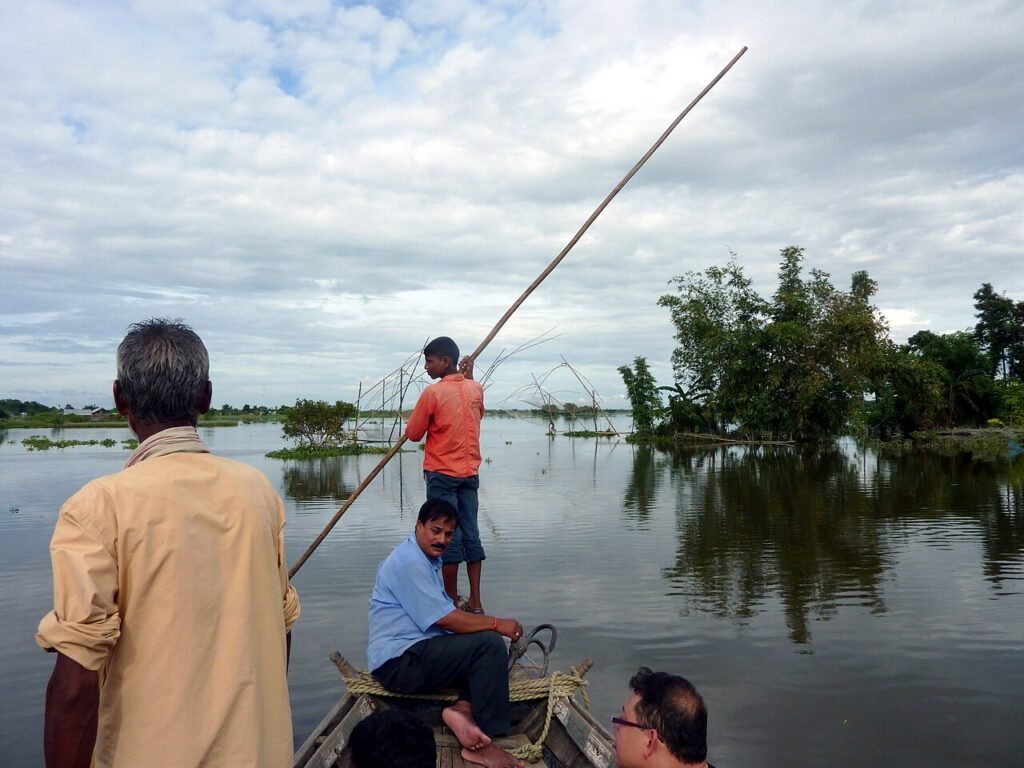
Why in News? Economist Debdulal Thakur wrote an opinion piece in the Assam Tribune of 16 November 2026. He argues that Assam should publish a “Public Value Cost Statement” for rural roads, primary health care and flood protection. He wants budgets to show the cost of keeping a service running reliably, as well as the cost of building an asset.
Current Context (The Trigger)
- The proposal: The author suggests a modest Public Value Cost Statement. It would be published along with selected departmental performance reports.
- Three starting services: The pilot would cover rural roads, primary health care and flood protection.
- What it would report: Each service would show its annual expenditure, the services delivered and their unit cost. A simple reliability measure would be added, such as the number of days a road stayed passable or a health facility stayed open.
- Budget size quoted: The 2026-27 Assam budget projects an economy of Rs 8.71 lakh crore and an outlay of Rs 1.48 lakh crore, excluding debt repayments. The author stresses that these are budget projections, not achievements.
- Author: The writer is a Professor of Economics. He is Director of the Centre of Excellence in Public Policy, Sustainability and ESG Research at Alliance University, Bengaluru.
Core Concepts & Static GK
- Outlay, output and outcome: The Union Government’s Output Outcome Monitoring Framework 2026-27 defines these terms. The outlay is the money provided for a scheme in the Budget. An output is the direct, measurable product of scheme activities, often counted in physical units. An outcome is the overall result or quality improvement in the service delivered.
- Applying it to Assam: In the author’s examples, a repaired kilometre of road and a finished embankment are outputs. Less disruption to travel is an outcome. Losses avoided because of flood protection are also an outcome, but they need a credible baseline to measure.
- Life-cycle cost: This is the total cost of an asset over its whole life, including construction, routine maintenance and repairs. The author warns that a road that is cheap to build can turn costly when it has to be repaired again and again.
- Unit cost: This is the cost of delivering one unit of a service, such as one kilometre of road kept open or one consultation at a clinic. The author says unit costs must be “interpreted, not worshipped”, because geography changes the cost of the same service.
- Annualised cost formula suggested: For a road, the yearly cost should include building cost spread over its life, regular upkeep and repairs after floods. Then divide the total by the kilometres kept open through the whole year.
- Union Outcome Budget: Since 2017-18, the Centre has presented the outputs and outcomes of schemes in one consolidated Outcome Budget along with the Budget. From 2026-27 it is presented as the Output Outcome Monitoring Framework (OOMF). It covers 172 Central Sector and Centrally Sponsored Schemes with an outlay of Rs 500 crore or more.
Constitutional & Legal Framework
- Article 202: The Governor must cause a statement of the State’s estimated receipts and expenditure for each financial year to be laid before the State Legislature. This is called the “annual financial statement”.
- Separate showing of expenditure: The estimates must show separately the sums charged on the Consolidated Fund of the State and the other expenditure proposed from it. They must also separate expenditure on revenue account from other expenditure.
- Charged expenditure under Article 202(3): It includes the Governor’s emoluments and allowances, the salaries of the Speaker and Deputy Speaker, and debt charges. It also covers the salaries of High Court Judges and sums needed to satisfy a court judgment, decree or arbitral award.
- Article 203: Charged expenditure is not put to the vote of the Legislative Assembly, but it can be discussed. Other expenditure goes to the Assembly as demands for grants, which it may approve, refuse or reduce. A demand for a grant can be made only on the Governor’s recommendation.
- Link to the proposal: Article 202 asks only for estimates of receipts and expenditure. A Public Value Cost Statement would add service cost and reliability data on top of this, as a voluntary step.
Institutional Machinery
- Water Resources Department: According to the article, the department’s long-standing estimate puts 39.58 percent of Assam’s area in the flood-prone category.
- FinAssam: The article says Assam uses this system to prepare budgets online, release funds, report spending and manage public money.
- Assam Budget Manual: The author notes that the State’s own Budget Manual already provides for outcome budgeting.
- NRSC and ASDMA: The National Remote Sensing Centre (NRSC) of ISRO prepares the Flood Hazard Zonation Atlas of Assam. It does so with the Assam State Disaster Management Authority (ASDMA). The National Disaster Management Authority (NDMA) also took part in the latest edition.
- Independent validators: The author proposes that universities and local technical institutions help check the indicators.
Reports, Indices & Data
- Flood-prone share: As cited in the article, about 39.58 percent of Assam is flood-prone, against about 10.2 percent nationally.
- Area hit each year: The article cites historical data showing an average of 9.31 lakh hectares affected by floods every year. The author calls these structural exposures, not a measure of flooding in any recent year.
- Flood Hazard Atlas (1998-2023): NRSC’s latest atlas puts the cumulative flood-affected area of Assam at 27.08 lakh hectares over 1998 to 2023. It also estimates that 18.22 lakh hectares of crop-grown area is at risk of flood inundation.
- Atlas editions: NRSC released the first Flood Hazard Zonation Atlas of Assam in 2011 and updated it in 2015. The latest edition maps hazard for 173 circles across 35 districts.
- 2026-27 budget numbers: Projected Gross State Domestic Product (GSDP) is Rs 8,71,451 crore. Expenditure excluding debt repayment is Rs 1,48,029 crore. With Rs 8,685 crore of debt repayment, the total is Rs 1,56,715 crore.
- Capital outlay: Capital outlay is proposed at Rs 29,451 crore in 2026-27.
Assam & Northeast Linkages
- Fiscal deficit target: The 2026-27 Assam budget targets a fiscal deficit of 3 percent of GSDP. This works out to Rs 26,186 crore.
- Two districts, same Rs 100 crore: The author compares a district building new roads on stable ground with one that keeps repairing links broken by floods and erosion. The same spending does not give the same public value.
- Riverine health centres: A good health centre for thinly spread river-island villages may spend more per patient visit than a city centre. A higher cost there is not automatically waste.
- Equity safeguard: The author says cost figures should never be used to justify cutting services in remote areas.
Prelims Trap Zones (Watch out for)
- Output vs Outcome Trap: A completed embankment or a repaired kilometre of road is an output. Less disruption and avoided flood loss are outcomes.
- Percentage Trap: Assam’s flood-prone share is 39.58 percent. The national share is about 10.2 percent. Do not swap them.
- Annual-vs-Cumulative Trap: The 9.31 lakh hectares is an average area affected each year. The atlas figure of 27.08 lakh hectares is the cumulative flood-affected area over 1998 to 2023.
- Budget Size Trap: Rs 1.48 lakh crore is the outlay excluding debt repayment. Including debt repayment, the figure is about Rs 1.57 lakh crore.
- Article Trap: Article 202 is the annual financial statement of a State. Article 203 deals with the procedure in the State Legislature on the estimates.
- Charged Expenditure Trap: Charged expenditure on the State Consolidated Fund can be discussed but is not voted on.
- Name Trap: From 2026-27, the Union Outcome Budget is presented as the Output Outcome Monitoring Framework. It is a Union document; Assam’s outcome budgeting comes from its own Budget Manual.
Introduction
The 2026-27 Assam budget projects an economy of Rs 8.71 lakh crore and an outlay of Rs 1.48 lakh crore. An opinion piece in the Assam Tribune on 16 November 2026 asks a harder question. What will it cost to keep these assets working for five monsoons? About 39.58 percent of the land in Assam is flood-prone. So the cost of keeping a road, clinic or embankment working matters as much as the cost of building it.
Why Life-Cycle Cost Matters for Assam
- Geography changes cost: About 39.58 percent of Assam is flood-prone, against about 10.2 percent for India. So the same service costs more to deliver here than on stable ground.
- Repeated repair bills: A road that is cheap to build but breaks every monsoon makes the State pay again and again. Over its life, it can cost more than a better-designed road.
- Equal spending, unequal value: Two districts may each spend Rs 100 crore on roads. The one that keeps repairing flood damage will give its people far less new access.
- Fiscal space is tight: The 2026-27 budget targets a fiscal deficit of 3 percent of GSDP. With long-term cost data, a department can choose between repairing, upgrading or redesigning an asset, or building it again.
- Fairer comparison: Raw cost comparisons ignore service quality and geography. Reporting reliability, such as the days a road remained passable, gives a fairer picture.
- Democratic dividend: Clear data let residents ask why a repaired road failed again or why a funded clinic stayed shut. Departments working in hard conditions would also get credit, and not just those with the lowest costs.
What the Public Value Cost Statement Would Contain
- Three pilot services: Rural roads, primary health care and flood protection would come first.
- Basic data lines: Each service would show annual expenditure, clearly defined services provided and unit cost.
- Reliability measures: It would add the days a road stayed passable and the days a health facility functioned. For flood protection, it would count households protected against a specified flood risk.
- Roads calculation: Annualised construction, routine maintenance and flood repair costs are added up. The total is divided by the kilometres kept open all year.
- Health calculation: Staffing, supplies, transport and facility costs would be added together. The statement would also show opening days and key services delivered.
- Counted versus estimated: The statement must keep what the government can count apart from what it has to estimate. Avoided flood loss, for example, needs a credible baseline.
Comparative Assessment: Input, Output and Outcome
| Item | Type | How it is judged |
|---|---|---|
| Rupees spent on a scheme | Input (outlay) | Shown in the budget; treating it as an outcome gives attractive dashboards but weak evidence |
| A repaired kilometre of road | Output | Can be counted directly |
| A completed embankment | Output | Can be counted directly |
| Less travel disruption | Outcome | Needs reliability data such as days passable |
| Avoided losses from flooding | Outcome | Needs a credible baseline and careful assessment |
Challenges
- Weak baselines: Measuring avoided flood loss needs a credible baseline. The author admits that measurements are often incomplete.
- Misreading unit costs: A higher cost in a flood-prone district is not automatically waste. Ranking districts by the cheapest kilometre could punish the places that most need support.
- Risk of cutting remote services: Officials could misuse cost data to justify withdrawing services from remote areas.
- Mixing structural exposure with recent floods: The 39.58 percent and 9.31 lakh hectare figures are long-run estimates. They do not show flooding in any given recent year.
- Risk of another costly platform: The author warns that a simple exercise should not grow into one more expensive IT platform.
- Single-ratio thinking: Equity, resilience and quality are public goals in their own right. They cannot be reduced to one efficiency ratio.
Way Ahead
- Start small: The State government can publish the statement for rural roads, primary health care and flood protection with selected departmental performance reports.
- Compare by risk bands: The first pilot should compare wide bands of flood risk, not rank every district against the others.
- Track assets over years: Departments should follow assets for several years and record emergency repairs separately. They should also log service interruptions and explain unusually high costs.
- Use FinAssam and the Budget Manual: Existing systems should be linked more closely to the cost of a reliable service, and not just to the purchase of an asset.
- Use flood hazard maps: The NRSC atlas classifies flood hazard for 173 circles across 35 districts. Such hazard zones could help define the flood-risk bands used for fair comparison.
- Admit gaps honestly: The author would rather a department say “there’s a gap” than pretend to know when the data are incomplete.
- Independent validation: Universities and local technical institutions can help check the indicators.
Conclusion
Assam already tracks the money it spends through FinAssam and a Budget Manual that allows outcome budgeting. The next step is to ask what it costs to keep each public benefit running, while protecting equity for remote and flood-hit communities. A small, honest pilot on roads, health and flood protection would test the idea at low cost before any wider rollout.
Arunachal Cabinet Reforms: Public Services Rules, CM-STARS and Mission Shikshit Arunachal
Open this topic as a separate page, with its MCQs →
Syllabus Mapping
- Prelims: GS Paper I (Current events of national and international importance; Indian Polity and Governance – Public Policy, Rights issues; Economic and Social Development – Social Sector Initiatives).
- Mains: GS Paper II (Important aspects of governance, transparency and accountability, e-governance applications, citizens charters; Government policies and interventions for development in various sectors; Issues relating to Social Sector/Services relating to Education); GS Paper III (Indian Economy and issues relating to growth, development and employment; Infrastructure); GS Paper V (Political and Administrative System of Assam – Public Policy, Legal Rights and Citizen Charter; Economy of Assam – Programmes and Schemes).
Why in News? The Arunachal Pradesh Cabinet met on Saturday, 14 November 2026. It cleared a set of decisions on school infrastructure, jobs for sportspersons, public service delivery, ease of doing business and drinking water. The report on the meeting is datelined Itanagar, 15 November.
Current Context (The Trigger)
- School mission: The Cabinet cleared the Standard Operating Procedure (SOP) for Mission Shikshit Arunachal, which is to be implemented by 2029.
- Outlay: The indicative outlay is Rs 1,500 crore for the three years from 2026-27 to 2028-29.
- Mission scope: It covers classrooms, school buildings, hostels and teachers’ quarters, planned together in an integrated way.
- CM-STARS: The Chief Minister’s Sports Talent Appointment and Recognition Scheme gives direct government jobs to medal winners. These are medal winners at the Olympic Games, Paralympic Games, Asian Games, Asian Para Games and Commonwealth Games. It will be put in place by amending the Arunachal Pradesh Sports Policy, 2017.
- Service rules: The Cabinet amended the Arunachal Pradesh (Methods and Procedures of Delivery of Services) Rules, 2017. These rules work under the Arunachal Pradesh Right to Public Services Act, 2016.
- Dual licensing: Establishments in 28 categories inside municipal areas will not need a separate municipal trade licence if they already hold a valid Central or State licence, registration or authorisation.
Core Concepts & Static GK
- Right to services law: The Arunachal Pradesh Right to Public Services Act, 2016 is Act No. 3 of 2016. It received the Governor’s assent on 28 April 2016 and was published in the State Gazette on 12 May 2016. Its long title speaks of delivering notified services to the public within a stipulated time limit.
- Citizen’s rights under the Act: A person can get a notified service within the time limit and in a transparent manner. The person can also demand performance of duties, hold the designated officer accountable and seek compensation for non-delivery or deficiency in service.
- Designated officer: The Government names designated officers for different areas and services. Within the time limit, the officer must either give the service or reject the application with reasons recorded in writing.
- Two-tier appeal: The Act provides a first appeal and a second appeal, each to be filed within 30 days. A late appeal can be admitted up to 60 days for sufficient cause.
- Jal Jeevan Mission (JJM): The Government of India restructured and subsumed the National Rural Drinking Water Programme into JJM. Its aim is a Functional Household Tap Connection (FHTC) for every rural household.
- Service level: JJM sets the service level at 55 litres per capita per day (lpcd).
Constitutional & Legal Framework
- Parent Act and rules: The 2017 service-delivery rules are made under the 2016 Right to Public Services Act. The Act lets the State make rules, and every rule must be laid before the Legislative Assembly.
- Second appellate authority: The Act says this authority must be an officer outside the department concerned and higher in status than the first appellate authority.
- Penalty in the Act: The second appellate authority can fine a designated officer Rs 100 per day of delay, up to Rs 5,000 on the first occasion. The officer must get a reasonable chance to be heard first.
- Civil court powers: Appellate authorities have the powers of a civil court under the Code of Civil Procedure, 1908. These include calling for documents and summoning the officer and the appellant. Civil courts cannot hear challenges to orders under the Act. The only route is the Act’s own appeals.
- New airport rules: The Cabinet also approved the Arunachal Pradesh Airport Development Authority Land Disposal Rules, 2026. They are framed under the Arunachal Pradesh Airport Area Development Authority Act, 2026.
Institutional Machinery
- JJM structure: JJM works through the National Jal Jeevan Mission, a State Water and Sanitation Mission and a District Water and Sanitation Mission. In the village, it works through the Paani Samiti or Village Water and Sanitation Committee (VWSC).
- Village role: The Gram Panchayat, VWSC or Paani Samiti implements the in-village piped water supply. This is meant to build a sense of ownership for long-term operation and maintenance.
- Space agency: The Cabinet approved an MoU between the Department of Geology and Mining and the Arunachal Pradesh Space Application Centre (APSAC), Itanagar. The aim is to use geospatial and space-based technology in the mineral sector.
Schemes & Initiatives
- Revised O&M policy: The Cabinet approved a revised Operation and Maintenance Policy for Rural and Urban Water Supply Systems. It is meant to keep drinking water infrastructure sustainable and well managed.
- Funding pattern: JJM funding is shared 90:10 between the Centre and the States for the North-Eastern and Himalayan (Uttarakhand, Himachal Pradesh) States. The pattern is 50:50 for the rest of the States and 100:0 for Union Territories.
- Community share: Communities pay 10 per cent of the capital cost in most villages. In hilly and forested areas, North-Eastern and Himalayan States and villages with over 50 per cent SC/ST population, the share is 5 per cent.
- Monitoring: Every asset created under JJM is geo-tagged. States use empanelled third-party agencies to inspect the infrastructure.
Reports, Indices & Data
- JJM baseline: On 31 March 2019, only 18.33 per cent of rural households (3.27 crore of 17.87 crore) had piped water connections.
- JJM cost: The total estimated cost of JJM at launch was Rs 3.60 lakh crore.
- Arunachal saturation: Arunachal Pradesh had earlier become the first North-Eastern State and the tenth in India to reach 100 per cent Har Ghar Jal saturation under JJM.
Assam & Northeast Linkages
- Assam’s law: Assam has its own Assam Right to Public Services Act, 2012 (Assam Act No. IX of 2012). It received the Governor’s assent on 27 April 2012.
- Assam’s Commission: A 2019 amendment added the Assam State Commission for Right to Public Services. A 2024 amendment made the Commission the third level of appeal.
- Assam’s appeal chain: After the 2024 amendment, a citizen goes to the First Appellate Authority. The next step is the Second Appellate Authority within 60 days. After that, the citizen goes to the Commission within 90 days.
- Assam’s penalty: The First Appellate Authority can fine a defaulting Designated Public Servant between Rs 100 and Rs 5,000. The officer carries the burden of proving that he acted reasonably.
Prelims Trap Zones (Watch out for)
- Act year trap: The Act is the Right to Public Services Act, 2016. The rules that were amended are from 2017. Do not swap the two years.
- Sports scheme trap: CM-STARS is brought in by amending the Sports Policy, 2017. It is not a new Act. It covers the Olympic, Paralympic, Asian, Asian Para and Commonwealth Games, and not every national event.
- Licence exemption trap: The exemption removes only the separate municipal trade licence. Building permissions, fire safety, sanitation, solid waste management, environmental protection and public health requirements still apply.
- Funding trap: Under JJM, the NE States get 90:10 funding. The 50:50 pattern is for the remaining States. The community share for NE States is 5 per cent, not 10 per cent.
- Rank trap: Among north-eastern States, Arunachal was the first to reach full Har Ghar Jal coverage, and it was the tenth State nationally. It is not the first in India.
- Appeal tier trap: Arunachal’s Act has two appeal levels. Assam’s amended Act has three, with the last one before the State Commission.
Introduction
On 14 November 2026, the Arunachal Pradesh Cabinet amended its 2017 service-delivery rules. Now a defaulting public servant is held directly liable, and a citizen is compensated at once. The same meeting cleared a Rs 1,500 crore school-building mission and a revised water O&M policy. Together, these decisions test a simple idea: a government should be judged by what reaches the citizen on time.
Need for Right to Services Laws
- Time-bound delivery: The Arunachal Act of 2016 fixes a time limit for every notified service. A citizen no longer depends on an officer’s goodwill.
- Written reasons: A designated officer who rejects an application must record the reasons in writing. This cuts arbitrary refusals.
- Accountability of a named officer: The Act lets a citizen hold the designated officer accountable. Responsibility moves from a faceless office to a named person.
- Appeal inside the system: A two-tier appeal gives quick redress without going to court. Civil courts are barred from hearing such matters, so the Act’s own appeals are the route.
- Penalty needs teeth: The 2016 Act already allows a fine of Rs 100 per day of delay, capped at Rs 5,000 the first time. The 2026 amendment goes further with direct financial accountability and immediate compensation.
Key Features of the Amended Rules and Other Decisions
- Online appeals: Appeals can now be filed online and processed automatically. This saves a citizen from visiting distant offices.
- Automatic escalation: If service delivery is delayed, the appeal moves up on its own. The citizen does not have to chase the file.
- Direct financial accountability: A defaulting public servant is directly accountable in money terms, and the affected citizen gets immediate compensation.
- Dual licensing relief: Removing the separate municipal trade licence for 28 categories of already licensed establishments cuts paperwork for small businesses. Safety and environment checks stay.
- School mission: Mission Shikshit Arunachal links classrooms, hostels, school buildings and teachers’ quarters in one plan. Rs 1,500 crore is set aside for 2026-27 to 2028-29.
- Sports jobs: CM-STARS offers a direct job to medal winners at five major Games. This gives a clear career path to athletes from a small State.
Water Services: From Connections to Upkeep
- Saturation achieved: Arunachal was the first North-Eastern State and tenth in India to reach 100 per cent Har Ghar Jal saturation. Building the network is only half the job.
- Why O&M matters: The revised policy covers both rural and urban systems. It aims at long-term sustainability and efficient management.
- Village ownership: JJM places the Paani Samiti or VWSC at the centre so that the village feels ownership of its water system.
- Service level: The JJM target is a functional tap giving 55 litres per person per day. A tap that is dry does not count as service.
- Verification: JJM requires geo-tagging of assets and third-party inspection. These checks can also be used to test upkeep.
Comparative Assessment: Right to Services Laws
| Feature | Arunachal Pradesh | Assam |
|---|---|---|
| Name of Act | Arunachal Pradesh Right to Public Services Act, 2016 (Act No. 3 of 2016) | Assam Right to Public Services Act, 2012 (Assam Act No. IX of 2012) |
| Appeal levels | Two: first and second appeal, each within 30 days | Three after the 2024 amendment: First Appellate Authority, Second Appellate Authority (within 60 days), State Commission (within 90 days) |
| Penalty on the officer | Rs 100 per day of delay, up to Rs 5,000 on the first occasion, imposed by the second appellate authority | Rs 100 to Rs 5,000, imposed by the First Appellate Authority; the officer must prove he acted reasonably |
| Independent body | Second appellate authority is an officer outside the department, senior to the first appellate authority | Assam State Commission for Right to Public Services, added by a 2019 amendment |
| Civil court powers | Appellate authorities act like a civil court under the Code of Civil Procedure, 1908 | Both appellate authorities and the Commission have civil court powers under the same Code |
| Latest change | Rules amended in 2026 for online appeals, automatic escalation and immediate compensation | Amendments in 2024 and 2025 reworked appeals and the Commissioners’ terms |
Challenges
- Digital access: Online appeals help only those with phones, data and digital skills. Remote border villages may be left out.
- Fair process for officers: The 2016 Act already requires a hearing before any fine. Faster, automatic penalties must keep this safeguard, or honest officers may pay for delays caused by others.
- Compensation delays: The promise of immediate compensation needs a ready fund and a quick payment route. Without them it stays on paper.
- Awareness: Citizens must know the list of notified services, their time limits and the appeal route. The Act requires these to be displayed locally and on the department website.
- Upkeep burden on villages: JJM leaves in-village schemes to the Paani Samiti or VWSC for long-term upkeep. Small hill villages may find it hard to raise user charges and keep accounts.
- Safeguards in deregulation: Dropping the municipal trade licence must not weaken checks on fire safety, sanitation and the environment. The Cabinet has kept these in place.
Way Ahead
- Publish service data: The department concerned should publish monthly figures on applications, delays and appeals, so the public can see whether the rules work.
- Help desks for the offline: Common service centres and block offices should file online appeals for citizens who lack digital access.
- Clear penalty procedure: The amended rules should keep the officer’s right to be heard and set a firm deadline for paying compensation.
- Fund upkeep: The State should set a regular budget line for water O&M and train village committees to keep accounts and collect charges.
- Track results: Mission Shikshit Arunachal should report yearly progress on classrooms, hostels and teachers’ quarters against the Rs 1,500 crore plan.
- Learn from neighbours: Arunachal can study Assam’s State Commission for Right to Public Services, which hears a final appeal and can take suo motu notice of serious cases.
Conclusion
Arunachal’s package moves from announcing schemes to guaranteeing results. Timed services with a price for delay, tap water that keeps flowing and schools with proper buildings can build trust in the State. The test will be enforcement: rules on paper matter only when a citizen actually gets the service and the compensation.
Press Council of India at Sixty: Regulating Print and Digital Media
Open this topic as a separate page, with its MCQs →
Syllabus Mapping
- Prelims: GS Paper I (Indian Polity and Governance; Current events of National importance; statutory bodies).
- Mains: GS Paper II (Statutory, regulatory and quasi-judicial bodies; Government policies and interventions; freedom of speech); GS Paper IV (Ethics in public and professional life: accountability, self-regulation).
Why in News? An opinion piece in the Assam Tribune of 16 November 2026 marks 60 years of the Press Council of India (PCI). Its writer is a professor of Mass Communication and Journalism at Tezpur University. The Council began work on 16 November 1966, and the day is observed as National Press Day. The writer argues that its reach must now extend to digital news.
Current Context (The Trigger)
- Diamond jubilee: The PCI has completed 60 years. It started functioning on 16 November 1966 under the Indian Press Council Act, 1965.
- Origin of the idea: The writer recalls that the First Press Commission first proposed a Press Council for the country.
- Emergency break: The Council was dissolved during the 1975-76 Emergency. The writer says it was re-established in 1978.
- Jurisdiction gap: The writer says the PCI still has no jurisdiction over websites, portals and other new media that carry news.
- Proposal for a new body: He calls for one umbrella regulator for all media in the country, to be named the Media Commission of India.
- Self-regulation example: The writer says The Times of India appointed the first-ever Readers’ Editor, former Chief Justice PN Bhagwati, in 1988. The Hindu appointed one in 2006, and the post still exists there.
Core Concepts & Static GK
- What the PCI is: It is a statutory, autonomous body set up under the Press Council Act, 1978. Its main aims are to preserve the freedom of the Press and to improve the standards of newspapers and news agencies.
- National Press Day: It falls on 16 November each year. It marks the start of the PCI in 1966.
- Press Council Act, 1978: It is Act No. 37 of 1978, dated 7 September 1978. It extends to the whole of India.
- Body corporate: Section 4 makes the Council a body corporate with perpetual succession and a common seal. It can sue and be sued in its own name.
- Norms of Journalistic Conduct: These are the PCI’s guide for ethical reporting in print. Newspapers are expected to follow them, and they discourage fake, defamatory or misleading news.
- Press Registrar General of India (PRGI): It was set up in 1956 and was earlier called the Registrar of Newspapers for India (RNI). It registers periodicals and is a different body from the PCI.
Constitutional & Legal Framework
- Article 19(1)(a): It guarantees freedom of speech and expression to all citizens.
- Article 19(2): It allows reasonable restrictions on eight grounds. These are sovereignty and integrity of India, security of the State, friendly relations with foreign States and public order. The rest are decency or morality, contempt of court, defamation and incitement to an offence.
- First Amendment link: The First Constitutional Amendment added “friendly relations with foreign States” and “public order” to Article 19(2). This followed the Supreme Court’s ruling in Romesh Thapar v. State of Madras.
- Section 13 (objects): The Council’s objects are to preserve the freedom of the Press. They are also to maintain and improve the standards of newspapers and news agencies. One of its functions is to build a code of conduct for newspapers, news agencies and journalists.
- Section 14 (censure): After a hearing and an inquiry, the Council may warn, admonish or censure a newspaper, news agency, editor or journalist. It may also disapprove an editor’s or journalist’s conduct, and it records its reasons in writing.
Institutional Machinery
- Composition: Section 5 provides for a Chairman and 28 other members.
- Member categories: Thirteen are working journalists (six editors and seven others), six are newspaper owners or managers, and one manages a news agency. Three experts are nominated by the University Grants Commission, the Bar Council of India and the Sahitya Akademi. Five are Members of Parliament: three from the Lok Sabha and two from the Rajya Sabha.
- Choosing the Chairman: A committee nominates the Chairman. It has the Chairman of the Rajya Sabha, the Speaker of the Lok Sabha and one person elected by the Council members.
- Term: The Chairman and members hold office for three years. A retiring member can be renominated for not more than one term.
- Civil-court powers: For an inquiry, Section 15 gives the Council the powers of a civil court. These include summoning witnesses, examining them on oath and calling for public records.
Schemes & Initiatives
- Press and Registration of Periodicals Act, 2023: It was notified on 29 December 2023 and came into force on 1 March 2024. It replaced the Press and Registration of Books Act, 1867.
- Press Sewa Portal: It runs fully online registration of periodicals. Within six months it onboarded 40,000 publishers and registered 3,000 printing presses.
- National Awards for Excellence in Journalism: They are presented every year on National Press Day. The Raja Ram Mohan Roy Award is the highest honour among them.
Reports, Indices & Data
- Registered publications: They rose from 60,143 in 2004-05 to 1.54 lakh in 2024-25.
- Print market: The writer says print’s market share has shrunk in recent years, mainly because of the Covid-19 pandemic. It has not fully returned to its pre-pandemic level.
- Disaster and LGBTQ+ reporting: In 2023 the PCI adopted a report on how the media represents the LGBTQ+ community. The same year it framed guidelines for reporting on natural disasters.
Prelims Trap Zones (Watch out for)
- Act Trap: The PCI works today under the Press Council Act, 1978, not the Indian Press Council Act, 1965. The 1965 Act was repealed in 1975.
- Year Trap: The Council began on 16 November 1966, and the new Act is dated 7 September 1978. Today’s article says the Council was re-established in 1978, while PIB says it was reconstituted under the new Act in 1979. Read the stem carefully.
- Section Trap: Section 13 gives objects and functions. Section 14 gives the power to censure. Section 15 gives civil-court powers. Do not swap them.
- Penalty Trap: The PCI can warn, admonish, censure or disapprove. The Act gives it no power to fine or jail anyone. Its decision under Section 14 is final and cannot be questioned in any court.
- Source Trap: The Council cannot force a newspaper or journalist to reveal the source of a news item (Section 15(2)).
- Chairman Trap: By convention the Chairman is a retired Supreme Court judge. The Act itself does not require this; it only says a committee nominates the Chairman.
Introduction
The Press Council of India began work on 16 November 1966 and turns sixty this year. It was built to watch newspapers, but news now also reaches people through websites and portals that its 1978 Act does not mention. The real question is how a free press can stay accountable when the medium has changed faster than the law.
Need and Relevance of a Press Watchdog
- Protecting press freedom: The Act’s first object is to preserve the freedom of the Press. The Council takes up complaints about attacks on journalists and curbs on press freedom, and it can also act on its own (suo motu).
- Setting ethical standards: The Norms of Journalistic Conduct guide reporters and editors in print. They discourage fake, defamatory or misleading news.
- Quasi-judicial route: A complaint is heard, the other side gets a chance to reply, and the Council records its reasons in writing. This gives a citizen a forum other than a defamation case in court.
- Reader and media relationship: The writer says the bond between readers and the media should be healthy and constructive. Readers should correct the media when it drifts from its stated goals.
- Gatekeeping: The writer says that today “anyone and everyone” presents news, often with weak or no gatekeeping. In this setting, he argues, an umpire like the PCI matters more than before.
- Watching ownership and foreign money: The Act also asks the Council to study concentration of newspaper ownership and to review help received from foreign sources.
Statutory and Policy Framework
| Level | Instrument | Purpose & Impact |
|---|---|---|
| Constitution | Article 19(1)(a) and 19(2) | Guarantees speech and expression, and allows reasonable restrictions on listed grounds such as public order and defamation. |
| Statute (print) | Press Council Act, 1978 | Creates the PCI to protect press freedom and improve standards of newspapers and news agencies; it can warn, admonish or censure. |
| Rules (digital) | IT (Intermediary Guidelines and Digital Media Ethics Code) Rules, 2021 | Notified on 25 February 2021 under the IT Act, 2000. They cover online publishers of news and current affairs and of curated audio-visual content. |
| Statute (registration) | Press and Registration of Periodicals Act, 2023 | Moves registration of periodicals online through the Press Sewa Portal and decriminalises procedural lapses. |
| Statute (labour) | Working Journalists Act, 1955 | PIB lists it among the laws that protect the rights of journalists. |
Regulating Digital Media: What Exists Today
- Three tiers: The 2021 Rules set up self-regulation by the publisher, self-regulation by an association of publishers, and oversight by the central government.
- Complaint timelines: A publisher must answer a complaint within 15 days. If the complainant is unhappy, the complaint goes to the association of publishers, which also has 15 days.
- Government tier: An inter-departmental committee set up by the Ministry of Information and Broadcasting hears escalated or referred cases.
- Borrowed code: The Rules ask digital news publishers to follow the PCI’s Norms of Journalistic Conduct. They must also follow the programme code under the Cable Television Networks (Regulation) Act, 1995.
- Legal doubt: PRS noted in 2021 that the Rules were being challenged in various High Courts. It also said the Rules may go beyond the powers the IT Act gives the executive.
- Self-regulation inside newsrooms: The Hindu has had an independent Readers’ Editor since 2006. The writer says he has not seen similar steps by other media houses.
Challenges
- Limited jurisdiction: The Act speaks of newspapers and news agencies. The writer says websites, portals and other new media still sit outside the PCI’s reach.
- Weak penalty: The Council can only warn, admonish, censure or disapprove. It has no power to fine or suspend, so a publisher can ignore the moral pressure.
- Stayed digital code: In August 2021 the Bombay High Court stayed Rules 9(1) and 9(3) of the 2021 Rules as an interim measure. These are the rules that make publishers follow the code and set up the three tiers.
- Court-pending bar: Section 14(3) stops the Council from inquiring into any matter pending in a court. A slow court case can therefore hold up a complaint.
- Shrinking print base: The writer says print has lost market share since Covid-19. So the Council now covers a smaller part of the news that people actually read.
- Coverage choices: The writer points to heavy coverage of crime and little development news. He asks whether such coverage may push vulnerable people to copy those acts.
- Question of state control: The writer compares the idea with the Central Board of Film Certification. He asks whether such a restriction still works in an age of global digital networks.
Way Ahead
- Amend the Act: Parliament could widen the Act so that registered online news publishers also fall under the Council. This would answer the writer’s concern about portals.
- Single umbrella body: The Ministry of Information and Broadcasting could study the writer’s idea of a Media Commission of India. Print and digital complaints would then reach one forum.
- More Readers’ Editors: Large newspapers should appoint independent ombudsmen, as The Hindu has done since 2006. Errors would then be corrected inside the newsroom first.
- Media literacy: The PCI can use its summer and winter internship programmes and its guidelines, such as those on disaster reporting, to train young journalists. This builds a habit of checking news quality.
- Keep safeguards for press freedom: Any new rule should keep the existing protection of journalists’ sources under Section 15(2). It should also stay within the limits of Article 19(2).
Conclusion
Sixty years on, the Press Council of India remains a useful ethical referee for print. Its tools are mild, and its law was written for newspapers. The sensible path is to extend its reach to online news with the same light touch and keep source protection intact. Stronger newsroom ombudsmen can then let accountability grow without weakening Article 19(1)(a).
India’s Space Economy at 9 Billion Dollars: NSIL, IN-SPACe and Private Startups
Open this topic as a separate page, with its MCQs →
Syllabus Mapping
- Prelims: GS Paper I (Current events of national importance; Science and Technology; Indian Economy).
- Mains: GS Paper III (Awareness in the fields of IT, Space, Computers; Indigenization of technology and developing new technology; Investment models); GS Paper V (Economy of Assam: Infrastructure & Resources; Disaster Management with relevant emphasis on Assam).
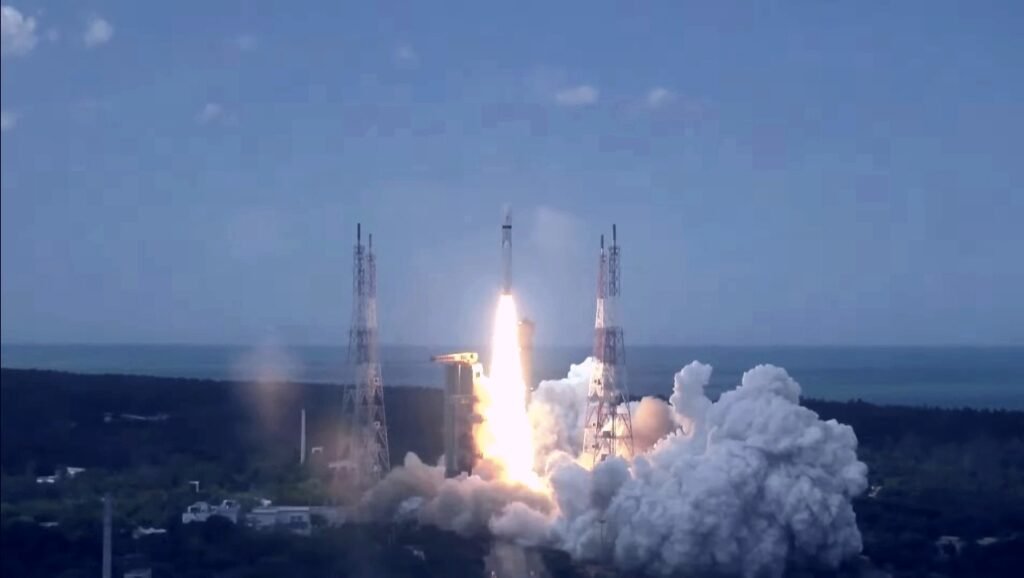
Why in News? A government statement, reported from New Delhi on 15 November 2026, puts India’s space economy at about $9 billion, up from $8.4 billion in 2023. It also says registered space startups have grown to 440, from just one in 2014.
Current Context (The Trigger)
- Size of the economy: India’s space economy is now about $9 billion, against $8.4 billion in 2023.
- Startups: Registered space startups number 440. In 2014 there was only one.
- Investment: A government factsheet says cumulative investment in Indian space startups rose more than six times. It went from $100.5 million in 2021-22 to $618.5 million by 31 March 2026.
- NSIL revenue: NewSpace India Limited (NSIL) revenue grew nearly ten times. It rose from Rs 321.77 crore in FY 2021-22 to over Rs 3,000 crore in FY 2024-25.
- Private launches: Six Indian non-government entities (NGEs) have launched 18 satellites. Also, 25 payloads have flown or are scheduled on PSLV Orbital Experimental Module (POEM) platforms.
Core Concepts & Static GK
- NewSpace India Limited: NSIL was incorporated on 6 March 2019 under the Companies Act, 2013. It is a wholly owned Government of India company under the administrative control of the Department of Space (DoS).
- NSIL mandate: Its job was later widened to commercialise technologies developed with public funds. It also pools demand from government and other customers and sells technologies and services in India and abroad.
- IN-SPACe: The Indian National Space Promotion and Authorisation Centre is an autonomous agency under the DoS. It is the single-window interface for private firms that need regulatory clearance.
- Non-government entity (NGE): The Indian Space Policy 2023 defines an NGE as a company under the Companies Act, 2013. It can also be a limited liability partnership, a trust or a registered association of persons. The policy lets NGEs carry out end-to-end space activities.
- The 2020 reforms: The government announced major space-sector reforms on 24 June 2020. Their aim was to bring private enterprise into the sector.
- POEM: POEM stands for PSLV Orbital Experimental Module. Payloads from private and other users are flown on these platforms.
Constitutional & Legal Framework
- Indian Space Policy 2023: The policy calls itself an overarching, composite and dynamic framework. It carries out the reform vision approved by the Cabinet.
- Open data rule: Under the policy, ISRO remote-sensing data with a ground sampling distance of 5 metres and higher is to be free and open to all.
- Space FDI rules, February 2024: On 21 February 2024 the Union Cabinet amended the foreign direct investment (FDI) policy for space. Up to 74% is allowed under the automatic route for satellite manufacturing and operation, satellite data products, and ground and user segments.
- Launch vehicles and spaceports: Up to 49% is allowed under the automatic route for launch vehicles and their systems, and for creating spaceports. Beyond 49%, government approval is needed.
- Components: Up to 100% is allowed under the automatic route for making components, systems and sub-systems for satellites and for ground and user segments.
- Legal backing for FDI: The Department of Economic Affairs notified the change on 16 April 2024. It amended the Foreign Exchange Management (Non-Debt Instruments) Rules, 2019.
- No space Act yet: India still has no dedicated space law passed by Parliament. Media reports in 2026 said a redrafted Space Activities Bill was still at the consultation stage, so the sector runs mainly on executive policy.
Institutional Machinery
- Department of Space: The policy makes DoS the nodal department for carrying out the policy. It must also make sure each body works in its own area without overlap.
- ISRO: The Indian Space Research Organisation is to move out of making operational space systems. The policy says mature systems pass to industry, and ISRO focuses on research and development in advanced technology.
- NSIL: The policy calls NSIL the public sector undertaking under DoS. It is responsible for commercialising space technologies and platforms created through public expenditure.
- IN-SPACe duties: It promotes private participation and authorises and supervises space activities. It also covers access to ISRO facilities, mission safety, launch readiness, orbital and frequency coordination, and spacecraft registration.
- IN-SPACe scorecard: By 31 January 2026 it had facilitated 71 technology transfers to industry and startups. By mid-2026 it had granted 113 authorisations to 52 NGEs, of which 18 were startups.
Reports, Indices & Data
- Technology transfers by NSIL: NSIL has signed 118 technology transfer agreements covering 83 ISRO technologies.
- Source of figures: The $9 billion estimate and the startup numbers come from a government statement and factsheet. They are official claims, not an independent audit.
- Growth since 2023: The economy moved from $8.4 billion in 2023 to about $9 billion now. That is a rise of roughly $0.6 billion.
Assam & Northeast Linkages
- NESAC: The North Eastern Space Applications Centre is a joint initiative of the Department of Space and the North Eastern Council (NEC). Its aim is to give the North Eastern Region development support using space science and technology.
- Location: NESAC is at Umiam in Ri Bhoi district of Meghalaya, near Shillong. It is listed by ISRO as an autonomous body under the Department of Space.
- Role: It acts as a nodal centre for major national and regional programmes on natural resource management. It also works with the State Remote Sensing Application Centres of the region.
- Wider support: NESAC supports disaster management and healthcare in the region. It also does research in Earth observation, satellite communication and atmospheric science.
Prelims Trap Zones (Watch out for)
- Body Trap: IN-SPACe is an autonomous agency under the DoS. NSIL is a company incorporated under the Companies Act, 2013. Do not swap the two.
- Date Trap: NSIL was set up in March 2019. The space reforms were announced on 24 June 2020. The Indian Space Policy is of 2023, and the FDI change is of February 2024.
- FDI Trap: The automatic-route limits differ by activity: 74% for satellites, 49% for launch vehicles and spaceports, 100% for components. Do not apply one figure to all.
- Number Trap: Startups are 440 (one in 2014). Authorisations are 113 to 52 NGEs, of which 18 are startups. Technology transfers are 71 (IN-SPACe) against 118 agreements (NSIL).
- Role Trap: NSIL sells and commercialises technology. IN-SPACe authorises and supervises private activity. ISRO focuses on research and development.
- Partner Trap: NESAC is a joint initiative of the Department of Space and the North Eastern Council. It is not a body of IN-SPACe or NSIL.
Introduction
India’s space economy has grown to about $9 billion, and registered space startups have gone from one in 2014 to 440. The change followed the 24 June 2020 reforms that let private firms work alongside ISRO. For Assam and the North East, the story matters because NESAC at Umiam already uses space technology for the region’s development planning.
Need and Rationale for Opening the Sector
- Maturity of ISRO: Once India’s space sector had grown strong, the government chose to open it up beyond a mostly state-run model. It kept public-sector leadership but invited private enterprise.
- Focus on research: The Indian Space Policy 2023 says ISRO should stop making operational space systems. Mature systems pass to industry, and ISRO works on advanced research and new systems.
- Global market: The growing global commercial space market gives India a chance to scale up industrial participation.
- Demand aggregation: NSIL was tasked with pooling demand from government and other customers. This gives young firms a steady buyer.
- Capital inflow: Cumulative startup investment reached $618.5 million by 31 March 2026, so investors are responding. The 2024 FDI changes also widen the pool of foreign money.
Roles of the Key Institutions
| Body | Role | Evidence |
|---|---|---|
| ISRO | Research and development; transfer of mature systems to industry | The policy asks ISRO to share technologies with NGEs and Government companies. NSIL has signed 118 technology transfer agreements covering 83 ISRO technologies. |
| NSIL | Commercial arm of DoS, set up in March 2019 | Its revenue rose from Rs 321.77 crore (FY 2021-22) to over Rs 3,000 crore (FY 2024-25). |
| IN-SPACe | Single-window authorisation and promotion | 113 authorisations to 52 NGEs by mid-2026, of which 18 were startups. |
| Department of Space | Nodal department for the policy | It must make sure bodies do not overlap each other’s work. |
| Non-government entities | End-to-end space activities, under IN-SPACe rules | Six NGEs launched 18 satellites. |
Achievements So Far
- Startup growth: Registered space startups rose from one in 2014 to 440.
- Revenue growth: NSIL revenue went up nearly ten times between FY 2021-22 and FY 2024-25.
- Authorisations: IN-SPACe has issued 113 authorisations, so the single-window system is working in practice.
- Private launches: Six Indian NGEs have launched 18 satellites.
- Shared platforms: 25 payloads were flown or scheduled on POEM platforms. This gives smaller users a way to fly their experiments on PSLV missions.
- Technology flow: IN-SPACe had facilitated 71 technology transfers to industry and startups by 31 January 2026.
Challenges
- No dedicated law: Parliament has not yet passed a space law. Reports say the Space Activities Bill is still under consultation, so the sector runs on executive policy.
- Licensing and security checks: Private space activity remains subject to licensing, safety and security requirements. These can slow small firms.
- Dependence on ISRO facilities: IN-SPACe provides access to ISRO facilities only subject to safety considerations and operational priorities. Startups may have to wait for their turn.
- Small startup share: Only 18 of the 52 NGEs that received authorisations are startups. So most authorised entities are established firms or other bodies.
- Limited foreign stake in launchers: The automatic route for launch vehicles and spaceports stops at 49%. Higher stakes need government approval, which may slow large investments.
- Official numbers: The headline figures are government estimates. The news report gives no independent check of them.
Way Ahead
- Enact a space law: The Department of Space should complete work on the Space Activities Bill and take it to Parliament. A statute gives firms legal certainty on licensing and liability.
- Faster authorisations: IN-SPACe should publish clear timelines for each type of authorisation. This helps startups plan their funding.
- More technology transfer: ISRO and NSIL should keep moving mature systems to industry, as the 2023 policy requires.
- Steady demand: NSIL should keep pooling government and other demand so startups have anchor customers.
- Use regional centres: NESAC at Umiam can help Assam and other North East states use space data for natural resource and disaster planning. This also builds local demand for private space firms.
- Independent tracking: The Department of Space should publish yearly data on startup jobs and revenue so that claims can be checked.
Conclusion
The numbers show that the 2020 reforms and the 2023 policy have brought private players into a field once run only by the state. The next test is a clear space law, faster approvals and demand that reaches regions like the North East. Only then will growth last beyond the first wave of firms.
News in Short
- Largest Wangala Dance: The Garo community’s 100 Drums Wangala Festival earned a Guinness World Records title for the Largest Wangala Dance. This came in its golden jubilee year. The record came at Wangala A’dam, Chibragre, in West Garo Hills district of Meghalaya, with 1,000 traditional dama (drum) players.
- Imphal-Silchar flight: Alliance Air will start flights on the Imphal-Silchar-Imphal route from 24 November 2026 under the Viability Gap Funding (VGF) Scheme. The service will run twice a week, on Tuesdays and Thursdays.
- Bodo Sahitya Sabha platinum jubilee: A two-day platinum jubilee celebration of the Bodo Sahitya Sabha (BSS) began at Basugaon in Chirang district. The BSS was founded in Basugaon on 16 November 1952.
- RBI six-hour rule: Under the Reserve Bank of India’s (RBI) revised master directions, non-bank payment system operators must inform the RBI of cyberattacks, critical outages and settlement delays. They must do so within six hours of detecting them. Large and medium operators must already comply, while small operators have until 1 April 2028.
- Modified UDAN scheme: UDAN (Ude Desh ka Aam Naagrik), the regional air connectivity scheme, began in October 2016. The government has approved a modified version for ten years, till 2035-36, with an outlay of Rs 28,840 crore.
- Project Amrit Sarovar, Ladakh: Ladakh Lieutenant Governor Vinai Kumar Saxena approved 97 more water bodies under the project. This takes the number of ponds to be operational in the Union Territory to 163 by January 2027, covering 163 of its 248 villages.
- Ceramonema leduci: Berhampur University researchers found this new marine nematode (a microscopic worm) on the Gopalpur coast in Ganjam district, Odisha. It is named after New Zealand nematologist Daniel Leduc, and the genus Ceramonema now has 27 known species worldwide.
- SEBI and AI: Securities and Exchange Board of India (SEBI) Chairman Tuhin Kanta Pandey said the regulator will soon issue guidelines. These will cover responsible use of Artificial Intelligence (AI) in capital markets. They will focus on disclosures, accountability of regulated entities and human oversight of critical decisions (a “human-in-the-loop” approach).
APSC Prelims MCQs
Practice questions on the topics above
Topic 1: Public Value Cost Statement for Assam’s Roads, Health and Flood Protection
Q1. Article 202 of the Constitution deals with the annual financial statement of a State. Consider the following statements:
(i) The Governor causes the statement of estimated receipts and expenditure to be laid before the State Legislature for every financial year.
(ii) The estimates must show separately the expenditure charged on the Consolidated Fund of the State and the other expenditure proposed from it.
(iii) Expenditure charged on the Consolidated Fund of the State is put to vote by the Legislative Assembly as demands for grants.
Which of the statements given above is/are correct?
- (a) (i) and (ii) only
- (b) (ii) and (iii) only
- (c) (i) and (iii) only
- (d) (i), (ii) and (iii)
Show answer
Answer: (a) Explanation: Statements (i) and (ii) are correct. Article 202(1) requires the Governor to lay the annual financial statement before the Legislature for each financial year. Article 202(2) requires charged expenditure and other expenditure to be shown separately. Statement (iii) is wrong because, under Article 203, charged expenditure can be discussed but is not submitted to the Assembly’s vote. Only the other expenditure goes to the Assembly as demands for grants, which it may approve, refuse or reduce. So option (a) is the key. Options (b), (c) and (d) all wrongly include (iii). Value addition: Article 202(3) lists charged items such as the Governor’s emoluments, debt charges and the salaries of High Court Judges.
Q2. An opinion piece on Assam’s finances discusses flood exposure. Consider the following statements:
(i) About 39.58 percent of Assam is estimated to be flood-prone, compared to about 10.2 percent nationally.
(ii) On past records, floods hit about 9.31 lakh hectares of Assam in an average year.
(iii) These figures measure the extent of flooding in the most recent year.
Which of the statements given above is/are correct?
- (a) (i) and (ii) only
- (b) (i) only
- (c) (ii) and (iii) only
- (d) (i), (ii) and (iii)
Show answer
Answer: (a) Explanation: Statements (i) and (ii) are correct. The article says the Water Resources Department’s long-standing estimate treats 39.58 percent of Assam as flood-prone, against about 10.2 percent for India. It also cites historical data showing an average of 9.31 lakh hectares affected each year. Statement (iii) is wrong. These are long-run structural exposure figures, and they do not show how much flooding occurred in any recent year. Option (b) wrongly leaves out (ii). Option (c) wrongly includes (iii) and leaves out (i). Option (d) wrongly includes (iii). Value addition: NRSC’s Flood Hazard Zonation Atlas puts Assam’s cumulative flood-affected area at 27.08 lakh hectares over 1998 to 2023.
Q3. Match List-I with List-II:
| List-I (Figure) | List-II (What it represents) |
|---|---|
| a. Rs 8.71 lakh crore | 1. Share of Assam’s area that is flood-prone |
| b. 39.58 percent | 2. Projected size of Assam’s economy in 2026-27 |
| c. 9.31 lakh hectares | 3. Fiscal deficit as a share of GSDP in the 2026-27 Assam budget |
| d. 3 percent | 4. Average area affected by floods annually |
Select the correct answer using the codes given below:
- (a) a-2, b-1, c-4, d-3
- (b) a-2, b-4, c-1, d-3
- (c) a-1, b-2, c-3, d-4
- (d) a-3, b-1, c-4, d-2
Show answer
Answer: (a) Explanation: The correct pairs are a-2, b-1, c-4 and d-3. Rs 8.71 lakh crore is the projected size of Assam’s economy in 2026-27. The figure of 39.58 percent is the share of Assam’s area that is flood-prone. The 9.31 lakh hectares is the historical average area affected by floods every year. The 3 percent is the fiscal deficit as a share of GSDP. Option (b) swaps the flood-prone share with the annual area. Option (c) mismatches all four pairs. Option (d) swaps the economy size with the deficit share. Value addition: the Rs 1.48 lakh crore outlay quoted in the article excludes debt repayment of Rs 8,685 crore.
Q4. In the Public Value Cost Statement proposed for Assam, a completed embankment is classified as:
- (a) an outcome
- (b) an output
- (c) an impact assessed through avoided losses
- (d) a reliability measure
Show answer
Answer: (b) Explanation: The author treats a completed embankment as an output. It is a physical product that can be counted directly, just like a repaired kilometre of road. Option (a) is wrong because an outcome is the result for people, such as less travel disruption. Option (c) is wrong because avoided flood losses are the outcome, and they need a credible baseline and careful assessment. Option (d) is wrong because reliability measures are items such as the days a road stayed passable or households protected against a specified flood risk. Value addition: from 2026-27, the Union Outcome Budget is presented as the Output Outcome Monitoring Framework. It covers 172 schemes with an outlay of Rs 500 crore or more.
Topic 2: Arunachal Cabinet Reforms: Public Services Rules, CM-STARS and Mission Shikshit Arunachal
Q5. The Arunachal Pradesh Cabinet recently approved several reform measures. Consider the following statements:
(i) The Methods and Procedures of Delivery of Services Rules, 2017 were amended under the Arunachal Pradesh Right to Public Services Act, 2016.
(ii) CM-STARS offers direct government employment to medal winners at the Olympic, Paralympic, Asian, Asian Para and Commonwealth Games.
(iii) The dual licensing exemption for 28 categories of establishments also removes the need for fire safety and building permission requirements.
Which of the statements given above is/are correct?
- (a) (i) and (ii) only
- (b) (ii) and (iii) only
- (c) (i) only
- (d) (i), (ii) and (iii)
Show answer
Answer: (a) Explanation: Statements (i) and (ii) are correct. The Cabinet amended the 2017 service-delivery rules, which operate under the 2016 Right to Public Services Act. CM-STARS covers medal winners at the five named Games and will be introduced through amendments to the Arunachal Pradesh Sports Policy, 2017. Statement (iii) is wrong. The exemption applies only to the separate municipal trade licence for establishments that already hold valid Central or State licences. Building permissions, fire safety, sanitation, solid waste management, environmental protection and public health requirements still apply. So options (b), (c) and (d) are wrong. Value addition: Under the Act, the second appellate authority must be an officer outside the concerned department. The officer must also be higher in status than the first appellate authority.
Q6. Match List-I with List-II:
| List-I (Decision) | List-II (Feature) |
|---|---|
| a. CM-STARS | 1. Indicative outlay of Rs 1,500 crore for 2026-27 to 2028-29 |
| b. Mission Shikshit Arunachal | 2. Use of geospatial and space-based technology in the mineral sector |
| c. Rationalisation of dual licensing | 3. Direct government employment for medal winners |
| d. MoU with APSAC, Itanagar | 4. Twenty-eight categories of establishments |
Select the correct answer using the codes given below:
- (a) a-1, b-3, c-4, d-2
- (b) a-3, b-1, c-4, d-2
- (c) a-3, b-1, c-2, d-4
- (d) a-4, b-1, c-3, d-2
Show answer
Answer: (b) Explanation: CM-STARS (a) is the sports scheme that gives direct government jobs to medal winners, so a matches 3. Mission Shikshit Arunachal (b) has an indicative outlay of Rs 1,500 crore for 2026-27 to 2028-29, so b matches 1. The dual licensing relief (c) applies to 28 categories of establishments in municipal areas, so c matches 4. The MoU between the Department of Geology and Mining and APSAC (d) is for geospatial and space-based technology in the mineral sector. So d matches 2. Options (a), (c) and (d) each swap at least one pair, for example giving the outlay to CM-STARS. Value addition: APSAC stands for Arunachal Pradesh Space Application Centre, based at Itanagar.
Q7. With reference to the Jal Jeevan Mission (JJM), which of the following statements is NOT correct?
- (a) It subsumed the National Rural Drinking Water Programme.
- (b) Its service level is 55 litres per capita per day.
- (c) The Centre-State funding ratio is 90:10 for North-Eastern States.
- (d) The community contribution is 10 per cent of capital cost in North-Eastern States.
Show answer
Answer: (d) Explanation: Statement (d) is not correct. The community contributes only 5 per cent of the capital cost in some places. These are hilly and forested areas, North-Eastern and Himalayan States, and villages with more than 50 per cent SC/ST population. The 10 per cent share applies in other villages. The other statements are correct. JJM restructured and subsumed the National Rural Drinking Water Programme. It aims at a functional household tap with 55 lpcd. It also shares funds 90:10 between the Centre and the North-Eastern and Himalayan States. The pattern is 50:50 for other States and 100:0 for Union Territories. Value addition: On 31 March 2019, only 18.33 per cent of rural households had piped water connections, according to the JJM background note.
Q8. The Methods and Procedures of Delivery of Services Rules, 2017, amended by the Arunachal Pradesh Cabinet, function under which law?
- (a) Arunachal Pradesh Right to Public Services Act, 2016
- (b) Right to Information Act, 2005
- (c) Arunachal Pradesh Sports Policy, 2017
- (d) Arunachal Pradesh Airport Area Development Authority Act, 2026
Show answer
Answer: (a) Explanation: The 2017 service-delivery rules are made under the Arunachal Pradesh Right to Public Services Act, 2016, which guarantees notified services within a time limit. Under the amended rules, citizens can file appeals online and the system processes them automatically. A delayed case moves up to the next level on its own. Officials who default pay from their own pocket, and the citizen gets compensation at once. The Right to Information Act, 2005 deals with access to information, not service delivery. The Sports Policy, 2017 is a policy, not an Act, and is being amended for CM-STARS. The Airport Area Development Authority Act, 2026 relates to airport land and has no link with service delivery. Value addition: Under the Act, each appeal must be decided within a period equal to the time limit of the service concerned.
Topic 3: Press Council of India at Sixty: Regulating Print and Digital Media
Q9. The Press Council of India turned sixty in 2026. Consider the following statements about the Press Council Act, 1978:
(i) The Chairman is nominated by a committee that includes the Chairman of the Rajya Sabha and the Speaker of the Lok Sabha.
(ii) In an inquiry, the Council can compel a journalist to disclose the source of a published news item.
(iii) The Council can warn, admonish or censure a newspaper, editor or journalist after giving a hearing.
Which of the statements given above is/are correct?
- (a) (i) and (iii) only
- (b) (i) and (ii) only
- (c) (ii) and (iii) only
- (d) (i), (ii) and (iii)
Show answer
Answer: (a) Explanation: Statement (i) is correct. Under Section 5, a committee of the Rajya Sabha Chairman, the Lok Sabha Speaker and one person elected by the Council members nominates the Chairman. Statement (iii) is correct. Section 14 lets the Council, after a hearing and an inquiry, warn, admonish or censure, or disapprove conduct. Statement (ii) is wrong. Section 15(2) says the Council’s civil-court powers do not compel any newspaper or journalist to disclose a source. So (b), (c) and (d), which all include (ii), are wrong. Value addition: the Council’s decision under Section 14 is final and cannot be questioned in any court of law.
Q10. Arrange the following events in chronological order:
(i) Notification of the Information Technology (Intermediary Guidelines and Digital Media Ethics Code) Rules
(ii) Start of functioning of the Press Council of India under the 1965 Act
(iii) Notification of the Press and Registration of Periodicals Act
(iv) Enactment of the Press Council Act which now governs the Council
Select the correct answer using the codes given below:
- (a) (iv), (ii), (i), (iii)
- (b) (ii), (i), (iv), (iii)
- (c) (ii), (iv), (i), (iii)
- (d) (ii), (iv), (iii), (i)
Show answer
Answer: (c) Explanation: The Council began functioning on 16 November 1966. The 1965 Act was repealed in 1975, and the Press Council Act, 1978 is dated 7 September 1978. The IT Rules were notified on 25 February 2021. The Press and Registration of Periodicals Act was notified on 29 December 2023. So the order is (ii), (iv), (i), (iii). Option (a) puts the 1978 Act before the 1966 start. Option (b) puts the 2021 Rules before the 1978 Act. Option (d) puts the 2023 Act before the 2021 Rules. Value addition: the 2023 Act came into force on 1 March 2024. It renamed the Registrar of Newspapers for India as the Press Registrar General of India.
Q11. Under the Press Council Act, 1978, the Press Council of India consists of a Chairman and how many other members?
- (a) 25
- (b) 28
- (c) 30
- (d) 32
Show answer
Answer: (b) Explanation: Section 5 of the Act provides for a Chairman and twenty-eight other members. They are 13 working journalists, 6 newspaper owners or managers and 1 news agency manager. Three experts are nominated by the University Grants Commission, the Bar Council of India and the Sahitya Akademi, and 5 are Members of Parliament. These add up to 28 besides the Chairman. The figures 25, 30 and 32 do not match this total, so (a), (c) and (d) are wrong. Value addition: members hold office for three years, and a retiring member can be renominated for not more than one term.
Q12. Consider the grievance mechanism for publishers of news and current affairs content under the Information Technology (Intermediary Guidelines and Digital Media Ethics Code) Rules, 2021. Its third tier is an inter-departmental committee constituted by which Ministry?
- (a) Ministry of Electronics and Information Technology
- (b) Ministry of Home Affairs
- (c) Ministry of Law and Justice
- (d) Ministry of Information and Broadcasting
Show answer
Answer: (d) Explanation: The 2021 Rules give publishers a three-tier system. The tiers are self-regulation by the publisher, self-regulation by an association of publishers, and oversight by the central government. The third tier is an inter-departmental committee constituted by the Ministry of Information and Broadcasting. The Rules were made under the IT Act, 2000, which the Ministry of Electronics and Information Technology handles. But that Ministry does not run this committee, so (a) is wrong. The Home Affairs and Law and Justice Ministries have no role in this tier, so (b) and (c) are wrong. Value addition: a publisher must answer a complaint within 15 days, and so must the association at the second tier.
Topic 4: India’s Space Economy at 9 Billion Dollars: NSIL, IN-SPACe and Private Startups
Q13. Consider the following statements about India’s space-sector institutions:
(i) NewSpace India Limited, set up in March 2019, is the business arm of the Department of Space.
(ii) NSIL was incorporated under the Companies Act, 2013.
(iii) The Indian National Space Promotion and Authorisation Centre (IN-SPACe) is a public sector company that sells ISRO technology abroad.
Which of the statements given above is/are correct?
- (a) (i) and (ii) only
- (b) (ii) and (iii) only
- (c) (i) only
- (d) (i), (ii) and (iii)
Show answer
Answer: (a) Explanation: Statements (i) and (ii) are correct. NSIL, set up in March 2019, is the business arm of the Department of Space. It was incorporated on 6 March 2019 under the Companies Act, 2013, and the Government of India owns it fully. Statement (iii) is wrong. IN-SPACe is an autonomous agency under the Department of Space, not a company. It works as the single-window interface for private firms and authorises and supervises their space activities. Selling ISRO technology is the work of NSIL. So options (b) and (d) fail because they include (iii), and (c) fails because it leaves out (ii). Value addition: NSIL is headquartered on the ISRO HQ campus, New BEL Road, Bengaluru.
Q14. Match List-I with List-II:
| List-I (Body) | List-II (Role under the Indian Space Policy 2023) |
|---|---|
| a. ISRO | 1. Nodal department for carrying out the policy |
| b. NSIL | 2. Single-window agency for authorising space activities |
| c. IN-SPACe | 3. Focus on research and development; transfer mature systems to industry |
| d. Department of Space | 4. Commercialise space technologies created through public expenditure |
Select the correct answer using the codes given below:
- (a) a-3, b-2, c-4, d-1
- (b) a-1, b-4, c-2, d-3
- (c) a-3, b-4, c-2, d-1
- (d) a-4, b-3, c-1, d-2
Show answer
Answer: (c) Explanation: The Indian Space Policy 2023 asks ISRO to focus on research and development and hand mature systems to industry. So a matches 3. It describes NSIL as the public sector undertaking that commercialises technologies built with public money, so b matches 4. IN-SPACe is the single-window agency that authorises space activities, so c matches 2. The Department of Space is the nodal department for carrying out the policy, so d matches 1. Option (a) wrongly gives NSIL the authorisation task. Options (b) and (d) wrongly give ISRO the nodal or commercial role. Value addition: under the policy, ISRO remote-sensing data with a ground sampling distance of 5 metres and higher is free and open to all.
Q15. The North Eastern Space Applications Centre (NESAC), located at Umiam in Meghalaya, is a joint initiative of the Department of Space and which other body?
- (a) Ministry of Development of North Eastern Region
- (b) North Eastern Council
- (c) NITI Aayog
- (d) Indian National Space Promotion and Authorisation Centre
Show answer
Answer: (b) Explanation: ISRO describes NESAC as a joint initiative of the Department of Space and the North Eastern Council (NEC). It gives the North Eastern Region development support through space technology from Umiam in Ri Bhoi district of Meghalaya. Option (a) is wrong because ISRO names the Council, not the Ministry of Development of North Eastern Region, as the partner. Option (c) is wrong because NITI Aayog is a policy think tank, not a partner. Option (d) is wrong because IN-SPACe is the authorisation agency for space activities, not a NESAC partner. Value addition: NESAC is a nodal centre for natural resource management programmes and works with the State Remote Sensing Application Centres of the North East.
Q16. The FDI policy on space was amended in February 2024. What is the limit for foreign investment under the automatic route in launch vehicles and associated systems?
- (a) 26 per cent
- (b) 49 per cent
- (c) 74 per cent
- (d) 100 per cent
Show answer
Answer: (b) Explanation: The Union Cabinet approved the amendment on 21 February 2024. It allows up to 49 per cent under the automatic route for launch vehicles and associated systems or sub-systems, and for creating spaceports. Beyond 49 per cent, the government route applies. Option (c), 74 per cent, is the automatic limit for satellite manufacturing and operation, satellite data products, and ground and user segments. Option (d), 100 per cent, applies to making components and systems or sub-systems for satellites and for the ground and user segments. Option (a), 26 per cent, is not a limit in this amendment. Value addition: before this change, FDI in establishing and operating satellites was allowed only through the government approval route.
Mains Answer Writing
One exam-style question with a model answer
Q. Budgets usually report how much a government spends, not how long the services it pays for actually last. Evaluate the case for reporting a ‘public value cost’ alongside budget expenditure in a flood-prone State like Assam. How can outcome budgeting be used for this purpose? (250 words, 15 marks)
Model answer
Introduction: A public value cost is the full cost of keeping a public service working over its life, divided by the service people actually receive. Assam’s Water Resources Department estimates that 39.58 percent of the State is flood-prone, against about 10.2 percent for India, so the idea fits Assam well.
1. The case for reporting a public value cost in a flood-prone State like Assam
- Geography changes cost: Floods hit about 9.31 lakh hectares of Assam in an average year. So the same service costs more to keep running.
- Equal spending is not equal service: Two districts may each spend Rs 100 crore on roads. The first district adds new roads, while the second spends its money repairing roads that floods keep breaking.
- Life-cycle thinking: A road that is cheap to build turns expensive if it needs repair every monsoon. The Pradhan Mantri Gram Sadak Yojana (PMGSY) already ties each road to a five-year maintenance contract with its builder.
- Better use of scarce money: Assam’s 2026-27 budget has an outlay of Rs 1.48 lakh crore, excluding debt repayment. Long-term cost data tells a department whether an asset needs repair, an upgrade, a redesign or a full rebuild.
- Clearer accountability: A 2018 Comptroller and Auditor General (CAG) audit found that flood works protected only about 16.50 lakh hectares. That is roughly 52 percent of the flood-prone area. A reliability measure would show what each rupee protects.
2. Limits of the case for a public value cost
- Outcomes are hard to measure: A finished embankment is easy to count. Proving the flood losses it prevented needs a reliable baseline.
- Risk of penalising remote areas: A health centre serving scattered char (river island) villages costs more per patient than a town clinic. That is geography, not waste.
- Dashboard trap: Crores spent on embankments can be shown as an outcome. That does not show how many households stayed dry.
- Not a single ratio: Fairness, resilience and quality are goals in their own right. A costly ferry or road link to Majuli, the river island district, still serves a public purpose.
3. How outcome budgeting can be used for this purpose
- Outlay to outcome chain: India’s first Outcome Budget, presented on 25 August 2005, rested on the idea that outlays do not automatically produce outcomes. A public value cost extends that chain over the whole life of an asset.
- Build on Assam’s systems: Assam’s Budget Manual already provides for outcome budgeting, and FinAssam digitises budget reporting. From 2018-19, the Finance Department aligned its Outcome Budget with the Sustainable Development Goals (SDGs).
- Add reliability indicators: The statement can report the days a road stayed usable and a health centre stayed open. These outcomes, not kilometres repaired, show the service people got.
- Guide mitigation spending: The Fifteenth Finance Commission kept 20 percent of the State Disaster Risk Management Fund for mitigation. Life-cycle data shows which flood works last longest.
4. Way Forward
- Start small: The Finance Department should pilot the statement in rural roads, primary health care and flood protection.
- Compare like with like: The Finance Department should compare districts within broad flood-risk bands, not rank every district.
- Keep honest records: The Public Works and Water Resources Departments should log emergency repairs separately. PMGSY roads can use eMARG, the online maintenance-monitoring platform.
- Independent checking: Local universities and technical institutions should validate the indicators. The Government should release the statement with departmental performance reports, so citizens can question failures.
Conclusion: On balance, the case for a public value cost in Assam is strong, because floods make the same service costlier to keep alive. It should be used through outcome budgeting for learning, not for ranking districts, so that each rupee serves people for longer.
Prepare with SuchitraACS
APSC CCE Foundation Programme₹24,999  APSC Prelims Crash Course 2027 (GS + CSAT)₹5,999
 APSC Prelims PYQ Book 2020-2025 (PDF)₹199See the book