APSC Current Affairs: Assam Tribune Notes with MCQs and Answer Writing (18/11/2026)
In this post
- Current Affairs Notes
- AASU Petition on NRC Reverification: Supreme Court Issues Notice to Centre and Assam
- Assam Needs Genuine Industrial Growth: Diversification Beyond Infrastructure-led Spending
- NFR Completes 100 Per Cent Railway Electrification in the Northeast
- Quad Leaders Launch Maritime Surveillance Collaboration and First Joint Patrol Aircraft Exercise
- News in Short
- APSC Prelims MCQs
- Mains Answer Writing
For APSC CCE and other Assam competitive exam aspirants, staying consistently updated with reliable current affairs is essential for success. This blog provides a well-researched analysis of the most important topics from The Assam Tribune dated 18 November 2026. Each issue has been carefully selected and explained to support both APSC Prelims and Mains preparation, ensuring alignment with the APSC CCE syllabus and the evolving trends of the examination.
 For working professionals and full-time aspirantsAPSC CCE Foundation Programme₹24,999
Current Affairs Notes
From The Assam Tribune, 18 November 2026
AASU Petition on NRC Reverification: Supreme Court Issues Notice to Centre and Assam
Open this topic as a separate page, with its MCQs →
Syllabus Mapping
- Prelims: GS Paper I (Indian Polity and Governance: Constitution, Political System, Rights issues; Assam Polity; Assam History; Current events of State/National importance).
- Mains: GS Paper II (Structure, organization and functioning of the Executive and the Judiciary; Governance, Constitution, Polity). GS Paper V (Political and Administrative System of Assam; Major Landmarks in the History of Assam; Security of Assam).
Why in News? On 17 November 2026, the Supreme Court sought replies from the Centre and the Assam government on a plea by the All Assam Students’ Union (AASU). AASU wants the 2019 National Register of Citizens (NRC) of Assam to be verified again.
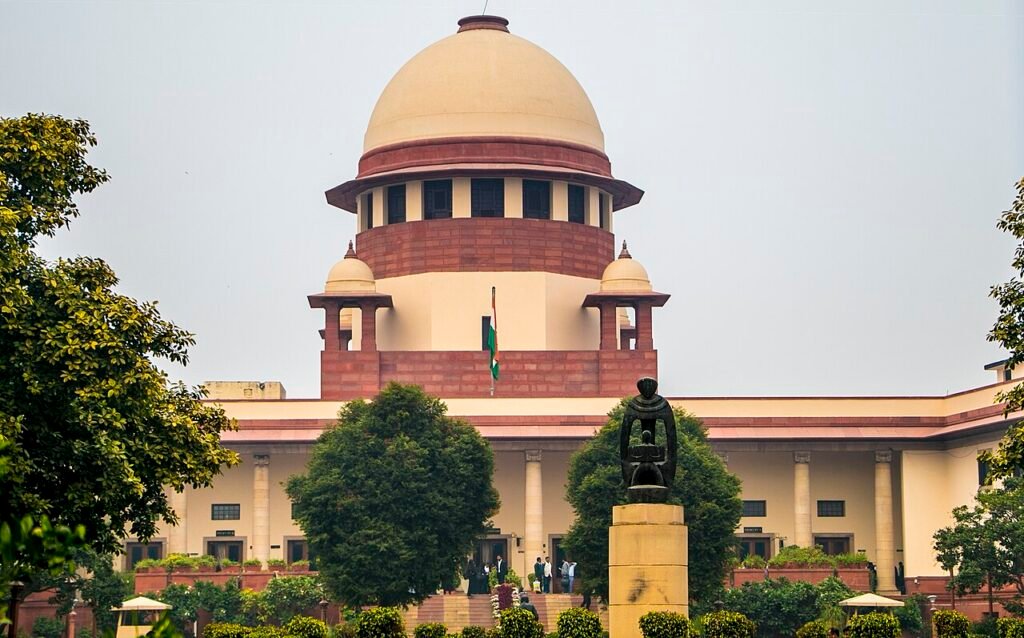
Current Context (The Trigger)
- Notice issued: The Supreme Court asked the Centre and the Assam government to reply to AASU’s petition. The petition alleges serious errors in the NRC update and says names of suspected illegal Bangladeshi immigrants got into the register.
- Bench: A two-judge bench of Justice Pamidighantam Sri Narasimha and Justice Alok Aradhe took up the matter. The paper reports only a notice, not any finding on the NRC.
- AASU’s core argument: Chief advisor Samujjal Bhattacharya said that excluding only around 19 lakh people raises doubts about the whole exercise. AASU president Utpal Sarma and Bhattacharya represented the organisation before the court.
- Electoral roll demand: AASU has again asked for a Special Intensive Revision (SIR) of Assam’s electoral rolls. It also wants the issuing of identity documents stopped until a revised NRC is published.
- Draft rolls out: Last week, the Assam election department released draft rolls under the Special Summary Revision (SSR) 2027. This came after the Election Commission decided last year to hold a special revision in the State.
Core Concepts & Static GK
- NRC: The register was first prepared in 1951. It was updated in Assam under the Supreme Court’s supervision, and the final list came out on 31 August 2019.
- Assam Movement: According to Bhattacharya, the movement began in 1979. Its trigger was the alleged presence of illegal foreigners in the voters’ list for the Mangaldoi Lok Sabha by-election. The by-election became necessary after the Mangaldoi MP Hiralal Patowary died on 28 March 1979.
- Assam Accord: It was signed on 15 August 1985 among the Union of India, the Government of Assam, AASU and the All Assam Gana Sangram Parishad (AAGSP). It ended the agitation that had begun in 1979.
- Accord cut-offs (Clause 5): Clause 5.1 fixed 1 January 1966 as the base date for detecting and deleting foreigners. Under Clause 5.3, those who came from 1 January 1966 up to 24 March 1971 were to be detected under the Foreigners Act, 1946 and the Foreigners (Tribunals) Order, 1964.
- Foreigner detection: Under Section 6A, “detected to be a foreigner” means detected by a Tribunal. The detection must be under the Foreigners Act, 1946 and the Foreigners (Tribunals) Order, 1964, and the Tribunal is one set up under that Order. The date of detection is the date on which the Tribunal submits its opinion.
- What a notice means: A notice only asks the other side to reply. In this case it means the Centre and Assam must now respond to AASU’s plea.
Constitutional & Legal Framework
- Section 6A, Citizenship Act, 1955: It was inserted by the Citizenship (Amendment) Act, 1985 after the Assam Accord, and applies to Assam only. It covers persons of Indian origin who came to Assam from the “specified territory” (the area of present Bangladesh). Those who came before 1 January 1966, and have lived there ordinarily since, are deemed citizens from 1 January 1966.
- The 1966-71 group: Persons of Indian origin who came on or after 1 January 1966 but before 25 March 1971, and are detected as foreigners, must register. For ten years from detection they have the same rights and obligations as a citizen, but their names cannot be included in any electoral roll. After the ten years, they are deemed citizens for all purposes.
- 2024 Supreme Court verdict: On 17 October 2024, a five-judge Constitution Bench upheld Section 6A by a 4:1 majority. Justice J.B. Pardiwala dissented.
- Why 25 March 1971: The majority held the cut-off rational. It marked the day Pakistan began Operation Searchlight in East Pakistan, and the Court did not find it manifestly arbitrary.
- Post-1971 entrants: Justice Surya Kant held that immigrants who entered on or after 25 March 1971 are illegal immigrants. They are liable to be detected, detained and deported.
- Earlier precedent: On 12 July 2005, in Sarbananda Sonowal v. Union of India, the Supreme Court struck down the Illegal Migrants (Determination by Tribunals) Act, 1983. Pending cases moved to tribunals under the Foreigners Act.
Institutional Machinery
- Supreme Court: It supervised the NRC update in Assam, and the final list was published on 31 August 2019.
- State Coordinator, NRC: The office of the State Coordinator of NRC, Assam released the final figures in a statement on 31 August 2019. People left out were given 120 days to appeal to Foreigners Tribunals.
- Foreigners Tribunals: These bodies give the opinion on whether a person is a foreigner. In 2024 Justice Kant held that the statutory machinery and Tribunals were inadequate for time-bound implementation of Section 6A.
- Election machinery: The Assam election department published the draft rolls under SSR 2027. The Election Commission had decided on the special revision last year.
Reports, Indices & Data
- Final NRC figures: On 31 August 2019, 3,30,27,661 people had applied. Of them, 3,11,21,004 were included and 19,06,657 were left out.
- How the paper puts it: The paper says the final register left out about 19 lakh applicants.
- Draft NRC, 2018: The final draft was published on 30 July 2018 and left out about 40 lakh people. The then Home Minister Rajnath Singh said it was only a draft and no coercive action would be taken.
- Tribunal data: A reply in the Assam Assembly on 22 July 2026 said 33,422 persons of the 1966-71 stream had been declared foreigners as on 31 August 2025. The same reply put the post-1971 stream at 1,35,549 persons.
Assam & Northeast Linkages
- Assam’s special case: Sarma said the NRC idea was prevalent only in Assam because, in his words, Assam is the state worst affected by illegal immigration.
- Section 6A is Assam-specific: The Supreme Court held that treating Assam separately was rational. Justice Kant reasoned that the Union had entered into the Accord with Assam alone.
- Agitation to Accord: The movement that began in 1979 ended with the Assam Accord on 15 August 1985.
- Clause 6 of the Accord: It promises constitutional, legislative and administrative safeguards to protect, preserve and promote the cultural, social and linguistic identity and heritage of the Assamese people.
Prelims Trap Zones (Watch out for)
- Date Trap: Section 6A covers entry before 25 March 1971, so the last covered day is 24 March 1971. The base date of 1 January 1966 is a different date, so do not mix the two.
- Number Trap: The final NRC left out 19,06,657 (about 19 lakh), not 40 lakh. The 40 lakh figure belongs to the 2018 final draft.
- Verdict Trap: The Supreme Court has only issued notice on AASU’s petition. It has not ordered reverification of the NRC.
- Year Trap: The NRC was first prepared in 1951 and the update was published in 2019. The Assam Accord is 1985, and the Section 6A verdict is 2024.
- Bench Trap: The 2024 Section 6A judgment was by a five-judge bench with a 4:1 split, not a unanimous one. Today’s notice came from a two-judge bench.
- Revision Trap: The draft rolls published last week are under Special Summary Revision (SSR) 2027. AASU is demanding a Special Intensive Revision (SIR), which is a different exercise.
Introduction
On 17 November 2026, the Supreme Court asked the Centre and Assam to reply to AASU’s plea for reverification of the 2019 NRC. That register had left out about 19 lakh applicants. The plea revives the question that started the Assam Movement in 1979: who is a citizen in Assam. It also tests how a court-supervised register, the Assam Accord and today’s electoral roll revision fit together.
Why AASU Wants Reverification (Underlying Drivers)
- Doubt over the outcome: AASU says that excluding only around 19 lakh people raises serious questions about the credibility of the NRC. It wants a fresh examination of the whole update process.
- Expectation gap: Sarma said the people of Assam and AASU had expected a much higher number of foreigners in the State. The gap between what was expected and what was found drives the plea.
- Link to the Assam Movement: The movement began in 1979 over alleged foreign names in the voters’ list during the Mangaldoi by-election. AASU therefore sees the NRC and the electoral roll as one problem.
- Electoral roll demand: Bhattacharya said AASU does not believe Assam has a voters’ list free of Bangladeshis, and it wants a Special Intensive Revision. The demand gains weight because draft rolls under SSR 2027 came out last week.
- Identity documents: AASU wants the issuing of identity documents stopped until a revised NRC is published. This shows how far the organisation wants the reverification to shape governance.
Legal and Constitutional Position
- Court-supervised NRC: The 1951 register was updated under the Supreme Court’s supervision, and the final list was published on 31 August 2019. Any reopening therefore comes back to the same court.
- Section 6A as the legal base: Section 6A of the Citizenship Act, 1955 gave statutory recognition to the Assam Accord. It separates pre-1966 entrants, the 1966-71 group, and those who came on or after 25 March 1971.
- Ten-year voting bar: A person in the 1966-71 group who is detected as a foreigner cannot be on any electoral roll for ten years from detection. This links citizenship law directly to the electoral roll.
- 2024 judgment: The Constitution Bench upheld Section 6A by 4:1 on 17 October 2024 and found the 1971 cut-off not manifestly arbitrary. Any reverification will have to respect this line.
- Court-monitored enforcement: Justice Kant held that implementation cannot be left to the mere wish and discretion of the authorities. He called for a bench, to be constituted by the Chief Justice of India, to oversee time-bound implementation.
- Earlier judicial correction: In 2005 the Supreme Court struck down the IMDT Act, 1983 and moved cases to Foreigners Act tribunals. This shows the Court has earlier reshaped the detection system itself.
Key Milestones
| Year | Event | Significance |
|---|---|---|
| 1951 | NRC first prepared | Base register that was later updated in Assam |
| 1979 | Assam Movement begins | Triggered by alleged foreigners in electoral rolls at the Mangaldoi by-election |
| 15 August 1985 | Assam Accord signed | Ended the agitation and set the 1966 and 1971 dates |
| 12 July 2005 | IMDT Act, 1983 struck down | Cases moved to Foreigners Act tribunals |
| 31 August 2019 | Final NRC published | 19,06,657 left out of 3,30,27,661 applicants |
| 17 October 2024 | Section 6A upheld 4:1 | Cut-off of 25 March 1971 held not manifestly arbitrary |
| 17 November 2026 | Notice on AASU petition | Centre and Assam asked to reply |
Challenges
- Settled and supervised list: The final NRC was prepared under the Supreme Court’s own supervision and published on 31 August 2019. Reopening it raises hard questions about finality and about who will verify the verifiers.
- Tribunal capacity: In 2024 Justice Kant held the statutory machinery and Foreigners Tribunals inadequate for the task. Without stronger tribunals, a fresh verification may only add to pending cases.
- Identity documents halt: AASU wants identity documents stopped until a revised NRC is out. Such a halt would also hit genuine residents who need documents for daily services, so the Court will weigh it with care.
- Human cost of uncertainty: The 2018 final draft had left out about 40 lakh people, and the final list left out 19,06,657. A new exercise could bring back anxiety for lakhs of families.
- Overlap of exercises: The NRC, Special Summary Revision 2027 and the demanded Special Intensive Revision serve different purposes. Running them together risks confusion about which list decides citizenship and which decides voting.
Way Ahead
- Reasoned replies: The Union Home Ministry and the Assam government should file clear replies with data on the 2019 process. This lets the Court decide on facts and not on estimates.
- Use of official data: In the 2024 case, the Court had asked the Ministry of Home Affairs for data on illegal inflows after 25 March 1971. The same practice can help here, with public and verifiable numbers.
- Stronger tribunals: The Assam government and the Centre should add members and staff to Foreigners Tribunals, since the Court found the machinery inadequate. Faster and fair decisions are needed for the 1966-71 and post-1971 groups.
- Follow the 2024 directions: Justice Kant said the Sarbananda Sonowal directions must be implemented, and the matters were placed before a bench for monitoring. Regular status reports would show whether detection and deportation work as ordered.
- Separate the two lists: The Election Commission should explain publicly how SSR 2027 differs from an SIR and how claims and objections work. Clear rules prevent the NRC debate from spilling into voter deletions.
- Protect the Accord promise: Clause 6 of the Accord promises safeguards for the culture and identity of the Assamese people. The State should deliver this through its own measures, so that the NRC is not the only answer to identity worries.
Conclusion
The notice is only the first step, and the Supreme Court has not yet said anything on the merits of AASU’s plea. The Court must balance a register it supervised itself with the Assam Accord promise on identity. A transparent and time-bound process, based on verified data and capable tribunals, is the way to keep both the rule of law and public trust.
Asked in APSC
- APSC Prelims 2020: (answer in the MCQs below)
As per the Tripartite Assam Accord signed among the Government of India, the Government of Assam and the Leaders of the Assam Agitation (AASU and All Assam Gana Sangram Parishad) on 15th August, 1985, what was set up as the cut-off date for detection and deportation of illegal migrants to Assam?- (A) 1st January, 1951
- (B) 15th August, 1967
- (C) 26th January, 1970
- (D) 24th March, 1971
Assam Needs Genuine Industrial Growth: Diversification Beyond Infrastructure-led Spending
Open this topic as a separate page, with its MCQs →
Syllabus Mapping
- Prelims: GS Paper I (Current events of national and international importance; Economic and Social Development – Sustainable Development).
- Mains: GS Paper III (Indian Economy and issues relating to planning, mobilization of resources, growth, development and employment; changes in industrial policy and their effects on industrial growth; Infrastructure). GS Paper V (Economy of Assam: Major Agricultural, Industrial and Service Sector Issues; Growth, Development and Planning; Major Development Projects).
Why in News? In an opinion article on page 4 of the Assam Tribune (18 November 2026), Swapnanil Barua argues that Assam must move beyond infrastructure-led growth. He wants a diversified economy built on manufacturing, entrepreneurship and productive jobs.
Current Context (The Trigger)
- The author’s puzzle: Swapnanil Barua says Assam has natural resources, a strategic location, a young population and a large river system. Even so, it has not built a strong industrial and services economy.
- Where industry sits today: He says industry is still concentrated in a few resource-based sectors such as petroleum, tea, coal and cement. Agriculture still employs a large share of people.
- Size versus structure: The author separates growth in the size of the economy from real industrial change. His test is whether growth brings productive jobs, higher incomes, private investment and a varied economy.
- The statistical catch: He points out that industry, as a sector, covers construction, mining and electricity as well as manufacturing. So more construction can lift industry’s share without building a manufacturing base.
- Announcements versus factories: He wants an annual investment scorecard from the government. It should show how many projects actually materialised, how much private capital came in and how many jobs were created.
- His closing view: Government spending on infrastructure is necessary, he says, but it cannot replace private enterprise. Roads, bridges and public buildings do not by themselves create a manufacturing or knowledge economy.
Core Concepts & Static GK
- Sectors of the economy: The author counts manufacturing, construction, mining and electricity as the industrial sector. He says the services sector also includes government administration and real estate.
- Value addition: This means turning a raw product into a more valuable one. The author says much of Assam’s industry stays in primary production and processing with little value addition.
- Ancillary and downstream industries: These are firms that supply or build on a main industry. He says tea could support packaging, branding, machinery and export firms. Petroleum could support plastics, chemicals, engineering parts and packaging.
- Multimodal logistics: This links river, rail, road and air transport with ports, terminals and warehouses. The author says the Brahmaputra and Barak rivers are used far below their commercial potential.
- Investment funnel: The author lists five stages: investment proposals, signed MoUs (memoranda of understanding), money actually committed, projects being built and factories already producing. He says a summit should be judged by the last stage.
- Single-window clearance: This is one counter for all approvals. The author wants one accountable authority to take a project from proposal to commercial production.
Schemes & Initiatives
- UNNATI 2024: The Union Cabinet approved UNNATI 2024, the Centre’s industrial incentive scheme for the North East. Its total outlay is Rs 10,037 crore.
- How UNNATI is split: Rs 9,737 crore is for incentives to eligible units and Rs 300 crore is for implementation. Sixty per cent of the incentive part (Part A) is earmarked for the eight North Eastern States, and the other 40% is given on a first-in-first-out basis.
- Who gets what under UNNATI: New units and units making a substantial expansion are eligible. Districts are placed in Zone A (industrially advanced) or Zone B (industrially backward), and the incentive rates differ.
- Policy base in Assam: The State notified the Industrial and Investment Policy of Assam, 2019 (IIPA 2019) in July 2019. It came into force on 1 September 2019, and a 2023 amendment added customised incentives for mega projects.
Reports, Indices & Data
- Sector shares, 2025-26: PRS Legislative Research uses the Economic Survey of Assam 2025-26 to estimate the sector shares of Assam’s economy at current prices. Agriculture is 35%, manufacturing 22% and services 43%.
- Growth estimate: The same analysis puts Assam’s GSDP (Gross State Domestic Product) growth at constant prices at 10% in 2025-26. India’s GDP is estimated to grow 8%.
- Per capita income: Assam’s per capita GSDP for 2025-26 is estimated at Rs 2,03,760 at current prices. India’s per capita GDP is estimated at Rs 2,43,803.
- North East in industry: The Economic Survey 2024-25 says six north-eastern States (excluding Assam and Sikkim) account for only 0.7% of India’s industrial GVA (Gross Value Added). Four States (Gujarat, Maharashtra, Karnataka and Tamil Nadu) account for about 43%.
Assam & Northeast Linkages
- Advantage Assam 2.0: The investment summit was held at Guwahati on 25 and 26 February 2025. Chief Minister Himanta Biswa Sarma put the investment commitments at Rs 4.91 lakh crore, according to press reports.
- Chip plant at Morigaon: The Union Cabinet approved a Tata Semiconductor Assembly and Test unit in Morigaon, Assam on 29 February 2024. The investment is Rs 27,000 crore.
- Refinery expansion: The Centre approved raising Numaligarh Refinery Limited’s capacity from 3 to 9 million metric tonnes per annum. The Cabinet Committee on Economic Affairs cleared this expansion in January 2019.
Prelims Trap Zones (Watch out for)
- Services trap: The author says services include government administration and real estate. Do not assume that a bigger services share means a strong private services sector.
- Industry trap: In the author’s list, the industrial sector is manufacturing, construction, mining and electricity. Construction growth can lift it without more factories.
- Share trap: For 2025-26, agriculture is 35%, manufacturing 22% and services 43%. Do not swap the first two.
- Summit figure trap: Rs 4.91 lakh crore is the Chief Minister’s figure for Advantage Assam 2.0 commitments. It is not the amount actually invested.
- Outlay trap: UNNATI’s total outlay is Rs 10,037 crore. Rs 9,737 crore is only the incentive part.
- Region trap: The author ties Upper Assam to petroleum, petrochemicals, tea and engineering. He ties Barak Valley to agro-processing, tea, bamboo and cross-border trade.
Introduction
Assam’s economy is estimated to grow 10% in 2025-26 at constant prices, faster than India’s 8%. Yet in a page 4 article on 18 November 2026, Swapnanil Barua asks a harder question. He asks whether this growth is creating factories, private investment and productive jobs, or only spending on roads and buildings.
Why Assam’s Industrial Base Stays Thin: The Author’s Diagnosis
- Few supporting industries: The author says Assam has not built the ancillary network that should have grown around its older industries. Tea, for example, could support packaging, branding, machinery and exports.
- Little value addition: In his view, much activity stays at primary production and processing. He says petroleum could feed plastics, chemicals and engineering components, but downstream manufacturing is limited.
- Distance from markets: He notes that Assam is far from India’s major industrial and consumption centres, so transport costs rise. Road, rail, air and waterway links have improved, but he finds the logistics system still weak.
- Idle rivers: He says the Brahmaputra and Barak could carry far more cargo than they do now. River ports, cargo terminals, warehouses and multimodal facilities need much more attention.
- Thin North East share: The Economic Survey 2024-25 found that six north-eastern States (excluding Assam and Sikkim) produce only 0.7% of India’s industrial GVA. The Survey called for industrial strategies suited to unique geographies like the North East.
- Misleading statistics: The author points out that construction counts as industry and government administration counts as services. So headline shares can hide a weak private manufacturing and services base.
Opportunities the Author Identifies
- Guwahati as services hub: The author says the city has the people, colleges, connectivity and position to host IT, finance, healthcare, education and logistics firms. Its role as a knowledge hub has been limited so far.
- Quality of investment: He argues that a company employing two thousand software professionals creates more than a shopping mall. In his view, it raises demand for housing, transport, restaurants and professional services.
- Agro-industry: He sees room in food processing, fruit concentrates, packaged goods, fish processing, dairy, bamboo furniture and engineered bamboo boards. Cold chains, collection centres and food-testing labs are missing.
- Regional specialisation: Upper Assam can build on petroleum, petrochemicals, tea and engineering. Barak Valley suits agro-processing, tea, bamboo and cross-border trade. Central Assam suits food processing, fisheries and resource-based industry.
- Tourism economy: He says Assam’s tourist destinations should support a much bigger hospitality and creative economy. That would spread visitor spending into local businesses.
- Big projects already coming: The Rs 27,000 crore Tata chip unit at Morigaon and the Numaligarh refinery expansion show that large industrial investment is possible. They still need local suppliers around them.
Challenges
- Land and common facilities: The author says investors need power, water, drainage, roads, waste disposal and testing labs, not only plots. The author wants industrial estates to work as real ecosystems and a clear land bank with known ownership and environmental status.
- Weak entrepreneurship culture: Many educated youth aim mainly for government jobs. The author says industry cannot grow unless starting a business becomes an attractive career.
- Credit gaps for small firms: He says small and medium enterprises struggle to get affordable credit, working capital and risk capital. First-generation entrepreneurs need incubation, technology support and venture funding.
- Skills mismatch: Assam has universities, engineering colleges, polytechnics and Industrial Training Institutes (ITIs). Yet, the author says, the link with real job needs is weak for technicians, operators, electricians and welders.
- Announcement gap: The author notes that summits produce proposals and memoranda, but the path to a working factory is long. The Chief Minister put Advantage Assam 2.0 commitments at Rs 4.91 lakh crore, but only a scorecard can show what was built.
- Fragmented approvals: He lists the departments for industries, finance, power, transport, revenue, environment and urban development as offices that each hold a piece of a project. He wants single-window clearance to become truly single.
Way Ahead
- Annual investment scorecard: The author wants the State government to publish yearly figures on projects that materialised, private capital invested and jobs created. This ties summit success to real output.
- One accountable authority: He wants one accountable authority to carry each project from proposal to commercial production. This would cut the delays between departments.
- MSMEs at the centre: Industrial policy should aim at thousands of small and medium units that supply larger firms. The author says every major cluster needs its own skill and apprenticeship programme.
- Industry-led skilling: The author says training courses should be designed with employers, and apprenticeships should become part of technical education. This fits the needs of firms such as the Morigaon chip unit.
- Use central schemes: Assam can help eligible units, especially in Zone B (industrially backward) districts and value-adding sectors, claim UNNATI 2024 incentives. Under the scheme, 60% of the Rs 9,737 crore incentive part is earmarked for the eight North Eastern States.
- Logistics and agro-chains: The author calls for river ports, cargo terminals and warehouses. He also wants cold chains, aggregation centres and food-testing labs so that farmers become dependable suppliers to food and bamboo industries.
- Market Guwahati: He wants the State to pitch Guwahati much more aggressively to IT and knowledge-services firms. In his view, such firms create deeper local demand than retail complexes.
Conclusion
Assam’s headline growth is real, but the author’s case is that its industrial base stays narrow and public spending alone cannot widen it. His test for policy is factories running, jobs created and local suppliers growing, not the size of summit announcements. Publishing that record every year would let citizens judge industrial policy on results.
Asked in APSC
- APSC Mains 2025, GS Paper 5 (15 marks): Critically examine the factors that have constrained industrialization in Assam. Suggest measures how the State can move towards a more diversified, employment-intensive and export-oriented industrial economy.
NFR Completes 100 Per Cent Railway Electrification in the Northeast
Open this topic as a separate page, with its MCQs →
Syllabus Mapping
- Prelims: GS Paper I (Current events of State/National importance; General issues on Environment ecology and Climate Change; Economic and Social Development).
- Mains: GS Paper III (Infrastructure: Railways; Environment and sustainable development); GS Paper V (Assam syllabus: Transport and connectivity, Economy of Assam).
Why in News? Northeast Frontier Railway (NFR), headquartered at Maligaon, said on 17 November 2026 (Tuesday) that every active railway section in its north-eastern jurisdiction is now electrified. The job took less than 10 years, and NFR’s cumulative figure up to 2026-27 is 4,311.96 Route Kilometres (RKM).
Current Context (The Trigger)
- The claim: NFR says all of its active railway sections in the north-eastern States are now electrified. The announcement came from NFR’s Chief Public Relations Officer (CPRO), Kapinjal Kishore Sharma.
- Total electrified: NFR has electrified 4,311.96 RKM as per cumulative progress up to 2026-27.
- State-wise split: Assam has 2,546.04 RKM, West Bengal 987.51 RKM and Bihar 427.49 RKM. Tripura has 269.45, Mizoram 52.88, Arunachal Pradesh 11.67, Meghalaya 9.58, Nagaland 6 and Manipur 1.35 RKM.
- Year-wise progress: NFR electrified 915.62 RKM in 2023-24 and 1,141.38 RKM in 2024-25. It added 445.66 RKM in 2025-26 and 141.77 RKM so far in 2026-27.
- Recent completions: Electrification was recently finished on the Lumding-Badarpur section and the Bairabi-Sairang section. Work is also going on along with new line projects that are under construction.
Core Concepts & Static GK
- First electric train: India’s first electric train ran in 1925 between Bombay Victoria Terminus and Kurla Harbour on a 1500 Volt DC system.
- Slow start: Only 388 RKM had been electrified by Independence.
- Why electric traction: The Press Information Bureau (PIB) says electric traction is more environment friendly and about 70 per cent more economical than diesel traction.
- Rising share: The electrified share of the network was 24 per cent in 2000 and 40 per cent in 2017. It crossed 96 per cent by the end of 2024.
- Speed of work: Electrification ran at about 1.42 km per day in 2004-2014. It rose to more than 15 km per day in 2019-2025.
- The NFR timeline: NFR says there was no railway electrification in the region before 2014. The drive began in 2017-18.
Institutional Machinery
- Zone and headquarters: NFR is one of the zones of Indian Railways. Its headquarters is at Maligaon in Guwahati, Assam.
- Formation: NFR was created on 15 January 1958 when the North Eastern Railway was split into two zones.
- Divisions: NFR has five divisions: Katihar, Alipurduar, Rangiya, Lumding and Tinsukia.
- Beyond the Northeast: The NFR figures include West Bengal and Bihar, so the zone’s reach is wider than the eight north-eastern States.
Schemes & Initiatives
- Mission 100% Electrification: Indian Railways has committed to electrify its entire Broad Gauge (BG) network in mission mode.
- Solar power for traction: Indian Railways had 898 MW of solar capacity by November 2025, up from 3.68 MW in 2014. Of this, 629 MW is used for traction.
- Mechanised methods: Cylindrical foundations laid by mechanised augering replace manual digging for overhead lines. An Automatic Wiring Train lays the catenary and contact wires together with controlled tension.
Reports, Indices & Data
- National level: As of November 2025, India had electrified 69,427 RKM, about 99.2 per cent of its 70,001 RKM BG network. Of this, 46,900 RKM was electrified between 2014 and 2025.
- States left: At that time 25 States/Union Territories were fully electrified. Only five States had balance work: Rajasthan, Tamil Nadu, Karnataka, Assam and Goa.
- Assam’s position then: PIB listed Assam with 2,578 BG RKM in total and 2,381 electrified, which is 92 per cent, with 197 RKM balance.
- World comparison: The International Union of Railways (UIC) report of June 2025 puts Switzerland at 100 per cent and China at 82 per cent.
Assam & Northeast Linkages
- Assam leads: Assam holds 2,546.04 of the 4,311.96 RKM, which is about 59 per cent of NFR’s electrified length.
- Bairabi-Sairang line: This 51.38 km line was inaugurated by the Prime Minister on 13 September 2025. It gave Aizawl, the capital of Mizoram, its first rail link to the Indian Railways network.
- Line features: It has 45 tunnels and 55 major bridges, and it cost over Rs 8,070 crore.
- Lumding-Badarpur hill section: This section is 169 km long and runs through the hills of Assam. It is a key rail link between the Barak Valley, along with several north-eastern States, and the rest of the country.
Prelims Trap Zones (Watch out for)
- Region Trap: The 4,311.96 RKM is not only in the Northeast. It includes 987.51 RKM in West Bengal and 427.49 RKM in Bihar.
- Share Trap: Assam is first (2,546.04 RKM) and West Bengal is second (987.51 RKM). Tripura (269.45 RKM) is the next north-eastern State after Assam.
- Year Trap: The highest yearly addition was in 2024-25 (1,141.38 RKM), not 2023-24 (915.62 RKM). The drive started in 2017-18, not 2014.
- Meaning of 100 per cent: NFR claims completion on its active sections. Electrification of new lines under construction is still going on.
- National Trap: Indian Railways as a whole was at 99.2 per cent in November 2025, not 100 per cent. The NFR milestone is a zone-level claim.
- Place Trap: NFR headquarters is Maligaon (Guwahati), and its divisions include Katihar and Alipurduar outside the Northeast proper.
Introduction
On Tuesday, Northeast Frontier Railway said it had electrified all its active sections, a total of 4,311.96 route kilometres, in under 10 years. Before 2014 the region had no electrified railway at all. For Assam, which holds more than half of this length, the milestone ties together cleaner transport, lower running cost and better connectivity.
Why Electrification Matters
- Lower running cost: PIB says electric traction is about 70 per cent more economical than diesel traction. Cheaper haulage helps freight and passenger services on long NE routes.
- Cleaner transport: Electric trains remove diesel exhaust from the track. NFR links the drive to sustainable and environment-friendly operations.
- Energy security: PIB says railway electrification strengthens energy security. Electric trains can draw power from any source, including solar, instead of depending only on diesel.
- Better reliability: NFR says electrification brings more efficient and reliable train operations.
- Link with solar power: Indian Railways uses 629 MW of its solar capacity for traction. Electric lines can therefore run partly on renewable energy.
- Regional growth: PIB says electrification catalyses industrial and rural growth along railway corridors. Faster freight can help Assam’s tea, oil and agro industries.
How NFR Reached 100 Per Cent
- Late start: There was no electrification in the region before 2014, and the drive began only in 2017-18. NFR had to build the whole system from zero.
- Peak years: NFR added 915.62 RKM in 2023-24 and 1,141.38 RKM in 2024-25. Together these two years make up nearly half of the total.
- Tapering work: The yearly addition fell to 445.66 RKM in 2025-26 and 141.77 RKM in 2026-27 so far. This fits a drive in its last phase, with fewer sections left to wire.
- Hill sections among the last: NFR says the Lumding-Badarpur and Bairabi-Sairang sections were completed recently. Both are hill routes: Lumding-Badarpur is a 169 km hill section, and the Bairabi-Sairang line needed 45 tunnels.
- Spread across States: Besides Assam, Tripura has 269.45 RKM and Mizoram 52.88 RKM electrified. Even small States such as Manipur now have a short electrified stretch (1.35 RKM).
- Work on new lines: NFR says new line projects are being electrified together with construction. This avoids a second round of work later.
Challenges
- Difficult terrain: Hill and forest sections need tunnels and bridges. The Bairabi-Sairang line alone has 45 tunnels and 55 major bridges.
- Thin coverage in some States: Manipur has only 1.35 RKM, Nagaland 6 RKM and Meghalaya 9.58 RKM electrified. Rail reach in these States is still small.
- Beyond active sections: The 100 per cent claim covers active sections only. New railway lines still under construction must also be wired as they are built.
- Power supply: Electric trains need steady traction power. On the Lumding-Badarpur hill section, electric running had to wait for a 132 kV line. It runs from the Haflong Grid Sub-Station to the New Haflong Traction Sub-Station and was energised in June 2026.
- Locomotive and crew readiness: Services moving from diesel to electric need enough electric locomotives, trained staff and maintenance depots. The paper does not give figures, so this remains a risk to watch.
- Weather and landslides: Heavy rain and landslides in NE hills can damage overhead lines. Maintenance cost and speed of repair become important.
Way Ahead
- Electrify new lines on opening: Ministry of Railways and NFR should wire every new line project along with construction, as NFR says it is doing.
- Run more electric services: NFR should shift long-distance and freight services on completed routes to electric locomotives. This turns the infrastructure into real fuel savings.
- Use solar for traction: Indian Railways already uses 629 MW of solar for traction. NFR can add solar on its own land to power NE sections.
- Strengthen power backup: NFR and State power utilities should build reliable substations and backup feeders on hill sections such as Lumding-Badarpur.
- Finish new lines faster: The Ministry of Railways should speed up the new line projects now under construction in the Northeast, so that more areas gain from electric traction. The Bairabi-Sairang line, which put Aizawl on the rail map in 2025, shows what a new line can do.
- Develop freight terminals: Assam Government and Railways can set up logistics parks near electrified corridors to attract industry and cut road freight.
Conclusion
NFR’s 4,311.96 RKM milestone moves the Northeast from having no electrified track before 2014 to a fully wired network on active sections. The real gain will come when more electric trains and freight run on it, and when every new line in the region is wired from day one.
Quad Leaders Launch Maritime Surveillance Collaboration and First Joint Patrol Aircraft Exercise
Open this topic as a separate page, with its MCQs →
Syllabus Mapping
- Prelims: GS Paper I (Current events of national and international importance; International groupings and Indo-Pacific affairs).
- Mains: GS Paper II (India and its neighbourhood; Bilateral, regional and global groupings and agreements involving India; Effect of policies of developed countries on India’s interests).
Why in News? At a Quad summit in Manila on 17 November 2026, the leaders of India, the US, Australia and Japan announced several new initiatives. These include the Indo-Pacific Maritime Surveillance Collaboration and a 2027 maritime exercise of their P-8 and P-3C patrol aircraft. It will be the first such exercise in a Quad context.
Current Context (The Trigger)
- Where and who: The summit was held in Manila, the capital of the Philippines, on 17 November 2026. Prime Minister Narendra Modi, US President Donald Trump, Australian Prime Minister Anthony Albanese and Japanese Prime Minister Sanae Takaichi attended.
- First meeting under Trump’s second term: This was the first time the four Quad leaders met after Trump’s return as US President last year. Manila was the first stop of his three-day trip.
- New maritime initiative: The leaders welcomed the Indo-Pacific Maritime Surveillance Collaboration. It is a new initiative to improve information sharing and maritime domain awareness (knowing what is happening at sea).
- First Quad patrol aircraft exercise: The leaders said the four countries’ P-8 and P-3C maritime patrol aircraft will take part in a joint exercise at sea in 2027. It will be the first such exercise in a Quad context.
- Other announcements: The package also included a partnership on cybersecurity, besides the cable framework. An inaugural Quad Business Leaders’ Forum is scheduled for early 2027.
- AI Accelerator: The leaders referred to a recent decision of the Quad foreign ministers to set up an AI Accelerator. It will coordinate and fund help so that Indo-Pacific countries can get, use and deploy trusted Artificial Intelligence (AI).
- Cable framework: The leaders reviewed the work done under the Quad Partnership for Cable Connectivity and Resilience. They said it has widened access to secure and trusted communications infrastructure in the region.
- Stand on coercion: The leaders opposed “any destabilising or unilateral actions” aimed at altering the status quo, including through “force or coercion”. They also voiced “grave concerns” about economic coercion, including arbitrary export restrictions.
Core Concepts & Static GK
- Quad: It is a grouping of four countries: India, the US, Australia and Japan. The Assam Tribune report says the group has sought to check China’s growing influence in the Asia Pacific.
- Origin in 2004: The four countries formed an ad-hoc “Tsunami Core Group” to respond to the Boxing Day tsunami of December 2004. The group disbanded as the relief and recovery effort wound down.
- 2007 meeting and dormancy: Officials of the four countries met in May 2007 in Manila, during the ASEAN Regional Forum meeting. In January 2008 Australia announced it would not take part in the Quad dialogue, and the grouping went quiet.
- Revival in 2017: Assistant secretary-level officials of the four countries met in Manila on 12 November 2017, on the margins of the ASEAN Summit. This restarted the grouping.
- Maritime domain awareness (MDA): MDA means a near-real-time picture of what ships are doing in a country’s waters. It helps track “dark shipping” (ships that switch off their tracking transponders), protect fisheries and respond to climate and humanitarian events.
- P-8 and P-3C: These are the two types of maritime patrol aircraft that the leaders named for the 2027 exercise.
- Freedom of navigation and overflight: The leaders listed protecting freedom of navigation and overflight among their aims. They also listed securing critical supply chains.
Institutional Machinery
- First leaders’ summit: The first-ever leader-level summit of the Quad was held virtually on 12 March 2021. It set up three working groups: on vaccines, on critical and emerging technology, and on climate.
- First in-person summit: The four leaders met in person as “the Quad” for the first time on 24 September 2021.
- Foreign ministers: The Quad foreign ministers met in Washington, D.C. on 1 July 2025. They named four focus areas: maritime and transnational security, economic prosperity and security, critical and emerging technology, and humanitarian assistance and emergency response.
- Information Fusion Centre: India’s Information Fusion Centre for the Indian Ocean Region (IFC-IOR) was inaugurated at Gurugram on 22 December 2018. It works with partner countries to build maritime domain awareness and share information on vessels of interest.
Schemes & Initiatives
- Indo-Pacific Partnership for Maritime Domain Awareness (IPMDA): It was launched at the Quad leaders’ summit in Tokyo on 24 May 2022. It offers partners a faster and more accurate near-real-time picture of activity in their waters.
- IPMDA reach: It works with regional fusion centres in the Indian Ocean, Southeast Asia and the Pacific Islands. In May 2023 the leaders said it was giving data to agencies in Southeast Asia and the Pacific. By September 2024 it had expanded to the IFC-IOR in Gurugram.
- Cable partnership: The Quad Partnership for Cable Connectivity and Resilience was announced at Hiroshima on 20 May 2023. It aims to strengthen undersea cable systems in the Indo-Pacific. In 2024 the leaders said Quad partners had committed over $140 million to undersea cable builds in the Pacific.
- Quad-at-Sea Ship Observer Mission: The Wilmington Declaration of 21 September 2024 announced a first mission for 2025. The US Coast Guard, Japan Coast Guard, Australian Border Force and Indian Coast Guard were to take part.
- MAITRI: The Maritime Initiative for Training in the Indo-Pacific (MAITRI) was also announced at Wilmington in 2024. India was to host its first workshop in 2025.
- Quad Critical Minerals Initiative: The Quad foreign ministers launched it in Washington on 1 July 2025. Its aim is to secure and diversify critical minerals supply chains.
Assam & Northeast Linkages
- Northeast as gateway: A Press Information Bureau (PIB) note of September 2025 links the Northeast with the Act East vision. It calls the region a vital gateway to India’s engagement with Southeast Asia. Open and safe Indo-Pacific sea lanes, which the Quad backs, form the sea side of this eastward engagement.
- Act East Policy: PIB describes the Act East Policy as an upgrade of the Look East Policy of 1992. It seeks economic, cultural and strategic ties with countries of the Asia-Pacific and better links between the North Eastern states and neighbouring countries.
- Assam’s own department: The Government of Assam set up an Act East Policy Affairs Department in 2017. It aims to use the state’s location advantage under the Act East Policy.
- Kaladan link: The Kaladan Multimodal Transit project links the Northeast to the sea through Myanmar’s Sittwe port. A PIB note of September 2025 said the Prime Minister would lay the foundation stone of the Chhimtuipui River Bridge in Mizoram to ease cross-border trade under the Kaladan framework.
Prelims Trap Zones (Watch out for)
- Name Trap: The new initiative welcomed at Manila is the Indo-Pacific Maritime Surveillance Collaboration. The older 2022 programme is the Indo-Pacific Partnership for Maritime Domain Awareness (IPMDA).
- Year Trap: The P-8 and P-3C exercise is scheduled for 2027, not 2026. The Quad Business Leaders’ Forum is due in early 2027.
- First Trap: The 2027 event is the first patrol aircraft exercise in a Quad context. It is not the first time all four navies exercised together, because the Royal Australian Navy joined India, the US and Japan in Exercise Malabar in November 2020.
- Timeline Trap: The Tsunami Core Group dates from 2004. The first official-level meeting was in 2007, the revival in 2017 and the first leaders’ summit in March 2021.
- Venue Trap: IPMDA came from Tokyo in 2022 and the cable partnership from Hiroshima in 2023. The observer mission and MAITRI came from Wilmington in 2024.
- Agency Trap: Australia’s participant in the Quad-at-Sea Ship Observer Mission is the Australian Border Force, not a “coast guard”. The other three are the coast guards of the US, Japan and India.
Introduction
On 17 November 2026 in Manila, the Quad leaders welcomed a new maritime surveillance collaboration. They also announced their first patrol aircraft exercise in a Quad context, due in 2027. The Quad began as a tsunami relief group in 2004 and now works mainly on sea security, technology and supply chains. For India, the stakes are high because nearly 95% of its trade by volume moves by sea.
Why the Maritime Turn Matters
- Safer sea lanes: The leaders vowed to “ensure open, safe, and resilient maritime transit corridors in the Indo-Pacific”. A PIB note of October 2025 says nearly 95% of India’s trade by volume and about 70% by value moves through maritime routes.
- A shared picture of the sea: The new collaboration is meant to improve information sharing and maritime domain awareness. Better shared data helps partners spot suspicious vessels earlier.
- Dark shipping and fisheries: IPMDA was designed to track “dark shipping” and to help partners protect their fisheries. A shared data picture makes such activity harder to hide.
- Practice in working together: The 2027 patrol aircraft exercise will let the four forces practise operating together. The Quad-at-Sea Ship Observer Mission, announced for 2025, had the same aim for coast guards.
- Supply chain security: The leaders said they are securing critical supply chains and protecting freedom of navigation and overflight. The Quad Critical Minerals Initiative of July 2025 supports this goal.
- Protecting digital links: The cable partnership aims to strengthen undersea cables, which carry communications across the Indo-Pacific. A cut cable can disrupt banking, trade and internet traffic in many countries.
India’s Role & Strategic Significance
- A hub for maritime data: India’s IFC-IOR at Gurugram, inaugurated in December 2018, shares information on vessels of interest with partner countries. IPMDA expanded to this centre by 2024, so India is already a node in the Quad’s data effort.
- Training role: Under MAITRI, India was to host the first workshop in 2025. This gives India a lead role in training Indo-Pacific partners to watch their own waters.
- Support for Act East: The Act East Policy seeks economic and strategic ties with Asia-Pacific countries. That outreach depends on secure sea lanes as well as land routes through the Northeast.
- Strategic autonomy: The leaders said they work with regional partners so that the Indo-Pacific gets real, visible gains. India can shape these benefits while keeping its own independent foreign policy choices.
- Technology access: The AI Accelerator will fund and coordinate help for partner countries to adopt trusted AI. India can use it to build digital capacity at home and in partner countries.
- Voice on coercion: India joined a statement that opposes economic coercion, including arbitrary export restrictions. The same concern applies to India’s own supply of critical minerals and other inputs.
Challenges
- Perceived anti-China tone: Most observers read the leaders’ remarks on force or coercion as a pointed signal to Beijing. When IPMDA was launched in 2022, a Chinese foreign ministry spokesperson said “building small cliques and stoking bloc confrontation” was the real threat to maritime order.
- Trust in data sharing: A Lowy Institute analysis notes that “no country wants to hand over raw data”. Donor states prefer to fund hardware, training and fusion centres rather than expose their own data streams.
- Reliance on commercial data: IPMDA uses commercial satellite radio-frequency data supplied through regional fusion centres. Its continuity therefore depends on steady funding and on agreements with data providers.
- Tensions in the South China Sea: ASEAN is trying to agree a non-aggression pact with China over the South China Sea. Clashes at sea between the Philippines and China have risen in recent years, so Quad activity in these waters is sensitive.
- Uneven priorities: The four partners have different interests and budgets in the Indo-Pacific. Summit announcements can run ahead of what each country can fund and deliver.
- Dependence on US politics: Manila was the leaders’ first Quad meeting in Trump’s second term as US President. The plans need steady US commitment over several years to hold.
Way Ahead
- Deliver the 2027 exercise: The four defence forces should fix dates, rules and data links early. This will show that the P-8 and P-3C exercise is more than an announcement.
- Build partner capacity: The Quad should keep giving maritime data and training to Indian Ocean, Southeast Asian and Pacific partners. Regional fusion centres in Singapore, Vanuatu and the Solomon Islands already link with IPMDA.
- Use Indian hubs: India should connect the IFC-IOR at Gurugram closely with the new Indo-Pacific Maritime Surveillance Collaboration. This would make India a central partner rather than only a user of data.
- Keep coast guards active: The Quad should continue the Quad-at-Sea observer missions and MAITRI workshops. Regular contact between the four maritime agencies builds trust for real operations.
- Protect cables: The Quad should keep funding and protecting undersea cables, as with its 2024 commitment of over $140 million for Pacific cable builds. Australia’s Indo-Pacific Cable Connectivity and Resilience Program already offers technical help to regional governments.
- Engage ASEAN: This year the Philippines holds the chair of ASEAN as well as of the East Asia Summit. The Quad should consult ASEAN members closely so its work supports, rather than sidelines, regional bodies.
Conclusion
The Manila announcements show the Quad moving from statements to shared work at sea, in the air and under the sea. Its success will depend on whether the 2027 exercise and the data initiatives run on time and win the trust of regional partners. For India, steady delivery will serve its trade, security and Act East interests better than headline summits.
News in Short
- Nagaland PAP relief: The Centre has relaxed the Protected Area Permit (PAP) rule for foreigners visiting Nagaland for tourism. They can stay 20 days, up from the earlier 10 days, from November 26 to December 15 every year. Citizens of Afghanistan, China and Pakistan, and foreigners of origin in these countries, still need prior approval of the Union Home Ministry.
- TTAADC Executive Committee: The Tripura Tribal Areas Autonomous District Council (TTAADC) unanimously passed an amendment Bill that raises its Executive Committee from nine members to 12. The Bill also says a vacant seat in the Council must be filled within six months. The Council has 30 members (28 elected and two nominated by the Governor) and works under the Sixth Schedule, which the Constitution (Forty-ninth Amendment) Act, 1984 extended to Tripura.
- Karbi Anglong world record: About 15,000 dancers from various tribes and communities set a world record for the largest folk dance performance at KASA Stadium, Diphu. The event marked the 75th anniversary of Karbi Anglong district.
- IFFI Indian Panorama: Four North East films are in the Indian Panorama section of the 57th International Film Festival of India (IFFI). The festival will be held in Goa from November 20 to 28. Urum, directed by Duyu Tabyo of Arunachal Pradesh, is the first Nyishi language film chosen for this section.
- Dairy Innovation Award 2026: A short film on Manipur Dairy won the award in the Socio-Economic Farming Sustainability category. It was given at the International Dairy Federation (IDF) World Dairy Summit in Auckland, New Zealand. Manipur Dairy is managed by the National Dairy Development Board (NDDB) under a tripartite Memorandum of Understanding (MoU) signed on January 31, 2025.
- East Asia Summit on scams: At the 21st East Asia Summit (EAS) in Manila, India and other members agreed to work together against online scams and human trafficking. The summit was set up in 2005 and has the 11 members of the Association of Southeast Asian Nations (ASEAN) and eight partners. The Philippines chairs ASEAN and the EAS this year.
- MeghGo app: Meghalaya launched MeghGo, a shared ride booking app for taxis, two wheelers and autorickshaws. Chief Minister Conrad Sangma said no commission will be charged from drivers.
- Yamuna microplastics study: A study in the Journal of Hazardous Materials Advances covered a 48.8-km stretch of the Yamuna in Delhi, from Palla to Asgarpur Jagir. It sampled eight locations and found 2,289 microplastic particles. The average was 3.18 particles per litre.
APSC Prelims MCQs
Practice questions on the topics above
Topic 1: AASU Petition on NRC Reverification: Supreme Court Issues Notice to Centre and Assam
Q1. Section 6A of the Citizenship Act, 1955, gave statutory recognition to the Assam Accord, and the Supreme Court upheld it in 2024. Consider the following statements:
(i) Section 6A applies only to Assam.
(ii) Persons of Indian origin who came to Assam from the specified territory before 1 January 1966, and have been ordinarily resident there since, are deemed to be citizens of India.
(iii) Persons who entered Assam on or after 25 March 1971 can register under it and become citizens after ten years.
Which of the statements given above is/are correct?
- (a) (i) only
- (b) (i) and (ii) only
- (c) (ii) and (iii) only
- (d) (i), (ii) and (iii)
Show answer
Answer: (b) Explanation: Statements (i) and (ii) are correct. Section 6A was inserted in 1985 after the Assam Accord and covers Assam alone. Such persons of Indian origin from the specified territory (present Bangladesh) are deemed citizens from 1 January 1966. Statement (iii) is wrong. In the 2024 verdict, Justice Surya Kant held that those who entered on or after 25 March 1971 are illegal immigrants liable to be detected, detained and deported. The registration route and the ten-year bar apply only to the group that came on or after 1 January 1966 but before 25 March 1971 and was detected as foreigners. Value addition: the Constitution Bench upheld Section 6A on 17 October 2024 by 4:1, with Justice J.B. Pardiwala dissenting.
Q2. Consider the following statements about the NRC in Assam:
(i) The NRC was first prepared in 1951.
(ii) The final updated NRC in Assam was published on 31 August 2019.
(iii) The 2024 Supreme Court verdict on Section 6A was a unanimous judgment of a three-judge bench.
How many of the statements given above are correct?
- (a) Only one
- (b) Only two
- (c) All three
- (d) None
Show answer
Answer: (b) Explanation: Statements (i) and (ii) are correct. The NRC was first prepared in 1951. Its update in Assam was done under the Supreme Court’s supervision, and the final list came out on 31 August 2019. Statement (iii) is wrong on both counts. The Section 6A case was decided by a five-judge Constitution Bench, and the verdict was 4:1, with Justice J.B. Pardiwala dissenting. So only two statements are correct, and options (a), (c) and (d) fail. Value addition: the final NRC included 3,11,21,004 persons and left out 19,06,657 of the 3,30,27,661 applicants. The 2018 final draft had left out about 40 lakh people.
Q3. Match List-I with List-II:
| List-I (Event) | List-II (Date / Year) |
|---|---|
| a. Signing of the Assam Accord | 1. 17 October 2024 |
| b. Publication of the final NRC in Assam | 2. 15 August 1985 |
| c. Supreme Court verdict upholding Section 6A | 3. 31 August 2019 |
| d. Start of the Assam Movement | 4. 1979 |
Select the correct answer using the codes given below:
- (a) a-2, b-1, c-3, d-4
- (b) a-4, b-3, c-1, d-2
- (c) a-2, b-3, c-1, d-4
- (d) a-3, b-2, c-4, d-1
Show answer
Answer: (c) Explanation: The Assam Accord was signed on 15 August 1985 among the Union, the Assam government, AASU and AAGSP, so a matches 2. The final NRC was published on 31 August 2019, so b matches 3. The Supreme Court upheld Section 6A on 17 October 2024, so c matches 1. The Assam Movement began in 1979 over alleged foreigners in the Mangaldoi by-election rolls, so d matches 4. Option (a) swaps the NRC and verdict dates. Option (b) puts the Accord at 1979 and the Movement at 1985, which reverses them. Option (d) shuffles all four. Value addition: Clause 5.1 of the Accord made 1 January 1966 the base date for detecting and deleting foreigners.
Q4. Under Section 6A of the Citizenship Act, 1955, a person came to Assam on or after 1 January 1966 but before 25 March 1971 and is detected as a foreigner. For how many years from the date of detection can his name not be included in any electoral roll?
- (a) Five years
- (b) Ten years
- (c) Fifteen years
- (d) Twenty-five years
Show answer
Answer: (b) Explanation: Section 6A says such a person must register. From the date of detection till the end of ten years, he has the same rights and obligations as a citizen. His name, however, cannot be included in any electoral roll. When the ten years end, he is deemed a citizen of India for all purposes. Five, fifteen and twenty-five years have no basis in the section and are only close-looking numbers. The Accord matches this: Clause 5.6 says names deleted from the electoral rolls are restored after ten years from the date of detection. Value addition: the date of detection is the date on which the Foreigners Tribunal submits its opinion that the person is a foreigner.
PYQ (APSC Prelims 2020): As per the Tripartite Assam Accord signed among the Government of India, the Government of Assam and the Leaders of the Assam Agitation (AASU and All Assam Gana Sangram Parishad) on 15th August, 1985, what was set up as the cut-off date for detection and deportation of illegal migrants to Assam?
- (A) 1st January, 1951
- (B) 15th August, 1967
- (C) 26th January, 1970
- (D) 24th March, 1971
Show answer
Answer: (D) Explanation: The Assam Accord was signed in New Delhi on 15 August 1985, in the presence of Prime Minister Rajiv Gandhi, by representatives of the Government of India, the Government of Assam, AASU (Prafulla Kumar Mahanta, Bhrigu Kumar Phukan) and the All Assam Gana Sangram Parishad (Biraj Kumar Sarma). Its cut-off was the midnight of 24 March 1971: foreigners who entered Assam on or after 25 March 1971 were to be detected and expelled. This is the eve of the Pakistani army crackdown in East Pakistan that set off the Bangladesh Liberation War. The Accord’s three-tier scheme:
Topic 2: Assam Needs Genuine Industrial Growth: Diversification Beyond Infrastructure-led Spending
Q5. In an opinion article in the Assam Tribune on the Assam economy, Swapnanil Barua discusses how growth is measured. Consider the following statements:
(i) The industrial sector includes manufacturing, construction, mining and electricity.
(ii) A rise in construction can lift industry’s share of the economy without creating a strong manufacturing base.
(iii) The services sector consists only of private IT and financial firms.
Which of the statements given above is/are correct?
- (a) (i) only
- (b) (i) and (ii) only
- (c) (ii) and (iii) only
- (d) (i), (ii) and (iii)
Show answer
Answer: (b) Explanation: The author counts manufacturing, construction, mining and electricity as the industrial sector, so (i) is correct. He adds that more construction can raise industry’s contribution without a real manufacturing base, so (ii) is also correct. Statement (iii) is wrong because he says services also include government administration and real estate, which do not automatically build competitive private services. So (a), (c) and (d) fail. Value addition: PRS Legislative Research estimates that in 2025-26 agriculture, manufacturing and services made up 35%, 22% and 43% of Assam’s economy at current prices.
Q6. Match List-I (region of Assam) with List-II (focus suggested by the author):
| List-I (Region) | List-II (Suggested focus) |
|---|---|
| a. Guwahati | 1. Agro-processing, tea, bamboo and cross-border trade |
| b. Upper Assam | 2. Food processing, fisheries and resource-based industries |
| c. Barak Valley | 3. Knowledge, financial and services hub |
| d. Central Assam | 4. Petroleum, petrochemicals, tea and engineering |
Select the correct answer using the codes given below:
- (a) a-3, b-1, c-4, d-2
- (b) a-4, b-3, c-2, d-1
- (c) a-3, b-4, c-1, d-2
- (d) a-3, b-4, c-2, d-1
Show answer
Answer: (c) Explanation: The author proposes Guwahati as a knowledge, financial and services hub (a-3). Upper Assam should build on petroleum, petrochemicals, tea and engineering (b-4). Barak Valley has openings in agro-processing, tea, bamboo and cross-border trade (c-1). Central Assam suits food processing, fisheries and resource-based industry (d-2). Option (a) swaps Upper Assam and Barak Valley. Option (b) puts Guwahati in the wrong group. Option (d) swaps Barak Valley and Central Assam. Value addition: in January 2019 the Union Cabinet approved expanding the Numaligarh refinery from 3 to 9 million tonnes a year.
Q7. Which one of the following statements is NOT correct?
- (a) The Union Cabinet approved a Tata Semiconductor Assembly and Test unit at Morigaon, Assam on 29 February 2024.
- (b) The investment approved for the Morigaon semiconductor unit is Rs 27,000 crore.
- (c) The Economic Survey 2024-25 put the share of six north-eastern States (excluding Assam and Sikkim) in India’s industrial GVA at 0.7%.
- (d) PRS Legislative Research estimates that services form 35% of Assam’s economy in 2025-26 at current prices.
Show answer
Answer: (d) Explanation: Statement (d) is not correct. PRS estimates services at 43% in 2025-26, while 35% is the share of agriculture. Manufacturing is 22%. Statement (a) is correct because the Cabinet cleared the Tata Semiconductor Assembly and Test unit in Morigaon on 29 February 2024. Statement (b) is correct because the investment is Rs 27,000 crore. Statement (c) is correct because the Economic Survey 2024-25 put six north-eastern States (excluding Assam and Sikkim) at 0.7% of industrial GVA. Value addition: GVA (Gross Value Added) is output value minus the cost of inputs used up in producing it.
Q8. What is the total outlay of the Centre’s UNNATI 2024 industrial incentive scheme for the North East?
- (a) Rs 9,737 crore
- (b) Rs 10,037 crore
- (c) Rs 4,91,000 crore
- (d) Rs 27,000 crore
Show answer
Answer: (b) Explanation: The Union Cabinet approved UNNATI 2024 with a total outlay of Rs 10,037 crore, so (b) is right. Option (a) is only the part meant for incentives to eligible units, with Rs 300 crore more set aside for implementation. Option (c) mixes it up with the Rs 4.91 lakh crore that the Chief Minister cited for Advantage Assam 2.0 commitments. That is a summit figure and not a scheme outlay. Option (d) is the investment in the Tata semiconductor unit at Morigaon. Value addition: 60% of UNNATI’s Part A (incentive) outlay is earmarked for the eight North Eastern States, and the rest is given on a first-in-first-out basis.
Topic 3: NFR Completes 100 Per Cent Railway Electrification in the Northeast
Q9. Northeast Frontier Railway has reported cumulative electrification of 4,311.96 RKM up to 2026-27. Consider the following statements:
(i) The headquarters of Northeast Frontier Railway is at Maligaon in Guwahati.
(ii) West Bengal has more electrified RKM than Bihar within the NFR network.
(iii) Mizoram has more electrified RKM than Tripura within the NFR network.
Which of the statements given above is/are correct?
- (a) (i) and (ii) only
- (b) (ii) and (iii) only
- (c) (i) only
- (d) (i), (ii) and (iii)
Show answer
Answer: (a) Explanation: Statement (i) is correct because NFR is headquartered at Maligaon in Guwahati. Statement (ii) is correct because West Bengal has 987.51 RKM electrified, against 427.49 RKM in Bihar. Statement (iii) is wrong because Mizoram has only 52.88 RKM, while Tripura has 269.45 RKM, so Tripura is far ahead. That removes options (b) and (d), and option (c) misses statement (ii). Students often assume NFR figures cover only the north-eastern States, but they also include West Bengal and Bihar. Value addition: NFR has five divisions: Katihar, Alipurduar, Rangiya, Lumding and Tinsukia.
Q10. Arrange the following in descending order of electrified route kilometres within Northeast Frontier Railway, as reported up to 2026-27:
(i) Bihar
(ii) Assam
(iii) Tripura
(iv) West Bengal
Select the correct answer using the codes given below:
- (a) (ii)-(iv)-(i)-(iii)
- (b) (iv)-(ii)-(i)-(iii)
- (c) (ii)-(iv)-(iii)-(i)
- (d) (ii)-(i)-(iv)-(iii)
Show answer
Answer: (a) Explanation: Assam is first with 2,546.04 RKM. West Bengal follows with 987.51 RKM. Bihar is third with 427.49 RKM, and Tripura is fourth with 269.45 RKM. That gives the order Assam, West Bengal, Bihar, Tripura, which is (ii)-(iv)-(i)-(iii). Option (b) puts West Bengal above Assam, which is wrong because Assam alone holds about 59 per cent of the total. Option (c) puts Tripura above Bihar, and option (d) puts Bihar above West Bengal, so both reverse figures. Value addition: Among the north-eastern States, Tripura is the largest after Assam, while Manipur has the smallest figure at 1.35 RKM.
Q11. India’s first electric train, which ran on a 1500 Volt DC system, operated between which two places?
- (a) Howrah and Bandel
- (b) Bombay Victoria Terminus and Kurla Harbour
- (c) Madras Beach and Tambaram
- (d) Delhi and Ghaziabad
Show answer
Answer: (b) Explanation: India’s first electric train ran in 1925 between Bombay Victoria Terminus and Kurla Harbour, using a 1500 Volt DC supply. It was a short suburban stretch, but it was the first operational use of electric traction in India. Options (a), (c) and (d) are suburban corridors of Kolkata, Chennai and Delhi, and none of them was India’s first electric route. Electrification stayed slow afterwards, and only 388 route kilometres were electrified by Independence. Value addition: The Press Information Bureau says electric traction is about 70 per cent more economical than diesel traction. Electrification pace also rose to over 15 km per day in 2019-2025.
Q12. The Bairabi-Sairang railway line, whose electrification NFR has now reported complete, for the first time connected the capital of which State to the Indian Railways network?
- (a) Manipur
- (b) Nagaland
- (c) Mizoram
- (d) Sikkim
Show answer
Answer: (c) Explanation: The 51.38 km Bairabi-Sairang line was inaugurated by the Prime Minister on 13 September 2025 and gave Aizawl, the capital of Mizoram, its first rail link. Option (a), Manipur, and option (b), Nagaland, have capitals (Imphal and Kohima) that were not linked by this line. Option (d), Sikkim, is not on this line either, as Sikkim’s capital is Gangtok. Mizoram’s electrified length in the NFR figures is 52.88 RKM. Value addition: The line has 45 tunnels and 55 major bridges and cost over Rs 8,070 crore.
Topic 4: Quad Leaders Launch Maritime Surveillance Collaboration and First Joint Patrol Aircraft Exercise
Q13. At a summit in Manila on 17 November 2026, the Quad leaders announced new initiatives. Consider the following statements:
(i) The leaders welcomed the Indo-Pacific Maritime Surveillance Collaboration to improve information sharing and maritime domain awareness.
(ii) The P-8 and P-3C patrol aircraft of the Quad countries will take part in a joint exercise at sea in 2027, the first in a Quad context.
(iii) The inaugural Quad Business Leaders’ Forum is scheduled to be held in late 2027.
Which of the statements given above is/are correct?
- (a) (i) and (ii) only
- (b) (ii) and (iii) only
- (c) (i) and (iii) only
- (d) (i), (ii) and (iii)
Show answer
Answer: (a) Explanation: Statement (i) is correct. At Manila the leaders welcomed the Indo-Pacific Maritime Surveillance Collaboration as a new initiative for information sharing and maritime domain awareness. Statement (ii) is correct. The leaders said their P-8 and P-3C patrol aircraft will hold a joint exercise at sea in 2027, the first in a Quad context. Statement (iii) is wrong because the inaugural Quad Business Leaders’ Forum is scheduled for early 2027, not late 2027. So options (b), (c) and (d), which all include statement (iii), are wrong. Value addition: the older Indo-Pacific Partnership for Maritime Domain Awareness (IPMDA) was launched at the Quad leaders’ summit in Tokyo on 24 May 2022.
Q14. The Quad Partnership for Cable Connectivity and Resilience was announced at which Quad leaders’ summit?
- (a) Tokyo, 2022
- (b) Hiroshima, 2023
- (c) Wilmington, 2024
- (d) Manila, 2026
Show answer
Answer: (b) Explanation: The Quad leaders announced the cable partnership at Hiroshima, Japan, on 20 May 2023. It aims to strengthen undersea cable systems in the Indo-Pacific. Option (a) is wrong because the Tokyo summit of May 2022 launched the Indo-Pacific Partnership for Maritime Domain Awareness. Option (c) is wrong because the Wilmington summit of September 2024 announced the Quad-at-Sea Ship Observer Mission and MAITRI, and only reported progress on cables. Option (d) is wrong because the Manila summit of November 2026 listed progress under the existing framework. Value addition: under this partnership Australia set up an Indo-Pacific Cable Connectivity and Resilience Program, and by 2024 Quad partners had committed over $140 million to Pacific cable builds.
Q15. Which one of the following statements about the history of the Quad is NOT correct?
- (a) An ad-hoc Tsunami Core Group of the four countries responded to the December 2004 tsunami.
- (b) Officials of the four countries met in Manila in May 2007, during the ASEAN Regional Forum meeting.
- (c) The grouping was revived at a meeting of officials in Manila in November 2017.
- (d) The first Quad summit at the level of leaders was held in person in 2019.
Show answer
Answer: (d) Explanation: Statement (d) is not correct. The first-ever leader-level Quad summit was held virtually on 12 March 2021. The four leaders first met in person on 24 September 2021. Statement (a) is correct because an ad-hoc Tsunami Core Group of the four countries responded to the 2004 Boxing Day tsunami. Statement (b) is correct because officials met in Manila in May 2007, at the time of the ASEAN Regional Forum. Statement (c) is correct because assistant secretary-level officials met in Manila on 12 November 2017, on the margins of the ASEAN Summit. Value addition: the March 2021 virtual summit set up three working groups, on vaccines, critical and emerging technology, and climate.
Q16. Arrange the following Quad initiatives in the order in which they were announced, earliest first:
- (A) Indo-Pacific Partnership for Maritime Domain Awareness
- (B) Quad Partnership for Cable Connectivity and Resilience
- (C) Quad-at-Sea Ship Observer Mission
- (D) Quad Critical Minerals Initiative
Select the correct answer using the codes given below:
- (a) B, A, C, D
- (b) A, C, B, D
- (c) A, B, C, D
- (d) A, B, D, C
Show answer
Answer: (c) Explanation: The correct order is A, B, C, D. IPMDA was launched at the Tokyo summit on 24 May 2022. The cable partnership followed at Hiroshima on 20 May 2023. The Quad-at-Sea Ship Observer Mission was announced in the Wilmington Declaration of 21 September 2024. The Quad foreign ministers launched the Critical Minerals Initiative in Washington on 1 July 2025. Option (a) wrongly puts the 2023 cable partnership before the 2022 IPMDA. Option (b) puts the 2024 mission before the 2023 cable partnership. Option (d) puts the 2025 minerals initiative before the 2024 mission. Value addition: the observer mission brought together the US Coast Guard, Japan Coast Guard, Australian Border Force and Indian Coast Guard.
Mains Answer Writing
One exam-style question with a model answer
Q. Recently, the Supreme Court issued notice on a petition of the All Assam Students’ Union (AASU) seeking reverification of the National Register of Citizens (NRC) published in Assam in 2019. In this context, examine why the NRC remains contested. Also discuss how the Assam Accord and the demand for a Special Intensive Revision (SIR) of electoral rolls shape the debate on illegal immigration in the State. (250 words, 15 marks)
Model answer
Introduction: On 17 November 2026, the Supreme Court issued notice to the Centre and Assam on AASU’s plea for reverification of the NRC. The final NRC of 31 August 2019 included 3,11,21,004 people and left out 19,06,657 of the 3,30,27,661 applicants. Seven years on, it is neither accepted nor legally final.
1. Why the NRC remains contested
- Doubts over the numbers: AASU finds 19 lakh exclusions too few. It cites a 2005 statement in Parliament of nearly 50 lakh Bangladeshis in Assam.
- Reverification refused earlier: In July 2019, the Centre and Assam sought sample reverification of 20% of draft NRC names in border districts and 10% elsewhere. The Supreme Court rejected the plea.
- Audit flags: The Comptroller and Auditor General (CAG) report of December 2022 found 215 software utilities added haphazardly, risking data tampering. Costs rose from about Rs 288 crore to Rs 1,602.66 crore.
- Not legally final: The Registrar General of India (RGI) has not notified the NRC because the data has not been shared with it. In 2020, the State Coordinator told the Gauhati High Court the list was not final.
- Excluded people in limbo: Rejection slips have still not been issued. So the excluded cannot appeal before the Foreigners Tribunals.
- Judgement: Since the Supreme Court supervised the update, the dispute is mainly about process and legal finality, not the NRC itself.
2. How the Assam Accord shapes the debate on illegal immigration
- The 1971 cut-off: Under Clause 5.8 of the Accord of 15 August 1985, foreigners who came on or after 25 March 1971 are to be detected, deleted and expelled.
- The 1966-71 stream: Under Clauses 5.3-5.6, those who came between 1 January 1966 and 24 March 1971 are deleted from the rolls and restored after ten years.
- Legal footing: On 17 October 2024, a five-judge bench upheld Section 6A of the Citizenship Act, 1955 by 4:1. It gives legal effect to the Accord’s 1971 cut-off, which the NRC follows.
- Clash with the CAA: The Citizenship (Amendment) Act (CAA), 2019 uses 31 December 2014 as its cut-off for certain migrants. Many in Assam see this as diluting 1971.
- Identity safeguards: Clause 6 promises safeguards for Assamese identity. The Justice Biplab Kumar Sarma Committee (2020) reportedly recommended 1951 as the base year.
3. How the demand for SIR of electoral rolls shapes the debate
- Roots in the voters’ list: AASU recalls that the Assam Movement began in 1979 over alleged foreigners on the Mangaldoi by-election rolls. So it wants detection reflected in the rolls.
- What an SIR means: In the 2025 Bihar SIR, every elector submitted an enumeration form. Those not on the 2003 roll gave eligibility documents.
- Assam left out: In November 2025, the Election Commission ordered only a Special Revision for Assam. It cited Assam’s special citizenship provisions and Court-supervised verification.
- Court route closed for now: In February 2026, the Supreme Court disposed of an Assam SIR plea as infructuous. Final rolls were already out on 10 February 2026.
- Fresh pressure: With Special Summary Revision 2027 draft rolls out last week, AASU wants identity documents halted until a revised NRC.
- The other side: The Bihar draft roll of 1 August 2025 dropped over 65 lakh names, mostly as dead or shifted. Critics fear a similar drive in Assam could cut genuine voters.
4. Way Forward
- Time-bound hearing: The Supreme Court should hear related NRC pleas together on a fixed timeline.
- Notify and issue slips: The RGI and the State Coordinator should secure the data, notify the NRC and issue rejection slips.
- Fair appeals: The Assam Home and Political Department should ensure trained Tribunal members and free legal aid.
- Link rolls to a clean NRC: The Election Commission should use the final NRC in roll revisions, with notice before any deletion.
- Fix responsibility: The State should act on the CAG’s call to fix responsibility for lapses.
Conclusion: With 1971 now settled law, the real test is an accurate and legally final register with fair appeals. Only that can end the doubt without making genuine citizens stateless.
Prepare with SuchitraACS
APSC CCE Foundation Programme₹24,999  APSC Prelims Crash Course 2027 (GS + CSAT)₹5,999
 APSC Prelims PYQ Book 2020-2025 (PDF)₹199See the book