APSC Current Affairs: Assam Tribune Notes with MCQs and Answer Writing (05/11/2026)
In this post
For APSC CCE and other Assam competitive exam aspirants, staying consistently updated with reliable current affairs is essential for success. This blog provides a well-researched analysis of the most important topics from The Assam Tribune dated 05 November 2026. Each issue has been carefully selected and explained to support both APSC Prelims and Mains preparation, ensuring alignment with the APSC CCE syllabus and the evolving trends of the examination.
 For working professionals and full-time aspirantsAPSC CCE Foundation Programme₹24,999
Current Affairs Notes
From The Assam Tribune, 5 November 2026
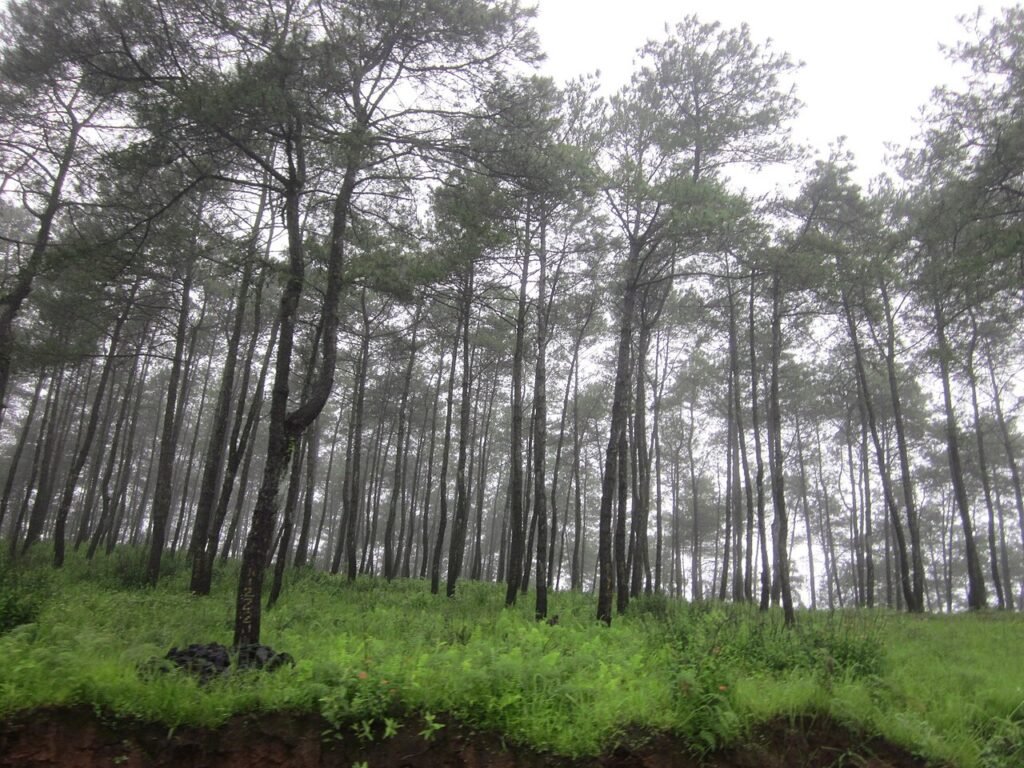
Assam Forest Cover Decline and Unclassed State Forests
Open this topic as a separate page, with its MCQs →
Syllabus Mapping
- Prelims: GS Paper I (General issues on Environment, ecology and climate change; Current events of State, National and International importance).
- Mains: GS Paper III (Conservation, environmental pollution and degradation, environmental impact assessment); GS Paper V (Assam: environment, forests and natural resources; Sixth Schedule and autonomous councils).
Why in News? The Assam government has filed an affidavit before the National Green Tribunal (NGT). It is about the forest loss shown in the India State of Forest Report (ISFR) 2023. It blames jhum farming, encroachment on inter-State borders and the use of forest land for projects. An amicus curiae report to the NGT has pointed to weak control over Unclassed State Forests and unsettled inter-State boundaries.
Current Context (The Trigger)
- Loss admitted: The State admits that 86.66 sq km of forest cover was lost from 2021 to 2023. The ISFR 2023 records this fall inside the Recorded Forest Area (RFA), which for Assam is mapped as the “Green Wash”.
- Long-term gain claimed: The government says the long-term trend is still positive. It points to a net gain of 748.65 sq km in forest cover since 2013.
- Dima Hasao hit hardest: The State blames traditional jhum (shifting) cultivation in Unclassed State Forest (USF) areas. The Forest Department does not directly administer these areas. The district also saw 95.55 sq km of forest land diverted for development between 2020 and 2025.
- Border districts: Cachar and Hailakandi each lost more than 16 sq km. The State blames encroachment from the Mizoram side of the border. In Chirang, it names encroachment by local communities.
- Regeneration argument: The State says more than 100 sq km was freed of encroachment but has not yet regrown. It wants this delay counted when the real loss is assessed.
- Amicus recommendations: The amicus wants a joint committee to study border encroachment. It would have the Union Environment Ministry, Survey of India and the Forest Departments of Assam and Mizoram. The amicus also asks for a USF policy made with local autonomous councils, closer checks on compensatory afforestation and livelihood support for jhum families.
Core Concepts & Static GK
- Forest cover: The ISFR counts all land of at least one hectare with tree canopy of at least 10 per cent as forest cover. Ownership and legal status do not matter. So an orchard or a plantation can count as forest cover.
- Tree cover: This means tree patches outside recorded forest areas that are smaller than one hectare, including scattered trees. The FSI estimates it by sampling, not by satellite mapping.
- Recorded Forest Area (RFA): This is land recorded in government records as Reserved Forest or Protected Forest. In the ISFR 2019, FSI noted that Assam had not supplied a digitised RFA boundary. It used a “Green Wash” of 27,547.84 sq km from Survey of India toposheets as a stand-in.
- Unclassed State Forest (USF): In Assam, this is the part of the recorded forest that is not Reserved Forest. In the ISFR 2019, Assam reported 26,832 sq km of RFA. Of this, 17,864 sq km was Reserved Forest and 8,968 sq km was Unclassed Forest. That is 33.42 per cent of the RFA.
- Jhum: Jhum is the local name for shifting cultivation. Patches of forest are cleared, farmed for some years and then left to regrow. The State’s affidavit names it as the main driver of loss in Dima Hasao.
- Compensatory afforestation: When forest land is diverted for a project, the user agency pays for planting trees elsewhere. The money goes into funds set up under the Compensatory Afforestation Fund (CAF) Act, 2016.
Constitutional & Legal Framework
- Godavarman definition: In T.N. Godavarman Thirumulpad (1996), the Supreme Court said “forest” must be read in its dictionary meaning. It also covers any area recorded as forest in government records, whatever its ownership. This is why unclassed forests still matter in law.
- 2024 interim order: On 19 February 2024, the Supreme Court told States and Union Territories to follow the Godavarman definition. This holds until they finish recording forest land under Rule 16 of the Van (Sanrakshan Evam Samvardhan) Rules, 2023.
- Sixth Schedule: The Sixth Schedule, linked to Articles 244(2) and 275(1), sets up autonomous district councils in tribal areas of Assam, Meghalaya, Tripura and Mizoram. Under its paragraph 3(1)(b), a district council can make laws on the management of any forest that is not a reserved forest.
- Dima Hasao council: The North Cachar Hills District Council was set up in April 1952 under Article 244(2) read with the Sixth Schedule. The district was renamed Dima Hasao on 30 March 2010, and the body now calls itself the Dima Hasao Autonomous Council.
- CAF Act, 2016: The Act creates a National Fund under the Public Account of India and a State Fund in each State or Union Territory. Both funds are non-lapsable and earn interest.
Institutional Machinery
- National Green Tribunal: The NGT took up the matter on its own (suo motu) after a media report based on the ISFR 2023. Its order of 22 January 2025 came from a bench led by Chairperson Justice Prakash Shrivastava. It made the Union Environment Secretary a party to the case. The forest chiefs (PCCFs) of Assam, Arunachal Pradesh, Tripura and Mizoram were also made parties.
- Amicus curiae: This means a friend of the court, an independent person who helps the tribunal. Here the amicus gave views on USF management and boundary disputes.
- Forest Survey of India (FSI): The FSI, under the Union Environment Ministry, prepares the ISFR every two years. The editorial wants it to add a decadal change analysis, so that short dips can be told apart from long trends.
- CAMPA authorities: The National Fund is managed by the National Compensatory Afforestation Fund Management and Planning Authority (CAMPA). Each State Fund is managed by the State CAMPA.
Reports, Indices & Data
- ISFR 2023: Union Environment Minister Bhupender Yadav released the report on 21 December 2024 at the Forest Research Institute, Dehradun.
- All-India picture: Total forest and tree cover is 8,27,357 sq km, or 25.17 per cent of India’s area. It rose by 1,445 sq km over the 2021 assessment.
- Assam picture: PTI’s report on the ISFR 2023 gives Assam a forest cover of 28,313.55 sq km, or 36.10 per cent of the State’s area. The NGT noted that canopy density inside Assam’s recorded forests had degraded over 1,699 sq km.
- Two different numbers: Reports speak of 83.92 sq km and 86.66 sq km. The first is the decrease reported for Assam as a whole, across all land. The second is the fall in forest cover inside the RFA/Green Wash only.
Assam & Northeast Linkages
- Assam-Mizoram border: Mizoram bases its boundary claim on the inner line notified in 1875 for the southern frontier of Cachar. Assam relies on the 1933 demarcation. Cachar and Hailakandi, two districts where the State reports forest loss, lie along this border.
- 2021 clash: On 26 July 2021, the police forces of the two States clashed at Lailapur in Cachar and Vairengte in Mizoram. Six Assam Police personnel were killed.
- Wider Northeast: The NGT case also covers Arunachal Pradesh, Tripura and Mizoram, so the issue is regional, not only Assam’s.
Prelims Trap Zones (Watch out for)
- Number Trap: 86.66 sq km is the fall in forest cover inside the Recorded Forest Area. 83.92 sq km is the decrease reported for the whole State. Do not swap them.
- Period Trap: The loss is for 2021 to 2023. The 748.65 sq km gain is counted since 2013.
- Control Trap: USFs are not run directly by the Forest Department. They are not Reserved Forests either.
- Definition Trap: Forest cover needs at least one hectare and at least 10 per cent canopy. Tree cover is made of patches smaller than one hectare outside recorded forest areas.
- District Trap: Dima Hasao is linked to jhum in USFs, Cachar and Hailakandi to Mizoram border encroachment, and Chirang to encroachment by local communities.
- Schedule Trap: Forest powers of autonomous councils come from paragraph 3 of the Sixth Schedule, not the Fifth Schedule. They cover forests that are not reserved forests.
Introduction
The ISFR 2023 shows that Assam lost 86.66 sq km of forest cover inside its recorded forests from 2021 to 2023. The State replies that it has gained 748.65 sq km since 2013. Now before the National Green Tribunal, the case shows that counting forest is easy but managing land that no single agency controls is hard.
Underlying Drivers of the Decline
- Jhum in Dima Hasao: The State says traditional shifting cultivation in USF areas caused much of the loss in Dima Hasao, the worst-hit district. Cleared plots show up as lost canopy until they regrow.
- Diversion for development: Dima Hasao saw 95.55 sq km of forest land diverted for development projects between 2020 and 2025. This is a planned, legal loss, unlike encroachment.
- Cross-border encroachment: Cachar and Hailakandi each lost more than 16 sq km. The State blames settlers coming in from the Mizoram side.
- Local encroachment: In Chirang, the State names encroachment by local communities as a major factor.
- Slow regrowth: More than 100 sq km freed of encroachment has not regenerated yet. Satellite maps count such land as non-forest until its canopy returns.
- Measurement rule: The ISFR counts land with at least 10 per cent canopy as forest, whatever its status. A fall can therefore come from thinning canopy as well as from clearing.
Governance Gaps Behind the Numbers
- Weak control over USFs: The amicus found that the State has little power to manage Unclassed State Forests. In the ISFR 2019, a third of Assam’s recorded forest, 8,968 sq km, was in this category.
- Unresolved boundaries: Disputes between States make it hard to monitor land or act on encroachment. The Assam-Mizoram dispute rests on two colonial-era lines, of 1875 and 1933.
- Missing RFA map: In the ISFR 2019, FSI noted that Assam had not given it a digitised boundary of its recorded forests. FSI used a Green Wash from Survey of India toposheets instead, and the ISFR 2023 still reports Assam under the RFA/Green Wash category.
- Council areas: Dima Hasao is a Sixth Schedule district, and its council can make laws on forests that are not reserved forests. The Forest Department cannot act alone there, so the amicus wants any USF policy made with the councils.
- Numerical targets: The amicus wants compensatory afforestation judged by how many native saplings survive and how far the ecosystem recovers. Merely meeting planting targets is not enough.
- Data limits: FSI reports come every two years. The editorial wants a decadal change analysis added, to tell temporary dips from lasting trends.
Challenges
- Livelihood dependence: Families practising jhum depend on it for food. Stopping it without alternatives would hurt them, so the amicus stresses sustainable farming and other livelihoods.
- Competing development needs: Roads, power lines and other projects keep asking for forest land. The 95.55 sq km diversion in Dima Hasao between 2020 and 2025 shows the scale.
- Inter-State tension: On 26 July 2021, a clash at Lailapur and Vairengte killed six Assam Police personnel. It shows how a boundary issue can turn violent. A joint forest survey with Mizoram will need trust on both sides.
- Dispute over the baseline: The State argues that a long-term gain of 748.65 sq km outweighs the recent loss. Critics can reply that the loss is inside legally recorded forest, which is the better-protected land.
- Legal uncertainty: Under the Supreme Court’s order of 19 February 2024, States must use the Godavarman definition until their forest records are complete. Until then, agencies can read the status of unclassed land differently.
- Quality of compensation: Planting trees elsewhere does not replace an old natural forest. Without survival checks, compensatory planting may exist only on paper.
Way Ahead
- Joint border committee: The Union Environment Ministry, Survey of India and the Forest Departments of Assam and Mizoram should jointly examine border encroachment. The committee should then propose corrective steps, as the amicus suggests.
- USF policy: Assam should frame a dedicated policy to bring USFs under sustainable management. It should be made together with the autonomous councils, which hold law-making power over non-reserved forests.
- Better compensatory afforestation: The State CAMPA should track plantation survival and prefer native species. Success should be measured by restoration, not by planting targets.
- Jhum support: The Agriculture and Forest departments should offer sustainable farming methods and alternative livelihoods to jhum families. This lowers the pressure to clear fresh forest.
- Technology monitoring: Satellite and field monitoring should flag clearing early. A digitised RFA boundary given to FSI would show exactly where loss happens.
- Decadal analysis: FSI should add decadal change assessments to its two-yearly reports. This would separate short dips from long-term trends.
Conclusion
The numbers show a long-term gain, but the recent loss inside recorded forests points to land that nobody fully manages. Assam will protect its forests only if Unclassed State Forests get a clear manager, boundary disputes are settled and hill communities share the work.
Asked in APSC
- APSC Prelims 2025: (answer in the MCQs below)
According to the India State of Forest Report, 2023, which North-Eastern State has the highest percentage of forest cover in relation to its total geographical area?- (A) Manipur
- (B) Assam
- (C) Mizoram
- (D) Arunachal Pradesh
- APSC Prelims 2025: (answer in the MCQs below)
With reference to the forest cover of India, consider the following statements:
1. Madhya Pradesh has the largest forest cover in terms of area.
2. Mizoram has more than 80% forest cover.
3. India State of Forest Report (ISFR), 2023 reports that India’s total forest cover is about 21.76% of the country’s total geographical area.
4. India’s forest cover is unevenly distributed across States.
Select the correct answer using the codes given below.- (A) 1, 2, 3 and 4
- (B) 1, 3 and 4 only
- (C) 2 and 4 only
- (D) 2, 3 and 4 only
All 500 APSC Prelims PYQs of CCE 2020 to 2025, with answers and explanations: practise free in the PYQ Explorer
Eco-Sensitive Zone around Bherjan-Borajan-Padumoni Wildlife Sanctuary
Open this topic as a separate page, with its MCQs →
Syllabus Mapping
- Prelims: GS Paper I (General issues on Environment and ecology, biodiversity; Current events of State/National importance).
- Mains: GS Paper III (Conservation, environmental pollution and degradation, environmental impact assessment); GS Paper V (Environment and biodiversity of Assam).
Why in News? On 4 November 2026, the Union Environment Ministry issued a draft notification. It proposes a uniform one-kilometre Eco-Sensitive Zone (ESZ) around the Bherjan-Borajan-Padumoni Wildlife Sanctuary in Tinsukia district. It has invited objections and suggestions from people likely to be affected.

Current Context (The Trigger)
- The proposal: The Centre proposed a uniform one-kilometre ESZ around the sanctuary in Tinsukia district. The aim is to protect the area’s biodiversity and regulate development around the protected area.
- Legal route: The Ministry of Environment, Forest and Climate Change (MoEFCC) issued a draft notification under the Environment (Protection) Act, 1986. It asked the public to send objections and suggestions.
- Balance sought: Officials said the plan tries to balance conservation with the livelihood needs of people living around the sanctuary. Development is to stay within a regulated ecological framework.
- Zonal Master Plan: Assam must prepare a Zonal Master Plan within two years of the final notification appearing in the official Gazette.
- Land-use rule: The draft says forests, farmland, horticultural areas, parks and recreation spaces should not be turned into large housing, commercial or industrial projects. Some activities for local needs may still be allowed with safeguards and approvals.
- Allowed with approval: These include strengthening existing roads, basic civic facilities, non-polluting small-scale and cottage industries, and local ecotourism amenities such as homestays.
Core Concepts & Static GK
- Eco-Sensitive Zone: An ESZ is an area around a national park or wildlife sanctuary where certain activities are prohibited or regulated. The 2011 guidelines describe it as a “shock absorber” for the protected area.
- Transition idea: The 2011 guidelines also treat an ESZ as a transition zone. It lies between an area of high protection and an area of lesser protection.
- No fixed width: The 2011 guidelines keep the width flexible and specific to each protected area. As a general principle it can go up to 10 km, as provided in the Wildlife Conservation Strategy-2002. The width need not be uniform on all sides.
- Origin of 10 km: The Indian Board for Wildlife adopted the Wildlife Conservation Strategy-2002 on 21 January 2002. Several States objected that a 10 km zone would cover towns and cities.
- Site-specific shift: The National Board for Wildlife decided on 17 March 2005 that ESZ limits should be site specific. It also said ESZ rules should mainly regulate activities rather than ban them.
- Activity classes: The 2011 guidelines prohibit commercial mining, sawmills, polluting industries and major hydroelectric projects. Tree felling and new hotels or resorts are regulated. Ongoing agriculture, rainwater harvesting and organic farming are permitted.
Constitutional & Legal Framework
- Environment (Protection) Act, 1986: The Centre notifies ESZs under Section 3 of the Act read with Rule 5 of the Environment (Protection) Rules, 1986.
- What Rule 5(1) weighs: Before restricting industries in an area, the Centre may consider its biological diversity, pollutant limits and environmentally compatible land use. Nearness to a sanctuary or national park is also a listed factor.
- 2011 guidelines: The Environment Ministry issued the guidelines for declaring ESZs around national parks and sanctuaries on 9 February 2011.
- Supreme Court, 3 June 2022: In the T. N. Godavarman Thirumulpad case, the Court directed a minimum one-kilometre ESZ around every national park and wildlife sanctuary.
- Supreme Court, 26 April 2023: A bench of Justices B. R. Gavai, Vikram Nath and Sanjay Karol modified this order on the Union’s application. The one-kilometre rule does not apply where MoEFCC has issued a draft or final ESZ notification or has received a proposal. The Court said ESZ areas “cannot be uniform” and will be specific to each protected area.
- Mining: The same order said mining is not permitted inside national parks and sanctuaries or within one kilometre of their boundaries.
- Safeguards in the process: Objections to a draft can be filed within 60 days of its Gazette publication. The 2023 order also said a final notification takes effect only 30 days after issue. Aggrieved persons can approach the Supreme Court directly.
Institutional Machinery
- MoEFCC: The Ministry issues the draft and final notifications after the State sends its proposal.
- State proposal: The State prepares the ESZ proposal and forwards it to MoEFCC for processing and notification.
- Local committee: The 2011 guidelines suggest a committee of the Wildlife Warden, an ecologist, a local self-government official and a Revenue Department official. It suggests the extent of the ESZ and how to manage it.
- Expert Committee: Before a final notification, the proposal goes to an Expert Committee. The Supreme Court noted in 2023 that it is drawn from 13 organisations.
- Monitoring Committee: ESZ notifications set up a monitoring committee. For the ESZ around Orang National Park in Assam, the Deputy Commissioner chairs it.
- Line departments: The Zonal Master Plan is drawn up with several departments. These are environment and forests, agriculture, revenue, tourism, urban development, rural development, irrigation and flood control, and public works.
Assam & Northeast Linkages
- Location: The sanctuary lies in Tinsukia district of Upper Assam.
- Declaration: The State government declared the three forests together as a wildlife sanctuary on 13 October 1999, mainly to protect the region’s primates.
- Three patches: The sanctuary covers 7.21 sq km in three separate forests: Bherjan (1.06 sq km), Borajan (1.76 sq km) and Padumoni (4.39 sq km).
- Forest types: It holds remnants of Assam Valley Tropical Wet Evergreen Forest, Eastern Seasonal Swamp Forest and Assam alluvial plains semi-evergreen forests.
- Plants: Mekai, Morhal, hingori, uriam and tezpat are among the species found here.
- Animals: The hoolock gibbon, pigtailed macaque, Assamese macaque, capped langur, stump-tailed macaque, leopard, golden jackal, wild pig and barking deer live here. Birds include the lesser adjutant stork, crested serpent eagle, hill myna and green magpie.
- Hoolock gibbon: It is the only ape found in India. It is listed in Schedule I of the Wildlife (Protection) Act, 1972, as amended in 2022.
- All five primates protected: All appear in Schedule I of the amended Act. They are the Hoolock Gibbon, Assamese Macaque, Capped Langur, Northern Pig-tailed Macaque and Stump-tailed Macaque.
Prelims Trap Zones (Watch out for)
- Act Trap: The draft ESZ notification is under the Environment (Protection) Act, 1986, not the Wildlife (Protection) Act, 1972.
- Who declared it: The State government declared the sanctuary on 13 October 1999. The ESZ is proposed by the Centre.
- Width Trap: The proposed ESZ is a uniform one kilometre. The 2011 guidelines allow up to 10 km, and the Supreme Court said ESZs are protected-area specific.
- Timeline Trap: The Zonal Master Plan is due within two years of the final notification, not the draft.
- Objection window: Objections to a draft ESZ notification can be filed within 60 days of its Gazette publication, not 30 days. The 30 days is the waiting period before a final notification takes effect.
- Draft is not final: The rules apply only after the final notification is published in the Gazette.
Introduction
The Centre has proposed a uniform one-kilometre Eco-Sensitive Zone around a sanctuary of just 7.21 sq km in Tinsukia. Small forest patches like these sit close to farmland and settlements, so pressure from outside reaches them quickly. The ESZ tests whether Assam can protect its primates without shutting out the people who live next to them.
Why an ESZ is Needed
- Tiny, split habitat: The sanctuary is only 7.21 sq km and is broken into three patches. Pressure on the edges can quickly harm the whole population.
- Primate protection: The sanctuary was created mainly to protect primates. It holds the hoolock gibbon and four other primate species, all listed in Schedule I of the Wildlife (Protection) Act, 1972.
- Buffer function: The zone will work as a protective ring. Industry, commerce, tourism and changes in land use there will be banned or controlled to reduce harm to the sanctuary.
- Rare forest types: Remnants of Assam Valley Tropical Wet Evergreen Forest and Eastern Seasonal Swamp Forest survive here. These types are hard to replace once cleared.
- Bird habitat: The lesser adjutant stork, hill myna and other birds use the sanctuary. A buffer limits disturbance at its edges.
Features of the Draft Framework
- Uniform width: One kilometre all around gives a simple, clear boundary. It also equals the minimum width the Supreme Court set in June 2022.
- Public consultation: The draft invites objections and suggestions from people likely to be affected.
- Zonal Master Plan: Assam must prepare it within two years of the final notification. It will be made with local communities and departments such as agriculture, revenue, tourism and irrigation and flood control.
- Land-use mapping: The plan will mark forests, farmland, settlements, water bodies and horticultural areas.
- Restoration measures: It will include steps to restore ecology, manage watersheds, conserve groundwater and protect soil and moisture.
- Tourism control: A Tourism Master Plan based on the carrying capacity of the ESZ will govern tourism activities.
Challenges
- Livelihood anxiety: Farmers and small traders near the boundary may fear loss of land use or income. The draft allows activities for local needs only with safeguards and approvals.
- Fragmented forest: Three separate patches mean a one-kilometre ring may still leave gaps for animal movement between them. This is an analysis point, not a figure from the draft.
- Weak enforcement: Rules need staff and regular checks. A monitoring committee can work only if it meets often and acts on violations.
- Plan delay: A two-year window for the Zonal Master Plan can slip if departments do not coordinate.
- Uniform width: The Supreme Court said in 2023 that ESZs are protected-area specific. A single one-kilometre figure may be too thin on some sides and too wide on others.
- Legal clarity: The Supreme Court order of June 2022 was modified in April 2023, so officials and residents need clear guidance on which rules apply.
Way Ahead
- Genuine hearings: The Ministry and the Tinsukia administration should hold village-level hearings and answer objections in writing. This builds trust before the final notification.
- Early master plan: The Assam Forest Department should start the Zonal Master Plan well before the two-year deadline, with a single nodal officer.
- Livelihood support: The State can link ESZ households to existing horticulture schemes, such as the Centrally-sponsored Mission for Integrated Development of Horticulture. Homestays and other ecotourism work can add income for local people.
- Habitat links: The Forest Department should study planting native trees in gaps between Bherjan, Borajan and Padumoni so primates can move safely.
- Monitoring: The monitoring committee should meet regularly and publish a yearly note on violations.
- Review of width: After the first plan, the State should check whether the one-kilometre width protects the gibbon population and revise it if needed. The Supreme Court allows protected-area-specific zones.
Conclusion
The proposed ESZ gives a small but important primate refuge a legal buffer. Its success will depend less on the one-kilometre line. It will depend more on the Zonal Master Plan, honest consultation with nearby villagers and steady enforcement by Assam’s forest staff.
Asked in APSC
- APSC Mains 2025, GS Paper 5 (10 marks): Explain the significance of eco-sensitive zones (ESZs) and animal corridors connecting Kaziranga National Park & Tiger Reserve to the Karbi Anglong Hills.
Traffic Congestion and the Fuel Wastage Bill
Open this topic as a separate page, with its MCQs →
Syllabus Mapping
- Prelims: GS Paper I (Current events of State/National importance; General issues on Environment and Ecology; Economic and Social Development).
- Mains: GS Paper III (Indian Economy: infrastructure, energy; Environment: pollution; Science and Technology: electric mobility); GS Paper V (Assam syllabus: urban issues and infrastructure in Assam).
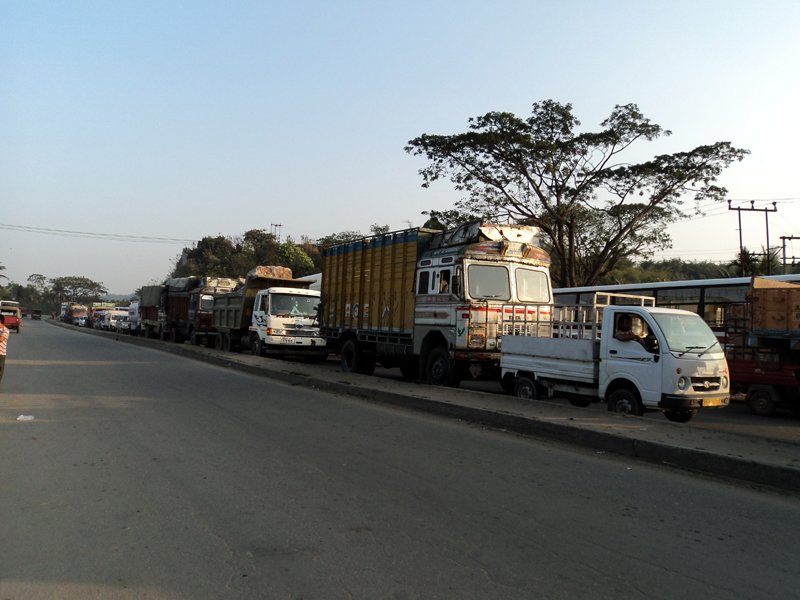
Why in News? An opinion article by policy advisor Narendra Sarawgi in the Assam Tribune (5 November 2026) argues that traffic jams waste a large amount of fuel every year. He estimates the fuel loss at Rs 1.1-1.65 lakh crore and the wider cost at nearly Rs 10.4 lakh crore. He asks for a national mission on traffic efficiency.
Current Context (The Trigger)
- Vehicle fleet: According to the writer, India had more than 41.5 crore registered vehicles by early 2026.
- Congestion ranking: The writer quotes the TomTom Traffic Index 2025. It places India fifth among the world’s most congested countries and second in Asia, with an average congestion level of 37.4 percent.
- City data: The writer says only Mexico City is more gridlocked than Bengaluru. Bengaluru commuters lose 168 hours a year to rush-hour traffic.
- Fuel waste estimate: The writer takes transport fuel use of about 141 billion litres in 2024-25. It covers 40 million tonnes of petrol and 73 million tonnes of diesel, citing PPAC. He assumes 8 to 12 percent is wasted in crawling and idling. That gives 11 to 17 billion litres a year, worth Rs 1.1-1.65 lakh crore.
- Wider cost: The writer uses a rule of thumb of about 3 percent of GDP, cited from a Centre for Science and Environment report. He arrives at nearly Rs 10.4 lakh crore and admits this is not a ground-up study.
- No official audit: The writer states that no official audit gives the national fuel or total bill. All these figures are his estimates.
Core Concepts & Static GK
- Traffic congestion: Congestion means traffic demand above road capacity, so speeds fall and journey times rise. Vehicles then burn fuel while moving slowly or standing still.
- Idling loss: An engine that is on but not moving uses fuel for zero output. The writer cites CSIR-CRRI (Central Road Research Institute) idling data. A two-wheeler uses about 0.14 litres an hour. A three-wheeler uses 0.24, a car about 0.6 and a bus close to 0.9.
- Bundled cost versus fuel cost: The Boston Consulting Group (BCG) figure of Rs 1.47 lakh crore for four metros is a bundled cost. It adds up fuel, lost time and productivity, pollution and accidents. The writer says fuel alone would be about Rs 25,000 to Rs 40,000 crore.
- Oil import dependence: India buys most of its crude oil from abroad. Petroleum Planning and Analysis Cell (PPAC) data for 2024-25 show import dependence of 88.2 per cent and a crude import bill of about $137 billion.
- Congestion pricing: This is a charge on vehicles entering a busy zone at peak hours. London began central-zone charging on 17 February 2003 with a daily fee of 5 pounds.
- Energy security: It means reliable and affordable energy supply. The writer argues that lower avoidable fuel use reduces the import bill and the exposure to oil-price shocks.
Institutional Machinery
- PPAC: The Petroleum Planning and Analysis Cell works under the Oil Ministry. It publishes data on petroleum consumption, production and imports.
- Ministry of Heavy Industries: It runs the PM E-DRIVE scheme for electric vehicles.
- Ministry of Housing and Urban Affairs (MoHUA): It ran the Smart Cities Mission. Its predecessor, the Ministry of Urban Development, framed the National Urban Transport Policy.
- Road Transport Ministry: The writer says it has a newer Rs 2 lakh crore plan to build 10,000 km of ring roads and bypasses in 500 cities.
Schemes & Initiatives
- National Urban Transport Policy (NUTP), 2006: The Union Cabinet approved it in April 2006. It aims at safe, affordable, quick, comfortable, reliable and sustainable urban transport, with people rather than vehicles as the focus.
- Unified Metropolitan Transport Authority (UMTA): NUTP recommends one coordinating body for cities with a population of ten lakh or more.
- PM E-DRIVE: The Union Cabinet approved it in September 2024 with an outlay of Rs 10,900 crore. It supports electric two-wheelers, three-wheelers, e-buses and charging points, and it replaced the FAME scheme. A 2025 notification extended it to 31 March 2028 within the same outlay.
- Smart Cities Mission: The Prime Minister launched it on 25 June 2015 for 100 cities. Its deadline was extended to 31 March 2025.
Reports, Indices & Data
- TomTom Traffic Index 2025: The writer uses it for India’s rank (fifth most congested country) and the congestion level of 37.4 percent.
- BCG study for Uber, 2018: It put the yearly cost of congestion in Delhi, Mumbai, Bengaluru and Kolkata at roughly Rs 1.47 lakh crore. Peak-hour congestion averaged 149 percent, so a rush-hour trip took 2.5 times longer than the same trip on a clear road.
- Economic Survey 2025-26: The writer says it flagged congestion pricing and parking reform.
- PPAC, 2024-25: Crude import dependence rose to 88.2 per cent and the crude import bill rose 2.7 per cent to about $137 billion.
Assam & Northeast Linkages
- Op-ed has no Assam data: The article gives national and metro figures only. The Guwahati points below come from separate sources.
- Vehicle mix in Guwahati: An IIT Guwahati study submitted in March 2025 found that two-wheelers make up 50% of registered vehicles and petrol four-wheelers 27%.
- Slow traffic: A 2016 Ministry of Urban Development document recorded an average traffic speed of 20 km/h in Guwahati.
- Public buses: The Assam State Transport Corporation (ASTC) runs 256 electric and 100 CNG buses in the city. An ASTC official put ridership at about 100,000 passengers on a working day.
- Air quality: The IQAir World Air Quality Report 2023 ranked Guwahati the world’s second most polluted city, after Begusarai. In the IIT Guwahati study, two-wheelers produced 52% of the city’s PM2.5 emissions.
Prelims Trap Zones (Watch out for)
- Bundled figure trap: Rs 1.47 lakh crore is the BCG estimate for four metros and covers fuel, time, pollution and accidents. It is not a fuel bill. The writer puts the fuel part at Rs 25,000 to Rs 40,000 crore.
- Four-metro trap: The BCG study covers Delhi, Mumbai, Bengaluru and Kolkata. Chennai is not among them. It was done in 2018 for Uber.
- Estimate trap: The Rs 1.1-1.65 lakh crore fuel loss and the Rs 10.4 lakh crore total are the writer’s estimates. They are not official government figures.
- Import dependence trap: The op-ed writer says India imports “close to 89 per cent” of its crude. Official PPAC data give 88.2 per cent for 2024-25. Always match a figure with its source and year.
- Ministry trap: PM E-DRIVE is a Ministry of Heavy Industries scheme. It is not run by the Road Transport Ministry or MoHUA.
- Population trap: NUTP 2006 recommends UMTAs for cities of ten lakh or more, not one lakh.
Introduction
A writer in the Assam Tribune on 5 November 2026 estimates that India burns 11 to 17 billion litres of fuel a year in jams. This fuel is worth Rs 1.1-1.65 lakh crore. This is costly because India imports most of its crude oil, so every wasted litre adds to the import bill and to exposure to oil-price shocks. Cities like Guwahati, where speeds are low and two-wheelers dominate, face the same problem.
Scale and Cost of Congestion
- Large fleet: The writer says India’s registered vehicles passed 41.5 crore by early 2026. When vehicle numbers grow faster than road space, jams spread across cities.
- Time lost: The writer says Bengaluru commuters lose 168 hours a year in rush-hour traffic. That is nearly a working week of lost work and rest.
- Metro cost: The 2018 BCG study estimated a yearly loss of roughly Rs 1.47 lakh crore in four metros. A 2023 study, as the writer cites it, put Bengaluru’s own loss at nearly Rs 20,000 crore.
- Fuel burnt for nothing: The writer assumes 8 to 12 percent of 141 billion litres is wasted. He says a former Delhi official separately estimated that metro cities waste about 10 percent of their fuel.
- Total cost: At about 3 percent of the Rs 346.36 lakh crore nominal GDP for 2025-26, the writer reaches nearly Rs 10.4 lakh crore. Fuel is then about an eighth of the total, which matches the four-city pattern.
- Caution on estimates: The writer himself calls the 3 percent figure a rule of thumb and notes that no official audit exists. Students should present these numbers as estimates.
Impact on Energy Security, Health and Equity
- Import pressure: PPAC data show India paid about $137 billion for crude imports in 2024-25. Avoidable fuel use adds to this bill and drains foreign exchange.
- Price shocks: A country that imports most of its crude feels global price rises quickly. Cutting waste is one of the few steps that works at once and needs no new supply.
- Costlier goods: Diesel trucks and buses waste the most expensive fuel. The writer says this raises the delivered cost of food and medicines.
- Health cost: Idling engines burn fuel incompletely and emit more PM2.5 and nitrogen oxides (NOx). This worsens winter smog and breathing illness.
- Vehicle type matters: CSIR-CRRI idling data show a bus burns about 0.9 litres an hour against 0.14 for a two-wheeler. Millions of vehicles idling at signals add up quickly.
- Opportunity cost: The writer notes that the fuel-only estimate of around Rs 1.38 lakh crore is close to the Rs 1.39 lakh crore education budget for 2026-27. The money could fund schools and clinics instead.
Government & Statutory Measures
| Level | Initiative | Purpose & Impact |
|---|---|---|
| National | National Urban Transport Policy, 2006 | Sets the aim of safe, affordable and sustainable urban transport. It recommends UMTAs in cities of ten lakh or more. Its impact is limited because many cities have not set up strong UMTAs. |
| National | Smart Cities Mission (launched 25 June 2015) | Funded area-based and pan-city projects in 100 cities, including mobility works. Its deadline was extended to 31 March 2025. |
| National | PM E-DRIVE (outlay Rs 10,900 crore) | Supports electric two-wheelers, three-wheelers and e-buses with charging points. It cuts fuel use and tailpipe pollution. |
| National | Economic Survey 2025-26 advice (as the writer reports) | Flags congestion pricing and parking reform as tools to ease traffic without building new roads. |
| National | Rs 2 lakh crore ring road and bypass plan (as the writer reports) | Aims at 10,000 km of ring roads and bypasses in 500 cities to take through traffic out of city centres. |
| Assam | ASTC electric and CNG city buses in Guwahati | 256 electric and 100 CNG buses carry about 100,000 passengers on a working day, as per an ASTC official. This reduces private vehicle use. |
Challenges
- No reliable national audit: The writer says no official audit gives the fuel or total cost of congestion. Without such data, policies rest on rough estimates and are hard to target.
- Car-based growth: Critics say NUTP’s aim of putting people, not vehicles, first has not been met. In Guwahati, two-wheelers are 50% of registered vehicles while public transport use has barely changed.
- Weak coordination: Many agencies handle roads, buses, parking and signals separately. UMTAs were meant to join them but exist in only some cities.
- Slow, costly construction: Ring roads and expressways take years and heavy funds. The writer notes that cheaper fixes like synchronised signals and bus lanes act faster.
- Battery import risk: The writer warns that more electric vehicles mean bigger bills for imported batteries. India needs large-scale battery manufacturing at home.
- Public acceptance: Congestion charges need good bus services first. Without them, commuters see the charge as a burden, not a choice.
Way Ahead
- Official fuel audit: The Oil Ministry, PPAC and the Road Transport Ministry should jointly measure fuel lost to idling. A sound national number would let policy target the worst corridors.
- Congestion pricing and parking reform: Large cities should test peak-hour charges and priced parking, as the Economic Survey 2025-26 flagged. Transport for London reported that traffic delays in its charging zone stayed about 30 percent lower after the first year.
- Smart signals: City traffic police should synchronise signals and use adaptive control, as Seoul has done according to the writer. This keeps traffic moving without new concrete.
- Strong public transport: MoHUA and state governments should add buses and bus lanes, because a single full bus can remove up to 40 private cars, the writer says. Guwahati’s ASTC fleet can be scaled up.
- Empower UMTAs: Million-plus cities, including Guwahati, should set up UMTAs with real powers over routes, fares and parking, as NUTP 2006 intended.
- Faster EV shift with local batteries: The Ministry of Heavy Industries should link PM E-DRIVE support to domestic battery production. This way, cleaner transport does not create a new import problem.
- Switch-off campaigns: Traffic departments can run “engine off at red lights” drives. The writer calls such steps cheap ways to cut idling losses without years of construction.
Conclusion
The exact size of the fuel bill is uncertain, since the figures are the writer’s estimates and not an official audit. Even so, the direction is clear: wasted fuel deepens India’s oil import problem and harms health. A mix of better data, priced road space, strong public transport and domestic battery capacity offers the surest way to save fuel in cities such as Guwahati.
Critical Minerals Processing Scheme for Lithium and Nickel
Open this topic as a separate page, with its MCQs →
Syllabus Mapping
- Prelims: GS Paper I (Current events of State/National importance; Economic and Social Development; General issues on Environment ecology and Climate Change).
- Mains: GS Paper IV (Technology, Economic Development); GS Paper V (Economic Development and Geography of Assam, for the mineral linkage).
Why in News? On Wednesday, 4 November 2026, the Union Cabinet under Prime Minister Narendra Modi approved a capital support scheme for processing lithium and nickel. The outlay is Rs 2,814 crore till 2030-31. It sits under the National Critical Mineral Mission.
Current Context (The Trigger)
- Outlay and period: The scheme has an outlay of Rs 2,814 crore. It will run for five years, from 2026-27 to 2030-31.
- Capital subsidy: The Centre will pay a capital subsidy equal to 30 per cent of the eligible investment. This helps set up four processing plants, two for lithium and two for nickel.
- Caps per beneficiary: Support is capped at Rs 500 crore for each lithium beneficiary and Rs 900 crore for each nickel beneficiary.
- Target products: The scheme aims to turn lithium and nickel ores and intermediate products into high purity compounds. Cobalt should also come out as a by-product when nickel is processed.
- End-use sectors: The processed materials will serve defence, speciality steel, electronics, electric mobility and Battery Energy Storage Systems (BESS).
- Stated reason: The official statement says processing happens in only a few places in the world. This leaves supply chains open to geopolitical tension, price swings and export curbs.
Core Concepts & Static GK
- Critical minerals: These are minerals that are vital for the economy and national security, but whose supply is risky because it is concentrated or hard to replace. The news report calls them key to clean energy and a net-zero economy.
- Beneficiation: This means improving the quality of an ore, for example by removing waste rock, before it is refined. The official statement says India’s beneficiation and processing base is still at an early stage.
- Processing or refining: This step converts ore or intermediates into high purity compounds that industry can use. India today buys most such refined, very pure materials from abroad.
- Capex support: Capex means capital expenditure, the money spent on plant and machinery. A capex subsidy cuts the upfront cost, which the statement names as a main hurdle, along with limited technology and weak access to raw material.
- By-product recovery: Cobalt does not get a plant of its own under this scheme. It is expected to be recovered while nickel is processed.
- Recycling as a source: Critical minerals can also be recovered from end-of-life products such as battery waste and e-waste. The National Critical Mineral Mission (NCMM) covers this part of the value chain.
Constitutional & Legal Framework
- MMDR Amendment, 2023: The Mines and Minerals (Development and Regulation) Amendment Act, 2023 placed 24 critical and strategic minerals in Part D. This is in the First Schedule of the MMDR Act, 1957.
- Auction power: The amendment lets the Central Government alone auction concessions for these minerals, while the revenue goes to the State concerned. The first tranche of 20 blocks was launched on 29 November 2023.
- Lithium moved out of the atomic list: The same amendment removed six minerals, including lithium, from the list of 12 atomic minerals in Part B of the First Schedule. The other five are beryllium, titanium, niobium, tantalum and zirconium.
Institutional Machinery
- Ministry of Mines: It runs the National Critical Mineral Mission and released India’s first critical minerals list in June 2023.
- Geological Survey of India (GSI): It carried out 368 critical mineral exploration projects in three years. It had 195 projects under way in 2024-25 and planned 227 for 2025-26.
- KABIL: Khanij Bidesh India Limited is a joint venture of National Aluminium Company Limited (NALCO), Hindustan Copper Limited (HCL) and Mineral Exploration and Consultancy Limited (MECL). It acquires critical mineral assets abroad.
- Centre of Excellence for Critical Minerals: The 2023 report proposed this centre in the Ministry of Mines. It would update India’s list, preferably every three years.
Schemes & Initiatives
- National Critical Mineral Mission (NCMM): The Cabinet approved it on 29 January 2025. Government expenditure is Rs 16,300 crore, and public sector units are expected to invest Rs 18,000 crore. The total is Rs 34,300 crore over seven years.
- Recycling incentive scheme: On 3 September 2025 the Cabinet approved an incentive scheme of Rs 1,500 crore for critical mineral recycling. It targets at least 270 kilotonnes of recycling capacity a year.
- S&T-PRISM: The Ministry of Mines launched this programme in 2023. It funds start-ups and Micro, Small and Medium Enterprises (MSMEs) to take research to the market.
- Customs duty relief: The Union Budget 2024-25 removed customs duties on most critical minerals.
Reports, Indices & Data
- Critical Minerals for India: The Ministry of Mines released this report with a list of 30 critical minerals on 28 June 2023. It was the first such list for India.
- Committee origin: The Ministry set up a committee on 1 November 2022 to identify critical minerals. Its work led to the list of 30.
- Auction record: The Ministry of Mines had auctioned 24 blocks of strategic minerals by the time the NCMM was approved in January 2025.
Assam & Northeast Linkages
- Rare earths in Assam: GSI has made an early-stage (G3 level) estimate of 28.64 million tonnes of Rare Earth Element (REE) resource in the Jashora Alkaline Complex of Karbi Anglong. This was reported in 2025.
- Jashora and Samchampi: GSI surveys found REE concentrations of 1,000 to 5,000 ppm (parts per million) in these two alkaline complexes of Assam.
- Exploration in the region: Between 2015 and 2024, GSI ran more than 200 mineral exploration projects in the Northeast. It marked out 38 potential blocks across Arunachal Pradesh, Assam, Meghalaya and Nagaland.
- No site named yet: The news report on the new scheme does not say where the four plants will be built. Any Assam link to the scheme is therefore not yet announced.
Prelims Trap Zones (Watch out for)
- Swapped caps: The cap is Rs 500 crore for lithium and Rs 900 crore for nickel. The reverse is a likely wrong option.
- Scheme versus mission: The Rs 2,814 crore scheme is separate from the NCMM, which has government expenditure of Rs 16,300 crore. The scheme is implemented under the mission.
- Cobalt: Cobalt is not one of the four plants. It comes out as a by-product when nickel is processed.
- Subsidy rate: The capital subsidy is 30 per cent of the eligible investment, subject to the caps. It is not a fixed lump sum and not a loan.
- Period: The scheme runs from 2026-27 to 2030-31, which is five years. The NCMM runs for seven years.
- Atomic minerals: Lithium was moved out of the atomic minerals list by the 2023 amendment. It was not added to it.
Introduction
On 4 November 2026 the Union Cabinet cleared Rs 2,814 crore to build lithium and nickel processing plants inside India. India still depends heavily on imports of refined battery materials, even as electric vehicles, grid batteries and defence needs grow. Processing is the weakest link in its critical mineral chain, and this scheme targets it directly.
Importance and Economic Rationale
- Import substitution: India relies heavily on imported refined intermediates and very pure materials, including lithium, nickel and cobalt. Domestic plants would cut this dependence.
- Value addition at home: Processing ore into high purity compounds keeps more of the value inside India. At present much of this value is added abroad.
- Supply chain security: Only a few countries do most of the world’s processing. Export curbs or political tension in those places can halt Indian industry.
- Clean energy goals: Lithium and nickel feed electric vehicles and Battery Energy Storage Systems. Local supply helps India meet its low-carbon plans without being exposed to foreign shocks.
- Defence and steel: The scheme also supports defence and speciality steel, where nickel is an input. This links the scheme to national security and not just to clean energy.
- Cobalt as a bonus: Recovering cobalt during nickel processing gives a third battery metal without a separate mine.
Government Initiatives (National & Assam)
| Level | Initiative | Purpose & Impact |
|---|---|---|
| National | Critical minerals list, June 2023 | Named 30 critical minerals so that policy could focus on them. |
| National | MMDR Amendment Act, 2023 | Let the Centre auction blocks of 24 critical and strategic minerals. 20 blocks were offered in the first tranche. |
| National | National Critical Mineral Mission, January 2025 | Covers exploration, mining, processing and recycling, with Rs 34,300 crore in total outlay and investment. |
| National | Recycling incentive scheme, September 2025 | Rs 1,500 crore to build at least 270 kilotonnes a year of recycling capacity. |
| National | Processing capex scheme, November 2026 | 30 per cent capital subsidy for two lithium and two nickel plants, with Rs 2,814 crore outlay. |
| Northeast | GSI exploration, 2015 to 2024 | Over 200 projects and 38 potential blocks across four Northeast states, including Assam. |
Challenges
- High capital need: Commercial-scale processing plants need large upfront money. The official statement names this as a main barrier, and a 30 per cent subsidy still leaves 70 per cent to the investor.
- Technology gap: Suitable technologies are limited in India. Firms may need foreign partners or must develop processes at home.
- Raw material access: Plants need a steady feed of ores or intermediates. India has limited access to raw material, so supply from abroad must be secured.
- Small scale: Only four plants are supported. This is a beginning and cannot meet the full demand of the battery and steel sectors on its own.
- Overseas dependence for ore: KABIL holds about 15,703 hectares for lithium in Catamarca province, Argentina. Such assets take years to produce and remain exposed to foreign policy risk.
- Environmental cost: Processing plants produce waste and use water and energy. Without strict rules, they can harm nearby land and communities.
Way Ahead
- Link with recycling: The Ministry of Mines should connect the processing plants with the Rs 1,500 crore recycling scheme. Battery scrap can then act as a second feed alongside ore.
- Secure raw material: KABIL and other public and private firms should sign more long-term supply deals with resource-rich countries, building on its lithium blocks in Argentina.
- Use domestic exploration: The Geological Survey of India should speed up its exploration projects, which stood at 227 planned for 2025-26, so that more home-grown ore reaches processors.
- Build technology: The proposed Centre of Excellence for Critical Minerals and S&T-PRISM funding should back pilot processing technology made in India.
- Enforce clean norms: Environment clearances should insist on waste and water management at every plant, with public monitoring near the site.
- Consider the Northeast: The Centre can study Assam and other Northeast states for processing hubs, since GSI has found rare earth and other mineral potential there.
Conclusion
The scheme moves India from digging and importing to processing at home, which is where most value and risk sit. Its success will depend on technology, steady raw material and clean operation of just four plants. If those plants work, India gets a base on which to scale up its battery and clean energy ambitions.
News in Short
- Viability Gap Funding for energy storage: On 4 November, the Union Cabinet approved a Rs 14,500-crore Viability Gap Funding scheme for 92 GWh of grid-scale energy storage. The five-year scheme runs till 2030-31. It covers 30 GWh of battery storage, 60 GWh of pumped storage and 2 GWh of emerging technologies.
- Agnipath changes: The 75 per cent of Agniveers not taken into the regular forces after four years will now get a two-year extension. After it, those who meet the criteria and wish to continue will be enrolled permanently. The scheme began in June 2022 with only 25 per cent of recruits retained in regular service.
- Visa regime: The Union Home Ministry is set to cut main visa categories from 13 to nine and sub-categories from 49 to 23. The change follows a review of the Visa Manual, 2019. Visa application forms will be trimmed by 70 per cent.
- Network Anubhav Platform: The Telecom Regulatory Authority of India (TRAI) launched this map-based dashboard of mobile and broadband speeds and call quality. It combines user test data from the MySpeed and MyCall apps with TRAI’s own drive tests. It also offers a web page for Do Not Disturb services.
- PFRDA pension target: The Pension Fund Regulatory and Development Authority (PFRDA) aims to grow the pension corpus to around Rs 100 lakh crore by 2040. It plans to use banks’ distribution networks and the Unified Payments Interface (UPI) to spread the National Pension System. Its Chairman is S Ramann.
- Manipur peace committees: Manipur has ordered a peace committee in every district, chaired by the District Magistrate. The committees will meet at least once a fortnight. They are only consultative and cannot use powers that the law gives to the district administration or police.
- Ziro chrysanthemums: Farmers in Ziro, Lower Subansiri district of Arunachal Pradesh, sent over 3,000 bunches of chrysanthemums to New Delhi. They grew the flowers with support from the Mission for Integrated Development of Horticulture (MIDH), a Centrally-sponsored scheme.
- Tiwa Autonomous Council: The All Tiwa Students’ Union (ATSU) and other Tiwa groups have stepped up their demand to bring the Council under the Sixth Schedule. They also want fresh delimitation. An Assam notification of 9 August 2024 added villages to the Council area and raised its constituencies from 30 to 38.
APSC Prelims MCQs
Practice questions on the topics above
Topic 1: Assam Forest Cover Decline and Unclassed State Forests
Q1. The Assam government has told the National Green Tribunal about forest loss in the State. Consider the following statements about the district-wise reasons it gave:
(i) Jhum cultivation in Unclassed State Forest areas was blamed for much of the loss in Dima Hasao.
(ii) The decline in Cachar and Hailakandi was linked to encroachment from the Mizoram side of the border.
(iii) The decline in Chirang was linked to forest land diverted for hydropower projects.
Which of the statements given above is/are correct?
- (a) (i) only
- (b) (i) and (ii) only
- (c) (ii) and (iii) only
- (d) (i), (ii) and (iii)
Show answer
Answer: (b) Explanation: Statements (i) and (ii) match the State’s affidavit to the NGT. It blamed traditional jhum farming in Unclassed State Forest areas for much of Dima Hasao’s loss. It linked declines of more than 16 sq km each in Cachar and Hailakandi to encroachment from the Mizoram side of the border. Statement (iii) is wrong because the State named encroachment by local communities in Chirang, not hydropower diversion. The 95.55 sq km diversion for development between 2020 and 2025 was reported for Dima Hasao. So options (a), (c) and (d) fail. Value addition: paragraph 3(1)(b) of the Sixth Schedule lets an autonomous district council make laws on managing any forest that is not a reserved forest.
Q2. Consider the following statements about forest data in the India State of Forest Report (ISFR):
(i) Forest cover includes land of at least one hectare with tree canopy of at least 10 per cent, regardless of ownership.
(ii) Tree cover means tree patches smaller than one hectare outside recorded forest areas.
(iii) The ISFR 2023 was released on 21 December 2024 and shows a fall in India’s total forest and tree cover.
Which of the statements given above is/are NOT correct?
- (a) (i) only
- (b) (ii) only
- (c) (iii) only
- (d) (ii) and (iii) only
Show answer
Answer: (c) Explanation: Statement (iii) is not correct. The ISFR 2023 was released on 21 December 2024 in Dehradun, but it showed a rise, not a fall, in total forest and tree cover. The total is 8,27,357 sq km, which is 25.17 per cent of India’s area and 1,445 sq km more than in 2021. Statements (i) and (ii) are correct, because they give the report’s definitions of forest cover and tree cover. So options (a), (b) and (d) wrongly mark a correct statement as incorrect. Value addition: the Recorded Forest Area covers land recorded as Reserved Forest or Protected Forest. Assam’s fall of 86.66 sq km was measured inside it.
Q3. Match List-I with List-II (as stated in the Assam government’s response to the NGT):
| List-I | List-II |
|---|---|
| a. Dima Hasao | 1. Encroachment by local communities |
| b. Cachar and Hailakandi | 2. Jhum cultivation in Unclassed State Forest areas |
| c. Chirang | 3. Encroachment from the Mizoram side of the border |
| d. Forest land diverted for development in Dima Hasao, 2020 to 2025 | 4. 95.55 sq km |
Select the correct answer using the codes given below:
- (a) a-2, b-3, c-1, d-4
- (b) a-2, b-1, c-3, d-4
- (c) a-3, b-2, c-1, d-4
- (d) a-4, b-3, c-1, d-2
Show answer
Answer: (a) Explanation: Dima Hasao is linked to jhum cultivation in Unclassed State Forest areas (a-2). Cachar and Hailakandi, which each lost more than 16 sq km, are linked to encroachment from the Mizoram side of the border (b-3). Chirang is linked to encroachment by local communities (c-1). The diversion of forest land for development in Dima Hasao between 2020 and 2025 was 95.55 sq km (d-4). Option (b) swaps the Mizoram and local-community causes. Option (c) swaps the causes for Dima Hasao and the Cachar-Hailakandi pair. Option (d) puts the figure against Dima Hasao and the jhum cause against the diversion. Value addition: the State also reports a net gain of 748.65 sq km in forest cover since 2013.
Q4. Which set of bodies did the amicus curiae recommend for a joint committee to investigate border encroachment on forest land between Assam and Mizoram?
- (a) Union Environment Ministry, Survey of India, and the Forest Departments of Assam and Mizoram
- (b) Union Home Ministry, Geological Survey of India, and the Revenue Departments of Assam and Mizoram
- (c) Forest Survey of India, North Eastern Council, and the Governors of Assam and Mizoram
- (d) Union Environment Ministry, Wildlife Institute of India, and the Autonomous Councils of Assam
Show answer
Answer: (a) Explanation: The amicus curiae report to the NGT proposed a joint committee. It would have the Union Environment Ministry, Survey of India and the Forest Departments of Assam and Mizoram. The mix fits the task, because the work needs both forest records and boundary mapping. Option (b) names the Home Ministry, Geological Survey of India and the revenue departments, none of which were proposed. Option (c) brings in the North Eastern Council and the Governors, who were not named. Option (d) adds the Wildlife Institute of India and leaves out Mizoram and Survey of India. Value addition: the 1875 inner line, which Mizoram treats as its boundary with Assam, ran along the southern frontier of Cachar district.
PYQ (APSC Prelims 2025): According to the India State of Forest Report, 2023, which North-Eastern State has the highest percentage of forest cover in relation to its total geographical area?
- (A) Manipur
- (B) Assam
- (C) Mizoram
- (D) Arunachal Pradesh
Show answer
Answer: (C) Explanation: According to the India State of Forest Report (ISFR) 2023, the 18th biennial report of the Forest Survey of India (released by the Ministry of Environment, Forest and Climate Change in December 2024), Mizoram has 85.34% of its geographical area under forest cover. This is the highest among all States (and among North-Eastern States); only the Union Territory of Lakshadweep (91.33%) is higher overall.
Read the full explanation, with all APSC Prelims Environment PYQs
PYQ (APSC Prelims 2025): With reference to the forest cover of India, consider the following statements:
1. Madhya Pradesh has the largest forest cover in terms of area.
2. Mizoram has more than 80% forest cover.
3. India State of Forest Report (ISFR), 2023 reports that India’s total forest cover is about 21.76% of the country’s total geographical area.
4. India’s forest cover is unevenly distributed across States.
Select the correct answer using the codes given below.
- (A) 1, 2, 3 and 4
- (B) 1, 3 and 4 only
- (C) 2 and 4 only
- (D) 2, 3 and 4 only
Show answer
Answer: (A) Explanation: As per the India State of Forest Report (ISFR) 2023, released on 21 December 2024 by the Forest Survey of India, Dehradun:
Read the full explanation, with all APSC Prelims Environment PYQs
Topic 2: Eco-Sensitive Zone around Bherjan-Borajan-Padumoni Wildlife Sanctuary
Q5. The Centre has issued a draft notification for an Eco-Sensitive Zone (ESZ) around the Bherjan-Borajan-Padumoni Wildlife Sanctuary in Tinsukia. Consider the following statements:
(i) The draft proposes a uniform one-kilometre ESZ around the sanctuary.
(ii) The draft is issued under the Wildlife (Protection) Act, 1972.
(iii) Assam must prepare a Zonal Master Plan within two years of the final notification.
Which of the statements given above is/are correct?
- (a) (i) and (iii) only
- (b) (i) and (ii) only
- (c) (ii) and (iii) only
- (d) (i), (ii) and (iii)
Show answer
Answer: (a) Explanation: Statements (i) and (iii) are correct. The draft proposes a uniform one-kilometre zone, and Assam has two years from the final Gazette notification to prepare the Zonal Master Plan. Statement (ii) is wrong. The Ministry of Environment, Forest and Climate Change issued the draft under the Environment (Protection) Act, 1986, not the Wildlife (Protection) Act, 1972. That is why options (b), (c) and (d), which include (ii), are wrong. Value addition: ESZs are notified under Section 3 of the Environment (Protection) Act read with Rule 5 of the Environment (Protection) Rules, 1986. Rule 5(1) lets the Centre weigh an area’s biological diversity and its nearness to a sanctuary or national park.
Q6. Which of the following statements about the Bherjan-Borajan-Padumoni Wildlife Sanctuary is NOT correct?
- (a) It lies in Tinsukia district of Assam.
- (b) The State government declared it a sanctuary on 13 October 1999.
- (c) It was declared a sanctuary under the Environment (Protection) Act, 1986.
- (d) It holds the hoolock gibbon and the capped langur.
Show answer
Answer: (c) Explanation: Statement (c) is not correct. Wildlife sanctuaries are declared under the Wildlife (Protection) Act, 1972. The Environment (Protection) Act, 1986 is the law under which the Centre notifies the Eco-Sensitive Zone around the sanctuary, so the two laws are often confused. Statement (a) is correct because the sanctuary is in Tinsukia district. Statement (b) is correct because the State government declared the three forests a sanctuary on 13 October 1999. Statement (d) is correct because the hoolock gibbon and the capped langur are among its prominent fauna. Value addition: the hoolock gibbon is the only ape found in India. It and the capped langur are both in Schedule I of the Wildlife (Protection) Act, 1972, as amended in 2022.
Q7. In June 2022 the Supreme Court directed a minimum Eco-Sensitive Zone of what width around every national park and wildlife sanctuary?
- (a) 500 metres
- (b) One kilometre
- (c) Five kilometres
- (d) Ten kilometres
Show answer
Answer: (b) Explanation: On 3 June 2022, in the T. N. Godavarman Thirumulpad case, the Court directed a minimum ESZ of one kilometre from the boundary. Option (a) is a trap: 500 metres applied only to subsisting activities around Jamua Ramgarh Wildlife Sanctuary. Option (c) is not a figure in the order. Option (d) is also a trap. The 2011 guidelines and the Wildlife Conservation Strategy-2002 speak of up to 10 km, but that is an upper general principle, not the Court’s minimum. On 26 April 2023 the Court modified the order, so the one-kilometre rule does not apply to ESZs with draft or final notifications. Value addition: the 2023 order bars mining within one kilometre of a sanctuary or national park boundary.
Topic 3: Traffic Congestion and the Fuel Wastage Bill
Q8. A newspaper opinion article estimates the national cost of traffic congestion. Consider the following statements:
(i) The writer assumes that 8 to 12 percent of transport-sector fuel is wasted while vehicles crawl or idle in traffic.
(ii) The Rs 1.47 lakh crore figure of the Boston Consulting Group study for four metros is the cost of wasted fuel alone.
(iii) The writer applies a rule of thumb of about 3 percent of GDP to reach a total cost of nearly Rs 10.4 lakh crore.
Which of the statements given above is/are correct?
- (a) (i) and (ii) only
- (b) (i) and (iii) only
- (c) (ii) and (iii) only
- (d) (i), (ii) and (iii)
Show answer
Answer: (b) Explanation: Statements (i) and (iii) are correct. The writer assumes 8 to 12 percent of transport fuel is wasted in idling, giving 11 to 17 billion litres a year. He also applies a rule of thumb of about 3 percent of GDP to Rs 346.36 lakh crore of nominal GDP for 2025-26, giving nearly Rs 10.4 lakh crore. Statement (ii) is wrong because the Rs 1.47 lakh crore figure is a bundled cost covering fuel, lost productivity, pollution and accidents. The writer puts the fuel part at only Rs 25,000 to Rs 40,000 crore. Value addition: the Boston Consulting Group study was done in 2018 for Uber and covered Delhi, Mumbai, Bengaluru and Kolkata.
Q9. Arrange the following in chronological order, from the earliest to the latest:
(i) Launch of the Smart Cities Mission
(ii) Introduction of central London congestion charging
(iii) Approval of the PM E-DRIVE scheme by the Union Cabinet
(iv) Approval of the National Urban Transport Policy by the Union Cabinet
Select the correct answer using the codes given below:
- (a) (ii), (iv), (i), (iii)
- (b) (iv), (ii), (i), (iii)
- (c) (ii), (iv), (iii), (i)
- (d) (iv), (i), (ii), (iii)
Show answer
Answer: (a) Explanation: The correct order is London congestion charging (17 February 2003), the National Urban Transport Policy (April 2006), the Smart Cities Mission (25 June 2015) and PM E-DRIVE (September 2024). So the sequence is (ii), (iv), (i), (iii). Option (b) wrongly places the national policy before London’s charge. Option (c) puts PM E-DRIVE before the Smart Cities Mission, though the mission is nine years older. Option (d) places the Smart Cities Mission ahead of London’s 2003 charge, which is wrong. Value addition: PM E-DRIVE replaced the FAME scheme, carries an outlay of Rs 10,900 crore and now runs till 31 March 2028.
Q10. Which Union Ministry implements the PM E-DRIVE scheme that supports electric buses, two-wheelers and charging infrastructure?
- (a) Ministry of Road Transport and Highways
- (b) Ministry of Heavy Industries
- (c) Ministry of Housing and Urban Affairs
- (d) Ministry of New and Renewable Energy
Show answer
Answer: (b) Explanation: PM E-DRIVE (Prime Minister Electric Drive Revolution in Innovative Vehicle Enhancement) is a scheme of the Ministry of Heavy Industries. The Union Cabinet approved it in September 2024 with an outlay of Rs 10,900 crore. It supports e-two-wheelers, e-three-wheelers, e-buses and charging points, and it replaced the FAME scheme. The Road Transport Ministry (a) frames vehicle and road rules but does not run this subsidy. MoHUA (c) runs urban missions such as the Smart Cities Mission. The Ministry of New and Renewable Energy (d) deals with renewable power. Value addition: the scheme provides funds for 14,028 e-buses for public transport agencies.
Q11. The National Urban Transport Policy, 2006 recommends the creation of a Unified Metropolitan Transport Authority (UMTA) in cities with a population of:
- (a) one lakh or more
- (b) five lakh or more
- (c) ten lakh or more
- (d) twenty lakh or more
Show answer
Answer: (c) Explanation: The National Urban Transport Policy, 2006 recommends a Unified Metropolitan Transport Authority in cities of ten lakh or more, commonly called million-plus cities. The authority is meant to coordinate roads, buses, metro, parking and traffic planning under one body. Options (a) and (b) set the threshold too low, which would cover many small towns that do not need such a body. Option (d) sets it too high and would leave out several million-plus cities. Value addition: the policy aims at safe, affordable, quick, comfortable, reliable and sustainable urban transport. UMTA creation was one of the reform conditions linked to bus funding under JNNURM.
Topic 4: Critical Minerals Processing Scheme for Lithium and Nickel
Q12. The Union Cabinet approved a capex support scheme for critical mineral processing on 4 November 2026. Consider the following statements:
(i) The scheme has an outlay of Rs 2,814 crore and runs from 2026-27 to 2030-31.
(ii) It gives a 30 per cent capital subsidy on the eligible investment for two lithium and two nickel processing plants.
(iii) The maximum support is Rs 900 crore for each lithium beneficiary.
Which of the statements given above is/are correct?
- (a) (i) and (ii) only
- (b) (ii) and (iii) only
- (c) (i) only
- (d) (i), (ii) and (iii)
Show answer
Answer: (a) Explanation: Statements (i) and (ii) are correct. The scheme has an outlay of Rs 2,814 crore over five years till 2030-31. The 30 per cent capital subsidy supports four plants, two for lithium and two for nickel. Statement (iii) is wrong because the caps are swapped. The cap is Rs 500 crore for each lithium beneficiary and Rs 900 crore for each nickel beneficiary. So option (b) and option (d) fail because they include the wrong statement (iii), and option (c) leaves out the correct statement (ii). Value addition: Cobalt does not get a separate plant under this scheme. It should come out as a by-product when nickel is processed.
Q13. A Geological Survey of India assessment of the Northeast, reported in 2025, noted rare earth element concentrations of 1,000 to 5,000 ppm in which pair of alkaline complexes in Assam?
- (a) Jashora and Samchampi
- (b) Lodoso and Chandardinga
- (c) Jashora and Lodoso
- (d) Samchampi and Chandardinga
Show answer
Answer: (a) Explanation: The GSI assessment, reported on 30 June 2025, names the Jashora and Samchampi alkaline complexes in Assam. Soil and trench sampling there returned rare earth concentrations of 1,000 to 5,000 parts per million. Lodoso is in Papum Pare district of Arunachal Pradesh, not Assam. There GSI found 2.15 million tonnes of rare earth bearing rock. So options (b) and (c) are wrong. Chandardinga in Dhubri district of Assam is an iron ore area, not an alkaline complex, so options (b) and (d) are wrong. Value addition: GSI has made an early-stage (G3 level) estimate of 28.64 million tonnes of rare earth resource in the Jashora Alkaline Complex of Karbi Anglong.
Q14. Which of the following is NOT correct about the Mines and Minerals (Development and Regulation) Amendment Act, 2023?
- (a) It placed 24 critical and strategic minerals in Part D of the First Schedule of the MMDR Act.
- (b) It empowered the Central Government to auction concessions for these minerals.
- (c) The first tranche auction of 20 critical mineral blocks under it was launched on 29 November 2023.
- (d) It newly added lithium to the list of atomic minerals.
Show answer
Answer: (d) Explanation: Option (d) is not correct. The amendment did the opposite. It removed six minerals, including lithium, from the list of 12 atomic minerals in Part B of the First Schedule. Mining of atomic minerals was reserved for public sector bodies, so this change opened lithium to private miners and Central auctions. Options (a), (b) and (c) are correct statements. The Act placed 24 minerals in Part D. It gave the Centre the power to auction them, with revenue going to the States. The first round of 20 blocks began on 29 November 2023. Value addition: The other five minerals removed from the atomic list are beryllium, titanium, niobium, tantalum and zirconium.
Q15. Match List-I with List-II:
| List-I (Item) | List-II (Figure) |
|---|---|
| a. Capital subsidy under the 2026 processing scheme | 1. Rs 900 crore |
| b. Maximum support per lithium beneficiary | 2. Rs 500 crore |
| c. Maximum support per nickel beneficiary | 3. 30 per cent of eligible investment |
| d. Incentive outlay of the 2025 critical mineral recycling scheme | 4. Rs 1,500 crore |
Select the correct answer using the codes given below:
- (a) a-3, b-2, c-1, d-4
- (b) a-3, b-1, c-2, d-4
- (c) a-2, b-3, c-4, d-1
- (d) a-4, b-2, c-1, d-3
Show answer
Answer: (a) Explanation: The capital subsidy is 30 per cent of eligible investment, so a matches 3. Each lithium beneficiary can get at most Rs 500 crore, so b matches 2. Each nickel beneficiary can get at most Rs 900 crore, so c matches 1. The recycling scheme approved on 3 September 2025 carries Rs 1,500 crore of incentives, so d matches 4. Option (b) swaps the two caps, which is the common trap. Options (c) and (d) mix the subsidy rate with rupee amounts. Value addition: The recycling scheme aims for at least 270 kilotonnes of recycling capacity a year.
Mains Answer Writing
One exam-style question with a model answer
Q. Recently, the Assam government told the National Green Tribunal that the State’s forest cover fell between 2021 and 2023, though it has grown since 2013. Discuss the major drivers of forest loss in Assam. Suggest measures to strengthen forest governance in the State. (250 words, 15 marks)
Model answer
Introduction: The India State of Forest Report (ISFR) 2023 shows that forest cover inside Assam’s Recorded Forest Area fell by 86.66 sq km between 2021 and 2023. In an affidavit to the National Green Tribunal (NGT), the State admitted this loss but pointed to a net gain of 748.65 sq km since 2013.
1. Major drivers of forest loss in Assam: pressures on land
| Driver | How it causes loss | Assam example |
|---|---|---|
| Shifting cultivation (jhum) | Farmers clear and burn a patch, farm it briefly and move on. The fallow gap was traditionally 10-20 years. Population pressure has cut it to 5-6 years or even less, so the forest cannot recover. | The State blamed much of the loss in Dima Hasao, the worst-hit district, on jhum in unclassed forests. |
| Encroachment from across State borders | Settlers from a neighbouring State clear forest on disputed land. | Cachar and Hailakandi each lost more than 16 sq km, which the State linked to encroachment from across the Mizoram border. |
| Local encroachment | Settlements and farms slowly push into poorly guarded forest land. | The State named encroachment by local communities as a major factor in Chirang. |
| Diversion for development | Roads, railways and other projects take forest land. The Forest (Conservation) Amendment Act, 2023 also exempts land within 100 km of international borders used for strategic linear projects of national importance. | Dima Hasao saw 95.55 sq km of forest land diverted for development between 2020 and 2025. |
2. Major drivers of forest loss in Assam: gaps in forest governance
- Unclassed State Forests (USF) outside control: USF are forests not notified as reserved forests. Under paragraph 3(1)(b) of the Sixth Schedule, the autonomous councils can make laws for such forests. So they fall outside the Forest Department’s direct control.
- Unsettled boundaries: Assam and Mizoram share a 164.6 km border that is still under dispute. The amicus curiae report to the NGT said this weakens monitoring.
- Slow regeneration: More than 100 sq km of forest land cleared of encroachers has still not grown back.
- Weak checks on compensatory afforestation: The amicus report asked for plantations to be judged by native species and survival, not merely by numerical targets.
- Weak long-term monitoring: The two-yearly ISFR shows changes over two years only. So it cannot separate a temporary dip from a long-term decline.
3. Measures to strengthen forest governance (Way Forward)
- Joint border survey: A joint committee of the Union Environment Ministry, the Survey of India and the Forest Departments of Assam and Mizoram should map and check border encroachment. Digitised forest boundaries, completed by the Forest Survey of India (FSI) in 25 States and Union Territories, can guide it.
- A USF policy with the councils: The Assam Environment and Forest Department should frame a USF policy with the Dima Hasao and Karbi Anglong autonomous councils. The Supreme Court’s 1996 Godavarman order already treats such land as forest, whatever its ownership or classification.
- Livelihoods for jhum families: The State Agriculture Department should offer jhum villages settled farming and other incomes, as the amicus report urges. Terrace farming, agroforestry and bamboo are possible options.
- Audit compensatory afforestation: Under the Compensatory Afforestation Fund Act, 2016, 90 per cent of the money paid by project agencies goes to the State fund. Assam’s State Compensatory Afforestation Fund Management and Planning Authority (CAMPA) should fund native species and publish plantation survival rates.
- Restore evicted land with communities: Joint Forest Management Committees can guard cleared land so that it regenerates. They also carry out the Green India Mission.
- Better data: The FSI should add a decadal change analysis to its two-yearly report.
Conclusion: The net gain since 2013 is real, but the recent loss inside recorded forests points to gaps in governance more than in nature. Assam’s forests will be safe only when boundaries are settled, council forests are managed and plantations are judged by how many trees survive.
Prepare with SuchitraACS
APSC CCE Foundation Programme₹24,999  APSC Prelims Crash Course 2027 (GS + CSAT)₹5,999
 APSC Prelims PYQ Book 2020-2025 (PDF)₹199See the book