APSC Current Affairs: Assam Tribune Notes with MCQs and Answer Writing (04/11/2026)
In this post
For APSC CCE and other Assam competitive exam aspirants, staying consistently updated with reliable current affairs is essential for success. This blog provides a well-researched analysis of the most important topics from The Assam Tribune dated 04 November 2026. Each issue has been carefully selected and explained to support both APSC Prelims and Mains preparation, ensuring alignment with the APSC CCE syllabus and the evolving trends of the examination.
 Last batch for APSC CCE 2027 · starts 16 NovAPSC CCE Foundation Programme₹24,999
Current Affairs Notes
From The Assam Tribune, 4 November 2026
Oil India’s Extended Reach Drilling Plea for Dibru-Saikhowa National Park
Open this topic as a separate page, with its MCQs →
Syllabus Mapping
- Prelims: GS Paper I (General issues on Environment, ecology and biodiversity; Current events of State/National importance).
- Mains: GS Paper III (Conservation, environmental pollution and degradation, Environmental Impact Assessment; Energy resources); GS Paper V (Assam: environment, natural resources and development issues).
Why in News? On 3 November 2026, the Supreme Court asked the Ministry of Petroleum and Natural Gas and the Assam government to respond. The plea was filed by Oil India Limited (OIL). OIL wants the Court to overturn the Centre’s refusal of its Extended Reach Drilling (ERD) proposal. The proposal aims to reach oil and gas beneath Dibru-Saikhowa National Park. The case will be taken up after 17 November.
Current Context (The Trigger)
- Bench and notice: A bench of Chief Justice Surya Kant and Justices Joymalya Bagchi and V Mohana sought replies. The replies are due from the petroleum ministry and the Assam government.
- Urgency argued: Senior advocate Rakesh Dwivedi, who represents OIL, told the bench the matter was extremely urgent. He said the company has been unable to explore for oil in the area.
- Reserve claim: He told the bench that the area close to the park is estimated to hold 3 per cent of all of India’s hydrocarbon reserves.
- Drilling plan: According to counsel, the drilling would go below 4,000 metres and would not harm the park’s plants and animals.
- Court’s hint: The bench said it may allow the exploration based on a research and development (R&D) report prepared by the authorities. The Ministry of Environment, Forest and Climate Change (MoEFCC) is one of them.
- Earlier step: On 2 September, the bench had let OIL take back an earlier interlocutory application. OIL could then come back with a new plea against the rejection.
- Land involved: The plea is about a 0.069-hectare patch of forest land in Tinsukia district that OIL wants for the project.
Core Concepts & Static GK
- Extended Reach Drilling: The term was first used in the early 1980s. It meant directional wells whose horizontal reach is at least twice their true vertical depth. Today the oilfield glossary of SLB also counts some very deep wells with a lower ratio as ERD wells.
- How OIL uses it: OIL says ERD means drilling from pads set up outside the protected area. The wells then reach oil and gas reservoirs several kilometres below the surface.
- OIL’s version: OIL says its drilling infrastructure would stay outside the park, while the wells target deposits about 3,500 to 4,000 metres below it.
- Mining versus drilling: OIL argues that oil and gas work is governed by its own legal and regulatory framework. So, it says, ERD cannot be treated as conventional mining.
- Forest law name: After the 2023 amendment, the Forest (Conservation) Act, 1980 has a new name. It is now the Van (Sanrakshan Evam Samvardhan) Adhiniyam, 1980 (Act 69 of 1980).
Constitutional & Legal Framework
- 2023 amendment: The Forest (Conservation) Amendment Bill, 2023, was passed by the Lok Sabha on 26 July 2023. The Rajya Sabha passed it on 2 August 2023.
- New rules: The Van (Sanrakshan Evam Samvardhan) Rules, 2023, notified on 29 November 2023, came into force on 1 December 2023. They replaced the Forest (Conservation) Rules, 2022.
- Section 2 route: OIL wants the Court to direct the Centre to approve non-forestry use of the land under section 2(1)(ii) of the Adhiniyam.
- 2023 Supreme Court order: On 26 April 2023, a bench of Justices B.R. Gavai, Vikram Nath and Sanjay Karol modified its 3 June 2022 order. It held that mining is not allowed inside a national park or wildlife sanctuary, or in a one-km belt around it.
- Clarification: On 28 April 2023, the Court clarified that mining is also barred inside a notified eco-sensitive zone. This holds even where the zone runs beyond one km from the boundary.
- The case file: OIL’s earlier interlocutory application was filed in the long-running T.N. Godavarman Thirumulpad v. Union of India case of 1995 (Writ Petition (Civil) 202 of 1995).
Institutional Machinery
- Forest Advisory Committee (FAC): OIL challenges the decision of this MoEFCC committee and the ministry’s later refusal of approval.
- Dates under challenge: OIL wants the MoEFCC order of 2 August 2024 and the minutes of the FAC meeting of 4 July 2024 set aside.
- Advisory Committee rules: Under the Van Rules, 2023, an Advisory Committee advises the Centre on approvals under section 2(1). The Director General of Forests in the MoEFCC chairs it.
- National Board for Wildlife: OIL says the proposal had been recommended by the Standing Committee of the National Board for Wildlife (NBWL).
- Statutory basis: Sections 5A and 5B were added to the Wildlife (Protection) Act, 1972 by an amendment of 2002. Section 5A makes the Prime Minister chairperson of the NBWL. Section 5B lets the Board form a Standing Committee of the Vice-Chairperson, the Member-Secretary and up to ten members.
- Respondents: The Court asked the Ministry of Petroleum and Natural Gas and the Assam government for replies.
Assam & Northeast Linkages
- Location: The MoEFCC lists the Dibru-Saikhowa Biosphere Reserve (1997, 765 sq km) as part of Dibrugarh and Tinsukia districts of Assam.
- Shrinking park: A 2024 PTI report cited Assam Forest Department records. It said 2023 satellite images show the park reduced to about 216.53 sq km from its declared 340 sq km. Erosion by the Brahmaputra caused most of this loss.
- Project site: The proposed drilling is from the Baghjan Petroleum Mining Lease (PML) in the Tinsukia Wildlife Division.
- Eco-sensitive zone: A January 2020 notification fixed the zone’s width at zero to 8.7 km, varying along the park boundary.
- Environmental clearance: OIL says a May 2020 environmental clearance let it drill and test for hydrocarbons at seven sites under the park. Drilling in forest areas still needed separate prior approval.
- High Court stay: In December 2020, the Gauhati High Court stayed the environmental clearance for these seven projects. Petitioners said the court was prima facie satisfied that OIL had not done a biodiversity impact assessment.
Prelims Trap Zones (Watch out for)
- Who rejected it: The refusal came from the MoEFCC after the Forest Advisory Committee’s decision, not from the petroleum ministry.
- Area of land: The forest land in question is 0.069 hectares, not 0.69 or 69 hectares.
- Depth figures: OIL gives 3,500 to 4,000 metres as the target depth. Counsel spoke of going below 4,000 metres. Do not mix the two.
- Judgment year: The mining ban order is dated 26 April 2023 and modified an order of 3 June 2022. The year 1995 belongs to the Godavarman case, and 2017 is the year of the earlier orders OIL relies on.
- Zone width: The park’s eco-sensitive zone varies from zero to 8.7 km in width; it is not a uniform 1 km.
- Park versus reserve: The 765 sq km biosphere reserve was declared in 1997. Its 340 sq km core became a national park only in 1999.
Introduction
On 3 November 2026, the Supreme Court issued notice on Oil India’s plea to drill sideways beneath Dibru-Saikhowa National Park. The case tests whether a technology that leaves the surface untouched can be treated differently from mining in a protected area. For Assam, it puts national energy needs against a fragile floodplain park and the memory of the 2020 Baghjan blowout.
Why the Company Presses the Case
- Energy argument: At the September hearing, Rakesh Dwivedi told the Court that the project was vital for the country’s energy requirements.
- Reserve estimate: Counsel put the hydrocarbon reserves near the park at an estimated 3 per cent of India’s total.
- Surface footprint: “The pipeline is being laid outside the park,” Dwivedi said in September. He added that it goes 4,000 metres down and then runs horizontally.
- Technology claim: An ERD well can reach far to the side of its surface pad. So OIL says it can tap reservoirs under the park while keeping its drilling infrastructure outside.
- Earlier permissions: OIL points to Supreme Court orders of 2017 and to a recommendation of the Standing Committee of the NBWL.
- Environmental clearance: It also holds a May 2020 clearance for seven locations, though forest areas still needed separate approval.
Legal Questions Before the Court
- Is ERD mining? OIL says oil and gas work is not conventional mining and has its own legal framework.
- The Centre’s reading: OIL says the authorities wrongly applied the 26 April 2023 judgment to its proposal.
- Scope of the 2023 ban: The Court barred mining inside national parks and sanctuaries and in a one-km belt around them.
- Forest law angle: Even the tiny diversion of 0.069 hectares needs Central approval under section 2(1)(ii) of the Van Adhiniyam.
- Procedural history: On 2 September, the Court let OIL withdraw the earlier application and gave it freedom to file a new petition.
- Court’s openness: The bench said it may allow the work based on an R&D report from the authorities, the MoEFCC among them.
Ecological Stakes
- Rare habitat: The BirdLife Key Biodiversity Area factsheet says the area has the largest salix (willow) swamp forest in north-eastern India.
- Bird value: The same factsheet lists important birds such as the white-winged duck, black-breasted parrotbill and marsh babbler.
- Special species: Assam Tourism says the park was set up mainly to protect the white-winged wood duck. It is also known for its feral horses and the Gangetic river dolphin.
- Protection layers: The area became a biosphere reserve in 1997, and its 340 sq km core became a national park in 1999.
- Erosion pressure: Assam Forest Department records cited by PTI show that more than 36 per cent of the park eroded in about 25 years. About 216.53 sq km was left in 2023.
- Buffer rules: The January 2020 eco-sensitive zone is up to 8.7 km wide in places and zero in others.
- Court scrutiny of assessment: In 2020, the Gauhati High Court halted the seven projects over the question of a missing biodiversity impact assessment.
The Baghjan Shadow
- Blowout: A blowout hit OIL’s Baghjan-5 well in Tinsukia on 27 May 2020. A fire broke out at the well on 9 June 2020.
- Nearness to the park: Down To Earth reported that Dibru-Saikhowa National Park and the Maguri-Motapung wetland were less than one km from the site.
- Penalty: On 25 June 2020, the National Green Tribunal (NGT) told OIL to deposit Rs 25 crore for the damage caused.
- Expert verdict: An NGT-appointed committee headed by Justice B.P. Katakey submitted a preliminary report on 24 July 2020. It said the blowout and fire could have been prevented.
- Missing consents: The committee found that OIL lacked the consents to establish and operate. These are required under the Water Act, 1974 and the Air Act, 1981.
- Spill impact: Oil spillage severely affected a six-km radius around the well. Bird density and diversity fell sharply within one km.
Challenges
- Proving no harm: Counsel’s claim that drilling will not harm the park’s plants and animals still has to be tested against independent studies.
- Precedent risk: A ruling that ERD is not mining could encourage similar proposals beneath other national parks.
- Accident risk: Baghjan showed that one well accident can severely affect an area six km around the site.
- Compliance record: The 2020 committee found OIL lacked mandatory Water Act and Air Act consents at Baghjan.
- Assessment gaps: The Gauhati High Court stayed the seven projects in 2020 over the missing biodiversity impact assessment.
- A park already shrinking: The park has lost more than a third of its declared area to Brahmaputra erosion. So any extra stress falls on a smaller habitat.
- Energy need: Any limit on drilling has a cost for national energy supply, which counsel called vital.
Way Ahead
- Independent study: The bench may rely on an R&D report prepared by the authorities. The MoEFCC should make sure this report is prepared by neutral experts and made public.
- Clear legal line: The Supreme Court can state whether sub-surface drilling from outside the boundary falls within its 2023 mining ban.
- Strict conditions: Any approval should carry binding safeguards, like the 2017 orders that allowed ERD subject to conditions.
- Safety audit: OIL should pass an independent well-control audit, given the lapses found after Baghjan.
- Local monitoring: The Assam Forest Department and the Tinsukia Wildlife Division can monitor pads on the park fringe.
- Open disclosure: Data on depth, pad locations and monitoring should be published so that residents of Tinsukia can check compliance.
Conclusion
The dispute is narrow in land (0.069 hectares) but wide in principle. A sound outcome will rest on independent evidence that sub-surface drilling leaves the park intact, with Baghjan as the benchmark for safety. Energy security and a biosphere reserve can coexist only under verified, enforceable conditions.
Paneer Adulteration and the Food Safety Prohibition Order
Open this topic as a separate page, with its MCQs →
Syllabus Mapping
- Prelims: GS Paper I (Indian Polity and Governance; Assam Polity; Current events of State/National importance; associated APSC current affairs).
- Mains: GS Paper II (Issues relating to development and management of Social Sector/Services relating to Health; important aspects of governance, transparency and accountability); GS Paper V (Political and Administrative System of Assam; Public Policy, Legal Rights and Citizen Charter).
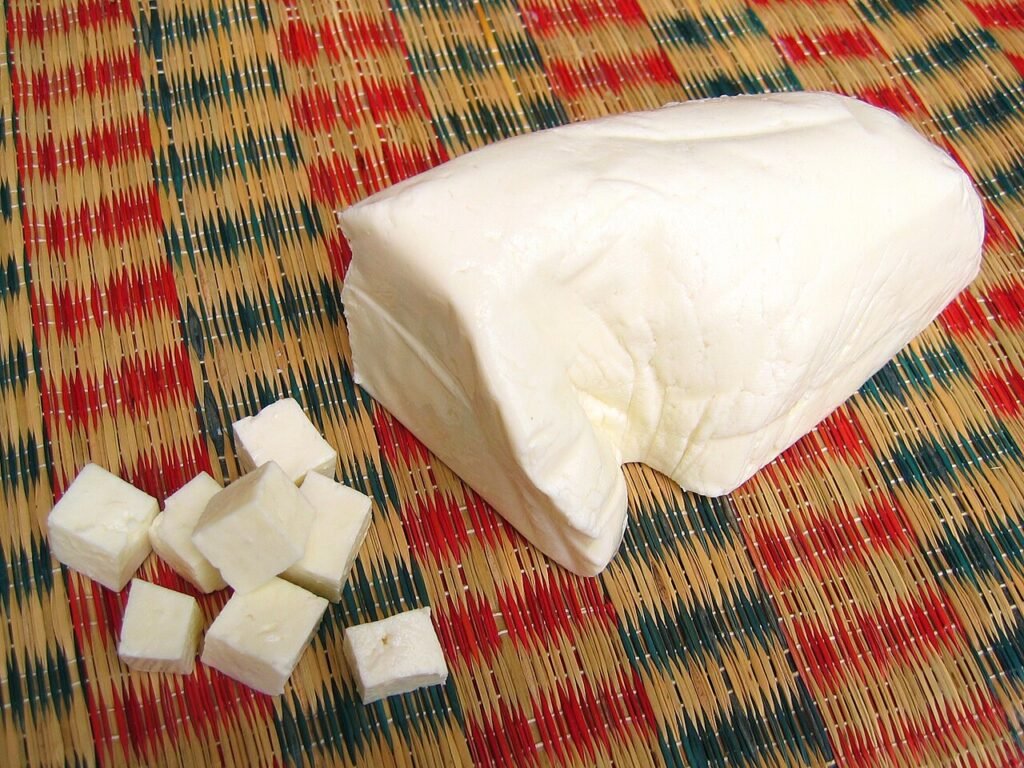
Why in News? On 3 November 2026, Assam Health Minister Ashok Singhal promised strict action against food adulteration. About 70 per cent of 60 paneer samples collected by the Food Safety Department had failed quality standards. Earlier, on 31 October 2026, the Assam Food Safety Commissionerate had issued a one-year Statewide prohibition order. It targets products passed off as paneer.
Current Context (The Trigger)
- Test result: About 70 per cent of the 60 milk-based paneer samples failed the prescribed standards.
- Sampling period: The Food Safety Department collected these samples in several urban areas of Assam over nearly 10 months.
- Prohibition order: The Assam Food Safety Commissionerate issued the order on 31 October 2026. For one year, it covers making, processing, storing, distributing, transporting, selling and using such products anywhere in Assam.
- Legal basis: The order was issued under Section 30(2)(a) of the Food Safety and Standards Act, 2006.
- Lab findings: Laboratory tests found too little milk fat and too much moisture in products sold as paneer. Some also contained starch and vegetable or other foreign fats.
- Minister’s statement: Health Minister Ashok Singhal spoke to the press at Janata Bhawan, Guwahati, on Tuesday, 3 November 2026. He said the government would act strictly against food adulteration and against tricks that mislead buyers.
Core Concepts & Static GK
- Food Safety and Standards Act, 2006: It is Act No. 34 of 2006 and received the President’s assent on 23 August 2006. It consolidates food laws and sets up the Food Safety and Standards Authority of India (FSSAI).
- Laws it replaced: Its Second Schedule lists eight entries that stand repealed. These include the Prevention of Food Adulteration Act, 1954 and the Milk and Milk Products Order, 1992.
- Paneer in law: FSSAI’s dairy standards define chhana or paneer as a product made from milk, with or without added milk solids. It is made by precipitation with permitted acidulants and heating. Permitted acidulants include lactic acid, citric acid and vinegar.
- Paneer composition: Paneer must have at least 50 per cent milk fat on dry matter basis and at most 60 per cent moisture.
- Analogue in the dairy context: It is a product in which non-milk constituents take the place of milk constituents, in part or in whole. The final product resembles a milk product.
- Dairy terms: Words such as milk, cream, cheese and butter are reserved for products made from milk. FSSAI does not recognise analogues as dairy products.
- Unsafe food: The Act treats food as unsafe if it is injurious to health, including through substitution of an inferior or cheaper substance.
- Sub-standard food: Food is sub-standard if it does not meet the specified standards but is not so poor as to be unsafe.
Constitutional & Legal Framework
- Section 30(1): The State Government appoints the Commissioner of Food Safety for the State.
- Section 30(2)(a): The Commissioner may prohibit the manufacture, storage, distribution or sale of any article of food in the interest of public health. The ban can cover the whole State or any part of it. It can last for a period not exceeding one year, as stated in an order notified in the Official Gazette.
- Section 33 is different: A court passes a Section 33 prohibition order. It does so after a food business operator is convicted and the court finds a health risk.
- Section 34: The Designated Officer can apply to the Commissioner for an emergency prohibition order. This applies against a food business where a health risk condition exists.
- Penalties: Sub-standard food draws a penalty up to Rs 5 lakh (Section 51). Misbranded food draws up to Rs 3 lakh (Section 52). Misleading advertisement draws up to Rs 10 lakh (Section 53).
- Unsafe food punishment: Section 59 gives up to six months in jail and a fine up to Rs 1 lakh if no injury results. If unsafe food causes death, the jail term is at least seven years and can extend to life. The fine is at least Rs 10 lakh.
Institutional Machinery
- FSSAI: The Central Government sets up the Food Safety and Standards Authority of India under Section 4 of the Act. Its head office is at Delhi.
- Food Authority composition: It has a Chairperson and 22 members, of whom one-third must be women. Seven are ex officio members representing Central ministries or departments.
- Shared duty: The Food Authority at the Centre and the State Food Safety Authorities share the work. FSSAI gives policy and direction, while the States enforce the law in the field.
- Designated Officer: The Commissioner appoints one for each district, not below the rank of Sub-Divisional Officer. The officer issues or cancels licences and can prohibit the sale of food that breaks the law.
- Food Safety Officer: The Commissioner appoints Food Safety Officers for local areas. Under Section 38, they can take samples and seize food that breaks the law.
- Appeals: Under Section 70, the Central Government or the State Government can set up a Food Safety Appellate Tribunal. It hears appeals against the decisions of the Adjudicating Officer.
Schemes & Initiatives
- Eat Right Movement: FSSAI launched The Eat Right Movement on 10 July 2018. It rests on two pillars, Eat Healthy and Eat Safe.
- What it combined: It brought together three FSSAI initiatives: the Safe and Nutritious Food Initiative, the Eat Healthy Campaign and Food Fortification.
- Eat Right Toolkit: It includes resource books for homes, schools, workplaces and eating out. It also has a training manual for frontline workers such as ASHA and Anganwadi workers.
- Cheese analogue notice: FSSAI’s West Region office in Mumbai issued a public notice in April 2026. PIB Mumbai reported it on 29 April 2026.
- Notice directions: The notice called any cheese analogue sold as paneer a grave violation of the law. It told centrally licensed food service establishments to show any use of cheese analogue on menus or display boards.
- Draft paneer rule: FSSAI notified a draft amendment to the Prohibition and Restrictions on Sales Regulations, 2011 on 22 September 2026. It is still a draft, open for public comments for 60 days.
Reports, Indices & Data
- State Food Safety Index: FSSAI announces this index every year to rank States and Union Territories on food safety. The first one was released on 7 June 2019.
- Five parameters: They are Human Resources and Institutional Data; Compliance; Food Testing Infrastructure and Surveillance; Training and Capacity Building; and Consumer Empowerment. A sixth head gives marks for improvement in rank.
- Sixth edition (2023-24) toppers: Kerala, Tamil Nadu and Jammu and Kashmir led the table, with Gujarat as a special mention. Nagaland received a special acknowledgement as the best North Eastern hilly State.
- Assam’s score: In the 2023-24 score sheet, Assam scored 38.5 out of 100. Kerala, the top State, scored 73.75.
Assam & Northeast Linkages
- Who issued the order: The Assam Food Safety Commissionerate issued the prohibition order for the whole State.
- Urban sampling: The 60 samples came from several urban areas of Assam, so the figure does not cover rural markets.
- Hotel and caterer duty: Hotels, restaurants, caterers, institutional kitchens and cloud kitchens in Assam must follow a rule. They must buy and use only products that follow the law and carry proper labels.
- Index position: In the 2023-24 State Food Safety Index, Assam scored 38.5. It got 21 of 36 marks on food testing but only 2.5 of 9 on human resources.
Prelims Trap Zones (Watch out for)
- Section Trap: The Assam order uses Section 30(2)(a), the Commissioner’s power. Do not confuse it with Section 33, which is a court’s prohibition order after conviction.
- Duration Trap: A Section 30(2)(a) ban can last for a period not exceeding one year. The Assam order runs for one year, the maximum allowed.
- Date Trap: The order is dated 31 October 2026. The minister’s press conference took place on 3 November 2026.
- Total Ban Trap: The order does not ban all dairy alternatives. Alternatives made lawfully are allowed if they carry a proper name and label.
- Moisture Trap: Paneer allows at most 60 per cent moisture. The 70 per cent limit applies to low fat paneer.
- Percentage Trap: The 70 per cent figure is the share of 60 tested samples that failed. It is not the share of all paneer sold in Assam.
- Draft Trap: FSSAI’s September 2026 rule reserving the name paneer for milk products is only a draft. It is not yet final law.
Introduction
On 31 October 2026, the Assam Food Safety Commissionerate banned fake paneer across the State for one year. This came after about 70 per cent of 60 tested samples failed standards. The order uses the Commissioner’s power under Section 30(2)(a) of the Food Safety and Standards Act, 2006. It matters because paneer is a common source of protein in many homes, and cheating on it hurts both health and honest dairy traders.
Why Paneer Adulteration Persists (Underlying Drivers)
- Cheaper substitution: Vegetable fat and oil can replace milk fat in a block that looks like paneer. The Act already names substitution of an inferior or cheaper substance as one ground for unsafe food.
- Look-alike products: Analogue products can look, feel and cook like paneer. The Assam order says that looking like paneer does not allow a product to be sold as paneer.
- Label gaps: Analogue makers must write “Contains” followed by the non-milk ingredient on the label. A restaurant plate carries no such label, so diners cannot tell.
- Service sector blind spot: In April 2026, FSSAI’s West Region office had to tell centrally licensed eateries to disclose cheese analogue use on menus. This shows the problem sits at the point of final sale.
- Thin surveillance: Only 60 samples were collected in nearly 10 months across several urban areas of Assam. A small sample can miss many bad batches.
- Weak paper trail: Without purchase records, the origin of a fake block is hard to trace. The order now requires operators to keep purchase and distribution records.
Legal and Statutory Measures
| Level | Initiative | Purpose & Impact |
|---|---|---|
| Assam Commissionerate | Prohibition order of 31 October 2026 under Section 30(2)(a) | Stops the manufacture, storage, transport, sale and use of non-compliant paneer look-alikes in Assam for one year. |
| State machinery under the Act | Designated Officers (Section 36) and Food Safety Officers (Section 37) | Give each district an officer to issue licences, keep inspection records, sample food and investigate written complaints. |
| Union law | Sections 51, 52 and 53 of the 2006 Act | Penalties up to Rs 5 lakh for sub-standard food, Rs 3 lakh for misbranded food and Rs 10 lakh for misleading advertisement. |
| FSSAI regulation | Label declaration for analogues in the dairy context | Requires “Contains” and “Contains no milk” declarations close to the product name. |
| FSSAI proposal | Draft amendment of the Prohibition and Restrictions on Sales Regulations, 2011 (22 September 2026) | Would bar sale of “paneer made of constituents not derived from milk” and make licensed analogue makers drop the word paneer. Open for comments for 60 days. |
Key Features of the Assam Order
- Wide list of acts: It bars food businesses from making, storing, moving, distributing or selling non-compliant dairy analogues presented as genuine paneer.
- Vegetable fat clause: A product may use vegetable fat, oil or other non-dairy ingredients instead of milk fat. If it fails the standards, it cannot be sold as genuine paneer.
- Space for honest alternatives: Dairy alternatives made lawfully remain allowed if their name and label are correct.
- Buyer’s duty: Operators must check what they buy: what it is, what it contains, where it came from and whether it is legally approved. They must keep records and show them to food safety officials on demand.
- Shared liability: The minister said an operator found using fake products without purchase documents “will be held responsible as manufacturers of those items”.
- Food service coverage: The order names hotels, restaurants, caterers, institutional kitchens and cloud kitchens.
Impact on Consumers, Dairy Business and the State
- Health risk: Foreign fats and starch mean the buyer gets far less milk fat than real paneer must contain. If such substitution makes food injurious to health, the Act classes it as unsafe food.
- Consumer deception: A buyer who pays for paneer but gets a vegetable-fat product is misled. Under the Act, food sold under the name of another food is misbranded.
- Unfair competition: A trader who follows the 50 per cent milk-fat standard cannot match the price of a trader who uses cheaper fat. The order tries to level this field.
- Trust in hospitality: The directions to hotels and cloud kitchens aim to restore trust in dishes such as paneer curries.
- Room for honest analogues: Allowing labelled alternatives protects lawful businesses and gives buyers a real choice.
- Public confidence in the State: A press conference with test data shows the State is willing to share findings. It also invites scrutiny of the full testing record.
Challenges
- Small sample: Sixty samples in nearly 10 months is a thin base for a Statewide picture.
- Urban bias: The samples came from urban areas, so village markets and small sweet shops remain unmeasured.
- Staffing gaps: The State Food Safety Index gave Assam only 2.5 of 9 marks on human resources and institutional data in 2023-24.
- Lab proof needed: Fake paneer and honest analogues look alike on the counter. So officers need a laboratory report in each case before they can act.
- Time-limited ban: Section 30(2)(a) allows a ban of at most one year at a time. So the order needs follow-up through regular enforcement and the final FSSAI rule.
- Consumer awareness: Assam scored only 2 of 9 marks on consumer empowerment in the 2023-24 index.
Way Ahead
- Test more, test widely: The Food Safety Department should sample rural markets and sweet shops in all districts, not only cities. It should also publish district-wise results.
- Fill posts: The State government should fill Designated Officer and Food Safety Officer posts. Assam scored low on human resources in the 2023-24 index.
- Menu disclosure: Assam could adopt a menu rule like the one FSSAI’s West Region issued in April 2026. Eateries would then have to show any use of cheese analogue on menus or display boards.
- Label checks: Officers should check that every analogue carries the “Contains” and “Contains no milk” declarations that FSSAI requires.
- Back the central rule: Assam can send comments while the 60-day window is open. The September 2026 FSSAI draft would reserve the name paneer for milk-based products.
- Raise awareness: The department can use the Eat Right Movement’s resource books and frontline worker network. They can teach buyers about safe food and honest labels.
- Improve the index score: Better testing, training and consumer outreach would raise Assam’s State Food Safety Index score across its parameters.
Conclusion
The Assam order shows how a State can use Section 30(2)(a) quickly, and the FSSAI draft shows the Centre moving in the same direction. A one-year ban buys time. But only wider testing, enough officers and informed buyers will keep paneer honest after the order ends.
Ganga Water Treaty Expiry and Bangladesh Relations
Open this topic as a separate page, with its MCQs →
Syllabus Mapping
- Prelims: GS Paper I (Current events of national and international importance; Indian and World Geography – Physical, Social, Economic Geography of India and the World).
- Mains: GS Paper II (India and its neighbourhood – relations; bilateral agreements involving India); GS Paper V (International Relations, Geography and Economic Development of Assam).
Why in News? An editorial on page 6 of the Assam Tribune (4 November 2026) notes that the 1996 India-Bangladesh Ganga Water-Sharing Treaty ends on 12 December 2026. It advises India not to turn river water into a political weapon against Bangladesh, even though relations are under strain.
Current Context (The Trigger)
- Expiry date: The 1996 Ganga Water-Sharing Treaty between India and Bangladesh runs out on 12 December 2026.
- Talks status: The editorial says full political talks on a direct renewal have not formally begun. It adds that Dhaka is understood to be seeking a longer arrangement with a minimum guarantee clause.
- Indian states’ demand: Bihar and West Bengal want the Centre to put domestic water security first. They cite rising needs of farms, cities, industry and thermal power plants.
- Old data: The two states argue that the treaty depends on river-flow data of 1949-1988. They want it revised for today’s climate and water shortage.
- Political climate: The editorial points to anti-India speeches at a National Citizen Party rally in Dhaka on 30 October. It also notes that Prime Minister Tarique Rahman has not yet visited New Delhi despite several invitations.
- Official position: On 1 August 2025, Minister of State for External Affairs Kirti Vardhan Singh told the Lok Sabha that renewal talks were yet to begin. He added that technical meetings with Bangladesh continue, the last one held in March 2025.
Core Concepts & Static GK
- Signing: The treaty was signed at New Delhi on 12 December 1996 by Prime Ministers H. D. Deve Gowda of India and Sheikh Hasina of Bangladesh.
- Duration: It came into force on signature and runs for thirty years. Article XII says it is renewable on the basis of mutual consent.
- Sharing period: Water at Farakka is shared in ten-day periods from 1 January to 31 May every year. This is the lean (dry) season.
- Formula: If the flow at Farakka is 70,000 cusecs or less, each country gets 50 per cent. Cusec means cubic feet per second.
- Middle band: When the flow is between 70,000 and 75,000 cusecs, Bangladesh gets 35,000 cusecs and India takes the balance.
- High flow: At 75,000 cusecs or more, India gets 40,000 cusecs and Bangladesh gets the balance.
- Guarantee periods: Each country is guaranteed 35,000 cusecs in three alternate 10-day periods between 11 March and 10 May. The treaty text (Annexure I) and the editorial give the same window.
- Farakka Barrage: It stands in Murshidabad district of West Bengal and started diverting water on 21 April 1975. It sends Ganga water into the Bhagirathi-Hooghly to flush silt and keep Kolkata port navigable.
Constitutional & Legal Framework
- Review clause: Article X says the two governments review the sharing every five years, or earlier if either side asks. Either party could seek the first review after two years.
- Minimum release: Article XI applies if a review ends without agreement. India must then release at least 90 per cent of Bangladesh’s share under the formula.
- Emergency clause: If the flow at Farakka falls below 50,000 cusecs in any 10-day period, both governments must consult at once (Article II). Such talks follow the principles of equity, fair play and no harm.
- India’s reasonable use: Article III lets India use up to 200 cusecs between Farakka and the point where both banks of the Ganga lie in Bangladesh.
- Other rivers: Article IX commits both governments to sign water-sharing treaties for other common rivers. Article VIII calls for cooperation on raising the dry-season flow of the Ganga.
Institutional Machinery
- Joint Committee: The treaty creates a Joint Committee with equal members from both sides (Article IV). It sets up teams at Farakka and Hardinge Bridge to record daily flows.
- Dispute route: A dispute that the Joint Committee cannot settle goes to the Indo-Bangladesh Joint Rivers Commission. If it is still unresolved, it goes to the two governments (Article VII).
- Joint Rivers Commission: It was constituted in 1972 as a bilateral body for common, border and transboundary rivers. Its top meetings are held at minister level; India’s Jal Shakti Minister and Bangladesh’s Water Resources Minister led the 38th meeting in 2022.
- Reports: The Joint Committee must send all data and a yearly report to both governments (Article VI). The governments then meet to decide further action.
Reports, Indices & Data
- Flow base: The indicative schedule (Annexure II) rests on 40 years of average ten-day flows at Farakka, from 1949 to 1988.
- Protecting flows: The treaty says the upper riparian will make every effort to protect Farakka flows at that 40-year average.
- Schedule example: On that average, India’s share is 40,000 cusecs in every ten-day period of January and February. In the first ten days of April, India’s share drops to 28,180 cusecs.
Assam & Northeast Linkages
- Kushiyara MoU: On 6 September 2022, India’s Ministry of Jal Shakti and Bangladesh’s Ministry of Water Resources signed an MoU on the Kushiyara river. It lets each country withdraw up to 153 cusecs in the dry season, 1 November to 31 May.
- Assam’s gain: The Centre said the MoU lets Assam draw water from the common stretch of the Kushiyara. The Union Cabinet gave ex post facto approval on 28 September 2022.
- Barak connection: The Barak river splits into the Surma and the Kushiyara at Amalshid, on the border of Bangladesh’s Sylhet district. So the Kushiyara is a direct water link between Assam’s Barak Valley and Bangladesh.
- Tsangpo parallel: The editorial reminds readers that India itself is downstream of China’s mega dams on the Tsangpo in Tibet. China builds them without consulting India.
Prelims Trap Zones (Watch out for)
- Year Trap: The treaty was signed in 1996 and expires in 2026. The Joint Rivers Commission dates from 1972, and Farakka Barrage started operating in 1975.
- Season Trap: The sharing formula covers only 1 January to 31 May, not the whole year. The 35,000 cusec guarantee covers three alternate 10-day periods between 11 March and 10 May.
- Number Trap: The 50:50 split applies at 70,000 cusecs or less. India’s fixed 40,000 cusecs applies only at 75,000 cusecs or more.
- Kushiyara Trap: The 2022 Kushiyara MoU allows each country a dry-season withdrawal of up to 153 cusecs. It is not a Ganga or Teesta agreement.
- Renewal Trap: The treaty does not renew itself. Article XII says it is renewable only on mutual consent.
Introduction
The Ganga Water-Sharing Treaty, signed at New Delhi on 12 December 1996, expires on 12 December 2026. It decides how the Ganga is shared at Farakka in the dry months of January to May. For India, the renewal is a test. India must protect the water needs of Bihar and West Bengal. It must also keep a fair deal with its downstream neighbour.
Why the treaty matters
- Predictable dry-season sharing: A fixed formula for 1 January to 31 May gives both countries clear numbers in the months of scarcity.
- Ended the Farakka dispute: Bangladesh took the Farakka issue to the UN General Assembly. The Assembly adopted a consensus statement in November 1976 asking for urgent talks. The 1996 treaty replaced years of short-term deals with a 30-year rule.
- Protects Kolkata port: Farakka diverts Ganga water into the Hooghly to flush silt from the Kolkata port channel. A stable sharing deal lets India run the barrage without a fresh dispute.
- Built-in safeguards: The 50,000 cusec emergency consultation and the 90 per cent minimum release rule protect Bangladesh in bad years.
- Shared monitoring: Joint teams at Farakka and Hardinge Bridge record daily flows. So both sides work from the same data.
- Template for other rivers: Article IX asks both governments to sign treaties on other common rivers. India and Bangladesh share 54 rivers.
Why renewal is difficult
- Old hydrology: The schedule uses flow data from 1949 to 1988. Bihar and West Bengal say this ignores the present climate and water shortage.
- Rising Indian demand: The two states point to more water needed for agriculture, growing towns, industry and thermal power plants.
- Bangladesh’s ask: According to the editorial, Dhaka wants a longer deal with a minimum guarantee clause. That would reduce India’s room to adjust in lean years.
- Strained politics: The editorial cites anti-India speeches at the National Citizen Party rally on 30 October. It also cites the Delhi visit that Prime Minister Tarique Rahman has not yet made, while he has visited China.
- Bangladesh’s opposition bloc: The editorial notes that the National Citizen Party was formed by the students who led the August 2024 protests. Those protests were against the then Awami League government. In its account, the party and its ally Jamaat-e-Islami form the main opposition to the Bangladesh Nationalist Party government.
- Federal politics: A state’s consent has mattered before. In September 2011 a Teesta water deal was not signed during Prime Minister Manmohan Singh’s Dhaka visit, after West Bengal Chief Minister Mamata Banerjee objected.
India as a downstream and upstream state
- Downstream worry: The editorial says countries lower down a river depend on upstream states. Those upper states can hold back water and use it to put political pressure on others.
- Tsangpo example: China is building mega dams on the Tsangpo without consulting India, says the editorial. India’s main complaint is the lack of consultation.
- Editorial’s advice: The paper says India should not copy such a strategy with Bangladesh, even after what it calls repeated provocations.
- Reputation at stake: If India refuses renewal, it weakens its own case when it asks China for data and consultation on the Tsangpo. This is an analytical point.
- Neighbourhood trust: The Ganga treaty is a written, working rule between the two countries since 1996. Letting it lapse would remove a steadying element from a strained relationship.
- Assam’s stake: Assam already gained from one India-Bangladesh water deal, the 2022 Kushiyara MoU. A failed Ganga renewal could slow talks on such river arrangements. This is an analytical point.
Government & Institutional Measures
| Level | Initiative | Purpose & Impact |
|---|---|---|
| Bilateral treaty | Ganga Water Treaty, 1996 | Shares Farakka waters from 1 January to 31 May with a fixed formula. |
| Bilateral body | Joint Rivers Commission, 1972 | Handles common river issues; technical-level meetings continue, the last one reported in March 2025. |
| Treaty body | Joint Committee | Records daily flows at Farakka and Hardinge Bridge and files a yearly report. |
| Bilateral MoU | Kushiyara MoU, 6 September 2022 | Allows each country a dry-season withdrawal of up to 153 cusecs from the common stretch. |
| Data cooperation | Eight more rivers added for data exchange | Agreed at the 38th ministerial Joint Rivers Commission meeting in New Delhi on 25 August 2022. |
Challenges
- Expiry deadline: The treaty ends on 12 December 2026, and the editorial says formal political talks on renewal have not begun. Time for a careful negotiation is short.
- Data question: Both sides must agree on which recent flow records will replace the 1949-1988 base. A disputed baseline would stall any new schedule.
- Minimum guarantee demand: A fixed minimum flow is hard to promise when upstream use and rainfall change from year to year.
- Pending Teesta pact: The Teesta deal that failed in 2011 is still unsigned. It shows how one state’s objection can stall a national agreement.
- Hostile public mood: The editorial points to rising anti-India rhetoric in Dhaka. At home, Bihar and West Bengal want domestic needs first, so both governments face pressure against compromise.
- Slow institutions: The 38th ministerial meeting of the Joint Rivers Commission in August 2022 came after a gap of about 12 years. Such long gaps delay decisions and weaken trust.
Way Ahead
- Start formal talks now: The Ministry of External Affairs and the Ministry of Jal Shakti should open renewal talks through the Joint Rivers Commission. An early start avoids a gap after 12 December 2026.
- Update the data: The Joint Committee’s teams at Farakka and Hardinge Bridge already record daily flows. Their records can be used to build a fresh schedule in place of the 1949-1988 base.
- Use the review principle: Article X already allows adjustments based on equity, fairness and no harm. A revised schedule can be negotiated on the same principle.
- Bring states in early: The Centre should consult Bihar and West Bengal before talks, since their concerns are on record. Early consultation can avoid a repeat of the 2011 Teesta failure.
- Link to other rivers: Article IX asks for treaties on other common rivers. India can use the renewal to push progress on the wider list of 54 shared rivers.
- Longer deal with reviews: Dhaka wants a longer arrangement. A deal with regular reviews, as in Article X, can offer length without locking in outdated numbers.
- Keep talks apart from rhetoric: The editorial advises against using water as a tool of pressure. Technical meetings should continue even when political ties are tense.
Conclusion
Letting the 1996 treaty lapse would weaken India’s own case as a downstream country facing China’s Tsangpo dams. A better course is a renewed, data-based and regularly reviewed arrangement that keeps Bihar, West Bengal and Bangladesh at the table. Water diplomacy works best when it is kept apart from political noise.
PRAGATI-50 and Guwahati’s Clean-City Challenge
Open this topic as a separate page, with its MCQs →
Syllabus Mapping
- Prelims: GS Paper I (Current events of State/National importance; Indian Polity and Governance: Constitution, Public Policy; General issues on Environment ecology).
- Mains: GS Paper II (Government policies and interventions for development; devolution of powers and finances up to local levels); GS Paper III (Disaster Management, Environmental pollution and degradation, conservation); GS Paper V (Governance, Environment and Disaster Management of Assam).
Why in News? An opinion piece in The Assam Tribune (4 November 2026, page 5) examines what PRAGATI-50, the Centre’s new clean-city initiative, means for Guwahati. It links the city’s garbage problem to drains, flooding and public health. It also asks how Guwahati can keep its better cleanliness ranking.
Current Context (The Trigger)
- New initiative: PRAGATI-50 aims to develop 50 cities in 24 States as clean cities that others can copy.
- Framework: It works under Swachh Bharat Mission-Urban 2.0. Its focus areas are visible cleanliness, solid waste, used water, sanitation and citizen participation.
- Method: The programme plans to use technology for monitoring, set targets that can be measured and review progress at regular intervals. The writer says this is different from relying only on cleanliness campaigns.
- Guwahati’s rank: In Swachh Survekshan 2024-25, Guwahati rose from 402nd to 44th in its population category.
- Recognition: The Ministry of Housing and Urban Affairs named the Guwahati Municipal Corporation (GMC) a “Promising Swachh Shehar of Assam”.
- Waste load: The GMC says the city produces about 550 tonnes of solid waste a day.
- Segregation gap: About 95 per cent of communities reportedly took part in a cleanliness contest across the city. Yet the GMC found that roughly half of all households actually segregate their waste.
Core Concepts & Static GK
- Solid-waste chain: Good waste management means segregation, collection, transport, processing and scientific disposal. Sweeping roads is only the first step.
- Used water: Used-water management means collecting and treating sewage and other wastewater, so that untreated water does not pollute rivers and wetlands.
- Drains and garbage: Plastic bags and other waste that enter drains block the flow of rainwater. Careless dumping can also pollute water bodies and low-lying parts of the city.
- Four-stream segregation: The Solid Waste Management Rules, 2026 make segregation at source into wet, dry, sanitary and special care waste mandatory.
- Bulk waste generator: Under the 2026 Rules, an entity qualifies on any one of three tests. It produces 100 kg or more of waste a day. It uses 40,000 litres or more of water a day. Or it has a floor area of 20,000 square metres or more.
- Cooperative approach: The article notes that national frameworks work only when wards, neighbourhoods and households act on them.
Constitutional & Legal Framework
- 74th Amendment: The Constitution (74th Amendment) Act, 1992 came into force on 1 June 1993. It inserted Part IXA on Municipalities, covering Articles 243P to 243ZG.
- Twelfth Schedule: This Schedule lists 18 functions for municipalities and is linked to Article 243W.
- Entry 6: It reads “Public health, sanitation conservancy and solid waste management”. So garbage handling is a municipal function under the Constitution.
- Types of bodies: Article 243Q provides for Nagar Panchayats for transitional areas, Municipal Councils for smaller urban areas and Municipal Corporations for larger urban areas.
- Finance: Under Article 243Y, the State Finance Commission set up under Article 243-I also reviews the financial position of municipalities.
- Solid Waste Management Rules, 2026: They take effect from 1 April 2026 and replace the 2016 Rules. They are framed under the Environment (Protection) Act, 1986.
Institutional Machinery
- Ministry of Housing and Urban Affairs: Union Minister Manohar Lal launched PRAGATI-50 in New Delhi on 29 September 2026.
- Review meetings: The Minister will chair review meetings every two months. Ministry officers will be assigned to individual cities for regular supervision and support.
- Digital review: A digital review system for the 50 cities has been set up on the Swachhatam Portal.
- Guwahati Municipal Corporation: The GMC sweeps streets and collects waste from every house across its 60 wards. NGOs handle the first stage of collection.
Schemes & Initiatives
- SBM-Urban 2.0: Prime Minister Narendra Modi launched the second phase of Swachh Bharat Mission-Urban on 1 October 2021. Its goal is to make cities garbage-free.
- Outlay: SBM-Urban 2.0 received a fresh allocation of Rs 1,41,600 crore at its launch.
- City selection: The 50 cities were chosen for their economic, cultural, heritage, pilgrimage, tourism and administrative importance. Guwahati is reported to be one of them.
- Related launches: The same event launched a Swachh Bharat Test Bed and Innovation Centre at Durgapur with CSIR-CMERI (Central Mechanical Engineering Research Institute). A WhatsApp channel for citizens to register sanitation complaints was also started.
- Smart City link: The article says Guwahati’s Smart City vision accepted that storm-water drains misused for dumping must be transformed.
Reports, Indices & Data
- Category rank: Guwahati ranked 44th of 95 cities in the 3 to 10 lakh population category in Swachh Survekshan 2024-25.
- Score: Guwahati scored 8,563 points. The category topper, Mira-Bhayandar, scored 11,652.
- Garbage Free City: Guwahati received a Garbage Free City One Star rating.
- Earlier rank: Guwahati had ranked 356 in Swachh Survekshan 2020.
Assam & Northeast Linkages
- Setting: Hills, wetlands and the Brahmaputra ring the city of Guwahati. The writer says these are central to keeping the city ecologically safe.
- Dumpsite: A 2021 Down To Earth report said more than 85 per cent of the city’s waste went to the Boragaon dumpsite.
- Compost plant: A 50 tonnes-per-day windrow compost plant has worked at Boragaon since 2010.
- Promising Swachh Shehar: Guwahati and North Lakhimpur shared the title for Assam.
- Assam cities: Six Assam cities received ODF++ (Open Defecation Free Plus Plus) certification in the same survey round.
Prelims Trap Zones (Watch out for)
- Name Trap: PRAGATI-50 is a clean-city initiative of the Housing and Urban Affairs Ministry, launched in 2026. PRAGATI (Pro-Active Governance and Timely Implementation) is a separate platform the Prime Minister uses to review projects, launched in 2015. The only link is that PRAGATI-50 followed directions the Prime Minister gave at the 51st PRAGATI meeting.
- Rank Trap: Guwahati’s 44th rank is within the 3 to 10 lakh population category, not an all-India rank. The earlier position was 402nd, not 44th.
- Scheme Trap: PRAGATI-50 sits under Swachh Bharat Mission-Urban 2.0, not under the Smart Cities Mission.
- Number Trap: 50 cities are in 24 States. Do not swap these two numbers.
- Schedule Trap: Municipal functions are in the Twelfth Schedule. The Eleventh Schedule belongs to panchayats under the 73rd Amendment.
- Segregation Trap: Taking part in a campaign (about 95 per cent of communities) is not the same as household segregation (about half).
Introduction
Guwahati climbed from 402nd to 44th in its category in Swachh Survekshan 2024-25. Yet the city still produces about 550 tonnes of solid waste a day. PRAGATI-50 now covers 50 cities in 24 States. The question is whether Guwahati can turn a survey success into a daily habit. For a city of hills, wetlands and the Brahmaputra, clean streets are also a flood, health and ecology issue.
Why Waste Is a Governance Problem in Guwahati
- Waste and floods: Plastic and other waste in drains block rainwater flow. This links garbage directly to urban flooding in Guwahati.
- Fragile geography: Hills, wetlands and the river make careless dumping costly for the city’s ecology. Waste dumped anywhere can pollute ponds, wetlands and low-lying localities.
- Heavy daily load: About 550 tonnes of waste a day needs a full chain of collection, transport, processing and disposal.
- Dumpsite dependence: In 2021, more than 85 per cent of the city’s waste went to the Boragaon dumpsite. Heavy dependence on one site increases risk for nearby residents and water bodies.
- Public health: The writer links waste to public health and to how well people live in the city. Open dumping and clogged drains can spread disease.
- Constitutional duty: Entry 6 of the Twelfth Schedule makes sanitation and solid waste management a municipal function. The GMC is therefore the first responsible body.
What PRAGATI-50 Offers
- Clear scope: The initiative covers visible cleanliness, solid waste, used water, sanitation and citizen participation. This goes beyond sweeping roads.
- Measurable targets: The programme uses technology for monitoring and sets targets that can be measured. Cleanliness is judged on results, not on appearance.
- High-level review: The Union Minister chairs review meetings every two months. Regular top-level attention keeps cities under pressure to deliver.
- Handholding: Ministry officers are assigned to individual cities. This gives each selected city direct supervision and support.
- Citizen channel: A WhatsApp channel lets citizens register sanitation complaints. It can feed ward-level problems into the review system.
- Role-model effect: The 50 cities are meant to be examples for others. Success in Guwahati can guide other cities of the Northeast.
Guwahati’s Progress and Gaps
- Ranking jump: The move from 402nd to 44th shows that sustained civic work can bring results. The GMC also earned the “Promising Swachh Shehar of Assam” title.
- Survey versus daily life: The writer warns that cleanliness must become a permanent feature of the city. It should not show up mainly at the time of surveys or special drives.
- Segregation gap: About 95 per cent of communities joined a cleanliness competition, but only about half of households segregate waste. Participation has not yet become behaviour.
- Collection model: The GMC runs door-to-door collection and street sweeping in 60 wards, with NGOs doing primary collection. Quality depends on how well these NGOs are supervised.
- Limited star rating: Guwahati holds a Garbage Free City One Star rating. The city has room to move up the star ladder.
- Processing gap: In 2021, Down To Earth reported a compost plant of 50 tonnes a day at Boragaon. That was small against about 550 tonnes of waste generated daily.
Challenges
- Behaviour change: Households must segregate every morning, not only during drives. Without this, processing plants receive mixed waste.
- Drain misuse: Storm-water drains have been used for dumping, which the city’s Smart City vision itself acknowledged. Clogged drains worsen monsoon flooding.
- Weak processing capacity: The Smart City vision also called for stronger treatment infrastructure for solid waste and sanitation. Waste that is not processed ends up at the dumpsite.
- Uneven monitoring: Cities often judge cleanliness by the look of main roads. Markets, neighbourhoods and dumping hotspots need continuous checks.
- Environmental pressure: Wetlands, hills and the Brahmaputra face harm from careless dumping. Cleaning one area should not push the problem into another.
- Campaign fatigue: The writer warns against treating PRAGATI-50 as one more short-term campaign. A lasting culture of cleanliness needs steady enforcement over years.
- Commercial waste: Shops and markets produce large amounts of food and vegetable waste. Such bulk generators now have clear duties under the Solid Waste Management Rules, 2026.
Way Ahead
- Enforce segregation: The GMC should apply the four-stream segregation of the Solid Waste Management Rules, 2026 ward by ward. Wet, dry, sanitary and special care waste must be separated at source.
- Track bulk generators: The GMC should register large markets and establishments that meet the bulk-generator test. They must process wet waste on site where possible, or obtain an extended bulk waste generator responsibility certificate.
- Monitor continuously: The city should use technology to track neighbourhoods, markets, drains, collection points and dumping spots. PRAGATI-50 reviews can use this data.
- Join drains and waste: Drain cleaning and garbage collection should be planned together. This reduces blocked drains before the monsoon.
- Build processing capacity: The GMC and Assam’s Housing and Urban Affairs Department should expand composting and treatment. This would cut the city’s dependence on the Boragaon dumpsite.
- Involve citizens: Resident groups, shopkeepers and market associations should take responsibility for shop frontages and food waste. The PRAGATI-50 WhatsApp complaint channel can support this.
- Protect ecology: Cleanliness plans should treat wetlands, hills and the Brahmaputra as part of the city’s ecological safety.
Conclusion
PRAGATI-50 gives Guwahati a national framework with targets and regular reviews. The city’s real test is daily behaviour in every ward, household and market. A better rank is a start, but lasting cleanliness will depend on segregation, working drains and processing capacity.
Asked in APSC
- APSC Mains 2024, GS Paper 4 (20 marks): The considerable volume of waste is posing threats to small towns as well as cities. The landfill sites are facing the problem of overcapacity. Towns have endeavoured to have waste-to-energy plants to mitigate the problem to some extent. However, due to incapacitation or in efficiency, the project may not necessarily yield the desired result. Administrations are often criticized for emitting pollutant gases, etc. Upon reviewing the situation, it is observed that how people dispose of waste is one of the primary reasons behind the problem. The government has already notified rules regarding the disposals, collection and treatment of waste and has initiated an awareness campaign in the past. Still, there is no definite answer to resolve the issue. You are posted as District Commissioner. Given such situations, explain the following questions :(a) What is the reason behind the apathy of people towards waste disposal that affects the larger interest of society? (b) Who are the stakeholders, and what is the significance of their involvement in addressing the issue?(c) What arguments will you put forth to convince people to act on the issue?
News in Short
- MAC and SKAC elections: The Assam State Election Commission announced the schedule on 3 November 2026. Polling for the Mising Autonomous Council (40 constituencies) and the Sonowal Kachari Autonomous Council (32 constituencies) will be on 30 November.
- Nagaon, Surakshit status: Nagaon district reached “Surakshit” status in HIV control under the National AIDS Control Programme, as per data of 1 November 2026. It met the 95-95-95 targets of UNAIDS and the World Health Organization.
- India, ISA President: India will lead the International Solar Alliance (ISA) as President for the third term in a row. The choice was made at the ninth ISA session, held at the Bharat Renewable Energy Summit 2026. Minister Pralhad Joshi announced it on 3 November. France was re-elected co-President.
- RBI surveys: On 3 November 2026 the Reserve Bank of India (RBI) launched the November round of its household inflation expectations survey. It covers 19 cities, including Guwahati. The RBI also announced the Urban and Rural Consumer Confidence Surveys.
- UNGA arms control vote: A Pakistan-Belarus draft on conventional arms control at regional and subregional levels passed the UN General Assembly’s First Committee on 2 November. The vote was 180 to two, with no abstentions. India and Israel cast the only votes against it.
- RBI forex norms: The RBI made reporting simpler for small exporters and importers of services. It did this by amending the Foreign Exchange Management (Export and Import of Goods and Services) Regulations. The changes apply retrospectively from 1 October 2026.
- New MMCH building, Guwahati: The new Mahendra Mohan Choudhury Hospital building has 997 beds. Its facilities include 112 ICU beds, six HDU beds, 52 paying cabins and a dialysis unit with 30 beds. GMCH services will move there in phases.
- Ropeway Development Authority: Chief Minister Himanta Biswa Sarma said the Centre and Assam will jointly set up this authority. It will bring five new ropeways, two of them in Guwahati.
APSC Prelims MCQs
Practice questions on the topics above
Topic 1: Oil India’s Extended Reach Drilling Plea for Dibru-Saikhowa National Park
Q1. The Supreme Court recently heard a plea by Oil India Limited on drilling beneath Dibru-Saikhowa National Park. Consider the following statements:
(i) The plea challenges a Forest Advisory Committee decision and the refusal that followed.
(ii) Oil India says the drilling pads would stay outside the national park.
(iii) The order under challenge dated 2 August 2024 was passed by the Ministry of Petroleum and Natural Gas.
Which of the statements given above is/are correct?
- (a) (i) and (ii) only
- (b) (ii) and (iii) only
- (c) (i) only
- (d) (i), (ii) and (iii)
Show answer
Answer: (a) Explanation: Statements (i) and (ii) are correct. Oil India questions both what the Forest Advisory Committee decided and the Environment Ministry’s later refusal to approve use of 0.069 hectares in Tinsukia. It also says its pads and other drilling equipment would sit outside the park, with wells reaching deposits 3,500 to 4,000 metres below. Statement (iii) is wrong because the 2 August 2024 order came from the Ministry of Environment, Forest and Climate Change, not the petroleum ministry. The Court has only asked the petroleum ministry to respond. Option (b) wrongly includes (iii) and drops (i), option (c) leaves out (ii), and option (d) includes (iii). Value addition: the Forest Advisory Committee’s meeting of 4 July 2024 is also under challenge.
Q2. Dibru-Saikhowa lies in Upper Assam. Consider the following statements about it:
(i) It was declared a Biosphere Reserve in 1997.
(ii) Its core area became a national park in 1999.
(iii) It lies entirely within Dibrugarh district.
Which of the statements given above is/are correct?
- (a) (i) only
- (b) (i) and (ii) only
- (c) (ii) and (iii) only
- (d) (i), (ii) and (iii)
Show answer
Answer: (b) Explanation: Statements (i) and (ii) are correct. The Environment Ministry lists Dibru-Saikhowa as a Biosphere Reserve designated in 1997 with an area of 765 sq km. Its 340 sq km core was declared a national park in 1999. Statement (iii) is wrong because the reserve covers parts of two districts, Dibrugarh and Tinsukia. The drilling land in the news is in Tinsukia. Option (a) ignores the 1999 national park status, option (c) accepts the false district claim, and option (d) accepts all three. Value addition: Assam Forest Department records cited by PTI in 2024 show Brahmaputra erosion has cut the park to about 216.53 sq km.
Q3. Match List-I with List-II (events in the Oil India case):
| List-I (Event) | List-II (Date) |
|---|---|
| a. Supreme Court judgment barring mining within 1 km of national parks and sanctuaries | 1. 4 July 2024 |
| b. Forest Advisory Committee meeting under challenge | 2. 2 August 2024 |
| c. Environment Ministry order refusing approval | 3. 26 April 2023 |
| d. Environmental clearance for seven locations, as claimed by Oil India | 4. May 2020 |
Select the correct answer using the codes given below:
- (a) a-3, b-1, c-2, d-4
- (b) a-3, b-2, c-1, d-4
- (c) a-4, b-1, c-2, d-3
- (d) a-1, b-3, c-4, d-2
Show answer
Answer: (a) Explanation: The correct pairs are a-3, b-1, c-2 and d-4. The Supreme Court’s order barring mining inside national parks and sanctuaries and in a one-km belt around them is dated 26 April 2023. The Forest Advisory Committee met on 4 July 2024, and the Environment Ministry’s refusal order followed on 2 August 2024. Oil India says it got environmental clearance in May 2020. Option (b) swaps the committee meeting and the ministry order, which is the main trap. Options (c) and (d) pair the 2023 judgment or the 2020 clearance with the wrong events. Value addition: the Eco-Sensitive Zone notification for the park was issued in January 2020, a few months before the clearance.
Q4. According to Oil India’s plea, which body had recommended its Extended Reach Drilling proposal for Dibru-Saikhowa National Park?
- (a) National Tiger Conservation Authority
- (b) Forest Advisory Committee
- (c) Standing Committee of the National Board for Wildlife
- (d) Central Zoo Authority
Show answer
Answer: (c) Explanation: Oil India says the Standing Committee of the National Board for Wildlife recommended its proposal. It adds that the Supreme Court then allowed sub-surface extraction, subject to environmental and wildlife conditions. The Forest Advisory Committee in option (b) is the body whose decision Oil India is now challenging, so it is the trap. The National Tiger Conservation Authority and the Central Zoo Authority are not named in the plea. Value addition: the National Board for Wildlife is set up under section 5A of the Wildlife (Protection) Act, 1972. The Prime Minister is its chairperson. Its Standing Committee comes under section 5B, and both sections were added by a 2002 amendment.
Topic 2: Paneer Adulteration and the Food Safety Prohibition Order
Q5. The Assam Food Safety Commissionerate issued a one-year Statewide prohibition order on fake paneer in October 2026 under the Food Safety and Standards Act, 2006. Consider the following statements:
(i) The Commissioner of Food Safety of a State is appointed by the State Government.
(ii) Under Section 30(2)(a), a prohibition on the sale of a food article can last for a period not exceeding one year.
(iii) Under Section 30(2)(a), the prohibition can be imposed only for a single district and never for the whole State.
Which of the statements given above is/are correct?
- (a) (i) and (ii) only
- (b) (ii) and (iii) only
- (c) (i) only
- (d) (i), (ii) and (iii)
Show answer
Answer: (a) Explanation: Statement (i) is correct because Section 30(1) says the State Government appoints the Commissioner of Food Safety for the State. Statement (ii) is correct because Section 30(2)(a) allows a ban for a period not exceeding one year. The period is specified in an order notified in the Official Gazette. Statement (iii) is wrong because the same clause lets the Commissioner prohibit in the whole State or any area or part of it. Option (c) misses statement (ii), and options (b) and (d) include the false statement (iii). Value addition: a Section 33 prohibition order is different, because a court passes it after a food business operator is convicted.
Q6. Match List-I with List-II:
| List-I (Section of the Food Safety and Standards Act, 2006) | List-II (Provision) |
|---|---|
| a. Section 30 | 1. Penalty up to Rs 10 lakh for misleading advertisement |
| b. Section 36 | 2. Commissioner can prohibit sale of a food article for up to one year |
| c. Section 51 | 3. A Designated Officer for each district |
| d. Section 53 | 4. Penalty up to Rs 5 lakh for sub-standard food |
Select the correct answer using the codes given below:
- (a) a-2, b-3, c-4, d-1
- (b) a-3, b-2, c-4, d-1
- (c) a-2, b-3, c-1, d-4
- (d) a-1, b-4, c-3, d-2
Show answer
Answer: (a) Explanation: Section 30 deals with the Commissioner of Food Safety. Its clause (2)(a) allows a prohibition for up to one year, so a matches 2. Section 36 says there shall be a Designated Officer for each district, so b matches 3. Section 51 sets a penalty up to five lakh rupees for sub-standard food, so c matches 4. Section 53 sets a penalty up to ten lakh rupees for misleading advertisement, so d matches 1. Option (b) swaps Sections 30 and 36, option (c) swaps the two penalties, and option (d) mixes up all four pairs. Value addition: Section 52 fixes the penalty for misbranded food at up to three lakh rupees.
Q7. Which one of the following statements about paneer and analogues under FSSAI regulations is NOT correct?
- (a) An analogue in the dairy context is a product in which non-milk constituents take the place of milk constituents and which resembles a milk product.
- (b) Analogues in the dairy context are not considered milk, milk products or composite milk products under the regulations.
- (c) The label of an analogue must carry a “Contains” declaration naming each non-milk constituent that replaces a milk constituent.
- (d) Paneer must have at least 50 per cent milk fat on dry matter basis and moisture of at most 70 per cent.
Show answer
Answer: (d) Explanation: Option (d) is not correct because the maximum moisture for paneer is 60 per cent. The 70 per cent limit applies only to low fat paneer, which has at most 20 per cent milk fat on dry matter basis. Option (a) is correct because it repeats the regulatory definition of an analogue. Option (b) is correct because the regulations state that analogues are not considered milk products. Option (c) is correct because the label must carry “Contains”. Where a milk constituent is fully replaced, it must also carry “Contains no milk” with the constituent named. Value addition: dairy terms such as milk, cream, cheese and butter are reserved for products made from milk.
Q8. In the 6th State Food Safety Index (2023-24) released by FSSAI, which State received the special acknowledgement as the best North Eastern hilly State?
- (a) Meghalaya
- (b) Nagaland
- (c) Tripura
- (d) Assam
Show answer
Answer: (b) Explanation: Nagaland received the special acknowledgement for North Eastern hilly States in the 2023-24 index. Its score was 44.25 out of 100. FSSAI chose to recognise the best performer among these States because they face manpower, transport and infrastructure limits. Meghalaya scored lower, at 33. Tripura scored 36. Assam scored 38.5, which is also below Nagaland, so the acknowledgement did not go to it. Overall, Kerala, Tamil Nadu and Jammu and Kashmir led the table. Value addition: the index rests on five parameters, and the first edition was released on 7 June 2019.
Topic 3: Ganga Water Treaty Expiry and Bangladesh Relations
Q9. The 1996 India-Bangladesh Ganga Water-Sharing Treaty is due to expire on 12 December 2026. Consider the following statements:
(i) It was signed at New Delhi by Prime Ministers H. D. Deve Gowda and Sheikh Hasina.
(ii) Its sharing formula at Farakka applies to ten-day periods from 1 January to 31 May every year.
(iii) It lapses automatically and cannot be renewed, even by mutual consent.
Which of the statements given above is/are correct?
- (a) (i) and (ii) only
- (b) (ii) and (iii) only
- (c) (i) and (iii) only
- (d) (i), (ii) and (iii)
Show answer
Answer: (a) Explanation: Statements (i) and (ii) are correct. The treaty was signed at New Delhi on 12 December 1996 by H. D. Deve Gowda and Sheikh Hasina. Article II applies the Annexure I formula to ten-day periods from 1 January to 31 May, the dry season. Statement (iii) is wrong because Article XII says the treaty stays in force for thirty years and is renewable on the basis of mutual consent. So options (b), (c) and (d), which include (iii), are out. Value addition: Article X provides for a review of the sharing every five years. If a review ends without agreement, Article XI requires India to release at least 90 per cent of Bangladesh’s formula share.
Q10. Assertion (A): Bihar and West Bengal want the Ganga treaty’s framework updated to reflect current climate and water scarcity. Reason (R): The treaty’s indicative schedule rests on average ten-day flows at Farakka for 1949 to 1988.
- (a) Both A and R are true and R is the correct explanation of A
- (b) Both A and R are true but R is not the correct explanation of A
- (c) A is true but R is false
- (d) A is false but R is true
Show answer
Answer: (a) Explanation: Both statements are true. The Assam Tribune editorial of 4 November 2026 says the two states want the framework revised for today’s climate and water shortage. The treaty’s Annexure II schedule is indeed based on 40 years of average flows at Farakka, from 1949 to 1988. This old data base is the very reason the states demand an update, so R explains A. Option (b) fails because R is the direct cause of A. Option (c) fails because R is true. Option (d) fails because A is true. Value addition: Article II also says that the two governments must consult at once if the flow at Farakka falls below 50,000 cusecs in any ten-day period.
Q11. Under the Kushiyara MoU signed by India and Bangladesh on 6 September 2022, how much water may each country withdraw from the river in the dry season?
- (a) Up to 35,000 cusecs
- (b) Up to 153 cusecs
- (c) Up to 200 cusecs
- (d) Up to 50,000 cusecs
Show answer
Answer: (b) Explanation: The MoU is between India’s Ministry of Jal Shakti and Bangladesh’s Ministry of Water Resources. It lets each country withdraw up to 153 cusecs from the common stretch of the Kushiyara from 1 November to 31 May. Option (a), 35,000 cusecs, is the guaranteed figure for each country in alternate ten-day periods under the 1996 Ganga treaty. Option (c), 200 cusecs, is India’s cap on reasonable use below Farakka under Article III of that treaty. Option (d), 50,000 cusecs, is the Farakka flow below which the two governments must consult at once. Value addition: The Barak splits into the Surma and the Kushiyara at Amalshid. The Union Cabinet approved the MoU ex post facto on 28 September 2022.
Q12. In which year was the India-Bangladesh Joint Rivers Commission constituted?
- (a) 1972
- (b) 1975
- (c) 1977
- (d) 1996
Show answer
Answer: (a) Explanation: The Joint Rivers Commission was constituted in 1972 as a bilateral body for common, border and transboundary rivers. Its 38th ministerial meeting was held in New Delhi on 25 August 2022. Option (b), 1975, is the year Farakka Barrage began diverting water, from 21 April. Option (c), 1977, is the year of the five-year Ganga sharing agreement (5 November 1977), which followed the 1976 UN General Assembly consensus. Option (d), 1996, is the year of the present Ganga Water Treaty. Do not mix up these dates. Value addition: India and Bangladesh share 54 rivers. The 1996 treaty sends any dispute that its Joint Committee cannot resolve to the Joint Rivers Commission.
Topic 4: PRAGATI-50 and Guwahati’s Clean-City Challenge
Q13. The Centre has launched PRAGATI-50 for cleaner cities. Consider the following statements:
(i) It works under the framework of Swachh Bharat Mission-Urban 2.0.
(ii) It covers 50 cities across 24 States.
(iii) It is the same Prime Minister’s project-review platform that was launched in 2015.
Which of the statements given above is/are correct?
- (a) (i) and (ii) only
- (b) (ii) and (iii) only
- (c) (i) only
- (d) (i), (ii) and (iii)
Show answer
Answer: (a) Explanation: Statements (i) and (ii) are correct. PRAGATI-50 is a clean-city initiative under Swachh Bharat Mission-Urban 2.0, and it aims to make 50 cities in 24 States into role models. Statement (iii) is wrong because it mixes up two different things. PRAGATI (Pro-Active Governance and Timely Implementation) is the platform the Prime Minister uses to review projects, launched in 2015. PRAGATI-50 is a Housing and Urban Affairs Ministry initiative for cleanliness. Option (b) and option (d) fail because they include (iii). Option (c) fails because it leaves out the correct statement (ii). Value addition: Union Minister Manohar Lal launched PRAGATI-50 in New Delhi on 29 September 2026 and will chair its review meetings every two months.
Q14. In Swachh Survekshan 2024-25, Guwahati improved from 402nd to which position in its population category?
- (a) 4th
- (b) 44th
- (c) 95th
- (d) 356th
Show answer
Answer: (b) Explanation: Guwahati moved from 402nd place in the earlier assessment to 44th in Swachh Survekshan 2024-25. The rank is within the 3 to 10 lakh population category, which had 95 cities, so it is not an all-India rank. Option (a) 4th is a figure with no basis in the results. Option (c) 95th is the number of cities in the category, not Guwahati’s position. Option (d) 356th is an older rank, which Guwahati held in Swachh Survekshan 2020. Value addition: Mira-Bhayandar topped the same category with 11,652 points, while Guwahati scored 8,563.
Q15. Under the Constitution of India, “solid waste management” is listed as a function of urban local bodies in which Schedule?
- (a) Seventh Schedule
- (b) Ninth Schedule
- (c) Eleventh Schedule
- (d) Twelfth Schedule
Show answer
Answer: (d) Explanation: The Twelfth Schedule, added through the 74th Amendment Act, 1992 (in force from 1 June 1993), lists 18 functions of municipalities. Entry 6 reads “Public health, sanitation conservancy and solid waste management”. Option (a), the Seventh Schedule, divides subjects between the Union and the States and does not list municipal functions. Option (b), the Ninth Schedule, protects certain laws from judicial review. Option (c), the Eleventh Schedule, lists functions of panchayats and came with the 73rd Amendment. Value addition: Article 243W links the Twelfth Schedule to the powers of municipalities.
Q16. Which of the following about the Solid Waste Management Rules, 2026 is NOT correct?
- (a) They take effect from 1 April 2026.
- (b) They ask for segregation at source into wet, dry, sanitary and special care waste.
- (c) A bulk waste generator can be an entity that produces 100 kg or more of waste a day.
- (d) Unsegregated waste can be sent to landfills without any extra charge.
Show answer
Answer: (d) Explanation: Statement (d) is not correct. The 2026 Rules restrict landfills to non-recyclable, non-energy-recoverable waste and inert material. They also provide higher landfill fees for local bodies that send unsegregated waste. Statement (a) is correct because the rules take effect on 1 April 2026. Statement (b) is correct because they make four-stream segregation at source mandatory. Statement (c) is correct because the bulk generator test includes 100 kg or more of waste a day. The other criteria are 40,000 litres of water a day or 20,000 square metres of floor area. Value addition: the rules were framed under the Environment (Protection) Act, 1986 and replace the 2016 Rules.
Mains Answer Writing
One exam-style question with a model answer
Q. Recently, Oil India Limited approached the Supreme Court seeking permission for Extended Reach Drilling beneath the Dibru-Saikhowa National Park. In this context, discuss the importance of the hydrocarbon sector for the economy of Assam. Critically examine the challenges in balancing oil and gas extraction with the conservation of protected areas in Assam. (250 words, 15 marks)
Model answer
Introduction: On 3 November 2026, the Supreme Court sought replies from the Union Petroleum Ministry and the Assam government. The case is about Oil India Limited’s (OIL) plea to tap oil and gas beneath the Dibru-Saikhowa National Park. OIL wants to use Extended Reach Drilling (ERD). Here, wells start from pads outside the park and bend sideways to reach deposits about 3,500 to 4,000 metres below it.
1. Importance of the hydrocarbon sector for the economy of Assam
- Historic base: Assam is where India’s oil industry began. The Digboi refinery, commissioned in 1901, is one of the oldest working refineries in the world.
- State revenue: OIL and the Oil and Natural Gas Corporation (ONGC) pay royalty to the Assam government on the crude oil and gas they produce in the state. This royalty is an important source of the state’s own revenue.
- Industrial growth: Numaligarh Refinery Limited (NRL) is raising its capacity from 3 to 9 million metric tonnes per annum (MMTPA). A pipeline of about 1,635 km from Paradip in Odisha will feed it imported crude.
- Energy security: Domestic output cuts India’s dependence on imported oil. OIL’s counsel told the court that the area near Dibru-Saikhowa may hold about 3 per cent of India’s hydrocarbon reserves.
2. Challenges in balancing oil and gas extraction with the conservation of protected areas in Assam
- Legal uncertainty: The Supreme Court’s judgment of 26 April 2023 bars mining in national parks and sanctuaries and within 1 km of them. Citing it, the Forest Advisory Committee and the Environment Ministry refused OIL just 0.069 hectare of forest land in 2024. OIL argues that ERD is not mining.
- Accident risk: On 27 May 2020, OIL’s Baghjan-5 gas well suffered a blowout, and it caught fire on 9 June 2020. At least 2,000 people were evacuated. A dead Gangetic dolphin was found in the polluted Maguri-Motapung Beel nearby.
- A park already shrinking: Dibru-Saikhowa has lost more than 36 per cent of its 340 sq km area to river erosion. This has happened since it became a national park in 1999.
- Scattered approvals: A 2017 Supreme Court order and an environmental clearance of May 2020 allowed drilling beneath the park. Yet the use of forest land still needed separate approval. So different bodies pull in different directions.
- Pressure on other reserves: The National Board for Wildlife’s standing committee cleared exploratory drilling on about 4.5 hectares in the eco-sensitive zone of the Hollongapar Gibbon Sanctuary. It barred oil and gas extraction inside that zone.
- Limits of the technology argument: ERD keeps rigs out of the park, but pads, roads and pipelines still sit at its edge. The eco-sensitive zone runs from zero to 8.7 km around parts of the park’s boundary. So ERD cuts surface damage but not the risk of leaks and blowouts at the edge.
3. Way Forward
- Clear rules: The Ministry of Environment, Forest and Climate Change should issue guidelines that separate deep drilling below the surface from surface mining. An expert research report should back them.
- Strict conditions: Approvals should carry Hollongapar-type conditions, such as real-time digital surveillance and minimal tree felling. The Assam Forest Department should check them on site.
- Blowout readiness: OIL should keep well-control teams and equipment ready in Tinsukia. Independent safety audits of wells near protected areas can prevent another Baghjan.
- Money for the park: A fixed share of project funds should go to erosion control and habitat repair in Dibru-Saikhowa.
- Local voice: Fringe villages hit in 2020 should be consulted before drilling. They should also get local jobs and fast compensation.
Conclusion: Assam needs its oil, but its protected areas cannot be traded away one well at a time. On balance, ERD beneath Dibru-Saikhowa can be accepted only as a narrow, closely watched exception. The surface of the park must stay untouched, and any breach of conditions should stop the project.
Prepare with SuchitraACS
APSC CCE Foundation Programme₹24,999  APSC Prelims Crash Course 2027 (GS + CSAT)₹5,999
 APSC CCE Study Materials Package (Prelims + Mains)₹4,999