APSC Current Affairs: Assam Tribune Notes with MCQs and Answer Writing (24/11/2026)
In this post
For APSC CCE and other Assam competitive exam aspirants, staying consistently updated with reliable current affairs is essential for success. This blog provides a well-researched analysis of the most important topics from The Assam Tribune dated 24 November 2026. Each issue has been carefully selected and explained to support both APSC Prelims and Mains preparation, ensuring alignment with the APSC CCE syllabus and the evolving trends of the examination.
 For working professionals and full-time aspirantsAPSC CCE Foundation Programme₹24,999
Current Affairs Notes
From The Assam Tribune, 24 November 2026
Sonitpur Solar Power Project (SJVN Green Energy)
Open this topic as a separate page, with its MCQs →
Syllabus Mapping
- Prelims: GS Paper I (Current events of State/National importance; General issues on Environment and ecology; Economic and social development of Assam).
- Mains: GS Paper III (Infrastructure: energy; conservation and environment; renewable energy); GS Paper V (Assam: economy, power and infrastructure).
Why in News? SJVN Green Energy Limited (SGEL) reached the Commercial Operation Date (COD) for 45 MW of its 50 MW Sonitpur solar power project in Assam on 21 November 2026. The Assam Power Distribution Company Limited (APDCL) will buy the power.
Current Context (The Trigger)
- Part COD: Only 45 MW of the 50 MW plant has started commercial operation, on 21 November. The remaining 5 MW is still to be declared.
- Developer: SGEL is a wholly owned subsidiary of SJVN Limited. The plant is in Sonitpur district.
- Award and foundation: APDCL awarded the project on 28 August 2023. Chief Minister Dr Himanta Biswa Sarma laid the foundation stone on 10 March 2024.
- Site and cost: The plant stands on 220 acres of leased land at Sitalmari, under Borsola Revenue Circle. The estimated cost is Rs 332.71 crore.
- Output: It should generate 100.82 million units (MU) in the first year. Over 25 years, it should give about 2,319 MU.
- Power sale: A Power Purchase Agreement (PPA) with APDCL was signed on 7 February 2024. The tariff is Rs 3.92 per unit.
Core Concepts & Static GK
- Commercial Operation Date (COD): This is the date from which a plant formally supplies power under its PPA. The paper reports it for 45 MW of the plant.
- Power Purchase Agreement (PPA): It is the long-term contract between the generator and the buyer of power. Here the buyer is APDCL and the tariff is Rs 3.92 per unit.
- MW and MU: MW (megawatt) measures capacity. MU (million units, that is, million kilowatt-hours) measures energy produced. The plant is 50 MW and its first-year output is 100.82 MU.
- Capacity utilisation (our calculation): A 50 MW plant running all 8,760 hours of a year would give 438 MU. The expected 100.82 MU is about 23 per cent of that. This share is called the capacity utilisation factor (CUF). SJVN designed its Dhubri solar plant in Assam for a CUF of 23 per cent.
- Transmission voltage: kV means kilovolt. The plant’s power goes out on a line of about 18 km and 132 kV.
- Climate link: The plant is expected to avoid about 16.23 lakh tonnes of carbon dioxide emissions over its life.
Institutional Machinery
- SJVN Limited: It was incorporated on 24 May 1988. The Government of India holds 55.00 per cent and the Government of Himachal Pradesh holds 26.85 per cent.
- Navratna status: The Government of India conferred Navratna status on SJVN on 30 August 2024.
- SJVN Green Energy Limited: It is SJVN’s renewable energy subsidiary. It was incorporated on 30 March 2022.
- Joint venture in Assam: SGEL signed a joint venture agreement with APDCL in April 2024. SGEL holds 51 per cent and APDCL holds 49 per cent. The venture is meant to build renewable projects and parks in Assam and across India.
- Grid link: The Assam Electricity Grid Corporation Limited (AEGCL) owns the 132/33 kV Dhekiajuli Grid Substation, where the plant’s line ends.
Schemes & Initiatives
- Assam Solar Power Promotion Policy 2025: It sets a minimum target of 3,500 MW of solar capacity by 2030. APDCL is the nodal agency.
- Allotment routes: The policy allows competitive bidding, nomination for central and state public sector undertakings, and first-come first-served allotment for private developers.
- Incentives: Captive and open access users of Assam projects can get up to 25 per cent off transmission charges. They can also get up to 75 per cent off electricity duty. Each benefit lasts five years.
- National rooftop push: PM Surya Ghar Muft Bijli Yojana was launched in February 2024. It aims to put rooftop solar on one crore (10 million) households. PM-KUSUM and solar parks are also part of the national programme.
Reports, Indices & Data
- National target: India aims for 500 GW of non-fossil capacity by 2030. The paper links the Sonitpur plant to this goal.
- 300 GW milestone: In August 2026, the Ministry of New and Renewable Energy (MNRE) reported over 300 GW of non-fossil capacity. This was more than 54 per cent of India’s installed power capacity.
- Solar share: Installed solar capacity was about 165 GW in August 2026, as per MNRE.
- Record year: India added a record 55.29 GW of non-fossil capacity in 2025-26.
Assam & Northeast Linkages
- Location: The plant is at Sitalmari in Sonitpur district, linked to Dhekiajuli.
- Sister project: The Chief Minister inaugurated SGEL’s 70 MW plant at Khudigaon in Dhubri district on 15 January 2026. It was described as Assam’s first large-scale solar plant. It also sells power to APDCL at Rs 3.92 per unit.
- Dhubri on land: That plant stands on 330 acres in Bilasipara Revenue Circle, leased by APDCL for 28 years. It should give about 141.13 MU in its first year.
- Policy fit: The Sonitpur plant adds to the state’s clean-power capacity. The 2025 policy targets 3,500 MW of solar by 2030.
Prelims Trap Zones (Watch out for)
- Capacity Trap: The plant is 50 MW, but only 45 MW reached COD on 21 November. Do not write 50 MW commissioned.
- Date Trap: COD is 21 November 2026. The news report carries a 23 November dateline, so do not mix up the two dates. The award date is 28 August 2023 and the PPA date is 7 February 2024.
- Buyer Trap: The buyer under the PPA is APDCL. AEGCL only owns the substation.
- Target Trap: The official national goal is 500 GW of non-fossil capacity by 2030, pledged at COP26. Non-fossil includes solar, wind, hydro, biomass and nuclear. Some reports loosely call it a renewable energy target, and it is not a pure solar target.
- Project Trap: Sonitpur is 50 MW. The Dhubri (Khudigaon) project is 70 MW. Both are SGEL projects.
Introduction
On 21 November, SJVN Green Energy Limited started commercial operation of 45 MW of its 50 MW solar plant in Sonitpur, Assam. The plant adds to the state’s clean power and supports India’s goal of 500 GW of non-fossil capacity by 2030. For Assam, the story is about cheaper clean power and the state’s own energy security.
Importance and Economic Rationale
- Clean power at a fixed price: APDCL will buy the power at Rs 3.92 per unit under a long-term PPA signed on 7 February 2024. A fixed tariff over many years helps the distribution company plan its power costs.
- Steady yield: The plant should give 100.82 MU in its first year and about 2,319 MU over 25 years. Output is long-lasting and needs no fuel.
- Climate gain: The project is expected to avoid about 16.23 lakh tonnes of carbon dioxide over its life. This supports India’s climate mitigation commitments.
- Contribution to the national goal: India’s non-fossil capacity crossed 300 GW in August 2026, against the 500 GW target for 2030. Each state project, even a 50 MW one, adds to that total.
- Investment and rural economy: The project costs an estimated Rs 332.71 crore and uses 220 acres of leased land in Borsola Revenue Circle. Construction and lease payments bring money into Sonitpur.
Government Initiatives (National & Assam)
- State solar target: The Assam Solar Power Promotion Policy 2025 sets at least 3,500 MW of solar by 2030. It runs to 31 March 2030.
- Rooftop and farm solar: The policy covers rooftop systems and agri-voltaics, where panels are raised so farming can continue.
- Developer discipline: Construction must start within one year of allotment, and financial closure must come within six months.
- Land rules: Government, APDCL, fallow and tea estate land is eligible. Solar on tea garden land cannot exceed 5 per cent of the holding.
- State-central partnership: APDCL and SGEL formed a joint venture in April 2024 to build renewable projects.
- National schemes: PM Surya Ghar, PM-KUSUM and solar parks support India’s solar push.
Challenges
- Part commissioning: Only 45 of the 50 MW has reached COD. The project was awarded on 28 August 2023, so it has taken over three years to reach this stage (our calculation).
- Land use: A 50 MW plant needs 220 acres. Assam has dense population and farmland, so such land is hard to find. This is why the policy allows fallow and tea estate land with limits.
- Evacuation: The plant depends on an 18-km, 132 kV line to the Dhekiajuli substation. A weak line or a substation fault can stop sale of power.
- Daytime-only supply: Solar power is produced only in daylight hours. Assam’s evening demand needs storage or other sources, which is why the 2025 policy includes Battery Energy Storage Systems.
- Monsoon and cloud: By our calculation, the expected 100.82 MU is about 23 per cent of the maximum possible output. Heavy rain and cloud cover in the Brahmaputra valley can pull the real figure down.
- Scale gap: A 50 MW plant is small against the state’s 3,500 MW solar goal for 2030. Many more projects must come on time.
Way Ahead
- Finish the balance 5 MW: SGEL and APDCL should declare COD for the rest of the plant quickly. Then the full 50 MW earns under the PPA.
- Add storage: The Assam government and APDCL can use the policy’s battery storage provisions to shift solar power into the evening peak.
- Strengthen the grid: AEGCL should upgrade lines and substations such as Dhekiajuli before more plants connect.
- Use non-farm land: The state should favour fallow land, APDCL land and water bodies, as the policy allows, to protect farmland.
- Enforce timelines: The policy’s deadlines on construction start and financial closure should be applied firmly, with bank guarantees forfeited on default.
- Expand rooftop and agri-voltaics: Departments should promote rooftop systems under PM Surya Ghar so that clean power reaches households and farms.
Conclusion
The Sonitpur plant is a modest but real step. It shows a central company and a state discom delivering a solar project with a fixed tariff. Whether Assam reaches its 3,500 MW solar goal will depend on faster completion, strong grids and storage, not on single plants.
Asked in APSC
- APSC Mains 2022, GS Paper 5 (15 marks): What are ‘Panchamrit Strategies’ declared by India to climate change? What strategy our State should adopt to contribute towards achieving our country’s target of 500 GW of non-fossil fuel based energy capacity by 2030?
Battle of Saraighat and Lachit Borphukan’s Leadership
Open this topic as a separate page, with its MCQs →
Syllabus Mapping
- Prelims: GS Paper I (History of India and Indian National Movement: medieval India; Current events of State/National importance); GS Paper V (History of Assam).
- Mains: GS Paper I (Indian history: military resistance and regional powers in medieval India); GS Paper V (Assam history: the Ahom state and its wars with the Mughals).
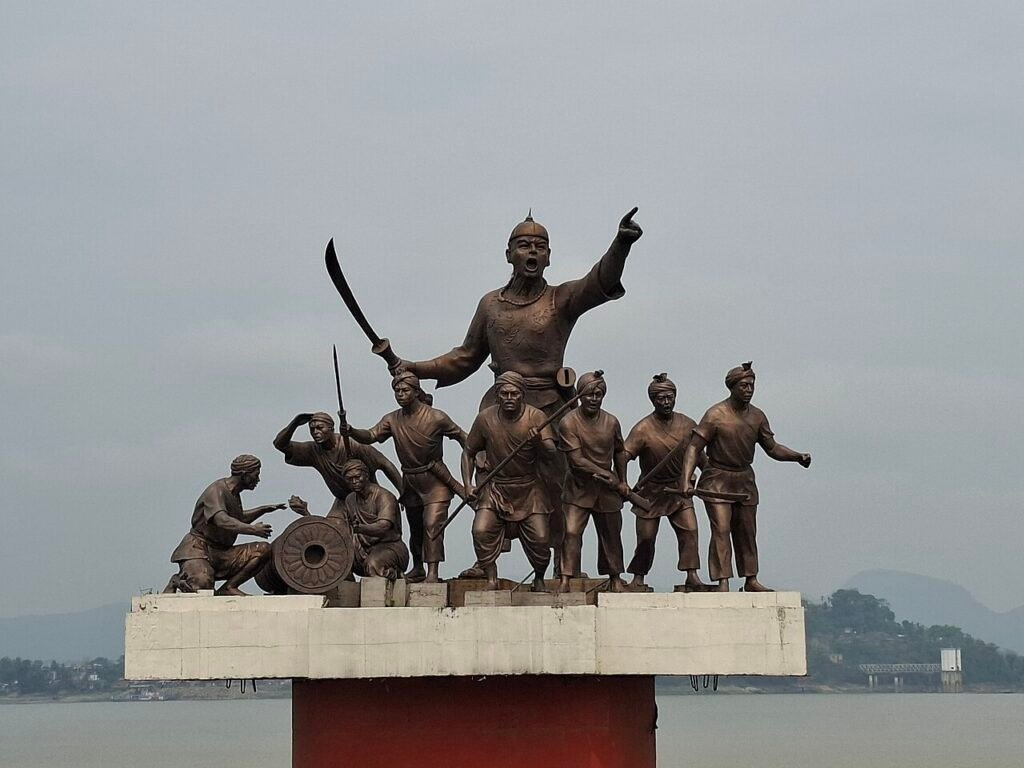
Why in News? The Assam Tribune’s opinion page on 24 November 2026 carried an article on the Battle of Saraighat (1671) and Lachit Borphukan. It recalls how the Ahoms recovered from the defeat of 1662-63, and argues that Assam needs leaders with Lachit’s spirit today. The day is also Lachit Divas, which Assam observes every 24 November, his birth anniversary.
Current Context (The Trigger)
- Opinion piece: The article sets the humiliation of 1662-63, when Mir Jumla occupied the Ahom capital Garhgaon, against the Ahom victory at Saraighat in 1671, only nine years later.
- Long preparation: The writer says the victory did not come in a year or two. It was the end of a long struggle to avenge the 1662-63 invasion.
- Team effort: The article credits the king’s courage, careful planning by ministers and generals, and the readiness of ordinary Assamese of all communities to sacrifice.
- Modern argument: In the writer’s view, political conquest has given way to economic imperialism (control of trade, commerce and industry). He argues that Assam needs “modern-day Lachits” to resist outside economic pressure.
- Anniversary mark: The piece counts 355 years since Saraighat.
Core Concepts & Static GK
- Mir Jumla’s invasion: The Mughal march into Assam began on 4 January 1662. Mir Jumla entered the abandoned capital Garhgaon on 17 March 1662.
- Treaty of Ghilajharighat: The 1663 treaty forced the Ahoms to pay gold, silver and elephants, give hostages and give up territory to the Mughals.
- Change of rulers: Swargadeo Jayadhwaj Singha died in 1663, broken by the defeat. Chakradhwaj Singha then took the throne and vowed to teach the Mughals a lesson.
- Lachit’s appointment: Atan Burhagohain, the Rajmantri (the king’s chief minister), picked Lachit. King Chakradhwaj Singha and the ministers then made him commander to recover Guwahati.
- Recovery of Guwahati: Lachit marched from the capital in August 1667 and recovered Guwahati by late 1667. The article gives exact dates (20 August and 2 November 1667) and lists the forts retaken: Simulugarh, Chamdhara Garh, Kajaligarh, Itakhuli and Guwahati.
- Battle of Alaboi (1669): On 5 August 1669 the Ahoms suffered a heavy defeat at Alaboi, near Dadara-Pacharia in Kamrup district. About 10,000 Ahom soldiers died, but the war went on.
- Saraighat (1671): The decisive phase was a naval fight on the Brahmaputra near Guwahati. Lachit was seriously ill but still led the attack. The exact day is not known; accounts place it in March 1671.
Institutional Machinery
- Swargadeo: The Ahom king held the title Swargadeo. Before Saraighat, Swargadeo Chakradhwaj Singha ordered the call-up of paiks for the war.
- Paik system: Paiks were the ordinary male subjects who owed service to the state in war and labour, in return for land. All male paiks except Brahmins were called up; women and minors were left out.
- Burhagohain and Borphukan: Atan Burhagohain, the Rajmantri, organised the state for war. Lachit, as Borphukan, held the military command at Guwahati.
Assam & Northeast Linkages
- Lachit Divas: Assam marks 24 November, Lachit’s birth anniversary, as Lachit Divas across the state. It honours his courage and the Saraighat victory.
- Birth and death: The Ministry of Culture (in a PIB explainer) gives his dates as 24 November 1622 to 25 April 1672.
- 400th anniversary: President Ram Nath Kovind opened the year-long celebrations in Guwahati on 25 February 2022. Prime Minister Narendra Modi addressed the closing ceremony in New Delhi on 25 November 2022.
- Maidam and statue: Lachit’s maidam (burial mound) is at Hollongapar near Teok in Jorhat district. On 9 March 2024 the Prime Minister unveiled a 125-foot statue there (an 84-foot figure on a 41-foot base).
- Army tribute: Since 1999, the National Defence Academy (NDA) has given the Lachit Borphukan Gold Medal to its best cadet.
Prelims Trap Zones (Watch out for)
- Year Trap: Mir Jumla occupied Garhgaon in 1662, and Saraighat was fought in 1671. Alaboi (1669) was an Ahom defeat, not an Ahom win.
- Death Trap: Lachit did not die in the battle. He died on 25 April 1672, about a year after Saraighat.
- Mughal Commander Trap: Ram Singh I of Amber (the paper writes Ram Singha), son of Jai Singh, led the Mughal army at Saraighat. Mir Jumla led the earlier invasion of 1662-63.
- Divas Trap: Lachit Divas on 24 November is his birth anniversary. It is not the date of the battle, which was fought in March 1671.
- Exact Date Trap: Do not give a fixed day for Saraighat. Sources say only that it was fought around March 1671.
- Place Trap: Lachit’s maidam and the 125-foot statue are at Hollongapar near Teok in Jorhat district. They are not at Saraighat in Guwahati.
Introduction
In 1671, a seriously ill Lachit Borphukan led the Ahom forces against a large Mughal army on the Brahmaputra at Saraighat, and won. This came only nine years after Mir Jumla had occupied the Ahom capital Garhgaon. The battle is remembered as one of the finest examples of resistance in Indian history, built on planning, local knowledge and public support.
Road from Defeat to Victory
- Collapse of 1662-63: Mir Jumla’s army took Garhgaon, and the Ahom king had to flee. The 1663 treaty drained the treasury through payments in gold, silver and elephants.
- Leadership change: Jayadhwaj Singha died in 1663. His successor Chakradhwaj Singha took a vow to teach the Mughals a lesson.
- Rebuilding: The kingdom was short of paiks and weapons at that time. Atan Burhagohain organised the whole state for war.
- Merit-based choice: Atan Burhagohain spotted Lachit, the son of Momai Tamuli Borborua. Lachit had risen through posts such as Ghora Barua, Duliya Borborua, Simluguria Phukan and Dolakasharia Barua.
- Quick recovery of Guwahati: He set out in August 1667 and had retaken Guwahati, with its nearby forts, before the end of that year. The Mughals lost their main base in western Assam within months.
- Four years of preparation: Between 1667 and 1671 both sides camped around Guwahati, with only occasional fighting. Aurangzeb sent Ram Singha with a large army, and the Battle of Alaboi followed in 1669.
Elements of Lachit’s Leadership
- Use of terrain: The Ahoms chose hilly Guwahati, where Mughal cavalry could not move freely. They also built mud embankments to slow the Mughal advance on land.
- Guerrilla methods: The Ahoms used guerrilla raids (dagga judha) to wear down the Mughal camps.
- Naval strength: The decisive fight was on the river, where the Ahoms were stronger. Lachit led the boats in person at a critical moment, though he was seriously ill.
- Total mobilisation: By the king’s order, all male paiks except Brahmins were called up. Neighbouring tribal kings sent soldiers and resources.
- Inclusive effort: The article stresses that people of all ethnic communities took part. The Ministry of Culture also notes that Lachit brought together the tribal forces of Assam.
- Outcome: The Mughal army under Ram Singh was defeated at Saraighat and retreated to Rangamati in March 1671. Aurangzeb’s plan to bring Assam under Mughal rule failed.
Mughal Aims and the Modern Parallel (the writer’s view)
- Political aim: The writer says the Mughals wanted to bring Koch Bihar and Assam under their rule.
- Economic aim: He adds that the Mughals also wanted the natural resources and wealth of these kingdoms.
- Strategic aim: In his view, control of Assam would open the road to Southeast Asia, China and Burma.
- Economic imperialism: The writer argues that powers today seek control of trade and industry rather than land. He names China and the United States as countries trying to dominate India’s economy.
- Internal argument: He also claims that business groups from outside Assam are trying to take over its resources. This is the author’s opinion, not a proven finding, so students should present it as a view.
- Lesson drawn: The writer wants leaders who keep Assam secure “politically and economically” and who do not feel obliged to outside forces.
Challenges
- Uncertain details: Historians differ on some details. The exact day of Saraighat is unknown, and troop numbers vary across accounts.
- Legend versus record: The popular story that Lachit beheaded his own uncle is not found in any historical document. Students should not repeat it as fact.
- Limited national memory: For long, Lachit was little known outside Assam. The Centre treated the 400th anniversary in 2022 as a way to honour “unsung heroes” like him.
- Use in public life: Lachit’s image is now used widely in politics and public events. This makes it harder to keep the history separate from present-day agendas.
- Mixing past and present: The opinion piece links a 17th-century war to modern trade questions. The two situations differ, and claims about economic control today need data to stand up.
- Alliances on both sides: The article lists many Indian rulers and others who helped the Mughals. So the war was not a simple story of Assam against outsiders.
Way Ahead
- Source-based history: Universities and Assam’s archaeology directorate can publish verified Ahom records and Buranjis (Ahom chronicles) in simple language for students.
- Battle sites: The state can protect and study sites such as the Alaboi plains, where archaeologists have found mounds believed to be graves of the 1669 soldiers.
- Memorial as a classroom: The Hollongapar memorial near Teok, with its statue and museum, can host school visits so students learn the real story.
- Teaching military ideas: Colleges can teach Saraighat as a case study of terrain, river warfare and logistics. The NDA gold medal already links his name to young officers.
- Local economic strength: The state can back local entrepreneurs, cooperatives and skill training. Strong local firms answer outside economic pressure better than slogans do.
- Inclusive memory: Lachit Divas events can involve all communities of Assam, because the victory belonged to all of them.
Conclusion
Saraighat shows that a defeated state can recover through patient planning, the right choice of commander and the support of its people. Lachit’s example is best honoured by building local strength and by telling his story with verified facts, not by turning his name into a slogan.
Asked in APSC
- APSC Prelims 2023: (answer in the MCQs below)
If an individual is awarded with a gold medal called Lachit Borphukan Medal as the best Army Cadet, where has he/she passed out from?- (A) Indian Military Academy (IMA)
- (B) National Defence Academy (NDA)
- (C) Rashtriya Indian Military College (RIMC)
- (D) Army Cadet College (ACC)
- APSC Prelims 2022: (answer in the MCQs below)
Arrange, the following external invasions of Assam in chronological order:
(i) Invasion of Bakhtiyar Khilji
(ii) Invasion of Turbak
(iii) Invasion of Mir Jumla
(iv) Invasion of Sikandar Shah
Select the correct answer using the codes given below.- (A) (i), (ii), (iii), (iv)
- (B) (i), (iv), (ii), (iii)
- (C) (ii), (i), (iv), (iii)
- (D) (i), (ii), (iv), (iii)
All 500 APSC Prelims PYQs of CCE 2020 to 2025, with answers and explanations: practise free in the PYQ Explorer
Sankardev and Guru Nanak Meeting and the Bhakti Movement in Assam
Open this topic as a separate page, with its MCQs →
Syllabus Mapping
- Prelims: GS Paper I (Current events of national and international importance; History of India; questions related to Assam).
- Mains: GS Paper I (Indian culture: salient aspects of Art Forms and literature from ancient to modern times); GS Paper V (History, Art, Culture, Literature, Tradition and Heritage of Assam: Religious Movements, Leading Personalities).
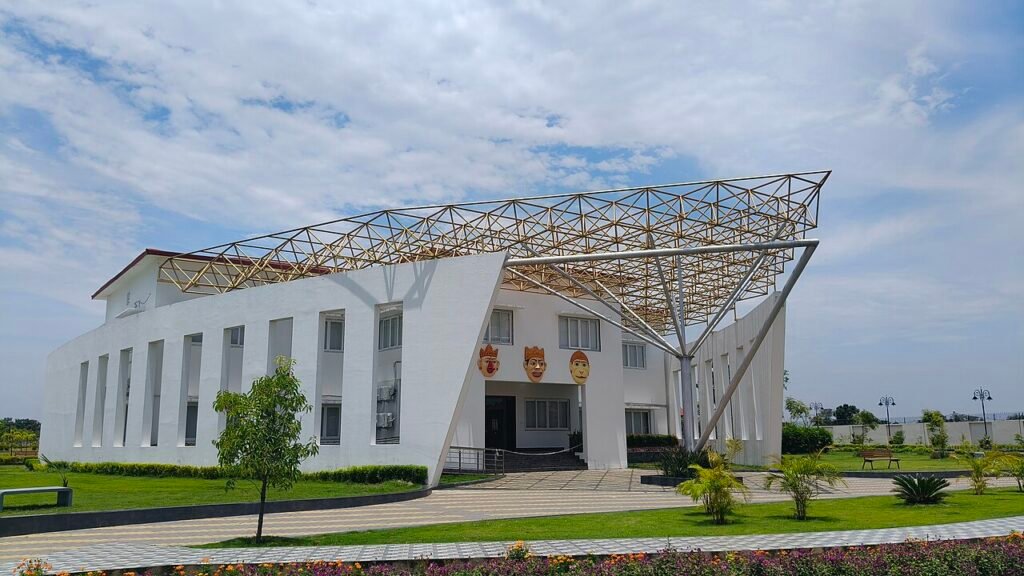
Why in News? An op-ed article in the Assam Tribune (24 November 2026, page 7) looks at the believed meeting between Srimanta Sankardev and Guru Nanak Dev in Assam. It says the time and place are still debated, and different traditions name Dhubri, Bardowa, Nazira and Brahmkund.
Current Context (The Trigger)
- Debated evidence: The article says the meeting is often debated because there is no concrete and conclusive historical evidence for it.
- Sources that point to a meeting: The writer says the Sikh Janam-Sakhis, local sources, oral stories and modern scholarship broadly agree on one point. They say the two saints met in Assam. This is the writer’s reading of the tradition, not settled proof.
- Three possible periods: Historians suggest three periods. These are 1481 to 1493, the year 1505 (Guru Nanak’s first Udasi, or journey, to the East), and 1514 to 1518 (his third Udasi).
- Four proposed places: The article names Dhubri, Bardowa, Nazira (on the Dikhow river in Sivasagar district) and Brahmkund (Parshuram Kund, Arunachal Pradesh).
- Source of the Sikh account: The article cites the Puratan Janam Sakhi, which it calls the oldest surviving life account of Guru Nanak. It says Guru Nanak visited Kamakhya, Guwahati and Dhubri on his eastern journey, and that the two are believed to have met then.
Core Concepts & Static GK
- Srimanta Sankardev: Most accounts date his life to 1449-1568. Some authors doubt that he lived so long, so these years should be read as the accepted tradition.
- Ekasarana Dharma: This Neo-Vaishnava faith centres on one deity, Vishnu in the form of Krishna. Its core idea is taking refuge (sarana) in one God. It is also called Mahapurushiya dharma.
- Two forms of devotion: Of the nine forms of bhakti, Sankardev stressed only two. These are sravana (hearing God’s name) and kirtana (chanting it).
- Namghar and Sattra: A namghar is a community prayer hall open to all castes and communities. A sattra is a Vaishnava monastery that is a centre of worship and the arts.
- Kirtan Ghosa and Naam Ghosa: Kirtan Ghosa is a collection of devotional poems mainly composed by Sankardev for community singing. Naam Ghosa, the companion book of hymns, was composed by his disciple Madhavdev.
- Borgeet, Ankiya Naat and Bhaona: Borgeets are devotional songs set to ragas and talas. Ankiya Naats are one-act plays written in Brajavali. Bhaona is their staged performance in namghars.
- Guru Nanak: Reference works give his birth as 15 April 1469 at Rai Bhoi di Talvandi, now Nankana Sahib in Pakistan. Tradition is divided between 1538 and 1539 for his death, and 1539 is seen as more likely.
Institutional Machinery
- Sangeet Natak Akademi: This national academy of music, dance and drama recognised Sattriya as a classical dance of India in 2000. Sattriya is counted as the eighth classical dance form.
- Origin of Sattriya: Sankardev is credited with shaping the dance in the 16th century. Traditionally, only male monks called bhokots performed it in the sattras, and the sattras of Majuli are still known for it.
- Sattras today: Assam Tourism lists Kamalabari, Auniati, Dakhinpat and Garamur among the sattras of Majuli. The Barpeta Satra was set up by Madhavdev.
Assam & Northeast Linkages
- Bardowa: The article describes it as the place where Sankardev settled, gathered followers, wrote scriptures and composed Borgeets. Assam Tourism names Batadrava Than (Bordowa Than) in Nagaon district as his birthplace.
- Dhubri: The Sikh narrative in the article says Guru Nanak stayed at Damdama, meaning “resting place” in Punjabi. A gurdwara called Damdama Sahib marks the spot.
- Nazira: Local lore, as reported, says Guru Nanak met Sankardev and the Ahom king Suhungmung (Dihingia Raja) on the banks of the Dikhow river.
- Brahmkund: An oral tradition links the two saints to Brahmkund (Parshuram Kund) in present-day Arunachal Pradesh at Makar Sankranti. The article itself says this story is hardly supported by Sikh or Assamese literature.
Prelims Trap Zones (Watch out for)
- Proven fact trap: Do not accept an option saying the meeting is historically proven. The evidence is not conclusive, and both the time and the place are disputed.
- Author trap: Kirtan Ghosa is mainly by Sankardev. Naam Ghosa is by Madhavdev. Students often swap them.
- Place trap: The Dhubri meeting is a Sikh account. Some scholars dispute it because Bardowa and Dhubri lay in different medieval kingdoms, so they think Sankardev was unlikely to travel there.
- Tradition trap: Guru Nanak’s death year is given as 1538 or 1539. Sankardev’s life span is also not certain, so be wary of options that sound too precise.
- Dance trap: Sattriya was recognised as a classical dance in 2000 by the Sangeet Natak Akademi. It was not recognised by UNESCO or by a ministry order.
Introduction
An op-ed article in the Assam Tribune on 24 November 2026 revisits the tradition that Srimanta Sankardev and Guru Nanak met in Assam. Historians still argue over when and where, because no conclusive record exists. The story matters because it shows Bhakti as a thread linking Punjab and Assam. It also tests how a student should use tradition as a source.
Significance of the Bhakti Link between Assam and Punjab
- All-India Bhakti: The writer reads the meeting as a sign that the Bhakti movement spread across India. It united saint-reformers of Punjab, Haryana and Assam. This is an interpretation of the tradition.
- Shared idea of one God: The article says both saints were devoted to Ek Onkar (One God) and Ek Sarana (single refuge). This common thread can be compared by scholars.
- Cultural memory: Even the doubtful Brahmkund story, the writer says, shows the cultural legacy of Guru Nanak’s eastern journeys. A tradition can matter even where proof is weak.
- Shared sacred sites: Damdama Sahib at Dhubri is described as a memorial to the believed meeting. Such sites link Assamese and Sikh communities.
- Two streams of Bhakti: Guru Nanak taught devotion to a formless God and is often linked with the nirguna stream. Sankardev’s Ekasarana centres on Krishna, a personal form of God. A meeting, if it happened, would link two different streams of Bhakti.
Key Features of Sankardev’s Neo-Vaishnavism
- Single deity: Ekasarana centres on Vishnu as Krishna, with refuge in one God as its core idea.
- Simple worship: Sankardev stressed only hearing and chanting the Lord’s name, so ritual was kept simple.
- Open institutions: Namghars were open to all castes and communities. They gave ordinary people a place for worship and community life.
- Literature for the people: He rendered eight of the twelve books of the Bhagavata Purana for local readers. Kirtan Ghosa is still sung daily in namghars.
- Performing arts: Borgeets, Ankiya Naats and Bhaona carried religious ideas to the public. Sattriya dance grew from the same tradition.
Challenges
- No conclusive evidence: The article admits that historians lack concrete evidence for the meeting. So students should write “believed” and not “proved”.
- Three competing periods: The proposed dates run from 1481 to 1518. Each period fits a different phase of the two saints’ lives, which shows how loose the dating is.
- Conflicting places: Dhubri, Bardowa, Nazira and Brahmkund are each backed by different traditions. No single site can be treated as the authentic one.
- Political borders: The article reports that Dhubri and Bardowa belonged to different medieval kingdoms with strict border controls. Some scholars use this to doubt that Sankardev travelled to Dhubri.
- Tension with biography: The article places Sankardev in Majuli and Sivasagar during the third period (1514-1518). Other biographies usually date his move into the Ahom kingdom to the 1520s. The exact years vary between sources, so this is a point for analysis, not a settled fact.
- Dependence on devotional texts: Janam-Sakhis are devotional life accounts of Guru Nanak. Modern scholars question the details of many of their travel stories, so their claims need support from other records.
Way Ahead
- Joint research: Universities in Assam and Punjab, such as Gauhati University and Guru Nanak Dev University, could study Sikh and Assamese manuscripts side by side. This would test the claims against both sets of sources.
- Archival survey: The Assam State Archives and sattra libraries could list old manuscripts, charters and biographies that mention Guru Nanak.
- Careful teaching: School and college texts should say “according to tradition” and give the competing places and periods. Students then learn to separate faith from evidence.
- Protect the sites: Assam’s archaeology and museum authorities could document Damdama Sahib and the namghars and sattras linked to Sankardev. This holds whatever the verdict on the meeting.
- Cultural exchange: Joint kirtan and Bhaona programmes with Sikh communities could build on the shared message of One God. The Sangeet Natak Akademi could support them. They must not claim unproven facts.
Conclusion
The meeting of Sankardev and Guru Nanak remains a believed tradition, not a proven event, and historians disagree on its time and place. Its real value lies in what it shows: Bhakti ideas travelled across regions and shaped Assam’s culture through namghars, sattras, music and drama. Students should treat it with exactly that balance.
Asked in APSC
- APSC Mains 2020, GS Paper 1 (15 marks): “The Neo-Vaishnavite Movement played the most significant role in laying the foundation of a broader society in the Brahmaputra Valley of Assam.” Elucidate this statement.
- APSC Prelims 2023: (answer in the MCQs below)
Which of the following dramas/Ankiya Nats was/were not composed by Sankardev?
(i) Kaliya Daman
(ii) Patni Prasada
(iii) Keli Gopal
(iv) Arjun Bhanjan
Select the correct answer using the codes given below.- (A) (i) and (iii) only
- (B) (ii) only
- (C) (ii) and (iii) only
- (D) (iv) only
All 500 APSC Prelims PYQs of CCE 2020 to 2025, with answers and explanations: practise free in the PYQ Explorer
Lowy Institute Asia Power Index 2026 and India’s Rank
Open this topic as a separate page, with its MCQs →
Syllabus Mapping
- Prelims: GS Paper I (Current events of national and international importance; International Relations and associated APSC current affairs).
- Mains: GS Paper II (India and its neighbourhood – relations; Bilateral, regional and global groupings and agreements involving India and/or affecting India’s interests); GS Paper V (International Relations; Economic Development of Assam).
Why in News? Australia’s Lowy Institute has released its 2026 Asia Power Index. A report from New Delhi on 23 November said India stayed third in Asia and cut its gap with China to the lowest level since 2018. Prime Minister Narendra Modi also rose to second place in the index’s ranking of regional leaders.
Current Context (The Trigger)
- Third place again: India kept its third position for the third edition in a row. The United States (78.9) and China are the only two countries ahead of it.
- India’s score: India’s overall score rose by 0.5 points to 40.5. This was the biggest gain among the top 10 powers of the region.
- Gap with China: China’s score slipped by 0.1 points to 73.6. The gap between the two countries fell to 33.1 points, the lowest since the index began in 2018.
- Only major power: India is the only country in the index’s Major Power category. The Lowy country pages confirm this: India is a “major power” for 2026, while fourth-placed Japan (38.6) is a “middle power”.
- Leader ranking: Modi moved up three places, from fifth in 2025 to second. Only Chinese President Xi Jinping is ranked above him.
- Expert view: Lowy’s expert survey rated Modi higher for advancing India’s diplomatic interests in Asia. But the report said India’s low profile during the Gulf conflict hurt views of his global leadership and strategic ambition.
Core Concepts & Static GK
- What the index is: The Lowy Institute launched the annual Asia Power Index in 2018. It measures resources and influence to rank the relative power of states in Asia. It covers 27 countries and territories using 131 indicators.
- Eight measures: The first four measures cover resources: economic capability, military capability, resilience and future resources. The next four cover influence: economic relationships, defence networks, diplomatic influence and cultural influence.
- Weights: Economic capability and military capability carry 17.5% each. Economic relationships carry 15%. The other five measures carry 10% each. So the resource measures make up 55% and the influence measures 45%.
- Meaning of power: The index defines power as the capacity of a state to direct or influence the behaviour of other states and non-state actors. It also covers the course of international events.
- Power categories: A country with 70 points or more is a superpower. A major power needs 40 points or more. A middle power needs 10 points or more, and a minor power scores below 10.
- Power Gap: The Power Gap is the difference between a country’s actual power and the power expected from its resources. A negative gap means the country has less influence than its resources suggest. India’s gap is negative.
Reports, Indices & Data
- Diplomatic influence: India scored 70.3, down by 0.5 points. It is still one of India’s strongest areas.
- Cultural influence: This measure gained the most, up 2.3 points to 43.8.
- Defence and economic ties: India’s defence networks ranking improved two places to ninth. Its economic relationships ranking improved two places to seventh. BrahMos missile sales to Southeast Asian countries helped its defence engagement.
- Investment attractiveness: India ranked second, ahead of China. It drew USD 552 billion of inward foreign capital investment over 2015-24, against China’s USD 533 billion. The United States led with USD 1.13 trillion.
- Recent inflows: For 2022-24, India again ranked second, with USD 255 billion. China received USD 95.7 billion over the same period, and the United States led.
- Armed forces indicator: India ranked first with a score of 100. China scored 85.3 and the United States 64.8.
- Best and weakest: On Lowy’s India page, the Power Gap is -3.3 in 2026, against -4.0 earlier. Future resources is India’s best measure (third place) and defence networks its weakest (ninth place).
Assam & Northeast Linkages
- Assam as gateway: Prime Minister Modi spoke at the Advantage Assam 2.0 summit in Guwahati on 25 February 2025. He said Assam is emerging as a gateway between South East Asia and India. He linked this to UNNATI, the Centre’s industrial development scheme for the North East.
- Northeast as gateway: In a speech at Shillong on 27 May 2016, the Prime Minister called the North Eastern Region the gateway to South-East Asia. The index’s defence and economic ties with Southeast Asia, such as BrahMos sales, point to the same region.
- Act East Policy: The Ministry of External Affairs (MEA) says the Look East Policy matured into the Act East Policy. The Prime Minister formally announced it at the 12th ASEAN-India Summit and 9th East Asia Summit in Nay Pyi Taw, Myanmar, in November 2014. The MEA calls ties with ASEAN (Association of Southeast Asian Nations) the foundation of this policy.
- Kaladan project: The Kaladan Multi-Modal Transit Transport Project links Kolkata to Mizoram through Sittwe port in Myanmar. It has a 539 km sea leg to Sittwe, a 158 km river leg to Paletwa, and a road of about 110 km to Zorinpui on the border.
- Setback on the ground: The Arakan Army, an armed group in Myanmar, captured Paletwa in January 2024. In July 2024, a Manohar Parrikar Institute for Defence Studies and Analyses (MP-IDSA) paper said the Paletwa-Zorinpui highway was not yet built.
Prelims Trap Zones (Watch out for)
- Rank trap: India is third in the index, behind the United States and China. Modi’s second place is in the separate ranking of regional leaders, behind Xi Jinping.
- Gap trap: The India-China gap narrowed to 33.1 points. It did not widen, and 33.1 is the lowest since 2018.
- Threshold trap: Major power status starts at 40 points and superpower status at 70. India’s 40.5 is just above the major power line.
- Investment trap: India is second, not first, in investment attractiveness. India is first in the armed forces indicator, with 100.
- Publisher trap: The index comes from the Lowy Institute, an Australian think tank. It is not a United Nations, World Bank or NITI Aayog report.
- Weights trap: Economic and military capability carry the highest weights, 17.5% each. Cultural influence carries only 10%.
Introduction
The Lowy Institute’s 2026 Asia Power Index kept India third among 27 Asian countries and territories, with a score of 40.5. The gap with China fell to 33.1 points, the lowest since the index began in 2018. The Prime Minister has called Assam a gateway between India and South East Asia. So this rising influence matters for Assam, because India’s land links to Southeast Asia run through the Northeast.
What the 2026 Index Shows About India
- Steady climb: India’s score rose by 0.5 points, the biggest improvement among the top 10 powers. It has held third place for three editions in a row.
- Narrower gap with China: The gap with China is now 33.1 points. A year earlier, Lowy had called the widening capability gap with China a long-term challenge for India’s vision of a multipolar world order.
- Regional influence: The report said India played a much more influential role in Asia this year. China managed this even though its relative economic capability fell and it spent the year dealing with problems at home.
- Investment pull: India ranked second for investment attractiveness, with USD 552 billion over 2015-24. This put it ahead of China, at USD 533 billion.
- Military strength: India topped the armed forces indicator with a score of 100. The 2025 edition said India’s military capability had improved steadily, likely helped by its performance in Operation Sindoor, launched in May 2025.
Why the Ranking Matters for India
- Major power status: India’s score went above the 40-point major power line in the 2025 edition. The 2026 score of 40.5 keeps it above the line, and it is the only country in that category.
- Investment destination: India drew USD 255 billion in investment inflows over 2022-24, second only to the United States. China drew USD 95.7 billion in that period.
- Defence diplomacy: BrahMos sales to Southeast Asian countries added to India’s influence. India’s defence networks ranking rose two places to ninth.
- Soft power: Cultural influence gained 2.3 points to 43.8. In 2025, Lowy linked India’s cultural gains to its growing role as a travel and tourism destination for Asian countries.
- Leadership image: Experts placed Modi second among regional leaders, behind only Xi Jinping. A better-rated leader can carry more weight in regional summits and talks.
Assam and Northeast Dimension
- Land bridge: The Prime Minister has described the North Eastern Region (2016) and Assam (2025) as India’s gateway to South East Asia. The MEA calls ties with ASEAN the foundation of the Act East Policy.
- Connectivity projects: The MEA lists the India-Myanmar-Thailand Trilateral Highway and the Kaladan project as its main connectivity projects with ASEAN. These links would help the economic relationships that the index measures.
- Kaladan route: The Kaladan project would give Mizoram a sea-river-road route to Kolkata through Sittwe. MP-IDSA says it would reduce pressure on the Siliguri Corridor, the narrow land link on which Assam and the Northeast depend.
- Project risks: Delays came from the 2017 Rohingya crisis, the February 2021 military coup in Myanmar and fighting with the Arakan Army. The Arakan Army took Paletwa in January 2024.
- Trade gap: Lowy noted in 2025 that India’s trade relations with other Asian countries remain underdeveloped. Working border trade and transport links through Assam and the Northeast are one way to close this gap.
Challenges
- Power Gap: India’s influence is still lower than its resources suggest. Its Power Gap score is -3.3 in 2026, better than -4.0 before.
- Dip in economic capability: The report noted a fall in India’s relative economic capability this year. A smaller economic base leaves less to build influence on.
- Weak defence networks: Defence networks is India’s weakest measure, at ninth place. In 2025, Lowy said India’s defence networks and diplomatic ties did not grow in step with its resources.
- Diplomatic dip: India’s diplomatic influence score fell by 0.5 points to 70.3. Its low profile during the Gulf conflict weighed on views of Modi’s global leadership and strategic ambition.
- Gap with China remains large: India is still 33.1 points behind China. Closing such a gap will need strong growth over many years.
- Unstable neighbourhood: The Kaladan project shows how conflict in Myanmar can stall a project meant to open up the Northeast. The Paletwa-Zorinpui road was still not built in mid-2024.
Way Ahead
- Grow the economy faster: The Finance Ministry and NITI Aayog (the Centre’s policy think tank) should push manufacturing and exports. Economic capability carries the highest weight in the index, 17.5%.
- Deepen trade ties inside Asia: The Ministry of Commerce should widen trade pacts and cut barriers with Asian partners. Lowy has flagged underdeveloped trade with Asia as a weakness.
- Build defence partnerships: The MEA and the Ministry of Defence should expand exercises, training and defence exports in Southeast Asia. This would lift defence networks, India’s weakest measure.
- Finish Northeast connectivity: The MEA, Mizoram and other Northeast states should push the Kaladan road and the Trilateral Highway. Safe routes would turn Assam and the region into a real gateway.
- Use soft power: India should promote tourism, education and cultural exchange with Asia. Cultural influence was India’s fastest-growing measure this year.
- Stay engaged in crises: India should speak and act more visibly in regional crises. The report showed that a low profile in the Gulf conflict cost India in perceptions.
Conclusion
The 2026 index shows India as Asia’s only major power below the two superpowers, with a narrower gap with China. But India still gets less influence than its resources suggest. Turning Assam and the Northeast into a working gateway to Southeast Asia is one practical way to close that gap.
News in Short
- Morigaon, AIDS Suraksha 2026: Morigaon district has achieved ‘Surakshit’ status under the AIDS Suraksha 2026 initiative. District Commissioner Anamika Tewari has asked the Health department to work next for the higher ‘Surakshit Plus’ status.
- Press and Registration of Periodicals Act, 2023: PIB Guwahati held a Varta (interaction meeting) with north-east publishers to explain the new Act and the Press Sewa Portal. The Act came into force on 1 March 2024 and repealed the Press and Registration of Books Act, 1867. About 1,000 applications now come in every month, of which around 700 to 800 are granted registration online.
- AASU constitution jubilee: The All Assam Students’ Union (AASU) launched a yearlong diamond jubilee celebration of its constitution in Guwahati. The constitution was adopted at 5 am on August 8, 1967, at the union’s Tezpur session.
- US panel on the Dalai Lama’s succession: The US-China Economic and Security Review Commission has made a recommendation to the US Congress. Congress should recognise the Gaden Phodrang Trust as the sole legitimate authority to identify the 14th Dalai Lama’s successor. It also proposed a senior-level channel with India for succession contingency planning. In a statement released on 2 July 2025, the Dalai Lama himself said the Trust has sole authority to recognise his future reincarnation.
- New Assam House, Dwarka: Chief Minister Himanta Biswa Sarma inaugurated the new Assam House at Sector-13, Dwarka, New Delhi, built for Rs 22 crore on a 1,000-square-metre plot. It has a built-up floor area of 2,827.48 square metres and 55 beds. The beds are spread over 21 guest rooms, two VIP suites and two dormitories.
- POWIET, Jorhat: The Prince of Wales Institute of Engineering and Technology (POWIET) was set up in 1927. It was the first technical institution in north-eastern India. Its yearlong centenary celebrations begin on November 27. It grew out of a Rs 1 lakh donation made in 1922 by Saud Bholanath Barooah.
- Textile and apparel target: A report by the Boston Consulting Group (BCG) and the Confederation of Indian Industry (CII) studied India’s textiles and apparel industry. It says the industry can grow to $350 billion by fiscal 2031. This includes $100 billion in exports.
APSC Prelims MCQs
Practice questions on the topics above
Topic 1: Sonitpur Solar Power Project (SJVN Green Energy)
Q1. SJVN Green Energy Limited has started commercial operation at its solar project in Sonitpur, Assam. Consider the following statements:
(i) Commercial operation has begun for 45 MW of the 50 MW project.
(ii) The project was awarded by the Assam Power Distribution Company Limited.
(iii) The Power Purchase Agreement was signed with the Assam Electricity Grid Corporation Limited.
Which of the statements given above is/are correct?
- (a) (i) and (ii) only
- (b) (ii) and (iii) only
- (c) (i) only
- (d) (i), (ii) and (iii)
Show answer
Answer: (a) Explanation: Statements (i) and (ii) are correct. SJVN Green Energy reached the Commercial Operation Date for 45 MW of the 50 MW plant on 21 November. The Assam Power Distribution Company Limited (APDCL) awarded the project on 28 August 2023. Statement (iii) is wrong. The Power Purchase Agreement, signed on 7 February 2024, is with APDCL, the distribution company. The Assam Electricity Grid Corporation Limited (AEGCL) is the state transmission utility. The plant’s line ends at its Dhekiajuli substation. Options (b) and (d) include the wrong statement (iii), and option (c) leaves out the correct statement (ii). Value addition: A discom buys and sells power to consumers, while a transmission company only carries it over high-voltage lines.
Q2. The Assam Solar Power Promotion Policy 2025 is meant to speed up solar capacity in the state. Consider the following statements:
(i) It sets a minimum target of 3,500 MW of solar capacity by 2030.
(ii) The Assam Power Distribution Company Limited is its nodal agency.
(iii) The state may hold up to 49 per cent equity in any project.
Which of the statements given above is/are NOT correct?
- (a) (i) only
- (b) (ii) only
- (c) (iii) only
- (d) (i) and (ii) only
Show answer
Answer: (c) Explanation: Only statement (iii) is incorrect, so (c) is the key. The policy lets the state hold up to 27 per cent equity in a project through mutual agreement, not 49 per cent. Statement (i) is correct, because the policy aims for at least 3,500 MW of solar by 2030 and stays valid until 31 March 2030. Statement (ii) is also correct, since APDCL is the nodal agency. Options (a), (b) and (d) wrongly label a correct statement as incorrect. Value addition: The policy covers ground-mounted and floating plants, rooftop solar and Battery Energy Storage Systems. It allows tariff-based bidding, nomination for public sector undertakings and first-come first-served allotment for private developers.
Q3. Match List-I with List-II (facts of the Sonitpur solar project):
| List-I (Feature) | List-II (Figure) |
|---|---|
| a. Tariff under the Power Purchase Agreement | 1. 18 km |
| b. Leased land at Sitalmari | 2. Rs 3.92 per unit |
| c. Length of the 132 kV transmission line (approx.) | 3. 220 acres |
| d. Expected generation in the first year | 4. 100.82 million units |
Select the correct answer using the codes given below:
- (a) a-2, b-3, c-1, d-4
- (b) a-2, b-3, c-4, d-1
- (c) a-3, b-2, c-1, d-4
- (d) a-1, b-3, c-2, d-4
Show answer
Answer: (a) Explanation: The tariff is Rs 3.92 per unit (a-2). The plant stands on 220 acres of leased land at Village No. 3 Sitalmari in Borsola Revenue Circle (b-3). The evacuation line is about 18 km long and runs at 132 kV to the Dhekiajuli substation (c-1). The plant should generate 100.82 million units in its first year (d-4). Option (b) swaps the line length with the first-year output. Option (c) swaps the tariff with the land area. Option (d) mixes the tariff and the line length. Value addition: Over 25 years, the project is expected to generate about 2,319 million units and avoid about 16.23 lakh tonnes of carbon dioxide.
Q4. On which date did the Government of India confer Navratna status on SJVN Limited, the parent of SJVN Green Energy Limited?
- (a) 28 August 2023
- (b) 10 March 2024
- (c) 30 August 2024
- (d) 24 May 1988
Show answer
Answer: (c) Explanation: The Government of India conferred Navratna status on SJVN Limited on 30 August 2024, as stated on the company’s own profile page. Option (a), 28 August 2023, is the date on which APDCL awarded the Sonitpur solar project. Option (b), 10 March 2024, is the date on which the Chief Minister laid its foundation stone. Option (d), 24 May 1988, is the date on which SJVN was incorporated. It was set up as a joint venture of the Government of India and the Government of Himachal Pradesh. Value addition: The Government of India holds 55.00 per cent of SJVN and Himachal Pradesh holds 26.85 per cent. Its renewable arm, SJVN Green Energy Limited, was incorporated on 30 March 2022.
Topic 2: Battle of Saraighat and Lachit Borphukan’s Leadership
Q5. The Battle of Saraighat is remembered as a landmark in Ahom history. Consider the following statements:
(i) The Battle of Alaboi in 1669 was a clear Ahom victory over the Mughals.
(ii) The Battle of Saraighat was fought in 1671 on the Brahmaputra near Guwahati.
(iii) Lachit Borphukan was the son of Momai Tamuli Borborua.
Which of the statements given above is/are correct?
- (a) (i) and (ii) only
- (b) (ii) and (iii) only
- (c) (i) and (iii) only
- (d) (i), (ii) and (iii)
Show answer
Answer: (b) Explanation: Statement (ii) is correct. The decisive Ahom victory came in 1671 in a naval fight on the Brahmaputra at Saraighat, near Guwahati. Statement (iii) is also correct, because Lachit was the son of Momai Tamuli Borborua of the Lukhurakhon clan. Statement (i) is wrong. At Alaboi, on 5 August 1669, the Ahoms suffered a heavy defeat and lost about 10,000 soldiers, though the war went on. So options (a), (c) and (d), which all include (i), are wrong. Value addition: The exact day of Saraighat is not known; accounts place it around March 1671.
Q6. Match List-I with List-II:
| List-I (Event) | List-II (Year) |
|---|---|
| a. Mir Jumla occupies Garhgaon | 1. 1669 |
| b. Lachit sets out to recover Guwahati | 2. 1671 |
| c. Battle of Alaboi | 3. 1662 |
| d. Battle of Saraighat | 4. 1667 |
Select the correct answer using the codes given below:
- (a) a-3, b-4, c-1, d-2
- (b) a-3, b-1, c-4, d-2
- (c) a-4, b-3, c-2, d-1
- (d) a-1, b-4, c-3, d-2
Show answer
Answer: (a) Explanation: Mir Jumla entered the abandoned Ahom capital Garhgaon on 17 March 1662, so a matches 3. Lachit set out from the capital for Guwahati in August 1667, so b matches 4. The Battle of Alaboi was fought on 5 August 1669, so c matches 1. The naval Battle of Saraighat was fought in 1671, so d matches 2. Option (b) swaps the years of Lachit’s march and Alaboi. Option (c) gets every pair wrong. Option (d) swaps the years of Garhgaon and Alaboi. Value addition: After Saraighat, Ram Singh’s defeated army retreated to Rangamati in March 1671.
Q7. Which one of the following statements is NOT correct?
- (a) Lachit Divas is observed in Assam on 24 November, his birth anniversary.
- (b) Under the Treaty of Ghilajharighat, the Ahoms had to give gold, silver and elephants and cede territory to the Mughals.
- (c) Ram Singh I of Amber led the Mughal side at Saraighat.
- (d) Lachit Borphukan died on the battlefield at Saraighat in 1671.
Show answer
Answer: (d) Explanation: Statement (d) is not correct. Lachit was seriously ill during Saraighat but survived the battle. The Ministry of Culture gives his date of death as 25 April 1672. Statement (a) is correct, since Lachit Divas falls on his birth anniversary, 24 November. Statement (b) is correct, because the 1663 treaty forced heavy payments and loss of territory on the Ahoms. Statement (c) is correct, as Ram Singh I of Amber, son of Jai Singh, led the Mughal forces. Value addition: President Ram Nath Kovind opened the 400th birth anniversary celebrations in Guwahati on 25 February 2022.
Q8. The Lachit Borphukan Gold Medal is awarded every year to the best cadet of which institution?
- (a) Indian Military Academy
- (b) National Defence Academy
- (c) Officers Training Academy
- (d) Air Force Academy
Show answer
Answer: (b) Explanation: Since 1999, the National Defence Academy (NDA) at Khadakwasla, Pune, has given the Lachit Borphukan Gold Medal to its best cadet. The aim is to let young soldiers draw inspiration from the Ahom commander of Saraighat. The Indian Military Academy, the Officers Training Academy and the Air Force Academy are separate training academies. Official sources link this medal only to the NDA, so options (a), (c) and (d) are wrong. Value addition: On 9 March 2024 the Prime Minister unveiled a 125-foot statue of Lachit at Hollongapar near Teok in Jorhat district.
PYQ (APSC Prelims 2023): If an individual is awarded with a gold medal called Lachit Borphukan Medal as the best Army Cadet, where has he/she passed out from?
- (A) Indian Military Academy (IMA)
- (B) National Defence Academy (NDA)
- (C) Rashtriya Indian Military College (RIMC)
- (D) Army Cadet College (ACC)
Show answer
Answer: (B) Explanation: The Lachit Borphukan Gold Medal is awarded at the National Defence Academy (NDA), Khadakwasla, Pune. Since 1999 the NDA has conferred it on a top passing-out cadet. It was instituted at the initiative of Lt Gen (Retd) S.K. Sinha, then Governor of Assam, to honour Lachit Borphukan, the Ahom general who defeated the Mughal forces at the Battle of Saraighat (1671), and to inspire young officers.
Read the full explanation, with all APSC Prelims Assam GK PYQs
PYQ (APSC Prelims 2022): Arrange, the following external invasions of Assam in chronological order:
(i) Invasion of Bakhtiyar Khilji
(ii) Invasion of Turbak
(iii) Invasion of Mir Jumla
(iv) Invasion of Sikandar Shah
Select the correct answer using the codes given below.
- (A) (i), (ii), (iii), (iv)
- (B) (i), (iv), (ii), (iii)
- (C) (ii), (i), (iv), (iii)
- (D) (i), (ii), (iv), (iii)
Topic 3: Sankardev and Guru Nanak Meeting and the Bhakti Movement in Assam
Q9. Consider the following statements about the Ekasarana Dharma of Srimanta Sankardev:
(i) Its central deity is Vishnu in the form of Krishna.
(ii) Naam Ghosa, its book of hymns, was composed by Sankardev himself.
(iii) Namghars are community prayer halls open to all castes.
Which of the statements given above is/are correct?
- (a) (i) and (iii) only
- (b) (ii) and (iii) only
- (c) (i) and (ii) only
- (d) (i), (ii) and (iii)
Show answer
Answer: (a) Explanation: Statements (i) and (iii) are correct. Ekasarana centres on Vishnu as Krishna and seeks refuge in one God. Namghars are prayer halls open to all castes and communities, which shows the faith’s social openness. Statement (ii) is wrong because Naam Ghosa was composed by Sankardev’s disciple Madhavdev. Sankardev’s own work for congregational singing is Kirtan Ghosa. So options (b), (c) and (d) are all wrong because they include statement (ii). Value addition: Sankardev stressed only two of the nine forms of bhakti, sravana (hearing God’s name) and kirtana (chanting it). This is why Ekasarana worship is simple and congregational.
Q10. Arrange the following in chronological order, earliest first, going by the dates generally given in reference works:
(i) Birth of Guru Nanak
(ii) Recognition of Sattriya as a classical dance by the Sangeet Natak Akademi
(iii) Birth of Madhavdev
(iv) Birth of Srimanta Sankardev
- (a) (i), (iv), (iii), (ii)
- (b) (iv), (iii), (i), (ii)
- (c) (iv), (i), (iii), (ii)
- (d) (iv), (i), (ii), (iii)
Show answer
Answer: (c) Explanation: Sankardev is traditionally dated to 1449, Guru Nanak was born in 1469, Madhavdev was born in 1489, and Sattriya was recognised in 2000. So the order is (iv), (i), (iii), (ii). Option (a) puts Guru Nanak before Sankardev, but Nanak was born about two decades later. Option (b) places Madhavdev before Guru Nanak, which reverses their birth years. Option (d) puts the 2000 recognition before Madhavdev’s birth, which is impossible. Value addition: Sattriya is counted as India’s eighth classical dance. Its traditional home is the sattras, the Vaishnava monasteries of Assam, especially those of Majuli.
Q11. Which body recognised Sattriya as a classical dance of India in 2000?
- (a) Ministry of Culture
- (b) Sangeet Natak Akademi
- (c) Indian Council for Cultural Relations
- (d) University Grants Commission
Show answer
Answer: (b) Explanation: The Sangeet Natak Akademi, the national academy for music, dance and drama, recognised Sattriya as a classical dance in 2000. The dance grew in the Vaishnava sattras linked to Sankardev and was long performed only by male monks called bhokots. The other options are wrong. The Ministry of Culture is the parent ministry of the Akademi, not the body that gave the recognition. The Indian Council for Cultural Relations promotes cultural links abroad. The University Grants Commission deals with higher education. Value addition: The scholar Maheswar Neog brought monks of the Kamalabari Sattra of Majuli to demonstrate Sattriya at the Akademi’s All India Dance Seminar in New Delhi in April 1958.
Q12. According to the Sikh narrative reported in the Assam Tribune, the gurdwara Damdama Sahib, said to mark the place where Guru Nanak rested during his meeting with Sankardev, is located at:
- (a) Nazira
- (b) Barpeta
- (c) Tinsukia
- (d) Dhubri
Show answer
Answer: (d) Explanation: The Sikh narrative places the believed meeting at Dhubri. Guru Nanak is said to have rested there at Damdama, which means resting place in Punjabi, and the gurdwara serves as a memorial. Nazira, on the Dikhow river in Sivasagar district, belongs to a separate Upper Assam lore. Barpeta is where Sankardev is said to have set out from to meet the Guru. Tinsukia appears only in the Brahmkund oral tradition. Scholars dispute the Dhubri claim, so it is a tradition and not proven fact. Value addition: The Nazira lore says the Ahom king Suhungmung, also called Dihingia Raja, was present at the meeting on the Dikhow.
PYQ (APSC Prelims 2023): Which of the following dramas/Ankiya Nats was/were not composed by Sankardev?
(i) Kaliya Daman
(ii) Patni Prasada
(iii) Keli Gopal
(iv) Arjun Bhanjan
Select the correct answer using the codes given below.
- (A) (i) and (iii) only
- (B) (ii) only
- (C) (ii) and (iii) only
- (D) (iv) only
Show answer
Answer: (D) Explanation: The question asks which play was NOT composed by Srimanta Sankardev.
Read the full explanation, with all APSC Prelims Assam Culture PYQs
Topic 4: Lowy Institute Asia Power Index 2026 and India’s Rank
Q13. The Lowy Institute released its 2026 Asia Power Index. Consider the following statements:
(i) India’s overall score rose by 0.5 points to 40.5.
(ii) The gap between India and China narrowed to 33.1 points, the lowest since 2018.
(iii) India ranked first among all countries in investment attractiveness, ahead of China and the United States.
Which of the statements given above is/are correct?
- (a) (i) and (ii) only
- (b) (ii) and (iii) only
- (c) (i) and (iii) only
- (d) (i), (ii) and (iii)
Show answer
Answer: (a) Explanation: Statements (i) and (ii) are correct. India’s score rose by 0.5 points to 40.5, the biggest gain among the top 10 powers. The gap with China fell to 33.1 points, the lowest since the index began in 2018. Statement (iii) is wrong. India ranked second in investment attractiveness, with USD 552 billion over 2015-24, ahead of China’s USD 533 billion. The United States ranked first, with USD 1.13 trillion. So options (b), (c) and (d), which include (iii), are wrong. Value addition: India ranked first in the armed forces indicator, with a score of 100, against 85.3 for China and 64.8 for the United States.
Q14. Under the Lowy Institute’s Asia Power Index, a country needs at least how many points to be called a “major power”?
- (a) 10 points
- (b) 40 points
- (c) 55 points
- (d) 70 points
Show answer
Answer: (b) Explanation: The index defines a major power as a country scoring 40 points or more. India’s 2026 score of 40.5 keeps it just above this line, and it is the only country in that category. Option (a) is wrong because 10 points is the cut-off for a middle power, with countries below 10 called minor powers. Option (d) is wrong because 70 points is the cut-off for a superpower, the status of the United States and China. Option (c), 55 points, is not a threshold in the index. Value addition: Japan, fourth in 2026 with 38.6 points, is classed as a middle power.
Q15. Which one of the following statements about the Asia Power Index is NOT correct?
- (a) It assesses 27 countries and territories using 131 indicators.
- (b) Economic capability and military capability carry the highest weight, 17.5% each.
- (c) The index was first published in 2018.
- (d) It measures only material resources and leaves out influence measures such as diplomatic and cultural influence.
Show answer
Answer: (d) Explanation: Statement (d) is incorrect, so it is the answer. The index uses eight measures. Four cover resources, and four cover influence: economic relationships, defence networks, diplomatic influence and cultural influence. Statement (a) is correct, because the index covers 27 countries and territories and 131 indicators. Statement (b) is correct, since these two measures have the top weight, 17.5% each. Statement (c) is correct, because the Lowy Institute launched the index in 2018. Value addition: the four influence measures together carry 45% of the total weight, and the four resource measures carry 55%.
Q16. The Kaladan Multi-Modal Transit Transport Project links Kolkata with Mizoram through Sittwe port in Myanmar. At which place does its road leg reach the India-Myanmar border?
- (a) Zorinpui
- (b) Moreh
- (c) Dawki
- (d) Nathu La
Show answer
Answer: (a) Explanation: The Kaladan route has a 539 km sea leg from Kolkata to Sittwe and a 158 km river leg to Paletwa. A road leg then runs from Paletwa to Zorinpui on the Mizoram border. Option (b) is wrong because Moreh in Manipur is the Indian end of the India-Myanmar-Thailand Trilateral Highway. Option (c) is wrong because Dawki in Meghalaya is a crossing point on the India-Bangladesh border. Option (d) is wrong because Nathu La is a pass on the Sikkim border with Tibet (China). Value addition: the Arakan Army captured Paletwa in January 2024, which further slowed the project.
Mains Answer Writing
One exam-style question with a model answer
Q. Discuss the causes of the Ahom-Mughal conflict in the seventeenth century. Analyse the factors that led to the Ahom victory under Lachit Borphukan in the Battle of Saraighat (1671). (250 words, 15 marks)
Model answer
Introduction: Assam observes Lachit Divas on 24 November, the birth anniversary of the Ahom general Lachit Borphukan (born 1622). In 1671 he defeated the Mughal army of Ram Singha in the river Battle of Saraighat near Guwahati. The victory came only nine years after the Mughal general Mir Jumla had occupied the Ahom capital, Garhgaon, in 1662.
1. Causes of the Ahom-Mughal conflict in the seventeenth century
- Koch rivalry: Koch Bihar became a Mughal vassal in 1596. Bali Narayan of rival Koch Hajo took shelter with the Ahoms, so both powers were drawn into the Koch quarrel.
- Boundary dispute: The Treaty of Asurar Ali (1639) fixed the Barnadi river (north bank) and the Asurar Ali (south bank) as the frontier. This left Guwahati with the Mughals.
- Ahom advance and Mir Jumla’s invasion: During the war of succession among Shah Jahan’s sons, Ahom king Jayadhwaj Singha seized Guwahati. Mir Jumla, the Mughal governor of Bengal, struck back and entered Garhgaon on 17 March 1662.
- A humiliating treaty: The Treaty of Ghilajharighat (January 1663) imposed a heavy indemnity in gold, silver and elephants. It also ceded land west of the Bharali and Kalang rivers. King Chakradhwaj Singha vowed to wipe out this disgrace, and Lachit recovered Guwahati in late 1667.
- Mughal imperial aims: The Mughals sought political control, Assam’s natural wealth and a route towards Burma and South-East Asia. Aurangzeb learnt of the loss of Guwahati in December 1667. He then sent Ram Singha, son of Mirza Raja Jai Singh of Amber, to win it back.
2. Factors that led to the Ahom victory under Lachit Borphukan in the Battle of Saraighat (1671)
| Factor | How it helped the Ahoms |
|---|---|
| Choice of ground | Lachit made his stand at Guwahati. Hills such as Kamakhya and the river left little open ground for Ram Singha’s large cavalry. |
| Naval strength | Skilled Ahom boatmen faced a Mughal navy that was the invaders’ weakest arm. The decisive fight was on the river. |
| Forts and raids | The Ahoms raised earthen ramparts around Guwahati and made surprise raids. These wore down a larger army. |
| Leadership | Atan Burhagohain organised the war and opposed surrendering Guwahati in peace talks. Lachit, though seriously ill, led the river battle himself. |
| People’s war | All male paiks (subjects owing military service), except Brahmins and minors, were mobilised. Tribal chiefs sent soldiers and supplies. |
| Diplomacy and caution | Talks bought time to complete the defences. The heavy Ahom defeat at Alaboi (1669) taught the commanders to avoid open-field battles. |
These factors worked together. The hills kept the Mughal cavalry out of action. So Ram Singha had to fight on the river, where the Ahoms were stronger. In March 1671 he retreated to Rangamati. King Gadadhar Singha’s forces later won the Battle of Itakhuli (1682), after which the Manas river was accepted as the boundary.
3. Way Forward: Keeping the lessons of Saraighat alive
- Heritage: The Assam government should complete the Lachit war memorial and 150-foot statue (foundation laid 25 February 2022). It can link them with Saraighat sites.
- Research: The Directorate of Historical and Antiquarian Studies, Assam, and universities should digitise and translate the Buranjis (Ahom chronicles).
- Riverine security: The Brahmaputra remains strategic. National Waterway-2 (Dhubri to Sadiya) should be developed with river patrolling in mind.
- Teaching history: Lachit’s story should reach classrooms across India. This can build on the Lachit Barphukan Gold Medal, given since 1999 to the best National Defence Academy cadet.
Conclusion: Saraighat shows that a smaller kingdom could defeat a vast empire. It used its rivers and hills well, united all communities and followed able leaders. Keeping Lachit Borphukan’s memory alive through research, heritage and education will carry this lesson of unity and self-respect to future generations.
Prepare with SuchitraACS
APSC CCE Foundation Programme₹24,999  APSC Prelims Crash Course 2027 (GS + CSAT)₹5,999
 APSC CCE Study Materials Package (Prelims + Mains)₹4,999