Nepal PM Balendra Shah visit to India: APSC Current Affairs Notes and MCQs
APSC CCE current affairs notes on Nepal PM Balendra Shah visit to India, from The Assam Tribune of 23 November 2026, with 4 practice MCQs for Prelims.
 For working professionals and full-time aspirantsAPSC CCE Foundation Programme₹24,999
Current Affairs Notes
From The Assam Tribune, 23 November 2026
Nepal Prime Minister Balendra Shah’s First Bilateral Visit to India: Energy and Connectivity
Syllabus Mapping
- Prelims: GS Paper I (Current events of national and international importance; Economic and Social Development).
- Mains: GS Paper II / Paper-III of Mains (India and its neighbourhood – relations; Bilateral, regional and global groupings and agreements involving India and/or affecting India’s interests). GS Paper III / Paper-IV (Economic Development, infrastructure and energy). GS Paper V (Assam syllabus: International Relations, Economic Development).
Why in News? Nepal Prime Minister Balendra Shah set out on a two-day visit to India on Sunday, 22 November 2026, on the invitation of Prime Minister Narendra Modi. It is his first official bilateral trip abroad since he took office in March. Energy, connectivity, trade and investment top the agenda.
Current Context (The Trigger)
- First bilateral trip: This is Shah’s first official bilateral foreign visit since he took office in March. His only earlier trip abroad was to the United States in September, for the United Nations General Assembly.
- Delegation: Shah leads a 34-member delegation. It includes Chief Advisor Kumar Byanjankar, Finance Minister Swarnim Wagle and Foreign Minister Shisir Khanal. A separate business delegation has come with him.
- Programme: He will call on President Droupadi Murmu and hold delegation-level talks with Prime Minister Modi. External Affairs Minister S Jaishankar will pay him a courtesy call. Shah will also speak at a Nepal-India Business Forum to draw Indian investment.
- Likely outcomes: Nepal’s Ministry of Foreign Affairs said the two sides will discuss inaugurating energy projects and laying foundation stones for new ones. Memoranda of understanding (MoUs) on education, health, agriculture, space, disaster management and human resource development are expected.
- Political backdrop: Shah leads a government of the Rastriya Swatantra Party (RSP), formed in March. It came about six months after a youth-led Gen Z protest brought down the K P Sharma Oli government in September last year.
- Travel detail: The 36-year-old leader, popularly called ‘Balen’, flew on a regular commercial Nepal Airlines flight.
Core Concepts & Static GK
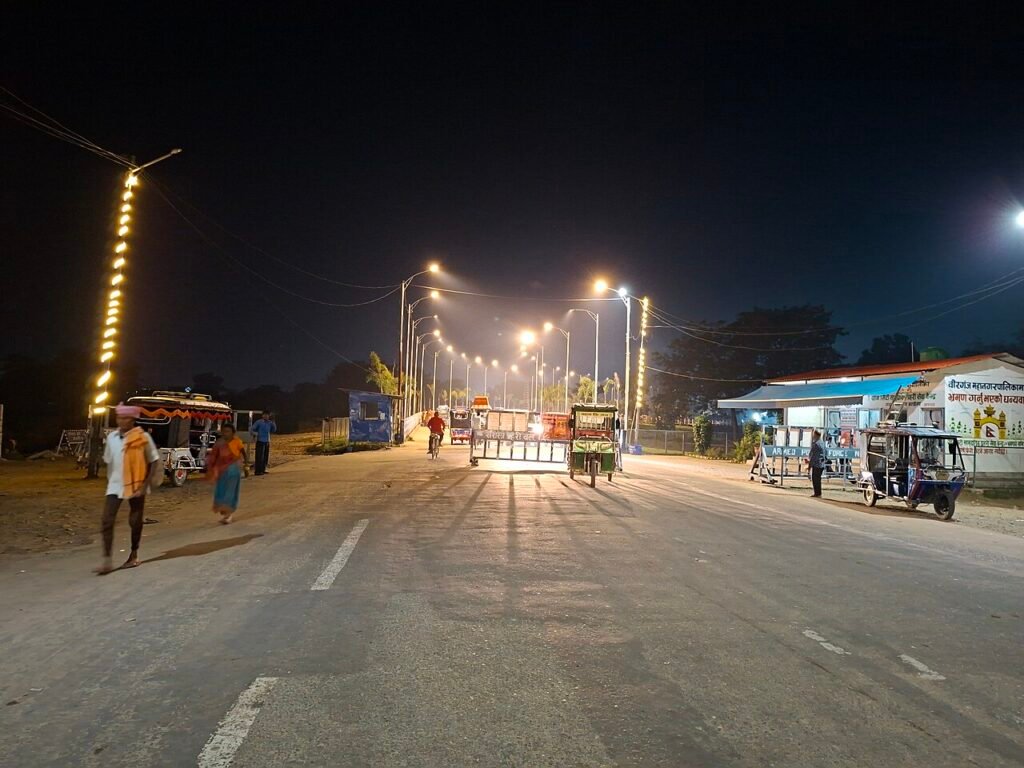
- Open border: India and Nepal share an open border and old historical, cultural and economic ties. The Ministry of Home Affairs (MHA) puts the length of this open border at 1,751 km.
- Border guarding force: The Sashastra Seema Bal (SSB), under the MHA, guards the Indian side. It got the border guarding role on the Nepal and Bhutan borders in 2001.
- Trade and transit: India is Nepal’s largest partner in trade and investment. Nepal is landlocked, so India is also its main transit route for trade with other countries.
- Hydropower trade: Nepal sells its surplus hydropower to India and wants wider access to the Indian power market. The Ministry of External Affairs (MEA) says Nepal exported about 1,100 MW of electricity to India last year.
- Dhalkebar-Muzaffarpur line: This 400 kilovolt (kV) line joins Dhalkebar in Nepal with Muzaffarpur in Bihar. The MEA says it is the one high-capacity cross-border line now working, and its Nepal section was built with Indian help.
- Arun-III: SJVN, an Indian public sector company, is building the 900 MW Arun-III project. It will be the largest power project in Nepal once it runs.
Constitutional & Legal Framework
- 1950 Treaty of Peace and Friendship: India and Nepal signed it at Kathmandu on 31 July 1950. It came into force the same day.
- Articles 6 and 7: These give each country’s nationals the same rights as locals in the other country. The rights cover economic activity, employment, residence and owning property.
- 2014 review: During Prime Minister Modi’s first visit to Nepal in 2014, the two sides agreed to “review, adjust and update” the 1950 treaty.
- Trade and Transit treaties: Separate treaties of Trade and of Transit guide the economic relationship.
- Legal assistance pact: India and Nepal signed an Agreement on Mutual Legal Assistance in Criminal Matters in February 2026. It helps investigation and prosecution of cross-border crime.
Institutional Machinery
- Bilateral mechanisms: India and Nepal have more than 40 bilateral institutional mechanisms. They cover border management, security, trade, power, water resources and railways.
- Joint Commission: India’s External Affairs Minister and Nepal’s Foreign Minister co-chair the Joint Commission. It has met five times since May 2014, most recently in Kathmandu in 2024.
- Joint Steering Committee (JSC): The 13th energy-secretary-level JSC met at Pokhara in July 2026. Secretaries from Nepal’s energy ministry and India’s Ministry of Power co-chaired it.
- Power agencies: The Nepal Electricity Authority (NEA) is Nepal’s state power utility. NTPC Vidyut Vyapar Nigam (NVVN) is the Indian power trader in the Nepal-Bangladesh power deal.
- Border force strength: The MHA has deployed 34 battalions of the SSB as the border guarding force on the Nepal border.
Schemes & Initiatives
- Nepal-India-Bangladesh power sale: NVVN, the NEA and the Bangladesh Power Development Board signed a tripartite deal in Kathmandu on 3 October 2024. Supply of 40 MW (megawatts) to Bangladesh through India began on 15 November 2024.
- Cross-border oil pipeline: The Motihari-Amlekhgunj petroleum pipeline opened in 2019. The MEA calls it the first regional cross-border petroleum pipeline, built by Indian Oil Corporation.
- Rail links: In June 2023 the two Prime Ministers flagged off a cargo rail service from Bathnaha (India) to the Nepal Customs Yard at Biratnagar. The Jaynagar-Kurtha passenger service was also extended to Bijalpura.
- Hydropower projects: In June 2023 Nepal signed a Project Development Agreement for the 669 MW Lower Arun project, which SJVN is developing. An MoU was also signed for the 480 MW Phukot-Karnali project.
- Digital payments: A link between India’s Unified Payments Interface (UPI) and Nepal’s National Payments Interface (NPI) for personal remittances went live in June 2026.
Reports, Indices & Data
- Trade volume: India-Nepal goods trade was about US$ 9.38 billion in 2025-26. This is more than 60% of Nepal’s total goods trade.
- Export destination: India took more than 80% of Nepal’s goods exports in 2025-26. India is also the largest source of foreign investment in Nepal, at almost one-third of its total.
- Long-term power target: India and Nepal agreed during the June 2023 visit that India would import 10,000 MW from Nepal within ten years. Energy secretaries signed the long-term power trade agreement in Kathmandu on 4 January 2024.
- Bangladesh deal numbers: Nepal supplies 40 MW from 15 June to 15 November each year for five years. That is about 144,000 megawatt-hours a year at 6.4 US cents per unit.
- Export earning: The NEA estimated that the Bangladesh sales would earn about Rs 330 million (Nepali rupees) a year.
Assam & Northeast Linkages
- Siliguri Corridor: Nepal and Bangladesh do not touch each other. A narrow strip of West Bengal, the Siliguri Corridor (about 21-22 km at its narrowest), lies between them. The same strip is the land link between the Northeast and the rest of India.
- Power route: Nepal’s power for Bangladesh enters India’s grid on the Dhalkebar-Muzaffarpur line. India then sends an equal amount on to Bangladesh.
- Kakarbhitta-Fulbari-Banglabandha corridor: This road links Nepal to Bangladesh across Indian land. In January 2025 India agreed that Nepali trucks on it would face the same axle-weight limits as Indian trucks.
- Motor vehicle pact: Bangladesh, Bhutan, India and Nepal signed the BBIN Motor Vehicles Agreement at Thimphu on 15 June 2015. The four finalised its protocol text in April 2025. Bhutan has not joined the trial runs, so the other three plan to go ahead.
Prelims Trap Zones (Watch out for)
- Treaty year trap: The Treaty of Peace and Friendship dates from 1950 (31 July 1950, Kathmandu), not 1947 or 1960.
- Agreed vs signed trap: The 10,000 MW power deal was agreed in June 2023 but signed on 4 January 2024 in Kathmandu. It is a ten-year target, not today’s export.
- Project trap: SJVN is behind both Arun projects. Arun-III is 900 MW; Lower Arun is 669 MW. Phukot-Karnali (480 MW) is a different project.
- Line trap: Only the Muzaffarpur-Dhalkebar high-capacity line is working now. The Gorakhpur-Butwal line is still being built.
- Siliguri trap: The Siliguri Corridor lies in West Bengal, not in Assam.
- First-trip trap: This is Shah’s first official bilateral visit abroad, not his first foreign trip. He went to the UN General Assembly in September.
- Figure trap: 40 MW is the Bangladesh deal. About 1,100 MW is what Nepal sent to India last year. 10,000 MW is the ten-year target.
Introduction
Nepal Prime Minister Balendra Shah chose India for his first official bilateral foreign visit, which began on 22 November 2026. The two countries share an open border and deep cultural and economic ties. India is Nepal’s main trading partner and transit route. How the talks handle power trade and connectivity will shape India’s neighbourhood policy. It will also shape the Northeast’s role as a corridor.
Why Nepal Matters to India
- Open border and people ties: The 1,751 km open border lets people move freely, so families and livelihoods are linked on both sides. More than one lakh Indian Army ex-servicemen live in Nepal, and Gorkha soldiers from Nepal serve in the Indian Army.
- Treaty base: The 1950 Treaty of Peace and Friendship still frames the relationship. Its Articles 6 and 7 give each other’s nationals equal rights in economic activity, residence and property.
- Trade and investment: India accounts for more than 60% of Nepal’s goods trade and almost one-third of its foreign investment. This gives India a strong stake in Nepal’s stability.
- Transit lifeline: Nepal is landlocked, and India is its main transit route for trade with other countries. This is why trade facilitation is always on the agenda.
- Border security: The MHA has posted 34 SSB battalions on this border. Its main worry is the misuse of the open border by criminals and terrorists, so a friendly Nepal keeps the border calm.
- Dense dialogue: More than 40 bilateral mechanisms exist across sectors. So there is a regular channel for most problems.
Energy and Connectivity: What Is Changing
- New line plans: In July 2026 the Joint Steering Committee approved project reports for two works. One is a Motihari-Nijgadh 400 kV line. The other is the re-stringing of Muzaffarpur-Dhalkebar with high-capacity conductors. Both aim to carry more power.
- Second big line: The Gorakhpur-Butwal line is at an advanced stage. Joint venture agreements have been signed for two more lines, Dododhara-Bareilly and Inaruwa-Purnea.
- Regional power trade: Nepal began sending 40 MW to Bangladesh through the Indian grid on 15 November 2024. It was the first time Nepal sold power to a country other than India.
- Big hydropower plans: India aims to import 10,000 MW from Nepal within ten years. SJVN is developing Arun-III (900 MW) and Lower Arun (669 MW).
- Rail and pipeline: The Motihari-Amlekhgunj oil pipeline (2019) and the cargo rail link from Bathnaha to Biratnagar (2023) make fuel and goods cheaper to move.
- New sectors: The expected MoUs on space, disaster management, health and education would take the partnership beyond power and trade. The UPI-NPI payment link of June 2026 adds a digital layer.
Northeast and Corridor Dimension
- Chicken’s neck: The Siliguri Corridor in West Bengal, about 21-22 km at its narrowest, links the Northeast to the rest of India. It also lies between Nepal and Bangladesh.
- Power transit: Nepal’s power reaches Bangladesh only by passing through India’s grid. This gives India a central place in regional power trade.
- Road transit: India’s January 2025 decision to apply Indian axle-weight limits to Nepali trucks on the Kakarbhitta-Fulbari-Banglabandha corridor puts Nepali freight on par with Indian freight.
- Sub-regional pact: The BBIN Motor Vehicles Agreement (2015) could link the Northeast, Nepal and Bangladesh by road. Its protocol text was finalised in April 2025.
- Possible Northeast gain (our reading): If Nepal-Bangladesh trade and power move smoothly across the Siliguri area, the same roads and grid links also serve the Northeast. This is our analysis, not a stated outcome of the visit.
Government & Statutory Measures
| Level | Initiative | Purpose & Impact |
|---|---|---|
| Treaty | 1950 Treaty of Peace and Friendship (Articles 6, 7) | Gives each other’s nationals equal rights in economic activity, residence and property. |
| Trade | Treaties of Trade and of Transit | Guide bilateral trade and Nepal’s transit trade through India. |
| Energy | Long-term power trade agreement (signed 4 January 2024) | Sets a target of 10,000 MW of Nepali exports to India in ten years. |
| Energy | Tripartite power sale (Nepal-India-Bangladesh) | 40 MW to Bangladesh through India from 15 November 2024. |
| Transport | Motihari-Amlekhgunj pipeline; Bathnaha-Biratnagar cargo rail | Cheaper movement of fuel and goods across the border. |
| Security | Mutual Legal Assistance Agreement (February 2026) | Better investigation and prosecution of cross-border crime. |
Challenges
- Treaty perception: Many in Nepal see the 1950 treaty as unequal. The two sides agreed in 2014 to review it, and an Eminent Persons Group recommended revision in 2018, but follow-up has been slow.
- Line bottleneck: Only one high-capacity cross-border line, Muzaffarpur-Dhalkebar, is working now. Exports cannot grow fast until lines like Gorakhpur-Butwal are finished.
- Seasonal supply: The Bangladesh deal covers only 15 June to 15 November each year. This shows how Nepal’s export surplus depends on the monsoon months.
- Narrow corridor: Nepal-Bangladesh power and goods must cross the narrow Siliguri Corridor. Any disruption there hurts both the Northeast and Nepal’s transit.
- Slow regional pacts: The BBIN agreement was signed in 2015, but its protocol came only in April 2025. Trial runs, road upgrades and border agency coordination are still pending.
- Doubts inside Nepal: Some rights activists and former officials in Nepal called the January 2024 power deal problematic. They sought parliamentary oversight over its effect on Nepal’s water use.
- Political churn in Nepal: The Oli government fell after the Gen Z protest in September last year, and Shah’s RSP-led government came in March. Frequent change makes long projects harder to sustain.
Way Ahead
- Finish the lines: India’s Ministry of Power and Nepal’s energy ministry should complete Gorakhpur-Butwal and the re-stringing of Muzaffarpur-Dhalkebar on time. More lines mean more of the 10,000 MW target can actually flow.
- Firm power contracts: The two governments should turn the 10,000 MW target into long-term purchase contracts. Hydropower developers need that certainty before they invest.
- Use the Joint Steering Committee: Regular energy-secretary meetings, like the one at Pokhara in July 2026, should track deadlines. One example is the Chameliya-Jauljibi line, due by December 2028.
- Operationalise the BBIN pact: India, Nepal and Bangladesh should run the pending trial runs and fix border procedures. This would give Nepali trucks a smoother route through Siliguri.
- Talk quietly on the treaty: Both sides should use the review agreed in 2014 to discuss the 1950 treaty calmly. This keeps the economic agenda on track.
- Use the Business Forum: The Nepal-India Business Forum can bring Indian investors to Nepali hydropower and infrastructure.
Conclusion
Power trade and connectivity are now the strongest pillars of India-Nepal ties, as the new line plans and the Bangladesh power deal show. If Shah’s visit turns these plans into funded projects, Nepal gains export income. India gains a stable neighbour and a role as a regional power hub. The 1950 treaty question needs patient handling so that it does not slow this progress.
APSC Prelims MCQs
Practice questions on this topic
Q1. Nepal Prime Minister Balendra Shah began a two-day visit to India on 22 November 2026. Consider the following statements:
(i) It is his first official bilateral foreign visit since taking office in March.
(ii) He leads a government of the Rastriya Swatantra Party, formed about six months after a youth-led protest toppled the K P Sharma Oli government.
(iii) He travelled to India on a special Indian Air Force aircraft.
Which of the statements given above is/are correct?
- (a) (i) and (ii) only
- (b) (ii) and (iii) only
- (c) (i) and (iii) only
- (d) (i), (ii) and (iii)
Show answer
Answer: (a) Explanation: Statement (i) is correct. This is Shah’s first official bilateral foreign visit since March. His only earlier trip abroad was to the United Nations General Assembly in September. Statement (ii) is correct. His Rastriya Swatantra Party government was formed in March. That was about six months after the Gen Z protest removed the K P Sharma Oli government in September last year. Statement (iii) is wrong because he flew on a regular commercial Nepal Airlines flight, not an Indian Air Force aircraft. So only (i) and (ii) are correct. Value addition: The India-Nepal Treaty of Peace and Friendship was signed at Kathmandu on 31 July 1950. In 2014 the two sides agreed to review, adjust and update it.
Q2. Match List-I with List-II:
| List-I | List-II |
|---|---|
| a. Nepal’s power sale to Bangladesh through India (from November 2024) | 1. 40 MW |
| b. Dhalkebar-Muzaffarpur cross-border power line | 2. 400 kV |
| c. Long-term target for Nepal’s power exports to India | 3. 10,000 MW in ten years |
| d. Lower Arun hydropower project | 4. 669 MW |
Select the correct answer using the codes given below:
- (a) a-1, b-2, c-3, d-4
- (b) a-4, b-2, c-3, d-1
- (c) a-1, b-3, c-2, d-4
- (d) a-3, b-2, c-1, d-4
Show answer
Answer: (a) Explanation: The correct pairing is a-1, b-2, c-3, d-4. Nepal began selling 40 MW to Bangladesh through the Indian grid on 15 November 2024. The Dhalkebar-Muzaffarpur line is a 400 kV link. The long-term agreement, signed on 4 January 2024, targets 10,000 MW of Nepali exports to India in ten years. Lower Arun, developed by SJVN, is a 669 MW project. Code (b) swaps the Bangladesh deal with Lower Arun. Code (c) treats the line as an export target. Code (d) swaps the Bangladesh deal with the ten-year target. Value addition: SJVN is also building the 900 MW Arun-III project, which will be Nepal’s largest power project once it runs.
Q3. Which Indian company signed the October 2024 tripartite power sales agreement with the Nepal Electricity Authority and the Bangladesh Power Development Board, under which Nepal exports power to Bangladesh through the Indian grid?
- (a) National Hydroelectric Power Corporation (NHPC)
- (b) SJVN Limited
- (c) NTPC Vidyut Vyapar Nigam
- (d) Power Grid Corporation of India
Show answer
Answer: (c) Explanation: NTPC Vidyut Vyapar Nigam (India), the Nepal Electricity Authority and the Bangladesh Power Development Board signed the tripartite agreement in Kathmandu on 3 October 2024. NTPC Vidyut Vyapar Nigam is the power trading company in this sale, so (c) is correct. NHPC is a hydropower generator and did not sign this deal, so (a) is wrong. SJVN develops Nepal’s Arun-III and Lower Arun projects but is not a party to this sale, so (b) is wrong. Power Grid builds and runs transmission lines and did not sign it either, so (d) is wrong. Value addition: Nepal supplies Bangladesh 40 MW from 15 June to 15 November each year for five years.
Q4. Which of the following statements about India-Nepal relations is NOT correct?
- (a) The Treaty of Peace and Friendship was signed at Kathmandu on 31 July 1950.
- (b) The Sashastra Seema Bal guards the Indian side of the open India-Nepal border.
- (c) The Siliguri Corridor, which separates Nepal from Bangladesh, lies in Assam.
- (d) Nepal exports its surplus hydropower to India.
Show answer
Answer: (c) Explanation: Statement (c) is not correct because the Siliguri Corridor lies in West Bengal, not Assam. This narrow strip, about 21-22 km at its narrowest, links the Northeast to the rest of India. Statement (a) is correct, as the treaty was signed at Kathmandu on 31 July 1950 and came into force the same day. Statement (b) is correct, since the Ministry of Home Affairs made the Sashastra Seema Bal the border guarding force for the Nepal border in 2001. Statement (d) is correct, as Nepal sells its surplus hydropower to India. Value addition: The Ministry of Home Affairs puts the open India-Nepal border at 1,751 km, guarded by 34 SSB battalions.
Prepare with SuchitraACS
APSC CCE Foundation Programme₹24,999  APSC Prelims Crash Course 2027 (GS + CSAT)₹5,999
 APSC CCE Study Materials Package (Prelims + Mains)₹4,999