SWIFT project for Assam beels: APSC Current Affairs Notes and MCQs
APSC CCE current affairs notes on SWIFT project for Assam beels, from The Assam Tribune of 22 November 2026, with 4 practice MCQs for Prelims.
 For working professionals and full-time aspirantsAPSC CCE Foundation Programme₹24,999
Current Affairs Notes
From The Assam Tribune, 22 November 2026
SWIFT Project: Restoring Assam’s Beels with ADB Support
Syllabus Mapping
- Prelims: GS Paper I (General issues on Environment, ecology and biodiversity; Current events of State and National importance).
- Mains: GS Paper III (Conservation, environmental pollution and degradation; Inclusive growth, agriculture and livelihoods); GS Paper V (Assam: economy, natural resources and environment).
Why in News? The Assam government launched the Assam Sustainable Wetland and Integrated Fisheries Transformation (SWIFT) project in Guwahati on Friday, 20 November 2026. The project uses a loan of USD 71.9 million from the Asian Development Bank (ADB) to restore beels and help fishing communities.
Current Context (The Trigger)
- Launch: The State government launched the SWIFT project on Friday at the ARIAS Society Conference Hall in Guwahati.
- Who launched it: KC Samria, Additional Chief Secretary in the Fishery department, Government of Assam, launched the project.
- Loan and target: A USD 71.9 million loan from ADB supports restoration and community-based management of at least 102 beels.
- Loan agreement: The Government of India, the Government of Assam and ADB signed the loan agreement on 2 November 2026.
- Women’s share: Beel Development Committees must have at least 40 per cent women representatives.
- Outreach: The programme also launched the project’s social media platform for public outreach and stakeholder engagement.
Core Concepts & Static GK
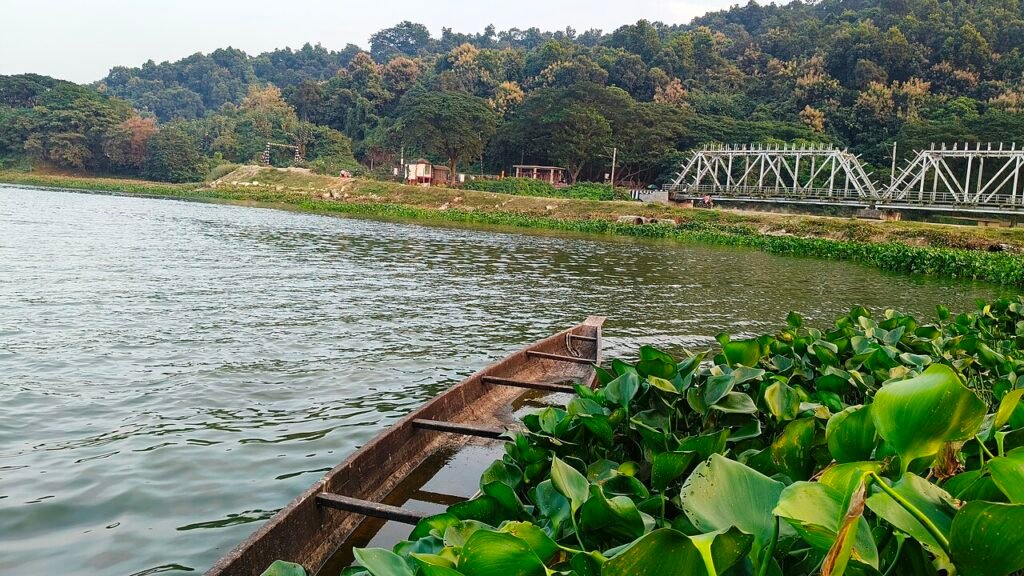
- Beel: A beel is the local Assamese name for a floodplain wetland.
- Wetland: Rule 2(1)(g) of the Wetlands (Conservation and Management) Rules, 2017 defines a wetland as an area of marsh, fen, peatland or water. It may be natural or artificial, permanent or temporary, with still or flowing, fresh, brackish or salt water.
- Wise use: Rule 4(1) says wetlands must be conserved and managed on the principle of “wise use”, as decided by the Wetlands Authority. The Rules define wise use as keeping a wetland’s ecological character through an ecosystem approach.
- Fish yield gap: ADB notes that Assam’s floodplain wetlands can yield 1,000 to 1,500 kg of fish per hectare per year with good management. Wetlands with culture-based fisheries give about 704.60 kg per hectare per year, and those without stocking give about 206.4 kg.
- Water hyacinth: The invasive plant Eichhornia crassipes is abundant across the beels and chokes fish habitat.
- Common property: Beel fisheries are a common property resource used and managed by communities in Assam.
Constitutional & Legal Framework
- Wetlands Rules, 2017: The Ministry of Environment, Forest and Climate Change (MoEFCC) notified these rules on 26 September 2017 under the Environment (Protection) Act, 1986. They replaced the Wetlands Rules of 2010.
- What is not a wetland: The 2017 definition leaves out river channels and paddy fields. It also leaves out tanks built for drinking water and structures built for aquaculture, salt production, recreation and irrigation.
- Banned activities: Rule 4(2) bans converting a wetland to other uses, including encroachment of any kind. It also bans new industries, solid waste dumping, discharge of untreated waste and poaching inside notified wetlands.
- State Wetlands Authority: Rule 5 sets up a State Wetlands Authority in each State. The State Minister in charge of Environment or Forests chairs it, and the Fisheries Secretary is an ex-officio member.
- Role of States: Rule 7 gives States a task. Within one year of the Rules, they must prepare a brief document for each wetland they plan to notify. The State then notifies the wetland within 240 days of the Authority’s recommendation.
- Assam Fishery Rules, 1953: These rules regulate fisheries in Assam, and all SWIFT work stays within beels regulated under them. A 2005 amendment added curbs on overfishing and illegal fishing, and brought leasing of fisheries through transparent bidding.
Institutional Machinery
- Executing agency: The Assam Rural Infrastructure and Agricultural Services (ARIAS) Society is the executing agency.
- Implementing agency: The Department of Fisheries, Government of Assam, is the implementing agency. Its Directorate of Fisheries acts as the project implementation unit.
- Beel Development Committees: These local committees, made up of community members and other stakeholders, plan and manage project work in each beel.
- Project team: Sunae Kim is ADB’s team leader for the SWIFT project. Virendra Mittal is the State project director at ARIAS Society.
Schemes & Initiatives
- Three outputs: ADB lists three outputs: stronger institutions and rules for beel management, community fisheries business with diversified income, and planned beel conservation and restoration.
- Grants: The project gives performance-based grants to beel community institutions for carrying out their management plans. It also offers matching grants for hatcheries, feed mills and primary processing.
- Self-help groups: Women’s self-help groups receive start-up funds, aligned with the Assam State Rural Livelihood Mission’s revolving fund mechanism.
- Value chain: The project will support fish landing sites and village-level aggregation centres.
Reports, Indices & Data
- Approval: ADB approved the project on 12 December 2025 as Loan 4744-IND.
- Cost: The project is estimated to cost USD 89.9 million. ADB provides USD 71.9 million (80 per cent) and the Government of Assam about USD 18.0 million (20 per cent).
- Beneficiaries: The project aims to benefit at least 8,000 beel-dependent fisher beneficiaries.
- Safeguards: ADB rates the project Category B for environment and Category C for involuntary resettlement.
Assam & Northeast Linkages
- Ramsar site: Deepor Beel, designated on 19 August 2002, is Assam’s only Ramsar site. India had 99 Ramsar sites in the MoEFCC list of 21 April 2026. It had 103 by October 2026, but none of the new sites is in Assam.
- Majuli: Water hyacinth handicrafts in Majuli are cited as an example of turning an invasive plant into livelihood.
- State goals: ADB links the project to the Assam 2030 document on sustainable consumption and production in natural resource management.
- Fishing ban: A seasonal fishing ban cuts the main income of beel families, so they need other earnings.
Prelims Trap Zones (Watch out for)
- Lender Trap: The funder is the Asian Development Bank, not the World Bank.
- Amount Trap: The ADB loan is USD 71.9 million, while the estimated total project cost is USD 89.9 million.
- Agency Trap: ARIAS Society is the executing agency, and the Department of Fisheries is the implementing agency.
- Number Trap: The target is “at least 102 beels”, and women must be “at least 40 per cent” of the Beel Development Committees.
- Date Trap: The loan agreement was signed on 2 November 2026, and the project was launched later, on 20 November 2026.
- Definition Trap: Paddy fields and river channels are not wetlands under the 2017 Rules, even though they hold water.
- Land Trap: The works are on government land and ADB expects no involuntary resettlement.
Introduction
On 20 November 2026, Assam launched the SWIFT project, backed by a USD 71.9 million ADB loan, to restore at least 102 beels. Beels feed fish production and the livelihoods of rural families, but lost river links, shrinking depth and weeds have degraded many of them. SWIFT tests whether giving local committees ownership can protect the wetland and raise incomes together.
Importance of Beels
- Fish habitat: Beels are key habitats for fish production and support varied aquatic life.
- Rural livelihoods: ADB says the beel fisheries sector gives livelihoods to millions of people, mostly in rural areas.
- Nutrition: Fish from beels are an important source of nutrition and help food security and dietary variety.
- Untapped yield: Assam’s floodplain wetlands can yield 1,000 to 1,500 kg per hectare per year, but unstocked wetlands give only about 206.4 kg.
- Biodiversity: Deepor Beel, Assam’s Ramsar site since 2002, shows the international value of beel ecosystems.
- Climate research: The project supports research on carbon sequestration from beel management and on climate change impacts.
Key Features of SWIFT
- Beel-wise restoration: Each beel gets its own plan. Work may include removing silt and weeds and improving water flow through the channels already there.
- Community ownership: Beel Development Committees will be at the centre of the work, from planning to running it and keeping it going.
- Women’s role: At least 40 per cent of committee members must be women.
- Market support: Fish farmers and cooperatives will get better inputs and fishing gear. They will also get facilities to process their catch and sell it.
- Price premium: Certification, traceability and branding aim to fetch better prices for beel fish.
- Alternative income: The project backs fishing methods that can cope with climate change. It also helps families find other earnings, so that they take less from the wetlands.
Challenges
- Lost river links: Many beels have lost their connection with nearby rivers, which harms fish movement and water exchange.
- Shallow water: Water depth in many beels is falling, and silt build-up is a main reason, so desilting is part of the plan.
- Weed growth: Water hyacinth and other weeds spread widely and hold down fish productivity.
- Encroachment: Unclear boundaries invite encroachment, which is why the project plans satellite mapping and boundary pillars.
- Lease conflicts: Some beels are under lease to fisheries cooperatives or other lessees, so profit-sharing talks with them will be needed.
- Seasonal income gaps: The seasonal fishing ban leaves families without their main income.
- Climate variability: Erratic monsoons, long dry spells and more frequent extreme floods worsen the stress on beel habitats and fishing incomes.
Way Ahead
- Update the rules: The Department of Fisheries should revise fishery rules to allow community management, as the project’s first output plans.
- Hand over leases: Once leases expire, Beel Development Committees are expected to become the leaseholders, so their by-laws and bank accounts must be ready.
- Demarcate beels: Satellite mapping and boundary pillars should fix beel limits and stop encroachment.
- Use the weed: Communities can turn water hyacinth into handicrafts, compost, bioenergy or animal feed, as artisans in Majuli do.
- Reward beel health: Performance-based grants linked to beel health monitoring should keep committees active after the loan period.
- Back women’s groups: Start-up funds for self-help groups can give women income outside fishing.
- Plan the exit: The project must prepare a sustainable operating model so that the work continues after ADB support ends.
Conclusion
SWIFT ties wetland health directly to fishing incomes, which is the right logic for Assam’s beels. Its results will depend on honest community committees, clear beel boundaries and a lease system that gives fishers a real stake. If those hold, the 102 beels can become a model for the rest of the State’s wetlands.
Asked in APSC
- APSC Prelims 2023: (answer in the MCQs below)
Match the following wetlands (List-I) with the districts where these are located (List-II):
(List-I) (List-II)
a. Urpad Beel 1. Bongaigaon
b. Son Beel 2. Goalpara
c. Tamranga Beel 3. Morigaon
d. Nandini-Sonai Beel 4. Karimganj
Select the correct answer using the codes given below:- (A) a b c d – 2 4 1 3
- (B) a b c d – 4 1 3 2
- (C) a b c d – 1 2 4 3
- (D) a b c d – 3 1 2 4
All 500 APSC Prelims PYQs of CCE 2020 to 2025, with answers and explanations: practise free in the PYQ Explorer
APSC Prelims MCQs
Practice questions on this topic
Q1. The Assam Sustainable Wetland and Integrated Fisheries Transformation (SWIFT) project was launched in Guwahati. Consider the following statements:
(i) It is supported by a loan of USD 71.9 million from the Asian Development Bank.
(ii) It aims to restore and manage at least 102 beels through community-based management.
(iii) Its executing agency is the Assam Forest Department.
Which of the statements given above is/are correct?
- (a) (i) and (ii) only
- (b) (ii) and (iii) only
- (c) (i) only
- (d) (i), (ii) and (iii)
Show answer
Answer: (a) Explanation: Statements (i) and (ii) are correct. The project rests on a USD 71.9 million ADB loan, and it targets at least 102 beels across Assam. Statement (iii) is wrong because the executing agency is the Assam Rural Infrastructure and Agricultural Services (ARIAS) Society. The Department of Fisheries is the implementing agency, and the Forest Department has no such role. Option (b) adds the wrong statement (iii) and drops (i). Option (c) leaves out the correct statement (ii). Option (d) includes (iii). Value addition: ADB puts the estimated total project cost at USD 89.9 million, of which the Government of Assam provides about USD 18.0 million.
Q2. Regarding the Beel Development Committees under the SWIFT project, consider the following statements:
(i) The project requires at least 40 per cent representation of women in these committees.
(ii) Where a beel is under lease, the committee is expected to become the leaseholder once the lease expires.
(iii) The project needs large-scale land acquisition and resettlement of fishing families.
Which of the statements given above is/are correct?
- (a) (i) only
- (b) (i) and (ii) only
- (c) (ii) and (iii) only
- (d) (i), (ii) and (iii)
Show answer
Answer: (b) Explanation: Statements (i) and (ii) are correct. At least 40 per cent of committee members must be women. ADB’s project manual says a committee is expected to become the beel leaseholder after the existing lease ends. Statement (iii) is wrong because the works are on government land within existing beel ecosystems, and ADB expects no involuntary resettlement. Option (a) leaves out (ii), option (c) wrongly includes (iii) and drops (i), and option (d) includes (iii). Value addition: ADB rates SWIFT Category C for involuntary resettlement and Category B for environment.
Q3. Match List-I with List-II:
| List-I (SWIFT feature) | List-II (Figure) |
|---|---|
| a. Minimum number of beels covered | 1. 102 |
| b. ADB loan amount | 2. USD 71.9 million |
| c. Estimated total project cost | 3. USD 89.9 million |
| d. Minimum women’s share in Beel Development Committees | 4. 40 per cent |
Select the correct answer using the codes given below:
- (a) a-2, b-1, c-3, d-4
- (b) a-1, b-2, c-3, d-4
- (c) a-1, b-2, c-4, d-3
- (d) a-3, b-4, c-1, d-2
Show answer
Answer: (b) Explanation: The correct pairs are a-1, b-2, c-3 and d-4. The project covers at least 102 beels, and the ADB loan is USD 71.9 million. The estimated total cost is USD 89.9 million, and women must form at least 40 per cent of the committees. Option (a) swaps the beel count with the loan. Option (c) swaps the total cost with the women’s share. Option (d) mixes up all four pairs. Value addition: ADB funds 80 per cent of the total cost, and the Government of Assam funds the remaining 20 per cent.
Q4. As of November 2026, which one of the following is the only Ramsar site in Assam?
- (a) Son Beel
- (b) Deepor Beel
- (c) Urpad Beel
- (d) Loktak Lake
Show answer
Answer: (b) Explanation: Deepor Beel is Assam’s only Ramsar site, designated on 19 August 2002. Son Beel and Urpad Beel are well-known Assam wetlands, but neither is a Ramsar site. Loktak Lake is also a Ramsar site, but it lies in Manipur, not Assam. Students often confuse Northeast wetlands, so always match the site with its State. Value addition: India had 103 Ramsar sites by October 2026. Sukhna Lake in Chandigarh and Sauj Jheel in Uttar Pradesh were added, but no new site came from Assam.
PYQ (APSC Prelims 2023): Match the following wetlands (List-I) with the districts where these are located (List-II):
(List-I) (List-II)
a. Urpad Beel 1. Bongaigaon
b. Son Beel 2. Goalpara
c. Tamranga Beel 3. Morigaon
d. Nandini-Sonai Beel 4. Karimganj
Select the correct answer using the codes given below:
- (A) a b c d – 2 4 1 3
- (B) a b c d – 4 1 3 2
- (C) a b c d – 1 2 4 3
- (D) a b c d – 3 1 2 4
Prepare with SuchitraACS
APSC CCE Foundation Programme₹24,999  APSC Prelims Crash Course 2027 (GS + CSAT)₹5,999
 APSC CCE Study Materials Package (Prelims + Mains)₹4,999