Paneer adulteration ban in Assam: APSC Current Affairs Notes and MCQs
APSC CCE current affairs notes on Paneer adulteration ban in Assam, from The Assam Tribune of 4 November 2026, with 4 practice MCQs for Prelims.
 Last batch for APSC CCE 2027 · starts 16 NovAPSC CCE Foundation Programme₹24,999
Current Affairs Notes
From The Assam Tribune, 4 November 2026
Paneer Adulteration and the Food Safety Prohibition Order
Syllabus Mapping
- Prelims: GS Paper I (Indian Polity and Governance; Assam Polity; Current events of State/National importance; associated APSC current affairs).
- Mains: GS Paper II (Issues relating to development and management of Social Sector/Services relating to Health; important aspects of governance, transparency and accountability); GS Paper V (Political and Administrative System of Assam; Public Policy, Legal Rights and Citizen Charter).
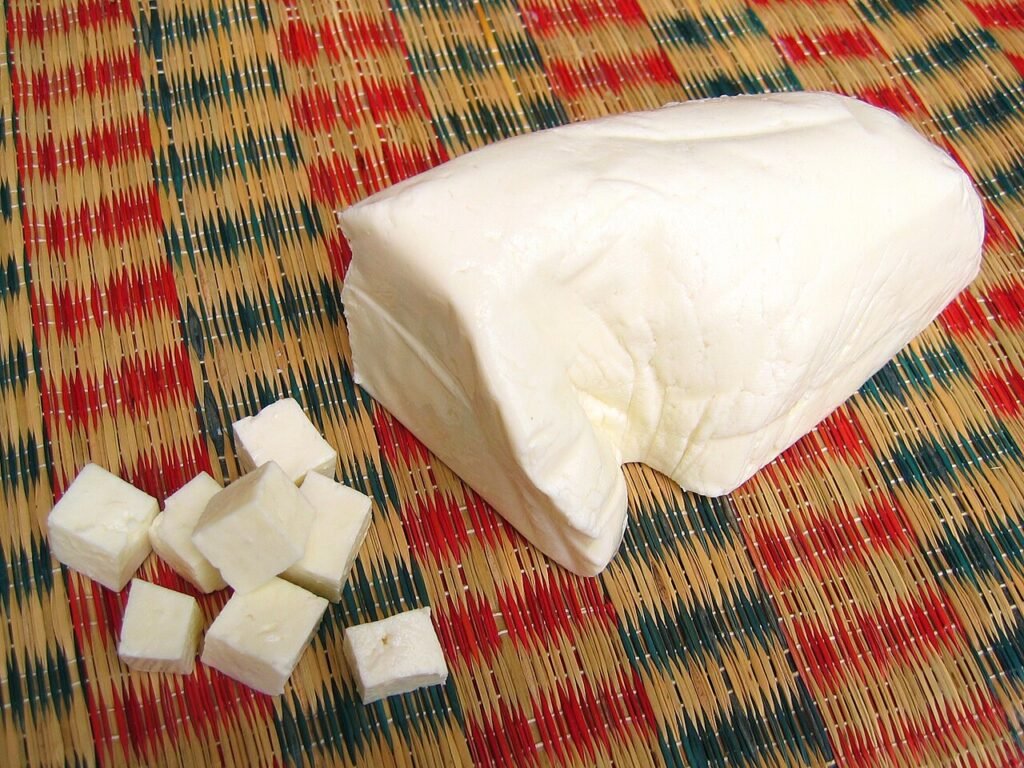
Why in News? On 3 November 2026, Assam Health Minister Ashok Singhal promised strict action against food adulteration. About 70 per cent of 60 paneer samples collected by the Food Safety Department had failed quality standards. Earlier, on 31 October 2026, the Assam Food Safety Commissionerate had issued a one-year Statewide prohibition order. It targets products passed off as paneer.
Current Context (The Trigger)
- Test result: About 70 per cent of the 60 milk-based paneer samples failed the prescribed standards.
- Sampling period: The Food Safety Department collected these samples in several urban areas of Assam over nearly 10 months.
- Prohibition order: The Assam Food Safety Commissionerate issued the order on 31 October 2026. For one year, it covers making, processing, storing, distributing, transporting, selling and using such products anywhere in Assam.
- Legal basis: The order was issued under Section 30(2)(a) of the Food Safety and Standards Act, 2006.
- Lab findings: Laboratory tests found too little milk fat and too much moisture in products sold as paneer. Some also contained starch and vegetable or other foreign fats.
- Minister’s statement: Health Minister Ashok Singhal spoke to the press at Janata Bhawan, Guwahati, on Tuesday, 3 November 2026. He said the government would act strictly against food adulteration and against tricks that mislead buyers.
Core Concepts & Static GK
- Food Safety and Standards Act, 2006: It is Act No. 34 of 2006 and received the President’s assent on 23 August 2006. It consolidates food laws and sets up the Food Safety and Standards Authority of India (FSSAI).
- Laws it replaced: Its Second Schedule lists eight entries that stand repealed. These include the Prevention of Food Adulteration Act, 1954 and the Milk and Milk Products Order, 1992.
- Paneer in law: FSSAI’s dairy standards define chhana or paneer as a product made from milk, with or without added milk solids. It is made by precipitation with permitted acidulants and heating. Permitted acidulants include lactic acid, citric acid and vinegar.
- Paneer composition: Paneer must have at least 50 per cent milk fat on dry matter basis and at most 60 per cent moisture.
- Analogue in the dairy context: It is a product in which non-milk constituents take the place of milk constituents, in part or in whole. The final product resembles a milk product.
- Dairy terms: Words such as milk, cream, cheese and butter are reserved for products made from milk. FSSAI does not recognise analogues as dairy products.
- Unsafe food: The Act treats food as unsafe if it is injurious to health, including through substitution of an inferior or cheaper substance.
- Sub-standard food: Food is sub-standard if it does not meet the specified standards but is not so poor as to be unsafe.
Constitutional & Legal Framework
- Section 30(1): The State Government appoints the Commissioner of Food Safety for the State.
- Section 30(2)(a): The Commissioner may prohibit the manufacture, storage, distribution or sale of any article of food in the interest of public health. The ban can cover the whole State or any part of it. It can last for a period not exceeding one year, as stated in an order notified in the Official Gazette.
- Section 33 is different: A court passes a Section 33 prohibition order. It does so after a food business operator is convicted and the court finds a health risk.
- Section 34: The Designated Officer can apply to the Commissioner for an emergency prohibition order. This applies against a food business where a health risk condition exists.
- Penalties: Sub-standard food draws a penalty up to Rs 5 lakh (Section 51). Misbranded food draws up to Rs 3 lakh (Section 52). Misleading advertisement draws up to Rs 10 lakh (Section 53).
- Unsafe food punishment: Section 59 gives up to six months in jail and a fine up to Rs 1 lakh if no injury results. If unsafe food causes death, the jail term is at least seven years and can extend to life. The fine is at least Rs 10 lakh.
Institutional Machinery
- FSSAI: The Central Government sets up the Food Safety and Standards Authority of India under Section 4 of the Act. Its head office is at Delhi.
- Food Authority composition: It has a Chairperson and 22 members, of whom one-third must be women. Seven are ex officio members representing Central ministries or departments.
- Shared duty: The Food Authority at the Centre and the State Food Safety Authorities share the work. FSSAI gives policy and direction, while the States enforce the law in the field.
- Designated Officer: The Commissioner appoints one for each district, not below the rank of Sub-Divisional Officer. The officer issues or cancels licences and can prohibit the sale of food that breaks the law.
- Food Safety Officer: The Commissioner appoints Food Safety Officers for local areas. Under Section 38, they can take samples and seize food that breaks the law.
- Appeals: Under Section 70, the Central Government or the State Government can set up a Food Safety Appellate Tribunal. It hears appeals against the decisions of the Adjudicating Officer.
Schemes & Initiatives
- Eat Right Movement: FSSAI launched The Eat Right Movement on 10 July 2018. It rests on two pillars, Eat Healthy and Eat Safe.
- What it combined: It brought together three FSSAI initiatives: the Safe and Nutritious Food Initiative, the Eat Healthy Campaign and Food Fortification.
- Eat Right Toolkit: It includes resource books for homes, schools, workplaces and eating out. It also has a training manual for frontline workers such as ASHA and Anganwadi workers.
- Cheese analogue notice: FSSAI’s West Region office in Mumbai issued a public notice in April 2026. PIB Mumbai reported it on 29 April 2026.
- Notice directions: The notice called any cheese analogue sold as paneer a grave violation of the law. It told centrally licensed food service establishments to show any use of cheese analogue on menus or display boards.
- Draft paneer rule: FSSAI notified a draft amendment to the Prohibition and Restrictions on Sales Regulations, 2011 on 22 September 2026. It is still a draft, open for public comments for 60 days.
Reports, Indices & Data
- State Food Safety Index: FSSAI announces this index every year to rank States and Union Territories on food safety. The first one was released on 7 June 2019.
- Five parameters: They are Human Resources and Institutional Data; Compliance; Food Testing Infrastructure and Surveillance; Training and Capacity Building; and Consumer Empowerment. A sixth head gives marks for improvement in rank.
- Sixth edition (2023-24) toppers: Kerala, Tamil Nadu and Jammu and Kashmir led the table, with Gujarat as a special mention. Nagaland received a special acknowledgement as the best North Eastern hilly State.
- Assam’s score: In the 2023-24 score sheet, Assam scored 38.5 out of 100. Kerala, the top State, scored 73.75.
Assam & Northeast Linkages
- Who issued the order: The Assam Food Safety Commissionerate issued the prohibition order for the whole State.
- Urban sampling: The 60 samples came from several urban areas of Assam, so the figure does not cover rural markets.
- Hotel and caterer duty: Hotels, restaurants, caterers, institutional kitchens and cloud kitchens in Assam must follow a rule. They must buy and use only products that follow the law and carry proper labels.
- Index position: In the 2023-24 State Food Safety Index, Assam scored 38.5. It got 21 of 36 marks on food testing but only 2.5 of 9 on human resources.
Prelims Trap Zones (Watch out for)
- Section Trap: The Assam order uses Section 30(2)(a), the Commissioner’s power. Do not confuse it with Section 33, which is a court’s prohibition order after conviction.
- Duration Trap: A Section 30(2)(a) ban can last for a period not exceeding one year. The Assam order runs for one year, the maximum allowed.
- Date Trap: The order is dated 31 October 2026. The minister’s press conference took place on 3 November 2026.
- Total Ban Trap: The order does not ban all dairy alternatives. Alternatives made lawfully are allowed if they carry a proper name and label.
- Moisture Trap: Paneer allows at most 60 per cent moisture. The 70 per cent limit applies to low fat paneer.
- Percentage Trap: The 70 per cent figure is the share of 60 tested samples that failed. It is not the share of all paneer sold in Assam.
- Draft Trap: FSSAI’s September 2026 rule reserving the name paneer for milk products is only a draft. It is not yet final law.
Introduction
On 31 October 2026, the Assam Food Safety Commissionerate banned fake paneer across the State for one year. This came after about 70 per cent of 60 tested samples failed standards. The order uses the Commissioner’s power under Section 30(2)(a) of the Food Safety and Standards Act, 2006. It matters because paneer is a common source of protein in many homes, and cheating on it hurts both health and honest dairy traders.
Why Paneer Adulteration Persists (Underlying Drivers)
- Cheaper substitution: Vegetable fat and oil can replace milk fat in a block that looks like paneer. The Act already names substitution of an inferior or cheaper substance as one ground for unsafe food.
- Look-alike products: Analogue products can look, feel and cook like paneer. The Assam order says that looking like paneer does not allow a product to be sold as paneer.
- Label gaps: Analogue makers must write “Contains” followed by the non-milk ingredient on the label. A restaurant plate carries no such label, so diners cannot tell.
- Service sector blind spot: In April 2026, FSSAI’s West Region office had to tell centrally licensed eateries to disclose cheese analogue use on menus. This shows the problem sits at the point of final sale.
- Thin surveillance: Only 60 samples were collected in nearly 10 months across several urban areas of Assam. A small sample can miss many bad batches.
- Weak paper trail: Without purchase records, the origin of a fake block is hard to trace. The order now requires operators to keep purchase and distribution records.
Legal and Statutory Measures
| Level | Initiative | Purpose & Impact |
|---|---|---|
| Assam Commissionerate | Prohibition order of 31 October 2026 under Section 30(2)(a) | Stops the manufacture, storage, transport, sale and use of non-compliant paneer look-alikes in Assam for one year. |
| State machinery under the Act | Designated Officers (Section 36) and Food Safety Officers (Section 37) | Give each district an officer to issue licences, keep inspection records, sample food and investigate written complaints. |
| Union law | Sections 51, 52 and 53 of the 2006 Act | Penalties up to Rs 5 lakh for sub-standard food, Rs 3 lakh for misbranded food and Rs 10 lakh for misleading advertisement. |
| FSSAI regulation | Label declaration for analogues in the dairy context | Requires “Contains” and “Contains no milk” declarations close to the product name. |
| FSSAI proposal | Draft amendment of the Prohibition and Restrictions on Sales Regulations, 2011 (22 September 2026) | Would bar sale of “paneer made of constituents not derived from milk” and make licensed analogue makers drop the word paneer. Open for comments for 60 days. |
Key Features of the Assam Order
- Wide list of acts: It bars food businesses from making, storing, moving, distributing or selling non-compliant dairy analogues presented as genuine paneer.
- Vegetable fat clause: A product may use vegetable fat, oil or other non-dairy ingredients instead of milk fat. If it fails the standards, it cannot be sold as genuine paneer.
- Space for honest alternatives: Dairy alternatives made lawfully remain allowed if their name and label are correct.
- Buyer’s duty: Operators must check what they buy: what it is, what it contains, where it came from and whether it is legally approved. They must keep records and show them to food safety officials on demand.
- Shared liability: The minister said an operator found using fake products without purchase documents “will be held responsible as manufacturers of those items”.
- Food service coverage: The order names hotels, restaurants, caterers, institutional kitchens and cloud kitchens.
Impact on Consumers, Dairy Business and the State
- Health risk: Foreign fats and starch mean the buyer gets far less milk fat than real paneer must contain. If such substitution makes food injurious to health, the Act classes it as unsafe food.
- Consumer deception: A buyer who pays for paneer but gets a vegetable-fat product is misled. Under the Act, food sold under the name of another food is misbranded.
- Unfair competition: A trader who follows the 50 per cent milk-fat standard cannot match the price of a trader who uses cheaper fat. The order tries to level this field.
- Trust in hospitality: The directions to hotels and cloud kitchens aim to restore trust in dishes such as paneer curries.
- Room for honest analogues: Allowing labelled alternatives protects lawful businesses and gives buyers a real choice.
- Public confidence in the State: A press conference with test data shows the State is willing to share findings. It also invites scrutiny of the full testing record.
Challenges
- Small sample: Sixty samples in nearly 10 months is a thin base for a Statewide picture.
- Urban bias: The samples came from urban areas, so village markets and small sweet shops remain unmeasured.
- Staffing gaps: The State Food Safety Index gave Assam only 2.5 of 9 marks on human resources and institutional data in 2023-24.
- Lab proof needed: Fake paneer and honest analogues look alike on the counter. So officers need a laboratory report in each case before they can act.
- Time-limited ban: Section 30(2)(a) allows a ban of at most one year at a time. So the order needs follow-up through regular enforcement and the final FSSAI rule.
- Consumer awareness: Assam scored only 2 of 9 marks on consumer empowerment in the 2023-24 index.
Way Ahead
- Test more, test widely: The Food Safety Department should sample rural markets and sweet shops in all districts, not only cities. It should also publish district-wise results.
- Fill posts: The State government should fill Designated Officer and Food Safety Officer posts. Assam scored low on human resources in the 2023-24 index.
- Menu disclosure: Assam could adopt a menu rule like the one FSSAI’s West Region issued in April 2026. Eateries would then have to show any use of cheese analogue on menus or display boards.
- Label checks: Officers should check that every analogue carries the “Contains” and “Contains no milk” declarations that FSSAI requires.
- Back the central rule: Assam can send comments while the 60-day window is open. The September 2026 FSSAI draft would reserve the name paneer for milk-based products.
- Raise awareness: The department can use the Eat Right Movement’s resource books and frontline worker network. They can teach buyers about safe food and honest labels.
- Improve the index score: Better testing, training and consumer outreach would raise Assam’s State Food Safety Index score across its parameters.
Conclusion
The Assam order shows how a State can use Section 30(2)(a) quickly, and the FSSAI draft shows the Centre moving in the same direction. A one-year ban buys time. But only wider testing, enough officers and informed buyers will keep paneer honest after the order ends.
APSC Prelims MCQs
Practice questions on this topic
Q1. The Assam Food Safety Commissionerate issued a one-year Statewide prohibition order on fake paneer in October 2026 under the Food Safety and Standards Act, 2006. Consider the following statements:
(i) The Commissioner of Food Safety of a State is appointed by the State Government.
(ii) Under Section 30(2)(a), a prohibition on the sale of a food article can last for a period not exceeding one year.
(iii) Under Section 30(2)(a), the prohibition can be imposed only for a single district and never for the whole State.
Which of the statements given above is/are correct?
- (a) (i) and (ii) only
- (b) (ii) and (iii) only
- (c) (i) only
- (d) (i), (ii) and (iii)
Show answer
Answer: (a) Explanation: Statement (i) is correct because Section 30(1) says the State Government appoints the Commissioner of Food Safety for the State. Statement (ii) is correct because Section 30(2)(a) allows a ban for a period not exceeding one year. The period is specified in an order notified in the Official Gazette. Statement (iii) is wrong because the same clause lets the Commissioner prohibit in the whole State or any area or part of it. Option (c) misses statement (ii), and options (b) and (d) include the false statement (iii). Value addition: a Section 33 prohibition order is different, because a court passes it after a food business operator is convicted.
Q2. Match List-I with List-II:
| List-I (Section of the Food Safety and Standards Act, 2006) | List-II (Provision) |
|---|---|
| a. Section 30 | 1. Penalty up to Rs 10 lakh for misleading advertisement |
| b. Section 36 | 2. Commissioner can prohibit sale of a food article for up to one year |
| c. Section 51 | 3. A Designated Officer for each district |
| d. Section 53 | 4. Penalty up to Rs 5 lakh for sub-standard food |
Select the correct answer using the codes given below:
- (a) a-2, b-3, c-4, d-1
- (b) a-3, b-2, c-4, d-1
- (c) a-2, b-3, c-1, d-4
- (d) a-1, b-4, c-3, d-2
Show answer
Answer: (a) Explanation: Section 30 deals with the Commissioner of Food Safety. Its clause (2)(a) allows a prohibition for up to one year, so a matches 2. Section 36 says there shall be a Designated Officer for each district, so b matches 3. Section 51 sets a penalty up to five lakh rupees for sub-standard food, so c matches 4. Section 53 sets a penalty up to ten lakh rupees for misleading advertisement, so d matches 1. Option (b) swaps Sections 30 and 36, option (c) swaps the two penalties, and option (d) mixes up all four pairs. Value addition: Section 52 fixes the penalty for misbranded food at up to three lakh rupees.
Q3. Which one of the following statements about paneer and analogues under FSSAI regulations is NOT correct?
- (a) An analogue in the dairy context is a product in which non-milk constituents take the place of milk constituents and which resembles a milk product.
- (b) Analogues in the dairy context are not considered milk, milk products or composite milk products under the regulations.
- (c) The label of an analogue must carry a “Contains” declaration naming each non-milk constituent that replaces a milk constituent.
- (d) Paneer must have at least 50 per cent milk fat on dry matter basis and moisture of at most 70 per cent.
Show answer
Answer: (d) Explanation: Option (d) is not correct because the maximum moisture for paneer is 60 per cent. The 70 per cent limit applies only to low fat paneer, which has at most 20 per cent milk fat on dry matter basis. Option (a) is correct because it repeats the regulatory definition of an analogue. Option (b) is correct because the regulations state that analogues are not considered milk products. Option (c) is correct because the label must carry “Contains”. Where a milk constituent is fully replaced, it must also carry “Contains no milk” with the constituent named. Value addition: dairy terms such as milk, cream, cheese and butter are reserved for products made from milk.
Q4. In the 6th State Food Safety Index (2023-24) released by FSSAI, which State received the special acknowledgement as the best North Eastern hilly State?
- (a) Meghalaya
- (b) Nagaland
- (c) Tripura
- (d) Assam
Show answer
Answer: (b) Explanation: Nagaland received the special acknowledgement for North Eastern hilly States in the 2023-24 index. Its score was 44.25 out of 100. FSSAI chose to recognise the best performer among these States because they face manpower, transport and infrastructure limits. Meghalaya scored lower, at 33. Tripura scored 36. Assam scored 38.5, which is also below Nagaland, so the acknowledgement did not go to it. Overall, Kerala, Tamil Nadu and Jammu and Kashmir led the table. Value addition: the index rests on five parameters, and the first edition was released on 7 June 2019.
Prepare with SuchitraACS
APSC CCE Foundation Programme₹24,999  APSC Prelims Crash Course 2027 (GS + CSAT)₹5,999
 APSC CCE Study Materials Package (Prelims + Mains)₹4,999