APSC Current Affairs: Assam Tribune Notes with MCQs and Answer Writing (20/11/2026)
For APSC CCE and other Assam competitive exam aspirants, staying consistently updated with reliable current affairs is essential for success. This blog provides a well-researched analysis of the most important topics from The Assam Tribune dated 20 November 2026. Each issue has been carefully selected and explained to support both APSC Prelims and Mains preparation, ensuring alignment with the APSC CCE syllabus and the evolving trends of the examination.
 For working professionals and full-time aspirantsAPSC CCE Foundation Programme₹24,999
Current Affairs Notes
From The Assam Tribune, 20 November 2026
Assam Accord Implementation Committee Report and Deportation Protocol
Open this topic as a separate page, with its MCQs →
Syllabus Mapping
- Prelims: GS Paper I (Indian Polity; Assam Polity; History of Assam; Current events of State/National importance; International Relations).
- Mains: GS Paper II (Government policies and interventions; Issues relating to citizenship; India and its neighbourhood); GS Paper V (Assam: Society, Polity and Governance; Issues of migration and identity).
Why in News? A committee set up to suggest how every clause of the Assam Accord can be put into effect has given its report to the Assam government. The news was reported from Guwahati on 19 November 2026. It wants a time-bound deportation protocol and talks with Bangladesh at the top level for a formal treaty.
Current Context (The Trigger)
- Who led the committee: Assam Accord Implementation Minister Atul Bora headed the committee.
- Who sat on it: It had three Cabinet ministers and three members from the All Assam Students’ Union (AASU).
- Main recommendation: It wants a deportation protocol that is time-bound and streamlined. It also wants top-level diplomatic talks with Bangladesh so that a formal treaty can be signed.
- Admission of delay: The committee accepted that detecting and deporting foreigners is already running late. It wants the process speeded up through a time-bound action plan.
- Push back method: It recommended that deportation by the “push back method” should go on.
- No consensus on CAA: The AASU members wanted the rest of Assam kept out of the Citizenship (Amendment) Act, 2019. The Cabinet ministers backed the Act, so the committee could not agree on this issue.
Core Concepts & Static GK
- Assam Accord: It is a Memorandum of Settlement signed in New Delhi on 15 August 1985. The parties were the Government of India, the Government of Assam, the AASU and the All Assam Gana Sangram Parishad. It ended the six-year Assam Movement against illegal foreigners.
- Cut-off date: Under the Accord, foreigners who came to Assam on or after 25 March 1971 are to be detected, deleted from the rolls and expelled.
- Section 6A: It was added to the Citizenship Act, 1955 to give legal effect to the Accord. People who came to Assam before 1 January 1966 are citizens. Those who came on or after 1 January 1966 but before 25 March 1971 get citizenship. But they cannot vote for 10 years after they are detected as foreigners.
- Clause 6: It promises “constitutional, legislative and administrative safeguards” to protect, preserve and promote the cultural, social and linguistic identity and heritage of the Assamese people.
- Push back: It means sending a person found to be a foreigner straight back across the border, outside the formal deportation route. On 2 June 2025 the Supreme Court refused to hear a petition against Assam’s push backs. It asked the petitioner to go to the Gauhati High Court.
Constitutional & Legal Framework
- Section 6A verdict: On 17 October 2024, a five-judge Constitution Bench upheld Section 6A by a 4:1 majority. Justice J B Pardiwala was the only judge to dissent.
- Directions of Justice Surya Kant: He held that people who came after 25 March 1971 are illegal immigrants and must be deported. The Immigrants (Expulsion from Assam) Act, 1950 is to be read with Section 6A to identify them. He found the machinery and Foreigners Tribunals inadequate, and the Supreme Court will monitor implementation.
- IMDT Act struck down: In Sarbananda Sonowal v. Union of India (12 July 2005), the Supreme Court declared the Illegal Migrants (Determination by Tribunals) Act, 1983 ultra vires the Constitution.
- Foreigners law: The Immigration and Foreigners Act, 2025 came into force on 1 September 2025. It repealed four laws, including the Foreigners Act, 1946 and the Passport (Entry into India) Act, 1920.
- CAA, 2019: It covers Hindu, Sikh, Buddhist, Jain, Parsi and Christian migrants from Afghanistan, Bangladesh and Pakistan. They must have entered India on or before 31 December 2014. It does not apply to Sixth Schedule tribal areas of Assam, Meghalaya, Mizoram and Tripura, or to areas under the Inner Line.
Institutional Machinery
- Border Security Force (BSF): The committee treats the BSF as the first line of defence on the Bangladesh border. It wants a strong second line behind it to catch those who get past.
- Foreigners Tribunals: The committee found them overloaded and short of staff. It wants them strengthened, with enough members appointed.
- Gauhati High Court: In December 2014 the Supreme Court asked the High Court to speed up selection of Foreigners Tribunal members. It also asked for a Special Bench that sits at least once a month to oversee the Tribunals.
- NRC State Coordinator: The Office of the State Coordinator of the National Register of Citizens (NRC), Assam released the figures of the final NRC in August 2019.
Reports, Indices & Data
- Final NRC (31 August 2019): Of 3,30,27,661 applicants, 3,11,21,004 were included and 19,06,657 were left out.
- Biplab Sarma committee: This high-level committee on Clause 6 was chaired by Justice (retd) Biplab Kumar Sarma. It gave its report to Chief Minister Sarbananda Sonowal on 25 February 2020.
- Its definition: It suggested 1 January 1951 as the cut-off for defining the “Assamese people” under Clause 6.
- Its safeguards: It sought reserved seats in Parliament, the Assembly and local bodies, and an Upper House with seats reserved for the Assamese people. It also wanted Assam brought under the Inner Line Permit system.
Assam & Northeast Linkages
- AASU’s CAA argument: AASU members pointed out that the CAA already leaves out Inner Line Permit areas. It also leaves out Sixth Schedule areas in Assam and the rest of the Northeast. So, they argued, the rest of Assam should be kept out too.
- Border gaps: The committee wants more border infrastructure and modern technology along the river border and the stretches that still have no fence.
- One-week push back: On 1 January 2026, Chief Minister Himanta Biswa Sarma said something clear. People declared foreigners by the Tribunals would be pushed back to Bangladesh within a week.
- 2014 border order: The Supreme Court asked for fencing on the India-Bangladesh border to be completed and for continuous patrolling of the riverine boundary.
Prelims Trap Zones (Watch out for)
- Cut-off Trap: The Accord’s detection cut-off is 25 March 1971. APSC options often write the same cut-off as the midnight of 24 March 1971. The CAA cut-off is 31 December 2014. The Clause 6 committee’s cut-off for “Assamese people” is 1951. Do not mix them.
- Push back Trap: The committee wants push back to continue, not stop.
- Chair Trap: The committee in the news now is headed by Minister Atul Bora. The Clause 6 committee that reported in 2020 was headed by Justice (retd) Biplab Kumar Sarma. They are different bodies.
- Verdict Trap: The Supreme Court upheld Section 6A in 2024 by 4:1. It was not struck down. The IMDT Act, 1983 was the law struck down, in 2005.
- NRC document Trap: The committee wants no identity card or rejection slip handed out until the NRC is fully re-verified. It does not ask for cards to be issued now.
Introduction
A committee headed by Minister Atul Bora has asked for a time-bound deportation protocol and a treaty with Bangladesh, as reported on 19 November 2026. It was set up to suggest how every clause of the Assam Accord can be implemented. The Accord was signed on 15 August 1985, so this is a call to finish work that is more than four decades old. The issue touches citizenship, border security, diplomacy and the identity of Assam’s people.
What the Committee Recommended
- Deportation protocol: It wants a quick and clear deportation protocol. It also wants top-level talks with Bangladesh that end in a formal treaty.
- Action plan: It wants a time-bound action plan for detection and deportation, because the process is already late.
- Second line of defence: It wants a strong second line behind the BSF to catch foreigners who slip past the border force.
- Technology: It wants better border infrastructure and modern technology on the river border and the unfenced stretches.
- Stronger tribunals: It wants Foreigners Tribunals strengthened and enough members appointed.
- Clause-wise timeframe: It wants the Centre and the State to fix a timeframe, clause by clause, for every clause of the Accord.
Legal Framework Behind Detection and Deportation
- Section 6A: It made people who came before 1 January 1966 citizens. It gave a conditional route to those who came on or after that date but before 25 March 1971.
- 2024 verdict: A five-judge Constitution Bench upheld Section 6A by 4:1 on 17 October 2024.
- Post-1971 entrants: Justice Surya Kant held that people who came after 25 March 1971 are illegal immigrants and must be deported.
- IMDT Act: The Supreme Court struck down the IMDT Act, 1983 in 2005. It linked the case to Article 355, the Union’s duty to protect states from external aggression and internal disturbance.
- Court monitoring: The 2024 verdict found the detection machinery inadequate. It made the Supreme Court the monitor of implementation.
- New law: The Immigration and Foreigners Act, 2025 replaced the Foreigners Act, 1946 from 1 September 2025.
NRC and the Citizenship Law Divide
- NRC outcome: The final NRC of 31 August 2019 left out 19,06,657 of 3,30,27,661 applicants.
- Re-verification demand: The committee wants the State to go to the Supreme Court at once for a full re-verification of the NRC.
- Interim rule: Until that re-verification is over, the committee wants no identity card or rejection slip handed out.
- Error-free goal: It asked the Centre and the State to act at once to make the NRC free of errors.
- CAA split: The AASU members wanted all of Assam kept out of the CAA, 2019. The ministers backed the Act.
- Basis of the exemption demand: The CAA already excludes Sixth Schedule tribal areas and Inner Line areas. AASU used this to argue for the rest of the state.
Clause 6 and Identity Safeguards
- Text of the promise: Clause 6 speaks of constitutional, legislative and administrative safeguards for the identity and heritage of the Assamese people.
- Task of the 2019 panel: The Union Home Ministry reconstituted a high-level committee in July 2019 under Justice (retd) Biplab Kumar Sarma. Its main job was to define the “Assamese people” and suggest safeguards.
- Cut-off year: The committee suggested 1 January 1951 as the cut-off for defining the Assamese people under Clause 6.
- Reservation: It sought reserved seats for the Assamese people in Parliament, the Assembly and local bodies.
- Inner Line Permit: It also recommended bringing Assam under the Inner Line Permit system. That decision lies with the Centre.
- Left out: People who came between 1951 and 1971 would be citizens but would not get Clause 6 safeguards. This is a known point of debate.
Challenges
- No treaty yet: India has no formal deportation treaty with Bangladesh. That is why the committee asks for one through top-level talks.
- Delay: The committee itself admits that detection and deportation are already running late.
- Weak tribunals: Foreigners Tribunals are overloaded and short of staff. The Supreme Court also called the machinery inadequate in its 2024 verdict.
- Porous border: The river border and unfenced stretches let people slip past the BSF. The Supreme Court asked in 2014 for continuous patrolling of the riverine boundary.
- Legal challenge to push back: Push backs have been challenged in court. In June 2025 the Supreme Court sent one such petition to the Gauhati High Court.
- Political divide: The committee could not reach agreement on the CAA, 2019, as the ministers and AASU members took opposite stands.
- NRC credibility: The 2019 list left out 19,06,657 people. The committee now wants the whole register re-verified, so the 2019 list is not treated as final.
Way Ahead
- Treaty track: The Ministry of External Affairs should take up a deportation treaty with Bangladesh at the top political level, as the committee suggests.
- Time-bound plan: The Assam government and the Centre should publish a timeline for every Accord clause and report progress openly.
- Tribunal capacity: The State and the Gauhati High Court should fill vacant posts in Foreigners Tribunals so that cases are decided faster.
- Border technology: The Ministry of Home Affairs and the BSF should add technology on the river border and unfenced areas and build the second line of defence.
- NRC re-verification: The State should move the Supreme Court for a full re-verification, as the committee advises.
- Clause 6 follow-through: The State and the Centre should act on the Biplab Sarma recommendations, including a clear definition of the Assamese people.
- Legal safeguards: Push back should follow the law and court directions, so that the action survives judicial review.
Conclusion
The committee has put a deadline-driven approach on the table. But its main demand, a treaty with Bangladesh, depends on Delhi and Dhaka. It does not depend on Guwahati alone. Without stronger tribunals, a verified NRC and fair legal process, a faster deportation drive may not stand in court. The Accord will be judged on whether its clauses are delivered on time.
Asked in APSC
- APSC Prelims 2020: (answer in the MCQs below)
As per the Tripartite Assam Accord signed among the Government of India, the Government of Assam and the Leaders of the Assam Agitation (AASU and All Assam Gana Sangram Parishad) on 15th August, 1985, what was set up as the cut-off date for detection and deportation of illegal migrants to Assam?- (A) 1st January, 1951
- (B) 15th August, 1967
- (C) 26th January, 1970
- (D) 24th March, 1971
ICJ Genocide Ruling on Myanmar and the Rohingya
Open this topic as a separate page, with its MCQs →
Syllabus Mapping
- Prelims: GS Paper I (Current events of national and international importance; International Relations and associated current affairs).
- Mains: GS Paper II (International relations: India and its neighbourhood, international institutions and agreements); GS Paper V (Assam syllabus: International Relations, Security and borders as they affect Assam and the Northeast).
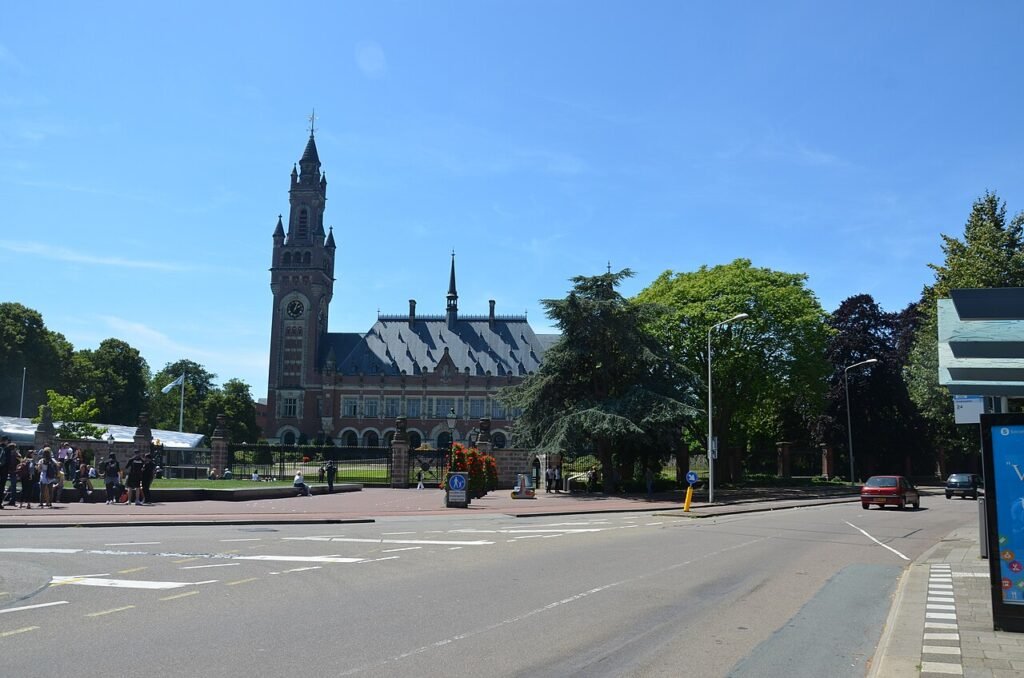
Why in News? On Thursday, 19 November 2026, the International Court of Justice (ICJ) at The Hague gave its ruling. It held by 9 votes to 6 that Myanmar is responsible for genocide against the Rohingya. The acts took place during its 2017 military operation in northern Rakhine state. The court ordered Myanmar to let the Rohingya return safely, to punish those responsible and to pay compensation.
Current Context (The Trigger)
- The verdict: By a 9-6 majority, the ICJ held that Myanmar “has committed genocide against the Rohingya group in northern Rakhine state”. It found this to be a breach of Myanmar’s duties under the Genocide Convention.
- Who read it: ICJ President Yuji Iwasawa read out the judgment of the 15-judge bench. The reading in the Great Hall of Justice lasted nearly three hours.
- What the court found: The court found that thousands of Rohingya civilians were killed by Myanmar’s security forces. It also found widespread sexual violence, extreme violence against children and attacks on people trying to flee. According to the paper, the court said the evidence showed that about 10,000 Rohingya were killed.
- Orders to Myanmar: Myanmar must allow the Rohingya a “safe, voluntary and dignified return” to the places where they lived. It must also investigate, prosecute and punish the people who carried out genocidal acts.
- Compensation: Myanmar has to pay compensation to the Rohingya. The court will fix the amount at a later stage of the case.
- A first, stated precisely: This is the first time the ICJ has held a state itself responsible for committing genocide. In Bosnia and Herzegovina v. Serbia and Montenegro (2007), the court found that genocide took place at Srebrenica. But it held Serbia responsible only for failing to prevent and punish it, not for committing it.
- The applicant: The Gambia, a Muslim-majority African country, brought the case under the 1948 Genocide Convention. The ICJ records the filing date as 11 November 2019.
Core Concepts & Static GK
- What genocide means: Article II of the Genocide Convention defines genocide as certain acts. They must be done with intent to destroy, in whole or in part, a national, ethnical, racial or religious group, as such. The key test is this intent, not the number of dead.
- Five listed acts: The acts are killing members of the group and causing them serious bodily or mental harm. They also include inflicting conditions of life meant to destroy the group, imposing measures to prevent births, and forcibly transferring children to another group.
- Punishable acts: Article III makes five things punishable. These are genocide, conspiracy to commit it, direct and public incitement, attempt, and complicity.
- Duty to prevent and punish: Under Article I, states confirm that genocide is a crime under international law in peace and in war. They undertake to prevent it and to punish it.
- Who can be punished: Article IV applies to rulers, public officials and private individuals alike. Article VI says accused persons are tried by a court of the state where the act took place. They can also be tried by an international penal tribunal whose jurisdiction the parties have accepted.
- Adoption and force: The UN General Assembly adopted the Convention on 9 December 1948 through resolution 260 (III). It came into force on 12 January 1951.
- The ICJ route: Article IX sends disputes between parties about the Convention to the ICJ at the request of any party. This includes disputes on a state’s responsibility for genocide.
- About the ICJ: The ICJ is the principal judicial organ of the United Nations. It was set up by the UN Charter in June 1945 and began work in April 1946. It sits in the Peace Palace at The Hague and is the only principal UN organ not located in New York.
Constitutional & Legal Framework
- Only states can be parties: Article 34 of the ICJ Statute says only states may be parties in cases before the Court. That is why The Gambia, a state, sued Myanmar and no individual stood trial.
- Binding but limited: Article 59 says a decision binds only the parties and only in that case. Article 60 says the judgment is final and without appeal.
- Compliance under the UN Charter: Article 94(1) of the UN Charter obliges every member to comply with the ICJ’s decision. This applies in any case to which it is a party.
- Enforcement route: Under Article 94(2), the other party can go to the Security Council if a state does not comply. The Council may make recommendations or decide on measures.
- Weak enforcement record: On 31 July 1986, a Security Council draft calling for compliance with the Nicaragua judgment got eleven votes. It still failed because a permanent member, the United States, voted against it.
- Ad hoc judges: Article 31 lets a party with no judge of its nationality on the bench choose a judge for that case.
Institutional Machinery
- Composition of the ICJ: The Court has 15 judges, and no two may be nationals of the same state.
- Election: The UN General Assembly and the Security Council vote separately for each seat. A candidate needs a majority in both bodies.
- Term: Judges serve nine-year terms and can be re-elected. One-third of the Court is elected every three years.
- Presidency: The judges elect a President and a Vice-President by secret ballot for three-year terms. Yuji Iwasawa presided as President on 19 November 2026.
- Two functions: The Court settles legal disputes between states, called contentious cases. It also gives advisory opinions on legal questions sent by authorised UN organs and agencies.
- Seat: Article 22 of the Statute fixes the seat at The Hague, though the Court may sit elsewhere.
Reports, Indices & Data
- The 2017 exodus: The UN Fact-Finding Mission on Myanmar reported that “clearance operations” followed attacks by the Arakan Rohingya Salvation Army (ARSA) on 25 August 2017. Nearly 725,000 Rohingya had fled to Bangladesh by mid-August 2018.
- Deaths and destruction: The same Mission called an estimate of up to 10,000 deaths “conservative”. It found that at least 392 villages in northern Rakhine were partly or fully destroyed.
- Camps in Bangladesh: The UN refugee agency (UNHCR) says close to one million Rohingya refugees live in 33 crowded camps in Cox’s Bazar district.
- UN fact-finding mission on genocide: The Mission gave its report to the Human Rights Council session of September 2018. It found acts that fell under four of the five genocidal acts. It said there was enough information to investigate and prosecute senior Myanmar army officers for genocide.
Assam & Northeast Linkages
- Border states: India’s border with Myanmar is 1,643 km long. It runs through Arunachal Pradesh (520 km), Nagaland (215 km), Manipur (398 km) and Mizoram (510 km). Assam does not touch this border.
- Who guards it: The Assam Rifles guards the India-Myanmar border, according to the Home Ministry’s Annual Report 2019-20.
- Free Movement Regime: Under the Free Movement Regime (FMR), hill tribe members living within 16 km on either side of the border could cross. They needed a border pass. The pass was valid for one year, and each visit could last up to two weeks.
- FMR suspended: On 8 February 2024, Union Home Minister Amit Shah said the Home Ministry had recommended the immediate suspension of the FMR. He cited internal security and the demographic structure of the border states.
- Fencing plan: On 6 February 2024, Mr Shah announced that the entire 1,643-km Myanmar border would be fenced. A 10 km stretch at Moreh in Manipur had already been fenced by then.
Prelims Trap Zones (Watch out for)
- ICJ versus ICC: The ICJ decides disputes between states, and only states can be parties. The International Criminal Court tries individuals, so the ICJ ruling does not by itself jail any Myanmar officer.
- Who filed the case: The Gambia filed it on 11 November 2019. It was not Bangladesh and not the Rohingya themselves.
- Dates: The Gambia filed in 2019, and the ICJ ordered provisional measures on 23 January 2020. The genocide ruling came on 19 November 2026. Do not mix the three.
- Vote count: The merits ruling was 9-6 on a 15-judge bench. Each of the four provisional measures of 2020 was adopted unanimously.
- “First” trap: Bosnia v. Serbia (2007) also involved genocide, but Serbia was held liable only for failing to prevent and punish it. The 2026 Myanmar ruling is the first in which the ICJ held a state responsible for committing genocide.
- Treaty dates: The Convention was adopted on 9 December 1948 but came into force on 12 January 1951. India ratified it on 27 August 1959, and Myanmar on 14 March 1956.
- India and refugees: India is not a party to the 1951 Refugee Convention or its 1967 Protocol. The point came up in the Supreme Court’s Rohingya case.
- Binding effect: The judgment binds only Myanmar and The Gambia, and it cannot be appealed. Enforcement depends on the Security Council under Article 94(2) of the UN Charter.
Introduction
On 19 November 2026, the ICJ ruled by 9 votes to 6 that Myanmar is responsible for genocide against the Rohingya in 2017. It is the first time the ICJ has held a state itself responsible for committing genocide. The ruling matters for India because Myanmar is a neighbour, Rohingya live in India, and four Northeast states border Myanmar.
Legal Significance of the Ruling
- State responsibility: The judgment places responsibility on the state of Myanmar, not on named individuals. Article IX of the Convention allows the ICJ to rule on a state’s responsibility for genocide.
- Intent test met: Myanmar argued that the 2017 campaign was a lawful counter-insurgency operation, and the court did not accept this. So a security reason cannot cancel a finding of intent to destroy a group.
- Remedies ordered: The court ordered investigation, prosecution and punishment of those responsible. It also ordered return of refugees and compensation, so the remedies go beyond a mere declaration.
- Standing of a third state: The Gambia is not a victim state, yet the case reached a merits judgment. In its judgment of 22 July 2022, the ICJ held that it had jurisdiction under Article IX and that the application was admissible.
- Earlier signal: On 23 January 2020, the Court ordered provisional measures to protect the Rohingya in Myanmar. Each of the four measures was adopted unanimously.
- Wider docket: The paper notes that the court also has genocide cases connected with the war in Gaza and the war in Ukraine. This ruling is likely to be cited in those cases.
- Link to the earlier UN finding: In 2018 the UN Fact-Finding Mission said senior Myanmar army officers should be investigated and prosecuted for genocide. The court has now made a binding legal finding on the same events.
Humanitarian and Accountability Dimension
- Scale of displacement: Nearly 725,000 Rohingya had fled to Bangladesh by mid-August 2018, according to the UN Fact-Finding Mission. Bangladesh has carried this burden for years.
- Protracted camp life: UNHCR says close to one million Rohingya refugees live in 33 crowded camps in Cox’s Bazar district.
- Right of return: The court demanded a “safe, voluntary and dignified return”. Return needs real safety on the ground, and the court has now made it a legal order.
- Victim voices: Rohingya rights activist Yasmin Ullah called it “a great day for the Rohingya” and for oppressed people everywhere. Such a ruling gives survivors public recognition of their suffering.
- Compensation pending: The court will decide the amount of compensation later. The wait before any payment will again test the patience of refugees.
- Sexual violence and children: The court found widespread sexual violence and extreme violence against children. These findings matter for later reparations and protection programmes.
India’s Position and Concerns
- Treaty obligations: India signed the Genocide Convention on 29 November 1949 and ratified it on 27 August 1959. It is therefore bound by the duty in Article I to prevent and punish genocide.
- Reservation on the ICJ clause: India has a reservation to Article IX. A dispute involving India can go to the ICJ under the Convention only with the consent of all parties to it.
- Refugee law gap: India is not a party to the 1951 Refugee Convention or its 1967 Protocol. So Rohingya in India have no formal refugee status.
- Supreme Court’s stand: On 8 April 2021, in Mohammad Salimullah v. Union of India, the Supreme Court declined to free Rohingya held in a Jammu holding centre. It said they should not be deported unless the prescribed procedure is followed.
- Government’s numbers and argument: The Home Ministry has estimated that around 40,000 Rohingya live in India as undocumented persons. In court, the Union argued that non-refoulement (no forced return to danger) binds only states party to the Refugee Convention.
- Neighbourhood balance: India has to work with Myanmar on border security and connectivity, while Bangladesh hosts the Rohingya. The ruling may push India to speak more clearly on safe return.
- Moral standing: On the same day, the leaders of the US, China and Russia also backed UN reform, which India has long demanded. India’s voice on international law will count for more if it backs the ruling’s call for accountability.
Northeast Border Angle
- Long open border: The 1,643-km India-Myanmar border touches Arunachal Pradesh, Nagaland, Manipur and Mizoram. Any new displacement in Myanmar can spill over into these states.
- End of the FMR: The Home Ministry recommended suspending the Free Movement Regime on 8 February 2024. It cited internal security and the demographic structure of the border states.
- Fencing on the ground: In February 2024, the Home Ministry said 10 km at Moreh in Manipur was already fenced. Two 1-km pilot projects with a hybrid surveillance system were under way in Arunachal Pradesh and Manipur.
- Mizoram’s objection: In January 2024, Mizoram Chief Minister Lalduhoma told the Centre that fencing the border was “unacceptable”. He said the border divides the Mizo people.
- Assembly resolutions: The Mizoram Assembly passed a resolution against fencing on 28 February 2024. The Nagaland Assembly followed on 1 March 2024 and also opposed ending the FMR.
- Assam’s concern: Assam does not border Myanmar, but any refugee flow into the region feeds its long debate on detecting and deporting foreigners.
Challenges
- Weak enforcement: The ICJ has no police of its own. Under Article 94(2) it depends on the Security Council, where a permanent member can block action, as the United States did over Nicaragua in 1986.
- Myanmar’s compliance: Myanmar told the court the campaign was a lawful operation against insurgents, and the judges rejected this. A state that denies the finding is unlikely to comply quickly.
- Binding only on parties: Article 59 of the ICJ Statute limits the decision to The Gambia and Myanmar. Other states have no direct duty under the judgment, though the Convention binds them to prevent genocide.
- Safe return is hard: Close to one million Rohingya remain in camps in Cox’s Bazar. They cannot return home safely until conditions in Rakhine improve.
- Split bench: The 9-6 vote shows that judges differed. A narrow majority gives critics room to question the reasoning.
- India’s dilemma: India is not a party to the Refugee Convention, and the Union argues that non-refoulement binds only parties to it. This leaves the legal status of Rohingya in India unsettled.
- Border security pressure: The plan to fence all 1,643 km faces resistance. The Mizoram and Nagaland Assemblies have both passed resolutions against it.
Way Ahead
- Back safe return: India should support a verified, voluntary return process for the Rohingya through the UN and regional forums. The court itself demanded a “safe, voluntary and dignified return”.
- Use Security Council channels: India has long pushed for UN reform. It can press for a working enforcement route under Article 94(2) of the UN Charter.
- Clear refugee framework: The Home Ministry could frame a written national policy on asylum seekers. The Supreme Court has already said deportation needs due procedure.
- Humanitarian help to Bangladesh: India can support Bangladesh, which hosts the camps in Cox’s Bazar, with relief and health assistance. This would ease pressure on the region’s borders.
- Balanced border management: The Centre should consult border communities before fencing. The Mizoram and Nagaland Assemblies have already objected.
- Back accountability: India can encourage investigation and prosecution of the guilty, as the court ordered. This keeps its position in line with Article I of the Convention.
Conclusion
The ICJ has turned years of UN reports and charges into a binding legal finding. The real test is whether Myanmar complies and whether the Security Council acts if it does not. For India and the Northeast, the best path is to back safe return and accountability while keeping the border secure and humane.
Government Job Aspiration, Youth Unemployment and Skilling in Assam
Open this topic as a separate page, with its MCQs →
Syllabus Mapping
- Prelims: GS Paper I (Current events of State/National importance; Economic and social development, demographics and employment).
- Mains: GS Paper III (Indian economy: employment, skill development, growth and inclusion); GS Paper V (Assam syllabus line: economy, human resources and youth issues of Assam).
Why in News? An opinion article in The Assam Tribune of 20 November 2026 warns young people against putting their lives on hold. They should not wait only for a government job. The article links this to graduate unemployment. It also links it to the skills mismatch flagged by NITI Aayog and the thin private sector in Assam and the Northeast.
Current Context (The Trigger)
- Applications per post: The article cites reported figures of about 1.86 crore applications for only 55,000 government posts. This was in the period from November 2024 to July 2025.
- Source of the figure: Official railway data of July 2025 link this number to Railway Recruitment Board computer-based tests. Over 1.86 crore candidates took these tests for 55,197 vacancies across seven notifications since November 2024.
- Odds of selection: The article works this out to roughly 338 applications for each vacancy.
- Urban unemployment: The article quotes the Periodic Labour Force Survey (PLFS) of the Ministry of Statistics and Programme Implementation (MoSPI). The urban rate rose slightly, from 6.8% in August to 6.9% in September 2026. The overall rate held at 5%.
- Skills mismatch: The writer says India’s real problem is the gap between education, employability and what the job market needs. NITI Aayog’s report ‘Reimagining Skilling for Viksit Bharat@2047’ points to this gap.
- Assam angle: The article says Assam and the Northeast have little industry and few organised private jobs. So, it notes, thousands of young people spend years on APSC, ADRE, banking and similar exams.
Core Concepts & Static GK
- Periodic Labour Force Survey: PLFS is run by the National Statistics Office (NSO) under MoSPI. Its Annual Report 2025 covers January to December 2025, and its press note came out on 27 March 2026.
- Usual status (ps+ss): The annual report measures activity in “usual status”. This counts a person’s principal status and subsidiary status together.
- Youth unemployment rate: The PLFS treats youth as persons aged 15-29 years. Their usual-status unemployment rate fell to 9.9% in 2025 from 10.3% in 2024.
- Rural and urban youth: The 2025 rate was 8.3% for rural youth and 13.6% for urban youth. In 2024 these were 8.7% and 14.3%.
- NEET: This means “not in employment, education or training”. In 2025, 25.0% of persons aged 15-29 and 21.0% of those aged 15-24 were NEET.
- Outcome-based skilling: NITI Aayog’s August 2026 report wants employability, progression and livelihoods to be the main measure of success. Counting the number of people trained is not enough.
Schemes & Initiatives
- Skill India Programme: On 7 February 2025, the Union Cabinet approved its continuation and restructuring for 2022-23 to 2025-26. The outlay was Rs 8,800 crore.
- Merged schemes: The restructured programme combined PMKVY 4.0, the PM National Apprenticeship Promotion Scheme and the Jan Shikshan Sansthan scheme. Together they form one central sector scheme.
- PMKVY 4.0: Pradhan Mantri Kaushal Vikas Yojana 4.0 gives NSQF-aligned short-term training. It also certifies existing skills through recognition of prior learning.
- PM-VBRY: The Union Cabinet approved the Employment Linked Incentive scheme on 1 July 2025. It runs as the Pradhan Mantri Viksit Bharat Rozgar Yojana, with an outlay of Rs 99,446 crore to support more than 3.5 crore jobs.
- PM-VBRY window: Jobs created between 1 August 2025 and 31 July 2027 qualify. Of the target, 1.92 crore are first-time employees. The Ministry of Labour and Employment runs it through an Employees’ Provident Fund Organisation (EPFO) framework.
Reports, Indices & Data
- Overall unemployment, 2025: The usual-status rate for persons aged 15 and above was 3.1% for both males and females.
- Educated unemployed: The rate among persons with secondary education and above fell to 6.5% in 2025 from 7.0% in 2024.
- Regular jobs: The share of workers in regular wage or salaried work rose to 23.6% in 2025 from 22.4% in 2024.
- Vocational training: Only 4.2% of persons aged 15-59 had received or were receiving formal vocational or technical training. For ages 15-29 it was 5.0%.
- Degree-job mismatch: The NITI Aayog report cites the Economic Survey 2024-25. Only 8.25% of graduates work in roles that match their qualifications.
- Training scale: The same report says over 7.67 crore people have been trained since 2014-15.
Assam & Northeast Linkages
- Assam Skill University: The Assam Skill University Act, 2020 (Assam Act No. IX of 2020) created a state university for skill education. The Governor gave assent on 12 October 2020, and the main campus is at Mangaldai.
- ASU Parichay: A two-day stakeholder programme at Assam Skill University, Mangaldai ended on 19 November 2026. More than 30 representatives of departments, civil society, institutes and industry attended, including IBM.
- State skilling pilot: The NITI Aayog report notes the Integrated Scheme in Skilling Architecture (ISSA) in the Union Budget 2026-27. It plans State Skills Transformation Pilots in Andhra Pradesh, Odisha, Uttar Pradesh, Bihar and Assam.
- Startup policy: The Government of Assam has notified the Assam Startup and Incubation Policy 2025-30. It is a five-year policy run by the Department of Innovation, Incubation and Startups.
- Target exams named: The article names APSC and ADRE as exams that draw Assam’s aspirants. ADRE is the Assam Direct Recruitment Examination, for Grade III and Grade IV posts.
Prelims Trap Zones (Watch out for)
- Age group trap: The NEET share is 25.0% for ages 15-29 but 21.0% for ages 15-24. Do not swap them.
- Rate trap: The youth rate of 9.9% is for ages 15-29. The overall 3.1% is for ages 15 and above.
- Scheme name trap: The Employment Linked Incentive scheme is PM-VBRY, an employment incentive. It is not PMKVY, which is a training scheme.
- Time trap: The 6.8% and 6.9% urban figures are monthly figures for August and September 2026. They are not the PLFS annual figures for 2025.
- Report trap: ‘Reimagining Skilling for Viksit Bharat@2047’ is a NITI Aayog report. Its Skill Development, Labour and Employment Division prepared it, not the Ministry of Skill Development and Entrepreneurship.
Introduction
About 1.86 crore candidates competed for roughly 55,000 government posts from November 2024 to July 2025. In Assam, where private jobs are fewer, the pull of a government post is even stronger. The challenge is to turn this aspiration into skills and work without lowering the dignity of a government career.
Why Government Jobs Attract Assam’s Youth
- Security: A fixed salary, a secure job and a pension-like retirement package make these posts very attractive.
- Social status: A government job has long stood for dignity and respect. Families see it as the reward for years of study.
- Family pride: In small towns and villages of Assam, landing such a job is often celebrated by the whole family.
- Few private options: Assam and the Northeast have little industry and few organised private employers. This has made youth more dependent on recruitment exams.
- Family support: Families usually back repeated attempts. A failed exam is treated as a short setback, not a signal to change course.
Causes and Impact of Prolonged Waiting
- Too few posts: UPSC, state commissions, SSC, banks and railways draw huge numbers of candidates for a small number of vacancies. The figure of 338 applications per post shows the scale.
- Long preparation years: The article describes a graduate who starts at 22 and is still attempting at 28 or 30. Meanwhile, friends build careers and families.
- Mental strain: Repeated failure wears down confidence. The article lists anxiety, frustration and falling self-esteem.
- Dependence: Aspirants stay financially dependent on parents. Comparison with peers grows harder each year.
- Lost opportunities: New jobs are opening up in fields such as IT, biotechnology, healthcare, tourism, finance and manufacturing, helped by AI and automation. Many aspirants miss them.
- Migration: Some young people leave Assam for big cities in search of work.
Skills Mismatch and the Data Picture
- Degree is not enough: The article says employers now value hands-on ability, communication, comfort with technology, flexibility and problem-solving.
- Youth unemployment: At 9.9% in 2025, the youth rate is about three times the overall rate of 3.1%.
- Urban youth stress: Urban youth unemployment was 13.6% in 2025, much higher than the rural rate of 8.3%.
- Educated unemployed: The rate among persons with secondary education and above was 6.5% in 2025. This is more than double the overall rate.
- Idle youth: A quarter of those aged 15-29 (25.0%) were not in employment, education or training in 2025.
- Thin training base: Only 5.0% of persons aged 15-29 had received or were receiving formal vocational or technical training.
Government & Institutional Initiatives
| Level | Initiative | Purpose & Impact |
|---|---|---|
| Centre | Skill India Programme (PMKVY 4.0, apprenticeship, Jan Shikshan Sansthan) | Rs 8,800 crore for 2022-23 to 2025-26; short-term training and recognition of prior learning. |
| Centre | PM-VBRY (Employment Linked Incentive scheme) | Rs 99,446 crore to support over 3.5 crore jobs created from 1 August 2025 to 31 July 2027. |
| Centre (policy) | NITI Aayog report on skilling, August 2026 | Wants skilling judged by employability, progression and livelihoods, not training numbers. |
| Assam | Assam Skill University, Mangaldai | Created by the Assam Skill University Act, 2020; runs industry-academia events such as ASU Parichay with IBM and others. |
| Assam | Assam Startup and Incubation Policy 2025-30 | Five-year policy to support new enterprises as an alternative to salaried jobs. |
Challenges
- Limited private sector: Assam has few organised private employers. So the government remains the most visible employer for educated youth.
- Education-employability gap: Many courses do not match what employers want. Nationally, educated unemployment was still 6.5% in 2025.
- Low vocational exposure: Just 5.0% of youth aged 15-29 report formal vocational training. Most enter the job market without a trade skill.
- Social stigma: The article notes that private jobs are often seen as inferior and starting a business as an unwise risk.
- Mental health cost: Long exam cycles create anxiety and low self-esteem. These costs rarely show up in official data.
- Underused sectors: Assam’s tourism, health care, agriculture, food processing, logistics and small industries have untapped potential. They have not yet been made an economic priority.
Way Ahead
- Time-bound preparation: Aspirants should set a realistic time limit, review it every year and keep other career paths ready.
- Skills alongside exams: Candidates should build job-ready skills and gain work experience while they prepare.
- Link training to jobs: Skilling schemes should be judged by placements, wage growth and career progression, as the NITI Aayog report urges.
- Use PM-VBRY: Employers in Assam should register new hires with EPFO before 31 July 2027. This lets first-time workers and firms in the state draw the incentive.
- Grow local sectors: The state should treat tourism, health care, agro-processing and logistics as priority employers.
- Industry-academia ties: Assam Skill University and colleges should keep building links with firms, as at ASU Parichay.
- Back startups: The Assam Startup and Incubation Policy 2025-30 should help graduates become job creators.
Conclusion
Government jobs will remain a fair goal, but they cannot absorb every graduate. Assam needs skills that match market demand and local sectors that hire. Then a young person’s best years need not be spent waiting for one exam result.
New Municipal Boards and Panchayat Remuneration in Assam
Open this topic as a separate page, with its MCQs →
Syllabus Mapping
- Prelims: GS Paper I (Current events of State/National importance; Indian Polity and Governance: Constitution, Political System, Panchayati Raj, Public Policy, Rights issues etc.).
- Mains: GS Paper II (functions and responsibilities of the Union and the States; devolution of powers and finances up to local levels, and the challenges in it). GS Paper V (Assam: governance, local self-government and development issues).
Why in News? The Assam Cabinet met in New Delhi on Thursday, 19 November 2026, with Chief Minister Himanta Biswa Sarma in the chair. It approved six new municipal boards spread over four districts. It also raised the monthly remuneration of elected members of Zila Parishads, Anchalik Panchayats and Gaon Panchayats.
Current Context (The Trigger)
- Six new boards: The Cabinet cleared municipal boards at Laluk, Harmuti-Bamunbari and Ghilamara in Lakhimpur district. The other three are Majuli in Majuli district, Udarbond in Cachar district and Mirza-Bijoynagar in Kamrup district.
- Stated purpose: The Cabinet wants stronger urban administration and better civic amenities in towns that are now growing. Each board will look after civic works such as sanitation, roads and drainage for its residents.
- Zila Parishad pay: The monthly remuneration of a Zila Parishad president goes from Rs 10,000 to Rs 15,000. A vice-president now gets Rs 10,000 instead of Rs 7,500, and a member gets Rs 5,500 instead of Rs 4,000.
- Anchalik Panchayat pay: The president’s remuneration rises from Rs 5,700 to Rs 10,000. A vice-president moves from Rs 5,000 to Rs 7,000, and a member from Rs 3,000 to Rs 6,000.
- Gaon Panchayat pay: The president’s remuneration goes from Rs 5,000 to Rs 6,500, and the vice-president’s from Rs 3,000 to Rs 4,000. A member now gets Rs 2,600 instead of Rs 2,000.
Core Concepts & Static GK
- Two parts of the Constitution: Part IX (Panchayats) came through the 73rd Amendment. Part IXA (Municipalities) came through the 74th Amendment. Both were passed in 1992. Part IXA starts at Article 243P and runs to Article 243ZG.
- Three kinds of municipality: Article 243Q provides a Nagar Panchayat for a transitional area, which is an area moving from rural to urban. It provides a Municipal Council for a smaller urban area and a Municipal Corporation for a larger urban area. The Governor specifies which area falls in which class.
- Three tiers of Panchayats: Article 243B requires Panchayats at the village, intermediate and district levels. A State with a population of twenty lakh or less may skip the intermediate level.
- Two Schedules: The Eleventh Schedule lists 29 subjects for Panchayats, and the Twelfth Schedule lists 18 matters for Municipalities. The States decide how much of each list to hand over.
- Direct election and five-year term: All seats in a Municipality or Panchayat are filled by direct election from territorial constituencies. Each body runs for five years from its first meeting, unless dissolved earlier.
Constitutional & Legal Framework
- Reservation of seats: Article 243T keeps not less than one-third of all directly elected municipal seats for women. Seats are also reserved for Scheduled Castes and Scheduled Tribes in proportion to their population in the municipal area.
- Fresh election after dissolution: An election must be completed before the term ends. If the body is dissolved early, the election must be held within six months of the dissolution. A body formed after dissolution serves only the remaining period.
- Ward Committees: Article 243S requires Ward Committees in a Municipality with a population of three lakh or more. A Ward Committee covers one or more wards, so civic decisions stay closer to the citizen.
- District Planning Committee: Article 243ZD requires a District Planning Committee in every State at the district level. It consolidates plans prepared by Panchayats and Municipalities and prepares a draft development plan for the district.
- Assam laws: The Assam Panchayat Act, 1994 (Act 17 of 1994) governs the Gaon Sabha, Gaon Panchayat, Anchalik Panchayat and Zilla Parishad. Assam municipal boards are created under the Assam Municipal Act, 1956.
Institutional Machinery
- State Election Commission: Article 243K vests the control of Panchayat electoral rolls and elections in a State Election Commissioner appointed by the Governor. The Commissioner can be removed only in the way and on the grounds applicable to a High Court judge.
- Municipal elections: Article 243ZA gives the same State Election Commission the control of municipal electoral rolls and elections. So one body runs both rural and urban local polls.
- State Finance Commission: Article 243-I required the Governor to constitute a State Finance Commission within one year of the 73rd Amendment Act coming into force. After that, a new Commission is due at the end of every fifth year. Article 243Y makes the same Commission review municipal finances.
- Disqualification age: A person aged 21 cannot be disqualified from local body membership merely for being under 25. This lets young citizens contest.
Reports, Indices & Data
- 15th Finance Commission (2021-26): It recommended about Rs 4.36 lakh crore for local bodies. This was made up of Rs 2,36,805 crore for rural local bodies and Rs 1,21,055 crore for urban local bodies. It also had Rs 70,051 crore for health grants through local governments.
- 16th Finance Commission (2026-31): It recommended Rs 7,91,493 crore for local bodies. Rural local bodies get Rs 4,35,236 crore and urban local bodies get Rs 3,56,257 crore.
- Basic and performance split: The 16th Finance Commission splits its grants 80 per cent basic and 20 per cent performance-based. Half of the basic grant is untied, and the other half must go to sanitation and solid waste management, water management, or both.
- Entry conditions: A local body must be constituted as per the Constitution. It must publish provisional and audited accounts. Its State must also constitute the State Finance Commission on time. The 15th Finance Commission said no grants would be released after March 2024 to a State that had not constituted a State Finance Commission. The State must also have acted on its report.
Assam & Northeast Linkages
- 2025 panchayat polls: The Assam State Election Commission held Panchayat elections in 27 districts in two phases, on 2 May and 7 May 2025. Counting was on 11 May. The electorate was 1,80,36,682 across 25,007 polling stations.
- Candidate rules in 2025: A general candidate for a Gaon Panchayat needed at least a High School Leaving Certificate (HSLC, Class 10) pass. For a Zilla Parishad or Anchalik Panchayat seat, a general candidate needed a Higher Secondary School Leaving Certificate (HSSLC, Class 12) pass. Candidates from the reserved categories got a lower bar.
- Expenditure caps in 2025: A Zilla Parishad candidate could spend up to Rs 10 lakh. An Anchalik Panchayat candidate could spend Rs 2.5 lakh. A Gaon Panchayat candidate could spend Rs 25,000.
- Newer civic bodies: The Assam Cabinet approved the Patharkandi Municipal Board in October 2024 under Section 4 of the Assam Municipal Act, 1956. It has 10 wards covering seven revenue villages, and the local Gaon Panchayat ceases to exist.
- Corporation upgrade: The Dibrugarh Municipal Board was dissolved and upgraded to the Dibrugarh Municipal Corporation on 7 March 2024.
- Sixth Schedule areas: Part IX does not apply to the tribal areas under Article 244(2), and Part IXA likewise excludes them. In Assam, the Sixth Schedule covers the North Cachar Hills, Karbi Anglong and Bodoland Territorial Areas districts, run by their own councils.
Prelims Trap Zones (Watch out for)
- Name Trap: Under Article 243Q(1)(b), an Assam municipal board is the State’s form of the Municipal Council for a smaller urban area. A 2017 audit report of the Comptroller and Auditor General (CAG) says so. It is not a Nagar Panchayat. In Assam, the Town Committee is the body for a transitional area (the Nagar Panchayat).
- Number Trap: The Eleventh Schedule has 29 subjects and the Twelfth Schedule has 18 matters. Do not swap them.
- Pay Trap: Rs 15,000 is the new pay of a Zila Parishad president, not the vice-president. The vice-president’s pay rises from Rs 7,500 to Rs 10,000, and a member’s from Rs 4,000 to Rs 5,500.
- Percentage Trap: The Constitution fixes “not less than one-third” for women in Panchayats and Municipalities. A State may go higher, but the constitutional floor stays one-third.
- Tier Name Trap: Under the Assam Panchayat Act, 1994, the intermediate tier is the Anchalik Panchayat, not an “Anchalik Parishad”. The district tier is the Zilla Parishad and the village tier is the Gaon Panchayat.
- Venue Trap: This Cabinet meeting was held in New Delhi, not in Dispur or Guwahati. It took place on Thursday, 19 November 2026.
Introduction
On 19 November 2026 the Assam Cabinet met in New Delhi. It cleared six new municipal boards. It also raised the monthly pay of elected members in all three Panchayati Raj tiers. The decision touches both halves of local self-government created by the 73rd and 74th Constitutional Amendments of 1992. It also brings back an old concern for Assam: local bodies need real money and real work, not only a new name.
Need for New Urban Local Bodies
- Civic services in growing towns: The Cabinet linked the boards to better civic services in fast-growing towns. A municipal board gives such a town an elected urban council in place of a rural panchayat.
- Clear service duties: The new boards will manage sanitation, roads and drainage. These match items in the Twelfth Schedule, such as roads and bridges and public health, sanitation conservancy and solid waste management.
- Spread across Assam: The boards fall in Lakhimpur, Majuli, Cachar and Kamrup districts. Three of them, Laluk, Harmuti-Bamunbari and Ghilamara, are in Lakhimpur alone.
- Replacing rural bodies: When Patharkandi became a municipal board in 2024, its Gaon Panchayat ceased to exist. Rural bodies in such towns must therefore give way to urban ones, with a change in taxes and functions.
- Access to urban grants: The 16th Finance Commission set Rs 3,56,257 crore for urban local bodies for 2026-31. A town without a recognised urban local body cannot draw on this share.
- Ward-level democracy: Municipal seats are filled by direct election from wards, with at least one-third reserved for women. Residents of a new board area therefore gain a councillor they can vote out.
Why Better Remuneration for Panchayat Members Matters
- Biggest percentage rise: The Anchalik Panchayat member’s remuneration doubles from Rs 3,000 to Rs 6,000, a 100 per cent rise. The president’s rises by Rs 4,300, from Rs 5,700 to Rs 10,000.
- Zila Parishad gains: The president gets Rs 5,000 more per month and the member gets Rs 1,500 more. The district tier sets the plan for the whole district, so its members need fair support.
- Gaon Panchayat gains: The Gaon Panchayat member’s pay rises by Rs 600 to Rs 2,600, and the president’s by Rs 1,500 to Rs 6,500. The member’s rise of Rs 600 is the smallest of all nine posts in rupee terms, though it is still a 30 per cent increase.
- Wider pool of candidates: Assam’s 2025 polls had qualification limits of HSLC for Gaon Panchayat and HSSLC for the upper two tiers. Better pay may help educated young people and women see panchayat work as a serious role.
- Costly campaigns: The 2025 spending cap was Rs 10 lakh for a Zilla Parishad seat and Rs 2.5 lakh for an Anchalik Panchayat seat. A pay of Rs 5,500 a month remains small beside such campaign costs, which can push members towards other income.
- Reduced dependence on patrons: Even a Gaon Panchayat member now gets a regular Rs 2,600 a month. A steady income, however modest, lowers the need to rely on contractors or party patrons.
Remuneration Before and After (Comparative Assessment)
| Tier and post | Earlier (Rs per month) | Now (Rs per month) | Rise (Rs) |
|---|---|---|---|
| Zila Parishad president | 10,000 | 15,000 | 5,000 |
| Zila Parishad vice-president | 7,500 | 10,000 | 2,500 |
| Zila Parishad member | 4,000 | 5,500 | 1,500 |
| Anchalik Panchayat president | 5,700 | 10,000 | 4,300 |
| Anchalik Panchayat vice-president | 5,000 | 7,000 | 2,000 |
| Anchalik Panchayat member | 3,000 | 6,000 | 3,000 |
| Gaon Panchayat president | 5,000 | 6,500 | 1,500 |
| Gaon Panchayat vice-president | 3,000 | 4,000 | 1,000 |
| Gaon Panchayat member | 2,000 | 2,600 | 600 |
Finance and Funds for Local Bodies
- Constitutional route: Articles 243-I and 243Y make the State Finance Commission review the finances of both Panchayats and Municipalities. It recommends how State taxes are shared and what grants flow to local bodies.
- Central grants grew: The 15th Finance Commission recommended about Rs 4.36 lakh crore for 2021-26. The 16th Finance Commission recommended Rs 7,91,493 crore for 2026-31.
- Rural share: Rural local bodies are to get Rs 4,35,236 crore in 2026-31, of which Rs 87,048 crore is performance-linked. Assam’s Panchayats can draw on this if they meet the conditions.
- Urban share: Urban local bodies are to get Rs 3,56,257 crore, including Rs 58,032 crore as performance grant. The urban package also has a one-time Rs 10,000 crore urbanisation premium for merging peri-urban villages into urban areas.
- Conditions attached: A body must publish audited accounts, and its State must constitute the State Finance Commission on time. Missed paperwork can cost a body its grant.
- Tied spending: Half of the basic grant must go to sanitation, solid waste or water management. This suits new boards, whose first jobs are sanitation and drainage.
Constitutional Design of Local Self-Government
- Elected, not nominated: Direct election to all seats in Panchayats and Municipalities gives local bodies their own democratic mandate. This is the core change brought by the 1992 amendments.
- Women’s presence: Not less than one-third of seats are reserved for women in both Panchayats and Municipalities. Women of the SC and ST groups get not less than one-third of the SC and ST seats, and these count within the women’s one-third.
- Regular polls: A new election must follow within six months of a dissolution. This blocks long periods of official rule.
- Independent poll body: A State Election Commission conducts local elections for both rural and urban bodies. Assam’s 2025 Panchayat poll covered 1,80,36,682 voters in 27 districts under this arrangement.
- Planning link: The District Planning Committee merges Panchayat and municipal plans into one draft plan for the district. Without it, rural and urban plans would run separately.
- Tribal areas left out: Parts IX and IXA do not apply to Sixth Schedule areas, which have their own councils. Assam’s Panchayat and municipal reforms therefore reach only the non-Sixth Schedule areas.
Challenges
- Money is thin: Pay of Rs 2,600 for a Gaon Panchayat member is still small. It may not cover travel and meeting costs for rural members.
- Functions without funds: The Constitution says a State “may” give powers to local bodies, and does not oblige it to. Local bodies can hold many functions on paper and few in practice.
- Grant conditions: The 16th Finance Commission ties grants to published audited accounts and a timely State Finance Commission. Small new boards may lack accountants and systems to meet this.
- Transition shocks: A village becoming a board area changes its taxes, staff and rules overnight, as in Patharkandi, where the Gaon Panchayat ended. People may face new tax bills before better services arrive.
- Two sets of rules: Assam has the Panchayat Act of 1994 and the Municipal Act of 1956. The 1994 Act was amended again in 2018, 2023 and 2025. Frequent changes make it hard for staff and members to follow the law.
- Unequal tier pay: As printed in the paper, an Anchalik Panchayat member will get Rs 6,000 a month, more than a Zila Parishad member’s Rs 5,500. If the official order confirms this, the pay ladder will not match the ladder of responsibility across tiers.
- Left-out areas: Sixth Schedule areas are outside Part IX and Part IXA. Their councils need a separate push for civic services.
Way Ahead
- Staff the new boards: The State’s urban affairs department should post a chief executive, engineers and accountants to each new board before elections. Trained staff are the base for sanitation and drainage services.
- Constitute the State Finance Commission on time: The State government should make sure the Governor constitutes each Commission in the five-year cycle of Articles 243-I and 243Y. This keeps the State eligible for central grants.
- Publish accounts: Every Panchayat and board should publish provisional and audited accounts each year. Without this, the entry condition for grants fails.
- Link pay to duties: The State’s Panchayat and Rural Development department can pair the new remuneration with a review of sitting-attendance and training. A paid member who attends training and meetings delivers more.
- Devolve more Schedule items: The State should hand over more of the 29 Eleventh Schedule and 18 Twelfth Schedule subjects, with staff and funds attached. Functions, funds and functionaries should move together.
- Use grants for sanitation: New boards should use the tied half of the basic grant on solid waste and water management. This delivers the sanitation and drainage promised in the Cabinet decision.
- Strengthen planning: The District Planning Committees in Lakhimpur, Cachar, Majuli and Kamrup should fold the new boards into district plans. This avoids duplication with nearby Gaon Panchayats.
Conclusion
The Cabinet’s two decisions follow the 1992 design: more urban bodies for growing towns and better pay for rural representatives. They will succeed only if the new boards get trained staff and publish audited accounts. Panchayat members also need real funds and functions to go with their higher remuneration.
Asked in APSC
- APSC Prelims 2025: (answer in the MCQs below)
Which of the following statements regarding the rules and provisions of the Assam Panchayat Act, 1994 are correct?
1. The Act establishes a three-tier system.
2. The Act provides reservation of seats and offices for the President/Vice President of Zila Parishad and Anchalik Panchayat for Scheduled Castes, Scheduled Tribes and women.
3. The Act outlines specific, mandatory revenue sharing from Haat (market) sales.
4. The latest amendment to the Assam Panchayat Act, 1994 has taken place in the form of the Assam Panchayat (Amendment) Act, 2025.
Select the correct answer using the codes given below.- (A) 1, 2 and 4 only
- (B) 1 and 2 only
- (C) 3 and 4 only
- (D) 1, 2, 3 and 4
News in Short
- Scrub typhus: A review of national surveillance data for 2009 to 2023 found 127 outbreaks, 3,751 cases and 93 deaths in India. The disease is caused by the bacterium Orientia tsutsugamushi and spreads through the bite of infected chiggers, the larval stage of a mite.
- SPECS 2030: Assam’s National Health Mission and Sri Sankaradeva Nethralaya, Guwahati, signed an MoU to put this WHO eye-care initiative into practice in the State. SPECS means Services, Personnel, Education, Cost and Surveillance, and it deals with care for refractive errors.
- Mizoram-Assam border: Officials of Kolasib and Hailakandi districts met at Buhchangphai and agreed to keep the status quo on the disputed boundary. They also agreed on joint patrols by forest and police staff and strict use of the Forest Conservation Act, 1980 in reserved forests.
- Meghalaya in BBC Travel list: Meghalaya is the only Indian place among BBC Travel’s 20 top destinations to visit in 2027. The State will also host the 39th National Games in 2027.
- Baljek Airport: Meghalaya and the Airports Authority of India (AAI) signed an MoU to develop this Garo Hills airport as a Code 2B facility for 19-seater planes. The State will give about 132.50 acres of land, and AAI will run the airport.
- India-Japan 2+2 dialogue: The fourth 2+2 meeting of the foreign and defence ministers took place in Tokyo. The ministers said Japan’s ‘Updated FOIP’ (Free and Open Indo-Pacific, announced in May) shares one vision for the region. So do India’s Indo-Pacific Oceans Initiative (IPOI) and MAHASAGAR.
- EPFO reforms: At its 240th meeting, the Central Board of Trustees of the Employees’ Provident Fund Organisation (EPFO) approved a voluntary Systematic Withdrawal Plan for retiring members. It also lowered the minimum EPF balance rule from 25 per cent to 10 per cent. The waiting time for final withdrawal now falls from 12 months to 2 months.
- World Bank food prices: The Bank’s October Commodity Markets Outlook expects its global food price index to rise about 10 per cent in 2026. It expects a further 7 per cent rise in 2027. It then sees a fall of about 5 per cent in 2028. Bank economists warn that prices could climb above their 2022 level.
APSC Prelims MCQs
Practice questions on the topics above
Topic 1: Assam Accord Implementation Committee Report and Deportation Protocol
Q1. A committee set up to suggest measures for implementing every clause of the Assam Accord has given its report to the Assam government. Consider the following statements:
(i) The committee was headed by the Assam Accord Implementation Minister and included three members from the All Assam Students’ Union.
(ii) It recommended that deportation by the “push back method” should be stopped.
(iii) It recommended that the State government move the Supreme Court for a full re-verification of the National Register of Citizens.
Which of the statements given above is/are correct?
- (a) (i) only
- (b) (i) and (iii) only
- (c) (ii) and (iii) only
- (d) (i), (ii) and (iii)
Show answer
Answer: (b) Explanation: Statement (i) is correct. Minister Atul Bora headed the committee, which had three Cabinet ministers and three AASU members. Statement (iii) is correct. The committee asked the State to approach the Supreme Court for a full NRC re-verification, and wants no identity card or rejection slip issued until then. Statement (ii) is wrong because the committee wants the push back method to continue, not stop. So only (i) and (iii) are correct. Option (a) leaves out (iii), while options (c) and (d) include the wrong statement (ii). Value addition: the final NRC of 31 August 2019 included 3,11,21,004 and left out 19,06,657 of 3,30,27,661 applicants.
Q2. Section 6A was inserted into the Citizenship Act, 1955 after the Assam Accord. Consider the following statements:
(i) It covers migrants who entered Assam on or after 1 January 1966 but before 25 March 1971.
(ii) A five-judge Constitution Bench of the Supreme Court upheld its validity by a 4:1 majority on 17 October 2024.
(iii) Justice J B Pardiwala dissented and held Section 6A(3) unconstitutional with prospective effect.
How many of the statements given above are correct?
- (a) Only one
- (b) Only two
- (c) All three
- (d) None
Show answer
Answer: (c) Explanation: All three statements are correct. Section 6A makes those who came before 1 January 1966 citizens. Those who came on or after that date but before 25 March 1971 get citizenship but cannot vote for 10 years after detection. The Constitution Bench upheld the section by 4:1 on 17 October 2024. Justice Pardiwala was the lone dissenter and would have struck down Section 6A(3) with prospective effect. Options (a), (b) and (d) undercount the correct statements. A common trap is to think the section was struck down, or that the final cut-off is 1966. Value addition: Justice Surya Kant held that post-1971 entrants are illegal immigrants who must be deported, with the Supreme Court monitoring implementation.
Q3. Match List-I with List-II:
| List-I | List-II |
|---|---|
| a. Sarbananda Sonowal v. Union of India (2005) | 1. Upheld by a 4:1 Constitution Bench in October 2024 |
| b. Section 6A of the Citizenship Act, 1955 | 2. 19,06,657 applicants excluded in the final list of 31 August 2019 |
| c. Citizenship (Amendment) Act, 2019 | 3. Struck down the Illegal Migrants (Determination by Tribunals) Act, 1983 |
| d. National Register of Citizens, Assam | 4. Covers entrants on or before 31 December 2014 from three neighbouring countries |
Select the correct answer using the codes given below:
- (a) a-3, b-1, c-4, d-2
- (b) a-1, b-3, c-4, d-2
- (c) a-3, b-4, c-1, d-2
- (d) a-2, b-1, c-3, d-4
Show answer
Answer: (a) Explanation: In Sarbananda Sonowal (12 July 2005) the Supreme Court struck down the IMDT Act, 1983 (a-3). Section 6A was upheld 4:1 on 17 October 2024 (b-1). The CAA, 2019 covers six named religious minorities from Afghanistan, Bangladesh and Pakistan who entered India on or before 31 December 2014 (c-4). The final NRC left out 19,06,657 applicants (d-2). Option (b) swaps the 2005 case with the 2024 verdict. Option (c) swaps Section 6A with the CAA. Option (d) mixes up all four pairs. Value addition: the CAA does not apply to Sixth Schedule tribal areas of Assam, Meghalaya, Mizoram and Tripura, nor to Inner Line areas.
Q4. The Union Home Ministry reconstituted the high-level committee on Clause 6 of the Assam Accord in July 2019. It gave its report to the Assam Chief Minister on 25 February 2020. Who chaired it?
- (a) Atul Bora
- (b) Justice Ranjan Gogoi
- (c) M P Bezbaruah
- (d) Justice (retd) Biplab Kumar Sarma
Show answer
Answer: (d) Explanation: Justice (retd) Biplab Kumar Sarma chaired the reconstituted Clause 6 committee, which gave its report to Chief Minister Sarbananda Sonowal on 25 February 2020. Atul Bora is wrong because he heads a different body: the committee on implementing all Accord clauses, whose report was in the news in November 2026. M P Bezbaruah is wrong because he headed the first Clause 6 panel notified in January 2019, whose members withdrew in protest before it met. Justice Ranjan Gogoi had no role in this committee. Value addition: the committee suggested 1 January 1951 as the cut-off for defining the “Assamese people” under Clause 6.
PYQ (APSC Prelims 2020): As per the Tripartite Assam Accord signed among the Government of India, the Government of Assam and the Leaders of the Assam Agitation (AASU and All Assam Gana Sangram Parishad) on 15th August, 1985, what was set up as the cut-off date for detection and deportation of illegal migrants to Assam?
- (A) 1st January, 1951
- (B) 15th August, 1967
- (C) 26th January, 1970
- (D) 24th March, 1971
Show answer
Answer: (D) Explanation: The Assam Accord was signed in New Delhi on 15 August 1985, in the presence of Prime Minister Rajiv Gandhi, by representatives of the Government of India, the Government of Assam, AASU (Prafulla Kumar Mahanta, Bhrigu Kumar Phukan) and the All Assam Gana Sangram Parishad (Biraj Kumar Sarma). Its cut-off was the midnight of 24 March 1971: foreigners who entered Assam on or after 25 March 1971 were to be detected and expelled. This is the eve of the Pakistani army crackdown in East Pakistan that set off the Bangladesh Liberation War. The Accord’s three-tier scheme:
Topic 2: ICJ Genocide Ruling on Myanmar and the Rohingya
Q5. The International Court of Justice (ICJ) recently ruled on a genocide case concerning Myanmar. Consider the following statements:
(i) The case was filed by The Gambia in 2019.
(ii) The ruling that Myanmar committed genocide was by a 9-6 decision.
(iii) The ICJ can try individual military officers for genocide.
Which of the statements given above is/are correct?
- (a) (i) only
- (b) (i) and (ii) only
- (c) (ii) and (iii) only
- (d) (i), (ii) and (iii)
Show answer
Answer: (b) Explanation: Statement (i) is correct. The Gambia instituted the case on 11 November 2019 under the Genocide Convention. Statement (ii) is correct. On 19 November 2026 the court found by 9 votes to 6 that Myanmar committed genocide. Statement (iii) is wrong. Under Article 34 of the ICJ Statute only states can be parties, so the court decides state responsibility and does not try individuals. Option (a) misses statement (ii), while options (c) and (d) wrongly include statement (iii). Value addition: Under Article VI of the Convention, individuals are tried by a court of the state where the act happened or by an international penal tribunal.
Q6. Match List-I with List-II (Articles of the Genocide Convention, 1948):
| List-I (Article) | List-II (Subject) |
|---|---|
| a. Article II | 1. Disputes go to the ICJ |
| b. Article VI | 2. Punishable acts such as conspiracy and incitement |
| c. Article IX | 3. Definition of genocide |
| d. Article III | 4. Trial by the territorial state’s court or an international penal tribunal |
Select the correct answer using the codes given below:
- (a) a-3, b-4, c-2, d-1
- (b) a-4, b-3, c-1, d-2
- (c) a-3, b-1, c-4, d-2
- (d) a-3, b-4, c-1, d-2
Show answer
Answer: (d) Explanation: Article II defines genocide as acts committed with intent to destroy a national, ethnical, racial or religious group, so a matches 3. Article VI says accused persons are tried by a competent court of the territorial state or an international penal tribunal, so b matches 4. Article IX sends disputes between parties to the ICJ, so c matches 1. Article III lists punishable acts such as conspiracy and incitement, so d matches 2. Option (a) swaps c and d, option (b) swaps a and b, and option (c) swaps b and c. Value addition: The Convention came into force on 12 January 1951.
Q7. Which of the following statements about the International Court of Justice is NOT correct?
- (a) Individuals can be parties in cases before the Court.
- (b) The seat of the Court is at The Hague.
- (c) Its judgment is final and without appeal.
- (d) A party with no judge of its nationality may choose a judge for the case.
Show answer
Answer: (a) Explanation: Option (a) is the incorrect statement. Article 34 of the ICJ Statute says only states may be parties in cases before the Court. That is why The Gambia, a state, filed the Myanmar case. Option (b) is correct because Article 22 fixes the seat at The Hague. Option (c) is correct because Article 60 says the judgment is final and without appeal. Option (d) is correct because Article 31 allows a judge ad hoc when a party has no judge of its nationality on the bench. Value addition: Article 59 says the decision binds only the parties and only in that particular case.
Q8. India ratified the Convention on the Prevention and Punishment of the Crime of Genocide in which year?
- (a) 1951
- (b) 1956
- (c) 1959
- (d) 1978
Show answer
Answer: (c) Explanation: India ratified the Genocide Convention on 27 August 1959, according to the UN Treaty Collection. Option (a), 1951, is the year the Convention entered into force, on 12 January, not the year of India’s ratification. Option (b), 1956, is the year Myanmar ratified it, on 14 March. Option (d), 1978, is the year The Gambia acceded, on 29 December. All three wrong options are real dates linked to the Convention, which is why they work as traps. Value addition: India signed the Convention on 29 November 1949. It has a reservation to Article IX. That article needs the consent of all parties before a dispute goes to the ICJ.
Topic 3: Government Job Aspiration, Youth Unemployment and Skilling in Assam
Q9. The Periodic Labour Force Survey (PLFS) Annual Report 2025 of MoSPI covers January to December 2025. Consider the following statements:
(i) The youth (15-29 years) unemployment rate in usual status was 9.9% in 2025, down from 10.3% in 2024.
(ii) The youth unemployment rate was 13.6% for urban youth and 8.3% for rural youth in 2025.
(iii) The share of persons aged 15-29 years who were not in employment, education or training was 21.0%.
Which of the statements given above is/are correct?
- (a) (i) only
- (b) (i) and (ii) only
- (c) (ii) and (iii) only
- (d) (i), (ii) and (iii)
Show answer
Answer: (b) Explanation: Statements (i) and (ii) match the MoSPI press note of 27 March 2026. Youth unemployment fell from 10.3% to 9.9%, with 13.6% in urban areas and 8.3% in rural areas. Statement (iii) is wrong because it mixes up age groups. The 21.0% figure is for persons aged 15-24, while the NEET share for ages 15-29 is 25.0%. So (a) fails because it leaves out (ii), and (c) and (d) fail because they include (iii). Value addition: The same report says only 5.0% of persons aged 15-29 had received or were receiving formal vocational or technical training.
Q10. According to the PLFS Annual Report 2025, what share of persons aged 15-29 years was not in employment, education or training (NEET) in usual status?
- (a) 10.3%
- (b) 13.6%
- (c) 21.0%
- (d) 25.0%
Show answer
Answer: (d) Explanation: The MoSPI press note says 25.0% of persons aged 15-29 were NEET in 2025. So one in four young people was not working, studying or training. Option (a) 10.3% is the youth unemployment rate of 2024. Option (b) 13.6% is the urban youth unemployment rate of 2025. Option (c) 21.0% is the NEET share for the narrower age group of 15-24 years, which makes it a common trap. Value addition: The overall usual-status unemployment rate for persons aged 15 and above was 3.1% for both males and females in 2025. This is far below the youth rate of 9.9%.
Q11. The Pradhan Mantri Viksit Bharat Rozgar Yojana (the Employment Linked Incentive scheme) was approved by the Union Cabinet on 1 July 2025 with an outlay of:
- (a) Rs 99,446 crore
- (b) Rs 94,446 crore
- (c) Rs 8,800 crore
- (d) Rs 1,99,446 crore
Show answer
Answer: (a) Explanation: The scheme has an outlay of Rs 99,446 crore and aims to support more than 3.5 crore jobs over two years. Options (b) and (d) are altered versions of the correct figure, a classic number trap. Option (c) Rs 8,800 crore is the outlay of the restructured Skill India Programme for 2022-23 to 2025-26. That is a separate training scheme under the skilling ministry. Value addition: Jobs created between 1 August 2025 and 31 July 2027 qualify. Of the target beneficiaries, 1.92 crore are first-time employees. The scheme works through an EPFO-linked framework.
Q12. The report ‘Reimagining Skilling for Viksit Bharat@2047’, cited in an Assam Tribune opinion article on youth and government jobs, was published by:
- (a) Ministry of Skill Development and Entrepreneurship
- (b) National Skill Development Corporation
- (c) NITI Aayog
- (d) Ministry of Education
Show answer
Answer: (c) Explanation: NITI Aayog published the report in August 2026. Its Skill Development, Labour and Employment Division prepared it. The report wants employability, progression and livelihoods to be the main measure of skilling success. Option (a) is the main skilling ministry and option (b) is its public-private skilling body. Both run programmes such as PMKVY but did not publish this report. Option (d) deals with school and higher education and is also not the publisher. Value addition: The report cites the Economic Survey 2024-25, which found that only 8.25% of graduates work in roles matching their qualifications.
Topic 4: New Municipal Boards and Panchayat Remuneration in Assam
Q13. The Assam Cabinet on 19 November 2026 approved six new municipal boards and raised the remuneration of elected members of the three-tier Panchayati Raj institutions. Consider the following statements:
(i) The new municipal boards include Majuli in Majuli district and Udarbond in Cachar district.
(ii) The monthly remuneration of a Zila Parishad president has been raised from Rs 10,000 to Rs 15,000.
(iii) The monthly remuneration of a Zila Parishad vice-president has been raised from Rs 7,500 to Rs 12,000.
Which of the statements given above is/are correct?
- (a) (i) and (ii) only
- (b) (ii) and (iii) only
- (c) (i) only
- (d) (i), (ii) and (iii)
Show answer
Answer: (a) Explanation: Statements (i) and (ii) are correct. The Cabinet approved boards at Majuli in Majuli district and Udarbond in Cachar district. The Zila Parishad president’s remuneration went from Rs 10,000 to Rs 15,000. Statement (iii) is wrong. The Zila Parishad vice-president’s remuneration rises from Rs 7,500 to Rs 10,000, not Rs 12,000. Options (b), (c) and (d) wrongly include (iii) or drop (ii). Value addition: the 2025 Assam Panchayat elections covered 27 districts, and Sixth Schedule areas stay outside Part IX of the Constitution.
Q14. Match List-I with List-II:
| List-I (Article) | List-II (Subject) |
|---|---|
| a. Article 243Q | 1. Review of the finances of Municipalities by the Finance Commission |
| b. Article 243K | 2. District Planning Committee |
| c. Article 243Y | 3. State Election Commission for Panchayat elections |
| d. Article 243ZD | 4. Constitution of three types of Municipalities |
Select the correct answer using the codes given below:
- (a) a-4, b-3, c-2, d-1
- (b) a-4, b-1, c-3, d-2
- (c) a-4, b-3, c-1, d-2
- (d) a-3, b-4, c-1, d-2
Show answer
Answer: (c) Explanation: Article 243Q provides for a Nagar Panchayat, a Municipal Council and a Municipal Corporation, so a matches 4. Article 243K vests Panchayat elections in the State Election Commission, so b matches 3. Article 243Y makes the Finance Commission review municipal finances, so c matches 1. Article 243ZD sets up the District Planning Committee, so d matches 2. Option (a) swaps c and d. Option (b) swaps b and c. Option (d) swaps a and b. Value addition: Article 243ZA gives the same State Election Commission charge of municipal elections.
Q15. The Twelfth Schedule to the Constitution, linked to Article 243W, lists how many matters for Municipalities?
- (a) 29
- (b) 18
- (c) 11
- (d) 21
Show answer
Answer: (b) Explanation: The Constitution (Seventy-fourth) Amendment Act, 1992 added the Twelfth Schedule. It lists 18 matters, among them urban planning, roads and bridges, water supply, fire services and slum improvement. Option (a), 29, is the number of subjects in the Eleventh Schedule for Panchayats, the usual trap. Options (c) and (d) are close-looking numbers with no link to either Schedule. Value addition: the Governor, not Parliament, specifies which area is a transitional, smaller urban or larger urban area under Article 243Q(2).
Q16. Which of the following is NOT correct about the constitutional provisions on Municipalities?
- (a) A Municipality continues for five years from the date of its first meeting, unless sooner dissolved.
- (b) An election to constitute a Municipality must be completed within six months of its dissolution.
- (c) Ward Committees are required in a Municipality with a population of three lakh or more.
- (d) Part IXA applies in full to the tribal areas referred to in Article 244(2).
Show answer
Answer: (d) Explanation: Statement (d) is wrong. Article 243ZC says nothing in Part IXA applies to the Scheduled Areas and the tribal areas under Article 244(2). However, Parliament may extend it by law with exceptions. Statement (a) is right under Article 243U(1). Statement (b) is right under Article 243U(3), with a proviso when under six months of the term remain. Statement (c) is right under Article 243S. Value addition: for Panchayats, Article 243M also excludes Nagaland, Meghalaya and Mizoram, and the hill areas of Manipur with District Councils.
PYQ (APSC Prelims 2025): Which of the following statements regarding the rules and provisions of the Assam Panchayat Act, 1994 are correct?
1. The Act establishes a three-tier system.
2. The Act provides reservation of seats and offices for the President/Vice President of Zila Parishad and Anchalik Panchayat for Scheduled Castes, Scheduled Tribes and women.
3. The Act outlines specific, mandatory revenue sharing from Haat (market) sales.
4. The latest amendment to the Assam Panchayat Act, 1994 has taken place in the form of the Assam Panchayat (Amendment) Act, 2025.
Select the correct answer using the codes given below.
- (A) 1, 2 and 4 only
- (B) 1 and 2 only
- (C) 3 and 4 only
- (D) 1, 2, 3 and 4
Show answer
Answer: (D)
Mains Answer Writing
One exam-style question with a model answer
Q. Educated youth in Assam often spend their most productive years preparing for a limited number of government jobs. Examine the reasons for this preference for government employment and suggest measures to align skill development with the job market in the State. (250 words, 15 marks)
Model answer
Introduction: Between November 2024 and July 2025, over 1.86 crore candidates sat the Railway Recruitment Board tests. There were just 55,197 vacancies, roughly 337 for each post. In Assam, about 15.43 lakh job-seekers were on the employment exchange rolls on 30 June 2026, as the State government told the Assembly.
1. Reasons for the preference for government employment
- Security and social status: A government job gives a regular salary, job security and retirement benefits. In small towns and villages of Assam, families celebrate such a job as a big achievement. So thousands of young people keep writing the Assam Public Service Commission (APSC), Assam Direct Recruitment Examination (ADRE) and banking exams.
- Small private sector: Assam has little industry and few organised private jobs. PRS Legislative Research estimates that in 2025-26 manufacturing makes up about 22% of the State’s economy, against 35% for agriculture and 43% for services.
- Higher joblessness: Assam’s unemployment rate was 3.9% in 2023-24, above the national rate of 3.2% (Periodic Labour Force Survey, PLFS). Across India, urban unemployment rose to 6.9% in September 2026.
- Degrees without job skills: NITI Aayog’s report “Reimagining Skilling for Viksit Bharat@2047” cites the Economic Survey 2024-25: only 8.25% of graduates work in jobs that match their qualification. Fewer than 1 in 12 secondary schools offer vocational subjects.
- Weak career guidance: Many young people do not know which training leads to which job. NITI Aayog found that 36% of higher-education students skip skilling partly because they are unaware of the right programmes.
- Social attitudes: Many families see private work as second-rate and business as a risky choice. So aspirants keep writing exams for years instead of building a second career path.
2. Measures to align skill development with the job market in the State
| Measure | Who should act and how |
|---|---|
| Start skills in school | The Assam Education Department should teach employability and entrepreneurship skills from Class 6 and offer vocational tracks from Class 9. NITI Aayog suggests this in line with the National Education Policy (NEP) 2020. |
| Use the national pilot well | Assam is one of five States chosen for State Skills Transformation Pilots under the Integrated Scheme in Skilling Architecture (ISSA) of the Union Budget 2026-27. The State should map district job demand and fund courses only against it. |
| Train for new industries | The Tata semiconductor assembly and test unit at Jagiroad (Rs 27,000 crore) is expected to create over 27,000 direct and indirect jobs. Assam Skill University at Mangaldai, backed by a US $112 million Asian Development Bank (ADB) loan, should design courses with such employers. |
| Earn while learning | Colleges should link students to apprenticeships and the Prime Minister’s (PM) Internship Scheme. The scheme aims at internships for 1 crore youth in the top 500 companies over five years, with Rs 5,000 a month. |
3. Way Forward
- Back self-employment: The Chief Minister’s Atmanirbhar Asom Abhijan gives Rs 2 lakh to Rs 5 lakh to young entrepreneurs. The State government should add mentoring and market links to it.
- Grow job-rich sectors: The State should promote tourism, food processing, logistics and healthcare, where Assam has untapped potential. These sectors can absorb trained youth in every district.
- Turn exchanges into career centres: The State government should offer career counselling and online job matching at every employment exchange. Then the 15.43 lakh registered job-seekers can find private jobs that suit their skills.
- Time-bound preparation: Colleges and parents should treat exam preparation as a fixed two- or three-year phase. Every aspirant should keep a skill-based plan B alongside it.
Conclusion: A government job is a fair goal, but it cannot absorb lakhs of graduates every year. Assam will gain from its young people only when schools, colleges and industry together train them for the jobs its growing sectors are creating.
Prepare with SuchitraACS
APSC CCE Foundation Programme₹24,999  APSC Prelims Crash Course 2027 (GS + CSAT)₹5,999
 APSC CCE Study Materials Package (Prelims + Mains)₹4,999