APSC Current Affairs: Assam Tribune Notes with MCQs and Answer Writing (19/11/2026)
For APSC CCE and other Assam competitive exam aspirants, staying consistently updated with reliable current affairs is essential for success. This blog provides a well-researched analysis of the most important topics from The Assam Tribune dated 19 November 2026. Each issue has been carefully selected and explained to support both APSC Prelims and Mains preparation, ensuring alignment with the APSC CCE syllabus and the evolving trends of the examination.
 For working professionals and full-time aspirantsAPSC CCE Foundation Programme₹24,999
Current Affairs Notes
From The Assam Tribune, 19 November 2026
Roumari-Donduwa Wetlands Proposal for Assam’s Second Ramsar Site
Open this topic as a separate page, with its MCQs →
Syllabus Mapping
- Prelims: GS Paper I (General issues on Environment ecology, Bio-Diversity and Climate Change; Current events of State/National importance; Geography of Assam).
- Mains: GS Paper III (Conservation, environmental pollution and degradation, environmental impact assessment); GS Paper V (Assam syllabus: environment, biodiversity and natural resources of Assam).
Why in News? The Assam government has cleared a proposal to seek Ramsar status for the Roumari-Donduwa wetland complex. The complex is in the Laokhowa Wildlife Sanctuary, a part of the Kaziranga Tiger Reserve. A team of Forest officials placed the proposal before the Chief Minister on 16 November. The report was datelined Guwahati, 18 November.
Current Context (The Trigger)
- State approval: The State government has agreed to send a proposal to have the Roumari-Donduwa wetland complex named a Wetland of International Importance.
- Location: The complex is inside the Laokhowa Wildlife Sanctuary, which falls under the Kaziranga Tiger Reserve.
- Second site: If it is listed, it will be Assam’s second Ramsar site. The first is Deepor Beel, listed in 2002.
- Bird numbers: The two wetlands together held more than 47,000 waterbirds in 2025.
- 2026 count: In the 2026 count, Roumari ranked first and Donduwa second for waterbird numbers in the whole Kaziranga Tiger Reserve.
- Better than Deepor: According to the report, these counts were higher than those at Deepor Beel. Deepor Beel is the State’s only Ramsar site today.
- Who prepared it: Samarjit Ojha, Noirrita Priyadarshini, Bipanchi Tamuli and Neeraj Bora compiled the proposal. Dr Sonali Ghosh and senior Forest department officials guided them.
Core Concepts & Static GK
- Ramsar Convention: It is an intergovernmental treaty on wetlands. It was adopted at Ramsar, Iran, on 2 February 1971 and came into force in 1975.
- World Wetlands Day: It is observed on 2 February, the day the Convention was adopted. It was first observed in 1997.
- Nine criteria: A wetland must meet at least one of nine criteria to be a Wetland of International Importance. The criteria fall into two groups: wetland types (Criterion 1) and biological diversity (Criteria 2 to 9).
- Criterion 5 (waterbirds): A wetland qualifies if it regularly supports 20,000 or more waterbirds.
- Criterion 6 (one per cent): A wetland qualifies if it regularly supports 1 per cent of the individuals in a population. The population must be of one waterbird species or subspecies.
- Montreux Record: It is a register of Ramsar sites where the ecological character has changed, is changing or is likely to change. It was set up by Recommendation 4.8 of the Conference of the Contracting Parties at Montreux in 1990.
- India and Ramsar: India became a Party to the Convention on 1 February 1982. Chilika Lake (Odisha) and Keoladeo National Park (Rajasthan) were India’s first Ramsar sites, listed on 1 October 1981.
- India’s tally: India had 103 Ramsar sites on 15 October 2026, covering over 13.87 lakh hectares. The Press Information Bureau says this ranks India first in Asia and third in the world by number of sites.
Constitutional & Legal Framework
- Wetlands Rules, 2017: The Wetlands (Conservation and Management) Rules, 2017 were notified under the Environment (Protection) Act, 1986.
- Prohibited activities: The Rules bar activities such as encroachment, waste dumping and discharge of untreated effluents.
- State Wetlands Authority: The Rules set up a Wetlands Authority in every State and Union Territory.
- Duties after listing: A Ramsar site is deemed notified under the 2017 Rules. The guidelines also recommend formal notification with an Integrated Management Plan, and the Ramsar Information Sheet must be updated every six years.
Institutional Machinery
- Assam Forest Department: Its officials prepared and presented the proposal. The department also manages the Laokhowa Wildlife Sanctuary.
- Kaziranga Tiger Reserve: The Wildlife Institute of India describes the reserve as Kaziranga National Park plus the Burachapori and Laokhowa Wildlife Sanctuaries.
- Laokhowa Wildlife Sanctuary: It covers 70.13 sq km on the southern bank of the Brahmaputra in Nagaon district. It was notified on 6 September 1979.
- Ministry of Environment, Forest and Climate Change (MoEFCC): In India, the State government first identifies a wetland. The Ministry then coordinates approval and forwards the proposal to the Ramsar Secretariat.
Assam & Northeast Linkages
- Deepor Beel: It is Assam’s only Ramsar site now. The Ramsar database lists it as site number 1207, about 4,000 hectares, designated on 19 August 2002.
- Why Deepor qualified: It is a permanent freshwater lake in an old channel of the Brahmaputra. Its 2002 Ramsar Information Sheet notes globally threatened birds and 50 fish species from 19 families.
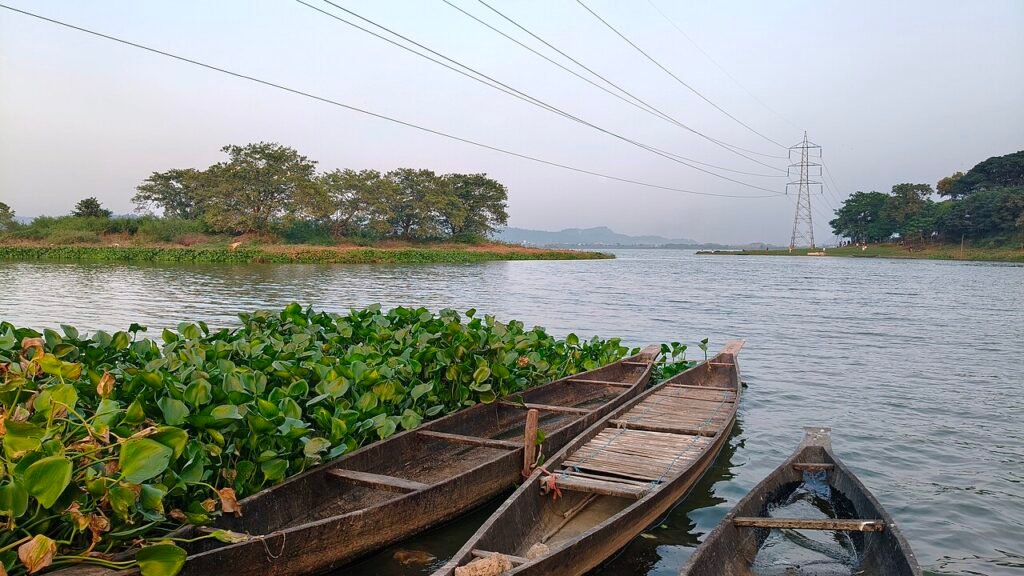
- Twin wetlands: Roumari and Donduwa are two neighbouring beels (floodplain lakes) in Laokhowa. The paper also spells the first one as Rowmari.
- 2026 Kaziranga count: The seventh Kaziranga waterbird count, reported in February 2026, found 1,05,540 waterbirds of 107 species across 166 wetlands. Rowmari Beel (15,661 birds) and Donduwa Beel (14,469) topped the list.
Prelims Trap Zones (Watch out for)
- Which sanctuary: The wetlands are in Laokhowa Wildlife Sanctuary, not inside Kaziranga National Park itself. The sanctuary is a part of the Kaziranga Tiger Reserve.
- Not yet a Ramsar site: Today’s news is only a proposal. Deepor Beel (2002) remains Assam’s only Ramsar site until the complex is listed.
- Which year, which figure: The 47,000 figure is for 2025 and covers both wetlands together, not Roumari alone. The 2026 count is cited for ranking, with Roumari first and Donduwa second.
- Criterion mix-up: Criterion 5 is 20,000 or more waterbirds. Criterion 6 is 1 per cent of a population. Students often swap these two.
- Montreux Record: It is a list of sites facing ecological change, not a list of best-protected sites. Chilika Lake was removed from it in 2002 after restoration.
- Two dates: India’s first Ramsar sites date from 1 October 1981, but India became a Party on 1 February 1982. Do not mix up the two.
Introduction
On 18 November 2026, a report from Guwahati said the Assam government had cleared a proposal to seek Ramsar status for the Roumari-Donduwa wetlands. More than 47,000 waterbirds were counted there in 2025. Assam has only one Ramsar site, Deepor Beel, listed in 2002, so a second site would take global recognition to the Kaziranga area. The real test is whether the tag brings better care, because Deepor Beel shows that a label alone does not protect a wetland.
Why the Complex Deserves Recognition
- Waterbird abundance: Over 47,000 waterbirds used the two beels in 2025. This is well above the 20,000 mark in Ramsar Criterion 5, and it is the strongest argument in the proposal.
- Consistent record: In 2026 Roumari again ranked first and Donduwa second in the whole Kaziranga Tiger Reserve. Repeated high counts show that the numbers are not a one-year accident.
- Comparison with Deepor Beel: The counts were higher than at Deepor Beel, the State’s only Ramsar site. This gives the proposal a local benchmark that officials can easily explain.
- Protected setting: The wetlands already lie inside Laokhowa Wildlife Sanctuary, notified in 1979, within the Kaziranga Tiger Reserve. So a legal protection base exists before the Ramsar step.
- Expert voice: Samarjit Ojha of Nagaon Girls’ College said the last three waterbird counts show the “exceptional ecological significance” of these twin wetlands. He is also research coordinator of the Laokhowa-Burachapori Wildlife Conservation Society.
- Research team and guidance: A four-member team compiled the proposal under the guidance of Dr Sonali Ghosh and senior Forest officials. Joint work by researchers and the department makes the dossier more credible.
Importance of Wetlands
- Bird habitat: Samarjit Ojha described the twin wetlands as home to some of India’s largest gatherings of migratory and resident waterbirds. Protecting them keeps a winter stop safe for birds that visit Assam.
- Fish nursery: Floodplain beels support fish breeding. Deepor Beel’s 2002 information sheet records 50 fish species that depend on it for food, spawning and nursery.
- Flood buffer: The Press Information Bureau notes that wetlands buffer floods and recharge groundwater. Beels in Nagaon district can hold extra Brahmaputra water in the monsoon, though no figure exists for this site.
- Livelihood base: Wetlands sustain fisheries and farming, according to the Government of India. Ramsar status, if managed well, can also bring eco-tourism income to nearby villages.
- Tiger reserve habitat: Laokhowa’s wetlands add water and grassland variety to the Kaziranga Tiger Reserve. This supports both birds and larger animals in the reserve’s southern part.
- International standing: Ramsar listing raises a site’s global visibility. It also opens access to expert advice, Ramsar Advisory Missions and the Convention’s small-grant programmes.
Challenges
- Recognition without protection: Deepor Beel has been a Ramsar site since 2002, yet Down To Earth has reported waste dumping and construction around it. A second tag will fail if enforcement stays weak.
- Waste pressure: A 24-hectare garbage dumping yard at Boragaon lies to the east of Deepor Beel. Roumari-Donduwa needs early planning so that no such conflict starts there.
- Shrinking wetlands: Down To Earth reported that Deepor Beel has shrunk by about 35 per cent since 1991. Floodplain beels elsewhere in Assam face similar land-use pressure.
- Flood and silt cycle: The Brahmaputra carries heavy silt during floods. Beels near its southern bank, like those in Laokhowa, can fill up if no one monitors water levels and silt.
- Need for regular data: The case rests on counts by researchers. If monitoring stops, nobody will know whether bird numbers fall, and the site could drift towards the Montreux Record.
- Livelihood conflict: Local fishers and graziers may fear losing access after listing. Without consultation, the people who should guard the wetland may turn against it.
Way Ahead
- Complete the Ramsar paperwork: The Assam Forest Department should send a full Ramsar Information Sheet to the MoEFCC. It should use the 2025 and 2026 count data. A clear sheet makes approval by the Ramsar Secretariat easier.
- Notify under the 2017 Rules: The Assam State Wetlands Authority should formally notify the complex with an Integrated Management Plan, as the guidelines recommend. This makes dumping and encroachment clearly illegal at the site.
- Plan for wise use: The management plan should cover water, silt and bird monitoring. The Ramsar Information Sheet must anyway be updated every six years, so the data will be needed.
- Continue annual counts: The Kaziranga waterbird count should stay a yearly exercise with the Laokhowa-Burachapori Wildlife Conservation Society and local colleges. These data built the case, and a long series catches early decline.
- Involve villagers: Fishing and grazing communities near Laokhowa in Nagaon district should sit on site committees, with fixed seasons and eco-tourism jobs. This turns local users into guardians.
- Learn from Deepor Beel: The State should keep waste yards and heavy construction away from the new site. It should also fix the old problems at Deepor Beel so that both sites are managed well.
Conclusion
The Roumari-Donduwa proposal rests on solid numbers: more than 47,000 waterbirds in 2025 and top rank in the Kaziranga reserve in 2026. Ramsar status would reward past field work. But it will mean something only if Assam backs it with formal notification, regular counts and local participation. If it does, Assam’s second Ramsar site can be better guarded than its first.
Asked in APSC
- APSC Prelims 2022: (answer in the MCQs below)
Which of the following combinations of the Ramsar Sites and the States of North-East India, where they are located, are correct?
(i) Rudrasagar Lake—Assam
(ii) Loktak Lake—Manipur
(iii) Deepor Beel—Assam
(iv) Pala Wetlands—Meghalaya
Select the correct answer using the codes given below.- (A) Only (i) and (iii)
- (B) Only (ii) and (iv)
- (C) Only (ii) and (iii)
- (D) Only (iii) and (iv)
Spontaneous Urban Enterprise and the Case for Civic Governance in Assam’s Towns
Open this topic as a separate page, with its MCQs →
Syllabus Mapping
- Prelims: GS Paper I (Current events of State/National importance; Indian Polity: Constitutional amendments, local government; Assam Economy and Polity).
- Mains: GS Paper II (Local self-government, urban governance, welfare schemes); GS Paper III (Urbanisation, informal sector and livelihoods, infrastructure); GS Paper V (Assam: urban development, economy and governance).
Why in News? In an opinion article in the Assam Tribune of 19 November 2026, Dr Jayanta Biswa Sarma uses a Guwahati street scene. He argues that Indian towns grow through spontaneous enterprise. In his view, shared infrastructure such as drains and utility lines still needs public governance.
Current Context (The Trigger)
- The opening scene: The writer describes a busy Guwahati intersection with tangled electric cables and shops spilling onto pavements. A little farther away, a watercourse lies stagnant.
- “The city works”: He notes that shops open, markets run and businesses multiply even though civic services are weak.
- Enterprise follows roads: He says a new road soon draws a tea stall, a grocery shop, a mechanic’s workshop and vegetable vendors. In his account, no government job scheme or subsidy necessarily comes first.
- Forest without an architect: He compares towns to a forest that grows without anyone deciding where each tree stands. He says Assam’s smaller towns show the same pattern.
- Where individual effort stops: A shopkeeper can open a shop and a household can build a septic tank. But, the writer argues, nobody can maintain a whole drainage catchment alone.
- The policy ask: He wants roads built with drainage, pedestrian access and utility corridors. He also wants informal markets improved rather than displaced, natural waterways protected and responsibility for shared infrastructure fixed.
Core Concepts & Static GK
- Informal economy: This is work and trade that runs outside formal registration and regulation, such as street vending, roadside repair shops and tea stalls. The writer treats it as a large source of urban livelihoods.
- Spontaneous organisation: The writer means that patterns such as a market street emerge from thousands of independent decisions, without a central designer. He admits the analogy has limits, because laws, politics, land ownership and public investment also shape towns.
- Collective-action problem: Water crosses property lines, so a blockage upstream causes trouble downstream. The writer sums it up this way: individually sensible decisions do not always give collectively sensible results.
- Consumer versus civic modernity: The writer argues that private spending on cars and modern shops has moved faster than public drains, roads and pavements.
- Urban local body: Article 243P defines a Municipality as an institution of self-government constituted under Article 243Q. Both Articles sit in Part IXA of the Constitution.
- Three types of municipality: Article 243Q provides for three types. These are a Nagar Panchayat for a transitional area, a Municipal Council for a smaller urban area and a Municipal Corporation for a larger urban area.
Constitutional & Legal Framework
- 74th Constitutional Amendment: The Constitution (Seventy-fourth Amendment) Act, 1992 inserted Part IXA (Articles 243P to 243ZG) and the Twelfth Schedule.
- Date of effect: The official text of the Constitution records that Part IXA came into force on 1 June 1993.
- Article 243W: It lets a State legislature give municipalities the powers they need to work as institutions of self-government, including for Twelfth Schedule matters. The word used is “may”, so devolution is a State choice.
- Twelfth Schedule: It lists 18 matters for municipalities, such as urban planning, water supply, and regulation of slaughter houses and tanneries.
- Street Vendors Act, 2014: The Street Vendors (Protection of Livelihood and Regulation of Street Vending) Act, 2014 (Act No. 7 of 2014) received the President’s assent on 4 March 2014. Under it, every local authority must prepare a plan for street vending once in every five years.
Institutional Machinery
- Town Vending Committee: Section 22 of the Street Vendors Act provides for a Town Vending Committee (TVC) in each local authority. The State may also set up one for each zone or ward.
- Chair of the committee: The Municipal Commissioner or Chief Executive Officer, as the case may be, is the chairperson.
- Vendor voice: Not less than 40 per cent of members must represent street vendors, and the vendors elect them. One-third of these vendor members must be women vendors.
- Survey duty: Under Section 3, the TVC surveys all existing street vendors and repeats the survey at least once in every five years. No vendor can be evicted or relocated until the survey is complete and vending certificates are issued.
- Guwahati Smart City Limited: Guwahati was in the first batch of 20 Smart Cities announced on 28 January 2016. Its projects are run by a special purpose vehicle, Guwahati Smart City Limited, a company incorporated under the Companies Act, 2013.
Schemes & Initiatives
- PM SVANidhi: The Prime Minister Street Vendor’s AtmaNirbhar Nidhi (PM SVANidhi) was launched on 1 June 2020 to support street vendors hit by the COVID-19 pandemic. It gives them collateral-free working capital loans.
- Restructuring: On 27 August 2025, the Union Cabinet approved a restructured scheme. Lending now runs till 31 March 2030, with a total outlay of Rs 7,332 crore.
- New loan tranches: The first loan rose from Rs 10,000 to up to Rs 15,000 and the second from Rs 20,000 to up to Rs 25,000. The third stays at Rs 50,000.
- Wider reach: A UPI-linked RuPay Credit Card is planned for vendors who repay the second loan. Coverage is also growing from statutory towns to census towns and peri-urban areas in a graded manner.
- Joint implementation: The Ministry of Housing and Urban Affairs (MoHUA) and the Department of Financial Services (DFS) run the restructured scheme together. It aims to reach 1.15 crore beneficiaries, including 50 lakh new ones.
Assam & Northeast Linkages
- Guwahati’s drains: When the Brahmaputra runs high, the Water Resources Department closes the sluice gate at Bharalumukh to stop river water flowing back into the Bharalu. In June 2022, the Guwahati Municipal Corporation Commissioner said the city could no longer pump floodwater into the Bharalu, and new areas went under water.
- Flood plan: In May 2026, Chief Minister Himanta Biswa Sarma announced a proposed Rs 1,459 crore storm water drainage and urban flood management project for Guwahati. It earmarks Rs 500.95 crore for the Bahini basin and Rs 958.10 crore for the Bharalu basin.
- Smaller towns: The writer says the road-commerce-settlement pattern repeats in Assam’s smaller towns.
- Municipal structure: A Comptroller and Auditor General (CAG) audit report counts 101 urban local bodies in Assam as on 31 March 2021. There was one Municipal Corporation and 100 Municipal Boards. A State notification of 11 October 2018 converted and renamed all Town Committees as Municipal Boards.
- Governing laws: Guwahati runs under the Guwahati Municipal Corporation Act, 1971, and other towns in general areas under the Assam Municipal Act, 1956. Urban bodies in Sixth Schedule areas follow rules framed by the Autonomous District Councils.
Prelims Trap Zones (Watch out for)
- Number Trap: The Twelfth Schedule has 18 matters. Do not pick a different number.
- Date Trap: The 74th Amendment Act is of 1992, but Part IXA came into force on 1 June 1993.
- “Shall” versus “may”: Article 243W says the State legislature “may” give functions to municipalities. Devolution is not automatic.
- Percentage Trap: Vendor members on a Town Vending Committee must be not less than 40 per cent. One-third of those vendor members must be women. Do not confuse the two figures.
- Tranche Trap: After restructuring, the first PM SVANidhi loan is up to Rs 15,000, not Rs 10,000. The third tranche is unchanged at Rs 50,000.
- Name Trap: Guwahati is governed by a Municipal Corporation. Its Smart City projects sit with a separate company, Guwahati Smart City Limited.
Introduction
In a 19 November 2026 opinion piece, Dr Jayanta Biswa Sarma asks how a Guwahati intersection with tangled cables and stagnant water still runs as a busy marketplace. His answer is that Indian towns grow through spontaneous enterprise, but drains, utility lines and waterways need public governance. For Assam, where the writer notes that seasonal waterlogging is familiar, this question sits at the centre of urban policy.
Why Spontaneous Urban Enterprise Matters
- Livelihoods without schemes: The writer says a new road draws tea stalls, grocery shops and workshops without any subsidy behind them. So informal trade creates jobs where formal schemes have not reached.
- Settlement follows commerce: In his account, roads attract commerce, commerce attracts settlement and settlement creates demand for services. He sees this pattern in Assam’s smaller towns too.
- Social capital: The writer describes families, shopkeepers and neighbours building “little oases” of comfort. These oases link to each other through families, markets and workplaces.
- Private investment in services: Households install water tanks, pumps and septic tanks, and informal recyclers and local transport operators fill gaps. The writer calls this an enormous investment of individual effort.
- Policy recognition of vendors: The Street Vendors Act, 2014 gives vendors a legal place through surveys, vending certificates and vending zones. PM SVANidhi offers them credit, so the state already treats this economy as worth protecting.
Limits of Private and Improvised Solutions
- Drainage cannot be private: Water crosses property boundaries, and a blockage upstream causes flooding downstream. So, the writer argues, a catchment needs coordinated protection and maintenance.
- Septic tanks are not sanitation: The writer notes that a septic tank must be emptied regularly and its sludge disposed of safely. Simply owning one does not keep a town clean.
- Cable clutter: Each cable added to a pole solves a local problem. Together, the writer says, they pile up until nobody is clearly responsible.
- Consumer versus civic modernity: Expensive cars run on damaged roads, and premium advertisements hang over crowded pavements. Private buyers can pay for upgrades, but shared assets need collective decisions and public money.
- Guwahati’s backflow problem: When the Brahmaputra is high, the Bharalumukh sluice gate is shut and the city struggles to empty its floodwater. No household or shop can solve such a problem alone.
Governance and Legal Framework for Towns
| Level | Instrument | Purpose and Impact |
|---|---|---|
| Constitution | Part IXA (Articles 243P to 243ZG) via the 74th Amendment | Creates municipalities as institutions of self-government, in force from 1 June 1993. |
| Constitution | Twelfth Schedule and Article 243W | Lists 18 matters that a State may give to municipalities. |
| Union law | Street Vendors Act, 2014 | Vendor surveys, vending plans and Town Vending Committees with at least 40 per cent vendor members. |
| Union scheme | PM SVANidhi (restructured, lending till 31 March 2030) | Loans of up to Rs 15,000, up to Rs 25,000 and Rs 50,000 in three tranches. |
| Assam | Proposed Rs 1,459 crore drainage and flood project for Guwahati | Targets the Bahini and Bharalu basins of the city. |
- Devolution is a State choice: Article 243W says a State legislature “may” give powers. So the real strength of a municipality depends on what Assam decides to hand over.
- Shared infrastructure needs a named owner: The writer wants clear responsibility for shared infrastructure. The Twelfth Schedule already lists urban planning, water supply and sanitation as municipal matters.
- Mission mode in Guwahati: Smart City projects run through Guwahati Smart City Limited, a company separate from the city corporation. Such parallel bodies can blur who answers for a street.
- Vendor voice in planning: The local authority prepares its plan for street vending on the recommendations of the Town Vending Committee. So the 40 per cent vendor members help decide where vending happens.
- Survey before eviction: Section 3 of the Act bars eviction or relocation of vendors until the survey is done and certificates are issued. This protects the very enterprise the writer praises.
Challenges
- Weak drainage: The writer notes that seasonal waterlogging is familiar and underground sewerage is absent in many neighbourhoods. The State’s Rs 1,459 crore answer was still only a proposal in May 2026.
- Vendors versus pedestrians: Shops and vendors crowd the pavements. Removing them harms livelihoods, but leaving them as they are blocks pedestrians.
- Finding vending space: The Act asks Town Vending Committees to fit surveyed vendors into vending zones. The norm is 2.5 per cent of the population of the ward, zone or town. In crowded cores like the intersection the writer describes, such space is hard to find.
- Divided responsibility: The city corporation, the Smart City company, utility firms and line departments all work on the same street. So nobody owns the whole outcome.
- Risk of rebuilding by erasing: The writer warns that rebuilding a town to a master plan can end disorder but destroy livelihoods and networks. Old patterns may also return if the governing institutions stay the same.
- Dependence on State devolution: The 74th Amendment leaves the transfer of functions to the States. So municipal capacity differs from State to State.
Way Ahead
- Build roads as corridors: The Public Works Department and municipal bodies should design new roads with drains, footpaths and utility ducts. They should also leave space for the shops that will come.
- Improve markets, do not remove them: Urban local bodies should upgrade informal markets with water, toilets and lighting. Vending zones in the street vending plan under the 2014 Act give them the legal tool.
- Protect natural waterways: The Guwahati Municipal Corporation and the Water Resources Department should keep channels like the Bharalu free of encroachment and silt. They should also publish who maintains each stretch.
- Safe sanitation chain: Municipal bodies should link household septic tanks to scheduled sludge collection and safe treatment. Private tanks then become part of a public system.
- Make Town Vending Committees work: The State’s Housing and Urban Affairs Department should ensure every Assam town has a committee with at least 40 per cent elected vendor members. PM SVANidhi loans can then bring these vendors into formal credit.
- Name one owner: The State should devolve more Twelfth Schedule functions to municipal bodies with matching funds and staff. It should also fix one authority for poles, cables and drains.
Conclusion
The writer’s case is that Assam’s towns show enterprise can grow without a planner, but drains, waterways and utility lines cannot be handled by shopkeepers and households alone. The better course is to let markets flourish while municipal bodies, backed by real devolution under the 74th Amendment, own the shared infrastructure.
Asked in APSC
- APSC Mains 2023, GS Paper 1 (15 marks): What are the challenges of urbanization in North-East India? Do you think the idea of satellite township can address these challenges? Justify your answer.
- APSC Mains 2025, GS Paper 2 (15 marks): Comment on the occurrence of urban flooding in Guwahati city. What would you attribute this disaster to? Elaborate on the extent to which this hydrometeorological disaster can be attributed to climate change or unplanned urban development. What are the global best practices to address this issue?
Cross-Border Narcotics from Myanmar and Manipur-Mizoram Border Security
Open this topic as a separate page, with its MCQs →
Syllabus Mapping
- Prelims: GS Paper I (Current events of State/National importance; Indian Polity and governance; Geography of Assam and the Northeast; International Relations).
- Mains: GS Paper III (Security challenges and their management in border areas; linkages of organized crime with terrorism with emphasis on Assam; role of external state and non-state actors in creating challenges to internal security); GS Paper V (Security of Assam; International Relations).
Why in News? Officials in Imphal said on 18 November that Manipur Police had arrested three Myanmar nationals in Churachandpur district with narcotics worth Rs 22.18 crore. In a separate operation, Manipur Police and the Assam Rifles found a large haul of arms and ammunition in Kakching district.
Current Context (The Trigger)
- The drug seizure: A team from Behiang Police Station picked up the three men at Behiang village in Churachandpur district. All three come from Teddim Township in Myanmar.
- What was seized: Police recovered about 7.4 kg of methamphetamine tablets, popularly called yaba or party tablets, and 3 kg of opium. Three mobile phones and two motorcycles were also taken.
- Value and charges: The drugs are valued at about Rs 22.18 crore. Police registered a case under the Narcotic Drugs and Psychotropic Substances (NDPS) Act and the Foreigners Act.
- Arms recovery: Manipur Police and the Assam Rifles carried out a joint cordon-and-search operation at Bashikhong Maril, Khoidum Pat. The place falls under Hiyanglam Police Station in Kakching district.
- What the arms haul held: The haul had one .303 Light Machine Gun, one AK Ghatak rifle, two Self-Loading Rifles and one .303 rifle. It also had four single-barrel guns, one double-barrel gun, two pistols and six handheld radio sets.
Core Concepts & Static GK
- Golden Triangle: It is the region where parts of Myanmar, Laos and Thailand meet. It has long been a centre for making and smuggling illegal drugs, including synthetic drugs.
- Yaba: The United Nations Office on Drugs and Crime (UNODC) describes yaba as a mix of methamphetamine and caffeine. It is popular in many parts of Southeast Asia because it is easy to get.
- Synthetic versus plant-based drugs: Opium comes from the poppy crop, while methamphetamine is made from chemicals in laboratories. The Manipur seizure had both kinds.
- Free Movement Regime (FMR): The Indo-Myanmar border was an open border with free movement within 16 km on both sides. In June 2017 the Ministry of Home Affairs (MHA) said militants and criminals misused it to smuggle weapons, narcotics and fake Indian currency notes.
- Border length: The whole Indo-Myanmar border is 1,643 km long. The paper says Manipur and Mizoram together share a 910-km stretch of it.
Constitutional & Legal Framework
- NDPS Act, 1985: It is Act No. 61 of 1985, enacted on 16 September 1985. It came into force on 14 November 1985. It is the main law against making, holding, selling and moving narcotic drugs and psychotropic substances.
- Substances covered: The Centre has scheduled 134 narcotic drugs, 173 psychotropic substances and 45 controlled substances under the Act.
- Strict bail rule: Section 37 sets two conditions for bail in grave cases, such as those involving commercial quantity. The court must see reasonable grounds that the accused is not guilty. It must also find that the accused is unlikely to commit an offence while on bail.
- 2014 amendment: It created a class of “essential narcotic drugs” notified by the Centre for medical and scientific use. This was meant to ease access to pain-relief medicines. It also made the death sentence for certain repeat offences (Section 31A) optional for the court instead of mandatory.
- PITNDPS Act, 1988: The Prevention of Illicit Traffic in Narcotic Drugs and Psychotropic Substances Act allows preventive detention of people involved in drug trafficking. Police use it against habitual traffickers.
- Foreigners Act: The Manipur case also invokes this Act because the accused are foreign nationals.
Institutional Machinery
- Narcotics Control Bureau (NCB): The Centre set up the NCB on 17 March 1986 under Section 4(3) of the NDPS Act. It now has 7 regional offices and 30 zonal units.
- Narco-Coordination Centre (NCORD): The government set up NCORD on 22 November 2016. It was restructured into a 4-tier system on 29 July 2019, from the Apex level down to the district.
- Anti-Narcotics Task Force (ANTF): Every State and Union Territory has an ANTF. It also works as the NCORD secretariat for that State.
- Border guarding forces: The Border Security Force (BSF), the Assam Rifles and the Sashastra Seema Bal (SSB) are empowered under the NDPS Act. They can search, seize and arrest for drug trafficking at the international border.
- Assam Rifles: It began in 1835 as the Cachar Levy. Today it guards the Indo-Myanmar border and checks infiltration there.
- Joint Coordination Committee: The Director General of the NCB chairs this committee. It monitors the investigation of large drug seizures.
Schemes & Initiatives
- Nasha Mukt Bharat Abhiyaan (NMBA): The Ministry of Social Justice and Empowerment (MoSJE) launched it on 15 August 2020 in 272 most vulnerable districts. It was extended to all districts from 15 August 2023.
- National Action Plan for Drug Demand Reduction (NAPDDR): Under this MoSJE scheme, the Centre funds awareness work, de-addiction centres and treatment facilities. NMBA is a part of it.
- MANAS helpline: The Madak Padarth Nishedh Asuchna Kendra helpline, 1933, was launched by Union Home Minister Amit Shah on 18 July 2024. The NCB runs it, and citizens can report drug crimes on it without giving their identity.
- De-addiction helpline: MoSJE runs a separate toll-free helpline, 14446. It gives primary counselling and immediate referral to people seeking help.
Reports, Indices & Data
- UNODC 2025 report: The report Synthetic Drugs in East and Southeast Asia: Latest Developments and Challenges came out on 28 May 2025. It recorded a record 236 tons of methamphetamine seized in the region in 2024, up 24 per cent from 2023.
- Shan State: UNODC says methamphetamine production and trafficking in Myanmar’s Shan State has risen sharply. The drug is mostly produced there.
- Thailand: Thailand remained the main transit and destination point. It alone seized about one billion methamphetamine tablets in 2024.
- National survey, 2019: The report Magnitude of Substance Use in India was prepared by the All India Institute of Medical Sciences (AIIMS) for MoSJE. It estimated that about 2.26 crore people, or 2.1 per cent of the population, use opioids.
- NCB in 2025: The NCB seized 1,33,965 kg of drugs worth about Rs 1,980 crore in 2025. It arrested 994 traffickers, including 25 foreign nationals, in 447 cases.
Assam & Northeast Linkages
- Eleven border districts: Six districts of Mizoram and five of Manipur touch Myanmar. This leaves both states open to cross-border drug smuggling.
- Four border states: As per the MHA, Arunachal Pradesh (520 km), Nagaland (215 km), Manipur (398 km) and Mizoram (510 km) share the border with Myanmar. Assam does not touch Myanmar, but it lies on the onward route to the rest of India.
- Cachar as a transit route: On 26 August 2026, the Assam Rifles and the Directorate of Revenue Intelligence (DRI), Silchar, seized 5,60,000 yaba tablets at Lakhipur in Cachar. The tablets were worth about Rs 168 crore. Officials said the gang was trying to use Cachar and Sribhumi districts as transit corridors to mainland India.
- Assam link in the name: The Assam Rifles was raised in 1835 as the Cachar Levy, a militia of about 750 men. Its first task was to protect British tea estates against raids.
- Regional coordination: The NCB held a two-day regional ANTF conference at Dimapur in November 2025. It brought together the seven Northeastern States, Sikkim and West Bengal to discuss drug trafficking in the region.
Prelims Trap Zones (Watch out for)
- Number Trap: The 910-km figure is only for the Manipur and Mizoram stretch. The full Indo-Myanmar border is 1,643 km.
- Agency Trap: The Assam Rifles guards the Indo-Myanmar border. The BSF guards the Indo-Pakistan and Indo-Bangladesh borders.
- Helpline Trap: MANAS (1933) is run by the NCB under the MHA for reporting drug crimes. The MoSJE de-addiction helpline is 14446.
- Substance Trap: Yaba is methamphetamine mixed with caffeine, not a plant-based drug like opium. The Churachandpur seizure had 7.4 kg of yaba and 3 kg of opium.
- Date Trap: The NDPS Act was enacted on 16 September 1985 but came into force on 14 November 1985. The NCB was set up later, on 17 March 1986.
- FMR Trap: The 16-km free movement zone was for border residents on both sides. On 8 February 2024 the MHA announced its decision to scrap the regime and recommended its immediate suspension.
Introduction
On 18 November 2026, officials in Manipur reported the seizure of methamphetamine tablets and opium worth Rs 22.18 crore from three Myanmar nationals in Churachandpur. The case shows how the 910-km Manipur-Mizoram border with Myanmar, close to the Golden Triangle, feeds a steady flow of drugs into India. For Assam, which lies on the onward route, the problem touches internal security, public health and law enforcement together.
Underlying Drivers: Why the Northeast Border Is Vulnerable
- Close to the source: Manipur and Mizoram lie near the Golden Triangle, one of the world’s main illegal drug-producing areas. Drugs made there have a short land route into India.
- Rising synthetic output: UNODC says methamphetamine production in Myanmar’s Shan State has grown sharply. A record 236 tons were seized in East and Southeast Asia in 2024.
- Porous border: Eleven districts of the two states share a 910-km line with Myanmar. The border also had an open regime within 16 km on both sides.
- Difficult terrain: The paper notes that hard terrain makes it tough for agencies to stop smuggling and break the networks. Forested hills offer many unwatched crossing points.
- Misuse of the open regime: In June 2017 the MHA said militants and criminals used the free movement regime to smuggle weapons, narcotics and fake currency.
- Conflict in Myanmar: UNODC says the ongoing crisis in Myanmar is raising the need for money from the drug trade. That pushes more production and trafficking.
Causes and Impact
- Drugs and guns on the same frontier: The same day’s report covered an arms haul in Kakching and a drug seizure in Churachandpur. Police and the Assam Rifles in Manipur must deal with armed groups and drug carriers at the same time.
- Insurgency link: From 2015 to 2018, 563 insurgents were caught and 47 killed along the Indo-Myanmar border, the MHA told Parliament. Illegal money can keep such groups going.
- Public health burden: The 2019 national survey estimated about 2.26 crore opioid users in India. It also estimated about 60 lakh people with opioid use disorders who need help.
- Youth and addiction: UNODC says yaba is popular in Southeast Asia because it is easy to get. The same easy supply can draw young users in border towns.
- Demographic worry: The MHA said scrapping the free movement regime would help keep the demographic structure of the Northeastern states bordering Myanmar. It also cited internal security.
- Pressure on policing: Small state police forces handle arrests, seizures and prosecution under two laws at once. The Manipur case under the NDPS Act and the Foreigners Act shows this.
Government & Statutory Measures (National & Assam/Northeast)
| Level | Initiative | Purpose & Impact |
|---|---|---|
| Law | NDPS Act, 1985 and PITNDPS Act, 1988 | The first punishes drug offences. The second allows preventive detention of traffickers. |
| Coordination | 4-tier NCORD and an ANTF in every State and Union Territory | It links central and state drug agencies from the Apex level down to the district. |
| Border security | Assam Rifles, BSF and SSB empowered under the NDPS Act | Border forces can search, seize and arrest at the international border. |
| Border control | Decision of February 2024 to fence the full 1,643-km Indo-Myanmar border and to scrap the FMR | It aims at better surveillance and internal security. |
| Citizen reporting | MANAS helpline 1933 | In 2025, NCB and State ANTF units registered 110 cases based on MANAS inputs. |
| Demand reduction | NMBA and NAPDDR | Awareness, counselling and treatment, including 342 Integrated Rehabilitation Centres for Addicts. |
Challenges
- Long, rugged frontier: The Manipur-Mizoram stretch alone is 910 km. In February 2024 the Home Minister said only a 10-km stretch at Moreh in Manipur had been fenced.
- Stretched manpower: The MHA told the Lok Sabha in 2018 that of the Assam Rifles’ 46 battalions, 31 were for counter-insurgency and 15 for border guarding. Drug interdiction competes with these duties for the same troops.
- Foreign suppliers, local carriers: The accused in the Manipur case were Myanmar residents carrying drugs across the line. Such cases need cooperation from Myanmar, which UNODC describes as being in an ongoing crisis.
- Shift to synthetics: Laboratory-made drugs need no fields that can be spotted and destroyed. Small, high-value tablet loads are also easier to hide than bulky opium.
- Strict bail versus delay: Section 37 sets twin conditions for bail in grave cases. Slow trials can then keep the accused in jail for long periods, which raises fairness concerns.
- Treatment gaps: MoSJE supports 83 Addiction Treatment Facilities in government hospitals under NAPDDR. The 2019 survey found about 60 lakh people with opioid use disorders, a far larger need.
Way Ahead
- Finish border fencing and surveillance: The MHA should complete the planned fence and patrol track along the 1,643-km border. The two Hybrid Surveillance System pilots in Manipur and Arunachal Pradesh can guide the choice of technology.
- Use NCORD in Assam and the Northeast: The ANTFs of Assam, Manipur and Mizoram should share intelligence quickly through the NCORD mechanism. The Cachar and Sribhumi transit route makes joint action essential.
- Follow the money: State police should trace the money behind every large seizure, not only the carriers. This helps break the networks that hire couriers from across the border.
- Work with Myanmar and UNODC: India should raise the drug routes in its border talks with Myanmar. UNODC data on routes and chemical supply can help target the production hubs in Shan State.
- Strengthen community reporting: The MANAS helpline can be promoted in Churachandpur, Kakching and the Mizoram border districts. Outreach in local languages will help.
- Expand treatment capacity: Border districts should get priority for Integrated Rehabilitation Centres for Addicts and Addiction Treatment Facilities under NAPDDR. NMBA outreach should reach schools and colleges there.
Conclusion
The Rs 22.18 crore Churachandpur seizure is a symptom of a supply chain that starts beyond India’s border and ends in Indian towns. Policing alone cannot win this fight. India needs a fenced and watched border, coordinated agencies and strong treatment services working together, with Assam and the Northeast as full partners.
Asked in APSC
- APSC Mains 2023, GS Paper 2 (10 marks): Do you think fencing of India-Myanmar border is an effective step to check terrorist activities and drugs trafficking? Justify your answer in the light of the Centre’s decision to fence the porous India-Myanmar border.
India-US Bilateral Trade Agreement and the New US Tariff Architecture
Open this topic as a separate page, with its MCQs →
Syllabus Mapping
- Prelims: GS Paper I (Current events of national and international importance; Indian Economy).
- Mains: GS Paper II (Bilateral, regional and global groupings and agreements involving India and/or affecting India’s interests); GS Paper III (Economic Development: external sector and trade).
Why in News? Commerce Secretary Rajesh Agrawal spoke at a FICCI (Federation of Indian Chambers of Commerce and Industry) event on 18 November. He said India and the US are close to finishing talks on their trade deal. But he said India will sign it only after the US settles its new tariff architecture.
Current Context (The Trigger)
- Talks near the end: The Commerce Secretary expects the negotiations on the proposed deal to wrap up soon. According to him, the two sides have already settled the deal’s framework and broad shape.
- Legal text almost done: According to him, both sides have negotiated the legal text of the agreement. It has reached its last stage and should be concluded soon.
- Signing must wait: He explained that the deal was announced when restrictive US tariffs were in force. The US Supreme Court has since struck those tariffs down, and the US is now building a new tariff architecture.
- Why tariffs matter to the text: In his words, the tariff architecture gives “different kinds of comparative advantages to different countries”. So India cannot sign before that structure is in place.
- Section 301 probes: He said the US is running some Section 301 investigations against several countries, India among them. India is waiting to see how they end.
- Next step: Agrawal said the final figures will be fixed, and the deal signed and brought into force, only after these investigations are complete. He added that “every aspect of the deal has been more or less finalised”.
Core Concepts & Static GK
- Bilateral trade agreement: It is a pact between two countries that cuts or removes tariffs and other barriers on trade between them. In February 2026, an India-US joint statement announced a framework for an Interim Agreement and reaffirmed the broader Bilateral Trade Agreement (BTA) talks.
- BTA talks began in 2025: President Donald Trump and Prime Minister Narendra Modi launched the BTA negotiations on 13 February 2025. The February 2026 joint statement recorded this date.
- Tariff architecture: This means the full set of US duties, with the law behind each, that decides what rate each country pays. The Commerce Secretary used the term for the structure the US is now rebuilding.
- IEEPA: The International Emergency Economic Powers Act is a US emergency-powers law. On 20 February 2026 the US Supreme Court held, by 6-3, that it does not allow the President to impose tariffs.
- Learning Resources, Inc. v. Trump: Chief Justice John Roberts announced the judgment and wrote the opinion of the Court. The case was decided together with Trump v. V.O.S. Selections, Inc.
- Section 301: This part of the US Trade Act of 1974 lets the US Trade Representative act against foreign practices that burden or restrict US commerce. Remedies include duties or other import restrictions and withdrawal of trade agreement concessions.
- Section 122: Another section of the same Act allows a temporary import surcharge to deal with large and serious US balance-of-payments deficits. The surcharge cannot exceed 15 per cent or last longer than 150 days unless Congress extends it.
Constitutional & Legal Framework
- Taxing power with Congress: The Court relied on Article I, Section 8 of the US Constitution, which gives Congress the power to lay and collect duties. The President, it said, has no inherent power to impose tariffs in peacetime.
- Two words could not carry it: The government had argued that IEEPA’s words “regulate” and “importation” allowed tariffs. The Court said those words cannot bear that weight.
- Other tariff laws untouched: The case dealt only with tariffs imposed under IEEPA. Other tariff laws were not struck down. These include Section 232 of the Trade Expansion Act of 1962 and Sections 122, 201 and 301 of the Trade Act of 1974.
- Section 301 timelines: In cases that do not involve a trade agreement, a determination is generally due within 12 months of starting the probe. USTR then generally has 30 days to implement the action.
- Section 301 discretion: Action is generally required for a trade agreement violation or an unjustifiable practice. For unreasonable or discriminatory practices, USTR has discretion.
- Duration: Section 301 actions end automatically after four years. They continue only if USTR receives a request for continuation and reviews the case.
Institutional Machinery
- Office of the US Trade Representative (USTR): It decides whether to act under Section 301 and what action to take. It acts subject to any specific direction from the President.
- Section 301 Committee: This staff-level body runs the investigations and makes recommendations to the inter-agency Trade Policy Staff Committee (TPSC). USTR bases its final decision on the TPSC’s recommendations.
- Court of International Trade (CIT): This US court has exclusive jurisdiction over cases arising from US tariff laws. So the Supreme Court sent the Learning Resources case back with instructions to dismiss it for lack of jurisdiction, because it had been filed in a District Court.
- Indian side: Commerce Secretary Rajesh Agrawal spoke for India’s Commerce Ministry. Commerce and Industry Minister Piyush Goyal has recently said India will get one of the “best” trade deals with the US in every respect.
Reports, Indices & Data
- Excess-capacity probes: On 11 March 2026 USTR started Section 301 investigations into structural excess capacity and production in manufacturing in 16 economies. India is one of them.
- The 16 economies: China, the European Union, Singapore, Switzerland, Norway, Indonesia, Malaysia, Cambodia, Thailand, Korea, Vietnam, Taiwan, Bangladesh, Mexico, Japan and India.
- Timeline of these probes: USTR asked for written comments by 15 April 2026. Its public hearing started on 5 May 2026.
- Forced-labour probes: On 12 March 2026 USTR started Section 301 investigations of 60 economies, India included. They examine whether each fails to ban and enforce a ban on imports of goods made with forced labour.
Prelims Trap Zones (Watch out for)
- Court Trap: The Supreme Court ruling dealt only with tariffs imposed under IEEPA. It did not strike down Section 232 or Section 301.
- Section Trap: Section 301 and Section 122 belong to the Trade Act of 1974. Section 232 belongs to the Trade Expansion Act of 1962.
- Signing Trap: The Commerce Secretary said negotiations may conclude soon, but signing waits for the new US tariff architecture. Concluding talks and signing are different steps.
- Agency Trap: Section 301 action is decided by the US Trade Representative. Under Section 232, the investigation is done by the US Secretary of Commerce, in consultation with the Secretary of Defense.
- Count Trap: The 11 March 2026 excess-capacity probes cover 16 economies. The separate 12 March forced-labour probes cover 60.
- Date Trap: The BTA talks were launched on 13 February 2025. The Supreme Court IEEPA ruling came on 20 February 2026.
Introduction
On 18 November the Commerce Secretary said India’s trade talks with the US are almost complete. Yet the deal cannot be signed until Washington rebuilds its tariff system. The US Supreme Court’s 20 February 2026 ruling against IEEPA tariffs removed the tariffs in whose background the deal was first announced. For India, the lesson is that a trade deal depends on the legal certainty of the partner’s tariff law as much as on the text itself.
Why the Signing Is Waiting (Underlying Drivers)
- Old tariff base is gone: The deal was announced when restrictive tariffs were in force. The US Supreme Court has since struck them down, as the Commerce Secretary noted.
- Court limits executive power: The 6-3 ruling held that IEEPA does not authorise tariffs. So any new US structure must rest on other laws, such as Section 232 or Section 301.
- Country-wise advantage: The Commerce Secretary said the tariff architecture gives different comparative advantages to different countries. India wants to see where it stands before it signs.
- Pending probes: India is among the 16 economies in the excess-capacity probe that USTR opened on 11 March 2026. It is also among the 60 economies in the forced-labour probes.
- Need for certainty: The Commerce Secretary said every country would want a deal that gives certainty around all the ongoing investigations. He said a deal is not possible while several probes remain uncertain.
Importance for India (Economic Rationale)
- Market access: The February 2026 joint statement set out a framework for an Interim Agreement and reaffirmed the broader BTA talks. A signed deal would lock that access in.
- Delegation-level work: An Indian delegation visited Washington from 20 to 23 April 2026. Its aim was to finalise details of the Interim Agreement and take forward the broader BTA talks.
- Political backing: Minister Piyush Goyal has said India will have one of the “best” trade deals with the US in every respect.
- Exporter confidence: A ready legal text lets Indian exporters plan orders once the US tariff structure is clear. This follows from the Commerce Secretary’s statement that the text is in its final stage.
- Export push at home: The Centre approved the Export Promotion Mission in November 2025 with an outlay of Rs 25,060 crore for FY 2025-26 to FY 2030-31. A clear US deal would help its support for exporters, especially MSMEs (micro, small and medium enterprises).
Challenges
- Moving US legal ground: After the IEEPA ruling, the US must rebuild its tariffs under other laws. Section 122, for example, allows at most 15 per cent for 150 days, so a base built on it alone would be short-lived.
- Open Section 301 outcomes: India does not yet know how the excess-capacity probe will end. Section 301 allows duties, other import restrictions or withdrawal of trade concessions.
- Wide probe coverage: India is one of 16 economies in one set of probes and one of 60 in another. Each set can end in a different action for India.
- Refund uncertainty: Justice Kavanaugh’s dissent warned that the US may have to refund billions of dollars of IEEPA tariffs to importers. He said the refund process is likely to be a “mess”.
- Timeline risk: Section 301 cases outside trade agreements can take up to 12 months to reach a determination. Signing may slip further.
- Operationalising the deal: The Commerce Secretary linked signing and operation of the deal to the probes reaching maturity. So even a ready text may not take effect at once.
Way Ahead
- Finish the text now: The Commerce Ministry should keep the legal text final so that signing can follow soon after the US tariff structure is clear. The Secretary says this is the aim.
- Engage USTR on the probes: USTR requested consultations with the governments of the 16 economies. India should use them to present its case in the excess-capacity probe.
- Build a safeguard clause: The agreement should say what happens if the US changes the legal basis of its tariffs again. This answers the lesson of the IEEPA ruling.
- Prepare exporters: The Export Promotion Mission works through two sub-schemes, Niryat Protsahan (trade finance) and Niryat Disha (market access and compliance). These should help MSMEs get ready for the US market.
- Diversify markets: India should keep its other trade talks moving. Then no single partner’s legal changes can stall its export plans.
Conclusion
The delay shows that India’s trade strategy now depends on US court rulings and US trade probes as well as on negotiations. A deal that is ready but unsigned is better than a rushed one signed on an unstable tariff base. India should finish the text, defend its position in the Section 301 probes and keep other markets open.
News in Short
- TUMO Centre, Nagaland: Nagaland will be the first Northeast state, and only the second state in India, to host a TUMO Centre for Creative Technologies. The Investment and Development Authority of Nagaland (IDAN) and Parinda Creative Technology Centre exchanged an MoU for it on 17 November. The centre at the Integrated Business Hub and Innovation Centre, Dimapur, will run a free after-school programme for teenagers aged 12 to 18.
- State Legislators Leadership Academy, Meghalaya: The Meghalaya Legislative Assembly and the University of Cambridge signed an MoU to set up this academy. It will offer training, research and capacity building for legislators. The MoU was signed during the legislators’ UK visit (7 to 14 November) led by Speaker Thomas Sangma.
- ADB Chief Economist: The Asian Development Bank (ADB) has named Karthik Muralidharan, Tata Chancellor’s Professor of Economics at the University of California, as its Chief Economist. He takes office on 1 July 2027 and will oversee the bank’s flagship Asian Development Outlook.
- India-Italy trade: Among European Union countries, Italy ranks fourth as India’s trading partner. Goods trade stood at 14.25 billion euros in 2025. After ties became a Special Strategic Partnership in May 2026, the two sides are working towards 20 billion euros a year by 2029. In Rome on 18 November, Commerce Minister Piyush Goyal urged a much higher goal of 50 billion euros.
- India-Oman Strategic Dialogue: The 11th round was held in Muscat on 17 November. Deputy National Security Advisor Pavan Kapoor met Maj Gen Idris Abdulrahman Al Kindi, Secretary General of Oman’s National Security Council. The talks covered counter-terrorism, law enforcement, cyber, artificial intelligence, energy and maritime cooperation.
- Digital Life Certificate Campaign 5.0: This nationwide campaign of the Department of Pension and Pensioners’ Welfare helps pensioners submit life certificates digitally. The State Bank of India is supporting it with face authentication, holding camps at its branches through November 2026.
- Itanagar vending complex: Arunachal Chief Minister Pema Khandu opened the Itanagar Municipal Corporation’s vending complex at Zoo Road (Gophur) on 18 November. Built on 8,000 square metres of leased land for 1,200 vendors, it has 1,136 stalls ready, with 64 still under work.
- Tobacco-free schools, Kohima: On 18 November, the Kohima District Level Coordination Committee on Tobacco Control declared eight schools in the district tobacco-free. Members noted that 43.3 per cent of adults in Nagaland use tobacco.
APSC Prelims MCQs
Practice questions on the topics above
Topic 1: Roumari-Donduwa Wetlands Proposal for Assam’s Second Ramsar Site
Q1. Consider the following statements about the Ramsar Convention on Wetlands:
(i) The Convention was adopted in 1971 in the Iranian city of Ramsar.
(ii) A wetland that regularly supports 20,000 or more waterbirds can qualify as a Wetland of International Importance.
(iii) The Montreux Record is a list of Ramsar sites that enjoy the highest level of protection.
Which of the statements given above is/are NOT correct?
- (a) (i) only
- (b) (ii) only
- (c) (iii) only
- (d) (i) and (ii) only
Show answer
Answer: (c) Explanation: Statement (iii) is incorrect, so (c) is the key. The Montreux Record is a register of Ramsar sites where the ecological character has changed, is changing or is likely to change. It is a warning list, not a mark of top protection. Statement (i) is correct, because the treaty was adopted at Ramsar, Iran, on 2 February 1971. Statement (ii) is also correct, because Criterion 5 sets the threshold at 20,000 or more waterbirds. Options (a), (b) and (d) wrongly mark a correct statement as incorrect. Value addition: Chilika Lake in Odisha was removed from the Montreux Record in 2002 after successful restoration.
Q2. The Assam government has approved a proposal to seek Ramsar designation for a wetland complex. Consider the following statements:
(i) The Roumari-Donduwa wetland complex lies within the Laokhowa Wildlife Sanctuary under the Kaziranga Tiger Reserve.
(ii) If designated, it would be Assam’s second Ramsar site after Deepor Beel, which was designated in 2002.
(iii) The proposal was presented to the Governor of Assam by a team of Forest officials.
Which of the statements given above is/are correct?
- (a) (i) only
- (b) (i) and (ii) only
- (c) (ii) and (iii) only
- (d) (i), (ii) and (iii)
Show answer
Answer: (b) Explanation: Statements (i) and (ii) are correct, so (b) is the key. The Roumari-Donduwa complex is inside Laokhowa Wildlife Sanctuary, a part of the Kaziranga Tiger Reserve. Deepor Beel was designated in 2002 and is Assam’s only Ramsar site now, so the complex would be the second. Statement (iii) is wrong because Forest officials presented the proposal to the Chief Minister on 16 November, not to the Governor. Option (a) leaves out a correct statement, while (c) and (d) include the wrong one. Value addition: the Ramsar database lists Deepor Beel as site number 1207, covering about 4,000 hectares.
Q3. Match List-I with List-II:
| List-I (Term) | List-II (Feature) |
|---|---|
| a. Ramsar Criterion 5 | 1. Regularly supports 1 per cent of the individuals of a waterbird population |
| b. Ramsar Criterion 6 | 2. Register of sites where ecological character has changed or may change |
| c. Montreux Record | 3. Regularly supports 20,000 or more waterbirds |
| d. Wetlands (Conservation and Management) Rules, 2017 | 4. Framed under the Environment (Protection) Act, 1986 |
Select the correct answer using the codes given below:
- (a) a-3, b-1, c-2, d-4
- (b) a-1, b-3, c-2, d-4
- (c) a-3, b-1, c-4, d-2
- (d) a-2, b-3, c-1, d-4
Show answer
Answer: (a) Explanation: The correct pairs are a-3, b-1, c-2 and d-4. Criterion 5 is the 20,000 waterbirds test, and Criterion 6 is the 1 per cent test for one waterbird species or subspecies. The Montreux Record lists sites with actual or likely change in ecological character. The 2017 Wetlands Rules were notified under the Environment (Protection) Act, 1986. Option (b) swaps Criteria 5 and 6, a common slip. Option (c) swaps the Record and the Rules. Option (d) mixes up three pairs. Value addition: the Montreux Record was created in 1990 through Recommendation 4.8 of the Conference of the Contracting Parties.
Q4. India became a Contracting Party to the Ramsar Convention on Wetlands in which year?
- (a) 1971
- (b) 1975
- (c) 1982
- (d) 1992
Show answer
Answer: (c) Explanation: India became a Party to the Ramsar Convention on 1 February 1982, so (c) is correct. Option (a), 1971, is the year the Convention was adopted at Ramsar, Iran, and students often confuse it with India’s joining date. Option (b), 1975, is the year the Convention came into force worldwide, not India’s year of joining. Option (d), 1992, is also wrong, because India had already been a Party for a decade by then. Value addition: the Press Information Bureau says India had 103 Ramsar sites on 15 October 2026, the most in Asia. Assam’s only one so far is Deepor Beel.
PYQ (APSC Prelims 2022): Which of the following combinations of the Ramsar Sites and the States of North-East India, where they are located, are correct?
(i) Rudrasagar Lake—Assam
(ii) Loktak Lake—Manipur
(iii) Deepor Beel—Assam
(iv) Pala Wetlands—Meghalaya
Select the correct answer using the codes given below.
- (A) Only (i) and (iii)
- (B) Only (ii) and (iv)
- (C) Only (ii) and (iii)
- (D) Only (iii) and (iv)
Show answer
Answer: (C)
Topic 2: Spontaneous Urban Enterprise and the Case for Civic Governance in Assam’s Towns
Q5. The Seventy-fourth Constitutional Amendment gave constitutional status to urban local bodies. Consider the following statements:
(i) Article 243Q provides for a Nagar Panchayat, a Municipal Council and a Municipal Corporation.
(ii) The Twelfth Schedule lists 18 matters that may be entrusted to municipalities.
(iii) Article 243W compels every State to transfer all Twelfth Schedule functions to municipalities.
Which of the statements given above is/are correct?
- (a) (i) and (ii) only
- (b) (ii) and (iii) only
- (c) (i) only
- (d) (i), (ii) and (iii)
Show answer
Answer: (a) Explanation: Statement (i) is correct because Article 243Q names three kinds of municipality. These are a Nagar Panchayat for a transitional area, a Municipal Council for a smaller urban area and a Municipal Corporation for a larger urban area. Statement (ii) is correct because the Twelfth Schedule has 18 matters, such as urban planning and water supply. Statement (iii) is wrong. Article 243W says a State legislature “may” give powers and functions to municipalities, so devolution is a State choice and not a compulsion. Hence only (i) and (ii) are correct. Value addition: Part IXA covers Articles 243P to 243ZG. It was inserted by the 74th Amendment Act, 1992 and came into force on 1 June 1993.
Q6. Match List-I with List-II:
| List-I (Instrument) | List-II (Feature) |
|---|---|
| a. Part IXA of the Constitution | 1. Lending period till 31 March 2030 |
| b. Twelfth Schedule | 2. Articles 243P to 243ZG |
| c. Town Vending Committee | 3. Not less than 40 per cent vendor members |
| d. Restructured PM SVANidhi | 4. 18 matters for municipalities |
Select the correct answer using the codes given below:
- (a) a-4, b-2, c-3, d-1
- (b) a-2, b-4, c-3, d-1
- (c) a-2, b-4, c-1, d-3
- (d) a-3, b-1, c-2, d-4
Show answer
Answer: (b) Explanation: Part IXA, inserted by the 74th Amendment, spans Articles 243P to 243ZG, so a matches 2. The Twelfth Schedule lists 18 matters for municipalities, so b matches 4. Under Section 22 of the Street Vendors Act, 2014, vendors must hold not less than 40 per cent of Town Vending Committee seats, so c matches 3. The restructured PM SVANidhi allows lending till 31 March 2030, so d matches 1. Option (a) swaps a and b. Option (c) swaps c and d, and option (d) mismatches every pair. Value addition: after restructuring, the first PM SVANidhi loan is up to Rs 15,000, the second up to Rs 25,000 and the third Rs 50,000.
Q7. Which of the following statements about PM SVANidhi is NOT correct?
- (a) It was launched on 1 June 2020 to support street vendors during the COVID-19 pandemic.
- (b) It gives collateral-free working capital loans to street vendors.
- (c) The restructured scheme extends lending till 31 March 2030.
- (d) The first loan tranche remains Rs 10,000 after restructuring.
Show answer
Answer: (d) Explanation: Option (d) is incorrect. The Union Cabinet approved the restructuring on 27 August 2025. After that, the first tranche rose from Rs 10,000 to up to Rs 15,000. The second rose from Rs 20,000 to up to Rs 25,000. Option (a) is correct, as the scheme was launched on 1 June 2020 to help vendors hit by COVID-19. Option (b) is correct, since the loans need no collateral. Option (c) is correct, because lending was extended beyond 31 December 2024 up to 31 March 2030. Value addition: the third tranche stays at Rs 50,000, and vendors who repay the second loan can get a UPI-linked RuPay Credit Card.
Q8. Under the Street Vendors (Protection of Livelihood and Regulation of Street Vending) Act, 2014, who chairs the Town Vending Committee?
- (a) The Mayor or the Chairperson of the local body
- (b) The Deputy Commissioner of the district
- (c) The Municipal Commissioner or the Chief Executive Officer
- (d) A vendor representative elected by the vendors
Show answer
Answer: (c) Explanation: Section 22(2) of the Act provides that the Municipal Commissioner or the Chief Executive Officer, as the case may be, chairs the Town Vending Committee. Option (a) is wrong because the elected head of the local body is not named as chair. Option (b) is wrong because the district administration does not chair it. Option (d) is wrong because vendor representatives make up not less than 40 per cent of the members and are elected by the vendors. But they do not chair the committee. Value addition: one-third of the vendor members must be women, and the committee must survey street vendors at least once in every five years.
Topic 3: Cross-Border Narcotics from Myanmar and Manipur-Mizoram Border Security
Q9. Manipur and Mizoram are major drug-trafficking corridors of the Northeast. Consider the following statements:
(i) Six districts of Mizoram and five districts of Manipur share a combined 910-km border with Myanmar.
(ii) The Golden Triangle consists of parts of Myanmar, Laos and Thailand.
(iii) The Border Security Force is the force deployed to guard the Indo-Myanmar border.
Which of the statements given above is/are correct?
- (a) (i) and (ii) only
- (b) (ii) and (iii) only
- (c) (i) and (iii) only
- (d) (i), (ii) and (iii)
Show answer
Answer: (a) Explanation: Statements (i) and (ii) are correct. The Manipur-Mizoram stretch of the Myanmar border covers six Mizoram and five Manipur districts and measures 910 km. The Golden Triangle spans parts of Myanmar, Laos and Thailand. Statement (iii) is wrong. The Assam Rifles, not the Border Security Force, guards the Indo-Myanmar border. The Border Security Force guards the Indo-Pakistan and Indo-Bangladesh borders. So option (a) is the key. Options (b), (c) and (d) all wrongly include statement (iii). Value addition: The whole Indo-Myanmar border is 1,643 km long, and in February 2024 the Centre decided to fence all of it.
Q10. Arrange the following events in chronological order, earliest first:
A. Launch of Nasha Mukt Bharat Abhiyaan
B. Launch of the MANAS helpline 1933
C. Constitution of the Narco-Coordination (NCORD) mechanism
D. MHA decision to scrap the India-Myanmar Free Movement Regime
- (a) C-A-D-B
- (b) A-C-D-B
- (c) C-A-B-D
- (d) C-D-A-B
Show answer
Answer: (a) Explanation: The correct order is C, A, D, B. NCORD was constituted on 22 November 2016. Nasha Mukt Bharat Abhiyaan was launched on 15 August 2020. The Ministry of Home Affairs announced its decision to scrap the Free Movement Regime on 8 February 2024. The MANAS helpline was launched on 18 July 2024. Option (b) puts the Abhiyaan before NCORD, which is wrong. Option (c) places MANAS before the February 2024 decision, which is wrong. Option (d) places the Free Movement Regime decision before the 2020 Abhiyaan, which is also wrong. Value addition: NCORD was restructured into a 4-tier system on 29 July 2019, reaching down to the district level.
Q11. The Assam Rifles, the force that guards the Indo-Myanmar border, was originally raised in 1835 under which name?
- (a) Sylhet Light Infantry
- (b) Cachar Levy
- (c) Frontier Police Force
- (d) Assam Frontier Militia
Show answer
Answer: (b) Explanation: The Assam Rifles began in 1835 as the Cachar Levy, a militia of about 750 men raised mainly to protect British tea estates. Cachar is a district in the Barak Valley of Assam, which gives the force its Assam link. Option (c) is the trap. The force was called the Frontier Police only later, from 1862, so it was not the original name. Options (a) Sylhet Light Infantry and (d) Assam Frontier Militia are not the name under which the force was first raised. Value addition: The Assam Rifles is called the oldest paramilitary force of India. It is empowered under the NDPS Act to search, seize and arrest at the international border.
Q12. Which one of the following is the toll-free helpline number of the Ministry of Social Justice and Empowerment for de-addiction counselling and referral?
- (a) 1933
- (b) 1930
- (c) 14446
- (d) 1098
Show answer
Answer: (c) Explanation: The Ministry of Social Justice and Empowerment runs the toll-free helpline 14446. It gives primary counselling and immediate referral to people seeking help for drug use. Option (a), 1933, is the MANAS helpline run by the Narcotics Control Bureau for reporting drug crimes, so it is the common trap. Option (b), 1930, is the Ministry of Home Affairs helpline for reporting financial cyber fraud. Option (d), 1098, is the child helpline for children in difficult situations. Value addition: MANAS stands for Madak Padarth Nishedh Asuchna Kendra, and it was launched on 18 July 2024 at the seventh NCORD apex-level meeting.
Topic 4: India-US Bilateral Trade Agreement and the New US Tariff Architecture
Q13. The Commerce Secretary said India-US trade talks are near their end, while US tariff law is being rebuilt. Consider the following statements about the US legal background:
(i) The US Supreme Court held that the International Emergency Economic Powers Act does not authorise the President to impose tariffs.
(ii) The ruling struck down Section 232 and Section 301 as tariff powers.
(iii) Section 301 action is decided by the US Trade Representative.
Which of the statements given above is/are correct?
- (a) (i) and (ii) only
- (b) (i) and (iii) only
- (c) (ii) and (iii) only
- (d) (i), (ii) and (iii)
Show answer
Answer: (b) Explanation: Statement (i) is correct. In Learning Resources, Inc. v. Trump, decided on 20 February 2026 by 6-3, the Court held that IEEPA does not allow tariffs. Statement (ii) is wrong because the case dealt only with IEEPA tariffs. Section 232 of the Trade Expansion Act of 1962 and Section 301 of the Trade Act of 1974 were not struck down. Statement (iii) is correct because the US Trade Representative decides whether to act under Section 301 and what action to take, subject to any presidential direction. So options (a), (c) and (d) each wrongly include (ii). Value addition: the Court relied on Article I, Section 8 of the US Constitution, which gives Congress the power to lay duties.
Q14. Match List-I with List-II:
| List-I (US provision) | List-II (Feature) |
|---|---|
| a. IEEPA | 1. Temporary import surcharge, up to 15 per cent for 150 days |
| b. Section 122, Trade Act of 1974 | 2. Law held by the Supreme Court not to authorise tariffs |
| c. Section 301, Trade Act of 1974 | 3. Used against unfair foreign trade practices; led by USTR |
| d. Section 232, Trade Expansion Act of 1962 | 4. Lets the President adjust imports that threaten national security |
Select the correct answer using the codes given below:
- (a) a-2, b-1, c-3, d-4
- (b) a-1, b-2, c-3, d-4
- (c) a-2, b-1, c-4, d-3
- (d) a-3, b-1, c-2, d-4
Show answer
Answer: (a) Explanation: IEEPA matches 2 because the US Supreme Court held on 20 February 2026 that it does not authorise tariffs. Section 122 matches 1 because it allows a temporary surcharge for serious balance-of-payments deficits, capped at 15 per cent and 150 days. Section 301 matches 3 because USTR uses it against foreign practices that burden or restrict US commerce. Section 232 matches 4 because it lets the President adjust imports to protect national security. Option (b) swaps IEEPA and Section 122. Option (c) swaps Sections 301 and 232. Option (d) links IEEPA to Section 301’s role and Section 301 to the ruling. Value addition: a Section 232 action follows an investigation by the US Secretary of Commerce.
Q15. According to the Commerce Secretary, the India-US trade deal will be signed only after
- (a) the US Congress ratifies it by a two-thirds vote
- (b) the US finalises its new tariff architecture
- (c) India completes a Section 301 investigation of the US
- (d) the World Trade Organization approves the text
Show answer
Answer: (b) Explanation: Rajesh Agrawal said at the FICCI event on 18 November that the deal was announced when restrictive US tariffs existed. The US Supreme Court has since struck those tariffs down. So India will not sign until the new US tariff architecture is in place. He also linked signing and operation to the maturing of Section 301 probes. Option (a) is wrong because he mentioned no ratification vote. Option (c) is wrong because Section 301 is a US tool, and India is among the economies under investigation, not the investigator. Option (d) is wrong because the World Trade Organization (WTO) has no approval role here. Value addition: India-US Bilateral Trade Agreement talks were launched on 13 February 2025.
Q16. Which of the following statements about the Section 301 investigations opened by USTR in March 2026 is NOT correct?
- (a) The excess-capacity investigations were opened on 11 March 2026 and cover 16 economies.
- (b) India is among the economies in the excess-capacity investigations.
- (c) The legal basis is Section 301(b) of the Trade Act of 1974.
- (d) The excess-capacity investigations were opened under IEEPA.
Show answer
Answer: (d) Explanation: Option (d) is not correct, so it is the answer. USTR opened these investigations under Section 301(b) of the Trade Act of 1974, a different law from IEEPA. The Supreme Court had already held on 20 February 2026 that IEEPA does not authorise tariffs. Option (a) is correct: the USTR release is dated 11 March 2026 and lists 16 economies. Option (b) is correct because India is one of the 16, along with China, the European Union, Japan and others. Option (c) is correct for the reason given above. Value addition: on 12 March 2026 USTR also opened forced-labour investigations of 60 economies, India included.
Mains Answer Writing
One exam-style question with a model answer
Q. Indian towns grow through the spontaneous enterprise of shopkeepers and street vendors, but their shared infrastructure, such as drainage and sanitation, lags far behind. Examine this statement in the context of Assam’s towns. Also suggest how urban local bodies can improve civic services without displacing livelihoods. (250 words, 15 marks)
Model answer
Introduction: Only about 14.1 per cent of Assam’s people lived in towns in Census 2011, against about 31 per cent for India. Yet towns like Guwahati, Jorhat and Silchar are busy trading centres, where private enterprise has grown much faster than shared public infrastructure.
1. Assam’s towns grow through the spontaneous enterprise of shopkeepers and street vendors
- Roads create markets: When a new road opens in an Assam town, a tea stall, a grocery shop and a mechanic’s workshop soon appear beside it. No government scheme plans this growth.
- Street vendors and natural markets: Vegetable and fish vendors gather at busy junctions in Guwahati and smaller towns. The Street Vendors (Protection of Livelihood and Regulation of Street Vending) Act, 2014 recognises such traditional spots as “natural markets”.
- Private fixes for public gaps: Households build their own water tanks, pumps and septic tanks. E-rickshaws and auto-rickshaws fill gaps in public transport.
- Informal recycling: Scrap dealers and waste pickers recover plastic, metal and paper. This supports poor families and cuts the waste that municipalities must handle.
2. Shared infrastructure, such as drainage and sanitation, lags far behind in Assam’s towns
- Little sewerage: Guwahati has long relied on septic tanks for want of an integrated public sewer system. A Japan International Cooperation Agency (JICA) loan signed in 2015 funds over 700 km of new sewers.
- Septic tanks are not enough: A septic tank needs regular emptying and safe disposal of sludge. Without this, untreated waste still reaches drains and streams.
- Choked drainage: Encroachment has narrowed the Bharalu river, Guwahati’s main drainage channel. Silt from hill cutting has raised its bed, so heavy rain brings flash floods.
- Damaged wetlands: Deepor Beel, a Ramsar site since 2002, stores Guwahati’s flood water. A municipal dump yard at Boragaon and encroachment on its edges have reduced it.
- Weak local bodies: The 74th Amendment Act, 1992 listed 18 municipal subjects in the Twelfth Schedule, but each state decides how many to transfer. Assam has 100 municipal boards and the Guwahati Municipal Corporation, whose real powers depend on what the state transfers.
3. Way Forward: how urban local bodies can improve civic services without displacing livelihoods
- Empower municipalities: The Assam Housing and Urban Affairs Department should transfer Twelfth Schedule functions along with funds and staff. It should also act on State Finance Commission awards.
- Survey before shifting vendors: Each municipal board should survey its vendors through a Town Vending Committee. At least 40 per cent of its members must be vendors, and one-third of these must be women. The 2014 Act bars eviction until the survey is complete.
- Credit for vendors: Municipal bodies should enrol vendors in PM SVANidhi (Prime Minister Street Vendor’s AtmaNirbhar Nidhi). It offers loans of Rs 15,000, Rs 25,000 and Rs 50,000, with lending extended to March 2030.
- Protect wetlands against floods: The Guwahati Metropolitan Development Authority should mark and guard beels under the Guwahati Water Bodies (Preservation and Conservation) Act, 2008. One agency should manage each drainage catchment.
- Safe sanitation: Towns without sewers should empty septic tanks on a fixed schedule and treat the sludge in septage plants. The National Policy on Faecal Sludge and Septage Management, 2017 and AMRUT 2.0 (Atal Mission for Rejuvenation and Urban Transformation) support this.
- Complete roads: The Public Works Department and the Assam Power Distribution Company Limited should build new roads with drains, footpaths, vending space and a shared utility duct.
Conclusion: The statement holds true for Assam: trade has grown on its own, but drains, sewers and wetlands have not kept pace. Urban local bodies should leave trade to the people and build what no household can build alone: drains, sewers, protected wetlands and safe footpaths.
Prepare with SuchitraACS
APSC CCE Foundation Programme₹24,999  APSC Prelims Crash Course 2027 (GS + CSAT)₹5,999
 APSC CCE Study Materials Package (Prelims + Mains)₹4,999