NRC reverification in Assam: APSC Current Affairs Notes and MCQs
APSC CCE current affairs notes on NRC reverification in Assam, from The Assam Tribune of 18 November 2026, with 4 practice MCQs for Prelims.
 For working professionals and full-time aspirantsAPSC CCE Foundation Programme₹24,999
Current Affairs Notes
From The Assam Tribune, 18 November 2026
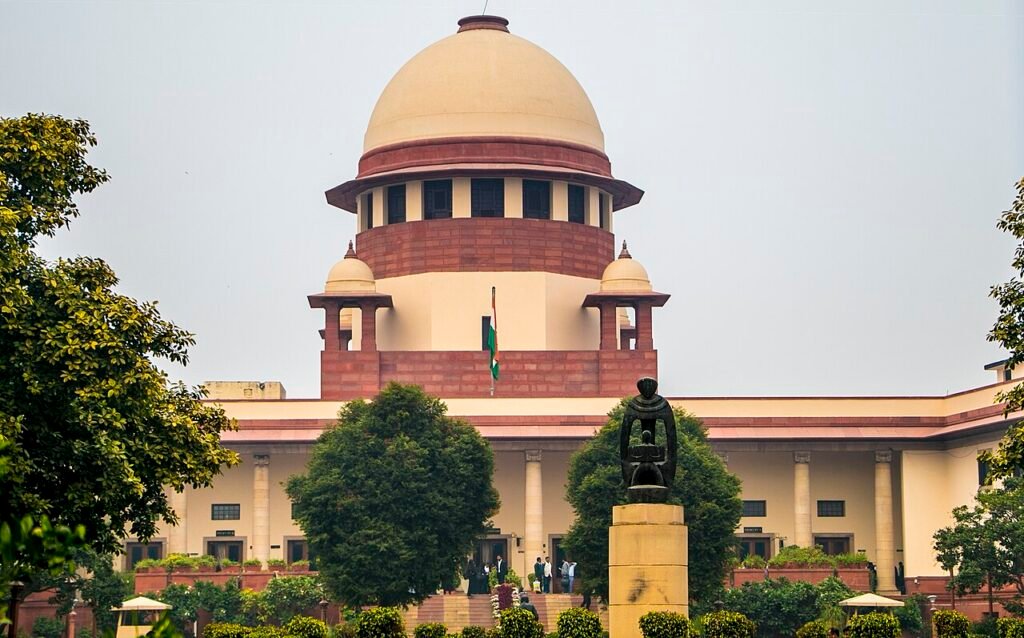
AASU Petition on NRC Reverification: Supreme Court Issues Notice to Centre and Assam
Syllabus Mapping
- Prelims: GS Paper I (Indian Polity and Governance: Constitution, Political System, Rights issues; Assam Polity; Assam History; Current events of State/National importance).
- Mains: GS Paper II (Structure, organization and functioning of the Executive and the Judiciary; Governance, Constitution, Polity). GS Paper V (Political and Administrative System of Assam; Major Landmarks in the History of Assam; Security of Assam).
Why in News? On 17 November 2026, the Supreme Court sought replies from the Centre and the Assam government on a plea by the All Assam Students’ Union (AASU). AASU wants the 2019 National Register of Citizens (NRC) of Assam to be verified again.
Current Context (The Trigger)
- Notice issued: The Supreme Court asked the Centre and the Assam government to reply to AASU’s petition. The petition alleges serious errors in the NRC update and says names of suspected illegal Bangladeshi immigrants got into the register.
- Bench: A two-judge bench of Justice Pamidighantam Sri Narasimha and Justice Alok Aradhe took up the matter. The paper reports only a notice, not any finding on the NRC.
- AASU’s core argument: Chief advisor Samujjal Bhattacharya said that excluding only around 19 lakh people raises doubts about the whole exercise. AASU president Utpal Sarma and Bhattacharya represented the organisation before the court.
- Electoral roll demand: AASU has again asked for a Special Intensive Revision (SIR) of Assam’s electoral rolls. It also wants the issuing of identity documents stopped until a revised NRC is published.
- Draft rolls out: Last week, the Assam election department released draft rolls under the Special Summary Revision (SSR) 2027. This came after the Election Commission decided last year to hold a special revision in the State.
Core Concepts & Static GK
- NRC: The register was first prepared in 1951. It was updated in Assam under the Supreme Court’s supervision, and the final list came out on 31 August 2019.
- Assam Movement: According to Bhattacharya, the movement began in 1979. Its trigger was the alleged presence of illegal foreigners in the voters’ list for the Mangaldoi Lok Sabha by-election. The by-election became necessary after the Mangaldoi MP Hiralal Patowary died on 28 March 1979.
- Assam Accord: It was signed on 15 August 1985 among the Union of India, the Government of Assam, AASU and the All Assam Gana Sangram Parishad (AAGSP). It ended the agitation that had begun in 1979.
- Accord cut-offs (Clause 5): Clause 5.1 fixed 1 January 1966 as the base date for detecting and deleting foreigners. Under Clause 5.3, those who came from 1 January 1966 up to 24 March 1971 were to be detected under the Foreigners Act, 1946 and the Foreigners (Tribunals) Order, 1964.
- Foreigner detection: Under Section 6A, “detected to be a foreigner” means detected by a Tribunal. The detection must be under the Foreigners Act, 1946 and the Foreigners (Tribunals) Order, 1964, and the Tribunal is one set up under that Order. The date of detection is the date on which the Tribunal submits its opinion.
- What a notice means: A notice only asks the other side to reply. In this case it means the Centre and Assam must now respond to AASU’s plea.
Constitutional & Legal Framework
- Section 6A, Citizenship Act, 1955: It was inserted by the Citizenship (Amendment) Act, 1985 after the Assam Accord, and applies to Assam only. It covers persons of Indian origin who came to Assam from the “specified territory” (the area of present Bangladesh). Those who came before 1 January 1966, and have lived there ordinarily since, are deemed citizens from 1 January 1966.
- The 1966-71 group: Persons of Indian origin who came on or after 1 January 1966 but before 25 March 1971, and are detected as foreigners, must register. For ten years from detection they have the same rights and obligations as a citizen, but their names cannot be included in any electoral roll. After the ten years, they are deemed citizens for all purposes.
- 2024 Supreme Court verdict: On 17 October 2024, a five-judge Constitution Bench upheld Section 6A by a 4:1 majority. Justice J.B. Pardiwala dissented.
- Why 25 March 1971: The majority held the cut-off rational. It marked the day Pakistan began Operation Searchlight in East Pakistan, and the Court did not find it manifestly arbitrary.
- Post-1971 entrants: Justice Surya Kant held that immigrants who entered on or after 25 March 1971 are illegal immigrants. They are liable to be detected, detained and deported.
- Earlier precedent: On 12 July 2005, in Sarbananda Sonowal v. Union of India, the Supreme Court struck down the Illegal Migrants (Determination by Tribunals) Act, 1983. Pending cases moved to tribunals under the Foreigners Act.
Institutional Machinery
- Supreme Court: It supervised the NRC update in Assam, and the final list was published on 31 August 2019.
- State Coordinator, NRC: The office of the State Coordinator of NRC, Assam released the final figures in a statement on 31 August 2019. People left out were given 120 days to appeal to Foreigners Tribunals.
- Foreigners Tribunals: These bodies give the opinion on whether a person is a foreigner. In 2024 Justice Kant held that the statutory machinery and Tribunals were inadequate for time-bound implementation of Section 6A.
- Election machinery: The Assam election department published the draft rolls under SSR 2027. The Election Commission had decided on the special revision last year.
Reports, Indices & Data
- Final NRC figures: On 31 August 2019, 3,30,27,661 people had applied. Of them, 3,11,21,004 were included and 19,06,657 were left out.
- How the paper puts it: The paper says the final register left out about 19 lakh applicants.
- Draft NRC, 2018: The final draft was published on 30 July 2018 and left out about 40 lakh people. The then Home Minister Rajnath Singh said it was only a draft and no coercive action would be taken.
- Tribunal data: A reply in the Assam Assembly on 22 July 2026 said 33,422 persons of the 1966-71 stream had been declared foreigners as on 31 August 2025. The same reply put the post-1971 stream at 1,35,549 persons.
Assam & Northeast Linkages
- Assam’s special case: Sarma said the NRC idea was prevalent only in Assam because, in his words, Assam is the state worst affected by illegal immigration.
- Section 6A is Assam-specific: The Supreme Court held that treating Assam separately was rational. Justice Kant reasoned that the Union had entered into the Accord with Assam alone.
- Agitation to Accord: The movement that began in 1979 ended with the Assam Accord on 15 August 1985.
- Clause 6 of the Accord: It promises constitutional, legislative and administrative safeguards to protect, preserve and promote the cultural, social and linguistic identity and heritage of the Assamese people.
Prelims Trap Zones (Watch out for)
- Date Trap: Section 6A covers entry before 25 March 1971, so the last covered day is 24 March 1971. The base date of 1 January 1966 is a different date, so do not mix the two.
- Number Trap: The final NRC left out 19,06,657 (about 19 lakh), not 40 lakh. The 40 lakh figure belongs to the 2018 final draft.
- Verdict Trap: The Supreme Court has only issued notice on AASU’s petition. It has not ordered reverification of the NRC.
- Year Trap: The NRC was first prepared in 1951 and the update was published in 2019. The Assam Accord is 1985, and the Section 6A verdict is 2024.
- Bench Trap: The 2024 Section 6A judgment was by a five-judge bench with a 4:1 split, not a unanimous one. Today’s notice came from a two-judge bench.
- Revision Trap: The draft rolls published last week are under Special Summary Revision (SSR) 2027. AASU is demanding a Special Intensive Revision (SIR), which is a different exercise.
Introduction
On 17 November 2026, the Supreme Court asked the Centre and Assam to reply to AASU’s plea for reverification of the 2019 NRC. That register had left out about 19 lakh applicants. The plea revives the question that started the Assam Movement in 1979: who is a citizen in Assam. It also tests how a court-supervised register, the Assam Accord and today’s electoral roll revision fit together.
Why AASU Wants Reverification (Underlying Drivers)
- Doubt over the outcome: AASU says that excluding only around 19 lakh people raises serious questions about the credibility of the NRC. It wants a fresh examination of the whole update process.
- Expectation gap: Sarma said the people of Assam and AASU had expected a much higher number of foreigners in the State. The gap between what was expected and what was found drives the plea.
- Link to the Assam Movement: The movement began in 1979 over alleged foreign names in the voters’ list during the Mangaldoi by-election. AASU therefore sees the NRC and the electoral roll as one problem.
- Electoral roll demand: Bhattacharya said AASU does not believe Assam has a voters’ list free of Bangladeshis, and it wants a Special Intensive Revision. The demand gains weight because draft rolls under SSR 2027 came out last week.
- Identity documents: AASU wants the issuing of identity documents stopped until a revised NRC is published. This shows how far the organisation wants the reverification to shape governance.
Legal and Constitutional Position
- Court-supervised NRC: The 1951 register was updated under the Supreme Court’s supervision, and the final list was published on 31 August 2019. Any reopening therefore comes back to the same court.
- Section 6A as the legal base: Section 6A of the Citizenship Act, 1955 gave statutory recognition to the Assam Accord. It separates pre-1966 entrants, the 1966-71 group, and those who came on or after 25 March 1971.
- Ten-year voting bar: A person in the 1966-71 group who is detected as a foreigner cannot be on any electoral roll for ten years from detection. This links citizenship law directly to the electoral roll.
- 2024 judgment: The Constitution Bench upheld Section 6A by 4:1 on 17 October 2024 and found the 1971 cut-off not manifestly arbitrary. Any reverification will have to respect this line.
- Court-monitored enforcement: Justice Kant held that implementation cannot be left to the mere wish and discretion of the authorities. He called for a bench, to be constituted by the Chief Justice of India, to oversee time-bound implementation.
- Earlier judicial correction: In 2005 the Supreme Court struck down the IMDT Act, 1983 and moved cases to Foreigners Act tribunals. This shows the Court has earlier reshaped the detection system itself.
Key Milestones
| Year | Event | Significance |
|---|---|---|
| 1951 | NRC first prepared | Base register that was later updated in Assam |
| 1979 | Assam Movement begins | Triggered by alleged foreigners in electoral rolls at the Mangaldoi by-election |
| 15 August 1985 | Assam Accord signed | Ended the agitation and set the 1966 and 1971 dates |
| 12 July 2005 | IMDT Act, 1983 struck down | Cases moved to Foreigners Act tribunals |
| 31 August 2019 | Final NRC published | 19,06,657 left out of 3,30,27,661 applicants |
| 17 October 2024 | Section 6A upheld 4:1 | Cut-off of 25 March 1971 held not manifestly arbitrary |
| 17 November 2026 | Notice on AASU petition | Centre and Assam asked to reply |
Challenges
- Settled and supervised list: The final NRC was prepared under the Supreme Court’s own supervision and published on 31 August 2019. Reopening it raises hard questions about finality and about who will verify the verifiers.
- Tribunal capacity: In 2024 Justice Kant held the statutory machinery and Foreigners Tribunals inadequate for the task. Without stronger tribunals, a fresh verification may only add to pending cases.
- Identity documents halt: AASU wants identity documents stopped until a revised NRC is out. Such a halt would also hit genuine residents who need documents for daily services, so the Court will weigh it with care.
- Human cost of uncertainty: The 2018 final draft had left out about 40 lakh people, and the final list left out 19,06,657. A new exercise could bring back anxiety for lakhs of families.
- Overlap of exercises: The NRC, Special Summary Revision 2027 and the demanded Special Intensive Revision serve different purposes. Running them together risks confusion about which list decides citizenship and which decides voting.
Way Ahead
- Reasoned replies: The Union Home Ministry and the Assam government should file clear replies with data on the 2019 process. This lets the Court decide on facts and not on estimates.
- Use of official data: In the 2024 case, the Court had asked the Ministry of Home Affairs for data on illegal inflows after 25 March 1971. The same practice can help here, with public and verifiable numbers.
- Stronger tribunals: The Assam government and the Centre should add members and staff to Foreigners Tribunals, since the Court found the machinery inadequate. Faster and fair decisions are needed for the 1966-71 and post-1971 groups.
- Follow the 2024 directions: Justice Kant said the Sarbananda Sonowal directions must be implemented, and the matters were placed before a bench for monitoring. Regular status reports would show whether detection and deportation work as ordered.
- Separate the two lists: The Election Commission should explain publicly how SSR 2027 differs from an SIR and how claims and objections work. Clear rules prevent the NRC debate from spilling into voter deletions.
- Protect the Accord promise: Clause 6 of the Accord promises safeguards for the culture and identity of the Assamese people. The State should deliver this through its own measures, so that the NRC is not the only answer to identity worries.
Conclusion
The notice is only the first step, and the Supreme Court has not yet said anything on the merits of AASU’s plea. The Court must balance a register it supervised itself with the Assam Accord promise on identity. A transparent and time-bound process, based on verified data and capable tribunals, is the way to keep both the rule of law and public trust.
Asked in APSC
- APSC Prelims 2020: (answer in the MCQs below)
As per the Tripartite Assam Accord signed among the Government of India, the Government of Assam and the Leaders of the Assam Agitation (AASU and All Assam Gana Sangram Parishad) on 15th August, 1985, what was set up as the cut-off date for detection and deportation of illegal migrants to Assam?- (A) 1st January, 1951
- (B) 15th August, 1967
- (C) 26th January, 1970
- (D) 24th March, 1971
All 500 APSC Prelims PYQs of CCE 2020 to 2025, with answers and explanations: practise free in the PYQ Explorer
APSC Prelims MCQs
Practice questions on this topic
Q1. Section 6A of the Citizenship Act, 1955, gave statutory recognition to the Assam Accord, and the Supreme Court upheld it in 2024. Consider the following statements:
(i) Section 6A applies only to Assam.
(ii) Persons of Indian origin who came to Assam from the specified territory before 1 January 1966, and have been ordinarily resident there since, are deemed to be citizens of India.
(iii) Persons who entered Assam on or after 25 March 1971 can register under it and become citizens after ten years.
Which of the statements given above is/are correct?
- (a) (i) only
- (b) (i) and (ii) only
- (c) (ii) and (iii) only
- (d) (i), (ii) and (iii)
Show answer
Answer: (b) Explanation: Statements (i) and (ii) are correct. Section 6A was inserted in 1985 after the Assam Accord and covers Assam alone. Such persons of Indian origin from the specified territory (present Bangladesh) are deemed citizens from 1 January 1966. Statement (iii) is wrong. In the 2024 verdict, Justice Surya Kant held that those who entered on or after 25 March 1971 are illegal immigrants liable to be detected, detained and deported. The registration route and the ten-year bar apply only to the group that came on or after 1 January 1966 but before 25 March 1971 and was detected as foreigners. Value addition: the Constitution Bench upheld Section 6A on 17 October 2024 by 4:1, with Justice J.B. Pardiwala dissenting.
Q2. Consider the following statements about the NRC in Assam:
(i) The NRC was first prepared in 1951.
(ii) The final updated NRC in Assam was published on 31 August 2019.
(iii) The 2024 Supreme Court verdict on Section 6A was a unanimous judgment of a three-judge bench.
How many of the statements given above are correct?
- (a) Only one
- (b) Only two
- (c) All three
- (d) None
Show answer
Answer: (b) Explanation: Statements (i) and (ii) are correct. The NRC was first prepared in 1951. Its update in Assam was done under the Supreme Court’s supervision, and the final list came out on 31 August 2019. Statement (iii) is wrong on both counts. The Section 6A case was decided by a five-judge Constitution Bench, and the verdict was 4:1, with Justice J.B. Pardiwala dissenting. So only two statements are correct, and options (a), (c) and (d) fail. Value addition: the final NRC included 3,11,21,004 persons and left out 19,06,657 of the 3,30,27,661 applicants. The 2018 final draft had left out about 40 lakh people.
Q3. Match List-I with List-II:
| List-I (Event) | List-II (Date / Year) |
|---|---|
| a. Signing of the Assam Accord | 1. 17 October 2024 |
| b. Publication of the final NRC in Assam | 2. 15 August 1985 |
| c. Supreme Court verdict upholding Section 6A | 3. 31 August 2019 |
| d. Start of the Assam Movement | 4. 1979 |
Select the correct answer using the codes given below:
- (a) a-2, b-1, c-3, d-4
- (b) a-4, b-3, c-1, d-2
- (c) a-2, b-3, c-1, d-4
- (d) a-3, b-2, c-4, d-1
Show answer
Answer: (c) Explanation: The Assam Accord was signed on 15 August 1985 among the Union, the Assam government, AASU and AAGSP, so a matches 2. The final NRC was published on 31 August 2019, so b matches 3. The Supreme Court upheld Section 6A on 17 October 2024, so c matches 1. The Assam Movement began in 1979 over alleged foreigners in the Mangaldoi by-election rolls, so d matches 4. Option (a) swaps the NRC and verdict dates. Option (b) puts the Accord at 1979 and the Movement at 1985, which reverses them. Option (d) shuffles all four. Value addition: Clause 5.1 of the Accord made 1 January 1966 the base date for detecting and deleting foreigners.
Q4. Under Section 6A of the Citizenship Act, 1955, a person came to Assam on or after 1 January 1966 but before 25 March 1971 and is detected as a foreigner. For how many years from the date of detection can his name not be included in any electoral roll?
- (a) Five years
- (b) Ten years
- (c) Fifteen years
- (d) Twenty-five years
Show answer
Answer: (b) Explanation: Section 6A says such a person must register. From the date of detection till the end of ten years, he has the same rights and obligations as a citizen. His name, however, cannot be included in any electoral roll. When the ten years end, he is deemed a citizen of India for all purposes. Five, fifteen and twenty-five years have no basis in the section and are only close-looking numbers. The Accord matches this: Clause 5.6 says names deleted from the electoral rolls are restored after ten years from the date of detection. Value addition: the date of detection is the date on which the Foreigners Tribunal submits its opinion that the person is a foreigner.
PYQ (APSC Prelims 2020): As per the Tripartite Assam Accord signed among the Government of India, the Government of Assam and the Leaders of the Assam Agitation (AASU and All Assam Gana Sangram Parishad) on 15th August, 1985, what was set up as the cut-off date for detection and deportation of illegal migrants to Assam?
- (A) 1st January, 1951
- (B) 15th August, 1967
- (C) 26th January, 1970
- (D) 24th March, 1971
Show answer
Answer: (D) Explanation: The Assam Accord was signed in New Delhi on 15 August 1985, in the presence of Prime Minister Rajiv Gandhi, by representatives of the Government of India, the Government of Assam, AASU (Prafulla Kumar Mahanta, Bhrigu Kumar Phukan) and the All Assam Gana Sangram Parishad (Biraj Kumar Sarma). Its cut-off was the midnight of 24 March 1971: foreigners who entered Assam on or after 25 March 1971 were to be detected and expelled. This is the eve of the Pakistani army crackdown in East Pakistan that set off the Bangladesh Liberation War. The Accord’s three-tier scheme:
Read the full explanation, with all APSC Prelims Assam Polity PYQs
Prepare with SuchitraACS
APSC CCE Foundation Programme₹24,999  APSC Prelims Crash Course 2027 (GS + CSAT)₹5,999
 APSC Prelims PYQ Book 2020-2025 (PDF)₹199See the book