Climate stress on Assam tea gardens: APSC Current Affairs Notes and MCQs
APSC CCE current affairs notes on Climate stress on Assam tea gardens, from The Assam Tribune of 17 November 2026, with 4 practice MCQs for Prelims.
 For working professionals and full-time aspirantsAPSC CCE Foundation Programme₹24,999
Current Affairs Notes
From The Assam Tribune, 17 November 2026
Sprinkler Irrigation in Tinsukia Tea Gardens and Climate Stress on Tea
Syllabus Mapping
- Prelims: GS Paper I (General issues on Environment ecology, Bio-Diversity and Climate Change; Economic and Social Development; Assam Economy and Geography of Assam; Current events of State/National importance).
- Mains: GS Paper III (Major crops and cropping patterns, different types of irrigation and irrigation systems; Economic Development); GS Paper V (Geography, climate and major agricultural and industrial issues of Assam).
Why in News? A report from Doomdooma dated 16 November 2026 says that tea estates in Tinsukia district are turning to sprinkler irrigation because of dry spells and erratic rain. An India Meteorological Department district report dated 14 November shows below-normal rainfall in the district.
Current Context (The Trigger)
- Artificial rain over tea: Sprinklers are now a common sight in the tea gardens of Tinsukia district, mainly around Doomdooma, which the paper calls the Tea City.
- Rainfall deficit: The India Meteorological Department (IMD) report dated 14 November says Tinsukia got 116.6 mm of rain between 1 October and 14 November, against a normal of 134.5 mm. The deficit is around 13.3%.
- No rain on the report date: Tinsukia got no rain at all on 14 November, while the normal for that day is 0.3 mm. The IMD’s wider review also found October rain below normal in large parts of Assam.
- Leaf shortage: A retired tea garden manager warned that the long dry spell in the autumn flush could cut the supply of leaf and also hurt the factory season. A factory worker said factory officials have warned that workers will have no work in late November, as green leaf is short.
- Rising costs: Pumps, power, fuel, upkeep and labour all add to the cost of running sprinklers.
Core Concepts & Static GK
- Sprinkler irrigation: Water is sprayed over the bushes so that it falls like rain, which is why the paper calls it artificial rain. The Tea Board’s 2017-20 scheme listed sprinkler equipment, drip systems, pipelines, motors and pump sets as items eligible for aid.
- Fresh shoots and flush: When rain turns irregular and soil loses moisture, tea bushes cannot put out fresh shoots at the normal pace. This directly cuts the green leaf that factories process.
- Timing matters as much as totals: The paper stresses that the spread and timing of rain matter as much as the seasonal total. Long gaps between showers can stress the bushes even when the overall deficit looks moderate.
- Conventional versus drip irrigation: The Tea Board scheme for 2017-20 fixed a ceiling unit cost of Rs 40,000 per hectare for conventional irrigation and Rs 4,00,000 per hectare for drip. So drip was treated as ten times costlier per hectare. These were that scheme’s rates, not necessarily today’s.
Institutional Machinery
- India Meteorological Department: The IMD issues district rainfall reports and forecasts, which the paper uses to measure the deficit in Tinsukia. It had forecast isolated to scattered rain over Assam and Meghalaya for 15-16 and 19-21 November.
- Tea Research Association: The paper cites Tea Research Association data for the long-term fall in Assam’s rainfall and rise in minimum temperature. The association runs the Tocklai research station, whose scientists study weather trends in tea areas.
- Tea Board of India: The Tea Board is a statutory body set up on 1 April 1954 under Section 4 of the Tea Act, 1953. It works under the Department of Commerce, Ministry of Commerce and Industry. Its head office is at 14 B.T.M. Sarani (Brabourne Road), Kolkata.
- Field offices: The Tea Board website lists zonal offices at Guwahati (the North Eastern Zonal Office) and Coonoor. It also lists regional offices at Dibrugarh, Siliguri and Palampur.
Schemes & Initiatives
- Tea Development and Promotion Scheme: This Tea Board scheme for the Medium Term Framework ran from 29 December 2017 to 31 March 2020. Its plantation component covered replanting, rejuvenation pruning, irrigation and mechanisation.
- Irrigation aid (2017-20 rates): Under that scheme, aid for irrigation was 25% of actual cost, subject to ceiling unit costs. The ceiling subsidy was Rs 10,000 per hectare for conventional irrigation and Rs 1,00,000 per hectare for drip. These figures belong to the 2017-20 scheme and should not be read as current rates.
- Area limit: The 2017-20 scheme considered at most 200 hectares per estate for conventional irrigation and 30 hectares per estate for drip.
- Eligible works: Besides sprinklers and drip kits, the scheme covered pump sets with electric line connection, transformers, and civil work such as check dams and tube wells.
Reports, Indices & Data
- Long-term trend: Tea Research Association data quoted in the paper show that Assam’s rainfall dropped by over 250 mm from 1921 to 2024. The minimum temperature went up by 1.2 degrees Celsius in the same period.
- Thirty-year weather study: A June 2026 paper in the journal Frontiers in Climate analysed weather data for 1996 to 2025. It covered four tea regions: South Bank in Assam, Nagrakata in West Bengal, Anamallais in Tamil Nadu and High Ranges in Kerala.
- Humidity: The same study finds that both morning and afternoon relative humidity fell in South Bank, Assam, over the study period.
- Older Tocklai figures: A 2013 Down To Earth report quoted a Tocklai deputy director saying Assam’s rainfall had fallen by 200 mm over 90 years, with temperatures up by over 1.5 degrees Celsius. These are older numbers from a different period, so use the Tea Research Association figures above for today’s news.
Assam & Northeast Linkages
- Tinsukia’s tea history: According to the report, indigenous tea plants were found in the Sadiya area in 1823. Chabua got the first English tea garden in 1837. The Tocklai history of tea credits Scottish trader Robert Bruce with the 1823 find, made during a trading visit.
- Tea belt of Upper Assam: The paper says the region later became one of Assam’s main tea-producing centres. Doomdooma is the focus of the sprinkler story.
- Weather hits output: Tea Board data for June 2025 showed Assam’s tea output at 68.55 million kg, down from 75.91 million kg in June 2024. That is a fall of about 9.7%, which reports linked to heat, low rain and pests.
- Switch from muga to tea: The 2013 Down To Earth report said farmers in Lakhimpur, Sivasagar and Jorhat gave up muga silk for tea because of rising temperatures and erratic rain. This is dated background, not a current survey.
Prelims Trap Zones (Watch out for)
- Date Trap: According to the report, indigenous tea plants in Sadiya are dated 1823 and the first English garden at Chabua is dated 1837. Do not swap the years or the places.
- Deficit Trap: The 13.3% deficit covers only 1 October to 14 November, not the whole year. It is based on 116.6 mm against a normal of 134.5 mm.
- Data Trap: The Tea Research Association figures in today’s paper are a fall of more than 250 mm in rainfall from 1921 to 2024 and a 1.2 degree Celsius rise in minimum temperature. The older Tocklai figures of 200 mm and over 1.5 degrees come from a 2013 report.
- Grower Trap: Under the Tea Board’s 2017-20 scheme, a big grower owned more than 10.12 ha, and a small grower owned up to 10.12 ha.
- Subsidy Trap: Irrigation aid under the 2017-20 scheme was 25% of actual cost with ceilings, not full cost. Drip had a higher ceiling than conventional irrigation.
- Head Office Trap: The Tea Board’s head office is in Kolkata, not Guwahati. Guwahati has its North Eastern Zonal Office.
Introduction
Between 1 October and 14 November 2026, Tinsukia got 116.6 mm of rain against a normal of 134.5 mm, and its tea estates have started running sprinklers. Gardens that once lived on rain now need pumps, pipes and power to keep their bushes producing leaf. Assam is India’s biggest tea producer. In June 2025 alone it made 68.55 million kg of India’s 133.50 million kg, so its response to a drier climate matters for the whole industry.
Causes and Impact
- Dry spells and erratic rain: Long dry spells and uneven rain are draining soil moisture in the tea belt. Estates in Doomdooma now spray water to keep fresh-leaf production going.
- A long-term drift: Tea Research Association data cited in the paper show a fall of over 250 mm in Assam’s rainfall from 1921 to 2024. The minimum temperature went up by 1.2 degrees Celsius over the same years.
- Timing of showers: Long gaps between showers stress the bushes even when the seasonal deficit looks small, as in Tinsukia’s 13.3% shortfall.
- Less humidity: The June 2026 Frontiers in Climate study finds that morning and afternoon humidity fell in South Bank, Assam, over 1996 to 2025. Sprinklers wet the soil, but they cannot bring back that moist air.
- Falling output: Tea Board data show Assam’s June 2025 output fell to 68.55 million kg from 75.91 million kg a year earlier. In Tinsukia today, the shortage of green leaf is already cutting factory work.
- Pests and quality: In July 2025, former Tea Board chairman Prabhat Bezbaruah reported a rise in green fly, a damaging tea pest, during the heat. A 2013 report also said heat had lowered the quality of Assam tea, known for its strong, bright liquor.
- Livelihood impact: Factory workers in Tinsukia say they leave early because there is not enough leaf to process. Fewer working days mean lower earnings for them.
Comparative Assessment: Conventional and Drip Irrigation under the Tea Board’s 2017-20 Scheme
| Feature (2017-20 scheme rates) | Conventional irrigation | Drip irrigation |
|---|---|---|
| Ceiling unit cost per hectare | Rs 40,000 | Rs 4,00,000 |
| Subsidy per hectare (25% of unit cost) | Rs 10,000 | Rs 1,00,000 |
| Maximum area per estate | 200 ha | 30 ha |
| Supplier condition | No special supplier rule listed | Items must come from a reputed supplier with prior experience in installing drip systems |
Government & Institutional Measures
| Level | Initiative | Purpose & Impact |
|---|---|---|
| Centre (Tea Board) | Irrigation aid under the Tea Development and Promotion Scheme, 2017-20 | Paid 25% of actual cost, within ceilings, for sprinklers, drip kits, pumps, check dams and tube wells. |
| Centre (Tea Board) | Replanting, rejuvenation pruning and mechanisation aid, 2017-20 | Targeted ageing bushes and field work; the paper names ageing plantations as a problem for estates. |
| Centre (Tea Board) | Support for Self Help Groups and Farmer Producer Organisations of small growers, 2017-20 | Helped groups of small growers (up to 10.12 ha each) buy shared items such as weighing scales, pruning machines, harvesters and sprayers. |
| Centre (IMD) | District rainfall reports and forecasts | Give estates a measure of the deficit, such as Tinsukia’s 13.3%, and a guide to coming showers. |
Challenges
- High running costs: Pumping, electricity, fuel, maintenance and labour all raise the cost of sprinkler irrigation. For an industry already facing rising input costs, this is another burden.
- Only temporary relief: The retired manager quoted in the paper says sprinklers give only temporary relief. They cannot fully replace the natural balance of rain, humidity and temperature that tea needs.
- Ageing plantations: The paper says estates are already dealing with ageing bushes. Old bushes cope less well with moisture stress, so irrigation money may not buy full recovery.
- Aid covers only a part: Under the 2017-20 scheme the grower paid the balance 75% of the cost. Small estates may struggle to fund such a share.
- Paperwork and water access: Under the 2017-20 rules, applicants needed a surveyor’s map and an engineer’s cost estimate for sources such as check dams and tube wells. Where a state restricts drawing water from rivers or streams, a no objection certificate from its Irrigation Department was required.
- Uncertain forecasts: The IMD district forecast showed possible showers in Tinsukia on 16 November, but the paper says sustained rain remains uncertain. Estates cannot plan irrigation rounds with confidence.
- Pests under heat stress: A former Tea Board chairman reported a rise in green fly during the 2025 heat. Estates then face pest control costs on top of irrigation.
Way Ahead
- Review irrigation aid: The Tea Board should check whether its irrigation support matches today’s pump, power and pipe costs. Under the 2017-20 scheme, the aid for conventional irrigation was only Rs 10,000 per hectare.
- Water harvesting: Estates should build check dams and tube wells, which the 2017-20 Tea Board scheme treated as eligible civil work. The June 2026 study also lists rainwater harvesting as a way to cope with moisture stress.
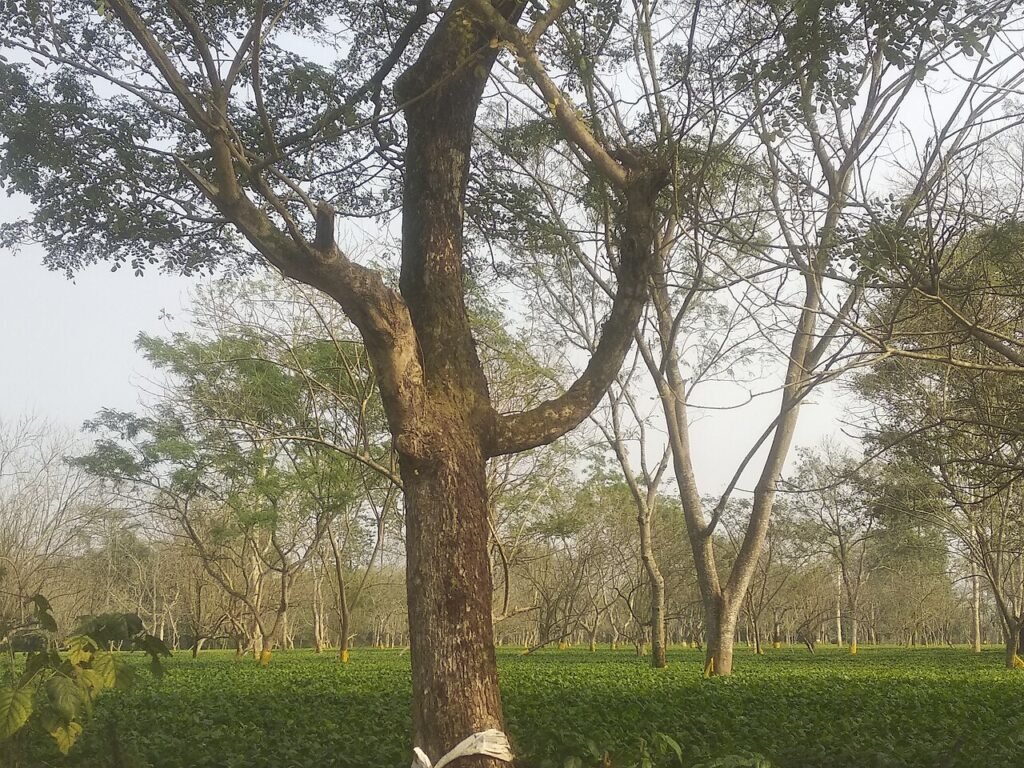
- Shade trees: Estates should plant more permanent shade trees to cut heat stress. The June 2026 study names species such as Albizzia chinensis and Derris robusta.
- Drought-tolerant clones: Estates should use replanting to bring in drought-tolerant clones, and replanting already gets Tea Board aid. The June 2026 study also recommends drought-tolerant cultivars.
- Use weather data: Estates in Tinsukia should link irrigation rounds to IMD district rainfall reports and forecasts. This saves pumping cost on days when rain is likely.
- Group irrigation for small growers: Self Help Groups of small growers (15 to 20 members under the 2017-20 rules) could share pump sets and pipelines. The Tea Board already funded shared equipment such as sprayers for such groups, so pumps could be added.
- Protect workers: The Assam labour department and the tea industry should plan wage support for factory workers when leaf is short. A Doomdooma worker has already warned of no work late in November.
Conclusion
Tinsukia’s sprinklers show that climate stress is no longer a distant forecast for Assam’s tea gardens. Irrigation can buy time, but it raises costs and cannot restore humidity or regular rain. A lasting answer needs cheaper water storage, hardier bushes and better use of weather data, backed by Tea Board aid that keeps pace with real costs.
Asked in APSC
- APSC Prelims 2024: (answer in the MCQs below)
According to the Assam State Action Plan on Climate Change (2015–2020), which of the following temperature and rainfall changes has occurred in Assam during the period 1951–2010?- (A) Annual mean temperature and annual rainfall have both increased
- (B) Annual mean temperature and annual rainfall have both decreased
- (C) Annual mean temperature has increased, while annual rainfall has decreased
- (D) No noticeable changes in temperature and rainfall trends
All 500 APSC Prelims PYQs of CCE 2020 to 2025, with answers and explanations: practise free in the PYQ Explorer
APSC Prelims MCQs
Practice questions on this topic
Q1. An India Meteorological Department district report dated 14 November 2026 was cited in a report on the tea gardens of Tinsukia. Consider the following statements:
(i) Tinsukia got 116.6 mm of rain from 1 October to 14 November, against a normal of 134.5 mm.
(ii) The rainfall deficit for the period was around 13.3%.
(iii) Chabua got Assam’s first English tea garden in 1823.
Which of the statements given above is/are correct?
- (a) (i) and (ii) only
- (b) (ii) and (iii) only
- (c) (i) and (iii) only
- (d) (i), (ii) and (iii)
Show answer
Answer: (a) Explanation: Statements (i) and (ii) are correct. The IMD report puts Tinsukia’s rain at 116.6 mm from 1 October to 14 November against a normal of 134.5 mm, a shortfall of about 13.3%. Statement (iii) is wrong because the first English tea garden at Chabua dates to 1837, not 1823. According to the report, 1823 is the year indigenous tea plants were found in the Sadiya region, so the two dates are often swapped. Hence options (b), (c) and (d), which all include statement (iii), are wrong. Value addition: Tocklai’s history of tea credits the Scottish trader Robert Bruce with the 1823 find of wild tea in Assam.
Q2. Match List-I with List-II:
| List-I (Item, as reported on 17 November 2026) | List-II (Figure) |
|---|---|
| a. Reported discovery of indigenous tea plants in the Sadiya region | 1. 1837 |
| b. First English tea garden at Chabua | 2. 1823 |
| c. Fall in Assam’s rainfall from 1921 to 2024 (Tea Research Association data) | 3. More than 250 mm |
| d. Rainfall received by Tinsukia from 1 October to 14 November 2026 (IMD) | 4. 116.6 mm |
Select the correct answer using the codes given below:
- (a) a-1, b-2, c-3, d-4
- (b) a-2, b-1, c-4, d-3
- (c) a-2, b-1, c-3, d-4
- (d) a-1, b-2, c-4, d-3
Show answer
Answer: (c) Explanation: The correct pairs are a-2, b-1, c-3 and d-4. According to the report, indigenous tea plants were found in Sadiya in 1823, and the first English garden came up at Chabua in 1837. Tea Research Association data show Assam’s rainfall down by more than 250 mm over 1921 to 2024. The IMD report shows Tinsukia got 116.6 mm from 1 October to 14 November 2026, against a normal of 134.5 mm. Options (a) and (d) swap the two years. Options (b) and (d) swap the long-term fall with this season’s rainfall. Value addition: the same Tea Research Association data show a 1.2 degree Celsius rise in Assam’s minimum temperature over 1921 to 2024.
Q3. Under the Tea Development and Promotion Scheme of the Tea Board for 2017-18 to 2019-20, which one of the following statements about irrigation support is NOT correct?
- (a) Sprinkler equipment, drip irrigation systems, pipelines and pump sets with electric connection were eligible items.
- (b) A big grower was defined as one who owns up to 10.12 hectares of tea area.
- (c) Assistance was 25% of the actual cost, subject to ceiling unit costs per hectare.
- (d) The area considered was limited to 200 hectares per estate for conventional irrigation and 30 hectares per estate for drip irrigation.
Show answer
Answer: (b) Explanation: Statement (b) is NOT correct. The scheme treated a big grower as one owning more than 10.12 hectares, while a small grower owns up to 10.12 hectares. Eligible irrigation items included sprinklers, drip systems, pipelines, motors and pump sets with electric line connection, so (a) is right. Aid was 25% of actual cost within ceiling unit costs of Rs 40,000 per hectare for conventional and Rs 4,00,000 per hectare for drip, so (c) is right. The area cap was 200 hectares per estate for conventional and 30 hectares for drip, so (d) is right. Value addition: these were the 2017-20 scheme’s rates, and the scheme also covered civil work such as check dams and tube wells.
Q4. The head office of the Tea Board of India, which works under the Ministry of Commerce and Industry, is located at:
- (a) Guwahati
- (b) Dibrugarh
- (c) Kolkata
- (d) Coonoor
Show answer
Answer: (c) Explanation: The Tea Board of India has its head office at 14 B.T.M. Sarani (Brabourne Road), Kolkata, under the Department of Commerce, Ministry of Commerce and Industry. Option (a) is wrong because Guwahati has the Board’s North Eastern Zonal Office, not its head office, even though Assam is India’s main tea state. Option (b) is wrong because Dibrugarh has a regional office. Option (d) is wrong because Coonoor in Tamil Nadu has a zonal office for the south. Students often pick Guwahati because of Assam’s weight in tea. Value addition: the Tea Board is a statutory body set up on 1 April 1954 under Section 4 of the Tea Act, 1953.
PYQ (APSC Prelims 2024): According to the Assam State Action Plan on Climate Change (2015–2020), which of the following temperature and rainfall changes has occurred in Assam during the period 1951–2010?
- (A) Annual mean temperature and annual rainfall have both increased
- (B) Annual mean temperature and annual rainfall have both decreased
- (C) Annual mean temperature has increased, while annual rainfall has decreased
- (D) No noticeable changes in temperature and rainfall trends
Show answer
Answer: (C) Explanation: The Assam State Action Plan on Climate Change (SAPCC) 2015–2020 used India Meteorological Department (IMD) analysis of State-level climate data for 1951–2010 (6 stations for temperature and 12 for rainfall in Assam). It found:
Read the full explanation, with all APSC Prelims Assam Environment PYQs
Prepare with SuchitraACS
APSC CCE Foundation Programme₹24,999  APSC Prelims Crash Course 2027 (GS + CSAT)₹5,999
 APSC CCE Study Materials Package (Prelims + Mains)₹4,999