Gauhati High Court on pollution consent: APSC Current Affairs Notes and MCQs
APSC CCE current affairs notes on Gauhati High Court on pollution consent, from The Assam Tribune of 14 November 2026, with 4 practice MCQs for Prelims.
 For working professionals and full-time aspirantsAPSC CCE Foundation Programme₹24,999
Current Affairs Notes
From The Assam Tribune, 14 November 2026
Gauhati High Court Quashes Pollution Board Consent for Coke Unit at Amingaon
Syllabus Mapping
- Prelims: GS Paper I (General issues on Environment ecology, Bio-Diversity and Climate Change; Current events of State/National importance; Indian Polity and Assam Polity).
- Mains: GS Paper III (Conservation, environmental pollution and degradation, environmental impact assessment); GS Paper II (Judiciary, governance, transparency and accountability); GS Paper V (Governance, Polity, Bio-diversity and Environment of Assam).
Why in News? The Gauhati High Court has set aside an order of the Pollution Control Board, Assam (PCBA, also called APCB). The order had illegally extended an old “Consent to Establish” for a highly polluting calcined petroleum coke unit. The unit is at the Amingaon industrial park near Guwahati. The report is datelined Guwahati, 13 November 2026.
Current Context (The Trigger)
- The ruling: The High Court struck down the Board’s order extending a “Consent to Establish” for a polluting unit in the Amingaon industrial park.
- The bench: The order came from a Division Bench of Justice Kalyan Rai Surana and Justice Pranjal Das.
- The petitioner: NOC Foundation went to court over alleged pollution and environmental damage at Amingaon caused by allowing a “red” category unit there.
- The unit: MM Carbon Products Pvt Limited got a Provisional Consent to Establish (PCTE) in 2012 to expand its calcination unit to a capacity of 12,000 MT (metric tonnes) per annum. The consent was valid for one year.
- The lapse: The PCTE had expired about nine years before the Board extended it by an order in 2022.
- The cost: The Board must pay Rs 1 lakh. The money goes to the Women and Child Development Department to create facilities for specially-abled girl children in care homes in remote districts.
- Recovery from officials: The bench said the State may, “if so advised”, recover this cost from officials found responsible for “turning a blind eye” to the lapse.
Core Concepts & Static GK
- Consent to Establish (CTE): This is the State Board’s prior permission to set up an industry before construction starts. Section 25 of the Water Act, 1974 bars anyone from setting up such an industry or making a new discharge without the Board’s previous consent.
- Provisional CTE (PCTE): The court stressed that the 2012 permission was only provisional. It was not a final Consent to Establish.
- Consent to Operate (CTO): This is the permission to run the unit once it is built. The court wondered how the Board let the unit run without a CTE and a CTO.
- Time-limited consent: Under Section 25 the Board can attach conditions to a consent. It can also fix how long the consent stays valid. The 2012 consent in this case was valid for one year.
- Four-month rule: Under the Water Act, consent is deemed to be given unconditionally if the Board does not grant or refuse it within four months of a complete application.
- Calcined petroleum coke (CPC): It is made by heating raw (“green”) petroleum coke to a very high temperature. It is used mainly to make carbon anodes for aluminium smelters and also as a carbon additive in steel making.
- Red category: The Central Pollution Control Board (CPCB) grades industries by a Pollution Index (PI) score. A PI of 60 and above makes an industry “red”.
Constitutional & Legal Framework
- Water Act, 1974: Section 25 requires the State Board’s previous consent for a new industry, outlet or discharge.
- Air Act, 1981: Section 21 requires the State Board’s previous consent to set up or run an industrial plant in an air pollution control area. The Board must decide within four months by a written order that records reasons.
- Article 21: In Subhash Kumar v. State of Bihar (1991), the Supreme Court held that the right to life includes the right to enjoy pollution-free water and air.
- Article 48A: This Directive Principle asks the State to protect and improve the environment and safeguard forests and wildlife. The 42nd Amendment, 1976 inserted it.
- Article 51A(g): This Fundamental Duty asks every citizen to protect and improve the natural environment.
- Legal point of the ruling: The Board’s standing counsel could not show any Act, Rule or notification that lets the Board extend a PCTE years after it lapsed. The court called the extension “bad in law and not sustainable”.
Institutional Machinery
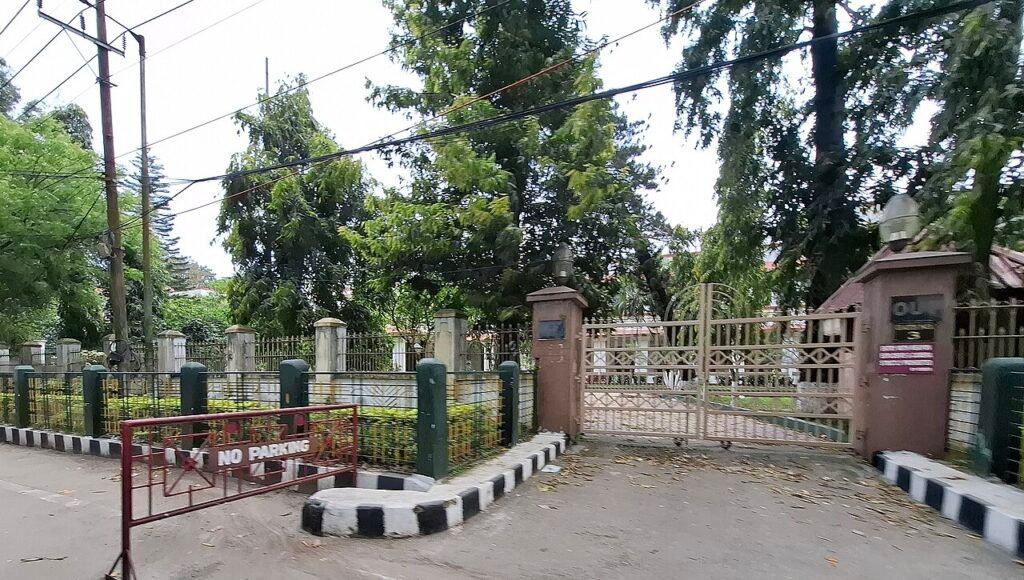
- Pollution Control Board, Assam: It is the State Board that grants or refuses consent under the Water and Air Acts. Its office is at Bamunimaidam, Guwahati.
- Central Pollution Control Board: It was set up in 1974 under the Water Act, 1974. It was later given powers under the Air Act, 1981.
- Consent platform: The Board launched a mobile app for its Online Consent Management and Monitoring System (OCMMS) in March 2025. Environment and Forest Minister Chandra Mohan Patowary launched it, and the National Informatics Centre (NIC) helped build it.
- Court’s view of the portal: In this case the court called the Board’s online portal “totally unreliable and totally untrustworthy”. It found acknowledgements without dates and application numbers that pointed to earlier years.
Assam & Northeast Linkages
- Location: The unit is in the Amingaon industrial park near Guwahati.
- Board’s own 2018 stand: In 2018 the Board decided to allow no further expansion of existing units and no new CPC or Low Ash Metallurgical Coke units in Assam. It cited high pollution levels in the surrounding areas.
- Notification date: This decision is in the Board’s notification of 17 February 2018. In an interim order of 11 May 2023, the High Court took the prima facie view that the Board could not change this stance.
- Another refusal: On 27 January 2022 the Board rejected a similar application from M/s Shyam Carbon LLP, Guwahati, to set up a new CPC unit.
- Paper trail: The 2012 consent letter was dated 10 December 2012 and was valid for one year. The Board treated the firm’s later fresh application as a request to extend that consent and issued a letter dated 31 December 2022.
- Case number: The Public Interest Litigation (PIL) was registered as PIL/32/2023 in the Gauhati High Court.
Prelims Trap Zones (Watch out for)
- Consent type trap: The 2012 permission was only a Provisional Consent to Establish, not a final Consent to Establish. The court stressed this difference.
- Body trap: The cost goes to the Women and Child Development Department, not to the Environment and Forest Department or the Board’s own fund.
- Category trap: The unit is “red” category, not “orange”. A PI of 60 and above is red, while 41 to 59 is orange.
- Number trap: The cost is Rs 1 lakh, and the unit’s capacity is 12,000 MT per annum.
- Authority trap: The court did not say the Board has no power over consent. It said nothing in law lets the Board extend a PCTE about nine years after it lapsed.
- Law trap: Section 25 is the consent provision of the Water Act, 1974. Section 21 is the matching provision of the Air Act, 1981.
Introduction
A permission that lapsed in 2013 was revived by Assam’s own pollution regulator in 2022, and the Gauhati High Court has now struck it down. The case shows how a “red” category unit near Guwahati nearly got a second life through paperwork. It tests whether a regulator keeps to its own rules and whether courts can still check it.
Why the Ruling Matters
- Limits on regulators: The court held that the Board acted beyond its authority, because no Act, Rule or notification lets it extend a lapsed PCTE. A regulator can use only the powers its law gives it.
- Consistent policy: The Board had decided in February 2018 not to allow expansion of CPC units. Reviving the lapsed consent in 2022 went against its own policy.
- Accountability of officials: The court allowed the State to recover the cost from officials who ignored the lapse. This links personal responsibility to administrative failure.
- Right to a clean environment: The Supreme Court read pollution-free air and water into Article 21 in Subhash Kumar (1991). A red category unit running without valid consent affects the right to life of nearby residents.
- Role of civil society: NOC Foundation, a New Delhi-based NGO, brought the issue to court through a PIL. The case shows how PILs can catch regulatory lapses.
- Social use of the cost: The Rs 1 lakh will fund facilities for specially-abled girl children in care homes in remote districts. So the penalty also helps a vulnerable group.
How the Consent System Works
- Two-step consent: An industry first needs a Consent to Establish and then a Consent to Operate. The court wondered how this unit ran without either.
- Time-bound validity: When a consent order fixes a validity period, the consent ends on that date. The High Court held that the lapsed 2012 consent could not be lawfully extended, so it could not work as a permit.
- Conditions can be attached: The Board may fix conditions such as the point of discharge and the nature, volume and rate of the effluent. These conditions are the main tool to protect nearby water bodies.
- Air Act parallel: Section 21 of the Air Act asks for consent for plants in air pollution control areas. A coke unit mainly raises air-quality concerns, so this provision matters too.
- Category-based scrutiny: CPCB’s 2016 scheme sorts industries into red, orange, green and white by PI score. Red units face the closest watch because they pollute the most.
- Digital applications: OCMMS lets applicants file and track CTE and CTO applications online. The court’s remarks on the portal show that such systems also need audit.
Government & Statutory Measures
| Level | Initiative | Purpose & Impact |
|---|---|---|
| Union (Parliament) | Water (Prevention and Control of Pollution) Act, 1974, Section 25 | Requires prior consent for new industries and discharges. Consent is conditional and time-limited. |
| Union (Parliament) | Air (Prevention and Control of Pollution) Act, 1981, Section 21 | Requires consent for industrial plants in air pollution control areas, decided within four months. |
| Union (CPCB) | Red, orange, green, white categorisation (2016) | Grades industries by PI score so that regulation matches the pollution load. White units need only an intimation. |
| Assam (PCBA) | Notification of 17 February 2018 on CPC units | Bars expansion of existing CPC units and new CPC units in Assam because of pollution levels. |
| Assam (PCBA) | OCMMS mobile app (March 2025) | Moves consent applications online for tracking and faster handling. |
Challenges
- Lapsed consents: A dead consent can be treated as alive through an administrative extension. Here the Board revived a PCTE that had expired about nine years earlier.
- Unlicensed operation: The court wondered how the Board let a red category unit run without a CTE and a CTO. This points to weak field inspection.
- Policy reversal: The Board barred expansion of CPC units in 2018 but later extended this unit’s consent. Such inconsistency erodes public trust in the regulator.
- Digital record doubts: The court found acknowledgements without dates and application numbers pointing to earlier years. Such records can hide delays or back-dating.
- Weak accountability: The cost falls first on the Board, which means public money. Recovery from the officials responsible is left to the State’s choice.
- Long litigation: The PIL was filed in 2023, and the court ordered status quo on 11 May 2023. The final ruling was reported only in November 2026, more than three years later.
Way Ahead
- Recover the cost: The Assam Government should use the court’s permission and fix personal responsibility on officials who ignored the lapse. This will make officers more careful.
- Audit the portal: The Board and the National Informatics Centre should run an independent audit of OCMMS records and date stamps. This answers the court’s doubts about the portal.
- Auto-expiry alerts: The Board should build automatic expiry alerts into OCMMS. Then no lapsed consent can be extended without a legal basis.
- Inspect red units: The Board should inspect red category units regularly, starting with CPC and coke units. It should publish the results.
- Rules for extensions: The Environment and Forest Department should state in rules whether and when a lapsed consent can be revived. This closes the gap the court pointed out.
- Public information: The Board should publish the consent status of red category units on its website. Citizens and NGOs can then check them.
Conclusion
The judgment reminds the Board that a lapsed permission cannot be revived by a letter, and that red category units need real checks. Assam will gain only if the Board keeps to its own 2018 stand, cleans up its digital records and makes officials answer for lapses.
APSC Prelims MCQs
Practice questions on this topic
Q1. Consider the following statements about consent for industries under the Water (Prevention and Control of Pollution) Act, 1974 and related rules:
(i) Section 25 requires the previous consent of the State Board to set up an industry or a process likely to discharge sewage or trade effluent.
(ii) Section 21 of the Air (Prevention and Control of Pollution) Act, 1981 requires the State Board’s previous consent to set up or operate an industrial plant in an air pollution control area.
(iii) A Consent to Operate is required even for the white category of industries.
Which of the statements given above is/are correct?
- (a) (i) and (ii) only
- (b) (ii) and (iii) only
- (c) (i) only
- (d) (i), (ii) and (iii)
Show answer
Answer: (a) Explanation: Statements (i) and (ii) are correct. Section 25 of the Water Act, 1974 bars setting up an industry or a new discharge without the State Board’s previous consent. Section 21 of the Air Act, 1981 makes a similar rule for industrial plants in an air pollution control area. Statement (iii) is wrong. Under the Central Pollution Control Board’s 2016 categorisation, white category industries need no Consent to Operate. An intimation to the State Board is enough. So options (b) and (d) fail, and option (c) leaves out true statement (ii). Value addition: A Pollution Index score of up to 20 places an industry in the white category, while 60 and above is red.
Q2. Match List-I with List-II:
| List-I (Provision) | List-II (Feature) |
|---|---|
| a. Section 25, Water Act, 1974 | 1. Directive Principle asking the State to protect the environment |
| b. Section 21, Air Act, 1981 | 2. Fundamental Duty of citizens to protect the natural environment |
| c. Article 48A | 3. Consent for new industries and discharges |
| d. Article 51A(g) | 4. Consent for industrial plants in air pollution control areas |
Select the correct answer using the codes given below:
- (a) a-3, b-4, c-1, d-2
- (b) a-4, b-3, c-1, d-2
- (c) a-3, b-4, c-2, d-1
- (d) a-1, b-2, c-3, d-4
Show answer
Answer: (a) Explanation: Section 25 of the Water Act, 1974 deals with consent for new industries, outlets and discharges, so a matches 3. Section 21 of the Air Act, 1981 requires consent for industrial plants in air pollution control areas, so b matches 4. Article 48A is a Directive Principle in Part IV that directs the State to protect and improve the environment, so c matches 1. Article 51A(g) is a Fundamental Duty of citizens, so d matches 2. Option (b) swaps the two Acts, option (c) swaps the two Articles, and option (d) gets every pair wrong. Value addition: Both Article 48A and Article 51A(g) were inserted by the 42nd Constitutional Amendment Act, 1976.
Q3. With reference to the Gauhati High Court’s ruling on the calcined petroleum coke unit at Amingaon, which of the following is NOT correct?
- (a) The court held that extending the lapsed Provisional Consent to Establish was bad in law.
- (b) The Pollution Control Board, Assam was asked to pay costs of Rs 1 lakh.
- (c) The costs were ordered to be deposited with the Environment and Forest Department.
- (d) The court allowed the State to recover the cost from officials found responsible.
Show answer
Answer: (c) Explanation: Statement (c) is not correct. The Rs 1 lakh is to be deposited with the Women and Child Development Department, to create facilities for specially-abled girl children in care homes of remote districts. Option (a) is correct, as the court called the extension “bad in law and not sustainable” because the provisional consent had expired about nine years earlier. Option (b) is correct, since the Board was directed to pay the cost. Option (d) is correct, because the bench said the State may recover the cost from officials found responsible. Value addition: The case was a Public Interest Litigation filed by NOC Foundation and was heard by Justice Kalyan Rai Surana and Justice Pranjal Das.
Q4. Under the Central Pollution Control Board’s 2016 revised categorisation, an industry with a Pollution Index (PI) score in which range is placed in the red category?
- (a) 60 and above
- (b) 41 to 59
- (c) 21 to 40
- (d) Up to 20
Show answer
Answer: (a) Explanation: The Central Pollution Control Board’s revised categorisation places industries with a PI score of 60 and above in the red category. It covers the most polluting units, such as the calcined petroleum coke unit in the Amingaon case. Option (b), a score of 41 to 59, is the orange category. Option (c), 21 to 40, is the green category. Option (d), up to 20, is the white category, which needs no Consent to Operate and only an intimation to the State Board. Value addition: CPCB sent this categorisation to the State Boards through a circular dated 7 March 2016.
Prepare with SuchitraACS
APSC CCE Foundation Programme₹24,999  APSC Prelims Crash Course 2027 (GS + CSAT)₹5,999
 APSC Prelims PYQ Book 2020-2025 (PDF)₹199See the book