US midterm elections and India: APSC Current Affairs Notes and MCQs
APSC CCE current affairs notes on US midterm elections and India, from The Assam Tribune of 9 November 2026, with 4 practice MCQs for Prelims.
 For working professionals and full-time aspirantsAPSC CCE Foundation Programme₹24,999
Current Affairs Notes
From The Assam Tribune, 9 November 2026
US Midterm Verdict and India’s Strategic Autonomy
Syllabus Mapping
- Prelims: GS Paper I (Current events of national and international importance; Indian Polity and Governance; Economic and Social Development).
- Mains: GS Paper III (Bilateral, regional and global groupings and agreements involving India and/or affecting India’s interests); GS Paper IV (Economic development, technology); GS Paper V (International Relations and Economic Development of Assam).
Why in News? An opinion article by Banasmita Das on the editorial page of The Assam Tribune of 9 November 2026 makes a claim about the United States midterm elections. It says the Democratic Party has taken both the Senate and the House of Representatives. The writer argues that India should prepare for a divided Washington. It should also hold on to its strategic autonomy.
Current Context (The Trigger)
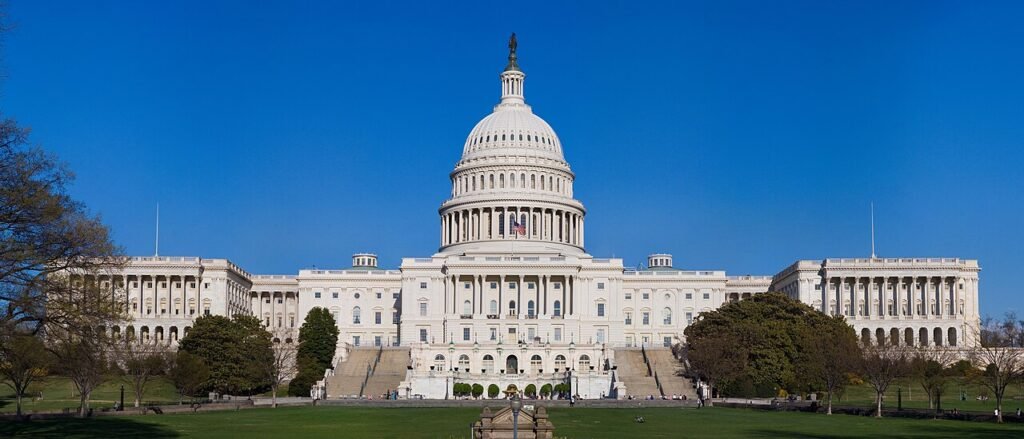
- The verdict: The article says the Democrats now control both chambers of the US Congress. So the Republican administration will face a legislature that is not on its side. The paper’s own editorial on the same page also notes the heavy defeat of President Donald Trump’s Republican Party.
- Result status: On 4 November 2026 Al Jazeera reported, citing an Associated Press projection, that Democrats had won the Senate. They had at least 54 seats. It added that a few races were still undecided, so this note uses no final seat totals.
- Divided government: Donald Trump remains President. But the article says the new Democratic majorities will hold real law-making, money and oversight powers.
- Timing: The article says the new Congress takes office next year, and Republicans control the present Congress until then. Under the Twentieth Amendment, the terms of the newly elected members begin at noon on 3 January, so the change comes in January 2027.
- Voter mood: The writer reads the result as voter anger. Voters were upset over high living costs, over tariffs and over how the administration dealt with conflicts abroad.
Core Concepts & Static GK
- Midterm election: It is held halfway through the President’s four-year term. The whole House and about one-third of the Senate face voters.
- House of Representatives: It has no more than 435 voting members, a number fixed by law. Each member serves a two-year term.
- Senate: Each state has two senators with six-year terms. The seats are divided into three classes so that one-third are filled every second year.
- Divided government: This means the President’s party does not control one or both chambers of Congress. The article expects more clashes between the executive and the legislature over the next two years.
- Non-voting members: Apart from the 435 voting members, the House has five delegates and a resident commissioner for Puerto Rico.
Constitutional & Legal Framework
- Power over trade: Article I, Section 8 of the US Constitution gives Congress two powers. It can lay duties, and it can regulate commerce with foreign nations.
- Delegated authority: The article notes that the President still holds wide power, delegated by Congress through several trade laws, to impose duties.
- Court ruling on tariffs: On 20 February 2026 the US Supreme Court held in Learning Resources, Inc. v. Trump that the International Emergency Economic Powers Act (IEEPA) does not give the President power to impose tariffs. Chief Justice John Roberts wrote the opinion of the Court.
- What the case covered: The ruling struck down two sets of IEEPA tariffs. One was the drug-related tariffs on Canada, Mexico and China. The other was the trade-deficit tariffs on most other imports. Tariffs under other laws, such as Section 232 duties on steel, aluminium and automobiles, were not part of the case.
- Stop-gap tariff: The President then used Section 122 of the Trade Act of 1974. It imposed a 10 per cent tariff for 150 days from 24 February 2026. Section 122 allows a temporary surcharge of at most 15 per cent for up to 150 days.
- Section 301 duties: On 23 July 2026 the Office of the US Trade Representative (USTR) imposed Section 301 tariffs on 60 economies. The reason was that they did not ban imports made with forced labour. India was placed in the lower 10 per cent group.
Reports, Indices & Data
- Imports from India: USTR reports that US goods imports from India were USD 103.8 billion in 2025, up 18.9 per cent from 2024.
- Exports to India: The same USTR page puts US goods exports to India at USD 45.4 billion in 2025, up 9.1 per cent.
- Total goods trade: USTR gives total two-way goods trade with India in 2025 as USD 149.1 billion. The US goods trade deficit with India was USD 58.4 billion.
- H-1B cap: The H-1B programme allows 65,000 new visas or statuses a year. Another 20,000 are available for people with a US master’s degree or higher.
Assam & Northeast Linkages
- Tea exports: Tea Board final data show that India exported 257.88 million kg of tea worth Rs 7,503.52 crore in 2024-25.
- North India’s share: North India, the region that includes Assam, supplied 161.20 million kg of these exports, worth Rs 5,161.06 crore, in 2024-25.
- Recent growth: Provisional Tea Board data for 2025-26 show North Indian tea exports rising 15.32 per cent in quantity to 185.90 million kg.
- Tariff exposure: Assam’s exporters to the US have faced a changing duty regime. Before February 2026 they faced a 25 per cent reciprocal tariff plus an extra 25 per cent. From July 2026 many Indian goods face a 10 per cent Section 301 duty.
Prelims Trap Zones (Watch out for)
- Seat numbers: Do not memorise any final seat count for the 2026 midterms. Some races were still undecided when the first reports came out.
- Immediate reversal: The article says the midterm result will not cancel existing tariffs on its own. The President keeps his delegated trade powers.
- Tariff law: The Supreme Court struck down IEEPA tariffs, not all tariffs. Section 232 tariffs were not part of the case.
- H-1B exemption: The 65,000 cap does not cover everyone. Universities and non-profit research organisations are not subject to it.
- Chamber terms: House members serve two years and senators serve six years. The terms are not the same.
- Treaty vote: A treaty needs the consent of two-thirds of the senators present, not a simple majority. This is in Article II, Section 2.
Introduction
The Democrats’ win in both chambers of the US Congress, discussed in The Assam Tribune on 9 November 2026, will end one-party control in Washington from January 2027. The writer argues that India should treat this as a lesson in preparedness. It is not a threat or a windfall. The real test for India is whether its policy can stay steady while American politics keeps shifting.
Why the Verdict Matters for India
- Trade exposure: The article lists Indian medicines, textiles, engineering goods and IT services as major exports to the US. USTR data show US goods imports from India reached USD 103.8 billion in 2025.
- Tariff uncertainty: A Congress that questions tariffs could make US trade policy more predictable. But long quarrels between the White House and Congress could also delay any trade deal.
- Trade talks: In February 2026 the two countries announced a framework for an Interim Agreement on trade. A White House fact sheet of 9 February 2026 said the US would lower its reciprocal tariff on India from 25 to 18 per cent. It would also remove an extra 25 per cent tariff.
- Talks reopened: The Supreme Court ruling upset that framework. Commerce Minister Piyush Goyal then met US Trade Representative Jamieson Greer in New Delhi on 23 June 2026. The talks aimed to recalibrate the proposed agreement.
- Energy risk: The article says unrest in West Asia, trouble near the Strait of Hormuz, and swings in crude prices hit India directly. They raise the import bill, push up inflation and strain the budget.
- Skilled workers: H-1B visas matter for Indian professionals in US technology firms. A Presidential Proclamation of 19 September 2025 added a USD 100,000 payment for certain new H-1B petitions.
- Technology ties: The article lists cooperation in Artificial Intelligence, chips, space and critical technologies as central to the relationship.
Limits of a Divided Government
- Oversight powers: The article says the new majorities can examine executive decisions, probe official conduct and shape federal spending.
- Trade law: Under Article I, Section 8, Congress holds the power to regulate trade with foreign nations. But the President can still set duties under powers Congress has delegated by law.
- Courts as a check: The Supreme Court’s ruling of 20 February 2026 shows something useful. Limits on tariff powers can come from the judiciary, and Congress is not the only check.
- Foreign policy: The article says Congress can apply pressure through budgets, resolutions and oversight. But the President keeps wide authority over foreign policy.
- Treaties: The Constitution requires two-thirds of senators present to agree before a treaty is made. So the Senate’s balance matters for formal agreements.
- Timing gap: The old Congress stays in office until the new members take their seats on 3 January 2027. So the full effect of the verdict will be seen only from 2027.
Challenges
- Policy swings: The article says Indian firms need stable market conditions. A US trade policy that keeps changing with domestic politics makes planning hard.
- Energy balancing: US sanctions and Washington’s stand on Indian purchases of Russian oil make things harder for India. It must buy cheap energy and also keep its strategic ties.
- Deeper conflicts remain: The writer stresses that the vote may change political pressure in Washington. It does not settle the basic geopolitical tensions India faces.
- Visa risk: USCIS says a federal district court in Massachusetts vacated the agency guidance for the USD 100,000 H-1B payment on 8 June 2026. The First Circuit refused the government a stay on 24 July 2026. But DHS says it still plans to collect the payment if the order is lifted.
- Shifting tariff law: Indian goods have moved from IEEPA tariffs to a Section 122 surcharge. In July 2026 they moved to a 10 per cent Section 301 duty. Each change has needed fresh talks and fresh costing by exporters.
- Exporter exposure: Tea is one example of the risk. India exported 257.88 million kg of tea in 2024-25, and any US duty change hits Assam’s export-oriented gardens.
Way Ahead
- Engage Congress: The article says New Delhi should not build its US policy only around the White House. It should work with congressional committees and with lawmakers of both parties.
- Widen contacts: The writer also suggests closer links with business bodies, universities and the Indian diaspora in the US.
- Protect bipartisan base: Ties in defence, the Indo-Pacific, intelligence and strategic technology have lasted through changes of party in the White House. India should keep this continuity.
- Close the trade deal: The Commerce Ministry should finish the Interim Agreement on terms that hold even if US tariff law changes again. It can build on the New Delhi talks of June 2026.
- Diversify energy: India should cut its exposure to West Asia and to crude price swings. The article links these directly to the import bill and inflation.
- Back exporters: The Tea Board and the Commerce Ministry can help Assam tea exporters find other markets. North Indian tea exports already grew 15.32 per cent in quantity in 2025-26.
Conclusion
The midterm verdict changes the mood in Washington, but it does not by itself rewrite tariffs, visas or West Asia policy. India gains most by keeping ties wide across both American parties and by trading without depending on any one side. As the writer argues, strategic autonomy is now a tool of national resilience and not just a diplomatic idea.
APSC Prelims MCQs
Practice questions on this topic
Q1. The United States has held its midterm elections. Consider the following statements about the US Congress:
(i) The House of Representatives has no more than 435 voting members, each serving a two-year term.
(ii) Senators serve six-year terms, and one-third of the seats are filled every second year.
(iii) A treaty can be made with the concurrence of a simple majority of senators present.
Which of the statements given above is/are correct?
- (a) (i) and (ii) only
- (b) (ii) and (iii) only
- (c) (i) only
- (d) (i), (ii) and (iii)
Show answer
Answer: (a) Explanation: Statement (i) is correct. The number of voting House members is fixed by law at no more than 435, and each is elected for two years. Statement (ii) is correct. Senate terms are six years, and the seats are arranged in three classes so that one-third are filled every second year. Statement (iii) is wrong. Article II, Section 2 requires the concurrence of two-thirds of the senators present, not a simple majority. So (a) is the answer. Options (b) and (d) wrongly include (iii), and option (c) leaves out the correct statement (ii). Value addition: under Article I, Section 7, a presidential veto can be overridden if two-thirds of each house agree to pass the bill.
Q2. On 20 February 2026 the US Supreme Court held in Learning Resources, Inc. v. Trump that the President cannot impose tariffs under which law?
- (a) Section 232 of the Trade Expansion Act of 1962
- (b) International Emergency Economic Powers Act
- (c) Section 122 of the Trade Act of 1974
- (d) Smoot-Hawley Tariff Act
Show answer
Answer: (b) Explanation: The Court held that the International Emergency Economic Powers Act (IEEPA) does not give the President power to impose tariffs. This struck down the drug-related tariffs on Canada, Mexico and China and the trade-deficit tariffs on most other imports. Option (a) is wrong because Section 232 duties on steel, aluminium and automobiles were not part of the case. Option (c) is wrong because the President used Section 122 after the ruling. It imposed a 10 per cent tariff for 150 days from 24 February 2026. Option (d) is wrong because that old law was not the subject of the case. Value addition: in July 2026 the USTR placed India in the 10 per cent group of new Section 301 duties.
Q3. With reference to the H-1B visa programme of the United States, which one of the following statements is NOT correct?
- (a) The annual cap is 65,000 new H-1B visas or statuses.
- (b) A further 20,000 are available for those with a US master’s degree or higher.
- (c) Initial admission is generally up to three years, extendable to a total of six.
- (d) Universities and non-profit research organisations are covered by the 65,000 cap.
Show answer
Answer: (d) Explanation: Statement (d) is not correct. USCIS says workers at institutions of higher education, their affiliated non-profits and non-profit research organisations are not subject to the cap. Statement (a) is correct because the regular annual cap is 65,000 new statuses or visas. Statement (b) is correct because a separate 20,000 petitions are set aside for holders of a US master’s degree or higher. Statement (c) is correct because the first admission is generally for up to three years. It can be extended to a total of six years. Value addition: a Presidential Proclamation of 19 September 2025 added a USD 100,000 payment for certain new petitions. A federal court vacated the agency guidance implementing it on 8 June 2026.
Q4. According to the Office of the US Trade Representative, what was the value of US goods imports from India in 2025?
- (a) USD 45.4 billion
- (b) USD 58.4 billion
- (c) USD 103.8 billion
- (d) USD 149.1 billion
Show answer
Answer: (c) Explanation: USTR reports that US goods imports from India were USD 103.8 billion in 2025, up 18.9 per cent from 2024. Option (a), USD 45.4 billion, is the value of US goods exports to India, so it is the reverse flow. Option (b), USD 58.4 billion, is the US goods trade deficit with India, which is imports minus exports. Option (d), USD 149.1 billion, is the total two-way goods trade, which adds both flows together. Value addition: a White House fact sheet of 9 February 2026 said something important for India. The US would lower its reciprocal tariff on India from 25 to 18 per cent under the new trade framework.
Prepare with SuchitraACS
APSC CCE Foundation Programme₹24,999  APSC Prelims Crash Course 2027 (GS + CSAT)₹5,999
 APSC CCE Study Materials Package (Prelims + Mains)₹4,999