
APSC Answer Writing (Daily) based on Assam Tribune – 30/10/2026
For APSC CCE and other Assam Competitive examinations aspirants, practicing Daily Answer Writing is vital. This blog covers the most important Main question and its model Answer from the Assam Tribune today (30-10-2026).
 Last batch for APSC CCE 2027 · starts 16 NovAPSC CCE Foundation Programme₹24,999
Mains Answer Writing
From The Assam Tribune, 30 October 2026
Q. The Assam government has formed a committee to draft rules for the Uniform Civil Code Bill, Assam, 2026, which awaits the President’s assent. Critically examine the constitutional and administrative challenges of a State UCC in a diverse State like Assam. Suggest safeguards. (250 words, 15 marks)
Model answer
Introduction: Article 44 asks the State to endeavour to secure a uniform civil code. The Assam Assembly passed the Bill on 27 May 2026. An eight-member committee must now draft its rules within one month.
1. Constitutional challenges
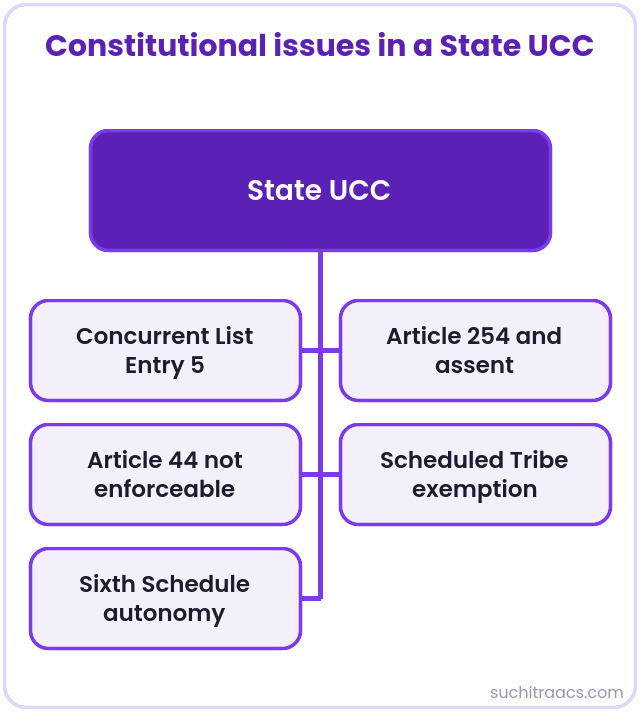
- Competence: Marriage, divorce, adoption, wills and succession are in Entry 5 of the Concurrent List. So a State can legislate, but within the limits of Article 254.
- Repugnancy: A State law that clashes with an earlier central law prevails in that State only if the President assents to it. Parliament can still amend or repeal it later.
- Directive Principle: Article 44 is not enforceable in court. Critics cite religious freedom under Articles 25 to 28 and the right to privacy.
- Tribal customs: The Bill keeps Scheduled Tribes outside its purview. Sixth Schedule councils in Bodoland, Karbi Anglong and Dima Hasao can make laws on marriage, divorce and social customs. So the code is not fully uniform.
2. Administrative challenges
- Registration load: Marriages must be registered within 60 days. Live-in relationships must be registered within one month. Registrars need staff and digital systems.
- Penalties: Bigamy or polygamy can bring up to seven years in jail. Low awareness may punish honest citizens.
- Rule-making: The committee has only government officials. No tribal council, women’s group or community body is on it.
3. Safeguards and Way Forward
- Assent first: Notify the rules only after the President’s assent. Uttarakhand’s code received assent in March 2024.
- Consultation: Publish draft rules and hear tribal councils, women’s groups and religious bodies.
- Rights: Keep the Scheduled Tribe exclusion clear. Protect live-in couples’ data.
- Capacity: Train registrars, set up online registration and a simple appeal process.
Conclusion: A State UCC can promote gender equality, but its legal footing and rules must be sound. Consultation and capacity will decide whether it unites or divides Assam’s diverse communities.
Prepare with SuchitraACS
APSC CCE Foundation Programme₹24,999  APSC Mains Mentorship Programme (MMP)₹9,999
 APSC Prelims Crash Course 2027 (GS + CSAT)₹5,999



