
APSC Answer Writing (Daily) based on Assam Tribune – 28/10/2026
For APSC CCE and other Assam Competitive examinations aspirants, practicing Daily Answer Writing is vital. This blog covers the most important Main question and its model Answer from the Assam Tribune today (28-10-2026).
 Last batch for APSC CCE 2027 · starts 16 NovAPSC CCE Foundation Programme₹24,999
Mains Answer Writing
From The Assam Tribune, 28 October 2026
Q. The Supreme Court has recently sought responses from the Centre and the Election Commission on legislators resigning soon after election, changing party allegiance and returning through bypolls. In this context, critically examine the adequacy of the Tenth Schedule in checking political defections, and suggest reforms that protect voters’ mandate without curbing legitimate dissent. (250 words, 15 marks)
Model answer
Introduction: The 52nd Amendment (1985) added the Tenth Schedule to disqualify defectors. Resigning, switching sides and winning the bypoll now tests its reach.
1. Where the Tenth Schedule works
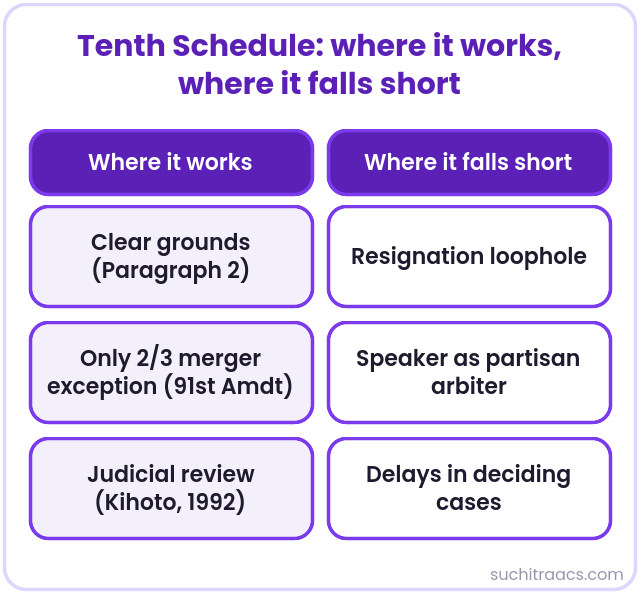
- Clear grounds: Paragraph 2 covers voluntarily giving up membership, voting or abstaining against the party’s direction, and an independent joining a party.
- Tighter exceptions: The 91st Amendment (2003) removed the split exception, leaving only a two-thirds merger. It also barred disqualified defectors from becoming ministers until their term ends or they are re-elected (Articles 75(1B), 164(1B)).
- Judicial check: In Kihoto Hollohan (1992), the Court struck down paragraph 7 and held that the Speaker’s rulings are open to judicial review.
2. Where it falls short
- Resignation loophole: Members quit before proceedings end and re-contest on another ticket. ADR counted 111 MPs and MLAs switching parties in 2022-2026.
- Partisan arbiter: The Speaker decides (paragraph 6), and is often seen as biased.
- Delay: Keisham Meghachandra Singh (2020) set three months, barring exceptional circumstances, and asked Parliament to consider a permanent tribunal.
3. Way Forward
- Independent adjudicator: An outside body that decides within fixed timelines, subject to judicial review.
- Targeted consequences: A time-bound, statutory bar on contesting the bypoll or holding office for those who resign to defeat pending proceedings.
- Protect dissent: Leave members free to resign on genuine grounds.
- Party accountability: Hold accountable the parties that engineer or reward defections.
Conclusion: The Tenth Schedule has curbed open defection but not planned evasion through resignation. Reform should close that gap and still leave room for dissent based on conscience.
Prepare with SuchitraACS
APSC CCE Foundation Programme₹24,999  APSC Mains Mentorship Programme (MMP)₹9,999
 APSC Prelims Crash Course 2027 (GS + CSAT)₹5,999



