Black softshell turtle in Assam: APSC Current Affairs Notes and MCQs
APSC CCE current affairs notes on Black softshell turtle in Assam, from The Assam Tribune of 13 November 2026, with 4 practice MCQs for Prelims.
 For working professionals and full-time aspirantsAPSC CCE Foundation Programme₹24,999
Current Affairs Notes
From The Assam Tribune, 13 November 2026
Black Softshell Turtle Recovery and Freshwater Turtle Trafficking
Syllabus Mapping
- Prelims: GS Paper I (General issues on Environment, ecology and biodiversity; Current events of State/National importance; Geography and wildlife of Assam).
- Mains: GS Paper III (Conservation, environmental pollution and degradation; Wildlife protection and organised illegal trade); GS Paper V (Biodiversity, wildlife and conservation issues of Assam).
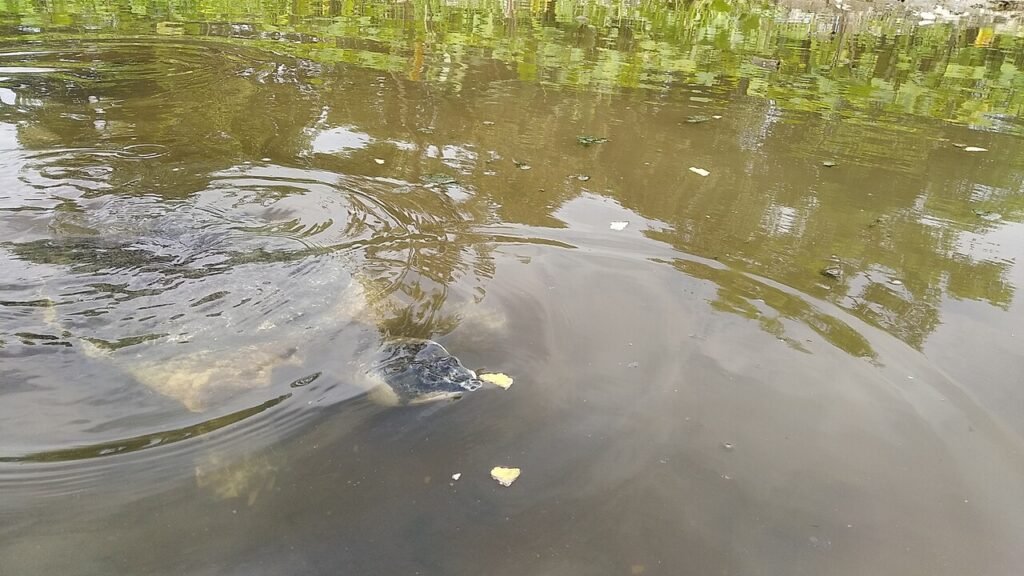
Why in News? About 240 hatchlings of the critically endangered black softshell turtle were recently released into a water body. The water body is under the Biswanath Wildlife Division of Kaziranga National Park and Tiger Reserve. The same report notes that Odisha Police rescued 230 live Indian flapshell turtles on 7 November 2026. This shows that illegal turtle trade remains strong.
Current Context (The Trigger)
- The release: The 240 hatchlings of Nilssonia nigricans went into a water body under the Biswanath Wildlife Division of Kaziranga National Park and Tiger Reserve.
- The project: The release is part of the project “Conservation and Recovery of Black Softshell Turtle in Assam”. The Wildlife Survival Alliance Foundation India (WSAFI) and the State Forest Department run it together.
- Running total: Since 2021, more than a thousand black softshell hatchlings have been released into the wild. The report says this has given the species a stable population in the Brahmaputra-Kaziranga landscape.
- Temple pond refuges: The Hayagriva Madhab Temple in Hajo and the Nagshankar Temple in Biswanath helped protect the species.
- Trafficking bust: Police stopped a Kolkata-bound vehicle near the Pipili toll gate in Puri district on 7 November 2026. They found 230 live Indian flapshell turtles (Lissemys punctata) packed in eight sacks.
Core Concepts & Static GK
- Species identity: The black softshell turtle (Nilssonia nigricans) is called Bormuria kaso in Assamese, meaning big-headed turtle. It is also known as the Bostami turtle.
- Status history: The IUCN (International Union for Conservation of Nature) listed the species as Extinct in the Wild in 2002. Its 2021 assessment lists it as Critically Endangered, with a decreasing population.
- Why “extinct in the wild” earlier: In 2002 the survivors were known only from a few temple ponds in Bangladesh and Assam. Hunting for meat, egg collection, overfishing and silting of riverbeds are named as its main threats.
- Name origin: The Bostami name comes from the shrine of Bayazid Bostami in Chittagong, Bangladesh, where a pond holds the turtles.
- Trade protection: The species is listed in Appendix I of CITES (Convention on International Trade in Endangered Species of Wild Fauna and Flora). This listing has been in force since 1 July 1975.
- Tortoises and Freshwater Turtles (TFTs): They spread seeds and clean up dead matter in forests and water bodies.
Constitutional & Legal Framework
- Main law: The Wild Life (Protection) Act, 1972 makes it a crime to sell, transport, trap or keep native tortoises and freshwater turtles as pets.
- 2022 amendment: The Wild Life (Protection) Amendment Act, 2022 (No. 18 of 2022) is dated 19 December 2022. It came into force on 1 April 2023.
- Fewer schedules: The Act cut the schedules from six to four. Schedules I and II now cover animals, Schedule III covers plants and the new Schedule IV covers CITES-listed specimens. Vermin are now notified under Section 62 instead of a separate schedule.
- CITES machinery: The Act provides for a Management Authority (Section 49E) to grant export and import permits. A Scientific Authority (Section 49F) advises whether trade will harm the survival of a species.
Assam & Northeast Linkages
- Turtle hotspot: The report calls Assam a global hotspot for freshwater turtle diversity. A 2010 Assam Tribune report said Assam has 20 of the 29 turtle and tortoise species found in India.
- Another critically endangered native: The Assam roofed turtle or Sylhet roofed turtle (Pangshura sylhetensis) is also critically endangered.
- Hajo incubation centre: The Hayagriva Madhava temple at Hajo, in Kamrup district, has an artificial incubation centre. A 2010 report said 46 eggs of four species hatched there, including black softshell, peacock softshell and Indian flapshell turtles.
- Nagshankar eggs: Eggs are collected from the pond banks of the Nagshankar Temple in the March-April breeding season. They are incubated at Biswanath Ghat.
- Rearing and release: Hatchlings emerge in July and August. They spend about three months at a rearing centre before release.
- Northeast trade route: The Dimapur-Moreh-Myanmar route links to Southeast Asian markets. It is known for trade in red-crowned roofed turtles and Indian star tortoises.
- Turtle priority landscape: A 2020 Mongabay-India report lists the Brahmaputra river system as one of India’s five turtle priority areas. The others are Chambal-Yamuna, the Indo-Nepal Terai, Eastern India and the Western Ghats.
Reports, Indices & Data
- Threatened TFTs: Out of 30 threatened Indian TFT species, 15 are actively targeted by illegal trade networks.
- Seizures: Law enforcement agencies seize tens of thousands of tortoises and freshwater turtles across India every year.
- Study on trafficking: A study titled “From pets to plates” compared illegal supply networks of two groups. These were tortoises and hard-shell turtles for the pet trade, and softshell turtles for the meat trade.
- Study finding: The pet-trade network covered a wider area and had more cross-border links. Softshell trade usually ran straight from the source to the buyer.
Prelims Trap Zones (Watch out for)
- Status Trap: The black softshell turtle is now Critically Endangered (2021 assessment). It was Extinct in the Wild in 2002, so do not pick “Extinct in the Wild” as today’s status.
- Temple Trap: The eggs for the Biswanath release come from the Nagshankar Temple pond in Biswanath. The Hajo temple is Hayagriva Madhab (Madhava), also a refuge, but it is in Kamrup district.
- Agency Trap: The project partner is the Wildlife Survival Alliance Foundation India (WSAFI), formerly TSA Foundation India. It is a non-government body, not a government agency.
- Species Trap: The 230 rescued turtles in Odisha were Indian flapshell turtles (Lissemys punctata), not black softshell turtles.
- Study Trap: The wider, more international network belongs to tortoises and hard-shell turtles (pet trade). Softshell turtles (meat trade) move on simple source-to-destination routes.
- Number Trap: The latest release was 240 hatchlings, and the total since 2021 is over a thousand. Do not swap these figures.
- Law Trap: The 2022 amendment is an Act now, in force from 1 April 2023. It has four schedules, not six.
Introduction
A turtle once written off as extinct in the wild is back in the news. Some 240 hatchlings were recently released under the Biswanath Wildlife Division of Kaziranga. Its comeback began in Assam’s temple ponds and shows how faith, science and the Forest Department can save a species together. Yet the same report notes that 230 flapshell turtles were rescued from smugglers in Odisha, so the recovery remains fragile.
Why the Black Softshell Recovery Matters
- A species pulled back: The IUCN listed it as Extinct in the Wild in 2002 and as Critically Endangered in 2021. This shows that a careful programme can improve a species’ status.
- Community conservation: The report credits community-driven efforts led by government and non-government groups. Temple committees at Hajo and Biswanath gave the turtles safe ponds.
- Ecological role: Tortoises and freshwater turtles eat dead matter and spread seeds. A recovered population helps keep water bodies cleaner.
- Assam’s global stake: The report calls Assam a global hotspot for freshwater turtle diversity. So losses here are losses for the world.
- Proven model: The cycle of egg collection, incubation at Biswanath Ghat, rearing and release has put more than a thousand hatchlings into the wild since 2021.
- Landscape link: Releases under the Biswanath Wildlife Division of Kaziranga link the temple ponds to wild Brahmaputra habitats.
Dimensions of Freshwater Turtle Trafficking
- Asian Turtle Crisis: This term describes the poor state of tortoises and freshwater turtles across Asia. Most species face habitat loss and large-scale illegal trade for food.
- Scale of targeting: Out of 30 threatened Indian TFT species, 15 are actively targeted. India remains one of the largest poaching hotspots despite strict laws.
- Demand types: Turtles are traded as pets, food and medicine. The “From pets to plates” study found that pet-trade networks cross more borders than meat-trade networks.
- Cruel transport: Many smuggled turtles die from dehydration, suffocation and shell injuries. The Puri seizure found 230 turtles packed in eight sacks.
- Northeast corridor: The Dimapur-Moreh-Myanmar route serves Southeast Asian markets. Red-crowned roofed turtles and Indian star tortoises move along it.
- Species at the edge: The Indian narrow-headed softshell, the peacock softshell and the Ganges softshell are among the species pushed close to extinction.
Government & Statutory Measures
- Wild Life (Protection) Act, 1972: It bans the sale, transport, trapping and pet-keeping of native tortoises and freshwater turtles.
- 2022 amendment: The amended law, in force since 1 April 2023, adds Schedule IV for CITES-listed specimens. It also creates a Management Authority and a Scientific Authority for wildlife trade.
- CITES Appendix I: The black softshell is in this appendix, which gives the strictest control on international trade.
- Forest Department role: The State Forest Department co-runs the Assam recovery project. The Biswanath Wildlife Division handled the latest release.
- Police action: Odisha Police intercepted the Puri-Kolkata vehicle on 7 November 2026. This shows that routine police checks can break trade chains.
Challenges
- Low public awareness: The report says many people do not know the reptile’s status or the penalties under the wildlife law. This ignorance has fed open trade across the Northeast.
- Weak enforcement: The report says authorities have failed to curb the wider illegal trade. Temple ponds are the only real protection many turtles get.
- Habitat loss and climate change: Habitat destruction and climate change harm species living in lakes, rivers and wetlands. A 2010 report also named sand mining and degraded water bodies as threats in Assam.
- Over-crowded ponds: A 2010 report described the Hajo temple pond as overpopulated with turtles. This limits how many more turtles temple ponds can hold.
- Hard to track: Releases are hard to monitor. A 2020 report noted that no transmitters had been fitted to released turtles, so survival was not measured.
- Complex pet-trade networks: Tortoise and hard-shell networks have complex international links. These are harder to detect than simple softshell routes.
Way Ahead
- Strict enforcement: The Forest Department, police and Customs should watch known routes such as Dimapur-Moreh. Regular checks can catch consignments like the one seized near Puri.
- Public awareness: The Assam Forest Department and NGOs should run awareness drives in villages and markets. They should explain that keeping native turtles as pets is a crime.
- Scale up the model: WSAFI and the Forest Department should repeat the egg, incubation, rearing and release cycle at other temple ponds.
- Monitor released turtles: Researchers should tag or fit transmitters on a sample of hatchlings to measure survival. This was missing in 2020.
- Protect wild habitats: The State should control sand mining and keep river and wetland habitats safe in the Brahmaputra-Kaziranga landscape.
- Use CITES tools: Agencies should use the Management Authority and Schedule IV of the amended Act to track cross-border consignments.
Conclusion
The black softshell shows that temple ponds, a committed NGO and the Forest Department can bring back a species. But the Puri seizure shows how fast such gains can be lost to traders. Firm policing of trade routes and steady public education must now go hand in hand.
APSC Prelims MCQs
Practice questions on this topic
Q1. Black softshell turtle hatchlings were recently released in Assam under a recovery project. Consider the following statements:
(i) The IUCN assessed the species as Extinct in the Wild in 2002, and a 2021 assessment lists it as Critically Endangered.
(ii) The recent release of 240 hatchlings was made into a water body under the Biswanath Wildlife Division of Kaziranga National Park and Tiger Reserve.
(iii) The recovery project is run jointly by the Zoological Survey of India and the State Forest Department.
Which of the statements given above is/are correct?
- (a) (i) and (ii) only
- (b) (ii) and (iii) only
- (c) (i) and (iii) only
- (d) (i), (ii) and (iii)
Show answer
Answer: (a) Explanation: Statement (i) is correct because the IUCN listed the species as Extinct in the Wild in 2002. Its 2021 assessment moved it to Critically Endangered. Statement (ii) is correct because the 240 hatchlings went into a water body under the Biswanath Wildlife Division. Statement (iii) is wrong. The project, ‘Conservation and Recovery of Black Softshell Turtle in Assam’, is run by the Wildlife Survival Alliance Foundation India (WSAFI) with the State Forest Department, not by the Zoological Survey of India. Hence only (i) and (ii) are correct. Value addition: The species is also called the Bostami turtle after a shrine in Chittagong, Bangladesh, and it is in CITES Appendix I.
Q2. Match List-I (Scientific name) with List-II (Common name):
| List-I (Scientific name) | List-II (Common name) |
|---|---|
| a. Nilssonia nigricans | 1. Assam roofed turtle (Sylhet roofed turtle) |
| b. Pangshura sylhetensis | 2. Indian flapshell turtle |
| c. Lissemys punctata | 3. Black softshell turtle |
| d. Chitra indica | 4. Indian narrow-headed softshell turtle |
Select the correct answer using the codes given below:
- (a) a-3, b-1, c-2, d-4
- (b) a-1, b-3, c-4, d-2
- (c) a-3, b-1, c-4, d-2
- (d) a-2, b-4, c-3, d-1
Show answer
Answer: (a) Explanation: The correct pairs are Nilssonia nigricans with the black softshell turtle and Pangshura sylhetensis with the Assam (Sylhet) roofed turtle. They also include Lissemys punctata with the Indian flapshell turtle and Chitra indica with the Indian narrow-headed softshell turtle. Option (b) swaps a with b and c with d. Option (c) gets a and b right but swaps c and d, so the flapshell and the narrow-headed softshell are interchanged. Option (d) gets every pair wrong. Link “flapshell” with the 230 turtles rescued near Puri. Value addition: Nilssonia hurum is the peacock softshell and Nilssonia gangetica is the Ganges softshell turtle.
Q3. Which one of the following statements about turtle trafficking in India is NOT correct?
- (a) Out of 30 threatened Indian tortoise and freshwater turtle species, 15 are actively targeted by illegal trade networks.
- (b) Police in Odisha rescued 230 live Indian flapshell turtles near the Pipili toll gate in Puri district in November 2026.
- (c) The softshell turtle trafficking network has a larger geographical scale and more international links than the tortoise and hard-shell network.
- (d) The Wild Life (Protection) Act, 1972 makes it a crime to sell or keep native tortoises and freshwater turtles as pets.
Show answer
Answer: (c) Explanation: Statement (c) is not correct because the study “From pets to plates” found the reverse. The tortoise and hard-shell turtle network, driven by the pet trade, had the larger geographical scale and more international links. The softshell network, driven by the meat trade, usually ran straight from source to destination. Options (a), (b) and (d) match the reported facts. 15 of 30 threatened species are targeted. The Puri seizure of 7 November 2026 involved 230 live flapshell turtles. The 1972 Act bans keeping native species as pets. Value addition: The Wild Life (Protection) Amendment Act, 2022 came into force on 1 April 2023 and added Schedule IV for CITES-listed specimens.
Q4. Which of the following trafficking routes, linking to Southeast Asian markets, is known for trade in red-crowned roofed turtles and Indian star tortoises?
- (a) Guwahati-Agartala-Dhaka
- (b) Dimapur-Moreh-Myanmar
- (c) Siliguri-Nathu La-Tibet
- (d) Jogbani-Biratnagar-Kathmandu
Show answer
Answer: (b) Explanation: The Dimapur-Moreh-Myanmar route links to Southeast Asian markets. It is known for trade in wildlife parts, red-crowned roofed turtles and Indian star tortoises. The other options are real-sounding border corridors, but none is named for this trade. Guwahati-Agartala-Dhaka points to Bangladesh, not Southeast Asia. Siliguri-Nathu La-Tibet points north to China, and Jogbani-Biratnagar-Kathmandu points to Nepal. Exam setters often pick distractors from real border routes, so link Moreh (Manipur) with Myanmar and Southeast Asia. Value addition: Moreh is a border town in Tengnoupal district of Manipur, on the India-Myanmar border.
Prepare with SuchitraACS
APSC CCE Foundation Programme₹24,999  APSC Prelims Crash Course 2027 (GS + CSAT)₹5,999
 APSC CCE Study Materials Package (Prelims + Mains)₹4,999