Roumari-Donduwa wetlands Ramsar site: APSC Current Affairs Notes and MCQs
APSC CCE current affairs notes on Roumari-Donduwa wetlands Ramsar site, from The Assam Tribune of 19 November 2026, with 4 practice MCQs for Prelims.
 For working professionals and full-time aspirantsAPSC CCE Foundation Programme₹24,999
Current Affairs Notes
From The Assam Tribune, 19 November 2026
Roumari-Donduwa Wetlands Proposal for Assam’s Second Ramsar Site
Syllabus Mapping
- Prelims: GS Paper I (General issues on Environment ecology, Bio-Diversity and Climate Change; Current events of State/National importance; Geography of Assam).
- Mains: GS Paper III (Conservation, environmental pollution and degradation, environmental impact assessment); GS Paper V (Assam syllabus: environment, biodiversity and natural resources of Assam).
Why in News? The Assam government has cleared a proposal to seek Ramsar status for the Roumari-Donduwa wetland complex. The complex is in the Laokhowa Wildlife Sanctuary, a part of the Kaziranga Tiger Reserve. A team of Forest officials placed the proposal before the Chief Minister on 16 November. The report was datelined Guwahati, 18 November.
Current Context (The Trigger)
- State approval: The State government has agreed to send a proposal to have the Roumari-Donduwa wetland complex named a Wetland of International Importance.
- Location: The complex is inside the Laokhowa Wildlife Sanctuary, which falls under the Kaziranga Tiger Reserve.
- Second site: If it is listed, it will be Assam’s second Ramsar site. The first is Deepor Beel, listed in 2002.
- Bird numbers: The two wetlands together held more than 47,000 waterbirds in 2025.
- 2026 count: In the 2026 count, Roumari ranked first and Donduwa second for waterbird numbers in the whole Kaziranga Tiger Reserve.
- Better than Deepor: According to the report, these counts were higher than those at Deepor Beel. Deepor Beel is the State’s only Ramsar site today.
- Who prepared it: Samarjit Ojha, Noirrita Priyadarshini, Bipanchi Tamuli and Neeraj Bora compiled the proposal. Dr Sonali Ghosh and senior Forest department officials guided them.
Core Concepts & Static GK
- Ramsar Convention: It is an intergovernmental treaty on wetlands. It was adopted at Ramsar, Iran, on 2 February 1971 and came into force in 1975.
- World Wetlands Day: It is observed on 2 February, the day the Convention was adopted. It was first observed in 1997.
- Nine criteria: A wetland must meet at least one of nine criteria to be a Wetland of International Importance. The criteria fall into two groups: wetland types (Criterion 1) and biological diversity (Criteria 2 to 9).
- Criterion 5 (waterbirds): A wetland qualifies if it regularly supports 20,000 or more waterbirds.
- Criterion 6 (one per cent): A wetland qualifies if it regularly supports 1 per cent of the individuals in a population. The population must be of one waterbird species or subspecies.
- Montreux Record: It is a register of Ramsar sites where the ecological character has changed, is changing or is likely to change. It was set up by Recommendation 4.8 of the Conference of the Contracting Parties at Montreux in 1990.
- India and Ramsar: India became a Party to the Convention on 1 February 1982. Chilika Lake (Odisha) and Keoladeo National Park (Rajasthan) were India’s first Ramsar sites, listed on 1 October 1981.
- India’s tally: India had 103 Ramsar sites on 15 October 2026, covering over 13.87 lakh hectares. The Press Information Bureau says this ranks India first in Asia and third in the world by number of sites.
Constitutional & Legal Framework
- Wetlands Rules, 2017: The Wetlands (Conservation and Management) Rules, 2017 were notified under the Environment (Protection) Act, 1986.
- Prohibited activities: The Rules bar activities such as encroachment, waste dumping and discharge of untreated effluents.
- State Wetlands Authority: The Rules set up a Wetlands Authority in every State and Union Territory.
- Duties after listing: A Ramsar site is deemed notified under the 2017 Rules. The guidelines also recommend formal notification with an Integrated Management Plan, and the Ramsar Information Sheet must be updated every six years.
Institutional Machinery
- Assam Forest Department: Its officials prepared and presented the proposal. The department also manages the Laokhowa Wildlife Sanctuary.
- Kaziranga Tiger Reserve: The Wildlife Institute of India describes the reserve as Kaziranga National Park plus the Burachapori and Laokhowa Wildlife Sanctuaries.
- Laokhowa Wildlife Sanctuary: It covers 70.13 sq km on the southern bank of the Brahmaputra in Nagaon district. It was notified on 6 September 1979.
- Ministry of Environment, Forest and Climate Change (MoEFCC): In India, the State government first identifies a wetland. The Ministry then coordinates approval and forwards the proposal to the Ramsar Secretariat.
Assam & Northeast Linkages
- Deepor Beel: It is Assam’s only Ramsar site now. The Ramsar database lists it as site number 1207, about 4,000 hectares, designated on 19 August 2002.
- Why Deepor qualified: It is a permanent freshwater lake in an old channel of the Brahmaputra. Its 2002 Ramsar Information Sheet notes globally threatened birds and 50 fish species from 19 families.
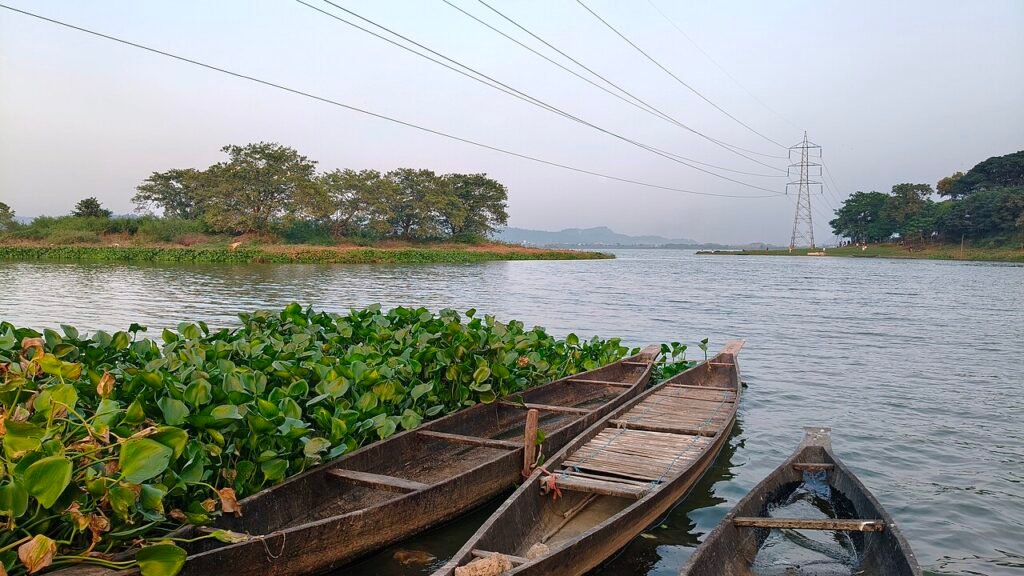
- Twin wetlands: Roumari and Donduwa are two neighbouring beels (floodplain lakes) in Laokhowa. The paper also spells the first one as Rowmari.
- 2026 Kaziranga count: The seventh Kaziranga waterbird count, reported in February 2026, found 1,05,540 waterbirds of 107 species across 166 wetlands. Rowmari Beel (15,661 birds) and Donduwa Beel (14,469) topped the list.
Prelims Trap Zones (Watch out for)
- Which sanctuary: The wetlands are in Laokhowa Wildlife Sanctuary, not inside Kaziranga National Park itself. The sanctuary is a part of the Kaziranga Tiger Reserve.
- Not yet a Ramsar site: Today’s news is only a proposal. Deepor Beel (2002) remains Assam’s only Ramsar site until the complex is listed.
- Which year, which figure: The 47,000 figure is for 2025 and covers both wetlands together, not Roumari alone. The 2026 count is cited for ranking, with Roumari first and Donduwa second.
- Criterion mix-up: Criterion 5 is 20,000 or more waterbirds. Criterion 6 is 1 per cent of a population. Students often swap these two.
- Montreux Record: It is a list of sites facing ecological change, not a list of best-protected sites. Chilika Lake was removed from it in 2002 after restoration.
- Two dates: India’s first Ramsar sites date from 1 October 1981, but India became a Party on 1 February 1982. Do not mix up the two.
Introduction
On 18 November 2026, a report from Guwahati said the Assam government had cleared a proposal to seek Ramsar status for the Roumari-Donduwa wetlands. More than 47,000 waterbirds were counted there in 2025. Assam has only one Ramsar site, Deepor Beel, listed in 2002, so a second site would take global recognition to the Kaziranga area. The real test is whether the tag brings better care, because Deepor Beel shows that a label alone does not protect a wetland.
Why the Complex Deserves Recognition
- Waterbird abundance: Over 47,000 waterbirds used the two beels in 2025. This is well above the 20,000 mark in Ramsar Criterion 5, and it is the strongest argument in the proposal.
- Consistent record: In 2026 Roumari again ranked first and Donduwa second in the whole Kaziranga Tiger Reserve. Repeated high counts show that the numbers are not a one-year accident.
- Comparison with Deepor Beel: The counts were higher than at Deepor Beel, the State’s only Ramsar site. This gives the proposal a local benchmark that officials can easily explain.
- Protected setting: The wetlands already lie inside Laokhowa Wildlife Sanctuary, notified in 1979, within the Kaziranga Tiger Reserve. So a legal protection base exists before the Ramsar step.
- Expert voice: Samarjit Ojha of Nagaon Girls’ College said the last three waterbird counts show the “exceptional ecological significance” of these twin wetlands. He is also research coordinator of the Laokhowa-Burachapori Wildlife Conservation Society.
- Research team and guidance: A four-member team compiled the proposal under the guidance of Dr Sonali Ghosh and senior Forest officials. Joint work by researchers and the department makes the dossier more credible.
Importance of Wetlands
- Bird habitat: Samarjit Ojha described the twin wetlands as home to some of India’s largest gatherings of migratory and resident waterbirds. Protecting them keeps a winter stop safe for birds that visit Assam.
- Fish nursery: Floodplain beels support fish breeding. Deepor Beel’s 2002 information sheet records 50 fish species that depend on it for food, spawning and nursery.
- Flood buffer: The Press Information Bureau notes that wetlands buffer floods and recharge groundwater. Beels in Nagaon district can hold extra Brahmaputra water in the monsoon, though no figure exists for this site.
- Livelihood base: Wetlands sustain fisheries and farming, according to the Government of India. Ramsar status, if managed well, can also bring eco-tourism income to nearby villages.
- Tiger reserve habitat: Laokhowa’s wetlands add water and grassland variety to the Kaziranga Tiger Reserve. This supports both birds and larger animals in the reserve’s southern part.
- International standing: Ramsar listing raises a site’s global visibility. It also opens access to expert advice, Ramsar Advisory Missions and the Convention’s small-grant programmes.
Challenges
- Recognition without protection: Deepor Beel has been a Ramsar site since 2002, yet Down To Earth has reported waste dumping and construction around it. A second tag will fail if enforcement stays weak.
- Waste pressure: A 24-hectare garbage dumping yard at Boragaon lies to the east of Deepor Beel. Roumari-Donduwa needs early planning so that no such conflict starts there.
- Shrinking wetlands: Down To Earth reported that Deepor Beel has shrunk by about 35 per cent since 1991. Floodplain beels elsewhere in Assam face similar land-use pressure.
- Flood and silt cycle: The Brahmaputra carries heavy silt during floods. Beels near its southern bank, like those in Laokhowa, can fill up if no one monitors water levels and silt.
- Need for regular data: The case rests on counts by researchers. If monitoring stops, nobody will know whether bird numbers fall, and the site could drift towards the Montreux Record.
- Livelihood conflict: Local fishers and graziers may fear losing access after listing. Without consultation, the people who should guard the wetland may turn against it.
Way Ahead
- Complete the Ramsar paperwork: The Assam Forest Department should send a full Ramsar Information Sheet to the MoEFCC. It should use the 2025 and 2026 count data. A clear sheet makes approval by the Ramsar Secretariat easier.
- Notify under the 2017 Rules: The Assam State Wetlands Authority should formally notify the complex with an Integrated Management Plan, as the guidelines recommend. This makes dumping and encroachment clearly illegal at the site.
- Plan for wise use: The management plan should cover water, silt and bird monitoring. The Ramsar Information Sheet must anyway be updated every six years, so the data will be needed.
- Continue annual counts: The Kaziranga waterbird count should stay a yearly exercise with the Laokhowa-Burachapori Wildlife Conservation Society and local colleges. These data built the case, and a long series catches early decline.
- Involve villagers: Fishing and grazing communities near Laokhowa in Nagaon district should sit on site committees, with fixed seasons and eco-tourism jobs. This turns local users into guardians.
- Learn from Deepor Beel: The State should keep waste yards and heavy construction away from the new site. It should also fix the old problems at Deepor Beel so that both sites are managed well.
Conclusion
The Roumari-Donduwa proposal rests on solid numbers: more than 47,000 waterbirds in 2025 and top rank in the Kaziranga reserve in 2026. Ramsar status would reward past field work. But it will mean something only if Assam backs it with formal notification, regular counts and local participation. If it does, Assam’s second Ramsar site can be better guarded than its first.
Asked in APSC
- APSC Prelims 2022: (answer in the MCQs below)
Which of the following combinations of the Ramsar Sites and the States of North-East India, where they are located, are correct?
(i) Rudrasagar Lake—Assam
(ii) Loktak Lake—Manipur
(iii) Deepor Beel—Assam
(iv) Pala Wetlands—Meghalaya
Select the correct answer using the codes given below.- (A) Only (i) and (iii)
- (B) Only (ii) and (iv)
- (C) Only (ii) and (iii)
- (D) Only (iii) and (iv)
All 500 APSC Prelims PYQs of CCE 2020 to 2025, with answers and explanations: practise free in the PYQ Explorer
APSC Prelims MCQs
Practice questions on this topic
Q1. Consider the following statements about the Ramsar Convention on Wetlands:
(i) The Convention was adopted in 1971 in the Iranian city of Ramsar.
(ii) A wetland that regularly supports 20,000 or more waterbirds can qualify as a Wetland of International Importance.
(iii) The Montreux Record is a list of Ramsar sites that enjoy the highest level of protection.
Which of the statements given above is/are NOT correct?
- (a) (i) only
- (b) (ii) only
- (c) (iii) only
- (d) (i) and (ii) only
Show answer
Answer: (c) Explanation: Statement (iii) is incorrect, so (c) is the key. The Montreux Record is a register of Ramsar sites where the ecological character has changed, is changing or is likely to change. It is a warning list, not a mark of top protection. Statement (i) is correct, because the treaty was adopted at Ramsar, Iran, on 2 February 1971. Statement (ii) is also correct, because Criterion 5 sets the threshold at 20,000 or more waterbirds. Options (a), (b) and (d) wrongly mark a correct statement as incorrect. Value addition: Chilika Lake in Odisha was removed from the Montreux Record in 2002 after successful restoration.
Q2. The Assam government has approved a proposal to seek Ramsar designation for a wetland complex. Consider the following statements:
(i) The Roumari-Donduwa wetland complex lies within the Laokhowa Wildlife Sanctuary under the Kaziranga Tiger Reserve.
(ii) If designated, it would be Assam’s second Ramsar site after Deepor Beel, which was designated in 2002.
(iii) The proposal was presented to the Governor of Assam by a team of Forest officials.
Which of the statements given above is/are correct?
- (a) (i) only
- (b) (i) and (ii) only
- (c) (ii) and (iii) only
- (d) (i), (ii) and (iii)
Show answer
Answer: (b) Explanation: Statements (i) and (ii) are correct, so (b) is the key. The Roumari-Donduwa complex is inside Laokhowa Wildlife Sanctuary, a part of the Kaziranga Tiger Reserve. Deepor Beel was designated in 2002 and is Assam’s only Ramsar site now, so the complex would be the second. Statement (iii) is wrong because Forest officials presented the proposal to the Chief Minister on 16 November, not to the Governor. Option (a) leaves out a correct statement, while (c) and (d) include the wrong one. Value addition: the Ramsar database lists Deepor Beel as site number 1207, covering about 4,000 hectares.
Q3. Match List-I with List-II:
| List-I (Term) | List-II (Feature) |
|---|---|
| a. Ramsar Criterion 5 | 1. Regularly supports 1 per cent of the individuals of a waterbird population |
| b. Ramsar Criterion 6 | 2. Register of sites where ecological character has changed or may change |
| c. Montreux Record | 3. Regularly supports 20,000 or more waterbirds |
| d. Wetlands (Conservation and Management) Rules, 2017 | 4. Framed under the Environment (Protection) Act, 1986 |
Select the correct answer using the codes given below:
- (a) a-3, b-1, c-2, d-4
- (b) a-1, b-3, c-2, d-4
- (c) a-3, b-1, c-4, d-2
- (d) a-2, b-3, c-1, d-4
Show answer
Answer: (a) Explanation: The correct pairs are a-3, b-1, c-2 and d-4. Criterion 5 is the 20,000 waterbirds test, and Criterion 6 is the 1 per cent test for one waterbird species or subspecies. The Montreux Record lists sites with actual or likely change in ecological character. The 2017 Wetlands Rules were notified under the Environment (Protection) Act, 1986. Option (b) swaps Criteria 5 and 6, a common slip. Option (c) swaps the Record and the Rules. Option (d) mixes up three pairs. Value addition: the Montreux Record was created in 1990 through Recommendation 4.8 of the Conference of the Contracting Parties.
Q4. India became a Contracting Party to the Ramsar Convention on Wetlands in which year?
- (a) 1971
- (b) 1975
- (c) 1982
- (d) 1992
Show answer
Answer: (c) Explanation: India became a Party to the Ramsar Convention on 1 February 1982, so (c) is correct. Option (a), 1971, is the year the Convention was adopted at Ramsar, Iran, and students often confuse it with India’s joining date. Option (b), 1975, is the year the Convention came into force worldwide, not India’s year of joining. Option (d), 1992, is also wrong, because India had already been a Party for a decade by then. Value addition: the Press Information Bureau says India had 103 Ramsar sites on 15 October 2026, the most in Asia. Assam’s only one so far is Deepor Beel.
PYQ (APSC Prelims 2022): Which of the following combinations of the Ramsar Sites and the States of North-East India, where they are located, are correct?
(i) Rudrasagar Lake—Assam
(ii) Loktak Lake—Manipur
(iii) Deepor Beel—Assam
(iv) Pala Wetlands—Meghalaya
Select the correct answer using the codes given below.
- (A) Only (i) and (iii)
- (B) Only (ii) and (iv)
- (C) Only (ii) and (iii)
- (D) Only (iii) and (iv)
Prepare with SuchitraACS
APSC CCE Foundation Programme₹24,999  APSC Prelims Crash Course 2027 (GS + CSAT)₹5,999
 APSC CCE Study Materials Package (Prelims + Mains)₹4,999