Accessibility of Guwahati flyovers: APSC Current Affairs Notes and MCQs
APSC CCE current affairs notes on Accessibility of Guwahati flyovers, from The Assam Tribune of 15 November 2026, with 4 practice MCQs for Prelims.
 For working professionals and full-time aspirantsAPSC CCE Foundation Programme₹24,999
Current Affairs Notes
From The Assam Tribune, 15 November 2026
Maintenance Gap and Universal Accessibility in Flyovers and Footbridges of Guwahati
Syllabus Mapping
- Prelims: GS Paper I (Indian Polity and Governance: Public Policy, Rights issues; Economic and Social Development: Inclusion, Social Sector Initiatives; Current events of State/National importance).
- Mains: GS Paper II (Government policies and interventions for development and issues arising out of their design and implementation; Welfare schemes, laws and institutions for vulnerable sections). GS Paper V (Assam: Infrastructure and Government Welfare Schemes for Disabled Persons; Political and Administrative System of Assam: Public Policy, Legal Rights and Citizen Charter).
Why in News? Priya Upadhyay wrote an opinion piece titled “Bridging the gap?” in The Assam Tribune of 15 November 2026. She argues that Guwahati’s new flyovers and footbridges make headlines when they open but are then poorly kept and hard to use for people who cannot move easily. She asks for published maintenance plans, regular accessibility audits and shared responsibility from citizens.
Current Context (The Trigger)
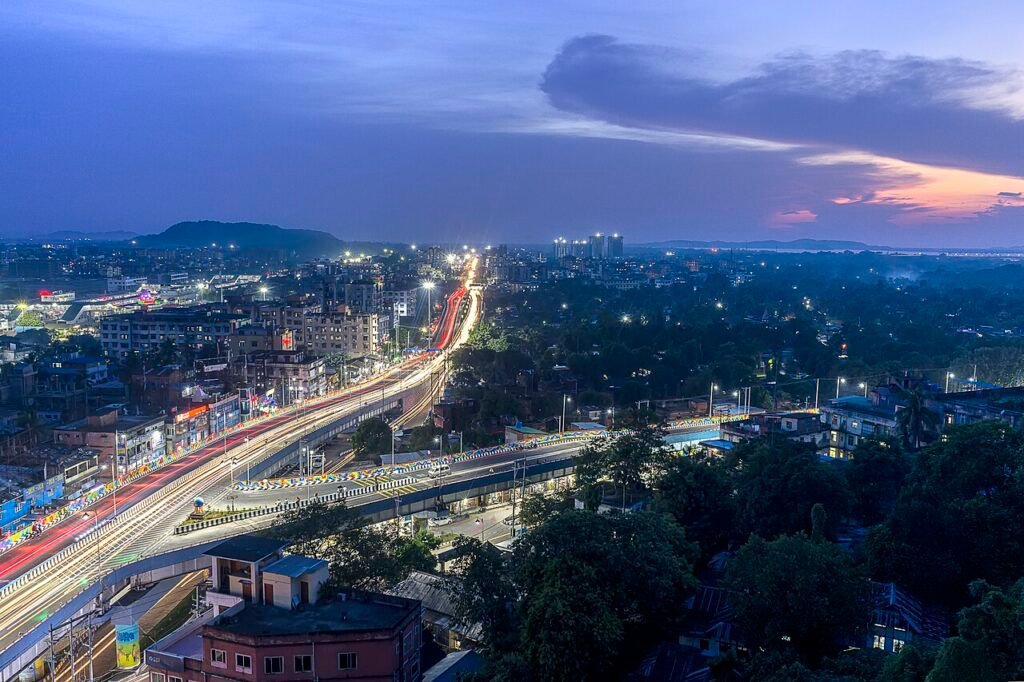
- New mega projects: The article names three flyovers that have changed the city. They are the Maharaj Prithu Flyover on GNB Road, the Nilachal Flyover in Maligaon and the Shraddhanjali Flyover on RG Baruah Road.
- Down-ramp congestion: At the down-ramps at Chandmari and Rajgarh, vehicles leaving the flyover land back in the same unmanaged traffic, the writer notes.
- Broken lifts and footbridges: Footbridges at Khanapara, Ganeshguri, Fancy Bazar and Lachit Nagar suffer from broken lifts and poor upkeep. This makes life hard for elderly people and others who cannot climb stairs easily.
- Footpath hazards: Cracked footpath slabs and uncovered drains push walkers out onto the busy road.
- Core complaint: The writer says the city sees the opening ceremony as the finish of a project, when it should be the start of its working life.
Core Concepts & Static GK
- Implementation gap: The article cites Christopher Pollitt and Geert Bouckaert, two scholars of public management. They separate government action into four levels. These are what is discussed, what is formally decided, what is actually practised and what finally produces results. These levels do not always match.
- Completion is not delivery: A project can be announced and completed and still give no lasting benefit in practice. Without regular upkeep and enough money, a structure may stay standing but slowly stop serving its purpose.
- Co-production: Tony Bovaird (2007) uses the term co-production for the shared role of citizens, businesses and organisations in keeping public spaces usable.
- Universal accessibility: It means infrastructure that wheelchair users, pregnant women, senior citizens and visually impaired people can all use. A footbridge with only steep stairs or broken lifts shuts them out.
- Accessibility features: The 2021 Harmonised Guidelines and Standards for Universal Accessibility list ramps no steeper than 1:12, handrails at two different heights and tactile paving. Tactile paving is a textured floor surface that guides blind and low-vision people along a safe path.
Constitutional & Legal Framework
- Older law: The Persons with Disabilities (Equal Opportunities, Protection of Rights and Full Participation) Act, 1995 was mainly welfare-based. According to the Government of India, it set no accessibility standards and no deadlines for compliance.
- RPwD Act, 2016: The Rights of Persons with Disabilities Act, 2016 came into force in April 2017. It makes barrier-free access a legal right, not a charitable extra, and non-compliance can attract fines and imprisonment.
- UN convention: India ratified the UN Convention on the Rights of Persons with Disabilities (UNCRPD) in 2007. Article 9 of this convention is titled Accessibility.
- Section 40: The Central Government frames rules on accessibility standards, in consultation with the Chief Commissioner for Persons with Disabilities.
- Section 44: No establishment can get permission to build a structure if its plan does not follow the Section 40 rules. It also cannot get a completion certificate or occupy the building unless it followed the rules.
- Section 45: Existing public buildings must be made accessible within a period not exceeding five years from the notification of the rules. The Centre may give States more time, case by case.
- Section 46: Service providers, government or private, must follow the accessibility rules within two years of their notification.
- Supreme Court, 8 November 2024: In Rajive Raturi v. Union of India, the Court held Rule 15(1) of the RPwD Rules, 2017 ultra vires the Act. It told the Union to frame mandatory accessibility rules under Section 40 within three months.
Institutional Machinery
- MoHUA: The Ministry of Housing and Urban Affairs (MoHUA) laid down the accessibility norms for buildings and public spaces. These are in the Harmonised Guidelines and Standards for Universal Accessibility in India, 2021.
- Guidelines authorship: The 2021 guidelines were released by the Central Public Works Department (CPWD) under MoHUA. They revise the 2016 Harmonised Guidelines and Space Standards for Barrier-Free Built Environment for Persons with Disabilities and Elderly Persons.
- Chief Commissioner: The Chief Commissioner for Persons with Disabilities must be consulted when the Centre frames accessibility rules under Section 40.
- Local authorities: Under Section 45, the government and local authorities must publish a prioritised action plan for accessibility. It covers their buildings and spaces that give essential services, such as hospitals, schools, railway stations and bus stops.
Schemes & Initiatives
- Accessible India Campaign: Also called Sugamya Bharat Abhiyan, it was launched by the Prime Minister on 3 December 2015, the International Day of Persons with Disabilities. It is run by the Department of Empowerment of Persons with Disabilities (DEPwD).
- Three pillars: The campaign works on the built-up environment, the transportation system and the information and communication technology ecosystem.
- Sugamya Bharat App: This crowdsourcing mobile app, launched on 2 March 2021, lets persons with disabilities report inaccessible places anywhere in India.
Assam & Northeast Linkages
- Guwahati hotspots: Chandmari and Rajgarh are named for down-ramp congestion, while Khanapara, Ganeshguri, Fancy Bazar and Lachit Nagar are named for broken lifts and poorly kept footbridges.
- State Commissioner: The Office of the State Commissioner for Persons with Disabilities, Assam was first set up under the 1995 Act. It now works under Section 79 of the 2016 Act.
- State rules: The Assam Social Justice and Empowerment Department lists The Rights of Persons with Disabilities (Assam) Rules, 2019 on its website.
Prelims Trap Zones (Watch out for)
- Ramp slope trap: The standard is a ramp slope no steeper than 1:12. A steeper ratio such as 1:8 breaks the standard, while a gentler one such as 1:15 is allowed.
- Handrail trap: The guidelines ask for handrails at two different heights, not at a single height.
- Section number trap: Section 44 covers building permission and completion certificates, Section 45 covers existing public buildings (five years) and Section 46 covers service providers (two years).
- Scholar trap: Pollitt and Bouckaert are cited for the gap between talk, decision, practice and results, while Tony Bovaird (2007) is cited for co-production.
- Issuing body trap: The 2021 accessibility guidelines came from CPWD under MoHUA, while the Accessible India Campaign is run by DEPwD under the Ministry of Social Justice and Empowerment.
- Date trap: The Accessible India Campaign began on 3 December 2015, before the RPwD Act of 2016. The Act came into force only in April 2017.
Introduction
Guwahati has added big flyovers such as the Maharaj Prithu Flyover on GNB Road, the Nilachal Flyover in Maligaon and the Shraddhanjali Flyover on RG Baruah Road. Yet broken lifts at footbridges in Khanapara and Ganeshguri show that building a structure is easier than keeping it usable. This gap between completion and daily service is a governance question and also a rights question under the Rights of Persons with Disabilities (RPwD) Act, 2016.
The Implementation Gap in Urban Infrastructure
- Inauguration mindset: In the writer’s view, the city treats the opening of a flyover or footbridge as the finish line, so upkeep gets little planning.
- Levels that drift apart: Using Pollitt and Bouckaert, the article shows how talk, formal decisions, daily practice and final results can fail to match in Guwahati’s projects.
- Completion without benefit: A project can be announced and finished and still fail to give lasting benefits to the people who use it.
- Maintenance needs money: Without regular upkeep and enough funds, a structure may stand but slowly stop doing the job it was built for.
- Routine tasks: The writer lists the work that keeps a structure useful, such as fixing lifts, cleaning drains, changing street lamps and keeping walkways safe.
- Congestion shifted, not solved: At the Chandmari and Rajgarh down-ramps, flyover traffic falls back into unmanaged jams, so the writer argues the flyover only moves the problem along.
Universal Accessibility as a Legal Right
- Exclusion by design: The writer argues that a footbridge with only steep stairs or a dead lift sends a message of exclusion. It tells wheelchair users, expectant mothers, the elderly and blind residents that the city was not made for them.
- Enforceable right: Citing the RPwD Act, 2016 and Article 9 of the UN convention, the article holds that barrier-free access is a legal right, not charity.
- Mandatory building norms: Section 44 of the Act links building permission and completion certificates to the accessibility rules framed under Section 40.
- Technical standards: The 2021 Harmonised Guidelines expect ramps no steeper than 1:12, handrails at two heights and tactile paving.
- Court backing: In Rajive Raturi v. Union of India (8 November 2024), the Supreme Court asked the Union to frame mandatory rules under Section 40.
- Campaign support: The Accessible India Campaign targets the built-up environment, transport and information and communication technology.
Co-production: Citizens’ Shared Responsibility
- Shared duty: Following Bovaird (2007), the article says citizens, businesses and organisations all share the duty of keeping public spaces usable.
- Clear paths: Citizens should keep footpaths, tactile paving and wheelchair ramps free of obstructions.
- Traders: Shopkeepers should not spread their goods over walkways and ramps.
- Vehicle owners: Parked vehicles should stay off ramps and footpaths.
- Advertisers: Unauthorised advertising boards and banners should not block accessible routes.
- Cleanliness: Citizens should not spit, litter or dump waste in these spaces.
Challenges
- No public maintenance plan: The writer’s demand implies that new structures open without a public statement on inspection duties, repair funding and the time allowed to fix faults.
- Broken lifts: Lifts at footbridges in Khanapara, Ganeshguri, Fancy Bazar and Lachit Nagar are out of order, which shuts out people with limited mobility.
- Damaged footpaths: Broken slabs and open drain covers force pedestrians to walk on busy roads.
- Weak standards in the rules: The Supreme Court struck down Rule 15(1) of the 2017 Rules in 2024 because it offered guidelines instead of mandatory, binding standards.
- Missed deadlines: The Accessible India Campaign’s first target date of March 2018 for its building, transport and website targets had to be extended more than once.
- Design without users: The writer’s call for input from people with disabilities at the design stage suggests that such consultation is often missing today.
- Road-first planning: According to the writer, new roads are treated as stand-alone answers to traffic jams and are not planned with buses and footpaths.
Way Ahead
- Maintenance plan before opening: Before a new flyover or footbridge opens, the responsible authority should publish three things. These are who will inspect it, who will pay for repairs and the time limit for fixing faults.
- Inclusive design: Projects should consult people with disabilities and the groups that speak for them right from the design stage.
- Universal design standards: New projects should build in lifts, ramps, tactile paving, handrails and safe walking paths, as the 2021 guidelines expect.
- Regular audits: Existing footbridges and footpaths should get regular accessibility and safety audits. Faults found, such as dead lifts, cracked surfaces and uncovered drains, should be repaired within fixed deadlines.
- One complaint channel: Residents should have a single simple way to report faults and obstructions, and the agency should publish what action it took.
- Action plan under the Act: The government and local authorities should publish the prioritised accessibility action plan. Section 45 of the RPwD Act requires it for buildings giving essential services.
- Integrated planning: Road projects should be planned as one package with dependable buses and safe footpaths, not as separate fixes.
Conclusion
Guwahati’s flyovers will serve the city only if lifts work, ramps meet the 1:12 standard and footpaths stay clear. The legal duty already exists in the RPwD Act, 2016, so the real task now is a published maintenance plan, regular audits and steady citizen cooperation. As the writer puts it, development should be judged by safe and accessible daily travel for everyone, not by the number of inaugurations.
APSC Prelims MCQs
Practice questions on this topic
Q1. Consider the following statements about the Rights of Persons with Disabilities Act, 2016:
(i) Section 44 bars building permission for a structure whose plan does not follow the accessibility rules framed under Section 40.
(ii) Section 45 gives existing public buildings a period not exceeding five years from the notification of the rules to become accessible.
(iii) Section 46 gives service providers three years from the notification of the rules to provide accessible services.
Which of the statements given above is/are correct?
- (a) (i) only
- (b) (i) and (ii) only
- (c) (ii) and (iii) only
- (d) (i), (ii) and (iii)
Show answer
Answer: (b) Explanation: Statement (i) is correct because Section 44 refuses building permission, and later a completion certificate, to any plan that ignores the rules framed under Section 40. Statement (ii) is correct because Section 45 allows existing public buildings up to five years from the date the rules were notified. The Centre may give States more time case by case. Statement (iii) is wrong because Section 46 gives service providers, government or private, two years, not three. So only (i) and (ii) are correct. Value addition: In Rajive Raturi v. Union of India (8 November 2024), the Supreme Court held Rule 15(1) of the RPwD Rules, 2017 ultra vires the Act and asked for mandatory rules under Section 40.
Q2. Arrange the following disability-related laws and initiatives of India in chronological order:
(i) Harmonised Guidelines and Standards for Universal Accessibility in India (2021 edition)
(ii) Accessible India Campaign (Sugamya Bharat Abhiyan)
(iii) Persons with Disabilities (Equal Opportunities, Protection of Rights and Full Participation) Act
(iv) Rights of Persons with Disabilities Act
Select the correct answer using the codes given below:
- (a) (iii), (ii), (iv), (i)
- (b) (iii), (iv), (ii), (i)
- (c) (ii), (iii), (iv), (i)
- (d) (iii), (ii), (i), (iv)
Show answer
Answer: (a) Explanation: The Persons with Disabilities Act came first in 1995. The Accessible India Campaign followed on 3 December 2015, then the RPwD Act in 2016, and the CPWD’s Harmonised Guidelines in 2021. So the order is (iii), (ii), (iv), (i). Option (b) wrongly puts the 2016 Act before the 2015 campaign, a common trap because the Act gave the campaign its legal backing later. Option (c) puts the campaign before the 1995 Act. Option (d) places the 2021 guidelines before the 2016 Act. Value addition: The RPwD Act, 2016 came into force in April 2017, and India had ratified the UN Convention on the Rights of Persons with Disabilities in 2007.
Q3. According to the MoHUA accessibility guidelines discussed in the article, what is the steepest ramp slope permitted?
- (a) 1:8
- (b) 1:10
- (c) 1:12
- (d) 1:15
Show answer
Answer: (c) Explanation: The Ministry of Housing and Urban Affairs guidelines of 2021 say ramps should have a slope no steeper than 1:12, so 1:12 is the steepest permitted. Options (a) 1:8 and (b) 1:10 are steeper ratios and break the standard, which makes them unsafe for wheelchair users. Option (d) 1:15 is gentler than the limit, so it is allowed but it is not the steepest permitted slope. The same guidelines ask for handrails at two different heights and tactile paving for people with visual impairments. Value addition: The 2021 guidelines were released by the Central Public Works Department under MoHUA and revise the 2016 Harmonised Guidelines for a barrier-free built environment.
Q4. The Accessible India Campaign (Sugamya Bharat Abhiyan) was launched on which date?
- (a) 3 December 2014
- (b) 3 December 2015
- (c) 3 December 2016
- (d) 3 December 2021
Show answer
Answer: (b) Explanation: The Prime Minister launched the campaign on 3 December 2015, the International Day of Persons with Disabilities, to create a barrier-free environment. Option (a), 2014, is wrong because the campaign did not exist then. Option (c), 2016, is the year of the Rights of Persons with Disabilities Act, so it is a common mix-up. Option (d), 2021, is the year of the universal accessibility guidelines released by CPWD under MoHUA, not the campaign. Value addition: The campaign works on three pillars, which are the built-up environment, the transportation system and the information and communication technology ecosystem. Its Sugamya Bharat App for reporting inaccessible places was launched on 2 March 2021.
Prepare with SuchitraACS
APSC CCE Foundation Programme₹24,999  APSC Prelims Crash Course 2027 (GS + CSAT)₹5,999
 APSC Prelims PYQ Book 2020-2025 (PDF)₹199See the book