APSC Current Affairs: Assam Tribune Notes with MCQs and Answer Writing (12/11/2026)
For APSC CCE and other Assam competitive exam aspirants, staying consistently updated with reliable current affairs is essential for success. This blog provides a well-researched analysis of the most important topics from The Assam Tribune dated 12 November 2026. Each issue has been carefully selected and explained to support both APSC Prelims and Mains preparation, ensuring alignment with the APSC CCE syllabus and the evolving trends of the examination.
 For working professionals and full-time aspirantsAPSC CCE Foundation Programme₹24,999
Current Affairs Notes
From The Assam Tribune, 12 November 2026
Four-in-One Yarn Winding Machine for Handloom Weavers
Open this topic as a separate page, with its MCQs →
Syllabus Mapping
- Prelims: GS Paper I (Current events of State/National importance; General issues on science and technology in everyday life; Economic and Social Development).
- Mains: GS Paper III (Indian Economy: inclusive growth, employment, science and technology applications); GS Paper V (Assam: handloom and handicraft economy, rural livelihoods).
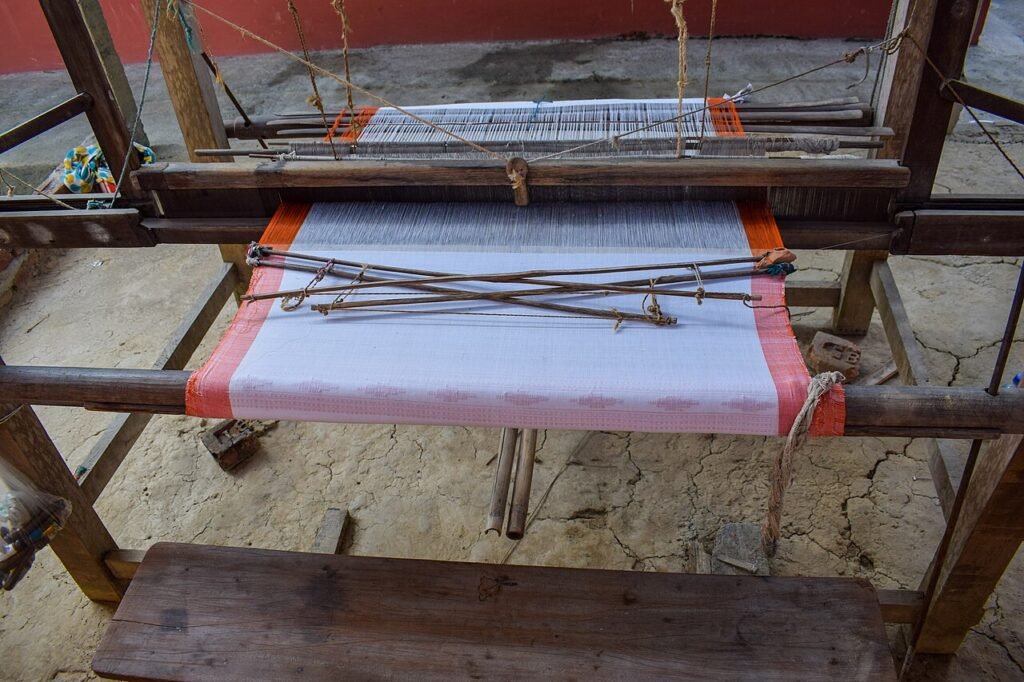
Why in News? The Rural Technology Action Group (RuTAG) at the Indian Institute of Technology (IIT) Guwahati has developed a four-in-one yarn winding machine for handloom weavers. It has been field tested in Assam and Meghalaya, and the report is datelined Guwahati, 11 November.
Current Context (The Trigger)
- New machine: RuTAG IIT Guwahati has built a four-in-one yarn winding machine to ease the tiring preparatory steps of handloom weaving.
- Four operations in one unit: The machine does hank-to-bobbin winding, bobbin-to-pirn winding, doubling and cone-to-bobbin winding.
- Field trials: The machine was tested at several weaving locations in Assam and Meghalaya. Weavers who took part gave feedback on its convenience and efficiency.
- Old method: Most weaving households still wind yarn by hand, often on a manually operated charkha. Depending on working conditions, hand methods may handle only about 1-2 kg of yarn a day.
- Next step: Commercialisation of the machine is in process. Weavers can contact RuTAG for procurement and demonstration.
Core Concepts & Static GK
- Yarn winding: It is a preparatory step in which yarn is moved from hanks, cones or other packages onto bobbins and pirns. This lets the yarn feed smoothly during weaving.
- Doubling: Two or more ends of yarn are wound together onto one package. Where needed, this yarn then goes for twisting.
- Cone-to-bobbin winding: Yarn is shifted from a large cone onto smaller bobbins suited to the next operation. The team kept this option because market yarn now comes in cone or reel form too.
- Rural Technology Action Group (RuTAG): It is an initiative of the Office of the Principal Scientific Adviser (PSA) to the Government of India, running since 2004. It offers demand-driven science and technology support to rural areas.
- RuTAG objectives: It aims to develop technologies from socio-economic data, validate prototypes and commercialise them. It works with stakeholders such as non-governmental organisations, self-help groups, startups and incubators.
Constitutional & Legal Framework
- Handlooms Act, 1985: The Handlooms (Reservation of Articles for Production) Act, 1985 is Act No. 22 of 1985. It lets the Centre reserve articles for production on handlooms only.
- Reserved articles: The Act reserves 11 specified textile articles for handloom production.
- Enforcement: Government agencies inspect powerloom units to stop them from making items reserved for handlooms.
- Geographical Indications Act, 1999: It protects registered geographical indications from unauthorised use. Registered users may approach the police against illegal manufacture or marketing.
Institutional Machinery
- RuTAG 1.0: Launched in 2004, it set up centres at seven IITs between 2004 and 2013. IIT Madras came first in 2004, IIT Guwahati followed in 2005 and IIT Kanpur was last in 2013.
- RuTAG 2.0: It was launched in April 2023. Seven Project Implementing Agencies run it, and IIT Guwahati is one of them.
- Programme head: Dr Rakesh Kaur, Adviser/Scientist ‘G’, is the RuTAG Programme Head and Coordinator.
- Scheme delivery: Under the National Handloom Development Programme, implementing agencies include weavers’ cooperative societies, federations, Handloom Producer Companies and participating banks.
Schemes & Initiatives
- National Handloom Development Programme (NHDP): It was formulated for 2021-22 to 2025-26 and takes a need-based approach to handloom development. It continues in 2026-27 with a budget allocation of Rs 205 crore.
- Small Cluster Development Programme: It funds small handloom clusters with up to Rs 2 crore. The help covers better looms, lighting, worksheds, design, product development and marketing.
- Raw Material Supply Scheme: It reimburses freight on all types of yarn. It also gives a 15% price subsidy on specified yarns, within quantity limits.
- Handloom Weaver MUDRA scheme: It offers handloom loans at a concessional 6% interest for three years. Government interest subvention of up to 7% supports it.
- Handloom Mark: It was launched in 2006 to give handwoven goods a collective identity and assure buyers that the product is handwoven.
Reports, Indices & Data
- Fourth All India Handloom Census, 2019-20: It recorded about 31.45 lakh handloom households. It counted 35.22 lakh weavers and allied workers.
- Allied workers: Of the workers counted, 8.48 lakh were allied workers doing pre-loom and post-loom jobs such as winding, warping, dyeing and calendaring.
- Women in the workforce: Women number 25.46 lakh, which is more than 72% of all workers in weaving and allied work.
- Looms: The census recorded 28.20 lakh looms. Of these, 25.30 lakh were in rural areas and 2.90 lakh in urban areas.
- Census history: India has held four handloom censuses, in 1987-88, 1995-96, 2009-10 and 2019-20.
Assam & Northeast Linkages
- Largest weaver base: The 2019-20 census table shows Assam with 11,07,428 handloom weavers, the highest among all States and Union Territories. West Bengal is next with 3,66,656.
- Allied workers in Assam: Assam also has 1,76,453 allied workers. These people do pre-loom and post-loom jobs such as winding, warping and dyeing.
- Meghalaya: The census table lists 41,221 handloom weavers in Meghalaya, the second State where the machine was tested.
- Other Northeast States: Manipur has 2,12,481 handloom weavers and Tripura has 1,11,927, as per the same census table.
- IIT Guwahati centre: The RuTAG centre at IIT Guwahati dates from 2005, the second of the seven RuTAG 1.0 centres.
Prelims Trap Zones (Watch out for)
- Agency Trap: RuTAG belongs to the Office of the Principal Scientific Adviser, not the Ministry of Textiles. IIT Guwahati is only one of its implementing agencies.
- Operation Trap: The four functions are hank-to-bobbin, bobbin-to-pirn, doubling and cone-to-bobbin winding. Spinning and dyeing are not among them.
- Status Trap: The machine has been field tested, and its commercialisation is still in process. It is not yet on the market.
- Location Trap: Trials were held in Assam and Meghalaya. Other north-eastern States are not named in the report.
- Number Trap: The Act reserves 11 articles for handlooms. The 1-2 kg a day figure refers to manual winding, not to the new machine.
Introduction
A report datelined Guwahati, 11 November says RuTAG IIT Guwahati has developed one machine that does four yarn winding jobs. Weavers in Assam and Meghalaya have already tried it. Assam has the most handloom weavers of any State, 11,07,428 in the 2019-20 census. So a small gain in the preparatory stage matters to many homes. The test is whether such a tool can cut drudgery without changing the craft itself.
Why Yarn Preparation Needs Attention
- Essential first step: Winding moves yarn onto bobbins and pirns so that it handles smoothly in the loom. Good winding leads to better fabric.
- Slow output: Hand methods may process only about 1-2 kg of yarn a day, depending on working conditions. A weaver who spends hours winding has less time to weave.
- Health strain: Winding by hand is repetitive work done for long hours in poor postures. This has raised worries about weavers’ health.
- Hidden workforce: Winding is an allied activity. The census counted 8.48 lakh allied workers, and Assam alone has 1,76,453 of them.
- Women carry the load: More than 72% of the handloom workforce is women. Any drudgery in preparation falls mostly on them.
What the Four-in-One Machine Offers
- One unit, four jobs: A weaver need not own separate equipment for each winding step. The same machine can do hank, pirn, doubling and cone winding work.
- Built from experience: RuTAG earlier made a hank-to-bobbin machine and a pirn winding machine. The team found the two jobs are not needed at the same time, so one machine could do both.
- Fits market yarn: Yarn is now sold on cones and reels. The cone or reel provision keeps the machine useful for what weavers actually buy.
- Better posture: According to Prof Sashindra K Kakoty, the machine reduces body pain because awkward postures are not needed.
- Craft stays intact: The machine only speeds up yarn preparation. The weaving itself stays traditional, as Prof Kakoty explained.
- Wider use: The team says power loom users can also use it to cut preprocessing time.
Handloom Sector: Scale and Support
- Large livelihood base: The 2019-20 census counted 35.22 lakh handloom weavers and allied workers across India.
- Rural and women-led: Nearly nine out of ten handlooms are in rural India, and women are over 72% of workers.
- Assam leads: Assam has 11,07,428 weavers, ahead of West Bengal at 3,66,656.
- Productivity schemes work: Under the Small Cluster Development Programme, workshed beneficiaries saw average daily earnings rise from Rs 328 to Rs 465.
- Technology raises income: Electronic jacquard users reported average monthly income rising from Rs 9,600 to Rs 15,000.
- Market protection: The Handlooms Act reserves 11 articles for handlooms, and the Handloom Mark had 29,402 registrations by 30 June 2026.
Government Support Available to Weavers
- Cluster help: Small clusters can get up to Rs 2 crore for looms, worksheds and marketing. From 2021-22 to June 2026, 357 clusters were sanctioned.
- Mega clusters: A mega handloom cluster can receive central help of up to Rs 30 crore over five years.
- Credit: Weaver MUDRA loans carry a concessional 6% interest. More than 40,000 loans worth about Rs 280 crore were sanctioned from 2021-22 to June 2026.
- Insurance: Pradhan Mantri Jeevan Jyoti Bima Yojana gives Rs 2 lakh on death from any cause. Pradhan Mantri Suraksha Bima Yojana gives Rs 2 lakh for accidental death or permanent total disability.
- Yarn support: The Raw Material Supply Scheme gives a 15% subsidy on specified yarns.
- Recognition: The Sant Kabir Handloom Award carries Rs 3.5 lakh and the National Handloom Award carries Rs 2 lakh.
Challenges
- Not yet commercial: The machine is still being commercialised, so most weavers cannot buy it today.
- Cost and access: Many weaving households work on small incomes. The report gives no price, so affordability is unknown.
- Small field sample: Trials covered several locations in two States. Wider testing across other weaving areas is still needed.
- Shared tool problem: Allied workers, who do jobs like winding, were 8.48 lakh in the census. A machine owned by one household may not reach them unless sharing is organised.
- Other bottlenecks remain: Winding is only one preparatory step. Warping, dyeing and marketing still need support.
- Competition from powerlooms: The Handlooms Act reserves only 11 articles, and agencies must keep inspecting powerloom units to enforce it.
Way Ahead
- Fast commercial launch: RuTAG and its manufacturing partner should set a clear price and delivery timeline, as commercialisation is already in process.
- Link with cluster schemes: The Ministry of Textiles can allow such machines as an eligible item. This can be done under Small Cluster Development Programme support for looms and accessories.
- Shared winding centres: Weavers’ cooperatives and Handloom Producer Companies can buy one machine per cluster and run it as a common facility.
- Training with demonstration: RuTAG already offers demonstration to weavers, and the Assam government’s handloom department can add hands-on training at cluster level.
- Women-focused rollout: Distribution should reach women winders and allied workers first, since they are the majority of the workforce.
- Feedback loop: Further trials in more Assam districts and in Meghalaya should feed design changes before large-scale production.
Conclusion
The four-in-one winding machine tackles a small but real pain point in a sector where Assam has more weavers than any other State. Its value will be judged by price, reach to women winders and whether it is bought through cluster schemes, not by the prototype alone.
Carbon Sequestration as a Development Strategy for Assam
Open this topic as a separate page, with its MCQs →
Syllabus Mapping
- Prelims: GS Paper I (General issues on Environment ecology, Bio-Diversity and Climate Change that do not require subject specialization; Current events of State/National importance).
- Mains: GS Paper III (Conservation, environmental pollution and degradation; Economic Development); GS Paper V (Natural Resources, Forests and Environment of Assam).
Why in News? An opinion article in the Assam Tribune (12 November 2026) argues for a State Carbon Sequestration Mission. It says Assam should treat carbon sequestration as a development strategy. The writer links the idea to India’s enhanced Nationally Determined Contribution for 2031-35. The Union Cabinet approved it in March 2026.
Current Context (The Trigger)
- Enhanced NDC: The Union Cabinet approved India’s Nationally Determined Contribution (NDC) for 2031-35 on 25 March 2026. It is to be communicated to the United Nations climate convention.
- Carbon sink goal: India has committed to create a carbon sink of 3.5-4 billion tonnes of CO2 equivalent. It will come through forest and tree cover by 2035, against the 2005 baseline.
- Progress so far: The writer says India had already created an additional sink of 2.44 billion tonnes of CO2 equivalent between 2005 and 2022. The government’s figure, released with the new NDC, is 2.29 billion tonnes created between 2005 and 2021.
- Assam’s forest cover: The writer cites the latest India State of Forest Report (ISFR) for 28,313.55 sq km of forest cover in Assam. That is 36.10% of the State’s geographical area in ISFR 2023.
- The writer’s ask: He wants a State Carbon Sequestration Mission with district-level targets. He also wants a carbon baseline for every district and satellite monitoring backed by field checks.
- Who wrote it: The article is by the Director of DIB Bioenergy LLP, who is also Secretary of the Policy Group For People’s Rights. These are his views, not a government proposal.
Core Concepts & Static GK
- Carbon sequestration: The writer uses the term for storing carbon through forests, soil carbon, biochar and wetland restoration. In his view it adds to emission cuts and cannot replace them.
- Carbon dioxide removal (CDR): The Intergovernmental Panel on Climate Change (IPCC) uses CDR for human activities that remove CO2 from the air. The carbon is then stored durably in land, ocean or geological reservoirs, or in products.
- Biochar: IPCC texts describe it as a stable, carbon-rich material made by heating biomass with very little oxygen. It is added to soil. The writer says it is no magic solution, because its value depends on the feedstock, the process and the final use.
- Pyrolysis: This is the heating of biomass with little or no oxygen, so it chars instead of burning. The writer says farm residue and bamboo waste can be turned into biochar this way.
- Activated carbon: It is a highly porous material used to clean water, treat wastewater and remove pollutants. The writer calls it a higher-value industrial product. Its climate benefit depends on how the feedstock is sourced and processed.
- NDC: A Nationally Determined Contribution is a country’s climate pledge under the Paris Agreement of the United Nations Framework Convention on Climate Change (UNFCCC).
- Net zero target: India aims to reach Net-Zero emissions by 2070. The writer sees the sink target as part of the path to that goal.
- Carbon credit tests: The writer wants credits only for projects whose additionality, permanence, leakage and measurement pass independent checks. Additionality means the carbon gain would not have happened without the project.
Constitutional & Legal Framework
- Energy Conservation (Amendment) Act, 2022: It amended the Energy Conservation Act, 2001, to give the Indian Carbon Market a legal base. Clause (w) of section 14 lets the Centre, after consulting the Bureau of Energy Efficiency, specify a carbon credit trading scheme.
- Carbon Credit Trading Scheme (CCTS): The Ministry of Power notified it by S.O. 2825(E) on 28 June 2023. An amendment, S.O. 5369(E) of 19 December 2023, added the Offset Mechanism.
- Green Credit Rules, 2023: The Centre notified them on 12 October 2023 under the Environment (Protection) Act, 1986.
- Bamboo and the Indian Forest Act, 1927: Bamboo is a grass by botany, but the Act treated it as a tree. So even bamboo grown on private land needed a transit permit. The Indian Forest (Amendment) Ordinance, 2017, promulgated on 23 November 2017, removed the word “bamboos” from the definition of tree in section 2(7).
Institutional Machinery
- Bureau of Energy Efficiency (BEE): It is the Administrator of the Indian Carbon Market under the CCTS. It issues Carbon Credit Certificates.
- Grid India: It works as the Registry of the market and keeps the record of certificates.
- National Steering Committee: The Secretary of the Ministry of Power chairs it. The Secretary of the Ministry of Environment, Forest and Climate Change (MoEFCC) is its co-chairperson.
- Indian Council of Forestry Research and Education (ICFRE), Dehradun: It is the Administrator of the Green Credit Programme.
- Forest Survey of India (FSI): It publishes the India State of Forest Report. The 2023 edition has a separate chapter on Assam with district-wise tables.
Schemes & Initiatives
- Compliance Mechanism: Obligated industries must meet Greenhouse Gas Emission Intensity (GEI) targets. Those who beat their targets earn Carbon Credit Certificates, which they can sell to those who miss.
- Offset Mechanism: Non-obligated entities can register projects that reduce, remove or avoid emissions. They can then get Carbon Credit Certificates for them.
- Compliance coverage: A notification of 13 January 2026 added petroleum refineries, petrochemicals, textiles and secondary aluminium. It covered 208 more units and took the total to 490 obligated entities.
- Green Credit Programme: It rewards voluntary environmental actions, mainly tree plantation on degraded forest land. Under the norms revised in August 2025, credits come only after five years of restoration work and a minimum canopy density of 40 per cent.
Reports, Indices & Data
- Forest classes in Assam: ISFR 2023 puts Very Dense Forest at 3,189.71 sq km and Moderately Dense Forest at 9,764.54 sq km. Open Forest is 15,359.30 sq km. Together they make 28,313.55 sq km.
- Scrub: The same report lists 240.93 sq km of scrub in Assam. Scrub is not counted as forest cover.
- Inside and outside recorded forest: Using Green Wash boundaries, 19,696.73 sq km of Assam’s forest cover lies inside the recorded forest area. Another 8,616.82 sq km lies outside it.
- Change since 2021: ISFR 2023 shows Assam’s forest cover 11.76 sq km lower than in the 2021 assessment.
- Area base: The report gives Assam’s geographical area as 78,438 sq km. Its district tables cover 33 districts.
Assam & Northeast Linkages
- Natural assets: The writer lists forests, bamboo, wetlands, farm landscapes and highly productive ecosystems as Assam’s routes to store carbon.
- Threats to the store: He names forest degradation, land-use change, fires, encroachment and the loss of trees outside forests.
- Forest outside recorded areas: In ISFR 2023, 8,616.82 sq km of Assam’s forest cover is outside the recorded forest area. The writer warns that the loss of trees outside forests can weaken the State’s sink.
- Bamboo agency: The State Bamboo Development Agency (SBDA), Assam, based at Udyog Bhawan, Guwahati, implements the National Bamboo Mission in the State.
Prelims Trap Zones (Watch out for)
- Baseline Trap: The 2035 sink target is measured against 2005, not 2015 or 2030.
- Old vs New NDC Trap: India’s first NDC of 2015 set a sink of 2.5-3 billion tonnes by 2030. The 2031-35 NDC raises it to 3.5-4 billion tonnes by 2035.
- Figure Trap: 3.5-4 billion tonnes is the target. The 2.29 billion tonnes (official, 2005-2021) and 2.44 billion tonnes (the writer, 2005-2022) are what has already been created.
- Percentage Trap: Assam’s forest cover is 36.10% of its geographical area, not of its recorded forest area.
- Class Trap: Open Forest (15,359.30 sq km) is Assam’s largest forest class, not Very Dense Forest (3,189.71 sq km).
- Body Trap: BEE is the Administrator of the carbon market and Grid India is its Registry. ICFRE, not BEE, runs the Green Credit Programme.
- Substitute Trap: The writer says sequestration adds to emission cuts and does not replace them.
Introduction
In March 2026 the Union Cabinet approved a 2031-35 climate pledge that includes a carbon sink of 3.5-4 billion tonnes of CO2 equivalent by 2035. Assam holds 28,313.55 sq km of forest cover, which is 36.1% of the State’s area, so it can add much to that goal. A writer in the Assam Tribune argues that the State must turn this natural stock into a planned development strategy.
Why Sequestration Matters Now
- Complement to cuts: The writer accepts that solar power, electric vehicles and green hydrogen are essential. But he says the carbon already in the air also needs attention.
- IPCC view: The writer points out that the IPCC counts carbon dioxide removal as part of the pathways. These pathways limit warming to 1.5 or 2 degrees Celsius.
- Higher national target: The 2031-35 NDC raises the sink goal to 3.5-4 billion tonnes of CO2 equivalent by 2035. The writer says this raises the stakes for States like Assam.
- Wider climate pledge: The same NDC aims to cut the emissions intensity of GDP by 47 per cent by 2035 from 2005. It also targets 60 per cent non-fossil power capacity, on the way to Net-Zero by 2070.
- Global shift: The writer notes that countries now look at how much carbon they can remove and store, not just at how much they emit.
- Economic angle: The writer wants carbon work to bring rural income. Then it becomes more than an accounting exercise.
Assam’s Natural Advantage
- Large forest stock: ISFR 2023 records 28,313.55 sq km of forest cover in Assam. That is 36.10% of the State’s area.
- Mix of forest quality: Of this, 3,189.71 sq km is very dense forest and 9,764.54 sq km is moderately dense forest. Another 15,359.30 sq km is open forest.
- Dense core is protected land: ISFR 2023 places 2,833.31 sq km of Assam’s very dense forest inside the recorded forest area. The writer says Assam’s forests have considerable carbon density.
- Bamboo and wetlands: The writer lists bamboo resources and wetlands next to forests as storage routes. Bamboo grown outside forests has been free of felling and transit permits since the 2017 change to the forest law.
- Trees outside forests: About 8,616.82 sq km of Assam’s forest cover lies outside the recorded forest area. The writer warns that loss of such trees can weaken the sink.
- The paradox: The writer says Assam has a large carbon reservoir, but it will not protect itself. He asks why the State has not pursued sequestration as a major economic strategy.
Beyond Tree Planting: A Portfolio of Methods
- Limits of planting: A tree takes in carbon as it grows. That carbon can return to the air through decay or burning, so planting alone is not enough.
- Protect natural forests: The writer puts protection and restoration of natural forests first in his list of methods.
- Agroforestry and soil: He adds agroforestry and better soil management. Both store carbon on working farms.
- Bamboo systems: Bamboo cultivation is another method he lists. The 2017 amendment to the Indian Forest Act, 1927, made such cultivation outside forests easier.
- Durable carbon products: The writer wants waste biomass turned into biochar with proper safeguards. He notes that the IPCC counts biochar and soil carbon among biological carbon removal methods.
- Activated carbon industry: Bamboo and farm residue could feed a local industry making activated carbon for water treatment. The writer adds a condition: only where it is technically and economically suitable.
From Carbon Sink to Carbon Economy
- State mission: The writer proposes a State Carbon Sequestration Mission. It would set measurable targets in each district for forest restoration, agroforestry, bamboo, soil carbon and use of biomass.
- District baselines: Every district should know its starting carbon stock. It should also have an open system to track changes in that stock.
- Better monitoring: He wants satellite data checked against field measurements, instead of counting plantations alone. FSI already publishes district-wise forest cover for Assam, which can serve as a first layer.
- Incentives for people: Farmers, women’s groups, cooperatives and rural enterprises should be rewarded for agroforestry, bamboo and well-managed biochar units.
- Public demand: The writer suggests that municipalities and industries use certified activated-carbon products to treat water and wastewater. Agriculture departments could back tested biochar use where soils suit it.
- Credible accounting: In his view, a credit should be issued only after independent checks of additionality, permanence, leakage and measurement.
Challenges
- Reversal risk: Carbon in trees can return to the air through decay or burning. Fires and encroachment in Assam raise this risk.
- Forest degradation: The writer lists degradation and land-use change as threats to the existing sink. ISFR 2023 shows Assam’s forest cover 11.76 sq km lower than in 2021, with open forest the largest class.
- Uncertain biochar value: How much carbon biochar stores depends on the feedstock, the production process, its stability and its final use. A poorly made product may give little lasting benefit.
- Weak measurement: Counting plantations does not show how much carbon is stored. Credits without independent checks on additionality, permanence and leakage would lose trust.
- Market built for industry: India’s compliance market covers 490 obligated industrial entities so far. A forest or biochar project in Assam would have to use the Offset Mechanism or the Green Credit Programme instead.
- Long waiting period: Under the Green Credit Programme, credits for plantation on degraded forest land come late. They come only after five years and 40 per cent canopy density.
- Limited tradability: Since the August 2025 revision, green credits from tree plantation cannot be traded or transferred, except between a holding company and its subsidiaries. This limits the income a project can earn.
Way Ahead
- Set up the State mission: The Assam Government should create a State Carbon Sequestration Mission. It should set district targets for forest, agroforestry, bamboo, soil carbon and biomass use. Clear targets make progress measurable.
- Build district baselines: The Environment and Forest Department can start from FSI’s district-wise forest data. It can then add field plots in every district to measure carbon stock.
- Monitor with satellites and field checks: The mission should combine remote sensing with ground measurement. It should also publish the results openly.
- Pay local people: Farmers, women’s groups and cooperatives should get incentives for agroforestry, bamboo and tested biochar units. The State Bamboo Development Agency, which implements the National Bamboo Mission in Assam, can help with bamboo plantations.
- Use public buying power: Municipal bodies can buy certified activated-carbon products for water treatment. This gives rural units a steady market.
- Link to national schemes: Assam can offer degraded forest land under the Green Credit Programme, which ICFRE administers. It can also study the Offset Mechanism of the carbon market, which BEE administers.
- Protect natural forests first: Fire control and anti-encroachment drives keep the existing store safe. This matters more than adding new carbon through fresh planting.
Conclusion
Assam has a large forest stock, and India’s 2035 sink target gives the State a reason to manage it as a carbon asset. The gain will last only if the State protects natural forests, measures carbon honestly and shares the income with farmers and rural groups.
Ahom-Era Jamuna Canal Encroachment and Heritage Protection in Sivasagar
Open this topic as a separate page, with its MCQs →
Syllabus Mapping
- Prelims: GS Paper I (Current events of State/National importance; Indian heritage and culture; History of Assam).
- Mains: GS Paper II (Indian Heritage & Culture: preservation of monuments and heritage); GS Paper V (History, Art, Culture, Tradition & Heritage of Assam, salient features of architecture and monuments; Governance of Assam).
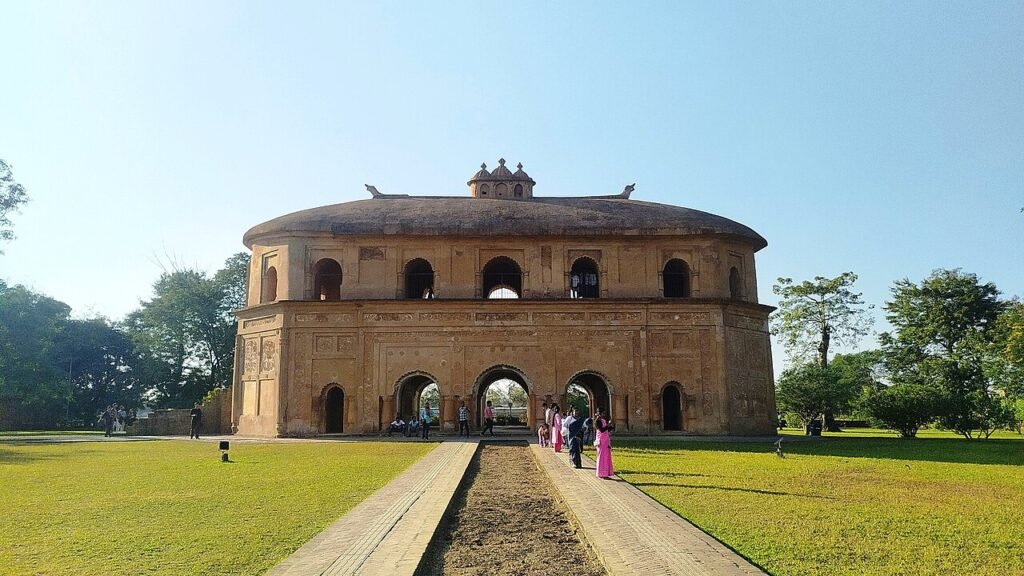
Why in News? On 11 November, the Sivasagar district administration was in the fourth day of a large eviction drive around the Ahom-era Jamuna canal near the Siva Doul. The action followed a long campaign by the All Tai Ahom Students’ Union (ATASU). By then, evictions had been carried out at 35 places.
Current Context (The Trigger)
- Fourth day of the drive: Police and revenue officials joined the district administration in the drive. By 11 November it was in its fourth day and had covered 35 places.
- Scale of the canal: The Jamuna garkhawoi (canal) around the Siva Doul covers 120 bigha, 1 katha and 9 lecha of land. Houses, sheds, garages and other buildings had occupied more than 40 bigha of it.
- Buildings brought down: The targets included a multi-storied Devotee Rest House and Commercial Centre in front of the Siva Doul and the Tai Ahom Kristi Vikash Kendra. A Sulabh toilet block, part of the Assam State Transport Corporation (ASTC) complex and the Assam Cooperative Apex Bank building were also on the list.
- Old notification: In 2004, the district administration notified the land under illegal occupation. It also set up RCC (reinforced cement concrete) boundary pillars, but encroachers kept building after that.
- Who led the work: Additional District Commissioner (ADC) (Revenue) Lukumoni Bora and ADC Rananmoy Bharadwaj led the team. The Revenue Circle Officer and the Executive Officer of the Sivasagar Municipality Board also monitored the drive.
- Start of the campaign: From 28 October, ATASU activists themselves removed fences and sheds on the canal. The official drive came later.
Core Concepts & Static GK
- Garkhawoi: The paper uses this Assamese word for the canal around the Siva Doul. It says the canal was dug between 1731 and 1738 by Bor-raja Ambika, also called Modambika, wife of Swargadeo Siva Singha.
- Siva Singha’s reign: The Archaeological Survey of India (ASI) Guwahati Circle gives the reign of Siba Singha as CE 1714-44. So the canal was dug during his rule.
- Monuments of national importance: Under the central Act of 1958, the Central Government has declared 3,679 monuments and sites as of national importance. These are the centrally protected monuments looked after by the ASI.
- Prohibited area: This is the zone from the limit of a centrally protected monument up to 100 metres in all directions. Only an archaeological officer may build there, except where the Act allows permission.
- Regulated area: This is the next zone, running 200 metres in all directions beyond the prohibited area. The Central Government can notify a larger area for either zone.
- Status of the sites: The ASI Guwahati Circle list of centrally protected monuments includes the Siva Dol at Sivasagar. The Jamuna canal itself is not named on that list, and the paper does not say which law the drive used.
- Measure of land: Bigha, katha and lecha (also spelt lessa) are traditional land units in Assam. One bigha equals 5 katha, and one katha equals 20 lessa.
Constitutional & Legal Framework
- Central Act of 1958: The Ancient Monuments and Archaeological Sites and Remains Act, 1958 protects monuments of national importance. Rules under it were framed in 2011 for the prohibited and regulated areas.
- 2010 amendment: The Amendment and Validation Act, 2010 inserted section 20A (prohibited area) and section 20B (regulated area). These sections are deemed to apply from 16 June 1992.
- Penalties: Building in a prohibited area is punishable with up to two years of imprisonment, or a fine up to one lakh rupees, or both (section 30A). Building in a regulated area without permission, or against the permission given, carries the same punishment (section 30B).
- Older penalty raised: Section 30 punishes acts such as damaging or misusing a protected monument. It earlier allowed up to three months in jail and a fine up to five thousand rupees. The 2010 amendment raised these to two years and one lakh rupees.
- State law: Assam’s own law is the Assam Ancient Monuments and Records Act, 1959, with the Assam Ancient Monuments and Records Rules, 1964. The State Directorate of Archaeology works under them.
- Procedure matters: Rule 3 of the 1964 Rules calls for a detailed enquiry, evidence and a clear area before a site is declared protected. In a ruling reported in November 2025, the Gauhati High Court quashed notices treating Chauldhuwa Pukhuri in Tinsukia as protected because these steps were skipped.
Institutional Machinery
- District administration: The Sivasagar administration carried out the eviction with police, revenue officials and the municipality. ADC Lukumoni Bora said the drive had the full support of the District Commissioner, Mridul Yadav.
- ATASU and civil society: The paper credits a long ATASU campaign for the action. The ADC said local civil society, including ATASU and Raijor Dal activists, cooperated in the drive.
- National Monuments Authority: Section 20F, added in 2010, provides for this Authority. Building in the prohibited or regulated area of a centrally protected monument needs permission from the competent authority on its recommendation.
- ASI Guwahati Circle: This circle has 70 centrally protected monuments and sites. Of these, 55 are in Assam.
- Directorate of Archaeology, Assam: This State body works under the Assam Act of 1959 and the 1964 Rules. In September 2025 its Director asked the Sivasagar district administration to stop damage at the Ahom-era Ligiripukhuri tank.
- Land Advisory Committee: This committee has given new plots at Rupohi Pathar near Jaysagar to the families who hold land pattas (title documents) on the canal land.
Assam & Northeast Linkages
- Sivasagar’s Ahom sites: ATASU’s campaign seeks removal of encroachers from all Ahom-era monuments in Sivasagar district, not only the Jamuna canal.
- Gauhati High Court on Ahom monuments: In a suo motu Public Interest Litigation (PIL) reported on 7 February 2025, a Division Bench directed the State to protect Ahom-dynasty monuments. It asked for the identification survey to be finished, preferably within six months.
- Survey of monuments: The Director of Archaeology told the court that a survey to identify historical monuments was under way. The plan is to assess Ahom sites and then bring them under protected status.
- Ligiripukhuri tank: In September 2025, the Director said this Ahom-era tank in Nazira is not a protected site of the Directorate. She still asked for steps to stop damage to its embankment.
Prelims Trap Zones (Watch out for)
- Who dug the canal: The paper credits Bor-raja Ambika (Modambika), wife of Siva Singha, with the Jamuna canal. Do not mix her with Phuleswari Devi, whom the ASI names as builder of the Sivadol at Gaurisagar.
- Distances: The prohibited area is 100 metres. The regulated area is a further 200 metres beyond it, not 200 metres in total.
- Penalty numbers: The 2010 amendment set two years and one lakh rupees for building in a prohibited area. The old section 30 figures were three months and five thousand rupees.
- Status trap: The Siva Dol at Sivasagar is on the ASI list of centrally protected monuments. The Jamuna canal is not on that list, so do not assume the central 100-metre rule is the basis of this drive.
- Pending case: The drive did not reach every property. The property of two owners was left alone because of a case in the Gauhati High Court (WP(C)/3497/2024).
- Land figure: About 40 bigha of the 120 bigha was occupied. Do not read this as the whole canal being encroached.
Introduction
On 11 November 2026, the Sivasagar administration was in the fourth day of a drive. The drive aims to clear the 120-bigha Jamuna canal, dug by Bor-raja Ambika between 1731 and 1738. The land had been notified as illegally occupied back in 2004, yet over 40 bigha of it came under buildings. The case tests how well Assam protects its Ahom heritage from land pressure and weak follow-up.
Why Heritage Land Gets Encroached
- Weak follow-up after notification: The administration marked the occupied area with concrete pillars in 2004. Even so, buildings, sheds and garages came up on more than 40 bigha of the 120 bigha.
- Private and public builders: The cleared structures were not only private houses. They included a devotee rest house, a toilet block, part of the ASTC complex and a cooperative bank building.
- Religious complexes near monuments: ATASU leader Basanta Gogoi objected to a large pilgrim complex built by the Temple Development Board over the Jamuna waterbody. This shows that even well-meant public projects can eat into a heritage site.
- Land patta issues: According to the ADC, six families with land pattas on the canal land must shift to new plots. A patta given inside a heritage area makes later removal slow and costly.
- Many Ahom sites lack protected status: The Director of Archaeology told the Gauhati High Court that Ahom monuments would be brought under protection only after a survey. Until a site is notified, officials cannot use the protection rules of the State or central law.
- Political and public climate: The paper says the official drive began only once there was no political pressure from above and enough public support. So enforcement on heritage land often waits for the right local mood.
Importance of Protecting Ahom-Era Heritage
- Link to a named queen: The canal is tied to Siva Singha’s queen Ambika, who had it dug in 1731-1738. Losing it would erase a dated piece of Ahom history.
- Setting of the Siva Doul: The canal surrounds the historic Siva Doul in Sivasagar, which is on the ASI list of centrally protected monuments. A clear canal helps the temple keep its old setting.
- Water-body value: The paper describes the Jamuna as a waterbody that the pilgrim complex encroached upon. Clearing it brings back an Ahom-era water body and open space in the middle of the town.
- Community ownership: ATASU, a student body, drove the campaign to remove encroachers from Ahom-era monuments. Local ownership of heritage makes enforcement easier and longer lasting.
- Wider Ahom heritage: The ASI says Queen Phuleswari Devi built the Sivadol at Gaurisagar. Both that temple and the Jamuna canal date to Siva Singha’s reign (CE 1714-44), so they form one historical story.
- Clean setting as a legal idea: For centrally protected monuments, the law keeps a 100-metre prohibited and a further 200-metre regulated area. Clearing the canal land follows the same idea of keeping a monument’s surroundings open. However, the paper does not cite that law for this drive.
Legal and Administrative Measures
| Level | Initiative | Purpose & Impact |
|---|---|---|
| Centre | Ancient Monuments and Archaeological Sites and Remains Act, 1958, amended in 2010 | Protects monuments of national importance; the Centre has declared 3,679 such monuments and sites. |
| Centre | Prohibited area of 100 metres, section 20A | Bars construction near a centrally protected monument except by an archaeological officer or as the Act allows. |
| Centre | Regulated area of 200 metres, section 20B | Allows building only with permission from the competent authority on the National Monuments Authority’s recommendation. |
| Centre | Penalties, sections 30A and 30B | Up to two years of jail or a fine up to one lakh rupees, or both. |
| Assam | Assam Ancient Monuments and Records Act, 1959 and Rules, 1964 | Give Assam its own law for protecting monuments, applied through the State Directorate of Archaeology. |
| Judiciary | Gauhati High Court suo motu PIL, reported February 2025 | Directed the State to protect Ahom monuments and finish the survey, preferably within six months. |
| District | Sivasagar eviction drive, November 2026 | Cleared 35 places by the fourth day; patta-holding families are to shift to new plots at Rupohi Pathar. |
Lessons from the Sivasagar Eviction Drive
- Civil society as a trigger: ATASU activists began removing fences and sheds themselves from 28 October. The official drive followed this pressure.
- Presence of senior officers: Two ADCs, the Revenue Circle Officer and the municipality’s Executive Officer monitored the sites. Such field presence leaves less room for delay.
- Rehabilitation of title holders: The Land Advisory Committee has given plots at Rupohi Pathar near Jaysagar to families holding pattas. This makes the eviction fairer and easier to defend.
- Voluntary exits: ADC Bharadwaj said some people left on their own after the administration’s call. Eviction was carried out only against those who did not move, so persuasion came first.
- Court-bound exceptions: The property of two owners could not be cleared because of a pending Gauhati High Court case. Legal disputes can leave gaps in a clean-up.
- No soft corner for institutions: Basanta Gogoi said he has no soft corner for the pilgrim complex and the Tai Ahom Cultural Complex built over the canal. This signals that even institutional structures are not exempt.
Challenges
- Enforcement lag: Pillars went up in 2004, but more than 40 bigha was still occupied by 2026. Notification without regular checks does not hold the line.
- Unclear legal status: The Jamuna canal is not on the ASI list of centrally protected monuments. The Directorate has also said that many Ahom sites are still to be surveyed and notified.
- Public bodies as encroachers: A cooperative bank building, part of the ASTC complex and a Temple Development Board complex stood on the canal land. Public agencies find it hard to act against each other.
- Rehabilitation burden: The ADC said the six patta-holding families will need some time to shift to Rupohi Pathar. Delays can slow the drive and cause local anger.
- Pending litigation: The Gauhati High Court case WP(C)/3497/2024 stopped action on part of the land. Slow court processes keep that portion of the canal blocked.
- Procedure gaps: In the Chauldhuwa Pukhuri case, reported in November 2025, the High Court quashed protection notices because Rule 3 steps were not followed. Weak paperwork can undo heritage protection in court.
Way Ahead
- Fence and map the canal: The Sivasagar district administration should fence the cleared canal land and record its limits clearly in revenue maps. This stops a repeat of the occupation that followed the 2004 notification.
- Finish the monument survey: The Directorate of Archaeology should complete its survey of Ahom sites, as the Gauhati High Court asked. It should then notify eligible sites under the Assam Act of 1959.
- Follow the Rules strictly: Every notification should carry out the Rule 3 enquiry, evidence and boundary steps. This keeps protection orders safe from challenge, unlike the Chauldhuwa Pukhuri notices.
- Use central law where it applies: Around centrally protected monuments such as the Siva Dol, the ASI and district officials should act against new construction. They can use sections 30A and 30B. Penalties of up to two years in jail discourage repeat violations.
- Speed up the court case: The State should press for an early hearing in WP(C)/3497/2024. This would free the last blocked part of the canal land.
- Complete rehabilitation fairly: The Land Advisory Committee and the district administration should finish shifting the patta-holding families to Rupohi Pathar on a clear timetable. A fair move lowers conflict.
- Involve local groups: ATASU, civil society and the Sivasagar Municipality Board should get a role in regular watch over the canal. Local eyes catch new occupation early.
Conclusion
The Jamuna drive shows that heritage land can be recovered when the public and the district administration act together. Its lasting success depends on fencing, a clear protected status for Ahom sites and fair rehabilitation. Without these, the canal may face the same fate it met after 2004.
Nutrient Based Subsidy for Rabi 2026-27 and Fertiliser Support
Open this topic as a separate page, with its MCQs →
Syllabus Mapping
- Prelims: GS Paper I (Current events of State/National importance; Indian Economy; Assam Economy).
- Mains: GS Paper III (Indian economy and issues of subsidies, agriculture inputs and food security); GS Paper V (Assam economy: agriculture and industry).
Why in News? On 11 November 2026 the Union Cabinet, chaired by Prime Minister Narendra Modi, approved Nutrient Based Subsidy (NBS) rates for phosphatic and potassic (P&K) fertilisers for the rabi season of 2026-27. The tentative outlay is about Rs 62,370 crore. The DAP price stays at Rs 1,350 per 50-kg bag. A new support package for sulphur and sulphuric acid was also cleared.
Current Context (The Trigger)
- Cabinet decision: The proposal came from the Department of Fertilizers. The new rates cover the period from 1 October 2026 to 31 March 2027.
- Size of the subsidy: The tentative rabi requirement is about Rs 62,370.02 crore. This is 50 per cent more than the kharif season that has just ended.
- Gap over last year: The rabi 2026-27 need is about Rs 24,417.73 crore higher than the need for rabi 2025-26.
- New per-kg rates: Nitrogen gets Rs 94.21, phosphorus Rs 66.11 and sulphur Rs 10.42 per kg. Potash stays at Rs 2.38 per kg.
- Reason for the rise: Information and Broadcasting Minister Ashwini Vaishnaw linked the higher fertiliser prices to the West Asia crisis and the Russia-Ukraine war.
- Farmer price held: DAP (diammonium phosphate) will still sell at Rs 1,350 per 50-kg bag.
- Budget pressure: With this decision, the P&K subsidy for 2026-27 has climbed to Rs 1,03,903 crore. That is close to twice the Rs 54,000 crore kept in the budget for NBS.
Core Concepts & Static GK
- What NBS is: Under NBS, the Centre gives a fixed subsidy for every kg of nutrient in notified P&K fertilisers. These include DAP, MOP (muriate of potash), SSP (single superphosphate) and NPK/NPKS complex grades.
- Start of NBS: The NBS scheme has been in place for P&K fertilisers since 1 April 2010.
- Who sets the price: Before 1 April 2010 the Government fixed the MRP (maximum retail price) of P&K fertilisers. Under NBS, companies and importers fix the MRP at a reasonable level, and the Government monitors it.
- Price on the bag: Companies must print the MRP and the subsidy on every bag of P&K fertiliser. Selling above the printed MRP is punishable under the Essential Commodities Act.
- Two rate decisions a year: NBS rates are announced twice a year, once for the kharif season and once for the rabi season.
- Urea is different: Urea is not under NBS. Its MRP is fixed by the Government at Rs 242 per 45-kg bag, excluding neem-coating charges and taxes.
- Urea price is old: Parliamentary replies state that this urea MRP has stayed the same since 1 March 2018. The Centre said again in March 2026 that it had no proposal to raise it.
Institutional Machinery
- Department of Fertilizers: It prepared the NBS proposal that the Cabinet approved. It will also issue the detailed guidelines for the sulphur and sulphuric acid package.
- Union Cabinet: It approves the NBS rates every season. For rabi 2025-26 it did so on 28 October 2025, for the period 1 October 2025 to 31 March 2026.
- Price monitoring: The Government checks that the MRPs fixed by companies stay reasonable. An inter-ministerial committee also reviews P&K fertiliser prices in its meetings.
Schemes & Initiatives
- DAP special provisions: The Cabinet extended the special DAP provisions to Triple Superphosphate (TSP), both imported and domestic. It also extended them to imported Monoammonium Phosphate (MAP).
- SSP freight support: The Centre will keep paying the freight subsidy on SSP this season. The aim is to push SSP as a cheaper alternative to DAP.
- Ammonium Sulphate: Subsidy on Ammonium Sulphate, both imported and made in India, also continues this rabi season.
- Sulphur package: Sulphur makers will receive 20 per cent of their actual procurement cost. A floor price of USD 800 per tonne applies.
- Sulphuric acid package: Makers of sulphuric acid will also receive 20 per cent of the actual procurement cost. Here the floor price is USD 266.67 per tonne.
Reports, Indices & Data
- Budget for 2026-27: The Union Budget kept Rs 1,70,799 crore for the urea and NBS schemes together. About Rs 1.16 lakh crore was meant for urea and about Rs 54,000 crore for non-urea fertilisers.
- First-half spending: In April-September the Centre spent Rs 85,585 crore on urea and Rs 33,664 crore on nutrient-based fertilisers. The total, about Rs 1.19 lakh crore, was 11 per cent higher than a year earlier.
- Budget used: By the end of the first half, 73 per cent of the urea budget estimate and 62 per cent of the NBS estimate had been used.
- What is left: Only about Rs 51,500 crore of the Rs 1.71 lakh crore remains for the second half. The rabi NBS need alone is Rs 62,370 crore.
- Earlier benchmark: The rabi 2025-26 requirement was about Rs 37,952.29 crore. That was about Rs 736 crore more than the kharif 2025 estimate.
Assam & Northeast Linkages
- Namrup-IV plant: On 19 March 2025 the Union Cabinet approved a new brownfield ammonia-urea plant. It will come up inside the premises of Brahmaputra Valley Fertilizer Corporation Limited (BVFCL) at Namrup in Dibrugarh district.
- Capacity and cost: The plant will make 12.7 lakh metric tonnes of urea a year. Its estimated cost is Rs 10,601.40 crore.
- Structure: It is a joint venture (JV) with a debt-equity ratio of 70:30. National Fertilizers Limited (NFL) holds 18 per cent of the equity.
- Foundation stone: Prime Minister Narendra Modi laid the foundation stone on 21 December 2025. The JV company, Assam Valley Fertiliser and Chemical Company Ltd, plans to commission the plant in 2030.
- Markets served: The plant will meet urea demand in the northeastern states, Bihar, West Bengal, eastern Uttar Pradesh and Jharkhand.
Prelims Trap Zones (Watch out for)
- Urea trap: Urea is not covered by NBS. NBS is only for P&K fertilisers, while urea has a government-fixed MRP.
- Potash rate trap: Only the potash rate stayed the same at Rs 2.38 per kg. The nitrogen, phosphorus and sulphur rates were set afresh.
- Period trap: The rabi 2026-27 rates run from 1 October 2026 to 31 March 2027, not over a calendar year.
- Bag size trap: Rs 1,350 is the price of a 50-kg bag of DAP. Rs 242 is the price of a 45-kg bag of urea.
- Increase trap: The 50 per cent rise is over the kharif season just ended, not over last year’s rabi. The increase over rabi 2025-26 is about Rs 24,417.73 crore.
- Who announced it: The proposal was from the Department of Fertilizers. Information and Broadcasting Minister Ashwini Vaishnaw, not the Fertilizers Minister, briefed the press.
Introduction
On 11 November 2026 the Union Cabinet approved a Rs 62,370 crore subsidy for phosphatic and potassic fertilisers for the rabi season. This is 50 per cent more than in the kharif season. The decision keeps DAP at Rs 1,350 per bag for farmers, but it puts pressure on a fertiliser budget that is already falling short. For Assam, which is building a new urea plant at Namrup, the issue links farm input supply with the fiscal cost of subsidies.
Need and Underlying Drivers
- Global price shock: The Government blamed the West Asia crisis and the Russia-Ukraine war for the steep rise in fertiliser prices this year.
- Protecting the farm-gate price: The Centre bears the higher cost so that a DAP bag still costs Rs 1,350. So the farmer faces no price jump at sowing time.
- Higher nutrient rates: Nitrogen is now subsidised at Rs 94.21 per kg and phosphorus at Rs 66.11 per kg. These are the two highest per-kg rates this season.
- Rising year-on-year need: The rabi requirement is about Rs 24,417.73 crore more than for rabi 2025-26. This shows how fast import costs have moved in one year.
- Fixed-subsidy design: Under NBS the subsidy per kg is fixed. So a rise in world prices would reach farmers through higher MRPs unless the Government raises the rates. This season the Government raised the rates and held the DAP price.
- Season-wise review: Since rates are set twice a year, the Cabinet can revise them as global prices change.
Importance and Economic Rationale
- Rabi crop supply: The new rates cover the whole rabi season from 1 October 2026 to 31 March 2027. Stable prices in this period help farmers buy DAP and other nutrients on time.
- Balanced use of nutrients: Separate rates for nitrogen, phosphorus, potash and sulphur let the Government steer the nutrient mix. Sulphur now gets Rs 10.42 per kg.
- Cheaper substitute for DAP: The continued freight subsidy on SSP gives farmers a lower-cost source of phosphate.
- Domestic sulphur and acid: The new package pays 20 per cent of procurement cost, with floor prices of USD 800 and USD 266.67 per tonne. Its stated aim is to boost domestic production of sulphur and sulphuric acid.
- Insulation from shocks: Mr Vaishnaw said, “The Modi government has provided a shield to farmers from geopolitical turmoil.”
- Local production at Namrup: The 12.7 lakh tonne urea plant in Assam will add domestic supply for the Northeast and eastern India.
Government Initiatives (National & Assam)
| Level | Initiative | Purpose & Impact |
|---|---|---|
| National | NBS rates for rabi 2026-27 | Fixed per-kg subsidy on P&K fertilisers for 1 October 2026 to 31 March 2027, with DAP held at Rs 1,350 per 50-kg bag. |
| National | Urea MRP fixed by Government | Urea sold at Rs 242 per 45-kg bag (excluding neem coating and taxes), whatever its cost. |
| National | SSP freight subsidy | Promotes SSP as a cheaper alternative to DAP. |
| National | Sulphur and sulphuric acid package | 20 per cent of procurement cost with a floor price, to raise domestic production. |
| Assam | Namrup-IV ammonia-urea plant | Brownfield JV plant of 12.7 lakh tonnes a year at BVFCL, Namrup, costing Rs 10,601.40 crore. |
Challenges
- Budget shortfall: About Rs 51,500 crore is left for the second half, but the rabi NBS need is Rs 62,370 crore. The Government has to find the extra money.
- Subsidy overrun: The P&K subsidy for 2026-27 has reached Rs 1,03,903 crore. This is nearly double the Rs 54,000 crore budgeted for NBS.
- Import and war risk: Prices depend on the West Asia crisis and the Russia-Ukraine war. The Government cannot control either.
- Frozen urea price: Urea has sold at Rs 242 per 45-kg bag since 1 March 2018, while P&K prices follow the market. This can tilt farmers towards urea and upset the nitrogen-phosphorus-potash balance.
- Heavy first-half use: By September, 73 per cent of the urea budget estimate was already spent. So the second half has little room.
- Lag in domestic capacity: The Namrup-IV plant is planned for commissioning only in 2030. So it gives no relief in this season.
Way Ahead
- Supplementary grant: The Finance Ministry can seek extra money for fertiliser subsidy through supplementary demands for grants under Article 115 of the Constitution. This would prevent delays in payments to companies.
- Issue sulphur guidelines quickly: The Department of Fertilizers should notify the promised guidelines soon. Then domestic makers can claim the 20 per cent support.
- Promote SSP use: State agriculture departments, including Assam’s, can train farmers to use SSP where it can replace DAP, since the freight subsidy continues.
- Fast-track Namrup-IV: The Inter-Ministerial Committee set up by the Cabinet to oversee the plant should keep it on schedule. This will improve urea supply for the Northeast.
- Review the nutrient mix: The Centre should watch the price gap between urea and P&K fertilisers. It can then adjust per-kg rates so that no nutrient is over-used.
- Diversify imports: Long-term contracts with several supplying countries can cut exposure to any one conflict region. This follows from the Government’s own link between prices and the West Asia crisis.
Conclusion
The Rs 62,370 crore rabi package shields farmers from a global price shock, but it widens the gap between spending and the budget. Lasting relief will come from balanced nutrient use, domestic inputs such as sulphur, and projects like Namrup-IV in Assam, not from bigger subsidy bills alone.
News in Short
- Yuge Yugeen Bharat Museum: The Cabinet Committee on Economic Affairs approved this museum at an estimated cost of Rs 3,230 crore. The historic North and South Block complex in Delhi will be reused to house it, over a proposed built-up area of about 1,78,509 sq metres. The Prime Minister first announced the project on May 18, 2023.
- Credit Guarantee Fund for Micro Units (CGFMU): The Union Cabinet extended the fund for five years, up to March 2031, with a corpus of Rs 5,000 crore. It runs through the National Credit Guarantee Trustee Company Limited (NCGTC). It protects lenders against default on loans such as Pradhan Mantri Mudra Yojana loans up to Rs 20 lakh. The fund began in January 2016.
- EVs for staff cars: The Finance Ministry has told ministries to choose electric vehicles by default when they replace old staff cars. The Net Dealer Price ceiling is now Rs 20 lakh for an EV and Rs 10 lakh for a petrol, diesel or hybrid car. The 2022 ceiling was Rs 6 lakh.
- INS Betwa refit: The Defence Ministry signed a Rs 498-crore contract with Cochin Shipyard Ltd to refit and re-power this Brahmaputra-class guided-missile frigate. The ship’s steam propulsion will give way to diesel engines, and it will also get a modern weapon suite.
- Greater Adjutant Stork (Hargila): A Greater Adjutant died at Gotanagar in Guwahati on Tuesday, during the Diwali celebrations. Some residents suspect that loud firecrackers may have played a part, but the cause of death has not been established.
- Wangala Festival 2026: The three-day festival opened at Wangala A’dam, Chibagre, in West Garo Hills. It is the post-harvest thanksgiving festival of the A’chik (Garo) community. It honours Saljong, the sun god of fertility.
- Shillong Peak Ropeway: The proposed 913-metre ropeway would link Madan Laban with Shillong Peak. Residents fear it could harm local water sources and catchments. The Khasi Hills Autonomous District Council had objected earlier because the project lacked a trading licence and other local clearances. Shillong Peak is the highest point in Meghalaya.
- Nagaland sandalwood: Scientists of the Indian Council of Forestry Research and Education (ICFRE) found Nagaland’s foothills promising for sandalwood. The foothills have good moisture and fertile soil. The State is also exploring commercial cultivation of red sanders with them.
APSC Prelims MCQs
Practice questions on the topics above
Topic 1: Four-in-One Yarn Winding Machine for Handloom Weavers
Q1. RuTAG at IIT Guwahati has developed a yarn winding machine for handloom weavers. Consider the following statements:
(i) The machine combines four winding functions in a single unit.
(ii) It has been field tested with weavers in Assam and Meghalaya.
(iii) It is designed only for power loom users and cannot be used by handloom weavers.
Which of the statements given above is/are correct?
- (a) (i) and (ii) only
- (b) (ii) and (iii) only
- (c) (i) only
- (d) (i), (ii) and (iii)
Show answer
Answer: (a) Explanation: Statement (i) is correct because RuTAG IIT Guwahati joined hank-to-bobbin winding, bobbin-to-pirn winding, doubling and cone-to-bobbin winding in one unit. Statement (ii) is correct because the trials were held at several weaving locations in Assam and Meghalaya. Statement (iii) is wrong. The machine is targeted at handloom users, and the coordinator only added that power loom users can also use it to cut preprocessing time. So options (b) and (d), which include (iii), are wrong, and option (c) leaves out the correct statement (ii). Value addition: Hand winding on a charkha may process only about 1-2 kg of yarn a day, which is the problem the machine addresses.
Q2. The Rural Technology Action Group (RuTAG) was in the news. Consider the following statements:
(i) It is an initiative of the Union Ministry of Textiles.
(ii) RuTAG 2.0 was launched in April 2023.
(iii) IIT Guwahati is one of the seven Project Implementing Agencies of RuTAG 2.0.
Which of the statements given above is/are correct?
- (a) (i) and (iii) only
- (b) (ii) and (iii) only
- (c) (i) and (ii) only
- (d) (i), (ii) and (iii)
Show answer
Answer: (b) Explanation: Statement (ii) is correct, since RuTAG 2.0 was launched in April 2023. Statement (iii) is correct, since seven agencies implement RuTAG 2.0 and IIT Guwahati is among them. The others are IIT Bombay, IIT Delhi, IIT Madras, IIT Roorkee, ICAR-NAARM Hyderabad and Sher-e-Kashmir University of Agricultural Sciences and Technology. Statement (i) is wrong. RuTAG is an initiative of the Office of the Principal Scientific Adviser to the Government of India, not the Ministry of Textiles. Options (a), (c) and (d) all include (i), so they are wrong. Value addition: RuTAG has run since 2004. RuTAG 1.0 set up centres at seven IITs between 2004 and 2013, with IIT Guwahati joining in 2005.
Q3. Match List-I with List-II:
| List-I (Handloom measure) | List-II (Feature) |
|---|---|
| a. Handloom Mark scheme | 1. Observed on 7 August |
| b. India Handloom Brand | 2. Launched in 2006 |
| c. Handlooms Act, 1985 | 3. Reserves 11 specified textile articles |
| d. National Handloom Day | 4. Launched on the first National Handloom Day in 2015 |
Select the correct answer using the codes given below:
- (a) a-1, b-2, c-3, d-4
- (b) a-2, b-3, c-4, d-1
- (c) a-2, b-4, c-3, d-1
- (d) a-4, b-2, c-1, d-3
Show answer
Answer: (c) Explanation: The Handloom Mark scheme was launched in 2006 to assure buyers that a product is handwoven, so a matches 2. The India Handloom Brand was launched on the first National Handloom Day on 7 August 2015, so b matches 4. The Handlooms Act, 1985 reserves 11 specified textile articles for handlooms, so c matches 3. National Handloom Day is observed on 7 August, so d matches 1. Option (a) gives the brand the year 2006. Option (b) gives the brand the Act’s 11 articles. Option (d) gives the Act the 7 August date. Value addition: National Handloom Day commemorates the Swadeshi Movement launched in 1905.
Q4. As per the Fourth All India Handloom Census 2019-20, which State has the largest number of handloom weavers?
- (a) West Bengal
- (b) Manipur
- (c) Tamil Nadu
- (d) Assam
Show answer
Answer: (d) Explanation: Assam is correct. The census table lists 11,07,428 handloom weavers in Assam, far ahead of every other State. West Bengal is second with 3,66,656 weavers, so option (a) is wrong. Manipur has 2,12,481 and Tamil Nadu has 1,97,818, so options (b) and (c) are also wrong, even though both have strong weaving traditions. Value addition: Assam also has 1,76,453 allied workers, and the whole country had 26,73,891 weavers and 8,48,621 allied workers in the census.
Topic 2: Carbon Sequestration as a Development Strategy for Assam
Q5. The Union Cabinet approved India’s Nationally Determined Contribution for 2031-35 in March 2026. Consider the following statements:
(i) It sets a carbon sink of 3.5 to 4.0 billion tonnes of CO2 equivalent. This is to come through forest and tree cover by 2035, against a 2005 baseline.
(ii) It commits India to reduce the emissions intensity of its GDP by 47 per cent by 2035 from the 2005 level.
(iii) It targets a 50 per cent share of non-fossil sources in installed electric power capacity by 2035.
Which of the statements given above is/are correct?
- (a) (i) only
- (b) (i) and (ii) only
- (c) (ii) and (iii) only
- (d) (i), (ii) and (iii)
Show answer
Answer: (b) Explanation: Statements (i) and (ii) are correct. The Union Cabinet approved India’s NDC for 2031-35 on 25 March 2026. It sets a carbon sink of 3.5-4.0 billion tonnes of CO2 equivalent by 2035 from the 2005 level. It also sets a 47 per cent cut in the emissions intensity of GDP by 2035. Statement (iii) is wrong because the non-fossil capacity target is 60 per cent. The 50 per cent figure was the 2030 target of the 2022 updated NDC. So option (a) leaves out the correct statement (ii), and options (c) and (d) include the wrong statement (iii). Value addition: India’s first NDC of 2015 set a sink target of 2.5-3 billion tonnes by 2030.
Q6. Match List-I with List-II:
| List-I (Role) | List-II (Body) |
|---|---|
| a. Registry of the Indian Carbon Market | 1. Indian Council of Forestry Research and Education |
| b. Administrator of the Indian Carbon Market | 2. Grid India |
| c. Administrator of the Green Credit Programme | 3. Bureau of Energy Efficiency |
| d. Chairperson and co-chairperson of the National Steering Committee | 4. Secretaries of the Ministry of Power and the Ministry of Environment, Forest and Climate Change |
Select the correct answer using the codes given below:
- (a) a-1, b-2, c-3, d-4
- (b) a-3, b-2, c-1, d-4
- (c) a-2, b-3, c-1, d-4
- (d) a-2, b-3, c-4, d-1
Show answer
Answer: (c) Explanation: Under the Carbon Credit Trading Scheme, 2023, Grid India is the Registry of the Indian Carbon Market, so a-2. The Bureau of Energy Efficiency is its Administrator, so b-3. The Indian Council of Forestry Research and Education, Dehradun, administers the Green Credit Programme, so c-1. The Power Secretary chairs the National Steering Committee and the Environment Secretary is its co-chairperson, so d-4. Option (a) gives the carbon market roles to the forestry council. Option (b) swaps the Registry and the Administrator. Option (d) wrongly links the forestry council with the steering committee. Value addition: the scheme was notified on 28 June 2023 under the Energy Conservation Act, 2001, as amended in 2022.
Q7. With reference to Assam’s forest cover in the India State of Forest Report 2023, which of the following statements is NOT correct?
- (a) Forest cover is 28,313.55 sq km, or 36.10 per cent of the State’s geographical area.
- (b) Very dense forest covers 3,189.71 sq km.
- (c) Open forest is the largest of the three forest classes.
- (d) Forest cover outside the recorded forest area is larger than forest cover inside it.
Show answer
Answer: (d) Explanation: Statement (d) is not correct. Using Green Wash boundaries, 19,696.73 sq km of Assam’s forest cover lies inside the recorded forest area. Only 8,616.82 sq km lies outside it, so the inside share is larger. Statement (a) is correct, as the report gives 28,313.55 sq km and 36.10 per cent. Statement (b) is correct, since very dense forest is 3,189.71 sq km. Statement (c) is correct, because open forest at 15,359.30 sq km is larger than moderately dense forest at 9,764.54 sq km. Value addition: the Forest Survey of India publishes the report, and ISFR 2023 shows Assam’s forest cover 11.76 sq km lower than in 2021.
Q8. The Indian Forest (Amendment) Ordinance, 2017, which removed felling and transit restrictions on bamboo grown outside forests, did so by:
- (a) adding bamboo to the list of non-timber forest produce in the Indian Forest Act, 1927
- (b) omitting the word “bamboos” from the definition of tree in section 2(7) of the Indian Forest Act, 1927
- (c) classifying bamboo as a minor mineral under the Mines and Minerals Act
- (d) exempting bamboo from the Environment (Protection) Act, 1986
Show answer
Answer: (b) Explanation: Bamboo is botanically a grass, but the Indian Forest Act, 1927 treated it as a tree. So even bamboo grown on private land needed a transit permit. The ordinance, promulgated on 23 November 2017, amended section 2(7) to omit the word “bamboos” from the definition of tree. Option (a) is wrong because the change was to a definition, not to a produce list. Option (c) is wrong because no mining law was involved. Option (d) is wrong because the Environment (Protection) Act was not touched. Value addition: bamboo grown inside forests is still covered by the Act, and Parliament passed a Bill in December 2017 to replace the ordinance.
Topic 3: Ahom-Era Jamuna Canal Encroachment and Heritage Protection in Sivasagar
Q9. The Sivasagar district administration ran an eviction drive around the Jamuna canal near the Siva Doul in November 2026. Consider the following statements:
(i) The canal was dug by Bor-raja Ambika, also called Modambika, between 1731 and 1738.
(ii) In 2004, the district administration notified the illegally occupied land and set up RCC boundary pillars.
(iii) The drive covered every property on the canal land, as no court case was pending.
Which of the statements given above is/are correct?
- (a) (i) and (ii) only
- (b) (ii) and (iii) only
- (c) (i) only
- (d) (i), (ii) and (iii)
Show answer
Answer: (a) Explanation: Statement (i) is correct. The canal around the Siva Doul was dug between 1731 and 1738 by Bor-raja Ambika, wife of Swargadeo Siva Singha. Statement (ii) is also correct, because the administration notified the occupied land and set up RCC (reinforced cement concrete) pillars in 2004. Statement (iii) is wrong. Property of two owners could not be cleared because of a pending Gauhati High Court case, WP(C)/3497/2024. So options (b) and (d) fail because they include (iii), and option (c) fails because it leaves out (ii). Value addition: the canal land measures 120 bigha, 1 katha and 9 lecha, and more than 40 bigha of it had been occupied.
Q10. Arrange the following events in chronological order:
(i) Digging of the Jamuna canal by Bor-raja Ambika
(ii) Notification of the illegally occupied canal land and setting up of RCC pillars
(iii) Enactment of the Ancient Monuments and Archaeological Sites and Remains (Amendment and Validation) Act, 2010
(iv) Start of removal of fences and sheds on the canal by ATASU activists
Select the correct answer using the codes given below:
- (a) (i), (iii), (ii), (iv)
- (b) (i), (ii), (iii), (iv)
- (c) (ii), (i), (iii), (iv)
- (d) (i), (ii), (iv), (iii)
Show answer
Answer: (b) Explanation: The canal was dug between 1731 and 1738, during Siva Singha’s reign, so it comes first. The district administration notified the occupied land and set up pillars in 2004, which is second. The Amendment and Validation Act followed in 2010. ATASU activists began removing fences and sheds on 28 October 2026, so that is last. Option (a) wrongly places the 2010 Act before the 2004 notification. Option (c) puts the 2004 notification before the canal was even dug. Option (d) puts the 2010 Act after the 2026 ATASU action. Value addition: the 2010 Act inserted sections 20A and 20B, which are deemed to apply from 16 June 1992.
Q11. Under the Ancient Monuments and Archaeological Sites and Remains Act, 1958 as amended in 2010, the prohibited area around a centrally protected monument normally extends up to:
- (a) 50 metres
- (b) 100 metres
- (c) 200 metres
- (d) 300 metres
Show answer
Answer: (b) Explanation: Section 20A was inserted in 2010. It makes the area from the limit of a protected monument up to 100 metres in all directions its prohibited area. Only an archaeological officer may build there, unless the Act allows otherwise. Option (a), 50 metres, is not the width of either zone. Option (c), 200 metres, is the width of the regulated area, which lies beyond the prohibited area. Option (d), 300 metres, is the combined reach of both zones, not the prohibited area alone. Value addition: the Central Government can notify a prohibited area larger than 100 metres on the recommendation of the National Monuments Authority. These rules apply to centrally protected monuments, such as the Siva Dol at Sivasagar.
Q12. Under the 2010 amendment to the Ancient Monuments and Archaeological Sites and Remains Act, 1958, the punishment for raising construction in a prohibited area is:
- (a) imprisonment up to three months or a fine up to five thousand rupees
- (b) imprisonment up to six months or a fine up to fifty thousand rupees
- (c) imprisonment up to two years or a fine up to one lakh rupees, or both
- (d) a fine only, up to one lakh rupees
Show answer
Answer: (c) Explanation: Section 30A was inserted in 2010. It punishes construction in a prohibited area with imprisonment up to two years, or a fine up to one lakh rupees, or both. Option (a) gives the old limits of section 30, which covered acts such as damaging a protected monument. The 2010 amendment raised those limits to two years and one lakh rupees. Option (b), six months and fifty thousand rupees, matches neither the old nor the new penalty. Option (d) is wrong because the court can also send the offender to jail. Value addition: section 30B gives the same punishment for building in a regulated area without permission, or against the permission granted.
Topic 4: Nutrient Based Subsidy for Rabi 2026-27 and Fertiliser Support
Q13. The Union Cabinet recently cleared Nutrient Based Subsidy (NBS) rates for the rabi season of 2026-27. Consider the following statements:
(i) The rates apply from 1 October 2026 to 31 March 2027.
(ii) The subsidy rate for potash was left unchanged at Rs 2.38 per kg.
(iii) Urea is covered under the NBS scheme.
Which of the statements given above is/are correct?
- (a) (i) only
- (b) (i) and (ii) only
- (c) (ii) and (iii) only
- (d) (i), (ii) and (iii)
Show answer
Answer: (b) Explanation: Statements (i) and (ii) are correct. The Cabinet fixed the rabi 2026-27 rates for 1 October 2026 to 31 March 2027. The potash rate stayed at Rs 2.38 per kg, while the other nutrient rates were reset. Statement (iii) is wrong because NBS covers only phosphatic and potassic fertilisers. Urea is sold at a government-fixed maximum retail price of Rs 242 per 45-kg bag, so it is outside NBS. Option (a) leaves out the correct potash statement, and options (c) and (d) wrongly include urea. Value addition: NBS has been in force for P&K fertilisers since 1 April 2010, and the urea price has not changed since 1 March 2018.
Q14. Match List-I (Nutrient) with List-II (NBS rate per kg for rabi 2026-27):
| List-I (Nutrient) | List-II (Rate per kg) |
|---|---|
| a. Nitrogen | 1. Rs 2.38 |
| b. Phosphorus | 2. Rs 10.42 |
| c. Sulphur | 3. Rs 66.11 |
| d. Potash | 4. Rs 94.21 |
Select the correct answer using the codes given below:
- (a) a-4, b-3, c-2, d-1
- (b) a-3, b-4, c-2, d-1
- (c) a-4, b-3, c-1, d-2
- (d) a-2, b-1, c-4, d-3
Show answer
Answer: (a) Explanation: The rabi 2026-27 rates are as follows. Nitrogen gets Rs 94.21 per kg, phosphorus Rs 66.11, sulphur Rs 10.42 and potash Rs 2.38. So the correct pairs are a-4, b-3, c-2 and d-1, which is option (a). Option (b) swaps the nitrogen and phosphorus rates. Option (c) swaps the sulphur and potash rates. Option (d) gets every pair wrong. Potash has by far the lowest rate, and it is also the only rate left unchanged this season. Value addition: the Union Cabinet fixes NBS rates twice a year, once for kharif and once for rabi, on a proposal from the Department of Fertilizers.
Q15. At what retail price will DAP (diammonium phosphate) remain available to farmers under the rabi 2026-27 decision?
- (a) Rs 1,350 per 45-kg bag
- (b) Rs 1,350 per 50-kg bag
- (c) Rs 242 per 45-kg bag
- (d) Rs 242 per 50-kg bag
Show answer
Answer: (b) Explanation: The retail price of DAP stays unchanged at Rs 1,350 per 50-kg bag. This is so even though the rabi subsidy outlay has risen to about Rs 62,370 crore. Option (a) has the right price but the wrong bag size. Option (c) is the government-fixed price of a 45-kg bag of urea, not DAP. Option (d) is wrong on both counts, because Rs 242 is the urea price and the urea bag weighs 45 kg. The trap lies in mixing up the DAP and urea figures. Value addition: the urea price of Rs 242 excludes neem-coating charges and taxes, and DAP is a P&K fertiliser covered by NBS, unlike urea.
Q16. The Union Cabinet approved the Namrup-IV project at Brahmaputra Valley Fertilizer Corporation Limited in Assam in March 2025. Which of the following describes it correctly?
- (a) A greenfield potash plant with 8 lakh tonnes capacity
- (b) A brownfield ammonia-urea plant of 12.7 lakh tonnes a year at Rs 10,601.40 crore
- (c) A brownfield DAP plant of 12.7 lakh tonnes a year at Rs 1,350 crore
- (d) A greenfield ammonia-urea plant of 8 lakh tonnes at Rs 4,500 crore
Show answer
Answer: (b) Explanation: Namrup-IV is a brownfield ammonia-urea complex, built inside the existing BVFCL premises at Namrup in Dibrugarh district. It will make 12.7 lakh metric tonnes of urea a year at an estimated cost of Rs 10,601.40 crore. Option (a) is wrong because the plant makes urea, not potash, and it is not greenfield. Option (c) wrongly calls it a DAP plant, and Rs 1,350 is actually the DAP bag price, not the project cost. Option (d) is wrong on type, capacity and cost. Value addition: it is a joint venture with a 70:30 debt-equity ratio. National Fertilizers Limited holds 18 per cent. The Prime Minister laid its foundation stone on 21 December 2025.
Mains Answer Writing
One exam-style question with a model answer
Q. Recently, India’s Nationally Determined Contribution for 2031-35 set a target of a 3.5-4 billion tonne CO2-equivalent carbon sink through forest and tree cover by 2035. In this context, discuss how Assam can make carbon sequestration a tool of development. What challenges does the State face in doing so? (250 words, 15 marks)
Model answer
Introduction: Carbon sequestration means removing carbon dioxide from the air and storing it in trees, soils, wetlands or long-lasting products. On 25 March 2026, the Union Cabinet approved India’s Nationally Determined Contribution (NDC) for 2031-35. It commits India to a carbon sink of 3.5 to 4.0 billion tonnes of CO2 equivalent through forest and tree cover by 2035. The baseline is 2005. Assam, with its large forest cover, is well placed to turn this national target into rural income.
1. How Assam can make carbon sequestration a tool of development
- Forest wealth: The India State of Forest Report 2023 records 28,313.55 sq km of forest cover in Assam, or 36.1% of the State’s geographical area. Protecting these forests keeps a large carbon store safe.
- Bamboo economy: The Indian Forest (Amendment) Act, 2017 removed bamboo from the definition of “tree”. So bamboo grown in non-forest areas needs no felling or transit permit. The Assam Bioethanol Plant at Numaligarh Refinery in Golaghat, inaugurated on 14 September 2025, makes ethanol from bamboo. The Centre said it would buy bamboo directly from farmers.
- Trees on farms: Agroforestry (trees grown with crops) stores carbon with limited impact on crop output, says the Intergovernmental Panel on Climate Change (IPCC). Assam’s Amrit Brikshya Andolan aimed to plant one crore commercially viable saplings on 17 September 2023.
- Biochar and activated carbon: Rice straw and bamboo waste can be heated without oxygen (pyrolysis) to make biochar. The IPCC says biochar can store carbon for centuries to millennia. The same residues can feed a local activated-carbon industry for water and wastewater treatment.
- Carbon markets: The offset mechanism of the Carbon Credit Trading Scheme, 2023 lets non-obligated entities register projects that reduce, remove or avoid emissions. They can then earn credits. The Green Credit Rules, 2023 also reward tree planting on degraded forest land.
2. Challenges the State faces in doing so
- Weakening sink: Forest degradation, land-use change, fires, encroachment and loss of trees outside forests can slowly weaken Assam’s carbon sink. In March 2025, Forest Minister Chandra Mohan Patowary told the Assembly that about 3,35,322.60 hectares of reserved forest were under encroachment.
- Plantation-number trap: A tree stores carbon only while it grows and lives. Its carbon goes back to the air through decay or burning, so sapling counts alone do not prove carbon gains.
- Poor measurement: Plantation numbers, not district-wise carbon stocks, are still the yardstick. The IPCC also notes that soil carbon gains per hectare are small and hard to monitor.
- Doubtful credits: A credit is credible only if the carbon saving is extra (additionality), lasting (permanence) and not shifted elsewhere (leakage). Without these checks, credits do not show real gains.
- Uneven biochar value: The carbon value of biochar depends on the feedstock, the process, the stability of the product and how it is used. The IPCC also warns of competition for biomass.
3. Way Forward
- State mission: Assam should set up a State Carbon Sequestration Mission with district targets for forest restoration, agroforestry, bamboo, soil carbon and biomass use.
- Honest baselines: The Forest Department should give every district a carbon baseline, measured by satellite data checked with field plots.
- Community incentives: Farmers, women’s groups and cooperatives should get support for agroforestry, bamboo and biochar units. The State Bamboo Development Agency, which implements the National Bamboo Mission in Assam, can link growers to buyers.
- Public demand: Municipalities and industries should buy certified activated carbon for water treatment. The Agriculture Department should promote biochar only where soil tests support it.
- Verified credits: The Forest Department should back only those carbon projects that pass independent checks of additionality, permanence, leakage and measurement. Such projects can then seek registration under the offset mechanism administered by the Bureau of Energy Efficiency.
Conclusion: Assam has the forests, bamboo and crop waste to build a carbon economy that pays villages. But carbon will become a real development tool only if the State protects its natural forests first and counts every tonne of carbon honestly.
Prepare with SuchitraACS
APSC CCE Foundation Programme₹24,999  APSC Prelims Crash Course 2027 (GS + CSAT)₹5,999
 APSC Prelims PYQ Book 2020-2025 (PDF)₹199See the book