
APSC CCE Mains PYQ Solved | APSC CCE 2023 Model Answer
Preparing for the APSC CCE Mains Examination requires much more than just reading books and making notes. One of the most effective ways to understand the actual demand of the examination is by practicing and analyzing Previous Year Questions (PYQs).
To help aspirants prepare in a smarter and more strategic way, SuchitraACS brings you APSC CCE Mains PYQs with Detailed Model Answers. These answers are written in a structured, exam-oriented, and high-scoring format based on the latest APSC trend.
APSC Mains GS Paper 1: 2023: What do you mean by soil ecosystem? What are its components? Describe the functions of soil ecosystem. (15 marks, 250 Words)
Model Answer:
According to the Food and Agriculture Organization (FAO), soil is a living, dynamic ecosystem that hosts more than 25% of our planet’s total biodiversity, anchoring global food security and terrestrial life.
Components of a Soil Ecosystem
A soil ecosystem comprises a complex, interdependent network of biotic (living) and abiotic (non-living) components that form the foundational matrix for terrestrial biomes.
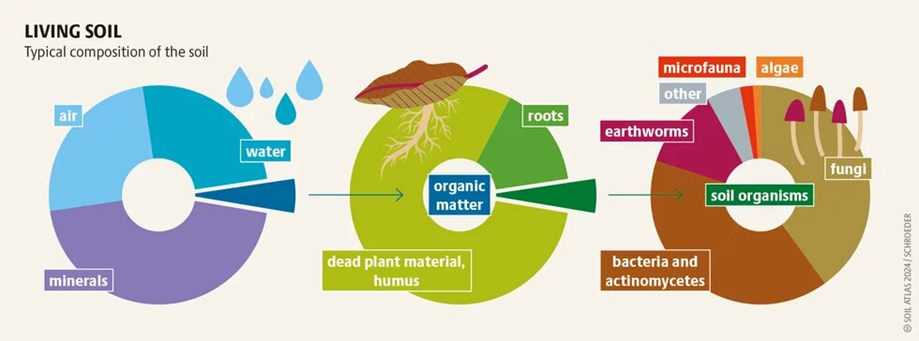
1. Abiotic Components (The Physical Matrix)
- Mineral Matter (~45%): Derived from the weathering of parent rock material (sand, silt, and clay particles), it determines the soil texture and supplies vital mineral nutrients.
- Soil Water (~25%): Held within the soil pores, it acts as a universal solvent, enabling plants to absorb dissolved macro and micronutrients.
- Soil Air (~25%): Fills the macro-pores, supplying oxygen to plant roots and aerobic microorganisms, while facilitating gas exchange.
2. Biotic Components (The Soil Food Web)
- Soil Flora: Comprises plant roots (macro-flora) and microorganisms like bacteria, fungi, and actinomycetes (micro-flora) that act as the primary decomposers.
- Soil Fauna: Includes ecosystem engineers like earthworms and ants (macro-fauna) that physically alter soil structure, alongside protozoa and nematodes (micro-fauna).
- Organic Matter (~5%): Consists of plant and animal residues at various stages of decomposition, culminating in nutrient-rich humus.
Functions of a Soil Ecosystem
The soil ecosystem performs critical regulatory, provisioning, and supportive functions that sustain life on Earth:
- Nutrient Cycling and Bio-fertility: Soil microbes transform complex organic compounds into inorganic forms that plants can assimilate. (e.g., Rhizobium and Azotobacter species converting atmospheric nitrogen into plant-absorbable nitrates).
- Carbon Sequestration and Climate Regulation: Soil operates as the largest terrestrial carbon pool. By locking organic carbon within stable humus fractions, healthy soil ecosystems mitigate the accumulation of greenhouse gases in the atmosphere.
- Water Filtration and Hydrological Regulation: Soil acts as a massive natural sponge and multi-layered filter. It regulates water flow, purifies contaminants, and facilitates groundwater recharge. (e.g., The highly porous alluvial soils of the Brahmaputra Valley absorb immense monsoonal precipitation, regulating peak runoff).
- Sustenance of Biomass and Food Security: It provides mechanical anchorage and the chemical environment necessary for agricultural productivity. (Data from the Indian Council of Agricultural Research (ICAR) underscores that optimizing soil ecosystem health via organic additions directly enhances crop resilience against drought).
- Habitat and Biological Pest Control: The high biodiversity within the soil suppresses soil-borne plant pathogens through competitive exclusion and predation, protecting wild and cultivated flora naturally.
Protecting our living soils requires transitioning from intensive chemical-dependent agriculture to regenerative conservation practices. Preserving the biological integrity of the soil ecosystem is an ecological imperative, safeguarding planetary health, biodiversity, and resource security for generations to come.
✨ Looking for top-quality APSC Mains Guidance with Personalised Mentor?

🔔 Join Our WhatsApp Study Group!
For exclusive access to premium quality content, including study materials, current affairs, MCQs, and model answers for APSC CCE and other Assam competitive exams.
Click here to join: SuchitraACS Study WhatsApp Group
📚 Want to know more about SuchitraACS’s most affordable courses?
Click here to know more: SuchitraACS Courses for APSC CCE and Assam Competitive Examinations


