APSC Current Affairs: Assam Tribune Notes with MCQs and Answer Writing (05/08/2026)
For APSC CCE and other Assam competitive exam aspirants, staying consistently updated with reliable current affairs is essential for success. This blog provides a well-researched analysis of the most important topics from The Assam Tribune dated 5 August 2026. Each issue has been carefully selected and explained to support both APSC Prelims and Mains preparation, ensuring alignment with the APSC CCE syllabus and the evolving trends of the examination.
✨ APSC CCE Mains Course, 2026

Supreme Court Directions on Cyber Frauds, Mule Accounts & Digital Governance
Syllabus Mapping
- GS Paper: GS Paper II | GS Paper III | GS Paper V (Assam)
- Subject/Topic: Governance | Judiciary | E-Governance | Citizen-Centric Administration | Science & Technology | Cyber Security | Internal Security | Digital Economy | Digital Administration
- Why in News: The Supreme Court of India, while hearing a suo motu case on digital arrest-related cyber frauds, issued a series of nationwide directions to strengthen India’s cyber fraud response. The Court directed the Reserve Bank of India (RBI) to prepare and circulate a Standard Operating Procedure (SOP) within four weeks for dealing with mule accounts (bank accounts used to receive or transfer proceeds of cyber fraud). It also directed States and Union Territories to operationalise cyber grievance mechanisms, strengthen cyber coordination centres, implement e-Zero FIR, and improve public awareness.
Introduction
The Supreme Court’s directives aim to dismantle cyber-enabled financial fraud networks by standardising banking protocols and accelerating grievance redressal across India’s digital ecosystem.
Prelims Perspective
- Suo Motu Case: Directed at mitigating “digital arrest” scams where fraudsters falsely impersonate law enforcement (CBI, ED, Police, RBI) to coerce victims into transferring funds.
- RBI Directive: Mandated to issue a uniform Standard Operating Procedure (SOP) within four weeks specifically targeting the identification and freezing of mule accounts.
- Mule Account: A bank account (whether knowingly, unknowingly, or fraudulently opened) used to receive, conceal, or transfer illegally obtained cyber fraud money.
- Indian Cyber Crime Coordination Centre (I4C): The national nodal agency functioning under the Ministry of Home Affairs for cybercrime intelligence, coordination, and capacity building.
- National Cyber Crime Reporting Portal (NCRP): Operates under I4C, facilitating online complaint reporting, tracking, and money recovery.
- Cyber Helpline: The toll-free number 1930 provides immediate reporting to help freeze fraudulent financial transactions.
- e-Zero FIR: A mechanism enabling the electronic registration of cybercrime complaints and their prompt routing to the appropriate jurisdiction, heavily pushed for statewide adoption.
- Legal Framework: Governed by the Information Technology Act (2000), Bharatiya Nyaya Sanhita (2023), Prevention of Money Laundering Act (2002), and Digital Personal Data Protection Act (2023).
- Institutional Reporting: High Court Registrar Generals are tasked with disseminating grievance redressal modules to subordinate courts to ensure victims are aware of administrative remedies.
Mains Perspective
- Importance
- Fosters Digital Governance by synchronising the efforts of the RBI, banking institutions, and law enforcement through unified, nationwide SOPs.
- Enhances Financial Security by directly targeting mule accounts, drastically improving the trace-and-recovery rate of stolen digital funds.
- Bolsters citizen confidence in the Digital Economy through swift, accessible grievance redressal and zero-jurisdictional FIRs.
- Challenges
- Rapid proliferation of AI-driven spoofing and sophisticated social engineering makes real-time interception difficult.
- Complex mule account networks and cross-border digital transactions frequently obscure the true beneficiaries and hinder jurisdictional authority.
- A persistent digital literacy deficit among the public, coupled with acute shortages in trained digital forensic experts.
- Government Initiatives
- The Indian Cyber Crime Coordination Centre (I4C) and the National Cyber Crime Reporting Portal (NCRP) serve as the backbone of national intelligence and citizen complaint mechanisms.
- The National Cyber Helpline (1930) and the RBI KYC Framework provide critical first-response tools and preemptive financial monitoring.
- International Best Practices
- Implementation of real-time AI fraud monitoring and mandatory multi-factor authentication for sensitive financial services.
- Fostering robust cross-border cyber intelligence sharing protocols to track transnational money laundering networks.
- Way Forward
- Mandate real-time banking alerts and AI-based analytics to detect and freeze suspicious transaction patterns instantly.
- Aggressively expand dedicated Cyber Police stations and fast-track the digitisation of forensic laboratories at the district level.
- Institutionalise seamless regulatory cooperation between telecom operators, the RBI, and the I4C to prevent impersonation calls and messages.
Conclusion
By mandating strict SOPs and rapid grievance redressal, the Supreme Court’s intervention creates a critical, unified shield against digital financial crimes, ensuring a safer and more resilient Digital India.
Registration of Births and Deaths (Amendment) Bill, 2026
Syllabus Mapping
- GS Paper: GS Paper II, GS Paper III, GS Paper V (Assam)
- Subject/Topic: Governance, Social Justice, E-Governance, Digital Governance, Public Administration
- Why in News: The Registration of Births and Deaths (Amendment) Bill, 2026 was passed by the Rajya Sabha after its earlier passage in the Lok Sabha. The amendment seeks to tighten the legal framework governing delayed registration of births and deaths, especially registrations made more than two years after the event, by requiring approval from a Judicial Magistrate First Class (JMFC). The government stated that the objective is to improve the integrity of India’s Civil Registration System (CRS), ensure universal registration, and prevent misuse of outdated records.
Introduction
The Registration of Births and Deaths (Amendment) Bill, 2026 introduces stricter judicial scrutiny for highly delayed civil registrations to ensure the integrity of India’s national database and prevent document fraud.
Prelims Perspective
- Parent Act: The Registration of Births and Deaths Act, 1969 originally made civil registration compulsory across India.
- 2026 Key Provision: Any birth or death registration delayed beyond two years now mandates an order from a Judicial Magistrate First Class (JMFC).
- Existing Rule Maintained: Delays between one and two years continue to require approval from an Executive Magistrate/DM/SDM.
- Nodal Authority: Administered by the Registrar General of India (RGI) functioning under the Ministry of Home Affairs (MHA).
- RGI Functions: Maintains the Civil Registration System (CRS), conducts the Census, and oversees the Sample Registration System (SRS).
- Sample Registration System (SRS): Responsible for measuring the Birth Rate, Death Rate, Infant Mortality Rate (IMR), and Maternal Mortality.
- Constitutional Backing: Supported by Article 21 (Right to legal identity), Article 39(f), Article 41, and shared vital statistics administration under the Seventh Schedule.
- 2023 Amendment Impact: Created a national digital database, making the birth certificate a single foundational proof for school, passport, and voter registration.
- Recent Statistics: Birth registrations surged from 86.6% (2014) to 99.1% (2024), while death registrations rose from 72.5% (2014) to 99.4% (2024).
- Infrastructure: Registration is facilitated through approximately 3.5 lakh centres nationwide.
Mains Perspective
- Importance
- Serves as the fundamental gateway to establish a legal identity, ensuring access to citizenship-linked services and government welfare.
- Provides reliable demographic and mortality data crucial for effective budget allocation, disease surveillance, and SDG monitoring.
- Maintains electoral integrity by systematically removing deceased persons from voter rolls and supports integration with Digital Public Infrastructure (DPI).
- Challenges
- Administrative constraints and geographical isolation hinder timely reporting in rural communities and remote tribal areas.
- The persisting digital divide and lack of digital literacy create friction in accessing modernized e-governance platforms.
- Mandating JMFC approval for highly delayed cases risks increasing the existing judicial burden if processes are not streamlined.
- Government Initiatives
- The Civil Registration System (CRS) provides a unified, nationwide digital platform for recording vital statistics.
- The 2023 Amendment Act established a national database, making birth certificates universally acceptable for multiple public services.
- Integration with the Digital India Mission and the Aadhaar ecosystem facilitates seamless and secure identity verification.
- Way Forward
- Ensure last-mile delivery by actively empowering Panchayats, Urban Local Bodies, and Anganwadi centres as accessible registration hubs.
- Enhance digital interoperability between the CRS and other state databases while maintaining stringent data privacy safeguards.
- Promote sustained public awareness campaigns and capacity building for registrars to achieve 100% universal registration.
Conclusion
Coupled with robust digital infrastructure and last-mile accessibility, the 2026 Amendment will critically fortify India’s governance architecture, ensuring highly credible demographic data for evidence-based policymaking.
India Home to Lots of Teams Building AI Innovations (Based on Adobe’s Statement on India’s AI Ecosystem)
Syllabus Mapping
- GS Paper: GS Paper III, GS Paper II, GS Paper V (Assam)
- Subject/Topic: Science & Technology, Artificial Intelligence, Innovation, Digital Economy, Governance, Digital India, Emerging Technologies, Technology & Digital Governance
- Why in News: Adobe stated that India has become one of the world’s fastest-growing Artificial Intelligence (AI) markets, driven by a vibrant startup ecosystem, rapid adoption of Generative AI, strong engineering talent, and increasing enterprise demand. According to Adobe, India is home to numerous teams developing AI innovations, making it a key hub for global AI research and product development.
Introduction
Adobe’s recognition of India as a rapidly growing AI market underscores the nation’s transition into a premier global hub for AI innovation, propelled by its dynamic startup ecosystem, expansive digital infrastructure, and robust engineering talent.
Prelims Perspective
- Artificial Intelligence (AI): The simulation of human cognitive abilities by machines, encompassing tasks like learning, reasoning, and pattern recognition.
- Generative AI (GenAI): A subset capable of creating new content (text, images, video, code) based on existing data patterns (e.g., ChatGPT, Gemini, Adobe Firefly).
- Machine Learning (ML): A subset of AI where systems learn from data without explicit programming.
- Deep Learning: Utilizes multi-layered neural networks to solve complex analytical tasks.
- Natural Language Processing (NLP) & Computer Vision: NLP enables machines to process human language, while Computer Vision allows systems to interpret images and videos.
- IndiaAI Mission: Approved by the Union Cabinet in 2024 and implemented by MeitY, focusing on AI compute infrastructure, the IndiaAI Datasets Platform, startup financing, and responsible AI.
- NITI Aayog Strategy: Released the National Strategy for Artificial Intelligence (AI for All) in 2018, targeting Healthcare, Agriculture, Education, Smart Mobility, and Smart Cities.
- Global Frameworks: Guided by UNESCO’s Recommendation on the Ethics of AI (2021), OECD AI Principles, and the Global Partnership on Artificial Intelligence (GPAI), of which India is an active member.
- Major Global Players: The United States, China, the United Kingdom, Canada, the European Union, and rapidly emerging India.
Mains Perspective
- Importance
- Drives economic growth and global competitiveness by drastically improving productivity and positioning India as an indispensable technology destination.
- Transforms inclusive governance by enabling evidence-based policy implementation, predictive administration, and targeted public service delivery.
- Fosters inclusive development by modernizing traditional sectors like agriculture and healthcare while generating high-value employment in digital forensics and robotics.
- Challenges
- Massive reliance on data aggregation triggers critical data privacy concerns alongside ethical risks such as algorithmic bias and lack of transparency.
- Acute skill gaps for advanced AI professionals compound existing infrastructure constraints regarding high-performance computing and semiconductor capacity.
- Rapid AI adoption escalates severe cybersecurity risks, including the proliferation of deepfakes, automated financial fraud, and sophisticated misinformation.
- Government Initiatives
- The IndiaAI Mission and the National Quantum Mission democratize high-performance compute access and build indigenous deep-tech capacities.
- The India Semiconductor Mission and Startup India foster a self-reliant hardware ecosystem and support AI-driven enterprise innovation.
- The Digital Personal Data Protection Act, 2023 establishes the critical legal architecture required for secure, consent-based AI deployment.
- Way Forward
- Urgently expand indigenous AI compute infrastructure and domestic semiconductor manufacturing to reduce external technological dependency.
- Scale human capital through targeted reskilling programs and strictly enforce Responsible AI frameworks that prioritize accountability and human oversight.
- Leverage Public-Private Partnerships (PPPs) to prioritize AI deployment for social good across high-impact domains like healthcare, disaster management, and education.
Conclusion
To sustain its momentum as a global AI powerhouse, India must synergize its engineering talent and startup dynamism with sovereign compute infrastructure, rigorous ethical standards, and inclusive capacity building.
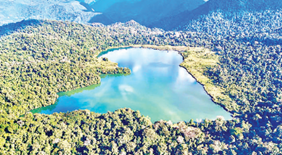
Glaw Lake Becomes Arunachal Pradesh’s First Ramsar Site
Syllabus Mapping
- GS Paper: GS Paper III, GS Paper V (Assam/North East)
- Subject/Topic: Environment, Biodiversity, Conservation, North East Environment & Biodiversity
- Why in News: Glaw Lake, located in Lohit district of Arunachal Pradesh, has been designated as the State’s first Ramsar Site under the Ramsar Convention on Wetlands. With this recognition, it becomes India’s 101st Wetland of International Importance, marking a significant milestone in wetland conservation and biodiversity protection in Northeast India. The lake lies within the Kamlang Tiger Reserve and Wildlife Sanctuary, enhancing its ecological significance.
Introduction
The designation of Glaw Lake as Arunachal Pradesh’s first Ramsar Site highlights its critical ecological value within the Eastern Himalayas and reinforces India’s commitment to conserving high-altitude wetland ecosystems.
Prelims Perspective
- Glaw Lake: A freshwater natural lake situated in Lohit district, Arunachal Pradesh.
- Protected Area: Located entirely within the Kamlang Tiger Reserve and Wildlife Sanctuary.
- Ramsar Milestone: Officially recognised as Arunachal Pradesh’s first and India’s 101st Ramsar Site.
- Ecological Region: Forms a vital part of the highly endemic Eastern Himalaya Biodiversity Hotspot.
- Kamlang Tiger Reserve: Declared India’s 50th Tiger Reserve in 2016; home to Tigers, Clouded Leopards, and Hoolock Gibbons.
- Ramsar Convention: An international wetland treaty signed in 1971 in Ramsar, Iran; India joined in 1982.
- India’s Ramsar Profile: Chilika Lake and Keoladeo National Park were the first sites; Tamil Nadu currently holds the maximum number of sites, and the Sundarbans is the largest.
- Montreux Record: A special register for Ramsar Sites facing significant ecological changes that require priority conservation attention.
Mains Perspective
Importance
- Biodiversity & Climate: Protects fragile, endemic Himalayan flora and fauna while functioning as a critical carbon sink to mitigate climate impacts.
- Water & Disaster Management: Ensures long-term regional water security and naturally absorbs excess rainfall to reduce floods and soil erosion.
- Socio-Economic Value: Generates sustainable local livelihoods through eco-tourism and reinforces India’s leadership in global environmental targets.
Challenges
- Ecological Threats: Shifting rainfall patterns driven by climate change and the unchecked spread of invasive species disrupt the wetland’s natural hydrology.
- Habitat Degradation: Catchment deforestation, unscientific infrastructure development, and unregulated tourism place immense stress on the fragile ecosystem.
- Human-Wildlife Conflict: Increasing anthropogenic activities and encroachment around the Kamlang landscape threaten the ecological balance of the protected area.
Government Initiatives
- Policy & Legal Framework: Conservation is legally backed by the Wetlands (Conservation and Management) Rules, 2017 and the National Plan for Conservation of Aquatic Ecosystems (NPCA).
- Amrit Dharohar Scheme (2023): Specifically targets the optimal use and conservation of Ramsar Sites while supporting sustainable livelihoods for local communities.
- Integrated Conservation: Synergized with Project Tiger for broader habitat protection and aligned with the National Biodiversity Action Plan to meet CBD framework goals.
Way Forward
- Landscape-Based Management: Adopt a holistic conservation model that integrates the management of the lake, surrounding forests, and river catchments.
- Community & Monitoring: Empower indigenous communities to lead low-impact eco-tourism and leverage GIS and remote sensing for scientific biodiversity tracking.
- Climate Adaptation: Formulate and enforce strict carrying-capacity guidelines while developing targeted climate resilience and wetland restoration strategies.
Conclusion
Protecting Glaw Lake through scientific management, indigenous community participation, and robust policy implementation will be pivotal in securing the ecological resilience of the Eastern Himalayas.
APSC Prelims MCQs
Topic 1: Registration of Births and Deaths (Amendment) Bill, 2026
Q1. With reference to the Registration of Births and Deaths (Amendment) Bill, 2026, consider the following statements:
- Registration of a birth or death after two years requires an order of a Judicial Magistrate First Class.
- The Bill replaces the Registration of Births and Deaths Act, 1969.
- The amendment aims to strengthen the authenticity of civil registration records.
Which of the statements given above is/are correct?
A. 1 and 3 only
B. 2 only
C. 1, 2 and 3
D. 3 only
Answer: A
Explanation: The amendment does not replace the 1969 Act; it amends it. JMFC approval is required for registrations beyond two years, and the objective is to improve the integrity of civil registration.
Q2. Which of the following are potential benefits of a robust Civil Registration System (CRS)?
- Better public health planning
- Accurate electoral roll updation
- Reliable demographic statistics
- Prevention of identity fraud
Select the correct answer using the code below:
A. 1 and 2 only
B. 2, 3 and 4 only
C. 1, 3 and 4 only
D. 1, 2, 3 and 4
Answer: D
Explanation: A comprehensive Civil Registration System supports governance through accurate population statistics, electoral roll purification, fraud prevention and better planning.
Q3. Consider the following pairs:
| Institution | Function |
| 1. Registrar General of India | Conducts Census and administers Civil Registration System |
| 2. Sample Registration System | Estimates birth and death rates |
| 3. Civil Registration System | Sample survey of selected households |
Which of the pairs given above is/are correctly matched?
A. 1 and 2 only
B. 2 only
C. 1 and 3 only
D. 1, 2 and 3
Answer: A
Explanation: CRS is a universal registration system, whereas SRS is a sample-based demographic survey.
Q4. SDG 16.9, often discussed in relation to birth registration, aims to:
A. Universal access to health insurance
B. Provide legal identity for all, including birth registration
C. Achieve universal digital literacy
D. Universal access to free education
Answer: B
Explanation: SDG Target 16.9 seeks legal identity for all, including universal birth registration.
Topic 2: Supreme Court Directions on Cyber Frauds, Mule Accounts & Digital Governance
Q5. With reference to cyber frauds, the term “Mule Account” refers to:
A. A dormant bank account maintained by banks
B. A bank account used to receive or transfer proceeds of cybercrime
C. An account exclusively used for cryptocurrency transactions
D. A government account maintained for emergency funds
Answer: B
Explanation: Mule accounts are used to move illegally obtained money and obscure the identity of cybercriminals.
Q6. Consider the following statements regarding the Indian Cyber Crime Coordination Centre (I4C):
- It functions under the Ministry of Home Affairs.
- It coordinates efforts to combat cybercrime.
- It is a statutory body established by Parliament.
Which of the statements given above is/are correct?
A. 1 and 2 only
B. 2 and 3 only
C. 1 and 3 only
D. 1, 2 and 3
Answer: A
Explanation: I4C functions under the Ministry of Home Affairs and is an executive initiative, not a statutory body.
Q7. Which of the following initiatives are specifically associated with cybercrime reporting and response in India?
- National Cyber Crime Reporting Portal
- Cyber Helpline 1930
- Indian Cyber Crime Coordination Centre (I4C)
Select the correct answer using the code below:
A. 1 only
B. 2 and 3 only
C. 1 and 3 only
D. 1, 2 and 3
Answer: D
Explanation: All three form important components of India’s cybercrime response ecosystem.
Q8. The Supreme Court recently directed the Reserve Bank of India to prepare a Standard Operating Procedure (SOP) primarily for dealing with:
A. Cryptocurrency exchanges
B. Cross-border payment systems
C. Mule accounts linked to cyber fraud
D. Digital lending platforms
Answer: C
Explanation: The direction aims to standardise the identification and handling of bank accounts used in cyber-enabled financial frauds.
Topic 3: Glaw Lake Becomes Arunachal Pradesh’s First Ramsar Site
Q9. Glaw Lake, recently designated as a Ramsar Site, is located in:
A. Namdapha National Park
B. Dibang Wildlife Sanctuary
C. Kamlang Tiger Reserve
D. Pakke Tiger Reserve
Answer: C
Explanation: Glaw Lake lies within the Kamlang Tiger Reserve in Lohit district of Arunachal Pradesh.
Q10. Consider the following statements regarding the Ramsar Convention:
- It was adopted in Ramsar, Iran.
- It is an international treaty for the conservation and wise use of wetlands.
- India became a Contracting Party in 1982.
Which of the statements given above are correct?
A. 1 and 2 only
B. 2 and 3 only
C. 1 and 3 only
D. 1, 2 and 3
Answer: D
Explanation: All three statements are correct.
Q11. Which of the following correctly explains the “Wise Use” principle under the Ramsar Convention?
A. Complete prohibition of all human activities in wetlands
B. Sustainable utilisation of wetlands while maintaining their ecological character
C. Exclusive conservation of wetlands through private ownership
D. Conversion of wetlands into protected forests
Answer: B
Explanation: Wise use promotes sustainable management without compromising ecological integrity.
Q12. Consider the following statements:
- Wetlands act as natural flood buffers.
- Wetlands help in groundwater recharge.
- Wetlands are generally poor carbon sinks.
Which of the statements given above is/are correct?
A. 1 only
B. 2 and 3 only
C. 1 and 2 only
D. 1, 2 and 3
Answer: C
Explanation: Wetlands are effective carbon sinks, making Statement 3 incorrect.
Topic 4: India Home to Lots of Teams Building AI Innovations
Q13. Consider the following statements regarding Artificial Intelligence (AI):
- Machine Learning is a subset of Artificial Intelligence.
- Generative AI is capable of creating new content.
- Natural Language Processing enables machines to understand human language.
Which of the statements given above is/are correct?
A. 1 and 2 only
B. 2 and 3 only
C. 1 and 3 only
D. 1, 2 and 3
Answer: D
Explanation: Machine Learning, Generative AI and Natural Language Processing are all important components of AI.
Q14. Which of the following are objectives of the IndiaAI Mission?
- Strengthening AI computing infrastructure
- Supporting AI startups
- Promoting responsible and trustworthy AI
Select the correct answer using the code below:
A. 1 only
B. 2 and 3 only
C. 1 and 3 only
D. 1, 2 and 3
Answer: D
Explanation: The IndiaAI Mission seeks to build computing capacity, encourage AI innovation and startups, and promote responsible AI.
Q15. Which one of the following technologies primarily enables computers to understand, interpret and generate human language?
A. Quantum Computing
B. Natural Language Processing
C. Blockchain
D. Edge Computing
Answer: B
Explanation: Natural Language Processing (NLP) enables machines to process and generate human language.
Q16. With reference to Artificial Intelligence, consider the following statements:
- Deep Learning uses multi-layered neural networks.
- Explainable AI (XAI) aims to improve the transparency of AI systems.
- Artificial Intelligence can contribute to precision agriculture and healthcare diagnostics.
Which of the statements given above is/are correct?
A. 1 and 2 only
B. 2 and 3 only
C. 1 and 3 only
D. 1, 2 and 3
Answer: D
Explanation: Deep Learning relies on neural networks, Explainable AI improves transparency, and AI has wide applications in agriculture, healthcare and governance.
APSC Mains Practice Question
📘 GS Mains Model Question (APSC CCE)
📝 Question
Q. India is rapidly emerging as a global hub for Artificial Intelligence (AI) innovation. Discuss the opportunities offered by AI for India’s socio-economic development. Also examine the challenges associated with AI adoption and suggest measures for ensuring responsible and inclusive AI governance.
According to the IndiaAI Mission (2024), Artificial Intelligence (AI) is expected to become a key driver of India’s digital economy and public service delivery. With one of the world’s largest digital ecosystems and a vibrant startup culture, India is well positioned to become a global AI innovation hub.
1. Opportunities Offered by AI for India
A. Economic Growth
- Enhances productivity across sectors.
- Promotes innovation-driven industries.
- Strengthens India’s digital economy.
- Attracts global investments and R&D centres.
B. Improved Governance
- AI-enabled grievance redressal.
- Predictive governance and policy planning.
- Smart city management.
- Efficient public service delivery through Digital Public Infrastructure (DPI).
C. Agriculture Transformation
- Precision farming.
- Crop disease detection.
- Weather-based advisories.
- Yield prediction and resource optimisation.
D. Healthcare Revolution
- Early disease diagnosis.
- AI-assisted medical imaging.
- Drug discovery.
- Telemedicine for remote regions.
E. Education & Skill Development
- Personalised learning.
- Multilingual digital education.
- AI-assisted assessment.
- Enhanced accessibility for differently-abled learners.
F. National Security
- Cybersecurity threat detection.
- Border surveillance.
- Disaster prediction and response.
- Intelligence analysis.
2. Challenges in AI Adoption
A. Data Privacy Concerns
- Extensive use of personal data.
- Risks of misuse and surveillance.
B. Ethical Issues
- Algorithmic bias.
- Lack of transparency.
- Accountability gaps in automated decisions.
C. Employment Disruptions
- Automation of repetitive jobs.
- Need for large-scale reskilling.
D. Infrastructure Constraints
- Limited access to high-performance computing.
- Dependence on imported semiconductor technologies.
E. Cybersecurity Risks
- AI-generated deepfakes.
- Sophisticated phishing attacks.
- Automated cybercrime.
F. Digital Divide
- Unequal access to AI technologies between urban and rural areas.
3. Government Initiatives
- IndiaAI Mission (2024).
- Digital India Programme.
- India Semiconductor Mission.
- National Quantum Mission.
- Startup India.
- Digital Personal Data Protection Act, 2023.
4. Way Forward
- Develop a comprehensive Responsible AI Framework aligned with global best practices.
- Strengthen indigenous AI research, semiconductor manufacturing, and computing infrastructure.
- Invest in AI education, digital literacy, and workforce reskilling.
- Encourage Public–Private Partnerships (PPP) and academic collaboration.
- Promote Explainable AI (XAI), transparency, and regular algorithm audits.
- Expand AI applications in agriculture, healthcare, education, disaster management, and governance for inclusive growth.
Artificial Intelligence has the potential to become a transformative force in achieving Viksit Bharat 2047 by improving productivity, governance, and innovation. With robust regulation, ethical safeguards, and inclusive capacity building, India can emerge as a trusted global leader in responsible AI while ensuring that technological progress benefits every section of society.
✨ APSC CCE Courses, 2025-26 offered by SuchitraACS

🔔 Join Our WhatsApp Study Group!
For exclusive access to premium quality content, including study materials, current affairs, MCQs, and model answers for APSC CCE and other Assam competitive exams.
Click here to join: SuchitraACS Study WhatsApp Group
📚 Want to know more about SuchitraACS’s most affordable courses?
Click here to know more: SuchitraACS Courses for APSC CCE and Assam Competitive Examinations