APSC Current Affairs: Assam Tribune Notes with MCQs and Answer Writing (04/08/2026)
For APSC CCE and other Assam competitive exam aspirants, staying consistently updated with reliable current affairs is essential for success. This blog provides a well-researched analysis of the most important topics from The Assam Tribune dated 4 August 2026. Each issue has been carefully selected and explained to support both APSC Prelims and Mains preparation, ensuring alignment with the APSC CCE syllabus and the evolving trends of the examination.
✨ APSC CCE Mains Course, 2026
Sanchipat Manuscripts of Assam: Restoration, Conservation and Cultural Heritage
Syllabus Mapping
- GS Paper: GS-V (History, Art, Culture, Literature, Tradition & Heritage of Assam – APSC) / GS-I (Indian Heritage & Culture – UPSC/APSC)
- Core Subject: Art & Culture, History of Assam, Heritage Conservation
- Why in News? Following devastating floods in Upper Assam, The Assam Royal Global University (RGU), in collaboration with the Society for Srimanta Sankaradeva (SSS), launched an emergency restoration and conservation campaign for flood-damaged Sanchipat manuscripts preserved in Satras, Naamghars, monasteries, and private collections across Sivasagar, Charaideo, Dibrugarh, Jorhat, and Golaghat districts.
Introduction
Sanchipat manuscripts are medieval handwritten texts prepared on processed Sanchi tree bark, representing the cornerstone of Assam’s literary, spiritual, and artistic heritage.
Prelims Perspective
- Material & Source: Prepared from the mature, boiled, dried, and polished bark of the Sanchi (Agarwood) tree (Aquilaria malaccensis / Aquilaria agallocha), belonging to the Thymelaeaceae family.
- Ecological Status: Aquilaria malaccensis is listed under CITES Appendix II to regulate international trade.
- Traditional Ink & Period: Written using traditional natural black ink called Mahi; extensively produced during 15th–19th century medieval Assam.
- Scripts & Content: Written in Assamese (early Kamrupi forms), Sanskrit, and Tai-Ahom scripts; contains religious texts, medicine, astronomy, history, and philosophy.
- Durability: Well-preserved manuscripts survive 300–500 years using herbal oils, resins, stone/shell polishing, and protective wooden covers.
- Painting Tradition: Flourished under the Neo-Vaishnavite Movement (patronized by Srimanta Sankardeva, Madhabdeva, Damodardeva, Gopal Ata, Harideva); features mineral pigments, bright natural colors, flat compositions, and decorative borders depicting Bhagavata Purana, Ramayana, Mahabharata, Krishna Leela, Kirtan Ghoxa, and Nam Ghoxa.
- Key Repositories: Satras of Majuli (Auniati, Kamalabari, Dakhinpat), Barpeta Satra, Bordowa Than, State Museum (Guwahati), and Department of Historical and Antiquarian Studies (DHAS), Assam.
- Institutional Framework: National Mission for Manuscripts (NMM) launched in 2003 by the Ministry of Culture for surveying, conservation, digitisation, and conservator training.
Mains Perspective
Importance
- Documentary & Knowledge Repository: Preserves medieval Assam’s administrative records, Ahom historical genealogies (Buranjis), and traditional indigenous medical systems.
- Artistic & Pedagogical Value: Highlights indigenous painting traditions while directly supporting National Education Policy (NEP) objectives regarding Indian Knowledge Systems (IKS).
Challenges
- Environmental Threats: High susceptibility to floods, humidity, fungal growth, termites, and climate disasters in Northeast India.
- Structural Deficits: Severe shortage of trained conservators, digital infrastructure, funding, combined with fragmented private/religious ownership risking theft and degradation.
Government & Institutional Initiatives
- National Level: National Mission for Manuscripts (2003), IGNCA preservation programs, and the National Mission on Libraries.
- State & University Level: Archival preservation via DHAS Assam, State Museums, and RGU’s emergency restoration initiative with SSS in Upper Assam.
Way Forward
- Institutional & Spatial Infrastructure: Establish a dedicated State Manuscript Conservation Centre in Assam alongside GIS-based mapping of all repositories.
- Disaster Protocols & Tech Integration: Execute high-resolution digitisation prior to restoration and implement mandatory disaster-risk management protocols for Satras.
- Capacity Building: Train local monks and community volunteers in preventive conservation while building public-private partnerships linked with heritage tourism circuits.
Value Addition
- Constitutional Link: Article 49 (State obligation to protect monuments/objects of national importance) and Article 51A(f) (Fundamental Duty to preserve composite culture).
- Sustainable Development Goals (SDGs): SDG 11.4 (Protect cultural and natural heritage), SDG 4 (Quality Education), and SDG 16 (Strong Institutions).
Conclusion
Safeguarding Sanchipat manuscripts through scientific conservation, digital archiving, and institutional-community collaboration is vital to preserving Assam’s civilisational memory for future generations.
Sustainable Development Goals (SDGs) & Education for Sustainable Development (ESD): Assam’s Innovation-Driven Path Towards Agenda 2030
Syllabus Mapping
- GS Paper: GS Paper V (Assam: Environment, Sustainable Development, Innovation) / GS Paper III (Sustainable Development, Environment, Science & Technology)
- Core Subject: Environment & Ecology, Sustainable Development, Green Technologies
- Why in News? A two-day SDGs and Education for Sustainable Development (ESD) Conclave was organised in Guwahati by the WICCI Assam SDG Council and Maria’s Public School, showcasing Assam-based eco-innovations to achieve Agenda 2030.
Introduction
The Guwahati SDG Conclave highlighted how local Assam-based innovations, green entrepreneurship, and Education for Sustainable Development (ESD) are driving practical, community-led solutions to achieve the UN Agenda 2030 targets.
Prelims Perspective
- SDG Framework: Adopted by the UN General Assembly (2015), effective January 1, 2016, with a target year of 2030. Comprises 17 Goals and 169 Targets under the motto “Leave No One Behind.”
- Conceptual Origin: “Sustainable Development” defined by the Brundtland Commission Report (1987) titled Our Common Future.
- ESD Framework: Education for Sustainable Development (ESD) is promoted by UNESCO.
- Assam Green Innovations showcased at Conclave:
- HyaCraft: Handicrafts from invasive water hyacinth (SDGs 8, 12, 13, 15).
- Bio Banana & Eco Peel: Eco-products and biodegradable bioplastic from banana stem fibre and peels.
- Agarwood Model: “Soil to Oil” sustainable cultivation and patented extraction.
- Ahimsa Eri Silk: Ethical “Peace Silk” production without killing silkworms.
- Seed Ball Mission: Youth-led afforestation initiative.
- National SDG Tracking: Facilitated by the NITI Aayog SDG India Index.
Mains Perspective
Importance
- Economic & Ecological Balance: Drives a circular economy and green job creation while conserving biodiversity and controlling invasive species.
- Social Inclusion: Fosters rural entrepreneurship, empowers women, and builds climate resilience through youth-led innovation.
Challenges
- Financial & Market Constraints: Limited access to green finance, weak market linkages, and slow grassroots technology scaling.
- Vulnerability & Execution: High climate vulnerability (floods/erosion) in Assam, coupled with behavioral resistance and monitoring gaps.
Government Initiatives
- National Level: Mission LiFE, NITI Aayog SDG Index, National Education Policy (NEP) 2020, Startup India, National Bamboo Mission.
- State Level: Assam State Action Plan on Climate Change, Assam Bamboo Mission, Advantage Assam green investments.
Way Forward
- Educational Integration: Mandate ESD within school curricula and strengthen university-industry green innovation incubation.
- Scaling & Support: Scale local models (hyacinth crafts, eco-peels) by expanding public-private-community partnerships and district-level SDG tracking.
Value Addition
- Constitutional Link: Article 21 (Right to a healthy environment), Article 48A (State duty to protect environment), Article 51A(g) (Fundamental Duty to protect environment).
- Key Phrase: “The Earth provides enough to satisfy every man’s needs, but not every man’s greed.” — Mahatma Gandhi
Conclusion
Achieving Agenda 2030 demands localizing global goals through targeted green entrepreneurship, robust Education for Sustainable Development, and scalable community-led innovations tailored to Assam’s unique ecological realities.
Climate Change and Public Health: An Emerging Health Emergency with Special Reference to Assam & Northeast India
Syllabus Mapping
- GS Paper: GS Paper V (Assam: Public Health, Climate Vulnerability, Disaster Management) / GS Paper II (Health, Government Policies) / GS Paper III (Environment, Climate Change, Disaster Management)
- Core Subject: Public Health, Climate Change, Environment & Ecology
- Why in News? An editorial in The Assam Tribune highlighted climate change as a public health emergency, emphasizing how changing rainfall, floods, and rising temperatures are exacerbating the disease burden and disrupting healthcare access, specifically in Assam and Northeast India.
Introduction
Climate change has evolved from an environmental issue into the greatest public health emergency of the 21st century, directly threatening health security, infrastructure, and disease ecology in vulnerable regions like Assam.
Prelims Perspective
- Global Consensus: WHO identifies climate change as the single biggest health threat facing humanity; IPCC AR6 confirms with “very high confidence” that climate change is actively altering disease patterns and food/water security.
- Mortality Projections: WHO estimates 250,000 additional deaths per year (2030–2050) due to malnutrition, malaria, diarrhoea, and heat stress.
- Vector-Borne Expansion: Rising temperatures expand breeding habitats for mosquitoes transmitting Malaria, Dengue, Chikungunya, Lymphatic Filariasis, and Japanese Encephalitis (JE) (transmitted by Culex mosquitoes).
- Assam’s Vulnerability Profile: Highly susceptible to annual floods, river erosion, landslides, and high humidity, leading to outbreaks of JE, Acute Diarrhoeal Diseases, snakebites, and severe disruption of maternal/cancer care.
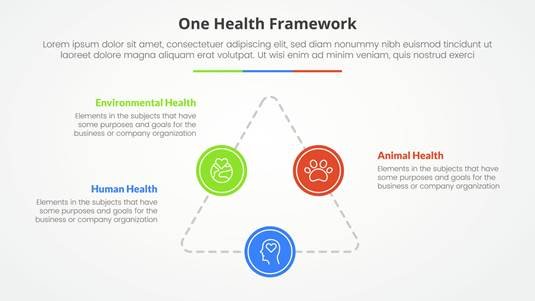
- One Health Approach: A framework recognizing the interconnected health of humans, animals, plants, and ecosystems—crucial for zoonotic disease control and early surveillance.
- Institutional Framework: The National Programme on Climate Change and Human Health (NPCCHH) is implemented by the Ministry of Health & Family Welfare.
Mains Perspective
Importance
- Health & Economic Security: Mitigates cascading economic losses from reduced labor productivity and escalating healthcare expenditures while ensuring health security for vulnerable groups (children, elderly, tribal, and riverine populations).
- Systemic Resilience: Builds robust, climate-adaptive infrastructure capable of absorbing shocks from extreme weather events (floods, cyclones, heatwaves).
Challenges
- Infrastructure & Geography: Fragile, climate-sensitive healthcare facilities face severe disruptions (e.g., interrupted cancer/maternal care) during recurrent floods and landslides in remote Northeast areas.
- Data & Governance Deficits: Weak early disease surveillance in rural areas, fragmented inter-sectoral coordination, and critical shortages of specialists and climate-health financing.
Government Initiatives
- National Level: NPCCHH, NAPCC (including Water, Agriculture, and Green India Missions), NDMA Guidelines (Heatwaves/Floods), and Mission LiFE.
- State Level (Assam): Assam State Action Plan on Climate Change, Integrated vector control (JE control programme), and deployment of Mobile Medical Units during floods.
Way Forward
- Infrastructure Upgrades: Mandate the construction of climate-resilient hospitals and primary health centers integrated with localized disaster risk assessments.
- Tech-Driven Surveillance: Expand digital disease surveillance and robust early warning systems for both floods and heatwaves.
- Policy Integration: Institutionalize the One Health approach via interdepartmental coordination to preempt zoonotic outbreaks and manage shifting disease ecologies.
Value Addition
- Constitutional Link: Article 21 (Right to a healthy environment), Article 47 (State duty to improve public health), Article 48A & 51A(g) (Environmental protection).
- International Frameworks: Paris Agreement (2015), Sendai Framework (2015-2030), and SDGs (specifically 3, 6, 11, and 13).
Conclusion
Safeguarding public health against the accelerating impacts of climate change requires an urgent transition from reactive disaster management to proactive, climate-resilient health systems guided by the One Health approach and robust local infrastructure investment.
Census 2027: Self-Enumeration (SE) Process and India’s Digital Census
Syllabus Mapping
- GS Paper: GS Paper V (Assam) – Governance, Planning, Demographic Profile of Assam / GS Paper II – Governance, E-Governance, Government Policies / GS Paper III – Science & Technology (Digital Governance)
- Core Subject: Census in India, Digital Governance, Demography
- Why in News? The Self-Enumeration (SE) portal (se.census.gov.in) opened for citizens in Assam from August 2 to August 16, 2026, allowing households to voluntarily submit demographic details online ahead of the official Houselisting and Housing Census (beginning August 17).
Introduction
Census 2027 marks a historic milestone as India’s first digital Census, introducing a Self-Enumeration (SE) feature that allows citizens to voluntarily submit household data online, driving evidence-based governance through efficiency and transparency.
Prelims Perspective
- Constitutional Basis: Census is a Union Subject under Entry 69, Union List (Seventh Schedule) via Article 246.
- Statutory Framework: Governed by the Census Act, 1948 and Census Rules, 1990, ensuring confidentiality of individual data.
- Conducting Authority: The Office of the Registrar General & Census Commissioner of India (RGI) under the Ministry of Home Affairs (MHA).
- Phases of Census 2027:
- Phase 1 (Houselisting & Housing Census): April 1 – Sept 30, 2026 (State-notified 30-day windows); collects housing/amenities data.
- Phase 2 (Population Enumeration): February 2027 (Sept 2026 for snow-bound non-synchronous areas like Ladakh/J&K); collects demographic/socio-economic data.
- Reference Dates: 00:00 hours of 1st March 2027 (Standard) / 00:00 hours of 1st October 2026 (Snow-bound areas).
- Self-Enumeration (SE): An optional, 15-day pre-enumeration window generating a Unique Reference Number (URN/SE ID) verified later by enumerators during home visits.
- Digital Tools: SE Portal, HLO Mobile App (for enumerators, offline capable, 16 languages), CMMS Portal, and a real-time monitoring dashboard.
- Historical Firsts: 1872 (First non-synchronous), 1881 (First synchronous), 1951 (First post-Independence), 2027 (First Digital Census).
Mains Perspective
Importance
- Governance & Resource Allocation: Provides baseline data for evidence-based policymaking, budget formulation, poverty estimation, and delimitation.
- Administrative Efficiency: The digital shift ensures faster data processing, real-time quality control, and quicker publication of results, lowering operational costs.
Challenges
- Digital & Social Exclusion: The digital divide (low internet/literacy in rural areas) and exclusion of the elderly, homeless, and remote tribal communities.
- Data Security: Cybersecurity threats and public trust concerns regarding data privacy, despite safeguards under the Census Act 1948.
Government Initiatives
- Technological Infrastructure: Digital India Mission, BharatNet (connectivity), and PM Gati Shakti (spatial data).
- Census 2027 Specifics: Digital dashboards, mobile apps for enumerators (HLO App), and citizen awareness campaigns via platforms like MyGov.
Way Forward
- Bridging the Divide & Support: Ensure offline alternatives are robust, expand digital literacy, and provide multilingual interfaces for maximum participation.
- Security & Quality: Leverage AI and GIS for data validation while strictly enforcing data protection and cybersecurity protocols under the Census Act.
Value Addition
- Linked Registries (Under RGI): Civil Registration System (CRS), Sample Registration System (SRS), National Population Register (NPR).
- SDG Linkages: SDG 1 (No Poverty), SDG 3 (Good Health), SDG 4 (Quality Education), SDG 10 (Reduced Inequalities), SDG 11 (Sustainable Cities).
Conclusion
The Self-Enumeration process in Census 2027 is a transformative leap for Digital India, and its success hinges on bridging the digital divide and ensuring robust data privacy to deliver the precise demographic data required for inclusive, targeted policymaking in states like Assam.
APSC Prelims MCQs
Topic 1: Sanchipat Manuscripts of Assam, Manuscript Painting & Cultural Heritage
Q1. With reference to Sanchipat manuscripts of Assam, consider the following statements:
- Sanchipat manuscripts were traditionally prepared from the bark of the Sanchi (Agarwood) tree.
- They were extensively preserved in Satras and Naamghars.
- The National Mission for Manuscripts functions under the Ministry of Education.
Which of the statements given above is/are correct?
A. 1 and 2 only
B. 2 and 3 only
C. 1 only
D. 1, 2 and 3
Answer: A
Explanation: Sanchipat manuscripts are prepared from the bark of the Sanchi (Agarwood) tree and were preserved in Satras and Naamghars. The National Mission for Manuscripts functions under the Ministry of Culture, not the Ministry of Education.
Q2. Which of the following are associated with the manuscript painting tradition of Assam?
- Bhagavata Purana
- Kirtan Ghoxa
- Krishna Leela
- Panchatantra illustrations
Select the correct answer using the code below.
A. 1, 2 and 3 only
B. 1 and 4 only
C. 2 and 3 only
D. 1, 2, 3 and 4
Answer: A
Explanation: Assamese manuscript paintings largely depict Vaishnavite themes such as the Bhagavata Purana, Kirtan Ghoxa and Krishna Leela. Panchatantra illustrations are not a characteristic feature of this tradition.
Q3. With reference to Aquilaria malaccensis, consider the following statements:
- It is the source of Agarwood.
- It is listed under Appendix II of CITES.
- It naturally occurs in Northeast India.
Which of the statements given above are correct?
A. 1 and 2 only
B. 2 and 3 only
C. 1 and 3 only
D. 1, 2 and 3
Answer: D
Explanation: Aquilaria malaccensis is the Agarwood-producing tree, naturally found in Northeast India, and is listed under CITES Appendix II.
Q4. Which one of the following institutions is primarily responsible for implementing the National Mission for Manuscripts?
A. Ministry of Culture
B. Ministry of Education
C. Archaeological Survey of India
D. Sahitya Akademi
Answer: A
Explanation: The National Mission for Manuscripts (2003) functions under the Ministry of Culture for documentation, conservation and digitisation of manuscripts.
Topic 2: Sustainable Development Goals (SDGs) & Education for Sustainable Development (ESD)
Q5. With reference to the Sustainable Development Goals (SDGs), consider the following statements:
- They were adopted by the United Nations General Assembly in 2015.
- They comprise 17 Goals and 169 Targets.
- They are legally binding on all member countries.
Which of the statements given above is/are correct?
A. 1 and 2 only
B. 2 and 3 only
C. 1 only
D. 1, 2 and 3
Answer: A
Explanation: SDGs were adopted in 2015 with 17 Goals and 169 Targets. They are voluntary global commitments, not legally binding.
Q6. Education for Sustainable Development (ESD) is primarily promoted by which of the following organisations?
A. UNEP
B. UNESCO
C. UNDP
D. UNICEF
Answer: B
Explanation: UNESCO leads the global programme on Education for Sustainable Development (ESD for 2030).
Q7. Which of the following initiatives directly promotes the principle of a circular economy?
- Converting water hyacinth into handicrafts.
- Producing biodegradable sheets from banana peels.
- Open dumping of agricultural residues.
- Value addition using banana fibre.
Select the correct answer using the code below.
A. 1, 2 and 4 only
B. 1 and 3 only
C. 2 and 3 only
D. 1, 2, 3 and 4
Answer: A
Explanation: Circular economy focuses on resource efficiency and waste utilisation. Open dumping is contrary to its principles.
Q8. The concept of sustainable development was first comprehensively defined in which of the following reports?
A. Human Development Report
B. Our Common Future
C. Limits to Growth
D. Global Environment Outlook
Answer: B
Explanation: The Brundtland Report (Our Common Future, 1987) defined sustainable development.
Topic 3: Climate Change and Public Health
Q9. With reference to climate change and public health, consider the following statements:
- Climate change affects both communicable and non-communicable diseases.
- Heatwaves are recognised among the deadliest weather-related hazards.
- Climate change influences only environmental health and not mental health.
Which of the statements given above is/are correct?
A. 1 and 2 only
B. 2 only
C. 1 and 3 only
D. 1, 2 and 3
Answer: A
Explanation: Climate change affects infectious diseases, NCDs, mental health and nutrition. It also contributes to heat-related mortality.
Q10. The ‘One Health’ approach recognises the interconnection among:
A. Human health, animal health and ecosystem health
B. Human health and industrial development only
C. Wildlife conservation alone
D. Agriculture and irrigation only
Answer: A
Explanation: One Health integrates human, animal and environmental health for holistic disease prevention and health security.
Q11. Which of the following are examples of climate-sensitive diseases?
- Malaria
- Dengue
- Japanese Encephalitis
- Chikungunya
Select the correct answer using the code below.
A. 1 and 2 only
B. 1, 2 and 3 only
C. 2, 3 and 4 only
D. 1, 2, 3 and 4
Answer: D
Explanation: All four diseases are influenced by climate variables such as temperature, rainfall and humidity.
Q12. The National Programme on Climate Change and Human Health (NPCCHH) is implemented by:
A. Ministry of Environment, Forest and Climate Change
B. Ministry of Health and Family Welfare
C. NITI Aayog
D. Ministry of Earth Sciences
Answer: B
Explanation: NPCCHH is implemented by the Ministry of Health and Family Welfare to strengthen climate-resilient health systems.
Topic 4: Census 2027 – Self-Enumeration (SE) & Digital Census
Q13. With reference to the Census in India, consider the following statements:
- Census is a Union subject under the Seventh Schedule.
- It is conducted by the Office of the Registrar General and Census Commissioner of India.
- It is governed by the Census Act, 1948.
Which of the statements given above are correct?
A. 1 and 2 only
B. 2 and 3 only
C. 1 and 3 only
D. 1, 2 and 3
Answer: D
Explanation: Census is a Union subject (Entry 69, Union List), conducted by the Registrar General under the Census Act, 1948.
Q14. The proposed Self-Enumeration (SE) feature in Census 2027 is primarily intended to:
A. Replace all field enumerators permanently.
B. Allow households to submit census information digitally before enumeration.
C. Conduct elections digitally.
D. Update electoral rolls automatically.
Answer: B
Explanation: Self-Enumeration enables households to submit demographic details online before the official visit by enumerators.
Q15. Which of the following organisations is responsible for conducting the Population Census in India?
A. National Statistical Office
B. Election Commission of India
C. Office of the Registrar General and Census Commissioner of India
D. NITI Aayog
Answer: C
Explanation: The Census is conducted by the Office of the Registrar General and Census Commissioner of India, under the Ministry of Home Affairs.
Q16. Which of the following are potential advantages of a Digital Census?
- Faster processing of census data.
- Reduction in manual data-entry errors.
- Real-time monitoring of enumeration.
- Improved data validation mechanisms.
Select the correct answer using the code below.
A. 1 and 2 only
B. 1, 2 and 3 only
C. 2, 3 and 4 only
D. 1, 2, 3 and 4
Answer: D
Explanation: A Digital Census enhances efficiency through faster data processing, reduced manual errors, real-time monitoring, and improved validation, thereby supporting evidence-based governance.
APSC Mains Practice Question
📘 GS Mains Model Question (APSC CCE)
📝 Question
Q. “Climate change has evolved from an environmental concern into a major public health emergency. Discuss the health implications of climate change in India with special reference to Assam. Suggest measures to build climate-resilient health systems.”
The World Health Organization (WHO) describes climate change as the greatest threat to global health in the 21st century. Increasing temperatures, extreme weather events, changing disease patterns, and food insecurity are adversely affecting human health worldwide. Assam, due to recurrent floods, erosion, and ecological vulnerability, faces disproportionate climate-related health risks.
1. Health Implications of Climate Change
A. Rising Burden of Climate-sensitive Diseases
- Expansion of vector-borne diseases such as malaria, dengue, Japanese Encephalitis and chikungunya due to changing temperature and rainfall patterns.
- Increased incidence of water-borne diseases like cholera, diarrhoea and leptospirosis after floods.
B. Heat-related Health Impacts
- Heat stress, dehydration and heatstroke.
- Increased cardiovascular and renal illnesses.
- Reduced productivity among outdoor workers.
C. Food and Nutritional Insecurity
- Crop losses due to floods and erratic rainfall.
- Malnutrition and micronutrient deficiencies, especially among children and pregnant women.
D. Mental Health Consequences
- Anxiety, depression and Post-Traumatic Stress Disorder (PTSD) following recurrent disasters.
- Long-term psychological stress among displaced communities.
E. Disruption of Healthcare Services
- Damage to hospitals and Primary Health Centres (PHCs).
- Interrupted vaccination drives and treatment schedules.
- Reduced access to maternal and child healthcare.
2. Assam: A Climate and Health Hotspot
- Annual floods and river erosion displace thousands, increasing disease vulnerability.
- High burden of Japanese Encephalitis and seasonal malaria.
- Landslides in hill districts restrict emergency healthcare access.
- Floods contaminate drinking water sources, triggering diarrhoeal outbreaks.
- Tea garden workers and riverine populations remain particularly vulnerable.
- Disruptions in cancer treatment and other essential health services during floods have highlighted the need for resilient healthcare infrastructure.
3. Government Initiatives
National
- National Programme on Climate Change and Human Health (NPCCHH).
- National Action Plan on Climate Change (NAPCC).
- National Health Mission (NHM).
- Integrated Disease Surveillance Programme (IDSP).
- NDMA guidelines on heatwaves and floods.
- Mission LiFE.
Assam
- Assam State Action Plan on Climate Change.
- Flood Early Warning Systems.
- Japanese Encephalitis control programme.
- Mobile medical units and community health outreach in flood-prone districts.
4. Way Forward
- Develop climate-resilient hospitals and flood-resistant health infrastructure.
- Integrate climate-risk assessments into health planning.
- Strengthen disease surveillance through GIS, AI and digital health platforms.
- Expand Heat Action Plans and flood-health preparedness to vulnerable districts.
- Promote the One Health Approach linking human, animal and ecosystem health.
- Improve safe drinking water, sanitation and nutrition services.
- Enhance community awareness on climate-sensitive diseases and disaster preparedness.
- Increase investment in climate-health research focused on Northeast India.
Climate change is no longer solely an environmental challenge but a public health and development challenge requiring coordinated action across sectors. For Assam, strengthening climate-resilient health systems through robust infrastructure, early warning mechanisms, community participation, and the One Health Approach will be critical to safeguarding lives and achieving SDGs 3 (Good Health and Well-being) and 13 (Climate Action). As the WHO cautions, protecting the climate is increasingly synonymous with protecting human health.
✨ APSC CCE Courses, 2025-26 offered by SuchitraACS
🔔 Join Our WhatsApp Study Group!
For exclusive access to premium quality content, including study materials, current affairs, MCQs, and model answers for APSC CCE and other Assam competitive exams.
Click here to join: SuchitraACS Study WhatsApp Group
📚 Want to know more about SuchitraACS’s most affordable courses?
Click here to know more: SuchitraACS Courses for APSC CCE and Assam Competitive Examinations