APSC Current Affairs: Assam Tribune Notes with MCQs and Answer Writing (03/11/2026)
In this post
For APSC CCE and other Assam competitive exam aspirants, staying consistently updated with reliable current affairs is essential for success. This blog provides a well-researched analysis of the most important topics from The Assam Tribune dated 03 November 2026. Each issue has been carefully selected and explained to support both APSC Prelims and Mains preparation, ensuring alignment with the APSC CCE syllabus and the evolving trends of the examination.
 Last batch for APSC CCE 2027 · starts 16 NovAPSC CCE Foundation Programme₹24,999
Current Affairs Notes
From The Assam Tribune, 3 November 2026
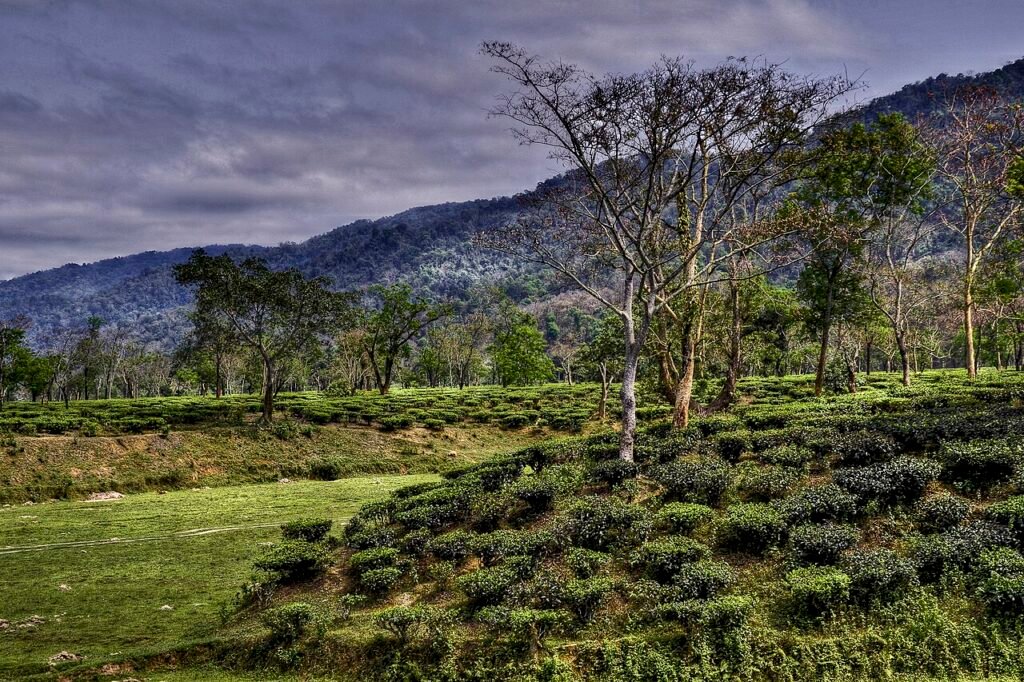
Anaemia Mukt Tea Garden Pilot in Dibrugarh
Open this topic as a separate page, with its MCQs →
Syllabus Mapping
- Prelims: GS Paper I (Economic and Social Development: Social Sector Initiatives; Current events of national importance).
- Mains: GS Paper II (Issues relating to development and management of Social Sector/Services relating to Health; Welfare schemes for vulnerable sections); GS Paper V (Economy of Assam: Government Welfare Schemes for Women, Children and Laborers).
Why in News? On 2 November 2026, the Dibrugarh district administration and the District Health Society launched a pilot called ‘Anaemia Mukt Tea Garden’. It covers eight tea estates of the district. It is a 12-month, community-based programme to screen, treat and prevent anaemia.
Current Context (The Trigger)
- Launch: The pilot started in Dibrugarh on 2 November 2026. Launch-day activities were held in all the selected estates.
- Eight estates: The estates are Dakshin Jalan Nagar, Manohari, Lengrai, Jutlibari, Lepetkata, Moran, Dinjoye and Achabam. They fall under six Block Primary Health Centres.
- Who is covered: The programme covers children aged 0-5 years. It also covers adolescent girls, women, pregnant women and lactating mothers.
- First steps: The opening work included awareness programmes, baseline surveys and haemoglobin tests. These give the district a starting picture of anaemia in each estate.
- Duration and partners: The pilot follows a 12-month action plan. The Health Department works with the Social Welfare and Education departments and with tea garden management committees.
Core Concepts & Static GK
- What is anaemia: It is a condition of low haemoglobin. This reduces the blood’s capacity to carry oxygen to vital organs. Iron deficiency is the main cause.
- Other causes: Lack of folate, vitamin B12 and vitamin A can also cause anaemia. Poor nutrition, early pregnancies and limited access to iron-rich foods add to the burden.
- Most vulnerable groups: Children under 5 years, menstruating adolescent girls and women, and pregnant and postpartum women are the most exposed.
- Effects: In children, iron deficiency harms mental and motor development. In pregnancy, it can lead to perinatal loss, prematurity and low-birth-weight babies.
- Intergenerational cycle: Health officials say the pilot aims to build habits that stop anaemia returning across generations. An anaemic mother is more likely to have a low-birth-weight baby, so the problem passes on.
Institutional Machinery
- District Health Society: It is the district administration’s partner in the pilot.
- Block-level health units: Block Primary Health Centres, subdivisional health officers and block-level officials carry out the work on the ground.
- Tea garden management committees: Their representatives joined the launch. They share the task of reaching beneficiaries.
- National Health Mission: Health is a state subject. But the Centre gives states money and technical support through the National Health Mission (NHM) and their annual Programme Implementation Plans.
Schemes & Initiatives
- Anaemia Mukt Bharat (AMB): It was launched in 2018 with a 6x6x6 strategy. This means six interventions, six target groups and six institutional mechanisms.
- Six target groups: They are children aged 6-59 months and children aged 5-9 years. They also include adolescents aged 10-19 years, pregnant women, lactating women and women aged 15-49 years.
- Six interventions: They are IFA (iron and folic acid) supplements, deworming and year-round behaviour change communication. The other three are digital testing with treatment, IFA-fortified food in public health programmes, and action on non-nutritional causes in endemic pockets.
- Target: AMB set a target of cutting anaemia by 3 percentage points a year, measured from the NFHS-4 baseline.
- National Deworming Day: Children and adolescents aged 1-19 are dewormed twice a year, on 10 February and 10 August.
- Linked programmes: AMB runs through the National Iron Plus Initiative and the Weekly Iron Folic Acid Supplementation programme. It also works with POSHAN Abhiyaan and the School Health Programme.
Reports, Indices & Data
- India, children: In NFHS-5 (National Family Health Survey, 2019-21), 67.1% of children aged 6-59 months were anaemic. The figure was 58.6% in NFHS-4.
- India, adolescent girls: 59.1% of adolescent girls were anaemic in NFHS-5.
- India, women: Anaemia among women aged 15-49 was 57% in NFHS-5, against 53.1% in NFHS-4.
- Assam, children: Anaemia among Assam’s children aged 6-59 months rose from 35.7% in NFHS-4 to 68.4% in NFHS-5. That is a jump of 32.7 percentage points.
- Assam, women: Anaemia among Assam’s women aged 15-49 rose from 46% in NFHS-4 to 65.9% in NFHS-5, a rise of 19.9 percentage points.
Assam & Northeast Linkages
- Dibrugarh district: The pilot is a district-level initiative. The Dibrugarh administration leads it with the District Health Society.
- Healthcare gap in gardens: A CAG (Comptroller and Auditor General) performance audit, Report No. 5 of 2024, counted 800 tea gardens in Assam. Of these, 414 had garden hospitals, 210 had dispensaries and 176 had no health facility.
- Sample audit: Among 40 test-checked estates, 26 had hospitals, 10 had dispensaries and 4 had no medical facility for workers.
- Shared duty: Under the Plantations Labour Act, 1951, the welfare of tea tribes is shared by the State Government and the plantation management.
- Convergence: The pilot ties Health, Social Welfare and Education to garden managements. This is the kind of joint effort the garden belt has lacked.
Prelims Trap Zones (Watch out for)
- Number of estates: The pilot covers eight estates, not six. Six is the number of Block Primary Health Centres.
- Duration: The action plan is 12 months, not 24 months or five years.
- Age group: The pilot names children aged 0-5 years. Under AMB, the youngest group is 6-59 months.
- Launch year of AMB: AMB began in 2018. Do not confuse it with the Dibrugarh pilot of 2026.
- Deworming dates: National Deworming Day is on 10 February and 10 August, not 10 April or 10 October.
Introduction
On 2 November 2026, Dibrugarh started ‘Anaemia Mukt Tea Garden’, a 12-month pilot across eight tea estates. The need is clear: in NFHS-5, 68.4% of Assam’s children aged 6-59 months were anaemic, against 67.1% nationally. The pilot tests whether a district can treat anaemia and change daily habits together, in a community with weak health access.
Why Tea Gardens Need a Focused Anaemia Drive
- High state burden: Child anaemia in Assam nearly doubled, from 35.7% in NFHS-4 to 68.4% in NFHS-5. A district drive tackles a visible state-level problem.
- Vulnerable life stages: Children, adolescent girls and mothers face the greatest risk, and the pilot covers all of them. Treating one group alone would miss the link between a mother’s health and her child’s.
- Health service gaps: The CAG audit found that 176 of Assam’s 800 tea gardens had no health facility. Residents of such estates depend on distant public centres.
- Serious consequences: Iron deficiency in pregnancy can lead to prematurity and low birth weight. In children, it slows mental and motor development.
- Break the cycle: Officials say the aim is lasting awareness so that anaemia does not return across generations. This makes prevention as important as treatment.
Key Features of the Pilot
- Model estates: The initiative wants these gardens to become models of anaemia prevention and control. Success can then be copied in other estates of the district.
- Combined approach: Screening and clinical care go together with nutrition awareness and community participation. No single tool is expected to work alone.
- Baseline first: Awareness camps, surveys and haemoglobin tests came on day one. They give a starting figure against which the year’s progress can be judged.
- Interdepartmental convergence: Health, Social Welfare and Education work with garden management committees. Each department reaches a different group, such as anganwadi children or schoolgirls.
- Preventive focus: The programme does not stop at treating cases once they are found. It tries to build lasting healthy habits in the estates through behaviour change.
Government Initiatives (National & Assam)
| Level | Initiative | Purpose & Impact |
|---|---|---|
| National | Anaemia Mukt Bharat (2018) | Six interventions for six target groups under the 6x6x6 strategy. |
| National | Weekly Iron Folic Acid Supplementation | Reduces anaemia among adolescents aged 10-19 years. |
| National | National Deworming Day | Mass deworming of children and adolescents aged 1-19 every 10 February and 10 August. |
| National | Digital tools under AMB | Track anaemia screening and supply data in real time. |
| Assam (district) | Anaemia Mukt Tea Garden | Pilot in eight estates of Dibrugarh with a 12-month plan. |
Challenges
- Thin health infrastructure: The CAG found 176 of 800 gardens without any health facility. In its sample, 16 of 36 garden hospitals and dispensaries were in poor condition, so many estates lack a place to test and treat.
- Few doctors: Among the test-checked estates, only 15 garden hospitals had a full-time doctor. The rest ran with part-time doctors or none, which weakens follow-up care.
- Short project period: A 12-month plan may be too short to change food habits built over generations. Gains may fade once the pilot ends.
- Small coverage: Only eight estates are included at present. Hundreds of other gardens in Assam stay outside the programme.
- Supplement compliance: Iron tablets and syrup work only when taken regularly over months. Side effects and forgetfulness often make families stop midway.
- Diet constraints: Three in four Indian women have low dietary iron intake. Advice on better food counts for little if households cannot afford iron-rich items.
Way Ahead
- Use the baseline data: The District Health Society should publish estate-wise haemoglobin results at 6 and 12 months. Clear numbers show what worked and where to focus.
- Scale up if it works: After an independent review, the Assam Health Department can extend the model. Other tea districts such as Tinsukia and Golaghat could come next.
- Fix garden health facilities: The Labour and Welfare and Health departments should act on the CAG findings. Garden managements must provide the hospitals and dispensaries the Plantations Labour Act, 1951 requires, starting with the 176 gardens that have none.
- Link to AMB supplies: The pilot should draw on AMB’s IFA stocks, deworming days and digital testing. This keeps supplies from running short in the estates.
- Involve frontline workers: Accredited Social Health Activists (ASHAs), anganwadi workers and self-help groups can visit households. They can remind families to keep taking supplements.
- Improve diets: Social Welfare can promote kitchen gardens. It can also use IFA-fortified food in anganwadi centres and garden crèches, as AMB already requires in public health programmes.
Conclusion
Dibrugarh’s pilot is useful because it treats anaemia as a community habit, not only a medical case. Its worth will depend on whether the gains last beyond the first 12 months and whether estate hospitals are strengthened. If it succeeds, it can become a model for the tea belt of Assam.
Asked in APSC
- APSC Mains 2024, GS Paper 2 (15 marks): “Despite tea being a major plantation industry in India, tea estates are in a deplorable condition.” Evaluate the effectiveness of Government policies and interventions for the improvement of the Assam tea estate workers.
Dissent, Disinformation and National Resilience
Open this topic as a separate page, with its MCQs →
Syllabus Mapping
- Prelims: GS Paper I (Indian Polity and Governance: Constitution, Rights issues; Current events of State/National importance).
- Mains: GS Paper II (Governance, Constitution, Polity: significant provisions of the Constitution); GS Paper III (Challenges to internal security through communication networks, role of media and social networking sites in internal security challenges); GS Paper IV (Ethics: accountability and ethical governance, information sharing and transparency); GS Paper V (Governance, Polity and Security of Assam).
Why in News? An opinion piece by Debika Dutta on page 6 of The Assam Tribune (3 November 2026) argues that India must tell dissent apart from deliberate destabilisation. It asks the state to act on verifiable evidence against organised manipulation, while protecting peaceful criticism and public trust. It gives special weight to Assam and the Northeast, where rumours can reopen old wounds.
Current Context (The Trigger)
- Core argument: The writer says a country can be defeated without losing a war. This happens when citizens stop trusting one another and political disagreement turns into hostility.
- Digital speed: The piece notes that a local complaint can become a national controversy in a few hours. A misleading video can stir tension before anyone checks it.
- Dissent versus destabilisation: In the writer’s words, “Criticism is not disloyalty, peaceful protest is not subversion, and opposition to a government is not opposition to the nation.”
- Evidence test: Similar slogans, common demands or foreign contacts do not by themselves prove a hidden plot. Charges of unlawful funding or interference need verifiable evidence and an impartial investigation.
- Shared responsibility: The government must act on credible threats without treating criticism as hostility. The opposition, in turn, must not deliberately sharpen social tensions for party gain.
Core Concepts & Static GK
- Dissent: Dissent means peaceful disagreement with the government or its policies. The op-ed says India’s freedom struggle gave moral legitimacy to challenging authority.
- Destabilisation: The op-ed describes it as using social divisions, magnifying grievances and wearing down trust in institutions. It needs no invading army.
- Misinformation versus disinformation: Misinformation is false content shared without knowing it is false. Disinformation is false content spread on purpose. The op-ed’s examples, such as fabricated images and coordinated online amplification, belong to the second group.
- Freedom of speech and expression: Article 19(1)(a) of the Constitution gives every citizen the right to freedom of speech and expression.
- Reasonable restrictions: Article 19(2) lets the State impose “reasonable restrictions” on this right. The original 1950 text of clause (2) did not use the word “reasonable”. It came in when the First Amendment (1951) replaced the whole clause, with retrospective effect.
- Intermediary: An intermediary is a platform that carries or hosts content posted by others, such as a social media site. The IT Rules 2021 lay down due-diligence duties for such platforms.
Constitutional & Legal Framework
- Grounds in Article 19(2): There are eight grounds. They are sovereignty and integrity of India, security of the State, friendly relations with foreign States, public order, decency or morality, contempt of court, defamation and incitement to an offence.
- Origin of some grounds: The First Amendment (1951) added public order, friendly relations with foreign States and incitement to an offence. The words “sovereignty and integrity of India” came later, through the Sixteenth Amendment (1963).
- Shreya Singhal v. Union of India (24 March 2015): A bench of Justices J. Chelameswar and R.F. Nariman struck down Section 66A of the Information Technology Act, 2000 in full. It held that the section violated Article 19(1)(a) and was not saved by Article 19(2).
- What else Shreya Singhal held: The Court upheld the blocking power in Section 69A and the 2009 blocking rules. It read down Section 79(3)(b), so a platform must act only on actual knowledge from a court order or a government notification.
- IT Rules 2021: The Information Technology (Intermediary Guidelines and Digital Media Ethics Code) Rules were notified on 25 February 2021. They were framed under Section 87(2) of the IT Act and replaced the 2011 Intermediary Guidelines Rules.
- Anuradha Bhasin v. Union of India (10 January 2020): The Supreme Court held that an indefinite suspension of internet services is not allowed. Suspension orders must be proportionate and open to judicial review.
Institutional Machinery
- Two ministries: The Ministry of Electronics and Information Technology administers Part II of the 2021 Rules, on intermediaries. The Ministry of Information and Broadcasting administers Part III, the Code of Ethics for digital news and OTT (online streaming) platforms.
- Grievance officers: Every intermediary’s grievance officer must acknowledge a complaint within 24 hours and resolve it within 15 days. Significant social media intermediaries must also appoint a Chief Compliance Officer, a Nodal Contact Person and a Resident Grievance Officer, all resident in India.
- Three-tier media oversight: Digital news publishers and OTT platforms face a three-tier grievance system. The first tier is the publisher’s own grievance officer. The second is a self-regulatory body headed by a retired Supreme Court or High Court judge or an eminent independent person. The third is an oversight mechanism of the Ministry of Information and Broadcasting.
- Courts as the check: The 2023 amendment that created a government fact-check unit was struck down by the Bombay High Court. The Union’s appeal is now pending before the Supreme Court.
Assam & Northeast Linkages
- Region’s history: The op-ed recalls that Assam and the wider Northeast have lived through insurgency, ethnic conflict, displacement and long mistrust. A fake message can exploit these old sensitivities before the facts come out.
- Peace is more than no violence: The writer argues that real peace rests on trust between communities. People must also feel sure that daily life can carry on safely.
- Damage outlasts the correction: Even after a lie is exposed, the harm done to relations between communities may stay.
- Precedent from 2012: In August 2012, rumours of attacks on people from the Northeast caused panic in cities such as Bengaluru and Pune. The Union Home Ministry banned bulk SMS and MMS across India for 15 days, and the curbs were withdrawn on 30 August 2012.
Prelims Trap Zones (Watch out for)
- Section Trap: Shreya Singhal struck down Section 66A, not Section 69A. The blocking power in Section 69A was upheld.
- Article Trap: Section 66A was held to violate Article 19(1)(a) and was not saved by Article 19(2). The ruling did not rest on Article 21.
- Ground Trap: Sedition is not a ground listed in Article 19(2). The listed grounds include sovereignty and integrity of India, public order, contempt of court, defamation and incitement to an offence.
- Amendment Trap: Public order, friendly relations with foreign States and incitement to an offence came through the First Amendment (1951). “Sovereignty and integrity of India” came through the Sixteenth Amendment (1963), not the First.
- Status Trap: The Bombay High Court struck down the fact-check unit provision on 20 September 2024. On 10 March 2026 the Supreme Court refused to stay that judgment and issued notice on the Union’s appeal, so the matter is still pending.
- Nature Trap: The IT Rules 2021 are subordinate legislation framed under Section 87(2) of the IT Act. They are not an Act of Parliament.
Introduction
On 3 November 2026 an op-ed in The Assam Tribune warned that a country can be weakened from within. This happens when disagreement is turned into distrust, and distrust into division. The Constitution protects speech under Article 19(1)(a). It allows reasonable restrictions under Article 19(2). The real task, as the piece argues, is to guard against organised manipulation without treating every critic as a threat.
Dissent versus Destabilisation: Why the Line Matters
- Criticism is not disloyalty: The op-ed states that “No government possesses a monopoly on patriotism.” Opposing a government is different from opposing the nation.
- Freedom struggle legacy: The piece reminds readers that the freedom movement made it morally right to challenge authority. The Constitution also protects the right to question power and demand accountability.
- Limits exist too: The writer adds that constitutional freedoms cannot protect clearly unlawful acts. Credible evidence of organised wrongdoing must be investigated without fear or favour.
- Constitutional basis: Article 19(2) lists eight grounds for restriction. Among them are public order and the sovereignty and integrity of India. A curb on speech must fit one of these grounds and must be reasonable.
- Equal standard: The op-ed asks that the same standards apply whatever the ideology, party or identity of the accused.
How Digital Manipulation Works
- Fabricated content: The piece lists fake images, selectively edited videos and anonymous allegations as tools. Together they can create a false picture of wide public anger.
- Repetition builds belief: A lie repeated often can start to look true. Emotional outrage then pushes aside calm judgement.
- Riding real grievances: Manipulation is most dangerous when it attaches itself to genuine complaints. One administrative failure can be sold as proof that every institution is corrupt.
- Targeting communities: A fair demand for justice can be turned into hostility towards a whole community.
- Loss of faith in truth: The deeper harm, says the writer, is that citizens lose confidence in institutions. They may even stop believing that facts can be established at all.
Legal and Judicial Safeguards
- Vagueness struck down: In Shreya Singhal (2015), the Supreme Court struck down Section 66A of the IT Act. It violated Article 19(1)(a) and fell outside Article 19(2).
- Blocking retained: The same judgment upheld Section 69A and the 2009 blocking rules. So the State keeps a lawful route, with procedure and safeguards, to block harmful content.
- Intermediary liability: The Court read down Section 79(3)(b). Platforms need to take down content only on a court order or a government notification.
- Internet shutdowns: Anuradha Bhasin (2020) held that an indefinite internet suspension is not allowed. Orders must be proportionate and open to judicial review.
- Fact-check unit: The 2023 IT Rules amendment let a government fact-check unit flag online content about the Central Government’s business as fake. After a split verdict on 31 January 2024, the third judge, Justice A.S. Chandurkar, struck it down on 20 September 2024 as violating Articles 14 and 19.
- Pending appeal: On 10 March 2026 a bench headed by Chief Justice Surya Kant refused to stay the High Court judgment. It issued notice on the Union’s appeal and sent the matter to a three-judge bench.
The Assam and Northeast Dimension
- Fragile trust: The op-ed notes that the region has seen insurgency, ethnic conflict and displacement. So false messages find easy ground here.
- Rumour has a record: In August 2012, rumours of revenge attacks followed violence in Assam. They drove many Northeast people out of Bengaluru, Pune and other cities. The Union Home Ministry then banned bulk SMS and MMS across India for 15 days.
- Calibrated curbs: At first no one could send more than five SMS at one go. The cap was raised to 20 SMS a day from 23 August 2012, and the curbs ended on 30 August 2012.
- Prompt official communication: The piece wants authorities to speak quickly in sensitive situations. Verified information should also be easy for the public to find.
- Roles for media and citizens: Journalists must keep proven facts apart from allegations. Citizens should know that forwarding an inflammatory post can cause real harm offline.
Challenges
- Speed of spread: Content goes viral within hours, long before any check, as the op-ed points out.
- Vigilance versus suspicion: Common slogans or foreign contacts can be wrongly read as proof of a conspiracy. Unsupported charges then deepen the very mistrust they claim to fight.
- Risk of overbroad control: The Bombay High Court struck down government fact-checking of online content about the Centre’s own business. This shows how state-led truth-setting can clash with free speech.
- Intermediary accountability: Platforms must acknowledge complaints within 24 hours and resolve them within 15 days. However, after Shreya Singhal, their duty to take content down depends on a court order or government notification.
- Unaddressed grievances: The op-ed warns that corruption, official indifference and delayed justice give manipulators fertile ground. Brushing off criticism as politically motivated only deepens discontent.
- Partisan exploitation: When rivals are painted as enemies and compromise is called surrender, social divisions become easier to exploit.
Way Ahead
- Evidence first: Law-enforcement agencies should act on evidence, not political pressure. Every allegation of foreign funding or interference needs an impartial investigation.
- Proportionate restrictions: Blocking orders and internet suspensions should follow the tests laid down in Shreya Singhal and Anuradha Bhasin. Orders should carry reasons and be open to review.
- Rapid verified communication: District administrations in Assam and the Northeast should issue quick, verified updates during tense situations. This leaves no gap for rumours to fill.
- Platform accountability: The Ministry of Electronics and Information Technology should make sure large platforms meet the grievance timelines and officer rules of the 2021 Rules.
- Media and citizen literacy: Newsrooms should label fact and allegation separately. Citizens should pause before forwarding inflammatory messages.
- Responsive governance: The op-ed calls responsive administration, impartial institutions and transparent communication tools of national resilience. Fixing real grievances removes the raw material that manipulators use.
Conclusion
The op-ed’s central warning is that a democracy “cannot defend truth by abandoning the standards through which truth is established.” For Assam and the rest of India, resilience will come from three things. The state must prove wrongdoing with evidence. It must protect peaceful dissent. It must also fix the grievances that manipulators exploit.
Asked in APSC
- APSC Mains 2023, GS Paper 2 (15 marks): “Right to dissent is the lifeline of democracy.” Explain.
- APSC Mains 2020, GS Paper 3 (10 marks): Use of various social media has become extremely popular in the present era. Explain how its misuse may be a threat to the national security of India and also how new legislations can help in tackling these issues.
Bharat Renewable Energy Summit and the 500 GW Target
Open this topic as a separate page, with its MCQs →
Syllabus Mapping
- Prelims: GS Paper I (Economic and Social Development: Sustainable Development; General issues on Environment ecology, Bio-Diversity and Climate Change; Current events of State/National importance).
- Mains: GS Paper III (Infrastructure: Energy; Indigenization of technology and developing new technology; Conservation, environmental pollution and degradation). GS Paper V (Economy of Assam: Infrastructure & Resources, Major Development Projects, Programmes and Schemes).
Why in News? Prime Minister Narendra Modi inaugurated the Bharat Renewable Energy Summit & Expo 2026 in New Delhi on Monday, 2 November. He said India’s non-fossil capacity is over 300 GW and voiced confidence of meeting the 500 GW renewable energy target by 2030.
Current Context (The Trigger)
- The event: The Prime Minister spoke at the inaugural session of the Bharat Renewable Energy Summit & Expo 2026 in New Delhi on 2 November. Union Minister for New and Renewable Energy Pralhad Joshi and four Chief Ministers, including Assam’s Himanta Biswa Sarma, were present at the inauguration.
- Capacity claim: Modi said India’s non-fossil fuel capacity is over 300 GW. He said about 500 GW of renewable capacity will be added over the next 10 to 11 years, and called the task tough but a must.
- West Asia link: The crisis in West Asia hit global energy supplies earlier in 2026 and hurt many countries. Modi argued that without the last 10 years of renewable build-up, India’s energy crisis could have been worse than elsewhere.
- Investor pitch: Modi said investment opportunities worth over Rs 20 lakh crore will open up in renewable energy by the end of the decade. He also said India is among the top three countries in solar and renewable energy.
- Calls for action: He asked for every government building, school, college, hospital and street-lighting system to be connected to solar power. He also asked for an indigenous storage solution and new battery storage capacity.
- Green hydrogen: Highlighting the National Green Hydrogen Mission, Modi said India targets an annual production capacity of 50 lakh tonnes.
Core Concepts & Static GK
- Non-fossil vs renewable: Non-fossil capacity covers renewables plus nuclear. On 31 March 2026, India’s non-fossil capacity was 283.46 GW, of which 274.68 GW was renewable and 8.78 GW nuclear.
- Where 500 GW comes from: The Prime Minister announced the target in India’s national statement at the COP26 summit in Glasgow on 1 November 2021. It reads: take non-fossil energy capacity to 500 GW by 2030. At the same summit he set a net zero goal for 2070.
- Capacity is not generation: Non-fossil sources are over 54 per cent of installed capacity (around 552 GW in July 2026). Yet they gave only 29.2 per cent of the power generated in 2025-26, and coal still supports over 70 per cent of generation. Solar and wind run only when the sun shines or the wind blows, so they produce less power per GW installed.
- Why storage matters: Battery storage saves daytime solar power for the evening peak. This is why the Prime Minister asked for an indigenous storage solution.
- Units: One GW (gigawatt) equals 1,000 MW (megawatts). The capacity figures at the summit are in GW of installed capacity, not units of power generated.
Institutional Machinery
- MNRE: The Ministry of New and Renewable Energy is the nodal ministry. It runs the PLI scheme for high efficiency solar modules, PM-KUSUM, PM Surya Ghar and the National Green Hydrogen Mission.
- UNFCCC route: India’s climate targets are submitted to the United Nations Framework Convention on Climate Change as Nationally Determined Contributions (NDCs). The Cabinet approved the updated NDC on 3 August 2022.
- Assam bodies: Assam Power Distribution Company Ltd (APDCL) is the nodal agency for the state’s Solar Power Promotion Policy 2025. The Namrup solar project is a joint venture of Assam Power Generation Corporation Ltd (APGCL) and Oil India Ltd.
Schemes & Initiatives
- PM Surya Ghar: Muft Bijli Yojana: The Cabinet approved it on 29 February 2024 with an outlay of Rs 75,021 crore. It aims at rooftop solar for one crore households, with up to 300 units of free power a month.
- PM-KUSUM: The scheme backs solar for farmers with central support of Rs 34,422 crore. It was set a goal of 34.8 GW by 31 March 2026. It has three components: A (small solar plants on farmers’ land), B (stand-alone solar pumps) and C (solarisation of grid-connected pumps).
- PLI for solar modules: MNRE’s Production Linked Incentive scheme for high efficiency solar PV modules has an outlay of Rs 24,000 crore. Its two tranches allocated 8,737 MW and 39,600 MW, a total of 48,337 MW of manufacturing capacity.
- National Green Hydrogen Mission: The Cabinet approved it on 4 January 2023 with an outlay of Rs 19,744 crore. It targets a green hydrogen production capacity of 5 million metric tonnes (MMT) a year by 2030.
- Floating solar scheme: The government approved the Pradhan Mantri Surya Sarovar Yojana on 31 July 2026 with an outlay of Rs 5,070 crore. It targets 5,000 MW of floating solar projects with energy storage.
Reports, Indices & Data
- Latest capacity: India’s non-fossil capacity was 300.50 GW on 31 July 2026. This is over 60 per cent of the 500 GW goal.
- Source-wise split (31 July 2026): Solar 164.59 GW, wind 58.14 GW, hydro (large and small) 57.24 GW, bio-power 11.75 GW and nuclear 8.78 GW.
- Record year: India added 55.29 GW of non-fossil capacity in 2025-26, the highest in any year. Solar additions of 44.61 GW beat the target of 34 GW.
- Global rank: India is third in renewable installed capacity, with 250.52 GW. This is as per IRENA (International Renewable Energy Agency) Renewable Energy Statistics 2026, with data as on December 2025. India moved ahead of Brazil to take this place.
Assam & Northeast Linkages
- Assam at the summit: Chief Minister Himanta Biswa Sarma was among the Chief Ministers at the inauguration in New Delhi.
- Solar Power Promotion Policy 2025: Assam notified this policy with a target of at least 3,500 MW of solar by 2030. It is valid until 31 March 2030.
- What the policy covers: It covers ground-mounted and floating solar, rooftop solar and battery energy storage. It also promotes agri-voltaics, where panels stand on stilts and farming goes on below.
- Namrup project: Chief Minister Sarma laid the foundation stone of a 25 MW solar project at the Namrup Thermal Power Station, Dibrugarh district, in June 2024. It is a joint venture of APGCL and Oil India, spread over 108 acres.
Prelims Trap Zones (Watch out for)
- Non-fossil vs renewable trap: The official 2030 goal is 500 GW of non-fossil capacity, which includes nuclear and large hydro. The paper reports the Prime Minister calling it a renewable energy target, but the COP26 wording is “non-fossil”.
- Stock vs addition trap: The COP26 goal is a total (stock) of 500 GW non-fossil capacity by 2030, against 300.50 GW in July 2026. Separately, the Prime Minister spoke of adding about 500 GW of renewable capacity over the next 10 to 11 years, a longer time frame. Do not mix the two figures.
- Source of the target: The 500 GW pledge came at COP26 Glasgow in 2021. The 2022 updated NDC states its power goal differently: about 50 per cent of installed electric capacity from non-fossil sources by 2030.
- Unit trap: 50 lakh tonnes of green hydrogen is the same as 5 MMT. Do not read it as 50 MMT.
- NDC numbers trap: The 2022 updated NDC has a 45 per cent emissions intensity cut and a 50 per cent non-fossil capacity share by 2030. The new NDC for 2031-35 has 47 per cent and 60 per cent by 2035.
- Surya Ghar trap: The target is one crore households. By early August 2026 just over 50 lakh households had rooftop solar under the scheme, so the target is not yet met.
Introduction
On 2 November 2026, the Prime Minister spoke at the Bharat Renewable Energy Summit. He said India has over 300 GW of non-fossil capacity. He also said it will add about 500 GW of renewable capacity over the next 10 to 11 years. The pledge matters because the West Asia crisis showed how exposed fuel-importing economies are to supply shocks. For Assam, it opens space for solar, storage and green investment under its new solar policy.
Why 500 GW Matters (Importance)
- Energy security: Modi said India’s energy crisis could have been worse without the last 10 years of renewable build-up. Home-grown solar and wind power reduce dependence on imported fuel.
- Climate commitment: The 500 GW goal sits beside the 2070 net zero pledge made at COP26 Glasgow. India reached a 50 per cent non-fossil share of installed capacity in June 2025, five years ahead of its 2030 NDC goal.
- Investment pull: The Prime Minister put the new opportunities at over Rs 20 lakh crore by the end of the decade. Political and policy stability is his main pitch to investors.
- Import savings from hydrogen: The Green Hydrogen Mission is expected to cut fossil fuel imports by over Rs 1 lakh crore (cumulative) by 2030. It is also expected to bring in over Rs 8 lakh crore of investment and create over 6 lakh jobs.
- Global standing: India ranks third in renewable installed capacity, behind China and the USA, as per IRENA data to December 2025. This gives it weight in climate talks.
Government Initiatives (National & Assam)
| Level | Initiative | Purpose & Impact |
|---|---|---|
| Centre | PM Surya Ghar: Muft Bijli Yojana (Rs 75,021 crore) | Rooftop solar for one crore households. Over 50 lakh households had rooftop solar under it by August 2026. |
| Centre | PM-KUSUM (Rs 34,422 crore) | Solar plants and pumps for farmers, so that farm power is cleaner and diesel use falls. |
| Centre | PLI for high efficiency solar PV modules (Rs 24,000 crore) | Builds home-made module capacity. Allocated capacity is 48,337 MW. |
| Centre | National Green Hydrogen Mission (Rs 19,744 crore) | Targets 5 MMT green hydrogen production capacity a year by 2030. |
| Assam | Solar Power Promotion Policy 2025 | At least 3,500 MW of solar by 2030, with rooftop, floating solar and storage. The state may waive part of transmission and distribution charges for eligible users. |
| Assam | Namrup 25 MW solar project | Joint venture of APGCL and Oil India. Its foundation stone was laid in June 2024. |
Where India Stands and the Gap to 2030
- Progress so far: Non-fossil capacity rose to 300.50 GW by 31 July 2026. That is over 60 per cent of the 500 GW goal.
- Size of the gap: By our estimate, about 200 GW more is needed by 2030. This is simple subtraction: 500 GW minus 300.50 GW is 199.50 GW.
- Pace needed: Spread over the roughly four years left, this is our estimate of about 50 GW a year. The record of 55.29 GW in 2025-26 shows it is possible, but that pace must hold every year.
- Solar leads: Solar is 164.59 GW, more than half of the total non-fossil capacity. Wind is second with 58.14 GW.
- Mixed grid: Non-fossil sources are over 54 per cent of capacity, but coal supports over 70 per cent of generation. The grid still depends heavily on coal.
Challenges
- Pace of addition: By our estimate, about 200 GW must be added in roughly four years. Even the record 55.29 GW of 2025-26 leaves little room for a slow year.
- Storage shortfall: The Prime Minister himself asked for an indigenous storage solution and new battery capacity. Without storage, solar power is wasted in the day and short in the evening.
- Coal dependence: Non-fossil sources gave only 29.2 per cent of generation in 2025-26, and coal still supports over 70 per cent. Shifting the energy mix will take more than building plants.
- Rooftop lag: PM Surya Ghar aims at one crore households, but just over 50 lakh had rooftop solar by August 2026. Reaching the rest needs faster loans, vendors and net metering.
- Funding need: The Prime Minister expects investment opportunities of over Rs 20 lakh crore by the end of the decade. Investors will need stable tariffs and timely payments from power distribution companies to use them.
- Land and local fit in Assam: Assam’s policy allows solar on government, fallow and tea estate land and on water bodies. Solar on tea estate land is capped at 5 per cent of the landholding, which limits large plants there.
Way Ahead
- Solar on public buildings: States and the Centre should put solar on government buildings, schools, colleges, hospitals and street lights, as the Prime Minister asked. This builds demand with no new land.
- Home-grown storage: MNRE should push battery and storage manufacturing with incentives, as it did for solar modules under the PLI scheme. This also reduces import dependence.
- Faster rooftop spread: Under PM Surya Ghar, states and distribution companies should clear applications faster to move well beyond 50 lakh households.
- Use Assam’s policy tools: APDCL should use the 2025 policy to allot floating solar on water bodies and agri-voltaics on farm land, both allowed by the policy.
- Floating solar with storage: The newly approved Pradhan Mantri Surya Sarovar Yojana backs floating plants with storage, which suits Assam’s many water bodies.
- Grow green hydrogen demand: MNRE should secure buyers in refineries and fertiliser plants so that the 5 MMT target has real demand.
Conclusion
India has crossed 60 per cent of its 500 GW goal. But the last 200 GW or so will be harder, because it needs storage, grid support and money together. If Assam and other states match the Centre’s pace on rooftop, floating solar and storage, the 2030 target looks achievable.
Asked in APSC
- APSC Mains 2022, GS Paper 5 (15 marks): What are ‘Panchamrit Strategies’ declared by India to climate change? What strategy our State should adopt to contribute towards achieving our country’s target of 500 GW of non-fossil fuel based energy capacity by 2030?
Skilling for International Mobility and PM-SETU in Assam
Open this topic as a separate page, with its MCQs →
Syllabus Mapping
- Prelims: GS Paper I (Economic and Social Development: Social Sector Initiatives; Current events of State/National importance).
- Mains: GS Paper II (Issues relating to development and management of Social Sector/Services relating to Health, Education, Human Resources). GS Paper III (Economic Development: employment and human resources). GS Paper V (Economy of Assam: Major Development Projects, Programmes and Schemes).
Why in News? On 2 November 2026, the Union Ministry of Skill Development and Entrepreneurship (MSDE) held a programme in Guwahati on “Skilling for International Mobility and PM-SETU”. MSDE signed an MoU with the Assam Government. Letters of intent were also exchanged for two Industrial Training Institute (ITI) clusters in Jorhat and Tinsukia.
Current Context (The Trigger)
- The event: MSDE convened the programme in Guwahati on 2 November 2026. Senior Central and Assam officials, industry leaders and other stakeholders attended.
- The MoU: MSDE and the Government of Assam signed a memorandum of understanding. It will lead to a Sectoral Industry Integrated Centre (SIIC) in the State.
- Two ITI clusters: Letters of intent were exchanged for ITI clusters in Jorhat and Tinsukia. Numaligarh Refinery Ltd (NRL) and Oil India Ltd (OIL) are set to support them under PM-SETU.
- Assam’s own ideas: The discussions covered international mobility, WorldSkills, the Assam Government’s CM FLIGHT Scheme and a vision for a Global Skill Center.
- Keynote: Union Minister of State Jayant Chaudhary said PM-SETU aims to modernise ITIs. The goal is future-ready skills for Northeast youth, for jobs in India and abroad, especially in tourism and hospitality.
- Finance Minister’s remark: Separately, at an HSBC event in Mumbai on 2 November, Nirmala Sitharaman called AI skilling for youth very important. She proposed AI skills at district level and said ITIs are “not doing so well”.
Core Concepts & Static GK
- PM-SETU: The full form is Pradhan Mantri Skilling and Employability Transformation through Upgraded ITIs. Prime Minister Narendra Modi launched it on 4 October 2025 at Vigyan Bhawan, New Delhi.
- Centrally Sponsored Scheme: PM-SETU is a Centrally Sponsored Scheme, so the Centre and the States share its cost. Industry also puts in money.
- Hub-and-spoke model: A Hub ITI is linked with four Spoke ITIs on average. Spokes share the hub’s advanced infrastructure, modern trades, digital learning and incubation facilities.
- Cluster: One cluster means one Hub ITI plus its Spokes. The National Steering Committee has approved a nationwide rollout across all 200 identified clusters.
- ITI: An Industrial Training Institute gives vocational training under the Craftsmen Training Scheme (CTS). Courses last from six months to two years, depending on the trade.
- Strategic Investment Plan (SIP): A company that wants to partner a cluster must submit an SIP. An approved partner is called the Anchor Industry Partner.
- Special Purpose Vehicle (SPV): Upgraded clusters are to be run by industry-led SPVs. The proposed ownership gives 51% to the Anchor Industry Partner and 24.5% each to the Centre and the State.
Institutional Machinery
- Directorate General of Training (DGT): This MSDE body is the apex organisation for vocational training. It frames policies, norms and standards, and handles curriculum, affiliation, instructor training and trade testing.
- State control of ITIs: ITIs are under the administrative and financial control of State Governments and Union Territory administrations. States lead the selection of ITIs under PM-SETU, in consultation with industry.
- National Steering Committee (NSC): MSDE set up the NSC, chaired by the Secretary, MSDE. It gives direction, finalises operational guidelines and monitors implementation.
- State Steering Committees: By October 2026, 35 States and Union Territories had formed State Steering Committees. 36 had identified clusters and created State budget heads.
- Assam’s skill department: In Assam, skilling is handled by the Skill, Employment and Entrepreneurship Department. The Assam Skill Development Mission works under it as the nodal skilling agency.
Schemes & Initiatives
- PM-SETU outlay: The total outlay is Rs 60,000 crore. The Centre gives Rs 30,000 crore, States Rs 20,000 crore and industry Rs 10,000 crore.
- Cabinet decision: The Union Cabinet approved the scheme on 7 May 2025 as the National Scheme for ITI Upgradation and five National Centres of Excellence for Skilling. The Asian Development Bank and the World Bank are to co-finance half of the Central share, equally.
- Targets: The Cabinet release aimed to skill 20 lakh youth over five years. It also planned pre-service and in-service training for 50,000 trainers.
- Component I and II: Component I upgrades 1,000 Government ITIs (200 Hub and 800 Spoke ITIs). Component II strengthens five National Skill Training Institutes (NSTIs) at Bhubaneswar, Chennai, Hyderabad, Kanpur and Ludhiana.
- New-age courses: The DGT has introduced 32 new-age courses under the CTS. They include Artificial Intelligence, Cyber Security, Drones, Robotics and Green Hydrogen.
- Skill India International Centres: MSDE has set up seven such centres, at Bengaluru, Bhubaneswar, Guwahati, Hyderabad, Kanpur, Ludhiana and Varanasi. They give domain skills, language training and pre-departure orientation for overseas jobs.
Reports, Indices & Data
- ITI growth: The number of ITIs, Government and private, rose from 9,776 in 2014 to 13,888 in 2026, an increase of 42%.
- Enrolment: ITI enrolment rose from 9.51 lakh in 2014-15 to 14.70 lakh in 2025-26, an increase of 54%.
- One-year progress: By 3 October 2026, 850 ITIs were identified: 172 Hub and 678 Spoke ITIs.
- SIPs approved: The NSC approved SIPs for 14 ITI clusters in eight States and one UT, with a total investment of Rs 3,446 crore.
Assam & Northeast Linkages
- Jorhat and Tinsukia: The two new Assam clusters have only reached the letter-of-intent stage. Letters of intent are not final approvals.
- Oil-sector backers: NRL and OIL, two oil companies working in Assam, are to support the clusters.
- Guwahati in the first phase: At the launch on 4 October 2025, Guwahati was among 15 hub-and-spoke clusters identified in the first phase of PM-SETU.
- Assam’s sector focus: Assam’s Minister for Skills and Youth Welfare, Biswajit Daimary, stressed the Northeast’s potential in tourism and hospitality.
- Existing centre in Guwahati: Guwahati is one of the seven cities with a Skill India International Centre for overseas job preparation.
Prelims Trap Zones (Watch out for)
- Acronym Trap: The paper expands SIIC as Sectoral Industry Integrated Centre for the new Assam MoU. MSDE also uses SIIC for its seven Skill India International Centres, which prepare youth for overseas jobs. Read the full form before answering.
- Stage Trap: Jorhat and Tinsukia got letters of intent, not sanctioned projects. None of the 14 clusters with approved SIPs is in Assam.
- Share Trap: In the proposed SPV, the Anchor Industry Partner holds 51%. The Centre and the State hold 24.5% each. Do not swap these.
- Scheme-type Trap: PM-SETU is a Centrally Sponsored Scheme with State and industry shares. It is not a Central Sector Scheme fully funded by the Centre.
- Control Trap: ITIs run under State Governments, not directly under MSDE. MSDE’s DGT frames norms and standards.
- Date Trap: The Cabinet approved the scheme on 7 May 2025, but the PM launched it as PM-SETU on 4 October 2025.
- Number Trap: Component I covers 1,000 ITIs: 200 Hubs and 800 Spokes. The five NSTIs belong to Component II.
- Vision Trap: The Global Skill Center was only a “vision” discussed at the event, not a launched centre.
Introduction
On 2 November 2026, MSDE signed an MoU with Assam in Guwahati for a Sectoral Industry Integrated Centre. Letters of intent were also exchanged for ITI clusters in Jorhat and Tinsukia, to be backed by Numaligarh Refinery and Oil India. The event shows a shift in skilling, from government-run workshops to industry-led institutions that also prepare youth for jobs abroad.
Need for Industry-Linked and Global Skilling
- Skills gap: The Finance Minister said on 2 November that even engineering graduates do not match the skills industry needs. She also said ITIs are not doing so well.
- Rising demand for training: ITI enrolment grew from 9.51 lakh in 2014-15 to 14.70 lakh in 2025-26. More learners need courses that employers value.
- New technologies: The DGT has added 32 new-age courses, such as Artificial Intelligence, Drones and Semiconductor Technology. Old trades alone no longer meet industry needs.
- Poor image of ITIs: The Cabinet release of 7 May 2025 said ITI training remains “less aspirational”. Upgraded buildings and modern trades are meant to change that view.
- Overseas opportunity: The Union Minister of State said PM-SETU aims at skills for jobs within India and abroad. Youth who earn abroad can also send income home.
- Local strengths: Assam’s minister pointed to tourism and hospitality as areas where the Northeast has real potential. Trained youth can serve hotels, tours and travel firms at home and overseas.
Significance for Assam
- Industry in governance: Under PM-SETU, a cluster is to be run by an SPV with an industry partner as the majority owner. Training can then follow actual workplace needs.
- Anchor from the oil sector: NRL and OIL work in Assam and know its workforce needs. Their support can tie training to jobs in refining and oil production.
- Upper Assam focus: Jorhat and Tinsukia lie in Upper Assam. Clusters there can serve the oil belt and nearby towns.
- A third cluster: Guwahati was already named among the 15 first-phase PM-SETU clusters in October 2025. With Jorhat and Tinsukia, the State could have clusters in both Lower and Upper Assam.
- Pre-departure support: Guwahati already hosts a Skill India International Centre for overseas job preparation. The new MoU adds a different, sector-focused centre.
- Link to State schemes: The CM FLIGHT Scheme and the Global Skill Center vision were discussed alongside PM-SETU. Together they can give youth a clear path from training to jobs.
Government Initiatives (National & Assam)
| Level | Initiative | Purpose & Impact |
|---|---|---|
| Centre | PM-SETU (approved 7 May 2025, launched 4 October 2025) | Upgrades 1,000 Government ITIs through hubs and spokes, with an outlay of Rs 60,000 crore. |
| Centre | National Skill Training Institutes (five) | NSTIs at Bhubaneswar, Chennai, Hyderabad, Kanpur and Ludhiana get sector-specific National Centres of Excellence. |
| Centre | New-age courses under CTS | The DGT added 32 courses in areas such as Cyber Security and Robotics. |
| Centre | Skill India International Centres | Seven centres, including Guwahati, give language training and pre-departure orientation for overseas jobs. |
| Assam | MoU for Sectoral Industry Integrated Centre | Signed with MSDE on 2 November 2026 to set up a centre in the State. |
| Assam | ITI clusters at Jorhat and Tinsukia | Letters of intent exchanged; NRL and OIL to support under PM-SETU. |
| Assam | CM FLIGHT Scheme | Cited as an Assam Government initiative to link the State’s workforce with global opportunities. |
Challenges
- Intent is not delivery: The Jorhat and Tinsukia clusters are at the letter-of-intent stage. A Strategic Investment Plan must still be approved by the National Steering Committee, as happened for 14 clusters elsewhere.
- Weak ITI image: The Finance Minister herself said ITIs are not doing so well. Young people may still see them as a last choice.
- Shared control: ITIs are under State Governments, while norms come from the DGT. A cluster needs both levels and an industry partner to agree.
- Dependence on a few partners: Industry is to hold 51% of each SPV. If a partner loses interest, a cluster can lose direction, so contracts must be clear.
- Narrow sectors: Tourism and hospitality are the stated focus, but both new clusters have oil-sector backers. Training must match the jobs that actually exist in each district.
- Trained instructors: New-age courses such as Artificial Intelligence need skilled trainers. Without them, new labs will stay under-used.
Way Ahead
- Finalise the Strategic Investment Plans: NRL, OIL and Assam’s Skill, Employment and Entrepreneurship Department should prepare plans for Jorhat and Tinsukia quickly. The National Steering Committee can then approve them.
- Match courses to local jobs: The clusters should offer oil-sector trades near refineries and fields. They should also add hospitality trades for the tourism push.
- Add AI and computer labs: Assam can follow the Finance Minister’s idea of labs for AI, information technology and hardware training. The cluster ITIs are a natural place to start.
- Train instructors first: The DGT and the State should train trainers on new-age courses before classes start. Hub ITIs are meant to house training-of-trainers facilities.
- Link training to placement: Hub ITIs offer placement services. Assam should connect them with the Guwahati Skill India International Centre so that trained youth reach overseas employers.
- Publish progress openly: Assam should report cluster progress, trainee numbers and placements each year. Public data builds trust in ITIs.
Conclusion
The Guwahati MoU and the Jorhat and Tinsukia letters of intent give Assam a real chance to rebuild its ITIs with industry in charge. The result will depend on how fast the intent becomes funded clusters, and on whether courses match the jobs available at home and abroad.
News in Short
- Assam power tariff: The Assam Electricity Regulatory Commission has allowed a tariff rise from November 2026. Low-tension (LT) consumers below 30 kW in the Jeevandhara and domestic categories will pay Rs 0.05 more per unit. Other categories will pay about Rs 0.30 more. The rise lets the Assam Power Distribution Company Limited (APDCL) recover about Rs 156 crore of fuel and power purchase cost adjustment. The recovery will be in stages from November 2026 to March 2027.
- Private medical cyclotron: The foundation stone of the Northeast’s first private medical cyclotron, by Nucleomed, was laid at the AIDC Industrial Estate, Bonda, Guwahati. It will be India’s 14th private medical cyclotron. The planned 18 MeV machine will make isotopes for PET-CT scans and cancer care. The Rs 62 crore project is due by September 2027.
- Digital Life Certificate campaign: The Department of Pension and Pensioners’ Welfare is running the 5th Nationwide Digital Life Certificate Campaign from 1 to 30 November 2026. The drive covers 2,000 cities and districts. It helps pensioners submit their annual life certificates digitally.
- Census 2027: Census 2027 will be India’s first fully digital Census. Enumerators will collect data house to house through a mobile app, and households can also self-enumerate on a web portal. Enumerators will later verify self-enumerated data in the field.
- Container Manufacturing Promotion Scheme: The Union Cabinet recently approved this Rs 10,000 crore scheme, which targets an annual container manufacturing capacity of 7.5 lakh TEUs. TEU means twenty-foot equivalent unit, the standard measure of container capacity. China makes more than 95 per cent of the world’s containers.
- Chavang Kut: This is a major harvest festival of the Kuki-Chin-Mizo communities of Northeast India, traditionally held on 1 November. It marks the end of the harvest season and is linked to jhum (shifting) cultivation in the hills.
- Plastic buy-back in Aizawl: The Republic Veng Sanitation Committee works under the Republic Veng Local Council. It paid residents Rs 30 per kg for plastic bottles and Rs 10 per kg for polythene bags in a drive on 31 October. It bought 116 kg of plastic waste and sold it to a recycler registered with the Mizoram Pollution Control Board.
APSC Prelims MCQs
Practice questions on the topics above
Topic 1: Anaemia Mukt Tea Garden Pilot in Dibrugarh
Q1. The Dibrugarh district administration launched the ‘Anaemia Mukt Tea Garden’ pilot on 2 November 2026. Consider the following statements:
(i) It covers eight tea estates that fall under six Block Primary Health Centres.
(ii) It covers all the tea estates of Dibrugarh district.
(iii) It includes adolescent girls, pregnant women and lactating mothers among its beneficiaries.
Which of the statements given above is/are correct?
- (a) (i) and (iii) only
- (b) (ii) and (iii) only
- (c) (i) and (ii) only
- (d) (i), (ii) and (iii)
Show answer
Answer: (a) Explanation: Statement (i) is correct. The pilot covers eight estates under six Block Primary Health Centres, so the number six refers to the centres and not the estates. Statement (iii) is correct. Besides children aged 0-5 years, the programme names adolescent girls, women, pregnant women and lactating mothers. Statement (ii) is wrong because the pilot covers only eight selected estates, not every estate in the district. Hence options (b), (c) and (d), which include (ii), are wrong. Value addition: Anaemia Mukt Bharat, the national programme, began in 2018 and follows a 6x6x6 strategy for six target groups.
Q2. Anaemia Mukt Bharat (AMB) is the national programme against anaemia. Consider the following statements:
(i) It was launched in 2018 with a 6x6x6 strategy.
(ii) Children aged 6-59 months receive a daily IFA tablet under it.
(iii) Mass deworming of children and adolescents is held every year on 10 February and 10 August.
How many of the statements given above are correct?
- (a) Only one
- (b) Only two
- (c) All three
- (d) None
Show answer
Answer: (b) Explanation: Statements (i) and (iii) are correct. AMB started in 2018 with six interventions, six target groups and six institutional mechanisms. National Deworming Day is held on 10 February and 10 August for ages 1-19. Statement (ii) is incorrect because children aged 6-59 months get biweekly IFA syrup, not a daily tablet. Daily IFA tablets are meant for pregnant women from the second trimester onwards. So only two statements are correct, and options (a), (c) and (d) fail. Value addition: AMB set a target of cutting anaemia by 3 percentage points a year from the NFHS-4 baseline.
Q3. Match List-I with List-II:
| List-I | List-II |
|---|---|
| a. Anaemia Mukt Tea Garden pilot, Dibrugarh | 1. 12-month action plan |
| b. Children aged 6-59 months under AMB | 2. Biweekly IFA syrup |
| c. National Deworming Day | 3. 10 February and 10 August |
| d. Anaemia among children aged 6-59 months in India, NFHS-5 | 4. 67.1% |
Select the correct answer using the codes given below:
- (a) a-2, b-1, c-3, d-4
- (b) a-1, b-2, c-4, d-3
- (c) a-1, b-2, c-3, d-4
- (d) a-3, b-4, c-1, d-2
Show answer
Answer: (c) Explanation: The correct pairs are a-1, b-2, c-3 and d-4. The Dibrugarh pilot runs on a structured 12-month action plan. Under AMB, young children aged 6-59 months receive biweekly IFA syrup. National Deworming Day falls on 10 February and 10 August every year. NFHS-5 found 67.1% of Indian children aged 6-59 months anaemic. Option (a) swaps the pilot and the syrup. Option (b) swaps the deworming dates and the survey figure. Option (d) mismatches every pair. Value addition: Assam’s child anaemia figure in NFHS-5 was even higher, at 68.4%, up from 35.7% in NFHS-4.
Q4. Which one of the following is NOT among the six interventions of Anaemia Mukt Bharat?
- (a) Prophylactic iron and folic acid supplementation
- (b) Mandatory provision of IFA-fortified foods in government-funded public health programmes
- (c) Cash transfer to every pregnant woman for her first child
- (d) Testing and treatment of anaemia using digital methods and point-of-care treatment
Show answer
Answer: (c) Explanation: Cash transfer to pregnant women is not one of the six AMB interventions. AMB works through supplements, deworming, behaviour change communication, testing and treatment, fortified food and action on non-nutritional causes. Option (a) is the first intervention. Option (b) is the fifth, as fortified food is mandatory in government-funded public health programmes. Option (d) is the fourth, with special focus on pregnant women and school-going adolescents. Hence only (c) is not part of AMB. Value addition: the sixth intervention targets non-nutritional causes of anaemia, such as malaria, haemoglobinopathies and fluorosis, in endemic pockets.
Topic 2: Dissent, Disinformation and National Resilience
Q5. The Supreme Court decided Shreya Singhal v. Union of India on 24 March 2015. Consider the following statements:
(i) Section 66A of the Information Technology Act, 2000 was struck down as it violated Article 19(1)(a) and was not saved by Article 19(2).
(ii) Section 69A, which deals with blocking of information, was also struck down in the same judgment.
(iii) Section 79(3)(b) was read down so that an intermediary needs to act only on a court order or government notification.
Which of the statements given above is/are correct?
- (a) (i) only
- (b) (i) and (iii) only
- (c) (ii) and (iii) only
- (d) (i), (ii) and (iii)
Show answer
Answer: (b) Explanation: Statements (i) and (iii) are correct. The bench of Justices J. Chelameswar and R.F. Nariman struck down Section 66A in full because it breached Article 19(1)(a) and did not fit any ground in Article 19(2). It also read down Section 79(3)(b), so a platform must remove content only after a court order or a government notification. Statement (ii) is wrong because the Court upheld Section 69A and the 2009 blocking rules, which lay down a procedure with safeguards. So option (a) misses statement (iii), while options (c) and (d) wrongly include (ii). Value addition: the Court also read down Rule 3(4) of the 2011 Intermediary Guidelines Rules in the same way as Section 79(3)(b).
Q6. Match List-I with List-II:
| List-I (Case / Provision) | List-II (Subject) |
|---|---|
| a. Shreya Singhal v. Union of India (2015) | 1. Challenge to the government fact-check unit under the IT Rules amendment of 2023 |
| b. Anuradha Bhasin v. Union of India (2020) | 2. Indefinite internet suspension held not permissible |
| c. Kunal Kamra’s petition in the Bombay High Court | 3. Section 66A struck down |
| d. Section 69A of the IT Act | 4. Power to block information, upheld in 2015 |
Select the correct answer using the codes given below:
- (a) a-3, b-2, c-1, d-4
- (b) a-2, b-3, c-1, d-4
- (c) a-3, b-2, c-4, d-1
- (d) a-1, b-2, c-3, d-4
Show answer
Answer: (a) Explanation: Shreya Singhal (2015) struck down Section 66A, so a matches 3. Anuradha Bhasin (2020) held that an indefinite suspension of internet services is not allowed and that orders must be proportionate, so b matches 2. Kunal Kamra challenged the 2023 IT Rules amendment that created a government fact-check unit, so c matches 1. Section 69A, the blocking power, was upheld in 2015, so d matches 4. Option (b) swaps the two Supreme Court cases. Option (c) swaps the Kamra petition and Section 69A. Option (d) wrongly links Shreya Singhal with the fact-check unit. Value addition: the Supreme Court stayed the notification of the fact-check unit on 21 March 2024.
Q7. Which one of the following statements is NOT correct?
- (a) Contempt of court and defamation are grounds for reasonable restriction under Article 19(2).
- (b) The IT Rules 2021 were notified on 25 February 2021 and replaced the 2011 Rules.
- (c) Under the IT Rules 2021, a complaint must be acknowledged within 24 hours and resolved within 15 days.
- (d) Sedition is one of the grounds of restriction listed in Article 19(2).
Show answer
Answer: (d) Explanation: Statement (d) is not correct. The grounds in Article 19(2) are sovereignty and integrity of India, security of the State, friendly relations with foreign States, public order, decency or morality, contempt of court, defamation and incitement to an offence. Sedition is not among them. The draft article of 1948 listed sedition, but the Constituent Assembly removed it in December 1948. Statement (a) is correct because both grounds are listed. Statement (b) is correct, as the 2021 Rules were framed under Section 87(2) of the IT Act and replaced the 2011 Rules. Statement (c) is correct, since these are the grievance timelines for intermediaries. Value addition: the word “reasonable” entered Article 19(2) only through the First Amendment in 1951.
Q8. After rumours of attacks on people from the Northeast spread in August 2012, the Union Home Ministry restricted bulk SMS and MMS across the country for how many days?
- (a) 7 days
- (b) 15 days
- (c) 30 days
- (d) 45 days
Show answer
Answer: (b) Explanation: The Union Home Ministry imposed the curbs for 15 days from 17 August 2012. Rumours of revenge attacks after violence in Assam had made many people from the Northeast leave Bengaluru, Pune and other cities. Under the order, no one could send more than five SMS at one go. Option (a) is too short and option (d) too long for the official period. Option (c) is a trap, because 30 is the date in August on which the curbs were finally withdrawn, not the number of days. Value addition: the cap was relaxed to 20 SMS a day from 23 August 2012, before the full withdrawal on 30 August 2012.
Topic 3: Bharat Renewable Energy Summit and the 500 GW Target
Q9. At COP26 Glasgow and in the updated Nationally Determined Contribution (NDC), India has set climate goals. Consider the following statements:
(i) At COP26 in Glasgow, India announced a goal of 500 GW of non-fossil energy capacity by 2030.
(ii) The updated NDC of 2022 aims at about 50 per cent of cumulative electric power installed capacity from non-fossil sources by 2030.
(iii) The updated NDC of 2022 aims to cut the emissions intensity of GDP by 35 per cent from the 2005 level by 2030.
Which of the statements given above is/are correct?
- (a) (i) and (ii) only
- (b) (ii) and (iii) only
- (c) (i) only
- (d) (i), (ii) and (iii)
Show answer
Answer: (a) Explanation: Statement (i) is correct. The Prime Minister named 500 GW of non-fossil capacity by 2030 at COP26 in Glasgow in November 2021. Statement (ii) is correct. The updated NDC, approved by the Cabinet on 3 August 2022, targets about 50 per cent non-fossil share of cumulative installed electric power capacity by 2030. Statement (iii) is wrong because the updated NDC sets a 45 per cent cut in emissions intensity of GDP from the 2005 level. The 33 to 35 per cent figure belongs to the original 2015 NDC. Value addition: India reached the 50 per cent non-fossil share in June 2025, five years ahead of 2030. The NDC for 2031-35 sets 47 per cent and 60 per cent goals for 2035.
Q10. Arrange the following climate and clean energy decisions of India in chronological order, from the earliest to the latest:
(i) Cabinet approval of the National Green Hydrogen Mission
(ii) National statement at COP26 in Glasgow announcing the 500 GW goal
(iii) Cabinet approval of PM Surya Ghar: Muft Bijli Yojana
(iv) Cabinet approval of the updated NDC
Select the correct answer using the code given below:
- (a) (ii), (iv), (i), (iii)
- (b) (iv), (ii), (i), (iii)
- (c) (ii), (i), (iv), (iii)
- (d) (i), (iv), (ii), (iii)
Show answer
Answer: (a) Explanation: The COP26 statement came on 1 November 2021 in Glasgow. The Cabinet then approved the updated NDC on 3 August 2022. The National Green Hydrogen Mission followed on 4 January 2023. PM Surya Ghar was approved last, on 29 February 2024. So the order is (ii), (iv), (i), (iii). Option (b) puts the NDC before COP26, which is wrong because the NDC update turned the Glasgow pledges into targets. Option (c) puts the Hydrogen Mission before the NDC, but the mission was approved in 2023, after the 2022 NDC. Option (d) starts with the Hydrogen Mission, which cannot be the earliest. Value addition: the Hydrogen Mission has an outlay of Rs 19,744 crore, and Surya Ghar has Rs 75,021 crore.
Q11. The Prime Minister highlighted the National Green Hydrogen Mission at the Bharat Renewable Energy Summit in November 2026. What is the target production capacity of green hydrogen by 2030 under this Mission?
- (a) 5 million metric tonnes per annum
- (b) 10 million metric tonnes per annum
- (c) 50 million metric tonnes per annum
- (d) 0.5 million metric tonnes per annum
Show answer
Answer: (a) Explanation: The mission targets a green hydrogen production capacity of at least 5 million metric tonnes (MMT) a year by 2030. The newspaper report gives the same target as 50 lakh tonnes, which equals 5 MMT. Option (b), 10 MMT, is wrong because it doubles the official target. Option (c) is wrong because it mistakes 50 lakh tonnes for 50 MMT, a ten-fold error. Option (d), 0.5 MMT, reads 50 lakh tonnes as 5 lakh tonnes and is far below the target. Value addition: the Cabinet approved the mission on 4 January 2023 with an outlay of Rs 19,744 crore. Of this, Rs 17,490 crore is for the SIGHT (Strategic Interventions for Green Hydrogen Transition) programme.
Q12. The Assam Solar Power Promotion Policy 2025 sets a minimum solar capacity target by 2030 of:
- (a) 1,200 MW
- (b) 2,500 MW
- (c) 3,500 MW
- (d) 5,000 MW
Show answer
Answer: (c) Explanation: The Assam government notified the Solar Power Promotion Policy 2025 with a target of at least 3,500 MW of solar capacity by 2030. The policy stays valid until 31 March 2030. The nodal agency is Assam Power Distribution Company Ltd (APDCL). Options (a), (b) and (d) are wrong because they are not the figure stated in the policy. 1,200 MW and 2,500 MW understate the target. 5,000 MW overstates it. Value addition: the policy covers ground-mounted and floating solar, rooftop solar and battery energy storage. It also allows agri-voltaics, and it permits solar on tea estate land up to 5 per cent of the landholding.
Topic 4: Skilling for International Mobility and PM-SETU in Assam
Q13. PM-SETU is a Centrally Sponsored Scheme for upgrading Industrial Training Institutes. Consider the following statements:
(i) The total outlay is Rs 60,000 crore, of which the Centre gives Rs 30,000 crore.
(ii) Component I covers 1,000 Government ITIs, made up of 200 Hub ITIs and 800 Spoke ITIs.
(iii) In the Special Purpose Vehicle of a cluster, the State Government is proposed to hold 51% ownership.
Which of the statements given above is/are correct?
- (a) (i) only
- (b) (i) and (ii) only
- (c) (ii) and (iii) only
- (d) (i), (ii) and (iii)
Show answer
Answer: (b) Explanation: Statements (i) and (ii) are correct. PM-SETU has a total outlay of Rs 60,000 crore. Of this, Rs 30,000 crore is from the Centre, Rs 20,000 crore from States and Rs 10,000 crore from industry. Component I upgrades 1,000 Government ITIs through a hub-and-spoke model, with 200 Hubs and 800 Spokes. Statement (iii) is wrong. The proposed SPV gives 51% to the Anchor Industry Partner, while the Centre and the State hold 24.5% each. Options (a), (c) and (d) fail because they drop a true statement or include the false one. Value addition: the Union Cabinet approved the scheme on 7 May 2025. The Asian Development Bank and the World Bank are to co-finance half of the Central share.
Q14. At the Guwahati programme on 2 November 2026 on skilling and PM-SETU, which of the following was NOT done or announced?
- (a) An MoU between MSDE and the Government of Assam was signed for a Sectoral Industry Integrated Centre.
- (b) Letters of intent were exchanged for ITI clusters in Jorhat and Tinsukia.
- (c) Numaligarh Refinery Ltd and Oil India Ltd were named as supporters of the ITI clusters.
- (d) A Global Skill Center was inaugurated in Guwahati.
Show answer
Answer: (d) Explanation: Option (d) is the answer. A Global Skill Center was only discussed as a vision of the Assam Government, and the report does not say any centre was inaugurated. Option (a) did happen, because the MoU is meant to set up a Sectoral Industry Integrated Centre in the State. Option (b) did happen, because letters of intent, not final sanctions, were exchanged for the two clusters. Option (c) did happen, because NRL and OIL are to support the clusters under PM-SETU. Value addition: Guwahati is also one of the seven Skill India International Centres, which give language training and pre-departure orientation to youth seeking overseas jobs.
Q15. Under which authority are Industrial Training Institutes in India placed for administrative and financial control?
- (a) Ministry of Skill Development and Entrepreneurship
- (b) Directorate General of Training
- (c) State Governments and Union Territory administrations
- (d) National Skill Development Corporation
Show answer
Answer: (c) Explanation: ITIs are under the administrative and financial control of State Governments and Union Territory administrations. That is why States lead the selection of ITIs under PM-SETU. Option (a) is wrong because MSDE sets national direction and runs the scheme, but does not manage ITIs directly. Option (b) is wrong because the Directorate General of Training is the apex body for policies, norms, curriculum, affiliation, instructor training and trade testing. It does not run ITIs. Option (d) is wrong because the National Skill Development Corporation is a skilling agency, not the controlling authority of ITIs. Value addition: ITIs offer courses under the Craftsmen Training Scheme, lasting six months to two years.
Q16. Under Component II of PM-SETU, National Skill Training Institutes (NSTIs) are being strengthened with international partners. Match List-I with List-II:
| List-I (NSTI) | List-II (Partner country) |
|---|---|
| a. NSTI Chennai | 1. Australia |
| b. NSTI Kanpur | 2. France |
| c. NSTI Bhubaneswar | 3. Germany |
| d. NSTI Hyderabad | 4. Singapore |
Select the correct answer using the codes given below:
- (a) a-4, b-2, c-1, d-3
- (b) a-2, b-4, c-1, d-3
- (c) a-4, b-2, c-3, d-1
- (d) a-1, b-3, c-4, d-2
Show answer
Answer: (a) Explanation: The correct pairs are NSTI Chennai with Singapore, NSTI Kanpur with France, NSTI Bhubaneswar with Australia and NSTI Hyderabad with Germany. MoUs were signed with Singapore, France and Australia for the first three. For Hyderabad, a Joint Declaration of Intent was exchanged with Germany. Option (b) swaps the partners of Chennai and Kanpur. Option (c) swaps the partners of Bhubaneswar and Hyderabad. Option (d) gets every pair wrong. Value addition: the five NSTIs under PM-SETU are at Bhubaneswar, Chennai, Hyderabad, Kanpur and Ludhiana. Each is to host a sector-specific National Centre of Excellence.
Mains Answer Writing
One exam-style question with a model answer
Q. Fake videos and coordinated online campaigns can now turn genuine grievances into social conflict. Distinguish between legitimate dissent and organised destabilisation in the age of social media. How can India counter the manipulation of social divisions while protecting constitutional freedoms, with special reference to the North-East? (250 words, 15 marks)
Model answer
Introduction: The World Economic Forum’s Global Risks Report 2024 named misinformation and disinformation the top global risk for the next two years. Its experts ranked it the top risk for India as well. India must therefore protect dissent, which keeps power accountable, while stopping organised destabilisation, which turns disagreement into distrust between citizens.
1. Legitimate dissent vs organised destabilisation in the age of social media
| Basis | Legitimate dissent | Organised destabilisation |
|---|---|---|
| Aim | It seeks to correct a policy or to demand accountability from the government. | It seeks to weaken trust in institutions and to turn communities against each other. |
| Method | It uses peaceful protest, petitions and the courts. In 2018 the Supreme Court refused a blanket ban on Jantar Mantar protests. | It uses fake images, edited videos and coordinated online amplification. |
| Identity | Its leaders and demands are open and can be questioned in public. | Its sources hide behind fake profiles and anonymous accounts. |
| Relation to truth | It accepts verified facts and changes its claims when proved wrong. | It spreads falsehoods fast, before verification begins. |
| Legal status | It is protected by Article 19(1)(a) and (b) as free speech and peaceful assembly without arms. | It can be restricted under Article 19(2) when it threatens public order or the sovereignty and integrity of India. |
2. How India can counter the manipulation of social divisions while protecting constitutional freedoms
- Incitement test: In Shreya Singhal v Union of India (2015), the Supreme Court struck down Section 66A of the Information Technology (IT) Act. Only incitement can be curbed, not discussion or advocacy.
- Targeted blocking: The same judgment upheld Section 69A of the IT Act for blocking specific harmful posts through reasoned orders.
- No misuse of sedition: Kedar Nath Singh (1962) limited sedition to incitement to violence, and S.G. Vombatkere (2022) put Section 124A in abeyance. Section 152 of the Bharatiya Nyaya Sanhita, 2023, needs the same narrow reading.
- Proportionate shutdowns: In Anuradha Bhasin (2020), the Court ruled that internet suspension orders must be temporary, proportionate and published.
- Independent fact-checking: The Press Information Bureau Fact Check Unit has worked since November 2019. But in 2024 the Bombay High Court struck down the 2023 IT Rules amendment on a government fact-check unit. So the State cannot be the sole judge of truth about itself.
3. Special reference to the North-East
- Deep historical fault lines: The region has lived through decades of insurgency, ethnic conflict and displacement. So one false message can reopen old wounds before the facts emerge.
- 2012 exodus: Morphed images made thousands of North-East people flee Bengaluru. The Centre then banned bulk Short Message Service (SMS) and Multimedia Messaging Service (MMS) messages for 15 days from 17 August 2012.
- Karbi Anglong lynching: On 8 June 2018, a mob at Dokmoka killed two Guwahati youths, Nilotpal Das and Abhijeet Nath, over a child-lifter rumour. It showed the need for fast local rumour-busting.
- Manipur violence: Manipur suspended mobile internet on 3 May 2023, citing rumours and hate videos. But the long shutdown also blocked verified information, so targeted blocking works better.
- Unresolved grievances: Manipulation thrives on corruption and delayed justice. Seven years after the Dokmoka killings, the trial was still incomplete in June 2025. Speedy justice and good governance are themselves security tools.
4. Way Forward
- State police: Every North-East state should run a social media cell like Assam’s Criminal Investigation Department cell for the 2026 polls, acting on evidence, not political pressure.
- District administration: Nodal officers required by Tehseen Poonawalla (2018) should issue quick, verified bulletins in tense times.
- Ministry of Electronics and Information Technology: It should make platforms label coordinated fake networks and share data with researchers.
- Schools and colleges: State education boards should teach students to verify forwards before sharing.
- Media and political parties: Journalists should separate facts from allegations, and parties should not inflame tensions for votes.
Conclusion: India does not need to choose between free speech and security. It needs narrow laws, fair investigation and honest, prompt communication. A North-East that trusts its institutions will reject rumours faster than any internet shutdown can stop them.
Prepare with SuchitraACS
APSC CCE Foundation Programme₹24,999  APSC Prelims Crash Course 2027 (GS + CSAT)₹5,999
 APSC CCE Study Materials Package (Prelims + Mains)₹4,999