APSC Current Affairs: Assam Tribune Notes with MCQs and Answer Writing (03/08/2026)
For APSC CCE and other Assam competitive exam aspirants, staying consistently updated with reliable current affairs is essential for success. This blog provides a well-researched analysis of the most important topics from The Assam Tribune dated 3 August 2026. Each issue has been carefully selected and explained to support both APSC Prelims and Mains preparation, ensuring alignment with the APSC CCE syllabus and the evolving trends of the examination.
✨ APSC CCE Mains Course, 2026
Can India Still Win the AI Race?
Syllabus Mapping:
- GS Paper III: Science & Technology, Innovation, Employment, Digital Economy, Skill Development
- GS Paper II: Government Policies, Education, Governance
- Why in News: An editorial in The Assam Tribune (“Can India Still Win the AI Race?”) argues that India stands at a critical juncture in the global AI revolution. Depending on policy reforms, research investments, and skill development, India’s tech workforce could either shrink to ~6 million or expand to ~10 million.
Introduction:
For India, Artificial Intelligence is not just a technological leap but a developmental imperative; transitioning from potential job displacement to becoming a global AI innovation hub requires large-scale reskilling, indigenous R&D, and robust government-industry collaboration.
Prelims Perspective:
- Core AI Technologies: Machine Learning (ML), Deep Learning, Natural Language Processing (NLP), Computer Vision, Generative AI, Large Language Models (LLMs), Reinforcement Learning.
- India’s Key Strengths: Digital Public Infrastructure (DPI) (Aadhaar, UPI, DigiLocker), BharatNet, 5G rollout, and a large young IT workforce.
- IndiaAI Mission: The flagship initiative under the Ministry of Electronics and Information Technology (MeitY) and the Digital India Corporation (DIC) to democratize AI. It spans seven pillars, including AI computing infrastructure, data quality, startup support, and Safe & Trusted AI.
- Recent Developments (2026): MeitY launched the IndiaAI Innovation Challenge 2026 (focusing on AYUSH and MSMEs) and hosted the India AI Impact Summit 2026 in New Delhi (Feb 16-21). The government identified 762 AI use cases across 62 ministries and approved 58 AI Centres of Excellence.
- Ethical AI Governance: The AI Governance and Economic Group (AIGEG), Technology and Policy Expert Committee (TPEC), and AI Safety Institute (AISI) were established to create national frameworks for responsible AI.
- Other Key Programmes: Digital India Programme, FutureSkills PRIME (for upskilling), and National Education Policy (NEP) 2020.
- Global Leaders: USA (Frontier research), China (Deployment/Manufacturing), UK (Regulation), Canada (Research).
Mains Perspective:
Importance:
- Economic & Employment: Promises massive productivity gains, new industry creation, and a shift toward high-skilled roles (AI engineers, prompt engineers, data scientists) to expand the workforce to ~10 million.
- Governance & Social: Enables predictive administration, efficient public service delivery (e.g., MSME and AYUSH integrations), personalized education, and precision healthcare.
Challenges:
- Infrastructural & R&D: Severe deficits in high-performance computing (GPUs, semiconductors) and lower R&D spending compared to global leaders hinder indigenous AI development.
- Labor & Ethical Risks: Vulnerability of routine IT jobs to automation creates transitional unemployment, while algorithmic bias, data privacy, deepfakes, and surveillance pose massive ethical threats.
Government Initiatives:
- Comprehensive Ecosystem Building: The IndiaAI Mission addresses everything from compute capacity and startup risk capital (IndiaAI Application Development Initiative) to indigenous LLM development.
- Skilling & Safety: National Programme on AI Skills, FutureSkills PRIME, and the establishment of the AI Safety Institute to ensure responsible AI.
Way Forward:
- Indigenous R&D and Compute: Heavily invest in sovereign AI capabilities, domestic semiconductor manufacturing, and public-private computing infrastructure.
- Reskilling and Regulation: Overhaul education via NEP 2020 to build AI talent, while strictly enforcing transparent, ethical, and accountable AI governance frameworks that protect privacy (Article 21).
Conclusion:
To win the AI race and secure its demographic dividend, India must rapidly scale its indigenous computing infrastructure and R&D while simultaneously executing massive workforce reskilling and enforcing ethical AI governance frameworks.
Brahmaputra River Erosion Mitigation through IIT Guwahati Expertise
Syllabus Mapping:
- GS Paper III: Environment & Biodiversity, Disaster Management, Science & Technology applications
- GS Paper V (Assam Specific): Environment & Disaster Management
- Why in News: The Assam Government will involve IIT Guwahati to design a scientific, long-term, ₹90-crore erosion mitigation project for the Brahmaputra River, following the Chief Minister’s visit to affected areas in Dibrugarh district.
Introduction:
Assam is transitioning from reactive, short-term embankment repairs to predictive, technology-driven basin management by partnering with IIT Guwahati to combat the permanent land loss caused by the highly erosive Brahmaputra River.
Prelims Perspective:
- The River: Originates in Tibet (Angsi Glacier/Yarlung Tsangpo), known as Siang/Dihang (Arunachal), Brahmaputra (Assam), Jamuna (Bangladesh), and finally joins Padma/Meghna.
- Key Characteristics: Transboundary, braided river system, among the highest sediment loads globally, constantly shifting channels (chars/sandbars).
- Major Tributaries (Assam): Left Bank (Subansiri, Burhi Dihing, Dhansiri South, Kopili); Right Bank (Manas, Beki, Jia Bharali, Kameng, Sankosh).
- Erosion Hotspots: Dibrugarh (Chabua, Balijan, Pukhurijan, Dinjan, Rahmoria visited by CM), Dhemaji, Lakhimpur, Majuli (world’s largest inhabited river island), Barpeta, Dhubri, Goalpara, Morigaon, Sonitpur.
- Causes of High Erosion: Young Himalayan geology, immense sediment load, heavy monsoon rains, seismic instability (1950 earthquake), loose alluvial soil, and climate change.
- Key Institutions: Brahmaputra Board (established 1980), Central Water Commission (CWC), NDMA, FREMAA, National Hydrology Project.
- Modern Mitigation Tools: Geo-bags, geo-tubes, revetments, spurs/groynes, vegetative bio-engineering, GIS, remote sensing, and hydrodynamic modelling.
Mains Perspective:
Importance:
- Environmental & Economic: Protects fertile floodplains and sensitive ecosystems (Majuli, Kaziranga) while safeguarding agriculture, infrastructure, and reducing permanent rehabilitation costs.
- Social & Strategic: Prevents forced displacement, secures livelihoods, limits internal migration, and protects vulnerable border districts.
Challenges:
- Geological Constraints: The river’s dynamic, braided morphology, massive sediment load, and frequent seismic activity make structural containment nearly impossible.
- Systemic Failures: Reliance on weak embankments, incomplete projects, delayed interventions, and increased flood intensity driven by climate change.
Government Initiatives:
- National Interventions: Formation of the Brahmaputra Board (1980) for basin planning, and CWC/NDMA for forecasting and guidelines.
- State Actions: FREMAA initiatives, proposed ₹90-crore mitigation project, and the strategic shift to collaborate with IIT Guwahati for scientific management.
Way Forward:
- Basin-Wide Scientific Planning: Shift from isolated structural fixes to integrated, nature-based river basin management (restoring wetlands/floodplains).
- Technological Integration: Utilize AI, drone mapping, and hydrodynamic modelling for predictive erosion forecasting and climate-resilient infrastructure design.
- Value Additions: Directly addresses SDG 9 (Infrastructure), SDG 11 (Sustainable Communities), SDG 13 (Climate Action), and SDG 15 (Life on Land).
Conclusion:
Effectively mitigating the Brahmaputra’s erosion requires moving beyond temporary embankments toward a scientifically integrated, basin-wide strategy that balances advanced hydrology with ecological restoration and community resilience.
Rising Minor Suicides & Mental Health Crisis in Assam
Syllabus Mapping:
- GS Paper II: Health, Vulnerable Sections, Government Policies & Social Justice
- GS Paper V (Assam Specific): Health, Social Issues, Governance
- Why in News: An Assam Tribune report highlights a surge in minor suicides, with over 2,400 deaths (over 1,400 girls) since 2021. In 2025 alone, Assam recorded 3,477 total suicides, averaging nearly 10 a day, underscoring a severe public health crisis.
Introduction:
The rising suicide rate among adolescents in Assam is a multifaceted crisis—driven by academic, familial, and social pressures—demanding an immediate shift from stigma to accessible, community-and school-based mental healthcare.
Prelims Perspective:
- Mental Health (WHO Definition): A state of well-being where an individual realizes their abilities, copes with normal stress, works productively, and contributes to the community (includes emotional, psychological, and social well-being).
- Assam Suicide Data (Since 2021): Over 2,400 minor suicides; >1,400 were girls.
- Assam Suicide Data (2025): 3,477 total suicides (~10/day).
- Most Common Method: Hanging (>90%).
- Major Causes: Academic pressure, family problems (domestic conflicts), untreated mental health disorders (depression/anxiety), digital addiction (cyberbullying), social isolation, relationship issues, substance abuse, and gender-specific vulnerabilities.
- Mental Healthcare Act, 2017: Recognizes mental healthcare access as a legal right; presumes severe stress in suicide attempts (focusing on care, not punishment).
- National Suicide Prevention Strategy (2022): Goal to reduce suicide mortality by 10% by 2030, strengthen surveillance, and restrict access to common means of suicide.
- KIRAN Helpline: A 24×7 multilingual national mental health helpline.
- Institutions: National Mental Health Programme (NMHP), District Mental Health Programme (DMHP), LGBRIMH (Tezpur – a key psychiatric care and research institute in Assam), and NIMHANS.
Mains Perspective:
Importance:
- Human Capital & Social Justice: Protecting adolescents secures India’s demographic dividend and fulfills the state’s obligation to safeguard vulnerable groups (Article 21: Right to live with dignity).
- Public Health & SDGs: Crucial for reducing avoidable mortality, alleviating community trauma, and directly supporting SDG 3 (Good Health and Well-being) and SDG 10 (Reduced Inequalities).
Challenges:
- Systemic Gaps: Severe shortage of mental health professionals (psychiatrists/psychologists), poor rural access, and a lack of school counseling infrastructure delay early identification.
- Social Barriers: Pervasive stigma, under-reporting, family conflicts, and the psychological impact of digital addiction prevent timely help-seeking.
Government Initiatives:
- National Frameworks: Mental Healthcare Act (2017), National Suicide Prevention Strategy (2022), and Ayushman Bharat’s School Health & Wellness initiatives.
- Assam-Specific Action: Implementation of the District Mental Health Programme (DMHP), the KIRAN helpline, and services through LGBRIMH (Tezpur).
Way Forward:
- School & Community Integration: Mandate regular psychological screening and life-skills education in schools; train community volunteers and frontline workers to recognize early warning signs.
- Expanded Access & Family Support: Scale up tele-mental health services, address the urban-rural divide in care, and promote family-centered counseling and digital literacy to mitigate cyberbullying.
Conclusion:
Reversing the tragic rise in minor suicides in Assam requires a holistic strategy that integrates robust school-based counseling, destigmatized family support, and expanded psychiatric infrastructure to foster a resilient and emotionally healthy society.
West Asia Conflict, Strait of Hormuz & India’s Energy Security
Syllabus Mapping:
- GS Paper II: International Relations, India’s Relations with West Asian Countries, Bilateral & Multilateral Relations
- GS Paper III: Energy Security, Economy, Internal & External Security, Infrastructure
- Why in News: Recent US–Iran tensions and the 2026 Strait of Hormuz crisis highlight the fragility of global energy markets. The broader focus remains on West Asian geopolitics, maritime chokepoints, and India’s strategic energy preparedness.
Introduction:
The ongoing US-Iran geopolitical rivalry, culminating in the 2026 Strait of Hormuz crisis, underscores India’s critical need to transition from import dependence to robust domestic energy buffers and diversified strategic reserves.
Prelims Perspective:
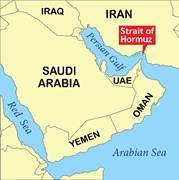
- Strait of Hormuz: World’s most critical oil chokepoint (narrowest point: 29 nautical miles). Connects the Persian Gulf to the Gulf of Oman and the Arabian Sea. Located between Iran (North) and Oman/UAE (South).
- Global Chokepoints: Bab-el-Mandeb (Red Sea–Gulf of Aden), Suez Canal (Mediterranean–Red Sea), Strait of Malacca (Indian Ocean–Pacific), Panama Canal.
- Chabahar Port: Located in southeastern Iran (Gulf of Oman); developed with Indian assistance as a gateway to Afghanistan and Central Asia, bypassing Pakistan.
- INSTC: Multimodal (road, rail, sea) corridor connecting India, Iran, Azerbaijan, Russia, and Europe.
- India’s Energy Dependence (Pre-2026 Crisis): Imports ~90% of crude oil and ~47% of natural gas. Historically, nearly 45-50% of crude, 50-60% of LNG, and up to 90% of LPG transited through Hormuz.
- Strategic Petroleum Reserves (SPR Phase I – 5.33 MMT capacity): Visakhapatnam (1.33 MMT), Mangaluru (1.5 MMT), and Padur (2.5 MMT).
- SPR Phase II Expansion (6.5 MMT planned): Chandikhol (Odisha – 4 MMT) and Padur (Karnataka – 2.5 MMT).
- Key Institutions: IAEA (Vienna; monitors nuclear safeguards); UNSC.
Mains Perspective:
Importance:
- Energy & Economic Stability: Uninterrupted crude and LNG access through chokepoints is vital to contain imported inflation, manage the Current Account Deficit (CAD), and sustain economic growth.
- Strategic Diplomacy & Diaspora: Requires balancing relations with competing powers (US, Iran, Israel, Gulf States) to secure sea lanes, promote regional stability, and ensure the safety of over 9 million Indian nationals.
Challenges:
- High External Vulnerability: India’s SPR currently provides less than 10 days of net import cover, far below the IEA’s 90-day benchmark, exposing the economy to severe supply-side shocks during maritime crises.
- Geopolitical Fallout: Sanctions, blocked waterways, and regional conflicts directly inflate global shipping costs, insurance premiums, and domestic fuel prices.
Government Initiatives:
- Diversification & Buffers: Fast-tracking SPR Phase II (Chandikhol and Padur) and aggressive diversification of crude sourcing (from ~27 countries to over 40).
- Strategic Corridors: Advancing the India-Middle East-Europe Economic Corridor (IMEC), INSTC, and Chabahar port to de-risk supply chains.
- Energy Transition: Accelerating the Ethanol Blended Petrol (EBP) program, expanding Battery Energy Storage Systems (BESS), and advancing the Green Hydrogen Mission.
Way Forward:
- Statutory Reserve Obligations: Shift from ad-hoc storage to legally mandated, deep strategic storage infrastructure to approach global security benchmarks.
- Accelerate Domestic Transition: Massively invest in scalable energy storage, grid modernization, and localized CCUS infrastructure to insulate baseline electricity from geopolitical shocks.
Conclusion:
To secure its economic future amidst volatile West Asian geopolitics, India must rapidly scale its domestic strategic petroleum reserves while aggressively transitioning toward renewable baseloads and diversified, transnational energy corridors.
APSC Prelims MCQs
Topic 1: Brahmaputra River Erosion Mitigation through IIT Guwahati Expertise
Q1. With reference to the Brahmaputra River, consider the following statements:
- It is one of the world’s largest braided rivers.
- It carries one of the highest sediment loads among the world’s rivers.
- It originates from the Siachen Glacier.
Which of the statements given above is/are correct?
A. 1 and 2 only
B. 2 only
C. 1 and 3 only
D. 1, 2 and 3
Answer: A
Explanation: Statements 1 and 2 are correct. The Brahmaputra is a braided river with one of the world’s highest sediment loads. It originates in Tibet as the Yarlung Tsangpo, not from the Siachen Glacier.
Q2. Which one of the following factors is the most significant contributor to severe riverbank erosion along the Brahmaputra in Assam?
A. High sediment load and shifting braided channels
B. Coral reef destruction
C. Tidal erosion from the Bay of Bengal
D. Volcanic activity
Answer: A
Explanation: Heavy sediment load, braided channels, loose alluvial soil and monsoon discharge make the Brahmaputra highly erosion-prone.
Q3. With reference to geo-bags and geo-tubes, frequently used in river management, consider the following statements:
- They are geotextile structures used for riverbank stabilization.
- They help reduce the velocity of flowing water near riverbanks.
- They are mainly used for groundwater recharge.
Which of the statements given above is/are correct?
A. 1 and 2 only
B. 2 and 3 only
C. 1 only
D. 1, 2 and 3
Answer: A
Explanation: Geo-bags and geo-tubes are erosion-control structures. They are not meant for groundwater recharge.
Q4. Which one of the following organisations was established specifically for integrated planning and implementation of flood management measures in the Brahmaputra and Barak river basins?
A. Brahmaputra Board
B. National River Conservation Directorate
C. Inland Waterways Authority of India
D. National Biodiversity Authority
Answer: A
Explanation: The Brahmaputra Board was established under the Brahmaputra Board Act, 1980 for flood control and basin planning.
Topic 2: Rising Minor Suicides & Mental Health Crisis in Assam
Q5. With reference to the Mental Healthcare Act, 2017, consider the following statements:
- It recognises access to mental healthcare as a legal right.
- It presumes that a person attempting suicide is under severe stress.
- It makes attempted suicide punishable with imprisonment.
Which of the statements given above is/are correct?
A. 1 and 2 only
B. 2 only
C. 1 and 3 only
D. 1, 2 and 3
Answer: A
Explanation: The Act recognises access to mental healthcare as a right and presumes severe stress in suicide attempts. It does not criminalise attempted suicide.
Q6. The District Mental Health Programme (DMHP) is implemented under which one of the following programmes?
A. National Mental Health Programme
B. Ayushman Bharat Digital Mission
C. National Health Mission
D. National Programme for Health Care of the Elderly
Answer: A
Explanation: DMHP is the district-level implementation programme under the National Mental Health Programme.
Q7. The KIRAN Helpline, often seen in the news, provides
A. Financial assistance to students
B. Mental health counselling and psychological support
C. Emergency disaster relief
D. Cybercrime reporting services
Answer: B
Explanation: KIRAN is the national mental health helpline that offers psychological counselling and support.
Q8. Which one of the following institutions is a premier mental healthcare institute located in Assam?
A. Lokopriya Gopinath Bordoloi Regional Institute of Mental Health (LGBRIMH)
B. National Institute of Mental Health and Neurosciences (NIMHANS)
C. Regional Institute of Medical Sciences (RIMS)
D. AIIMS Guwahati
Answer: A
Explanation: LGBRIMH, located at Tezpur, is a premier mental healthcare institute serving Northeast India.
Topic 3: Artificial Intelligence & India’s AI Race
Q9. With reference to Artificial Intelligence (AI), consider the following statements:
- Machine Learning is a subset of Artificial Intelligence.
- Deep Learning is a subset of Machine Learning.
- Natural Language Processing enables computers to understand and generate human language.
Which of the statements given above is/are correct?
A. 1 and 2 only
B. 2 and 3 only
C. 1 and 3 only
D. 1, 2 and 3
Answer: D
Explanation: Machine Learning is a branch of AI, Deep Learning is a subset of Machine Learning, and NLP enables machines to process human language.
Q10. The IndiaAI Mission primarily aims to
A. Promote cryptocurrency adoption
B. Build a comprehensive Artificial Intelligence ecosystem in India
C. Establish a national cyber command
D. Replace all government services with AI
Answer: B
Explanation: IndiaAI Mission focuses on AI infrastructure, datasets, startups, skilling, research and responsible AI.
Q11. Which of the following occupations are expected to witness increasing demand due to the growth of Artificial Intelligence?
- AI Ethics Specialists
- Machine Learning Engineers
- Routine Data Entry Operators
Select the correct answer using the code below.
A. 1 only
B. 1 and 2 only
C. 2 and 3 only
D. 1, 2 and 3
Answer: B
Explanation: AI is expected to increase demand for skilled professionals while reducing routine data-entry jobs.
Q12. FutureSkills PRIME, frequently mentioned in the context of emerging technologies, is primarily associated with
A. Skill development in Artificial Intelligence and digital technologies
B. Space technology research
C. Defence manufacturing
D. Biotechnology research
Answer: A
Explanation: FutureSkills PRIME is a national upskilling programme in AI, cybersecurity, cloud computing and related technologies.
Topic 4: West Asia Conflict, Strait of Hormuz & India’s Energy Security
Q13. The Strait of Hormuz connects which one of the following water bodies?
A. Persian Gulf and Gulf of Oman
B. Red Sea and Gulf of Aden
C. Mediterranean Sea and Red Sea
D. Arabian Sea and Bay of Bengal
Answer: A
Explanation: The Strait of Hormuz connects the Persian Gulf with the Gulf of Oman and opens into the Arabian Sea.
Q14. Which one of the following best describes the strategic importance of Chabahar Port for India?
A. It enables India to access Afghanistan and Central Asia without passing through Pakistan.
B. It serves as India’s first overseas naval base.
C. It connects India directly with Europe through the Mediterranean Sea.
D. It is jointly administered by India and Bangladesh.
Answer: A
Explanation: Chabahar Port provides India strategic access to Afghanistan and Central Asia while bypassing Pakistan.
Q15. With reference to the International North-South Transport Corridor (INSTC), consider the following statements:
- It is a multimodal transport corridor.
- It aims to improve connectivity between India and Eurasia.
- It consists exclusively of maritime routes.
Which of the statements given above is/are correct?
A. 1 and 2 only
B. 2 only
C. 1 and 3 only
D. 1, 2 and 3
Answer: A
Explanation: INSTC is a multimodal corridor involving sea, rail and road transport. It is not exclusively maritime.
Q16. Consider the following pairs:
| Waterway | Connects |
| 1. Strait of Hormuz | Persian Gulf – Gulf of Oman |
| 2. Bab-el-Mandeb | Red Sea – Gulf of Aden |
| 3. Suez Canal | Mediterranean Sea – Red Sea |
| 4. Strait of Malacca | Arabian Sea – Bay of Bengal |
How many of the above pairs are correctly matched?
A. Only one
B. Only two
C. Only three
D. All four
Answer: C
Explanation: Pairs 1, 2 and 3 are correct. The Strait of Malacca connects the Andaman Sea (Indian Ocean) and the South China Sea (Pacific Ocean), not the Arabian Sea and Bay of Bengal.
APSC Mains Practice Question
📘 GS Mains Model Question (APSC CCE)
📝 Question
Q. Artificial Intelligence (AI) presents India with a historic opportunity to accelerate economic growth, but it also raises concerns regarding employment, ethics and digital inequality. Discuss. Suggest measures to ensure that AI becomes an inclusive driver of development.
According to the IndiaAI Mission, Artificial Intelligence (AI) has the potential to contribute significantly to India’s digital economy by enhancing productivity, innovation and public service delivery. However, its rapid adoption also poses challenges relating to employment displacement, ethical governance and digital inclusion.
AI as a Growth Engine for India
1. Economic Growth
- Enhances productivity across manufacturing, agriculture and services.
- Promotes innovation and strengthens India’s digital economy.
2. Employment Generation
- Creates demand for AI engineers, data scientists, cybersecurity experts and AI ethics professionals.
- Encourages growth of AI-based startups and entrepreneurship.
3. Governance
- Improves public service delivery through predictive analytics and intelligent decision-making.
- Enables smart governance in healthcare, agriculture and disaster management.
4. Social Sector Transformation
- AI-assisted diagnostics in healthcare.
- Personalised learning in education.
- Precision farming for improved agricultural productivity.
Challenges
1. Job Displacement
- Routine and repetitive jobs are increasingly vulnerable to automation.
2. Skill Gap
- Limited availability of AI-ready workforce and advanced research talent.
3. Digital Divide
- Unequal access to digital infrastructure may widen socio-economic disparities.
4. Ethical Concerns
- Algorithmic bias.
- Privacy violations.
- Deepfakes and misinformation.
- Lack of transparency and accountability.
5. Dependence on Foreign Technology
- Heavy reliance on imported AI models, semiconductor technology and cloud infrastructure.
Government Initiatives
- IndiaAI Mission
- Digital India Programme
- FutureSkills PRIME
- National Education Policy (NEP), 2020
- National Programme on Artificial Intelligence
Way Forward
- Increase investment in indigenous AI research and semiconductor manufacturing.
- Promote AI education, reskilling and lifelong learning.
- Develop a robust ethical AI regulatory framework ensuring transparency and accountability.
- Strengthen public-private partnerships for innovation.
- Expand digital infrastructure to bridge the rural-urban divide.
- Encourage responsible AI aligned with constitutional values and human rights.
Conclusion
Artificial Intelligence should be viewed not merely as an automation tool but as a catalyst for inclusive economic transformation. By combining innovation with ethical governance, robust skilling initiatives and equitable digital access, India can convert its demographic dividend into a technological dividend, emerging as a global leader in trustworthy and inclusive AI.
✨ APSC CCE Courses, 2025-26 offered by SuchitraACS
🔔 Join Our WhatsApp Study Group!
For exclusive access to premium quality content, including study materials, current affairs, MCQs, and model answers for APSC CCE and other Assam competitive exams.
Click here to join: SuchitraACS Study WhatsApp Group
📚 Want to know more about SuchitraACS’s most affordable courses?
Click here to know more: SuchitraACS Courses for APSC CCE and Assam Competitive Examinations